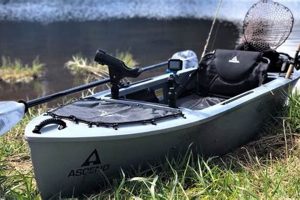
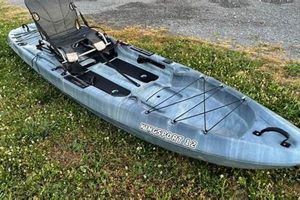
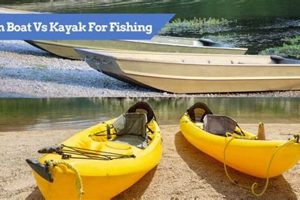
A two-person kayak designed specifically for angling offers enhanced stability and capacity compared to solo models. These watercraft typically feature specialized seating, rod holders, and often storage compartments tailored for fishing gear. For example, integrated tracks might accommodate fish finders or other accessories. They facilitate shared fishing experiences and can be more efficient for carrying larger equipment loads.
The collaborative nature of this type of watercraft provides advantages for anglers of varying skill levels. Novices can benefit from the experience of more seasoned companions, while experienced anglers can enjoy shared excursions. The increased stability often found in these larger designs makes them suitable for diverse water conditions, expanding angling possibilities. Historically, fishing from watercraft has been a practical necessity and efficient method for food gathering, and modern iterations continue to improve upon this tradition.
The subsequent sections delve into key aspects of these specialized kayaks, such as design variations, material selection, and essential accessories. Further discussion will also explore paddling techniques, safety considerations, and optimal fishing locations suited to this style of angling.
Tips for Two-Person Kayak Fishing
Proper preparation and technique enhance safety and enjoyment while fishing from a two-person kayak. These tips offer guidance for a successful outing.
Tip 1: Coordinate Paddling Strokes: Synchronized paddling is crucial for efficient movement. Practice paddling together on calm water before venturing into challenging conditions. Establish clear communication signals for turning and stopping.
Tip 2: Distribute Weight Evenly: Proper weight distribution maintains stability and maneuverability. Gear should be balanced throughout the vessel, avoiding overloading the bow or stern.
Tip 3: Plan Fishing Locations Strategically: Research potential fishing spots beforehand, considering water depth, currents, and potential hazards. Shared decision-making optimizes fishing opportunities.
Tip 4: Utilize Designated Seating and Storage: Designed features maximize efficiency and comfort. Rod holders and storage compartments keep gear organized and readily accessible, minimizing clutter.
Tip 5: Employ Appropriate Safety Measures: Wear personal flotation devices and carry essential safety equipment such as a whistle, first-aid kit, and communication device. Check weather forecasts before departure.
Tip 6: Practice Landing and Launching Techniques: Smooth entry and exit minimize the risk of capsizing. Coordinate movements and maintain balance while entering or exiting the vessel.
Tip 7: Respect Wildlife and the Environment: Adhere to Leave No Trace principles. Dispose of waste properly and avoid disturbing natural habitats.
By following these guidelines, anglers can maximize their success and enjoyment on the water while ensuring safety and environmental responsibility.
The concluding section offers a summary of key points and emphasizes the importance of responsible kayaking practices for a sustainable future.
1. Capacity (two-person)

The two-person capacity defines a fundamental characteristic of the ascend tandem fishing kayak, directly impacting its suitability for shared angling experiences. This design facilitates collaborative fishing, allowing two individuals to fish from the same vessel. The increased capacity affects not only the number of anglers but also the potential for carrying additional gear, including tackle boxes, coolers, and other equipment. For instance, a guided fishing trip might utilize a two-person kayak to pair an experienced guide with a novice angler. Alternatively, friends or family members can share a fishing excursion, enhancing the social aspect of the sport.
The practical implications of this two-person capacity extend beyond simple companionship. Weight distribution becomes a critical consideration, requiring balanced loading to maintain stability and maneuverability. Paddling in tandem necessitates coordination and communication between occupants. Furthermore, the shared space influences fishing techniques, requiring anglers to coordinate casting and retrieval to avoid entanglement. Understanding these dynamics is essential for a successful and enjoyable fishing experience.
In summary, the two-person capacity of these kayaks offers advantages for collaborative fishing, but also necessitates careful consideration of weight distribution, paddling coordination, and shared fishing techniques. Recognizing this interplay between capacity and practical application is crucial for leveraging the full potential of the ascend tandem fishing kayak.
2. Purpose (fishing)
The explicit designation of “fishing” as the core purpose fundamentally shapes the design and functionality of an ascend tandem fishing kayak. This specialized purpose differentiates it from recreational kayaks, dictating features tailored for angling activities. Cause and effect are clearly linked: the need for a stable platform for casting and retrieving lines leads to design elements such as wider hulls and specialized seating. The requirement for carrying fishing gear necessitates integrated storage compartments and rod holders. This purpose-driven design enhances angling efficiency and overall experience.
Consider the practical significance: anglers require ready access to rods, tackle, and other equipment. A dedicated fishing kayak addresses this need, providing designated spaces for these items, minimizing clutter, and maximizing fishing time. For instance, a fly fisherman benefits from the stability offered by a wider hull, enabling standing casts. A bass angler utilizes rod holders to troll multiple lines. These examples illustrate how the “fishing” purpose directly influences design choices and, consequently, on-the-water performance.
In summary, the “fishing” purpose serves as the cornerstone of the ascend tandem fishing kayak’s identity. This specialized focus directly translates into design features that optimize angling functionality and enhance the overall fishing experience. Understanding this connection is crucial for selecting the right equipment and maximizing success on the water.
3. Brand (Ascend)
The “Ascend” brand denotes a specific manufacturer within the broader context of tandem fishing kayaks. This brand signifies a particular set of design philosophies, manufacturing processes, and quality standards associated with Ascend kayaks. Cause and effect are intertwined: Ascend’s focus on stability and affordability directly influences the design and material choices in their kayak models. The brand’s reputation for durability impacts consumer perceptions and purchasing decisions. For instance, an angler seeking a budget-friendly yet reliable option might gravitate towards Ascend due to their established market position in this segment.
Ascend’s emphasis on user-friendliness often translates into features like integrated accessory mounts and comfortable seating. Their focus on fishing-specific designs results in purpose-built kayaks with rod holders, storage compartments, and other angling-centric features. Practical significance emerges in the form of enhanced on-the-water performance and user satisfaction. An angler using an Ascend kayak benefits from the stability and specialized features tailored for their activity. The brand’s reputation for customer service also contributes to the overall ownership experience. Consider a scenario where an angler needs replacement parts: Ascend’s established dealer network and customer support infrastructure facilitate efficient solutions.
In summary, the “Ascend” brand represents more than just a name; it signifies a specific set of values and characteristics embodied in their kayak products. This brand identity influences design choices, manufacturing processes, and ultimately, the user experience. Understanding this connection allows consumers to make informed decisions based on their individual needs and priorities within the fishing kayak market. Recognizing Ascend’s specific contributions to the design and performance of their tandem fishing kayaks empowers informed decision-making within the competitive landscape of fishing-oriented watercraft.
4. Type (tandem)
The “tandem” designation signifies a two-person configuration, a core attribute defining the ascend tandem fishing kayak’s functionality and purpose. This design choice directly impacts performance characteristics, influencing stability, maneuverability, and overall capacity. Cause and effect are clearly linked: the need to accommodate two anglers necessitates a longer, wider hull design, impacting how the kayak tracks and responds to paddling input. The increased weight capacity allows for more gear, but also requires careful weight distribution to maintain balance. The “tandem” type directly influences the social and practical aspects of the fishing experience. For example, a parent teaching a child to fish benefits from the shared space and close proximity afforded by a tandem kayak. A fishing guide can effectively instruct and assist a client within the same vessel.
Practical significance extends beyond simply accommodating two individuals. Tandem kayaks offer increased stability compared to solo models, particularly beneficial in challenging conditions or when landing larger fish. The shared workload of paddling can reduce fatigue on longer trips, expanding exploration possibilities. However, successful tandem kayaking requires coordination and communication between paddlers. Synchronized paddling strokes are essential for efficient movement. Weight distribution must be carefully managed to avoid imbalance. Consider a scenario where one angler is significantly heavier than the other: thoughtful gear placement becomes critical for maintaining stability and maneuverability. These practical considerations underscore the importance of understanding the implications of the “tandem” type.
In summary, the “tandem” type defines a fundamental characteristic of the ascend tandem fishing kayak, influencing its performance, capacity, and suitability for specific fishing scenarios. This design choice necessitates a clear understanding of its implications for weight distribution, paddling coordination, and overall on-the-water experience. Recognizing these factors is crucial for leveraging the full potential of the tandem configuration and maximizing fishing success while maintaining safety and enjoyment. The inherent trade-offs between stability and maneuverability inherent in the “tandem” type must be carefully evaluated against individual needs and intended usage.
5. Stability

Stability forms a critical cornerstone of the ascend tandem fishing kayak’s design and functionality, directly impacting its on-the-water performance and angler safety. Cause and effect are tightly interwoven: the wider hull and lower center of gravity inherent in tandem kayak design contribute significantly to stability. This inherent stability provides a secure platform for casting, reeling, and landing fish, crucial for angling success. Consider the scenario of battling a strong current or unexpected wave action: enhanced stability minimizes the risk of capsizing, ensuring angler safety and preserving the fishing experience. The importance of stability is amplified when dealing with larger fish, where sudden movements or shifts in weight can compromise a less stable vessel.
Practical significance extends beyond simply preventing capsizing. Enhanced stability allows anglers greater freedom of movement within the kayak, facilitating comfortable casting and retrieval. Standing casting, often preferred by fly fishermen, becomes a viable option in a stable tandem kayak. This increased stability also allows for more confident handling of fishing gear and equipment, reducing the likelihood of accidental drops or spills. Consider a scenario involving two anglers simultaneously casting in opposite directions: a stable platform minimizes the risk of imbalance and ensures a smooth, coordinated fishing experience. The wider beam and flat-bottomed hull designs often found in these kayaks directly contribute to their stable characteristics, allowing anglers to focus on fishing rather than constantly managing their balance. Furthermore, stability plays a crucial role in comfort, particularly during longer fishing trips, where a less stable platform could lead to fatigue and discomfort.
In summary, stability represents a non-negotiable aspect of the ascend tandem fishing kayak’s design, impacting safety, performance, and overall fishing experience. The inherent stability provided by these kayaks allows anglers to focus on their fishing techniques and enjoy their time on the water without constantly worrying about balance. This stability contributes directly to angler confidence and enables more adventurous fishing excursions in varied water conditions. The connection between stability and angler confidence underscores its crucial role in the overall success and enjoyment of tandem kayak fishing. Neglecting this critical aspect can compromise safety and detract from the overall fishing experience.
6. Storage
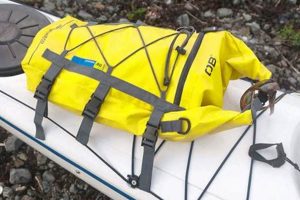
Ample, strategically designed storage is integral to the ascend tandem fishing kayak’s functionality. Cause and effect are directly linked: the need to transport fishing gear necessitates dedicated storage compartments within the kayak. This built-in storage influences angler efficiency and organization on the water. Consider the impact of inadequate storage: tangled lines, misplaced lures, and general clutter detract from the fishing experience and compromise safety. Conversely, well-designed storage keeps essential gear readily accessible, allowing anglers to focus on fishing rather than managing equipment. For example, dedicated tackle storage protects lures and keeps them organized, while rod holders secure rods and prevent damage. Larger storage compartments accommodate essential items such as coolers, dry bags, and safety equipment. The strategic placement of storage compartments contributes to weight distribution, impacting the kayak’s stability and maneuverability. For instance, distributing weight evenly throughout the kayak, rather than concentrating it at the bow or stern, optimizes performance.
Practical significance emerges through enhanced organization and efficiency. Ready access to essential gear streamlines the fishing process, allowing for quick lure changes and efficient tackle management. This organized approach minimizes wasted time and maximizes fishing opportunities. Furthermore, secure storage protects valuable equipment from damage and loss. Consider a scenario involving rough water or unexpected impacts: securely stored gear remains protected, minimizing financial loss and preserving essential equipment. Ample storage capacity allows anglers to carry sufficient supplies for extended trips, expanding exploration possibilities. Furthermore, specialized storage solutions, such as dry hatches or waterproof compartments, safeguard sensitive items from water damage, ensuring their functionality throughout the fishing excursion. The availability and strategic placement of storage solutions directly contribute to a more enjoyable and productive fishing experience.
In summary, integrated storage is not merely a convenience; it’s a critical component of the ascend tandem fishing kayak’s overall design and functionality. Adequate and strategically designed storage directly influences angler efficiency, organization, and safety on the water. Understanding the importance of storage, and utilizing it effectively, maximizes the potential of the kayak and contributes significantly to a successful and enjoyable fishing experience. The impact of well-designed storage extends beyond simple convenience, impacting safety, efficiency, and the overall success of the fishing trip. Failure to adequately address storage needs can compromise the fishing experience and potentially lead to equipment damage or loss.
7. Features (fishing-specific)
Fishing-specific features distinguish ascend tandem fishing kayaks from recreational models, directly influencing their utility and effectiveness for angling. Cause and effect are intrinsically linked: the demand for specialized functionality drives the incorporation of features like rod holders, tackle storage, and fish finder mounts. These features enhance angling efficiency and overall success. Consider the impact of lacking rod holders: securing rods becomes challenging, increasing the risk of loss or damage. Conversely, integrated rod holders free anglers’ hands for other tasks, such as paddling, baiting hooks, or landing fish. Similarly, dedicated tackle storage keeps lures and other essential gear organized and readily accessible, minimizing wasted time and maximizing fishing opportunities. Integrated fish finder mounts provide a stable platform for electronics, enhancing the ability to locate fish and navigate effectively. The strategic placement and design of these features contribute to a more streamlined and productive fishing experience.
Practical significance emerges through improved angling performance and convenience. Rod holders facilitate trolling and other fishing techniques requiring multiple lines. Tackle storage keeps essential gear organized and protected, minimizing clutter and maximizing efficiency. Fish finder mounts provide valuable information about water depth, structure, and fish location, enhancing angling success. Consider a scenario where an angler needs to quickly change lures: readily accessible tackle storage facilitates a swift transition, minimizing disruption to the fishing flow. Similarly, securely mounted rod holders prevent rod loss or damage during unexpected movements or encounters with obstacles. These practical applications underscore the importance of fishing-specific features in enhancing the overall angling experience.
In summary, fishing-specific features define the ascend tandem fishing kayak’s core purpose and functionality. These features directly translate to enhanced angling performance, efficiency, and convenience. Understanding the function and strategic application of these specialized features empowers anglers to maximize their potential on the water. The integration of these features underscores the ascend tandem fishing kayak’s purpose-built design for angling, differentiating it from recreational kayaks and solidifying its position as a specialized tool for the serious fisherman. Overlooking the importance of these features can compromise efficiency, limit angling versatility, and ultimately detract from the overall fishing experience. Therefore, careful consideration of these fishing-specific features is crucial for selecting the appropriate kayak and maximizing success on the water.
Frequently Asked Questions
This section addresses common inquiries regarding ascend tandem fishing kayaks, providing concise and informative responses to facilitate informed decision-making.
Question 1: What weight capacity should one anticipate in a typical ascend tandem fishing kayak?
Weight capacities vary by model, but generally range from 500 to 600 pounds. Consulting manufacturer specifications for the specific model of interest is recommended.
Question 2: Are ascend tandem fishing kayaks suitable for ocean use?
While some models may handle calmer coastal waters, these kayaks are generally designed for lakes, rivers, and slower-moving bodies of water. Ocean use requires careful consideration of specific model specifications and prevailing conditions.
Question 3: What materials are typically used in the construction of ascend fishing kayaks?
Rotomolded polyethylene is commonly used due to its durability and affordability. Higher-end models may incorporate additional materials for enhanced performance or features.
Question 4: How does one transport an ascend tandem fishing kayak?
Roof racks designed for kayaks are the recommended transport method. Securing the kayak properly is crucial for safe transport. Trailers are another option for longer distances or multiple kayaks.
Question 5: What essential safety equipment should accompany any tandem kayak fishing excursion?
Personal flotation devices (PFDs) are mandatory. A whistle, first-aid kit, communication device, and appropriate navigation tools are also highly recommended.
Question 6: What maintenance is required for an ascend tandem fishing kayak?
Rinsing the kayak with fresh water after each use helps prevent corrosion and prolong its lifespan. Regular inspection for damage and proper storage are also essential maintenance practices.
Thorough research and careful consideration of individual needs are essential when selecting an ascend tandem fishing kayak. Understanding the factors discussed in this FAQ section contributes to informed decision-making.
The next section offers a comparative analysis of various ascend tandem fishing kayak models, highlighting key features and performance characteristics.
Conclusion
Careful consideration of design, features, and intended usage is paramount when selecting a two-person fishing kayak. Factors such as stability, storage capacity, and specialized fishing features directly impact on-the-water performance and overall angling success. The collaborative nature of tandem kayaking necessitates effective communication and coordination between occupants. Prioritizing safety through proper equipment usage and adherence to established guidelines remains crucial for an enjoyable and productive experience. Investing time in research and thoughtful evaluation empowers informed purchasing decisions aligned with individual needs and preferences within the broader context of kayak fishing.
The evolving landscape of fishing kayak design promises continued innovation and refinement. Focus on enhanced stability, increased storage capacity, and integration of advanced technologies will likely shape future developments. Responsible usage and environmental stewardship remain essential for preserving aquatic ecosystems and ensuring the sustainability of kayak fishing for generations to come. Ultimately, selecting the appropriate vessel hinges upon a thorough assessment of individual requirements and a commitment to responsible angling practices.