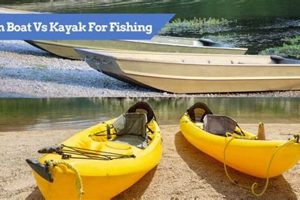
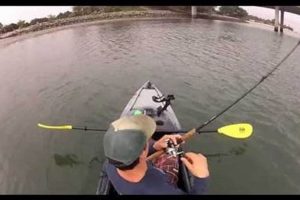
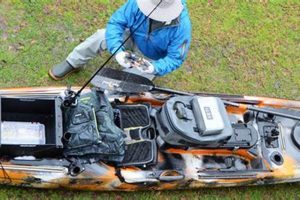
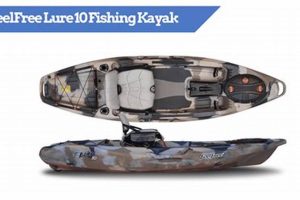
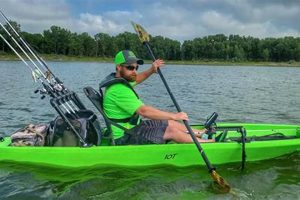
This specific model of personal watercraft is designed for angling, offering stability and features tailored to the needs of fishermen. Typically constructed from durable materials like high-density polyethylene, it often includes specialized components such as rod holders, paddle clips, and storage compartments for tackle and gear. Its twelve-foot length generally provides a balance between maneuverability and tracking performance suitable for various water conditions, from calm lakes to slow-moving rivers.
Anglers benefit from the portability and affordability this type of vessel provides compared to larger, motorized boats. This allows access to shallower waters and tighter fishing spots often inaccessible to larger craft. Furthermore, the quiet operation inherent in paddle-powered watercraft can be advantageous, minimizing disturbance to fish and contributing to a more immersive angling experience. The increasing popularity of kayak fishing reflects a growing appreciation for self-powered water recreation and closer engagement with nature.
The following sections will delve deeper into specific aspects of this watercraft, covering topics such as construction, key features, performance characteristics, and user experiences, providing a comprehensive overview for prospective buyers and current owners alike. This detailed exploration aims to inform and educate, helping readers make informed decisions about selecting and using this type of fishing kayak.
Tips for Utilizing a 12-Foot Fishing Kayak
Proper preparation and technique enhance safety and enjoyment on the water. These guidelines offer practical advice for maximizing the fishing kayak experience.
Tip 1: Stability Enhancement: Maintaining a low center of gravity contributes significantly to stability. Distributing weight evenly within the hull minimizes the risk of capsizing. Avoid sudden movements or leaning excessively to either side.
Tip 2: Paddle Efficiency: Employing proper paddling techniques conserves energy and improves tracking. A vertical paddle stroke, engaging core muscles, generates more power with less effort. Adjust stroke length and frequency as needed for changing conditions.
Tip 3: Effective Anchor Deployment: Selecting an appropriate anchor system and deployment strategy is crucial for maintaining position in desired fishing locations. Consider water depth, current, and bottom composition when choosing and deploying an anchor.
Tip 4: Gear Organization: Organizing essential fishing gear within easy reach promotes efficient angling. Utilize designated storage compartments and consider using tackle boxes or bags designed for kayak fishing. Secure loose items to prevent loss or interference with paddling.
Tip 5: Safety Precautions: Prioritizing safety is paramount. Always wear a personal flotation device (PFD) and carry essential safety equipment, including a whistle, signaling device, and first-aid kit. Check weather conditions before embarking and inform someone of the intended fishing location and return time.
Tip 6: Navigation Awareness: Familiarize oneself with navigation rules and local water regulations. Carry a map or chart, especially when fishing in unfamiliar waters. Be mindful of other boat traffic and potential hazards.
Adhering to these guidelines contributes significantly to a safer and more productive fishing experience. Preparation, practice, and respect for the water environment are essential for successful kayak angling.
By understanding these key aspects of kayak fishing, anglers can better appreciate the versatility and enjoyment this mode of angling provides, leading to a more fulfilling and productive time on the water.
1. Stability
Stability represents a critical performance characteristic in fishing kayaks, directly influencing angler safety, comfort, and fishing effectiveness. The Kingsport 12 fishing kayak addresses this crucial aspect through design elements aimed at maximizing stability in various on-the-water scenarios. A wider hull design and a lower center of gravity contribute significantly to primary stability, resisting initial tipping forces. Secondary stability, the ability to recover from larger destabilizing forces, is also enhanced by the hull design. This combination of primary and secondary stability allows anglers to confidently cast, retrieve, and land fish without excessive concern for capsizing. For example, the flat bottom of the kayak’s hull is more stable than other kayak models, so when reeling in a fish from either side of the kayak, an angler can expect the boat to remain upright in the water.
The practical implications of enhanced stability are numerous. Anglers can focus on fishing rather than constantly correcting balance, leading to a more enjoyable and productive experience. Standing to cast, a desirable practice for sight fishing and improved casting distance, becomes a safer possibility. This increased stability also contributes to angler confidence in challenging conditions such as wind, chop, or current. Furthermore, the platform’s stability enhances safety during critical moments like landing a fish or entering and exiting the kayak.
Understanding the stability characteristics of the Kingsport 12 empowers anglers to make informed decisions about usage and technique. While the inherent stability of the design provides a secure platform, anglers should still practice proper weight distribution and avoid sudden movements to maximize safety and performance. By appreciating the interplay between design and stability, anglers can fully utilize this kayaks potential and enjoy a confident and productive fishing experience.
2. Maneuverability

Maneuverability represents a critical performance attribute influencing the effectiveness and enjoyment of kayak fishing. The ability to precisely position the kayak in desired locations, navigate tight spaces, and respond efficiently to changing conditions significantly impacts angling success. This section explores the maneuverability characteristics of the Kingsport 12 fishing kayak, examining how its design features contribute to its on-the-water performance.
- Hull Design and Length:
The Kingsport 12’s hull design and twelve-foot length contribute to a balance between tracking and turning performance. The moderate length allows for relatively quick turns while maintaining sufficient tracking for straight-line paddling. The hull’s shape, often incorporating a shallow V or flat bottom, further enhances maneuverability in shallow water and tight quarters, allowing anglers to access areas often inaccessible to larger craft. For example, navigating through dense vegetation or around submerged obstacles becomes more feasible with a responsive and maneuverable kayak.
- Rudder and Skeg Systems:
Many Kingsport 12 fishing kayaks offer rudder or skeg systems to further enhance directional control. These systems aid in maintaining a straight course in windy or current-prone conditions, minimizing the need for constant corrective strokes. A rudder, providing active directional control, allows for precise adjustments to heading, while a skeg, providing passive directional stability, helps maintain a straight track. These features improve tracking performance, allowing the kayak to maintain its course with minimal effort.
- Paddle Length and Technique:
While not a direct feature of the kayak itself, paddle length and paddling technique significantly influence maneuverability. A properly sized paddle and efficient paddling strokes contribute to responsive turning and precise boat control. Short, quick strokes facilitate turning, while longer strokes enhance forward momentum. Mastering basic paddling techniques, such as sweep strokes and draws, allows for precise maneuvering in confined spaces.
- Weight Capacity and Distribution:
Weight capacity and weight distribution impact maneuverability. A kayak loaded within its recommended weight capacity and with weight distributed evenly tends to respond more predictably to paddle input. Overloading or uneven weight distribution can negatively affect tracking and turning performance, making the kayak feel sluggish or unresponsive. Optimal performance occurs within the specified weight range, ensuring appropriate responsiveness to paddle movements.
The maneuverability of the Kingsport 12, influenced by these interconnected factors, contributes significantly to its versatility as a fishing platform. Anglers benefit from the ability to navigate diverse water environments, access productive fishing spots, and position themselves effectively for casting and retrieving. By understanding the factors contributing to maneuverability, anglers can maximize their on-the-water performance and enjoy a more productive and engaging fishing experience.
3. Storage Capacity

Adequate storage capacity represents a critical aspect of fishing kayak functionality, directly impacting organization, efficiency, and overall angling success. The ability to securely and efficiently transport essential gear, tackle, and personal items contributes significantly to a productive and enjoyable fishing experience. This section explores the storage capacity of the Kingsport 12 fishing kayak, examining its various storage compartments and their practical implications for anglers.
- Rear Tank Well:
The rear tank well, a common feature in fishing kayaks, provides open storage space typically located behind the seat. This area accommodates larger items such as tackle crates, coolers, and dry bags. Bungee cords or straps often secure these items, preventing shifting or loss during transport. The tank well’s accessibility allows for quick retrieval of frequently used gear. For example, a angler might store a tackle box and a small cooler in the rear tank well, allowing for quick access to lures, snacks, and drinks.
- Front Hatch:
Many Kingsport 12 models incorporate a front hatch, providing enclosed storage protected from water and the elements. This compartment suits smaller items requiring secure storage, such as electronics, wallets, and keys. The watertight seal safeguards these items from accidental splashes or submersion. The front hatch maintains easy access while protecting valuables from unexpected water exposure.
- Side Storage Compartments:
Smaller side storage compartments, often located within reach of the seated angler, offer convenient storage for frequently accessed items like pliers, line cutters, and leader spools. These compartments may feature specialized organizers or inserts for efficient tackle management. Keeping essential tools within easy reach minimizes disruption during fishing and allows for quick adjustments to tackle or rigs.
- Rod Holders:
Dedicated rod holders, integrated into the kayak’s design, securely hold fishing rods while not in use. Flush-mounted or adjustable rod holders accommodate various rod lengths and types. These holders prevent rod tangling and damage while keeping rods readily accessible for quick deployment when fish are spotted. Multiple rod holders allow anglers to carry several rigged rods, facilitating quick transitions between different fishing techniques.
The strategic placement and variety of storage compartments within the Kingsport 12 fishing kayak contribute significantly to its practicality and versatility. Anglers benefit from the ability to organize and transport essential gear efficiently, maximizing both fishing time and overall enjoyment. The thoughtful incorporation of storage solutions reflects a design focused on meeting the specific needs of kayak anglers, contributing to a more organized and productive fishing experience.
4. Comfort Features
Comfort features significantly influence the overall fishing experience, particularly during extended outings on the water. The Kingsport 12 fishing kayak incorporates several design elements aimed at enhancing angler comfort, thereby reducing fatigue and maximizing enjoyment. A comfortable angler can focus on fishing, rather than discomfort, resulting in a more productive and satisfying experience. The relationship between comfort and performance is integral to the overall design philosophy of fishing kayaks like the Kingsport 12.
The seat design plays a pivotal role in angler comfort. Adjustable seating systems allow for customization to individual preferences and body types. Features such as padded seating surfaces, adjustable backrests, and breathable fabrics contribute to long-term comfort, even in challenging weather conditions. An improperly fitting or uncomfortable seat can lead to backaches, stiffness, and decreased fishing effectiveness. For example, an angler with a longer torso may require a higher backrest for optimal support, while an angler with shorter legs may benefit from adjustable footrests to maintain a comfortable paddling position. The Kingsport 12’s focus on seat adjustability aims to mitigate these potential discomforts.
Beyond seating, other comfort features contribute to the overall experience. Adjustable footrests allow anglers to customize leg positioning, promoting proper posture and reducing strain during paddling. Integrated thigh pads provide additional support and stability, further enhancing comfort and control. Placement of rod holders, cup holders, and other accessories within easy reach minimizes unnecessary movements and contributes to a more streamlined and comfortable fishing experience. The cumulative effect of these comfort features enables anglers to remain on the water longer, fish more effectively, and fully enjoy their time on the water. Understanding the importance of these features empowers anglers to make informed decisions when selecting a kayak and to customize their setup for optimal comfort and performance.
5. Durability

Durability represents a critical factor influencing the lifespan and overall value of a fishing kayak. The Kingsport 12 fishing kayak addresses this crucial aspect through material selection and construction techniques aimed at withstanding the rigors of regular use in diverse aquatic environments. The kayak’s construction typically utilizes high-density polyethylene (HDPE), a durable thermoplastic known for its impact resistance, UV stability, and resistance to abrasion. This material choice allows the kayak to endure impacts from rocks, submerged obstacles, and general wear and tear associated with transport and handling. For example, HDPE can withstand minor collisions with rocks or logs without sustaining significant structural damage, ensuring the kayak remains functional and safe for continued use. This inherent durability contributes to a longer lifespan, reducing the need for frequent repairs or replacements.
Beyond material selection, construction techniques further enhance the Kingsport 12’s durability. Rotational molding, a common manufacturing process for kayaks, creates a seamless, one-piece hull with uniform wall thickness. This eliminates potential weak points or seams prone to leaks or failure. Reinforced areas, such as the keel and stern, provide additional protection against abrasion and impact in high-wear areas. These construction methods contribute to the kayak’s overall structural integrity, ensuring it can withstand the stresses of regular use in various water conditions. For instance, a reinforced keel protects the hull from damage when dragged across sandy beaches or shallow gravel beds, extending the kayak’s usable lifespan.
The practical implications of a durable kayak extend beyond longevity. A robust construction instills user confidence, allowing anglers to explore more challenging environments without concern for damaging their equipment. Reduced maintenance requirements minimize downtime and associated costs, allowing more time for fishing. The Kingsport 12’s emphasis on durability reflects a commitment to providing a reliable and long-lasting product, contributing to a more satisfying and cost-effective ownership experience. Investing in a durable kayak minimizes the long-term costs associated with repairs and replacements, maximizing the return on investment for anglers seeking a dependable fishing platform. This durability allows for extended use and enjoyment, making the Kingsport 12 a valuable asset for avid anglers.
6. Target Species
The Kingsport 12 fishing kayak’s versatility allows it to target a variety of fish species, making it suitable for diverse angling styles and environments. Understanding the relationship between target species and kayak features, such as rod holders, storage capacity, and stability, informs equipment choices and fishing strategies. Matching the kayak’s capabilities to the target species enhances angling effectiveness and overall enjoyment on the water.
- Freshwater Fishing:
The Kingsport 12 performs well in freshwater environments, targeting species such as bass, trout, crappie, and catfish. Its stability allows for stand-up fishing, improving visibility and casting accuracy. Ample storage accommodates tackle and gear specific to freshwater angling techniques, such as baitcasting and fly fishing. For example, bass anglers might equip their Kingsport 12 with rod holders suitable for baitcasting rods and reels, while trout anglers might prioritize storage for fly boxes and waders.
- Inshore Saltwater Fishing:
The Kingsport 12’s durability and stability make it suitable for inshore saltwater environments. Targeting species such as redfish, speckled trout, flounder, and snook requires specialized tackle and techniques. The kayak’s corrosion-resistant hardware and robust construction withstand the harsh saltwater environment. Rod holders designed for saltwater rods and reels, along with storage for heavier tackle and lures, optimize the kayak for inshore saltwater pursuits. For instance, anglers targeting redfish in shallow flats might equip their Kingsport 12 with a stake-out pole for anchoring in the current.
- Multi-Species Angling:
The Kingsport 12’s adaptability allows it to target multiple species within a single outing. Its versatile design accommodates various rod and reel combinations, allowing anglers to switch between different fishing techniques. For example, an angler might target bass in the morning using topwater lures and then switch to bottom fishing for catfish in the afternoon, utilizing the same kayak and adjusting their tackle accordingly. The kayak’s storage capacity allows for carrying a variety of rods, reels, and lures, maximizing fishing versatility.
- Kayak Fishing Tournaments:
The Kingsport 12 finds increasing popularity in kayak fishing tournaments. Its stability, maneuverability, and storage capacity meet the demands of competitive angling. Features such as rod holders, fish finders, and live wells can be integrated to enhance tournament performance. The kayak’s ability to access shallow water and navigate tight spaces provides a competitive advantage in certain tournament scenarios. For example, anglers competing in bass tournaments might equip their Kingsport 12 with a fish finder and live well to maximize their chances of success.
The Kingsport 12 fishing kayak’s adaptable design caters to diverse target species and fishing styles. By considering the specific requirements of target species, anglers can optimize their kayak setup and enhance their chances of angling success. This versatility makes the Kingsport 12 a valuable asset for anglers seeking a adaptable and efficient fishing platform.
Frequently Asked Questions
This section addresses common inquiries regarding the Kingsport 12 fishing kayak, providing concise and informative responses to facilitate informed decision-making.
Question 1: What is the weight capacity of the Kingsport 12 fishing kayak?
Weight capacity varies depending on the specific model but generally ranges between 350 and 400 pounds. Exceeding the recommended weight capacity can compromise stability and performance. Consulting manufacturer specifications provides precise weight capacity information for individual models.
Question 2: Is the Kingsport 12 suitable for ocean use?
While designed primarily for freshwater and inshore saltwater environments, the Kingsport 12 can handle calm ocean conditions. However, venturing far offshore or into rough seas is not recommended. Prioritizing safety and adhering to appropriate usage guidelines ensures an enjoyable and safe experience.
Question 3: What maintenance is required for a Kingsport 12 fishing kayak?
Routine maintenance includes rinsing the kayak with fresh water after each use, especially after saltwater exposure. Periodic inspection of hardware, such as screws and bolts, ensures proper function. Storing the kayak out of direct sunlight prolongs its lifespan. Following manufacturer recommendations for maintenance ensures optimal performance and longevity.
Question 4: Are accessories, such as fish finders and rod holders, compatible with the Kingsport 12?
Numerous aftermarket accessories, including fish finders, rod holders, and anchor trolleys, are compatible with the Kingsport 12. Many models feature pre-installed mounting points or tracks for easy accessory installation. Compatibility varies depending on the specific model and accessory, so consulting manufacturer guidelines or retailer expertise ensures proper fit and function.
Question 5: How does the Kingsport 12 perform in windy conditions?
Wind can impact the Kingsport 12’s tracking performance. Utilizing a rudder or skeg can significantly improve directional stability in windy conditions. Paddling technique and weight distribution also influence wind resistance. Understanding how wind affects kayak performance and employing appropriate paddling strategies enhances control and minimizes drift.
Question 6: What safety precautions should be taken when using a Kingsport 12 fishing kayak?
Wearing a personal flotation device (PFD) is paramount. Carrying essential safety equipment, including a whistle, signaling device, and first-aid kit, is crucial. Checking weather conditions before embarking and informing someone of the intended fishing location and return time enhances safety. Adhering to established safety guidelines ensures a responsible and safe kayaking experience.
Understanding these key aspects of the Kingsport 12 facilitates informed purchasing decisions and promotes safe and enjoyable kayak fishing experiences. Addressing these common queries provides clarity and empowers individuals to make the most of their time on the water.
The next section provides a comprehensive review of the Kingsport 12 fishing kayak, encompassing performance analysis, user feedback, and overall value assessment.
Kingsport 12 Fishing Kayak
This exploration of the Kingsport 12 fishing kayak encompassed key features impacting performance and user experience. Stability, maneuverability, storage capacity, comfort features, durability, and suitability for diverse target species were examined. Understanding these attributes empowers informed purchase decisions and facilitates optimal utilization on the water. Analysis revealed a balance between performance characteristics, catering to diverse angling styles and preferences.
The Kingsport 12 represents a versatile and accessible entry point into kayak fishing. Its adaptability across various fishing disciplines and environments positions it as a valuable tool for anglers seeking enhanced on-the-water experiences. Continued exploration of kayak fishing and mindful engagement with the aquatic environment promises enriching experiences and fosters a deeper appreciation for the sport.