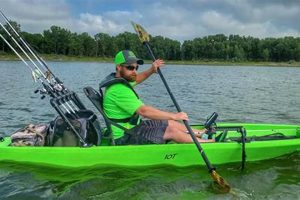
Anglers face a fundamental choice between small, human-powered vessels and larger, motorized ones. This decision often boils down to selecting between a kayak designed for fishing and a small, flat-bottomed aluminum boat known as a jon boat. Each option presents distinct advantages and disadvantages depending on factors such as fishing style, target species, budget, and access to waterways. Understanding these differences is critical for maximizing angling success and enjoyment on the water.
Choosing the right watercraft significantly impacts an angler’s experience. A suitable vessel allows access to diverse fishing locations, influences the types of fishing techniques employed, and affects overall comfort and safety. Historically, jon boats, with their simplicity and affordability, have been a popular choice. However, the increasing popularity of kayak fishing reflects the growing appreciation for their maneuverability, stealth, and the physical engagement they offer. Ultimately, the ideal choice hinges on individual needs and preferences.
This article will explore the key distinctions between these two popular fishing platforms, considering factors such as stability, capacity, propulsion, cost, fishability, transportation, and maintenance. By examining these elements, anglers can make informed decisions tailored to their specific fishing goals and circumstances.
Tips for Choosing Between a Fishing Kayak and a Jon Boat
Selecting between a fishing kayak and a jon boat requires careful consideration of individual needs and priorities. These tips offer guidance for navigating this decision-making process.
Tip 1: Evaluate Fishing Style and Target Species: Kayak fishing excels in shallow water and tight spaces, making it ideal for targeting species like bass and panfish in heavily vegetated areas. Jon boats, with their larger casting decks and ability to handle heavier tackle, are better suited for open water fishing for larger species like catfish or stripers.
Tip 2: Consider Physical Capabilities and Preferences: Kayak fishing demands a certain level of physical fitness for paddling and maneuvering. Jon boats, offering motorized options, require less physical exertion but necessitate boat handling skills and engine maintenance.
Tip 3: Assess Transportation and Storage: Kayaks offer easier transportation and storage due to their smaller size and lighter weight. Jon boats often require trailers and more substantial storage space.
Tip 4: Factor in Budgetary Constraints: Kayaks generally represent a lower initial investment compared to jon boats, especially when factoring in motor and trailer costs. Ongoing maintenance costs for motorized jon boats also tend to be higher.
Tip 5: Analyze Waterway Accessibility: Kayaks grant access to smaller, shallower waterways often inaccessible to jon boats. Jon boats, with their greater speed and range, are advantageous on larger bodies of water.
Tip 6: Prioritize Safety Considerations: Both kayaks and jon boats necessitate safety precautions. Kayak anglers should prioritize personal flotation devices and be mindful of weather conditions. Jon boat users must adhere to boating regulations and ensure proper safety equipment is onboard.
Tip 7: Research Available Features and Accessories: Both kayaks and jon boats offer a wide array of features and accessories designed to enhance the fishing experience. Researching these options allows anglers to customize their vessels based on their individual needs and preferences.
Careful consideration of these factors allows anglers to select the watercraft best aligned with their individual requirements and fishing aspirations. The optimal choice enhances angling experiences and contributes to a more enjoyable and productive time on the water.
By understanding the nuanced differences between fishing kayaks and jon boats, anglers can confidently choose the vessel that maximizes their fishing potential and aligns with their individual circumstances. This informed decision ultimately contributes to a more rewarding and fulfilling experience on the water.
1. Maneuverability

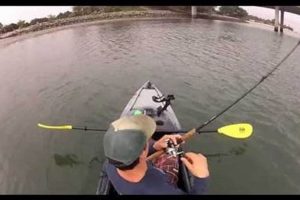
Maneuverability represents a critical differentiator between fishing kayaks and jon boats, significantly impacting an angler’s ability to navigate diverse water environments and access prime fishing spots. Kayaks, propelled by paddles, offer exceptional agility, enabling navigation through narrow channels, shallow creeks, and dense vegetation often inaccessible to larger, motorized vessels. This maneuverability allows kayak anglers to exploit tight spaces, targeting fish in hard-to-reach areas. Jon boats, while less nimble, possess their own advantages in open water, providing a stable platform for trolling or drifting. However, their size and reliance on a motor can limit access to shallow or obstructed waterways. Consider navigating a cypress-lined swamp; a kayak can silently weave through the trees, whereas a jon boat might struggle to navigate the tight confines. Conversely, in a large reservoir, a jon boat’s motor provides the power and speed to cover vast distances, while a kayak angler would face limitations in range and speed.
The importance of maneuverability hinges on the specific fishing environment and target species. For anglers pursuing bass in shallow, weedy lakes, a kayak’s agility provides a distinct advantage, allowing precise casting into pockets and along vegetation edges. In contrast, anglers targeting offshore species might prioritize the stability and range of a jon boat, utilizing its motor to reach deeper waters and cover greater distances. Understanding these maneuverability differences informs strategic decisions regarding vessel selection based on fishing preferences and target locations. For example, an angler seeking trophy largemouth bass in a densely vegetated river system would likely favor a kayak’s maneuverability, while an angler targeting striped bass in open ocean waters would likely opt for the range and stability of a jon boat.
Selecting a fishing vessel necessitates a comprehensive evaluation of maneuverability alongside other factors such as stability, capacity, and cost. Recognizing the trade-offs inherent in each choice allows anglers to prioritize attributes that align with their specific fishing goals and environmental conditions. The practical application of this understanding translates to improved fishing success and a more efficient and enjoyable experience on the water. Balancing maneuverability with other critical vessel characteristics ultimately equips anglers with the optimal platform to pursue their chosen fishing pursuits effectively.
2. Stability

Stability plays a crucial role in the “fishing kayak vs jon boat” debate, directly influencing angler safety, comfort, and fishing effectiveness. Each vessel type exhibits distinct stability characteristics stemming from its design and construction. Kayaks, with their lower center of gravity and narrower beam, offer primary stability resistance to initial tipping. However, they require more balance and coordination, especially in rough conditions or when making sudden movements. Jon boats, featuring a wider beam and flatter bottom, provide superior secondary stability the ability to resist capsizing once tilted. This characteristic makes them well-suited for stand-up fishing, offering a more secure platform for casting and retrieving. Consider the scenario of an angler hooking a large fish; in a kayak, maintaining balance during the fight requires careful weight shifting and paddle use, while a jon boat offers a more stable platform to manage the struggle.
The impact of stability extends beyond simply preventing capsizing. A stable vessel enhances fishing efficiency by allowing anglers to focus on fishing techniques rather than maintaining balance. For example, fly fishing often requires intricate casting motions and line management; a stable platform, like a jon boat, facilitates these actions. Conversely, kayak anglers often employ specialized techniques like leaning into turns and bracing with paddles to enhance stability during casting and retrieval. Choosing the right vessel based on stability needs depends on individual fishing styles and environmental conditions. Anglers planning to fish in calm, protected waters might prioritize the maneuverability of a kayak, while those venturing into open water or choppy conditions might prioritize the stability of a jon boat. An angler targeting bonefish in shallow flats might prefer a kayak’s stealth and maneuverability, accepting the trade-off in stability, while an angler trolling for salmon in rough seas would likely prioritize the stability and security of a jon boat.
Understanding the nuances of stability in relation to fishing kayaks and jon boats empowers anglers to make informed decisions aligned with their skill levels and intended fishing environments. Prioritizing stability enhances not only safety but also fishing effectiveness and overall enjoyment on the water. Neglecting this critical factor can lead to compromised fishing experiences, potentially jeopardizing safety and hindering success. Recognizing the inherent stability differences between these two popular fishing platforms contributes significantly to a more successful and enjoyable angling experience.
3. Capacity/Space
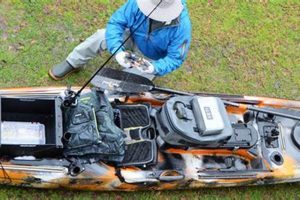
Capacity and available space represent critical considerations when evaluating fishing kayaks versus jon boats. These factors directly influence gear storage, passenger accommodation, and overall fishing experience. Kayaks, by design, offer limited storage and typically accommodate a single angler. While specialized fishing kayaks incorporate storage compartments and gear mounting systems, they inherently constrain the amount of equipment and supplies carried. This limitation necessitates careful gear selection and prioritization, particularly for longer trips or specialized fishing techniques. Jon boats, conversely, offer significantly greater capacity, accommodating multiple anglers, substantial gear, and even livewells for keeping caught fish. This expanded space allows for a more versatile fishing experience, enabling anglers to carry a wider array of tackle, coolers, and other equipment.
The practical implications of capacity differences become readily apparent in various fishing scenarios. Consider a multi-day fishing expedition; a kayak angler faces limitations in carrying food, water, and camping gear, requiring meticulous planning and potentially multiple trips to transport supplies. A jon boat, in contrast, readily accommodates these necessities, enhancing comfort and logistical ease. Similarly, when fishing with a partner or family, a jon boat provides the necessary space for shared experiences, whereas kayaks limit participation to solo endeavors. For example, a group of anglers targeting catfish in a large river would benefit from the spaciousness of a jon boat, allowing for comfortable seating, ample rod storage, and a livewell to maintain catches. Conversely, an angler seeking solitude while fly fishing in a small stream would find a kayak’s compact size advantageous, minimizing disturbance to the environment.
Ultimately, the optimal choice between a fishing kayak and a jon boat hinges on individual needs and fishing objectives. Anglers prioritizing mobility and minimalist approaches favor kayaks, accepting limitations in capacity and space. Those requiring greater storage, passenger capacity, and equipment versatility gravitate towards jon boats. Evaluating capacity needs in relation to fishing style, trip duration, and social preferences ensures a suitable vessel choice, contributing to a more efficient and enjoyable angling experience. Ignoring these practical considerations can lead to compromised fishing trips, whether due to inadequate gear storage or limitations in shared experiences. Recognizing the inherent capacity differences between these two popular fishing platforms is essential for making informed decisions aligned with specific angling goals and maximizing overall on-the-water satisfaction.
4. Propulsion
Propulsion methods represent a fundamental distinction between fishing kayaks and jon boats, significantly impacting speed, range, access, and the overall fishing experience. Kayaks rely primarily on human power, utilizing paddles for propulsion. This method offers advantages in stealth, maneuverability, and environmental friendliness, allowing anglers to approach fish quietly and navigate shallow or vegetated areas with minimal disturbance. However, paddling requires physical exertion and limits travel distance, particularly against currents or wind. Jon boats, conversely, offer diverse propulsion options, including outboard motors, trolling motors, and even oars. Outboard motors provide significant speed and range, enabling anglers to cover vast distances and access remote fishing locations. Trolling motors offer precise control for slow-speed maneuvering and fishing in specific areas. Oars provide a backup propulsion method and can be useful in shallow water or when navigating tight spaces.
The choice of propulsion method directly influences fishing strategies and access to different environments. A kayak angler targeting bass in a shallow cove benefits from the stealth and maneuverability offered by paddling, allowing precise lure presentations and minimal disturbance to the fish. A jon boat angler trolling for salmon in a large lake utilizes the speed and range of an outboard motor to cover extensive water and locate schools of fish. Consider the scenario of fishing a river system; a kayak angler might paddle upstream, carefully targeting specific pockets and eddies, while a jon boat angler might utilize a trolling motor to maintain position and control drift while fishing downstream. The practical implications of propulsion choices extend beyond simply reaching a fishing destination. Paddling a kayak provides a physical workout and immersive connection with the environment, while operating a motorized jon boat offers convenience and speed, allowing anglers to cover more water and potentially increase fishing opportunities.
Understanding the nuances of propulsion systems in the context of fishing kayaks versus jon boats allows anglers to select the most appropriate vessel based on their fishing style, target species, and physical capabilities. Evaluating factors such as desired speed, range, access to specific locations, and personal preferences concerning physical exertion informs this decision-making process. Recognizing the trade-offs inherent in each propulsion method empowers anglers to optimize their fishing experience and maximize their chances of success. The connection between propulsion and vessel choice ultimately influences not only how anglers reach their fishing destinations but also how they interact with the environment and pursue their target species.
5. Cost
Cost represents a significant factor influencing the decision between a fishing kayak and a jon boat. Purchase price, ongoing maintenance, and associated expenses like transportation and storage contribute to the overall financial commitment. Kayaks typically present a lower initial investment compared to jon boats. A basic fishing kayak can be purchased for a few hundred dollars, while a new jon boat, even without a motor, can cost several thousand. This price disparity widens further when factoring in the cost of outboard motors, trailers, and other accessories commonly associated with jon boats. Maintenance costs also differ significantly. Kayaks require minimal upkeep, primarily involving cleaning and occasional repairs. Jon boats, especially those with motors, necessitate more frequent maintenance, including engine servicing, hull repairs, and trailer upkeep. These ongoing expenses contribute to the higher long-term cost of jon boat ownership.
Real-world examples illustrate these cost differences. An angler on a limited budget seeking a simple, accessible fishing platform might opt for a used kayak, minimizing initial investment and ongoing expenses. Conversely, an angler prioritizing speed, range, and the capacity to carry multiple passengers might justify the higher cost of a jon boat equipped with an outboard motor and trailer. Transportation and storage also influence overall cost. Kayaks, due to their smaller size and lighter weight, can often be transported on a vehicle’s roof rack, eliminating the need for a trailer. They also require less storage space, potentially reducing or eliminating storage fees. Jon boats, especially larger models, necessitate a trailer for transport and require more substantial storage solutions, potentially incurring additional costs. For instance, an angler living in an apartment with limited storage might find a kayak’s compact size and ease of transport more cost-effective, while an angler with ample garage space and a tow vehicle might prefer the versatility and capacity of a jon boat, absorbing the associated transportation and storage costs.
Understanding the financial implications associated with each vessel type allows for informed decision-making aligned with budgetary constraints and long-term ownership costs. While the initial price difference between kayaks and jon boats can appear substantial, considering the comprehensive cost landscape, including maintenance, transportation, and storage, provides a more accurate assessment. This holistic approach empowers anglers to select a fishing platform that aligns with both their fishing needs and financial resources, maximizing value and ensuring long-term affordability. Failing to consider these cost nuances can lead to unexpected financial burdens and potentially compromise the overall enjoyment of the fishing experience. Recognizing the long-term cost implications associated with each vessel type ultimately contributes to a more sustainable and rewarding pursuit of angling.
Frequently Asked Questions
This section addresses common inquiries regarding the choice between fishing kayaks and jon boats, providing concise and informative responses to facilitate informed decision-making.
Question 1: Which option is better for beginners?
The ideal choice for beginners depends on individual comfort levels and desired fishing experiences. Kayaks offer a more accessible entry point in terms of cost and ease of transport, while jon boats may require additional skills related to trailering, boat handling, and motor operation. Beginners should consider their existing skill sets and comfort levels on the water.
Question 2: Which is safer, a fishing kayak or a jon boat?
Both options present inherent risks. Kayaks require greater attention to balance and self-rescue techniques, while jon boats necessitate adherence to boating regulations and safety equipment requirements. Safety in either vessel depends on responsible operation, appropriate safety gear, and awareness of environmental conditions.
Question 3: Which performs better in rough water conditions?
Jon boats generally offer greater stability and higher freeboard in rough water compared to kayaks. Kayaks, while capable of handling some chop, are more susceptible to capsizing in challenging conditions. Anglers anticipating frequent rough water fishing might prioritize a jon boat’s stability.
Question 4: Which is better for fishing in shallow water?
Kayaks excel in shallow water environments due to their shallower draft and superior maneuverability. They can access areas inaccessible to jon boats, providing advantages when targeting species inhabiting shallow, vegetated areas.
Question 5: Which offers better fishing versatility?
Jon boats generally offer greater fishing versatility due to their larger capacity, ability to accommodate multiple anglers, and compatibility with various fishing techniques. They provide ample space for different types of gear and equipment, catering to diverse fishing styles.
Question 6: What are the long-term cost implications of each option?
While kayaks typically have lower initial purchase prices, jon boats often involve higher ongoing costs related to fuel, maintenance, storage, and potential trailer expenses. Long-term cost considerations should factor in these ongoing expenses to accurately assess the financial commitment associated with each vessel type.
Careful consideration of these frequently asked questions, alongside individual fishing preferences and circumstances, contributes to a well-informed decision, ensuring a satisfying and successful fishing experience on the water.
By understanding the specific advantages and disadvantages of each option, anglers can confidently select the vessel that best aligns with their individual needs and fishing goals, maximizing enjoyment and success on the water. The subsequent sections will delve deeper into specific features and considerations to further refine this decision-making process.
Fishing Kayak vs Jon Boat
The decision between a fishing kayak and a jon boat represents a pivotal choice for anglers, shaping their fishing experiences and dictating access to diverse waterways and fishing styles. This exploration has highlighted key differentiators, encompassing maneuverability, stability, capacity, propulsion, and cost. Kayaks excel in maneuverability and affordability, proving advantageous in shallow water and confined spaces, while demanding physical exertion and offering limited carrying capacity. Jon boats, conversely, prioritize stability and capacity, accommodating more gear and passengers, facilitating diverse fishing techniques, yet entailing higher costs and requiring more complex logistics regarding transportation and storage. The optimal selection hinges upon a comprehensive assessment of individual needs, fishing styles, target species, and budgetary constraints.
Ultimately, the “fishing kayak vs jon boat” deliberation underscores the importance of aligning vessel choice with specific angling aspirations. A thorough understanding of these vessel characteristics empowers anglers to make informed decisions, optimizing fishing effectiveness, safety, and overall enjoyment on the water. The ideal choice ultimately depends on a nuanced evaluation of individual priorities and a clear vision of desired fishing experiences, leading to more productive and fulfilling time spent pursuing angling passions.