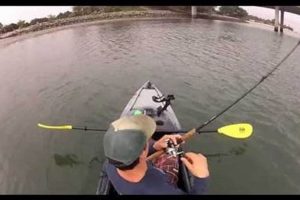
This pursuit involves angling for smallmouth bass from a kayak. It combines the tranquility and close-to-the-water perspective of kayak angling with the challenge and excitement of pursuing this popular game fish. The smaller size and maneuverability of a kayak allows access to shallow waters, river systems, and other locations often inaccessible to larger motorized boats, providing a unique angling experience.
This method offers numerous advantages. The quiet approach afforded by paddling minimizes disturbance to the fish, potentially increasing catch rates. The elevated vantage point from a kayak provides improved visibility for spotting fish and structure. Furthermore, this approach is environmentally friendly, promoting low-impact interaction with natural waterways. Historically, kayaks have been used for fishing for centuries by various cultures. Modern advancements in kayak design and fishing tackle now offer anglers specialized equipment tailored specifically for this activity.
The following sections will explore various aspects of this activity, including recommended equipment, effective techniques, ideal locations, and responsible fishing practices.
Tips for Successful Smallmouth Bass Fishing from a Kayak
Optimizing the kayak fishing experience requires careful consideration of several key factors. The following tips provide guidance for enhancing success and overall enjoyment on the water.
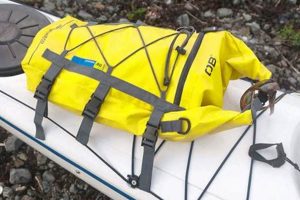
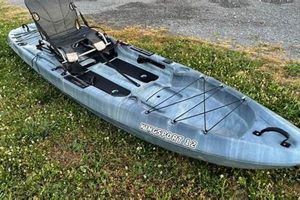
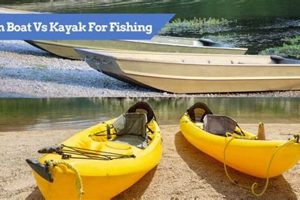
Tip 1: Choose the Right Kayak: Select a kayak designed for stability and fishing, such as a sit-on-top or wide-bodied sit-inside model. Consider features like rod holders, storage compartments, and anchor systems.
Tip 2: Utilize Lightweight and Versatile Tackle: Shorter rods and reels spooled with lighter line are generally preferred for maneuverability within the confines of a kayak. Focus on lures and techniques suitable for smallmouth bass in the targeted waters.
Tip 3: Master Kayak Positioning and Control: Practice paddling and maneuvering the kayak efficiently. Learn to position the kayak upstream or upwind of target areas for optimal casting angles.
Tip 4: Focus on Shallow Water Structure: Smallmouth bass often inhabit areas with rocks, submerged logs, weed beds, and drop-offs. Target these areas with appropriate lures and presentations.
Tip 5: Employ Stealth Tactics: Minimize noise and movement within the kayak to avoid spooking fish. Approach target areas quietly and make precise casts.
Tip 6: Prioritize Safety: Always wear a personal flotation device (PFD) and carry essential safety equipment, including a whistle, signaling device, and first-aid kit. Check weather conditions before venturing out and be aware of potential hazards on the water.
Tip 7: Practice Catch and Release Techniques: Handle fish gently and minimize their time out of the water. Use appropriate hooks and tools for quick and efficient release to ensure the conservation of this valuable species.
By following these tips, anglers can increase their chances of a successful and enjoyable experience on the water, while also contributing to responsible fishing practices.
These techniques and considerations provide a solid foundation for any angler looking to enhance their kayak fishing pursuits.
1. Stable Kayak Platform

A stable kayak platform is paramount for successful smallmouth bass fishing. The inherent instability of a kayak, amplified by the movements involved in casting, retrieving, and landing fish, necessitates a platform that prioritizes stability. A stable kayak allows anglers to focus on fishing techniques rather than constantly correcting balance, ultimately increasing casting accuracy, lure presentation, and hookset effectiveness. For instance, when battling a strong smallmouth near submerged structure, a stable kayak provides the leverage and control necessary to prevent line breakage or the fish escaping into cover. Conversely, an unstable platform can compromise these efforts, leading to lost opportunities and frustration.
Several factors contribute to kayak stability. Hull design plays a critical role; wider, flatter hulls generally offer greater stability than narrower, V-shaped designs. Weight capacity and distribution also influence stability. Exceeding the kayak’s recommended weight limit or improperly distributing gear can create instability. Furthermore, the angler’s center of gravity plays a significant role. Maintaining a low center of gravity and avoiding sudden movements enhances stability. Consider, for example, the difference between standing to cast in a narrow kayak versus remaining seated in a wider, more stable platform. The latter demonstrably reduces the risk of capsizing, particularly in challenging conditions like wind or current.
Choosing a stable kayak platform is a crucial investment for anglers pursuing smallmouth bass from a kayak. This selection directly impacts not only fishing success but also overall safety and enjoyment on the water. Prioritizing stability in kayak selection facilitates improved angling performance and contributes to a more confident and controlled experience. This understanding empowers anglers to select the appropriate vessel for their needs and maximize their potential on the water.
2. Appropriate Tackle Selection

Appropriate tackle selection significantly influences success in kayak smallmouth fishing. The confined space and unique demands of this angling method necessitate specialized equipment choices. Optimized tackle enhances casting accuracy, lure presentation, and fish-fighting capabilities, maximizing angling effectiveness.
- Rods and Reels
Shorter, lighter rods (6-7 feet) paired with spinning reels offer maneuverability within the kayak. Medium-power rods with fast action tips provide sensitivity for detecting subtle bites and sufficient backbone for setting hooks and fighting strong fish. Baitcasting reels, though requiring more expertise, provide greater casting distance and control in windy conditions. Spinning reels, however, are generally easier to manage for beginners.
- Fishing Line
Line choice depends on fishing conditions and target areas. Lighter lines (6-10 lb test fluorocarbon or monofilament) offer better casting distance and sensitivity in clear water. Heavier lines (12-15 lb test) become necessary in heavier cover or when targeting larger fish. Braided lines, while strong and sensitive, lack abrasion resistance and may require a fluorocarbon leader in rocky environments.
- Lures and Baits
Effective lures for smallmouth bass include topwater baits, crankbaits, spinnerbaits, jigs, and soft plastic lures. Lure selection should consider water clarity, depth, and prevalent forage. Matching lure size and color to the local forage often increases strike rates. For instance, smaller finesse worms and jigs might prove more effective in clear, shallow water, while larger crankbaits or spinnerbaits might be better suited for deeper, murky water.
- Terminal Tackle
Essential terminal tackle includes hooks, weights, swivels, and leader material. Hook size should match the chosen lure and target fish size. Weights, such as bullet weights or drop-shot weights, adjust lure depth and presentation. Swivels prevent line twist, particularly when using spinning lures. Fluorocarbon leader material, due to its low visibility and abrasion resistance, often improves catch rates, especially in clear water scenarios.
The synergy between these tackle components contributes significantly to successful kayak smallmouth fishing. Careful selection based on specific conditions and target areas empowers anglers to maximize their chances of success. Understanding the nuances of each tackle component and its role in the overall fishing system enhances angling effectiveness and contributes to a more rewarding experience on the water.
3. Effective Lure Presentation

Effective lure presentation is a cornerstone of successful kayak smallmouth fishing. The ability to present lures naturally and enticingly significantly influences strike rates. Because kayaks offer a stealthy approach and close proximity to the water, precise lure presentation becomes even more critical. A well-presented lure mimics the movements of natural prey, triggering predatory instincts and eliciting strikes from otherwise wary smallmouth bass.
- Accuracy and Placement
Accurate casts place lures in prime locations, such as near submerged structures, along weed lines, or under overhanging branches, where smallmouth bass often ambush prey. Kayak anglers benefit from the maneuverability of their vessels to position themselves for optimal casting angles. For instance, a precise cast near a submerged log allows a lure to drift naturally along the cover, increasing the likelihood of a strike. In contrast, an inaccurate cast that lands far from the target area decreases the chances of attracting fish.
- Retrieve Techniques
Varying retrieve techniques, such as slow rolls, twitches, and pauses, impart lifelike action to lures, simulating the movements of injured baitfish or other prey. Understanding the nuances of each retrieve and its effectiveness under different conditions is crucial. A slow, steady retrieve might prove effective in colder water, while a more aggressive retrieve with erratic pauses might trigger strikes in warmer water. Adapting retrieve techniques based on water temperature, clarity, and fish behavior maximizes lure effectiveness.
- Depth Control
Controlling lure depth is paramount for targeting smallmouth bass at different levels in the water column. Adjusting lure weight, line type, and retrieve speed allows anglers to present lures at the desired depth. For example, using a heavier jig allows anglers to probe deeper water near drop-offs, while a lighter weightless worm rigged Texas-style can be effectively fished in shallow, weedy areas. Understanding how these factors interact allows for precise depth control and targeted presentation.
- Natural Presentation
The goal of effective lure presentation is to mimic the natural movements of prey, avoiding unnatural or erratic actions that might deter fish. Smooth, controlled retrieves, subtle twitches, and lifelike pauses create the illusion of vulnerable prey, increasing the likelihood of a strike. For example, allowing a topwater lure to sit motionless for a few seconds after a splashdown can entice a following smallmouth to commit to the strike. Conversely, a hurried or erratic retrieve might appear unnatural and deter wary fish.
These facets of effective lure presentation work synergistically to maximize angling success in kayak smallmouth fishing. Mastering these techniques allows anglers to exploit the unique advantages of kayak fishing and consistently entice strikes from even the most discerning smallmouth bass. The quiet approach and close proximity afforded by kayaks amplify the importance of precise and natural lure presentation, making it a critical skill for any serious kayak angler.
4. Strategic Location Targeting
Strategic location targeting is paramount in kayak smallmouth fishing. Success hinges on understanding smallmouth bass behavior and habitat preferences. Targeting specific locations likely to hold fish maximizes angling efficiency and increases catch rates. Smallmouth bass exhibit predictable behaviors influenced by environmental factors such as water temperature, oxygen levels, and prey availability. Knowledge of these factors informs location choices. For instance, during warmer months, smallmouth often seek cooler, deeper water near drop-offs or springs. Conversely, in cooler seasons, they may concentrate in shallower areas with ample sunlight and cover.
Several key locations consistently attract smallmouth bass. Rocky shorelines, points, and submerged structures like logs, rocks, and weed beds provide ambush points and shelter. Current breaks, eddies, and seams created by converging currents offer feeding opportunities where baitfish and other prey concentrate. Inflowing streams and tributaries introduce cooler, oxygenated water, often attracting smallmouth, especially during summer. Understanding the dynamics of these locations and how they interact with environmental factors enhances location selection. Consider a river system where a rocky point intersects with a current seam. This confluence of structure and current creates a prime feeding zone where smallmouth are likely to ambush prey. Targeting such high-percentage locations significantly increases the probability of encountering fish.
Effective location targeting optimizes kayak fishing efforts. By understanding smallmouth behavior and habitat preferences, anglers can focus their efforts on the most productive areas. This strategic approach conserves time and energy, leading to a more efficient and rewarding fishing experience. Leveraging the maneuverability of kayaks allows anglers to access hard-to-reach areas often inaccessible to larger boats, further amplifying the importance of strategic location selection. The combination of species-specific knowledge and kayak maneuverability empowers anglers to consistently locate and target prime smallmouth bass habitats, maximizing their chances of success.
5. Stealthy Approach Techniques

Stealthy approach techniques are essential for successful kayak smallmouth fishing. Smallmouth bass are easily spooked, particularly in clear, shallow water environments often targeted by kayak anglers. Noise and disturbances readily transmit through the water, alerting fish and diminishing catch rates. A stealthy approach minimizes these disturbances, maximizing opportunities for close-range presentations and increasing the likelihood of hooking wary fish. Consider the scenario of a kayak angler paddling aggressively toward a promising shoreline. The resulting splashing and vibrations warn fish of the approaching angler, causing them to scatter and seek cover. Conversely, a quiet, controlled approach allows the angler to reach casting distance undetected, significantly improving the chances of a successful presentation.
Several techniques contribute to a stealthy approach. Minimizing paddle strokes and using a slow, deliberate paddling cadence reduces noise and surface disturbance. Drifting with the current or wind allows for near-silent movement, enabling close-range presentations without alarming fish. Avoiding sudden movements or noises within the kayak further minimizes disturbance. For example, dropping tackle boxes or shifting weight abruptly can create vibrations that transmit through the water and spook fish. Maintaining a low profile in the kayak also reduces visibility, making the angler less conspicuous to fish. This is particularly important in shallow, clear water where fish have a greater visual range. Using a kayak with a muted color scheme that blends with the environment further enhances stealth.
The practical significance of a stealthy approach lies in its direct impact on fishing success. By minimizing disturbances, anglers maintain an element of surprise, increasing their chances of presenting lures to unsuspecting fish. This is particularly crucial when targeting pressured fish in heavily fished waters. Mastering stealthy approach techniques empowers kayak anglers to effectively exploit the inherent advantages of their vesselsmaneuverability and close-to-the-water perspectiveultimately leading to more consistent and rewarding fishing experiences. Challenges may arise in windy conditions or when navigating complex waterways, necessitating adjustments in approach strategies to maintain stealth while ensuring safety and efficient boat control.
6. Seasonal Pattern Awareness
Seasonal pattern awareness is fundamental to successful kayak smallmouth fishing. Smallmouth bass behavior and habitat preferences shift throughout the year in response to changing water temperatures, prey availability, and spawning cycles. Understanding these seasonal patterns allows anglers to adapt their approach, target specific locations, and select appropriate lures and presentations, maximizing their chances of success. Ignoring seasonal influences can lead to unproductive fishing trips, while attuned anglers can consistently locate and entice fish throughout the year.
- Spring
Spring marks the post-spawn period for smallmouth bass. As water temperatures rise, fish move shallower to feed and regain energy after spawning. Target shallow bays, flats, and rocky areas near spawning grounds. Effective lures include crankbaits, spinnerbaits, and jerkbaits that mimic baitfish activity. The increased activity levels of smallmouth during spring offer excellent opportunities for kayak anglers to capitalize on aggressive feeding behavior.
- Summer
Summer presents unique challenges as smallmouth seek thermal refuge in deeper, cooler water. Target drop-offs, ledges, and shaded areas near deeper water. Deep-diving crankbaits, jigs, and plastic worms fished near the bottom can be effective. Kayak anglers benefit from their ability to access shallower, shaded areas often inaccessible to larger boats, providing an advantage during the summer heat.
- Fall
Fall brings a renewed period of active feeding as smallmouth prepare for winter. Fish move shallower again, focusing on baitfish schooling near creek mouths and points. Crankbaits, spinnerbaits, and topwater lures can be highly effective. Kayak anglers can exploit the cooler temperatures and increased fish activity to target shallow areas with aggressive presentations.
- Winter
Winter finds smallmouth in deeper water, often near the bottom. Slow presentations with jigs, plastic worms, and blade baits are effective. While kayak fishing can be challenging in cold weather, anglers willing to brave the elements can find success by targeting deep holes and channels where smallmouth concentrate.
By aligning fishing strategies with seasonal patterns, kayak anglers maximize their chances of success year-round. Understanding the cyclical nature of smallmouth behavior and habitat preferences empowers anglers to adapt their techniques, target specific areas, and select appropriate tackle, resulting in more consistent catches and a deeper understanding of the interplay between fish behavior and the aquatic environment. This awareness translates into a more informed and ultimately more rewarding angling experience.
7. Responsible Fishing Practices
Responsible fishing practices are integral to the sustainability of kayak smallmouth fishing. This approach ensures the health and longevity of fish populations and the preservation of aquatic ecosystems. Kayak anglers, due to their close interaction with the environment, bear a particular responsibility for minimizing their impact. These practices extend beyond catch-and-release principles to encompass a broader consideration of environmental stewardship. For instance, discarding fishing line improperly can entangle wildlife, while disturbing nesting areas can disrupt breeding cycles. The cumulative effect of such actions, even seemingly minor, can significantly degrade aquatic habitats.
Several key practices characterize responsible kayak smallmouth fishing. Proper catch-and-release techniques, including the use of barbless hooks and minimizing handling time, reduce stress on fish and increase post-release survival rates. Respecting size and bag limits helps maintain healthy population structures. Avoiding fishing in closed areas or during sensitive periods, such as spawning seasons, protects vulnerable fish populations. Minimizing disturbances to aquatic vegetation and habitats preserves the ecological integrity of waterways. Packing out all trash and fishing line prevents pollution and protects wildlife. For example, using a reusable water bottle and carrying a small trash bag can significantly reduce the accumulation of plastic waste in and around waterways. Furthermore, educating fellow anglers about responsible fishing practices promotes a culture of conservation and reinforces the importance of environmental stewardship.
The practical significance of responsible fishing practices lies in ensuring the future of kayak smallmouth fishing. These actions contribute to the long-term health and abundance of fish populations and the preservation of aquatic ecosystems. The cumulative impact of individual actions, multiplied across the angling community, underscores the importance of adopting a conservation-minded approach. Challenges may include balancing angling enjoyment with environmental protection and addressing issues such as invasive species or habitat degradation. However, by prioritizing responsible fishing practices, kayak anglers can actively contribute to the sustainability of this cherished recreational activity and ensure its viability for future generations.
Frequently Asked Questions
This section addresses common inquiries regarding kayak smallmouth fishing, providing concise and informative responses to enhance understanding and address potential misconceptions.
Question 1: What are the advantages of fishing for smallmouth bass from a kayak?
Kayaks offer unparalleled access to shallow, hard-to-reach areas often inaccessible to larger boats. Their quiet operation minimizes disturbance to fish, enhancing stealth and potentially increasing catch rates. The elevated perspective from a kayak improves visibility for spotting fish and structure. Furthermore, kayak fishing promotes a low-impact, environmentally friendly approach to angling.
Question 2: What type of kayak is best suited for smallmouth fishing?
Sit-on-top kayaks are generally preferred for their stability, ease of entry and exit, and self-bailing design. Wider, more stable hulls provide a secure platform for casting and fighting fish. Key features to consider include rod holders, storage compartments, and anchor systems. Sit-inside kayaks can also be suitable, particularly in colder climates, but require greater consideration of stability and maneuverability.
Question 3: What essential gear is required for kayak smallmouth fishing?
Essential gear includes a personal flotation device (PFD), paddle, appropriate fishing rods and reels, a selection of lures and baits, fishing line, terminal tackle, and basic safety equipment such as a whistle, signaling device, and first-aid kit. Additional accessories might include an anchor, rod leash, and fish finder.
Question 4: Where are the best places to find smallmouth bass from a kayak?
Prime locations include rocky shorelines, points, submerged logs and rocks, weed beds, drop-offs, current breaks, eddies, and inflowing streams or tributaries. Focus on areas offering a combination of cover, current, and access to deeper water.
Question 5: What are some effective techniques for catching smallmouth bass from a kayak?
Effective techniques include casting accurately to target areas, varying retrieve speeds and actions to mimic natural prey, controlling lure depth to match fish location, and maintaining a stealthy approach to avoid spooking fish. Adapting techniques to seasonal patterns and prevailing conditions is crucial.
Question 6: How can anglers contribute to the conservation of smallmouth bass populations?
Practicing catch and release with proper handling techniques minimizes stress on fish and increases post-release survival. Using barbless hooks, minimizing handling time, and keeping fish in the water as much as possible are crucial. Adhering to size and bag limits, respecting closed areas and seasons, and minimizing environmental impact further contribute to conservation efforts.
Understanding these key aspects of kayak smallmouth fishing enhances angling effectiveness and contributes to a more rewarding and sustainable experience. These insights equip anglers to make informed decisions regarding equipment, location selection, and fishing techniques.
The following section delves further into advanced techniques for maximizing kayak smallmouth fishing success. Building upon the foundational knowledge presented here, the advanced section explores specialized tactics and strategies for experienced anglers seeking to refine their skills and elevate their fishing prowess.
Kayak Smallmouth Fishing
This exploration of kayak smallmouth fishing has highlighted key elements crucial for success. From the selection of a stable kayak platform and appropriate tackle to the mastery of effective lure presentation and stealthy approach techniques, each facet contributes significantly to the overall angling experience. Understanding seasonal patterns, targeting strategic locations, and adhering to responsible fishing practices further enhance angling effectiveness and ensure the sustainability of this pursuit. The synergy between these elements empowers anglers to consistently locate and entice smallmouth bass while minimizing environmental impact.
Kayak smallmouth fishing offers a unique and rewarding connection with the aquatic environment. The challenges inherent in this pursuit, combined with the opportunity for close-range interaction with a prized game fish, create an engaging and dynamic angling experience. Continued learning, adaptation, and a commitment to conservation will ensure the enduring appeal and sustainability of kayak smallmouth fishing for generations to come. The pursuit represents not merely a recreational activity, but an opportunity to engage with nature, refine angling skills, and contribute to the preservation of aquatic ecosystems.