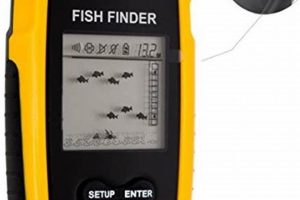
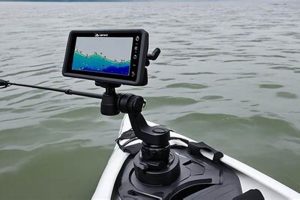
A compact sonar device designed for kayak anglers helps locate fish and underwater structures. These units typically integrate seamlessly with kayak hulls or can be mounted temporarily, offering anglers crucial information about water depth, bottom contours, and fish presence, enhancing their fishing experience.
Access to real-time underwater data provides a significant advantage, allowing anglers to make informed decisions about where to cast their lines. This technology contributes to increased fishing success and efficient use of time on the water. Historically, kayak fishing relied heavily on guesswork and experience. The development of portable and affordable sonar units has revolutionized the sport, making it more accessible and productive for anglers of all skill levels.
This discussion will further explore specific features, popular models, installation techniques, and effective utilization strategies associated with these devices. A deeper understanding of these topics will empower anglers to select the right equipment and maximize their fishing potential.
Tips for Effective Sonar Use in Kayak Fishing
Maximizing the effectiveness of sonar technology requires a clear understanding of its capabilities and proper application. The following tips provide valuable guidance for optimizing sonar use in a kayak fishing environment.
Tip 1: Transducer Placement is Key: Optimal transducer placement ensures accurate readings. Mounting the transducer too low can create turbulence interference, while placing it too high may limit bottom tracking in shallow water. Experimentation and adjustment are crucial for each kayak setup.
Tip 2: Understand Sonar Settings: Familiarization with sensitivity, frequency, and other settings is essential. High sensitivity detects smaller objects and fish, but can also increase clutter. Lower frequencies penetrate deeper water, while higher frequencies provide more detail in shallower areas.
Tip 3: Interpret the Display: Learning to interpret the sonar display accurately takes practice. Distinguishing between fish, vegetation, and bottom structure requires careful observation and understanding of how these elements appear on the screen.
Tip 4: Utilize Waypoints Effectively: Marking productive fishing spots with waypoints allows for easy return to promising areas. This feature is particularly valuable in large bodies of water or when fishing unfamiliar locations.
Tip 5: Consider Water Conditions: Water clarity, temperature, and current can influence sonar performance. Adjust settings and interpretation strategies accordingly to maintain accuracy and effectiveness.
Tip 6: Battery Management: Sonar units consume battery power. Carrying spare batteries or utilizing a kayak-specific power system ensures uninterrupted operation throughout the fishing trip.
Tip 7: Regular Maintenance: Keeping the transducer clean and free of debris ensures optimal performance. Inspecting cables and connections regularly helps prevent malfunctions.
By implementing these strategies, anglers can significantly improve their ability to locate fish, understand underwater terrain, and ultimately enhance their fishing success. These skills contribute to a more rewarding and productive experience on the water.
The following section will offer a concluding perspective on the overall impact of sonar technology on modern kayak fishing.
1. Compatibility

Compatibility between an ascend kayak and a fish finder is paramount for seamless integration and optimal performance. Selecting a compatible fish finder ensures proper functionality and avoids potential issues with installation, power supply, and data transfer. Understanding the various facets of compatibility empowers informed decisions and maximizes the benefits of using a fish finder on an ascend kayak.
- Transducer Compatibility:
Ascend kayaks often feature specific mounting locations or configurations for transducers. Ensuring the chosen fish finder’s transducer is compatible with the kayak’s design is essential. Some transducers may require specific mounting hardware or adapters for secure and effective installation. For example, a kayak with a scupper hole mount may require a transducer specifically designed for that setup. Incompatible transducers can lead to poor signal quality or difficulty in securing the transducer properly.
- Power Compatibility:
Fish finders require a stable power supply. Verifying the fish finder’s power requirements align with the kayak’s electrical system (if equipped) or choosing a suitable battery setup is essential. Some kayaks offer pre-wired power connections, while others require independent battery solutions. Using an incompatible power source can damage the fish finder or lead to inconsistent performance. For instance, a 12V fish finder requires a 12V power supply. Attempting to use a different voltage could result in malfunction.
- Display Mounting Compatibility:
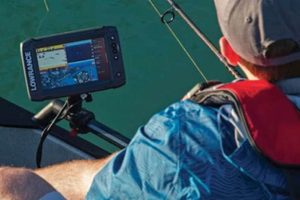
Secure and accessible display mounting is critical for convenient viewing while kayaking. Considering the available space and mounting options on the kayak is essential when selecting a fish finder. Some kayaks offer dedicated display mounts, while others require aftermarket solutions. A compatible display mount ensures clear visibility and minimizes interference with paddling. A large display might not be suitable for a kayak with limited mounting space.
- Software Compatibility (if applicable):
Some fish finders offer features like GPS mapping and data sharing that may require software compatibility with other devices or applications. Ensuring compatibility between the fish finder’s software and any intended connected devices is necessary for full functionality. For example, if intending to use mapping software on a smartphone or tablet, confirming compatibility with the chosen fish finder is vital.
Careful consideration of these compatibility factors ensures a well-integrated and functional fish finder setup on an ascend kayak. Addressing these aspects optimizes performance and contributes to a more productive and enjoyable fishing experience. Neglecting compatibility can lead to frustration and suboptimal fish finder performance, hindering the angler’s ability to locate fish effectively.
2. Transducer Placement

Optimal transducer placement is crucial for maximizing the effectiveness of an ascend kayak fish finder. Incorrect placement can lead to inaccurate readings, interference, and reduced sonar performance. Understanding the factors influencing transducer placement ensures accurate depth readings, clear fish identification, and efficient use of sonar technology.
- Inside Hull Mounting:
This method involves mounting the transducer inside the kayak’s hull, typically using epoxy or a specialized mounting bracket. Inside hull mounting offers protection from impact and minimizes drag. However, it can slightly reduce sonar sensitivity and may not be suitable for all hull materials or designs. This approach is often preferred for kayaks used primarily in calm waters.
- Transom Mounting:
Transom mounting places the transducer on the kayak’s stern. This method is generally easier to install and provides good performance in various water conditions. However, transom-mounted transducers are more exposed to potential damage and can create turbulence at higher speeds, affecting sonar readings. This option is often chosen for its simplicity and versatility.
- Scupper Hole Mounting:
Many ascend kayaks feature scupper holes, which can be utilized for transducer mounting using specialized scupper hole transducers or adapters. This method offers a balance between protection and performance. It’s important to ensure a proper seal to prevent water leakage into the kayak’s hull. This option is a good compromise for anglers seeking both performance and convenient installation.
- Trolling Motor Mounting:
For kayaks equipped with trolling motors, mounting the transducer on the motor provides an unobstructed view of the water. This setup is particularly effective for trolling and eliminates interference from the kayak’s hull. However, it requires a compatible trolling motor and transducer mount. This specialized approach caters to anglers who utilize trolling motors regularly.
Careful consideration of these transducer placement options is essential for achieving optimal fish finder performance on an ascend kayak. The chosen method impacts data accuracy, ease of installation, and overall user experience. Selecting the correct placement ensures anglers receive reliable information about water depth, fish location, and bottom structure, ultimately enhancing fishing success.
3. Power Management

Effective power management is essential for maximizing the operational duration of fish finders on ascend kayaks. Fish finders, while offering valuable underwater insights, consume electrical power. Understanding power consumption characteristics and implementing appropriate management strategies ensures uninterrupted operation throughout the fishing trip, preventing premature battery depletion and maximizing time on the water.
- Battery Selection:
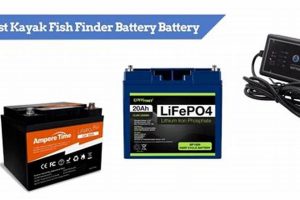
Selecting the correct battery type and capacity is fundamental. Deep-cycle marine batteries are designed for sustained power delivery and are ideal for powering fish finders. Battery capacity, measured in ampere-hours (Ah), determines the duration of operation. Higher capacity batteries provide longer run times but may be heavier. Lithium-ion batteries offer higher energy density and lighter weight but are typically more expensive. Choosing the appropriate battery balances runtime requirements with weight and cost considerations. A 12V 10Ah deep-cycle battery might provide sufficient power for a day of fishing, while a larger capacity battery would be necessary for extended trips or powering multiple devices.
- Power Consumption Optimization:
Fish finder power consumption varies based on settings and usage. Adjusting screen brightness, sonar sensitivity, and frequency can significantly impact power draw. Reducing screen brightness when ample ambient light is available conserves power. Optimizing sonar settings for specific fishing conditions minimizes unnecessary energy expenditure. For example, reducing sonar sensitivity in shallow, clear water reduces power consumption without compromising performance.
- Power Saving Modes:
Many fish finders offer power-saving modes or automatic shut-off features. Utilizing these features extends battery life, particularly during periods of inactivity. Power-saving modes reduce screen refresh rates and sonar output, conserving energy while maintaining basic functionality. Automatic shut-off features prevent accidental battery drain when the fish finder is not in use. These features contribute significantly to extending operational time.
- Monitoring Battery Level:
Regularly monitoring battery level is essential for avoiding unexpected power loss. Most fish finders display battery status indicators. Understanding the indicator’s behavior and remaining runtime estimations allows for proactive power management decisions. Carrying a spare battery or having a charging solution available ensures continuous operation. Closely monitoring battery status prevents disruptions during critical fishing moments.
Effective power management ensures the ascend kayak fish finder remains operational throughout the fishing trip, maximizing its utility and contributing to a more productive and enjoyable experience. By understanding power consumption characteristics and implementing appropriate strategies, anglers can focus on fishing without concerns about battery life, ultimately increasing the likelihood of success.
4. Display Readability
Display readability is a critical factor influencing the effectiveness of ascend kayak fish finders. A clear, easily interpretable display allows anglers to quickly and accurately assess underwater conditions, identify fish, and navigate effectively. Poor display readability hinders these activities, reducing the fish finder’s utility and potentially impacting fishing success. The following facets highlight the key components of display readability in the context of ascend kayak fishing.
- Screen Size and Resolution:
Larger screens with higher resolutions provide more detailed information and are easier to view, particularly in bright sunlight or challenging weather conditions. A small, low-resolution screen can make it difficult to distinguish between fish, structure, and bottom contours. For example, a 5-inch screen with a resolution of 800×480 pixels offers significantly better clarity and detail than a 3-inch screen with a resolution of 320×240 pixels. The increased clarity allows for more precise interpretation of sonar data.
- Screen Brightness and Contrast:
Adequate screen brightness ensures visibility in direct sunlight, while appropriate contrast enhances the distinction between different elements displayed on the screen. A dim screen or poor contrast makes it challenging to interpret sonar data effectively, particularly in bright conditions. High-brightness screens with adjustable contrast settings allow anglers to optimize visibility based on ambient lighting. For instance, a fish finder with a transflective display utilizes ambient light to enhance visibility in bright conditions.
- Color Palette and Data Representation:
The choice of color palettes and data representation methods significantly impacts readability. High-contrast color schemes and clear icons facilitate quick interpretation of information. Cluttered displays or poorly chosen color combinations can make it difficult to identify key features. Fish finders often offer customizable color palettes and data display options, allowing anglers to tailor the presentation to their preferences and fishing conditions. A color scheme that clearly differentiates between fish, structure, and bottom provides immediate, actionable information.
- Viewing Angle and Screen Coating:
Wide viewing angles ensure the display remains readable from various positions on the kayak. Anti-glare screen coatings minimize reflections and improve visibility in bright sunlight. Limited viewing angles or highly reflective screens force anglers into uncomfortable positions to view the display effectively, hindering kayak control and fishing efficiency. A fish finder with a wide viewing angle and anti-glare coating maintains readability even when the angler is not directly in front of the display.
These facets collectively determine the overall readability of an ascend kayak fish finder’s display. Optimal readability enhances the angler’s ability to interpret sonar data efficiently, locate fish accurately, and navigate effectively. Prioritizing display readability when selecting a fish finder significantly improves the overall kayak fishing experience and contributes to increased success on the water. A clear, easily readable display empowers anglers to make informed decisions based on real-time underwater information, maximizing their chances of a successful catch.
5. Target Identification
Target identification is a crucial skill for effectively utilizing ascend kayak fish finders. Accurate differentiation between fish, vegetation, and bottom structure allows anglers to focus their efforts on promising areas, maximizing fishing efficiency. Misinterpreting sonar data leads to wasted time and reduced catch rates. Understanding how various factors influence target identification empowers anglers to interpret sonar readings accurately and make informed decisions.
- Fish Arches:
Fish typically appear as arches or inverted “V” shapes on a fish finder display. The shape and clarity of the arch depend on the fish’s size, orientation, and movement relative to the transducer. A clear, well-defined arch typically indicates a fish directly beneath the kayak, while a fainter, elongated arch may suggest a fish moving through the sonar cone. Recognizing these variations allows anglers to estimate fish size and location accurately. For example, a thick arch might indicate a larger fish, while a thin, fleeting arch could represent a smaller fish or baitfish.
- Vegetation and Structure:
Vegetation and underwater structures like rocks, logs, and debris appear as irregular shapes or clusters on the sonar display. Distinguishing these features from fish requires careful observation and consideration of the surrounding environment. Vegetation often appears as scattered or dense clumps, while structures tend to have more defined edges and consistent shapes. Understanding the typical sonar signatures of common underwater features in a given area aids in accurate target identification. For instance, in a weedy area, scattered irregular shapes likely represent vegetation, while a distinct, solid object might indicate a submerged log.
- Bottom Contour and Hardness:
The fish finder’s ability to depict bottom contour and hardness provides valuable context for target identification. Changes in depth, transitions between hard and soft bottoms, and the presence of drop-offs or humps influence fish behavior and habitat preferences. Analyzing bottom characteristics helps anglers identify potential fish-holding areas. For example, a hard bottom area adjacent to a drop-off often attracts fish seeking shelter and foraging opportunities. The fish finder’s display might show a distinct change in bottom color or texture, indicating a transition from a soft, muddy bottom to a hard, rocky area.
- Sonar Settings and Interference:
Fish finder settings like sensitivity, frequency, and noise rejection influence target identification. High sensitivity increases the detection of smaller objects but can also introduce clutter and make it challenging to distinguish individual targets. Adjusting these settings based on water conditions and target species improves accuracy. External factors like water turbulence and electrical interference can also affect sonar readings, potentially obscuring targets or creating false echoes. Understanding how these factors impact the display helps anglers interpret data correctly. For example, in turbulent water, reducing sensitivity can minimize the display of surface clutter and improve the visibility of fish near the bottom.
Mastering target identification significantly enhances the effectiveness of ascend kayak fish finders. Accurate interpretation of sonar data allows anglers to pinpoint fish locations, differentiate them from other underwater features, and ultimately improve their fishing success. By considering fish behavior, environmental factors, and sonar settings, anglers can unlock the full potential of their fish finders and make the most of their time on the water. Continuously refining target identification skills through practice and observation further enhances the angler’s ability to read and interpret sonar data effectively, ultimately leading to a more rewarding and productive fishing experience.
6. GPS Integration

GPS integration significantly enhances the capabilities of ascend kayak fish finders, transforming them into comprehensive navigation and fish-finding tools. The ability to pinpoint location, track movement, and mark waypoints adds a crucial layer of information, optimizing fishing efficiency and safety on the water. This integration streamlines navigation, allowing anglers to focus on fishing rather than constantly referencing separate navigational devices.
- Waypoint Marking:
GPS integration allows anglers to mark waypoints at productive fishing locations, facilitating easy return to these spots. This feature is particularly valuable when fishing large bodies of water or unfamiliar areas. Marking waypoints for underwater structures, drop-offs, or areas with high fish activity allows anglers to revisit these locations without relying solely on memory or visual landmarks. For example, marking a waypoint at a submerged reef allows for precise return trips to this productive fishing spot.
- Navigation and Route Planning:
GPS integration enables navigation to specific coordinates or along pre-planned routes. This functionality is invaluable for exploring new areas, navigating in low-visibility conditions, or returning to launch points safely. Anglers can input coordinates for known fishing hotspots or create routes to explore promising areas systematically. For instance, using GPS to navigate to a distant cove known for holding specific target species streamlines the journey and maximizes fishing time.
- Speed and Distance Tracking:
GPS allows for accurate tracking of speed and distance traveled. This information helps anglers determine trolling speeds, estimate travel times, and monitor fishing coverage. Understanding speed and distance contributes to efficient fishing strategies and effective use of time on the water. For example, maintaining a consistent trolling speed maximizes lure presentation and attracts target species. Tracking distance covered helps anglers estimate the area explored and identify potentially productive zones.
- Mapping and Chartplotting:
Some ascend kayak fish finders with GPS integration offer mapping and chartplotting capabilities. These features provide detailed visual representations of underwater terrain, navigation channels, and other relevant information. Overlaying sonar data onto maps provides a comprehensive view of the fishing environment, enhancing situational awareness and aiding in strategic decision-making. For instance, a chartplotter displaying depth contours and navigation buoys assists in safe navigation and identification of potential fishing hotspots.
The integration of GPS with ascend kayak fish finders significantly enhances their functionality and contributes to a more informed and productive fishing experience. By combining precise location data with real-time sonar information, these integrated systems empower anglers to navigate efficiently, mark productive fishing spots, and ultimately increase their chances of success on the water. This synergy between GPS and sonar technology elevates the ascend kayak fishing experience, making it more strategic, efficient, and enjoyable.
7. User Interface
The user interface (UI) of an ascend kayak fish finder plays a critical role in the angler’s ability to effectively utilize the device and interpret the information it provides. A well-designed UI simplifies operation, allowing anglers to focus on fishing rather than struggling with complex menus or unclear data presentation. Conversely, a poorly designed UI can lead to frustration, misinterpretation of information, and reduced fishing effectiveness.
Several key elements contribute to an effective fish finder UI. Intuitive menu structures, clearly labeled icons, and logical button layouts facilitate quick access to essential functions. Customizable display options allow anglers to tailor the information presented based on their preferences and fishing conditions. For example, an angler targeting specific fish species might customize the display to highlight relevant sonar data, such as fish arches within a particular depth range. Another angler focusing on bottom structure might prioritize detailed contour mapping. The ability to quickly adjust settings like sensitivity, frequency, and zoom level without navigating complex menus significantly enhances usability. Furthermore, a responsive touchscreen interface minimizes the need for physical buttons, streamlining operation and improving durability in wet conditions. Consider a scenario where an angler needs to quickly adjust the sonar sensitivity due to changing water conditions. A well-designed UI allows for immediate access to this setting, minimizing disruption to the fishing experience. In contrast, a cumbersome UI requiring multiple menu navigations could lead to missed opportunities.
The practical significance of a well-designed UI extends beyond mere convenience. Efficient access to information and control over device settings directly impacts fishing success. Rapid interpretation of sonar data allows anglers to identify promising areas, adjust fishing techniques, and ultimately increase their catch rates. Moreover, a user-friendly interface contributes to a more enjoyable and less stressful fishing experience. Challenges related to UI design often involve balancing complexity with functionality. A UI that is overly simplistic might lack essential features, while excessive complexity can overwhelm users. Striking the right balance requires careful consideration of user needs and priorities. Ultimately, a well-designed UI integrates seamlessly with the overall fish finder experience, empowering anglers to maximize their time on the water and achieve their fishing goals.
Frequently Asked Questions
This section addresses common inquiries regarding the integration and utilization of fish finders within Ascend kayaks.
Question 1: Are all fish finders compatible with Ascend kayaks?
Not all fish finders are inherently compatible. Compatibility depends on factors like transducer mounting options, power requirements, and display mounting provisions. Consulting the Ascend kayak and fish finder specifications ensures proper integration.
Question 2: What is the recommended transducer placement for optimal performance?
Optimal transducer placement depends on the kayak’s hull design and the intended fishing environment. Common options include inside-hull mounting, transom mounting, and scupper hole mounting. Each method offers distinct advantages and disadvantages related to performance, installation complexity, and potential interference. Experimentation might be necessary to determine the most effective placement for a specific kayak and fishing style.
Question 3: How can battery life be maximized when using a fish finder on an Ascend kayak?
Battery life can be extended by selecting an appropriate battery capacity, optimizing fish finder settings (brightness, sensitivity, frequency), utilizing power-saving modes, and regularly monitoring battery level. Carrying a spare battery or employing a kayak-specific power management system ensures uninterrupted operation during extended fishing trips.
Question 4: What are the key features to consider when choosing a fish finder display for an Ascend kayak?
Key display features include screen size, resolution, brightness, contrast, viewing angle, and screen coating. Larger, high-resolution displays enhance readability in various lighting conditions. Adequate brightness and contrast improve visibility in direct sunlight. Wide viewing angles and anti-glare coatings maintain clarity from different kayak positions.
Question 5: How does one differentiate between fish, vegetation, and bottom structure on a fish finder display?
Differentiating targets involves interpreting sonar data patterns. Fish typically appear as arches, while vegetation and structure exhibit irregular shapes or clusters. Bottom contour and hardness variations provide additional context for target identification. Understanding sonar settings and potential interference sources further refines interpretation accuracy.
Question 6: What are the benefits of GPS integration with an Ascend kayak fish finder?
GPS integration enables waypoint marking, navigation, route planning, speed and distance tracking, and, in some models, mapping and chartplotting capabilities. These features enhance fishing efficiency, navigational safety, and overall situational awareness on the water.
Careful consideration of these frequently asked questions empowers informed decisions regarding fish finder selection, installation, and utilization, maximizing the benefits of this technology for Ascend kayak anglers.
The subsequent section will delve into advanced techniques for maximizing fish finder performance.
Ascend Kayak Fish Finder
Exploration of ascend kayak fish finders reveals their significant impact on angling experiences. Key considerations encompass compatibility with specific kayak models, optimal transducer placement for accurate readings, effective power management strategies, display readability in diverse conditions, accurate target identification techniques, advantages of GPS integration, and the importance of a user-friendly interface. Understanding these elements allows anglers to harness the full potential of these devices.
Ascend kayak fish finders empower anglers with enhanced underwater insights, promoting strategic decision-making and increasing fishing success. Continued exploration of advanced features and techniques promises further refinement of angling practices within the evolving landscape of kayak fishing technology.