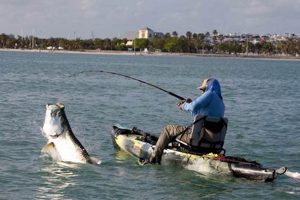
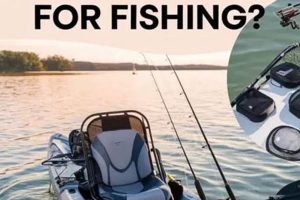
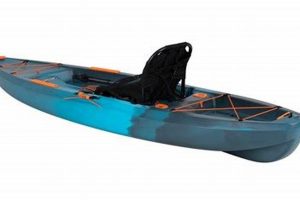
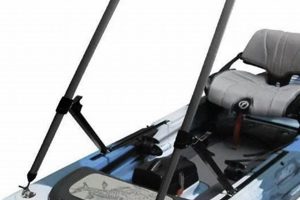
A durable, molded plastic watercraft designed for angling, typically measuring twelve feet in length, offers stability and portability for individual anglers. These vessels frequently feature specialized components such as rod holders, storage compartments, and adjustable seating, enhancing the fishing experience.
The combination of durability, manageable size, and fishing-specific features makes these kayaks a popular choice. Their relatively compact dimensions facilitate easy transport and storage, while the inherent stability of their design allows anglers to cast and reel comfortably. The inclusion of integrated accessories contributes to a more organized and efficient fishing experience. Historically, fishing from small, human-powered vessels has been a common practice. Modern materials and manufacturing techniques have allowed for the development of highly specialized and durable kayaks like these, improving both performance and accessibility for recreational anglers.
Further exploration will delve into specific aspects of these kayaks, including variations in design, material selection, and the diverse range of fishing applications they support. This will provide a more comprehensive understanding of the factors that contribute to their growing popularity in the recreational fishing community.
Tips for Utilizing a 12-Foot Fishing Kayak
Effective use of a 12-foot fishing kayak enhances angling success and overall safety on the water. These tips offer guidance for maximizing the benefits of this type of watercraft.
Tip 1: Prioritize Stability Testing: Before venturing into open water, conducting stability tests in a controlled environment, such as a calm shallow area, is crucial. This allows users to familiarize themselves with the kayak’s balance point and behavior.
Tip 2: Distribute Weight Evenly: Proper weight distribution within the vessel is essential for maintaining stability and maneuverability. Gear should be distributed evenly, avoiding concentration at either end.
Tip 3: Utilize Appropriate Safety Gear: Adhering to safety regulations involves wearing a personal flotation device (PFD) and carrying essential safety equipment, including a whistle, signaling devices, and a first-aid kit.
Tip 4: Plan Navigation Carefully: Pre-planning navigation routes, considering weather conditions and water currents, contributes significantly to a safe and efficient fishing excursion.
Tip 5: Master Paddling Techniques: Efficient paddling techniques maximize speed and minimize fatigue. Learning proper paddling strokes and body positioning is highly recommended.
Tip 6: Secure Equipment Properly: Gear should be secured to the kayak using appropriate tie-down straps or storage compartments, preventing loss or damage in the event of capsizing.
Tip 7: Respect Wildlife and the Environment: Maintaining a respectful approach to wildlife and minimizing environmental impact through proper waste disposal contributes to responsible angling practices.
Tip 8: Regularly Inspect and Maintain the Kayak: Routine inspection and maintenance of the kayak, including checking for wear and tear, ensures optimal performance and prolongs its lifespan.
Adherence to these tips contributes significantly to angler safety and promotes responsible enjoyment of the sport. A well-prepared angler can fully leverage the advantages of a 12-foot fishing kayak for a successful and rewarding experience.
The following section concludes this exploration, offering final considerations for selecting and utilizing a 12-foot fishing kayak.
1. Durability

Durability represents a critical factor in the overall value proposition of a 12-foot fishing kayak, particularly for the Lifetime brand, which often emphasizes this attribute. The ability of the kayak to withstand impacts, abrasion, and prolonged exposure to the elements directly influences its lifespan and the long-term cost of ownership. High-density polyethylene (HDPE) is commonly employed in the construction of these kayaks due to its inherent impact resistance and UV stability. This material choice contributes significantly to the kayak’s ability to endure harsh conditions frequently encountered in fishing environments, including rocky shorelines, submerged debris, and prolonged sun exposure. A durable kayak minimizes the risk of damage during transport, launch, and retrieval, reducing repair costs and ensuring more time on the water.
The practical significance of durability extends beyond simply protecting the kayak from physical damage. A robust construction contributes to user confidence, allowing anglers to navigate challenging waters and focus on the fishing experience rather than worrying about potential damage to their vessel. For instance, anglers fishing in rocky rivers or near oyster beds benefit greatly from the impact resistance of an HDPE kayak. Furthermore, the UV resistance of the material prevents degradation from prolonged sun exposure, preserving the kayak’s structural integrity and color over time, thus retaining its value and aesthetic appeal. This resistance to environmental factors contributes significantly to the longevity of the kayak, making it a worthwhile investment for frequent anglers.
Ultimately, durability plays a pivotal role in the long-term viability of a fishing kayak. The inherent resilience of materials like HDPE, coupled with thoughtful design and construction, translates to a product capable of withstanding the rigors of regular use in diverse fishing environments. This robustness not only protects the investment but also enhances the overall user experience by providing a stable and reliable platform for pursuing angling adventures. The sustained performance and reduced maintenance requirements associated with a durable kayak contribute directly to its overall value and appeal within the fishing community.
2. Stability

Stability stands as a critical performance attribute in a 12-foot fishing kayak, directly influencing angler safety, comfort, and fishing effectiveness. A stable platform allows for casting, reeling, and landing fish without compromising balance, a crucial factor particularly in challenging conditions such as moving water or when larger fish are hooked. This section explores the core components contributing to kayak stability.
- Hull Design:
Hull design plays a pivotal role in determining stability. Wider hulls generally offer greater primary stability, resisting initial tipping. Flatter bottoms enhance stability on calm water, while more rounded or V-shaped hulls provide better performance in choppy conditions. The specific hull design of a Lifetime 12-foot fishing kayak often balances initial stability with maneuverability to cater to diverse fishing environments.
- Center of Gravity:
The center of gravity significantly impacts stability. Lower centers of gravity enhance stability. Proper weight distribution within the kayak is crucial, ensuring gear is evenly dispersed to maintain a low center of gravity and prevent tipping. Angler positioning also influences the center of gravity; maintaining a centered and balanced posture contributes to overall stability.
- Kayak Width and Length:
Wider kayaks provide more initial stability than narrower models, offering a greater margin of error before tipping. While longer kayaks may track better in a straight line, the 12-foot length offers a balance between stability and maneuverability, making it suitable for a range of fishing environments, from ponds and lakes to slow-moving rivers.
- Water Conditions:
While inherent kayak design influences stability, prevailing water conditions play a significant role in real-world performance. Calm, flat water presents fewer stability challenges compared to choppy or fast-moving water. Wind can also significantly impact stability, especially in kayaks with higher profiles. Understanding the limitations of a kayak’s stability in various conditions is crucial for safe operation.
The interplay of these factors determines the overall stability of a 12-foot fishing kayak. A well-designed kayak will optimize these elements to provide a balanced platform suitable for the intended fishing environment. The Lifetime brand frequently prioritizes stability in its designs, making them a popular choice for anglers seeking a secure and confident fishing experience. Matching the kayak’s stability characteristics with anticipated water conditions and fishing styles ensures optimal performance and safety on the water.
3. Portability
Portability represents a significant advantage of 12-foot fishing kayaks, particularly within the Lifetime brand, often favored for their balance of size and features. Transporting kayaks to and from fishing locations presents logistical challenges. A kayak’s portability directly impacts accessibility to diverse fishing spots. Several factors influence portability: weight, length, and the availability of transport accessories. Lighter kayaks are easier to handle, reducing strain during loading and unloading. Twelve-foot lengths strike a balance between on-the-water performance and manageable transport size. Roof racks, trailers, and kayak carts simplify transport, further enhancing portability.
Consider a fishing trip to a remote lake accessible only by a narrow, unpaved road. A heavier, longer kayak would prove cumbersome to transport under such conditions. A 12-foot kayak, particularly one of lighter construction within the Lifetime lineup, offers easier maneuverability on uneven terrain, facilitating access to otherwise challenging locations. Similarly, urban anglers limited to apartment storage benefit from the compact size of a 12-foot kayak, allowing storage in confined spaces. The portability factor thus broadens fishing opportunities, enabling access to locations constrained by terrain or storage limitations.
Enhanced portability translates to greater fishing flexibility. Anglers can readily explore diverse waterways, unburdened by complex transport logistics. This accessibility contributes to the versatility of 12-foot fishing kayaks, making them suitable for a range of fishing environments. The ease of transport encourages exploration, contributing to a more diverse and rewarding fishing experience. Choosing appropriate transport accessories further optimizes portability, reflecting the practical value of this key attribute in selecting a fishing kayak. Ultimately, portability significantly influences the overall utility and appeal of a 12-foot fishing kayak, particularly for anglers seeking access to a variety of fishing destinations.
4. Fishing Features

Specialized features distinguish fishing kayaks from recreational models. These integrated elements enhance angling efficiency and overall experience, directly impacting functionality and user satisfaction. A 12-foot fishing kayak, especially within the Lifetime brand, frequently incorporates several key fishing-specific features designed to cater to diverse angling needs.
- Rod Holders:
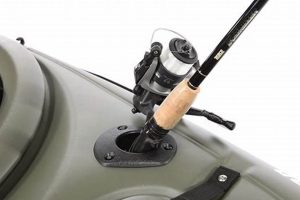
Flush-mounted or adjustable rod holders provide secure storage and quick access to fishing rods, freeing hands for paddling, baiting, and landing fish. Multiple rod holders accommodate diverse fishing techniques and allow for carrying spare rods. Consider a scenario where an angler trolls with one rod while having a second rigged for casting; integrated rod holders facilitate seamless transitions between techniques without tangled lines or misplaced equipment. This enhances efficiency and contributes to a more organized fishing experience.
- Storage Compartments:
Dedicated storage compartments, including hatches, tank wells, and dry storage areas, accommodate tackle boxes, gear, and personal items. These compartments keep essential equipment organized and protected from the elements. Imagine kayaking to a favorite fishing spot; readily accessible tackle within a dedicated compartment eliminates the need to rummage through bags, streamlining the process of rigging and re-rigging. This organized approach maximizes fishing time and minimizes disruptions.
- Paddle Keepers:
Paddle keepers secure the paddle to the kayak when not in use, preventing loss and freeing hands for fishing activities. This seemingly simple feature contributes significantly to convenience and safety. When fighting a fish, a secure paddle prevents it from drifting away, ensuring it’s readily available for regaining control of the kayak after landing the catch. This reinforces safety and prevents equipment loss.
- Anchor System:
Integrated anchor systems, often including anchor trolleys or cleats, allow anglers to maintain position in specific locations, particularly in current or wind. This proves invaluable for targeting specific structures or holding position in a productive fishing area. Consider fishing a river channel; an anchor system allows the angler to remain stationary in the desired location, maximizing fishing effectiveness. This targeted approach enhances the likelihood of success and contributes to a more controlled fishing experience.
The strategic integration of these features contributes significantly to the overall utility and appeal of a 12-foot fishing kayak, especially within the Lifetime brand. These specialized features cater to the specific needs of anglers, optimizing efficiency, organization, and overall fishing performance. The inclusion of these features transforms a basic kayak into a dedicated fishing platform, enhancing the experience and increasing the likelihood of a successful and enjoyable outing on the water.
5. Maneuverability

Maneuverability represents a critical performance characteristic in a 12-foot fishing kayak, influencing its suitability for various fishing environments and techniques. This attribute dictates how easily the kayak responds to paddle input, enabling precise navigation through complex waterways and efficient positioning for optimal fishing angles. Several factors influence a kayak’s maneuverability, including hull design, length, and water conditions. Shorter kayaks generally offer greater maneuverability than longer ones, allowing for tighter turns and quicker adjustments in direction. The 12-foot length represents a balance between maneuverability and tracking performance, making it suitable for a range of environments, from confined creeks and ponds to open lakes. Hull design also plays a significant role; a kayak with a more rounded or V-shaped hull tends to turn more easily than one with a flatter hull. Water conditions, such as current and wind, can also impact maneuverability, requiring greater paddling effort and precise control to maintain desired positioning. In the context of a Lifetime 12-foot fishing kayak, maneuverability contributes significantly to its versatility, enabling anglers to navigate diverse waterways and adapt to changing conditions effectively.
Consider navigating a narrow, winding creek overgrown with vegetation. A highly maneuverable kayak allows the angler to negotiate tight bends and avoid obstacles effectively. The ability to quickly change direction and maintain precise control is essential in such environments, maximizing fishing opportunities and ensuring safe passage. Conversely, in open water scenarios with wind or current, a kayak with moderate maneuverability, like a typical 12-foot model, allows for sufficient responsiveness to maintain course and adjust positioning for optimal fishing angles while still providing reasonable tracking performance to cover distance efficiently. The practical significance of maneuverability becomes particularly apparent when sight fishing or targeting specific structures. Precise boat control enables the angler to approach fish stealthily and position the kayak for the most effective presentation of lures or bait, directly impacting fishing success. Understanding the factors affecting maneuverability empowers anglers to choose a kayak suited to their target fishing environments and preferred techniques.
In summary, maneuverability represents a crucial element in the overall performance and suitability of a 12-foot fishing kayak. The interplay of hull design, length, and prevailing water conditions determines how easily the kayak responds to paddle input, influencing navigation, positioning, and ultimately, fishing effectiveness. The balance of maneuverability and tracking performance offered by a 12-foot kayak, frequently emphasized in Lifetime designs, makes it a versatile choice for a wide range of fishing environments and techniques. Recognizing the importance of this attribute and selecting a kayak that aligns with specific fishing needs contributes significantly to a more successful and enjoyable on-the-water experience.
6. Affordability

Affordability plays a significant role in the popularity of 12-foot fishing kayaks, particularly within the Lifetime brand. Cost considerations frequently influence purchasing decisions within the recreational fishing market. Kayak fishing, while offering numerous advantages, requires an initial investment in equipment. The relative affordability of 12-foot models compared to larger, more feature-rich kayaks opens up the sport to a wider range of participants. Budget-conscious anglers benefit from the availability of entry-level models that provide adequate functionality without excessive cost. This accessibility factor contributes to the growth of kayak fishing as a recreational activity, enabling more individuals to experience the sport without significant financial barriers. For example, a family looking to explore kayak fishing might find the cost of two high-end kayaks prohibitive. A pair of 12-foot models, offering essential features at a lower price point, allows the entire family to participate, fostering a shared outdoor experience without straining the budget. This cost-effectiveness broadens access to the sport, promoting participation across diverse demographics.
The affordability of 12-foot fishing kayaks extends beyond initial purchase price. Maintenance costs typically remain lower compared to larger, more complex kayaks. Simpler designs often translate to fewer components prone to breakage or requiring specialized maintenance. This reduces the long-term cost of ownership, making these kayaks a sustainable option for budget-minded anglers. Consider the example of an angler fishing in shallow, rocky waters. Minor hull scratches or abrasions, while aesthetically undesirable, rarely impact the functionality of a durable, roto-molded kayak. Repair costs for such minor damage remain relatively low, minimizing financial burden. This inherent durability and ease of maintenance contribute to the long-term value proposition of these kayaks.
The affordability factor associated with 12-foot fishing kayaks significantly impacts market accessibility and participation within the sport. Lower initial investment costs and reduced maintenance requirements make these kayaks a viable option for a wider range of individuals, promoting inclusivity within the fishing community. Balancing functionality with cost-effectiveness positions 12-foot models as an attractive entry point into kayak fishing, fostering growth and participation across various demographics. Understanding the affordability component enhances the overall value proposition of these kayaks, highlighting their accessibility and sustainability for both novice and experienced anglers alike.
Frequently Asked Questions
Addressing common inquiries regarding 12-foot fishing kayaks provides clarity for potential purchasers and enhances understanding of key features and considerations.
Question 1: What weight capacity can a typical 12-foot fishing kayak handle?
Weight capacity varies depending on the specific model and manufacturer, but generally ranges from 250 to 500 pounds. Exceeding the specified weight limit compromises stability and safety.
Question 2: Are these kayaks suitable for ocean use?
While some 12-foot fishing kayaks possess sufficient stability for calm coastal waters or protected bays, they are generally better suited for lakes, rivers, and ponds due to their smaller size and susceptibility to wind and waves in open ocean environments. Careful consideration of water conditions and personal experience level is crucial.
Question 3: What maintenance is required for a 12-foot fishing kayak?
Routine maintenance includes rinsing the kayak with fresh water after each use to remove salt, sand, and debris, and inspecting for damage. Periodically checking and tightening hardware, and storing the kayak out of direct sunlight contributes to its longevity.
Question 4: What safety precautions should one take when using this type of kayak?
Essential safety measures include always wearing a personal flotation device (PFD), carrying a whistle and signaling devices, informing someone of planned fishing locations and estimated return times, and checking weather forecasts before embarking on any trip. Adhering to established boating regulations and carrying a first-aid kit enhances preparedness.
Question 5: How does one choose the right paddle length for a 12-foot kayak?
Appropriate paddle length depends on factors such as torso height, kayak width, and paddling style. Consulting retailer recommendations or using online paddle sizing charts assists in selecting the correct length for optimal paddling efficiency and comfort.
Question 6: Can a 12-foot fishing kayak accommodate a trolling motor?
Some 12-foot fishing kayaks offer compatibility with trolling motors; however, checking the specific model’s specifications for motor mount compatibility and weight capacity is crucial before installation. Proper installation and adherence to manufacturer guidelines ensures safe and effective motor operation.
Careful consideration of these frequently asked questions informs purchase decisions and promotes safe and enjoyable kayak fishing experiences. Understanding weight capacity, appropriate usage environments, maintenance requirements, and essential safety precautions contributes to informed decision-making and responsible kayak operation.
This concludes the frequently asked questions section. The following section will offer concluding thoughts on selecting and utilizing a 12-foot fishing kayak.
Conclusion
Exploration of the Lifetime 12-foot fishing kayak reveals a compelling blend of practicality, affordability, and specialized functionality. Durability, derived from robust construction materials, ensures resilience against the rigors of diverse fishing environments. Stability, influenced by hull design and thoughtful weight distribution, provides a secure platform for casting, reeling, and landing fish. Portability facilitates access to a wider range of fishing locations, while integrated features such as rod holders and storage compartments enhance angling efficiency. Maneuverability allows navigation through complex waterways, maximizing access to prime fishing spots. Affordability positions these kayaks as an accessible option for anglers of varying budgets. Collectively, these attributes contribute to the widespread popularity and versatility observed within this segment of the fishing kayak market.
The Lifetime 12-foot fishing kayak presents a compelling option for anglers seeking a balanced platform for pursuing their passion. Careful consideration of individual needs, fishing styles, and target environments facilitates informed selection and maximizes the potential for rewarding on-the-water experiences. The evolving landscape of kayak fishing continues to drive innovation in design and features, promising further enhancements in performance, functionality, and overall angler experience. Ultimately, the enduring appeal of human-powered watercraft combined with specialized fishing features suggests a sustained trajectory of growth and innovation within this dynamic segment of the recreational fishing industry.