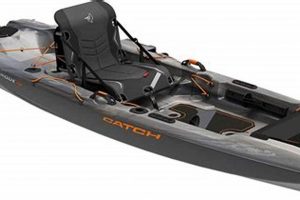
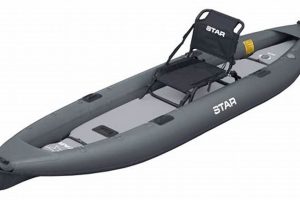
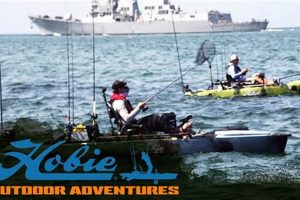
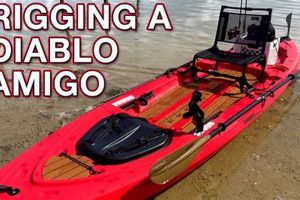
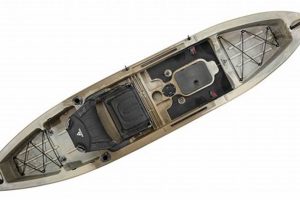
This specific model of recreational watercraft is designed for angling activities. It combines the stability and maneuverability of a kayak with features tailored to the needs of anglers, such as rod holders, storage compartments, and often specialized seating. This type of vessel enables fishing in a variety of environments, from calm lakes to flowing rivers.
Anglers benefit from the stealth and close-to-the-water perspective these watercraft provide. They allow access to shallow waters and secluded fishing spots often unreachable by larger boats. Historically, kayaks have been used for fishing and transportation for millennia by indigenous cultures. Modern advancements in materials and design have transformed them into highly specialized vessels tailored for specific activities like angling. This evolution reflects the growing popularity of kayak fishing as a sport and recreational pursuit.
The following sections will delve into specific aspects of this type of fishing kayak, exploring its construction, features, performance, and suitability for various fishing styles and environments. This detailed examination aims to provide prospective buyers with the information necessary to make informed purchasing decisions.
Tips for Kayak Fishing
Effective angling from this type of watercraft requires preparation and technique. The following tips offer guidance for enhancing fishing success and overall experience.
Tip 1: Pre-Trip Planning: Research potential fishing locations, including water depth, currents, and access points. Consult weather forecasts and pack accordingly. A float plan shared with someone onshore enhances safety.
Tip 2: Weight Distribution and Balance: Evenly distribute gear within the vessel to maintain stability. Consider lower center of gravity placements for enhanced balance. Practice entering and exiting in shallow water to build confidence.
Tip 3: Paddle and Rod Management: Secure paddles effectively when not in use to prevent loss. Utilize rod holders strategically, keeping lines free from entanglement. Practice casting techniques from a seated position.
Tip 4: Safety Equipment: Carry essential safety gear, including a personal flotation device, whistle, and signaling device. A first-aid kit and appropriate clothing for varying weather conditions are crucial.
Tip 5: Anchor Positioning: Understand appropriate anchor deployment techniques for different water conditions. A properly set anchor prevents drifting and maintains optimal fishing position. Consider anchor trolley systems for versatile positioning.
Tip 6: Catch and Release Practices: Handle fish with care, minimizing handling time. Utilize appropriate tools for hook removal and support fish horizontally when releasing. Follow local regulations regarding catch limits and sizes.
Tip 7: Navigation and Electronics: Familiarize oneself with navigational tools, including GPS devices and charts. Consider fish finders and depth sounders to locate target species. Ensure electronic devices are charged and waterproofed.
By adhering to these guidelines, anglers can maximize their chances of a successful and enjoyable fishing experience while prioritizing safety and responsible practices.
These practical tips combined with the information provided throughout this article should equip prospective buyers with a comprehensive understanding of this specialized fishing platform.
1. Hull Design

Hull design significantly influences the performance of a Tamarack Pro fishing kayak, affecting its tracking, stability, maneuverability, and speed. A wider, flatter hull generally provides greater initial stability, beneficial for casting and reeling, particularly in calmer waters. However, this design often sacrifices speed and efficient tracking, making it less suitable for covering longer distances or paddling against currents. Conversely, a longer, narrower hull, potentially with a pronounced keel, enhances tracking and speed but may compromise initial stability. This design excels in open water and moving currents but requires more experience and balance from the angler.
Consider a scenario where an angler frequently fishes in shallow, sheltered bays. A wider, flatter hull allows stable casting and reduces the likelihood of tipping when landing fish. Conversely, an angler targeting open-water species like lake trout benefits from a longer, narrower hull to efficiently cover larger areas and maintain course in changing winds or currents. The Tamarack Pro fishing kayaks specific hull design balances these factors to optimize performance for its intended uses. The manufacturer likely considered factors like targeted fishing environments (rivers, lakes, or oceans) and common angling activities (casting, trolling, or still fishing) when finalizing the hull design.
Understanding the connection between hull design and kayak performance empowers anglers to select the appropriate vessel for their specific needs and fishing style. Evaluating hull characteristics allows informed decisions based on anticipated water conditions and desired performance attributes. Recognizing these nuances contributes significantly to maximizing on-the-water effectiveness and overall fishing experience. This careful consideration of design elements underscores the importance of selecting specialized equipment for targeted applications within the broader context of kayak fishing.
2. Storage Capacity

Adequate storage capacity is a critical factor for fishing kayaks, directly impacting the angler’s ability to carry essential gear, tackle, and personal items. The Tamarack Pro fishing kayak’s storage solutions are designed to accommodate the diverse needs of anglers while maintaining vessel stability and maneuverability. Understanding these storage options allows for efficient organization and ensures preparedness on the water.
- Front Hatch Storage:
A front hatch often provides ample space for larger items like tackle boxes, dry bags containing extra clothing, and safety equipment. Easy accessibility makes this location ideal for frequently used items. Imagine needing rain gear during a sudden downpour; quick access through a front hatch prevents extended disruption to the fishing experience.
- Rear Tankwell Storage:
The rear tankwell, typically an open area behind the seat, accommodates larger items like crates, coolers, or even a small anchor. Bungee cords or straps secure these items, preventing shifting during movement. This area can also be utilized for temporary storage of a caught fish. Consider carrying a cooler in the tankwell to keep catches fresh throughout the day.
- Side Storage Compartments:
Smaller, strategically placed side compartments provide quick access to essential tools, lures, or personal items like sunscreen or a phone. These compartments often feature sealed closures to protect contents from water damage. Storing pliers or line cutters within easy reach streamlines tackle adjustments and minimizes interruptions.
- Rod Holders and Gear Tracks:
Dedicated rod holders and gear tracks offer secure storage and convenient access to fishing rods while underway or during active fishing. Flush-mounted rod holders minimize line tangling, while adjustable tracks accommodate various rod lengths and fishing styles. These features contribute to a more organized and efficient fishing experience.
The strategic placement and design of these storage solutions on the Tamarack Pro fishing kayak reflect a focus on maximizing angler efficiency and comfort. Appropriate storage capacity allows for longer trips, diversified fishing techniques, and enhanced preparedness for varying conditions. The ability to organize and access gear efficiently contributes significantly to a more successful and enjoyable fishing experience. Choosing a kayak with well-designed storage contributes to overall on-the-water performance.
3. Seat Comfort
Seat comfort directly impacts the angler’s endurance and overall experience, especially during extended fishing trips. A well-designed seat minimizes fatigue and allows for prolonged focus on fishing, rather than discomfort. In the context of the Tamarack Pro fishing kayak, seat comfort is a crucial factor influencing overall performance and enjoyment. Analyzing the key components of seat design reveals its contribution to a successful fishing experience.
- Adjustability:
An adjustable seat accommodates varying body types and preferences. Features like adjustable backrests, foot braces, and seat height contribute to personalized comfort. For instance, an angler with a longer torso benefits from a higher backrest, while someone with shorter legs requires adjustable footrests for proper paddling posture. Adjustability ensures optimal comfort and support, reducing strain and fatigue during long hours on the water. The Tamarack Pro fishing kayak’s seat adjustability likely caters to a wide range of anglers, maximizing comfort and minimizing physical strain.
- Padding and Breathability:
Adequate padding cushions the angler from the hard shell of the kayak, improving comfort and reducing pressure points. Breathable materials promote airflow, preventing overheating and moisture buildup, especially in warmer climates. A well-ventilated seat minimizes discomfort caused by perspiration and enhances overall comfort during extended fishing sessions. The Tamarack Pro fishing kayak likely incorporates breathable materials and strategic padding to enhance comfort and minimize fatigue.
- Durability and Stability:
A durable seat withstands the rigors of regular use and exposure to the elements. Stable seat construction ensures secure positioning and prevents unwanted shifting during paddling or casting. A robust and stable seat contributes to angler confidence and allows for focused fishing without distractions caused by seat instability. The Tamarack Pro fishing kayak’s seat construction prioritizes durability and stability, ensuring long-lasting performance and a secure platform for angling activities.
- Material and Construction:
High-quality materials contribute to both comfort and durability. Materials like molded plastic or high-density foam provide a comfortable seating surface while resisting wear and tear. UV-resistant materials prevent degradation from sun exposure, extending the seat’s lifespan. Consider the Tamarack Pro fishing kayak’s seat material and construction; its design likely balances comfort, durability, and weather resistance for long-lasting performance in various conditions.
These facets of seat design collectively contribute to the overall comfort and performance of the Tamarack Pro fishing kayak. A comfortable seat enables anglers to focus on fishing, rather than physical discomfort, maximizing enjoyment and endurance on the water. By prioritizing seat comfort, the Tamarack Pro fishing kayak demonstrates a commitment to enhancing the overall angling experience, recognizing its crucial role in successful and enjoyable fishing trips.
4. Propulsion System

The propulsion system of a fishing kayak significantly influences its performance, affecting speed, maneuverability, and the angler’s ability to fish effectively. For the Tamarack Pro fishing kayak, the chosen propulsion system directly impacts its suitability for specific fishing environments and techniques. Understanding the nuances of various propulsion methods provides valuable insights into the kayak’s capabilities and intended use.
- Paddle Propulsion:
Traditional paddle propulsion offers excellent maneuverability and control, allowing anglers to navigate tight spaces and shallow waters effectively. This method requires physical exertion but provides a quiet and stealthy approach, beneficial for approaching wary fish. Consider a scenario where an angler navigates a narrow, overgrown creek; paddle propulsion offers precise control for maneuvering through obstacles and accessing secluded fishing spots. The Tamarack Pro, if paddle-driven, benefits from this versatility, allowing anglers to explore diverse environments effectively.
- Pedal Propulsion:
Pedal-powered kayaks utilize leg muscles, freeing hands for fishing. This system provides greater speed and endurance over longer distances compared to paddling. Imagine trolling for open-water species; pedal propulsion allows sustained speed and simultaneous rod control, increasing fishing efficiency. If the Tamarack Pro utilizes a pedal drive, this feature enhances its suitability for covering larger bodies of water and engaging in techniques like trolling or drift fishing.
- Motorized Propulsion:
Motorized kayaks offer the greatest speed and range, allowing anglers to cover vast distances quickly. This propulsion method reduces physical exertion, enabling access to distant fishing grounds. Consider a large reservoir or coastal area; a motorized kayak expands fishing opportunities by reducing travel time to preferred locations. While less common in smaller fishing kayaks, if the Tamarack Pro incorporates a motor, it significantly extends its range and versatility, catering to anglers seeking access to distant waters.
- Hybrid Propulsion:
Some kayaks offer hybrid systems, combining paddle propulsion with an optional motor or pedal drive. This versatility caters to diverse fishing scenarios, allowing anglers to choose the most effective method based on conditions and target species. Imagine a scenario where an angler paddles to a distant fishing spot using a motor, then switches to paddle propulsion for quieter maneuvering within the target area. If the Tamarack Pro offers a hybrid system, this adaptability significantly expands its capabilities, catering to a wider range of fishing styles and environments.
The Tamarack Pro fishing kayak’s specific propulsion system directly influences its intended use and target audience. Whether paddle, pedal, or motor-driven, the propulsion method impacts speed, maneuverability, and fishing efficiency. Evaluating these factors allows anglers to assess the kayak’s suitability for their specific fishing needs and preferred techniques, contributing to a more informed purchasing decision and enhanced on-the-water experience.
5. Stability & Maneuverability

Stability and maneuverability are critical performance attributes for fishing kayaks, directly influencing angling effectiveness and safety. These characteristics determine the kayak’s suitability for specific water conditions and fishing techniques. For the Tamarack Pro fishing kayak, the balance between stability and maneuverability significantly impacts its overall performance and target applications.
- Initial Stability:
Initial stability refers to the kayak’s resistance to tipping when at rest or during slow movements. A wider hull typically provides greater initial stability, beneficial for casting, reeling, and landing fish. Imagine standing to cast in a shallow lake; a stable platform minimizes the risk of capsizing. The Tamarack Pro fishing kayak’s initial stability likely caters to its intended fishing style, providing a secure platform for various angling activities.
- Secondary Stability:
Secondary stability describes the kayak’s ability to remain upright when leaned or tilted, important for maneuvering in waves or currents. A rounded hull with a defined chine (the transition between the hull’s bottom and sides) often provides good secondary stability. Consider navigating through choppy water; secondary stability prevents capsizing during turns or when encountering unexpected waves. The Tamarack Pro fishing kayak’s secondary stability likely contributes to its performance in varying water conditions.
- Tracking:
Tracking refers to the kayak’s ability to maintain a straight course with minimal paddling adjustments. A longer, narrower hull with a keel enhances tracking, reducing the need for constant corrective strokes. Imagine paddling across a large lake; efficient tracking minimizes fatigue and allows for faster travel to distant fishing spots. The Tamarack Pro fishing kayak’s tracking performance influences its suitability for covering larger distances and navigating currents.
- Maneuverability:
Maneuverability describes the kayak’s responsiveness to paddle strokes and its ability to turn quickly and efficiently. A shorter, wider hull generally offers greater maneuverability, beneficial for navigating tight spaces and changing directions quickly. Consider fishing in a narrow river with frequent bends; maneuverability allows for precise navigation and access to secluded areas. The Tamarack Pro fishing kayak’s maneuverability impacts its suitability for various fishing environments, particularly those requiring quick turns and precise positioning.
The interplay between these facets of stability and maneuverability defines the Tamarack Pro fishing kayak’s performance characteristics and its suitability for specific fishing applications. The design choices made by the manufacturer reflect a balance between these attributes, aiming to optimize performance for the intended use cases. Understanding these performance characteristics empowers anglers to select the appropriate kayak for their individual needs and fishing styles.
6. Fishing-Specific Features
Specialized features distinguish fishing kayaks from recreational models, enhancing angling effectiveness and overall experience. These features directly influence functionality and contribute significantly to the Tamarack Pro fishing kayak’s suitability for its intended purpose. Understanding the purpose and application of these features provides insights into their practical value and contribution to successful angling.
Rod holders, strategically positioned for easy access and secure rod storage, are essential for various fishing techniques. Flush-mounted rod holders minimize line tangling during paddling, while adjustable rod holders accommodate different rod lengths and angling styles. Consider trolling with multiple lines; dedicated rod holders prevent entanglement and facilitate quick reactions to strikes. Similarly, integrated tackle storage compartments within easy reach streamline lure changes and prevent disruptions during active fishing. Imagine quickly switching lures to match changing fish behavior; readily accessible tackle storage maximizes fishing efficiency.
Further enhancing functionality, built-in fish finders and transducer mounts offer crucial underwater insights. These electronic tools provide real-time data on water depth, fish location, and bottom structure, enabling strategic decision-making. Consider locating submerged vegetation or drop-offs where fish congregate; fish finders enhance the angler’s ability to target specific areas, increasing the likelihood of success. Furthermore, features like anchor trolleys provide precise anchor control, maintaining boat position in currents or wind. Imagine holding position near a promising structure; an anchor trolley allows fine-tuned adjustments, maximizing fishing time in productive zones. These specialized features, carefully integrated into the Tamarack Pro fishing kayak, demonstrate a focus on angler needs and contribute significantly to on-the-water effectiveness.
The thoughtful integration of these fishing-specific features underscores the Tamarack Pro’s design focus. These features are not merely additions but integral components contributing to the kayak’s overall functionality and its suitability for serious angling. Understanding the practical application of these features empowers anglers to maximize their effectiveness on the water. By recognizing the value of these features, prospective buyers can make informed decisions based on their specific fishing requirements and preferences. The inclusion of these specialized features differentiates the Tamarack Pro fishing kayak from recreational models, solidifying its position as a dedicated platform for anglers seeking enhanced performance and functionality. The strategic combination of these features ultimately contributes to a more productive and enjoyable fishing experience.
Frequently Asked Questions
This section addresses common inquiries regarding this specialized fishing kayak, providing concise and informative responses to assist prospective buyers.
Question 1: What differentiates this model from standard recreational kayaks?
Key distinctions include specialized features like rod holders, tackle storage, and often a pedal-drive or motor system designed for fishing activities. Hull design may prioritize stability for angling, and seating often emphasizes comfort for extended trips.
Question 2: What weight capacity and storage limitations exist?
Weight capacity varies by model but generally accommodates an angler plus gear within a specified range. Storage limitations depend on compartment design and placement, impacting the amount of tackle and personal items carried. Consulting manufacturer specifications clarifies these parameters.
Question 3: Is this kayak suitable for both freshwater and saltwater environments?
Material composition and design influence suitability for different water types. While many models perform well in both, specific considerations, such as corrosion resistance in saltwater, should be evaluated based on intended usage.
Question 4: What maintenance requirements are associated with this model?
Regular cleaning, especially after saltwater exposure, and periodic inspection of moving parts, such as pedal drives or rudders, are essential. Proper storage and UV protection contribute to longevity. Manufacturer guidelines provide specific maintenance recommendations.
Question 5: What safety precautions should be observed when using this kayak?
Wearing a personal flotation device is paramount. Adhering to local boating regulations, carrying appropriate safety equipment, and informing someone of fishing plans enhance safety. Weather awareness and appropriate clothing for conditions are crucial.
Question 6: What factors influence the price range of this kayak?
Factors include material quality, propulsion system (paddle, pedal, or motor), included features (fish finder, rod holders), and overall design complexity. Researching various models and comparing features helps determine appropriate value.
These responses aim to clarify key aspects of this specialized kayak, facilitating informed purchasing decisions. Thorough product research and consideration of individual fishing needs remain essential for optimal kayak selection.
For further information and detailed specifications, consult the manufacturer’s website or authorized dealers.
Tamarack Pro Fishing Kayak
This exploration of the Tamarack Pro fishing kayak has highlighted its key features, from hull design and storage capacity to propulsion systems and specialized angling features. Understanding the interplay between these elements reveals a watercraft designed for a specific purpose: to enhance the angling experience. The analysis of seat comfort and stability considerations underscores the emphasis on angler well-being and performance optimization. The discussion of propulsion options, ranging from traditional paddles to advanced pedal-drive systems, illustrates the versatility and adaptability of this specialized kayak.
The Tamarack Pro fishing kayak represents a culmination of design and engineering focused on the needs of anglers. Its features cater to diverse fishing styles and environments, empowering anglers to pursue their passion with enhanced efficiency and comfort. Careful consideration of these features, combined with an understanding of individual fishing requirements, will guide informed purchasing decisions and contribute to countless successful fishing expeditions. The future of kayak fishing continues to evolve, with innovations constantly refining design and enhancing on-the-water experiences. The Tamarack Pro stands as a testament to this ongoing evolution, offering anglers a sophisticated platform to engage with the sport they love.