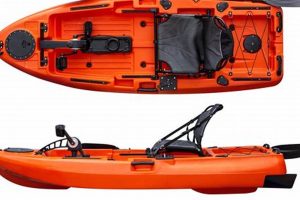
Navigating a virtual kayak in the Fishing Planet simulator requires understanding the specific input methods for movement and actions. These typically involve keyboard keys for paddling forward, backward, and turning, as well as mouse control for aiming and casting. For example, ‘W’ and ‘S’ keys might control forward and backward motion, while ‘A’ and ‘D’ manage left and right turns. Mouse movements generally direct the fishing rod and the casting action.
Mastering kayak navigation within the game enhances the virtual angling experience. Precise maneuvering allows players to reach optimal fishing spots, access secluded areas teeming with specific species, and present lures with greater accuracy. This level of control contributes to a more realistic and immersive simulation, differentiating kayak fishing from shore or boat-based angling within the game. Furthermore, understanding these controls often unlocks specific challenges and achievements tied to kayak-based gameplay.
This information serves as a foundation for further exploration of specific control schemes, advanced maneuvering techniques, and strategies for maximizing angling success from a virtual kayak. Articles may delve into platform-specific controls (PC, console), customizable keybindings, and tips for navigating diverse in-game water bodies effectively.
Kayak Control Tips for Fishing Planet
Effective kayak navigation is crucial for a successful fishing experience in Fishing Planet. These tips offer guidance on maneuvering and maximizing angling opportunities from a virtual kayak.
Tip 1: Master Basic Movement: Familiarization with default or customized keybindings for forward, backward, and turning movements is essential. Practice navigating open water to develop a feel for kayak responsiveness and turning radius.
Tip 2: Utilize Momentum: Kayaks possess momentum; anticipating turns and paddling preemptively allows for smoother transitions and avoids oversteering. Short bursts of paddling followed by coasting can conserve energy and maintain a stealthy approach.
Tip 3: Wind and Current Awareness: Environmental factors significantly impact kayak movement. Account for wind direction and current speed when navigating, particularly in open water or river systems. Adjust paddling accordingly to maintain desired positioning.
Tip 4: Approach Fishing Spots Strategically: Avoid paddling directly towards target locations. Approach from an upwind or upstream position to minimize disturbance and allow for a natural drift into the desired casting area.
Tip 5: Precision Casting from a Kayak: The kayak’s instability adds a layer of complexity to casting. Practice short, controlled casts to maintain accuracy and prevent line tangles. Consider using a shorter rod or adjusting casting techniques to compensate for the kayak’s movement.
Tip 6: Anchor Effectively: Utilize the anchor feature strategically to maintain position in promising fishing areas, particularly in strong currents or windy conditions. Ensure the anchor is properly set before focusing on fishing.
Tip 7: Navigate Tight Spaces Carefully: Maneuvering through narrow channels or around obstacles requires precise control and patience. Utilize short, controlled paddle strokes and avoid sudden movements to prevent collisions or capsizing.
By implementing these tips, anglers can significantly enhance their kayak fishing proficiency within Fishing Planet, leading to increased catches and a more immersive virtual experience.
This knowledge equips players to tackle more challenging fishing scenarios and fully appreciate the nuances of kayak angling in the virtual world.
1. Forward/Backward Movement

Forward and backward movement form the foundation of kayak navigation in Fishing Planet, directly influencing angling success. Effective propulsion and controlled deceleration are essential for reaching fishing hotspots, maintaining position against currents, and executing precise approaches. The game typically employs keyboard keys for these actions, translating player input into realistic kayak motion within the virtual environment. The responsiveness of the kayak to these controls simulates real-world physics, requiring players to adapt to momentum and inertia. For instance, sudden stops require anticipatory backward paddling, while maintaining a slow, steady drift necessitates subtle forward strokes. This nuanced control differentiates kayak fishing from other angling styles within the game, demanding a higher degree of precision and awareness.
Understanding the cause-and-effect relationship between paddling input and kayak movement is crucial. Aggressive paddling generates speed but sacrifices maneuverability, potentially overshooting desired locations. Conversely, timid paddling might prove insufficient to combat strong currents or reach distant spots efficiently. Consider a scenario where a player aims to fish a specific underwater structure. Approaching the target too quickly risks spooking fish, while slow progress might allow the current to drift the kayak off course. Mastering forward/backward control allows players to fine-tune their approach, optimizing positioning for casting and presentation.
Precise control over forward and backward motion is not merely about reaching a location; its about controlling the kayaks interaction with the environment. This understanding underpins advanced techniques such as maintaining position in a current seam or subtly adjusting drift speed to match lure presentation. Challenges like navigating tight spaces or compensating for wind drift further emphasize the importance of these fundamental controls. Mastery of these seemingly simple actions unlocks the full potential of kayak fishing within Fishing Planet, enabling strategic navigation and enhancing the overall angling experience.
2. Turning (Left/Right)

Maneuvering a kayak in Fishing Planet hinges on effective turning. Precise directional control is paramount for navigating complex waterways, approaching fishing spots strategically, and maintaining optimal casting positions. Unlike motorboats, kayaks rely on paddle-driven rotation, demanding a nuanced understanding of momentum and water resistance. This section explores key facets of turning within the game’s kayak fishing mechanics.
- Paddle-Based Turning Mechanics
Turning a virtual kayak replicates real-world physics. Paddle strokes on one side create rotational force, pivoting the kayak. The game translates these virtual paddle actions into realistic turning motions, considering factors like water resistance and kayak design. A single, powerful stroke initiates a sharper turn, while repeated, gentler strokes create gradual directional shifts. Understanding this cause-and-effect relationship between paddle input and kayak rotation is crucial for precise maneuvering.
- Navigating Obstacles and Narrow Channels
Obstacles like submerged logs or emergent rocks necessitate precise turning to avoid collisions. Narrow channels and winding river systems demand controlled rotations to maintain course and avoid grounding. Successful navigation requires anticipating turns, judging distances accurately, and executing paddle strokes with appropriate force and timing. This skill becomes particularly critical when navigating challenging environments within the game, such as densely vegetated areas or fast-flowing streams.
- Controlling Drift and Maintaining Position
Wind and current exert constant pressure on a kayak, influencing its direction. Strategic turning counteracts these forces, allowing anglers to maintain desired positions or control drift speed and direction. For example, turning the kayak perpendicular to the current allows for a controlled drift along a specific seam or structure, maximizing fishing opportunities. This ability to manage drift becomes crucial for techniques like float fishing or presenting lures naturally in flowing water.
- Optimizing Casting Angles and Presentation
Precise turning allows anglers to align the kayak for optimal casting angles. Presenting lures effectively often requires specific orientations relative to target areas, structure, or fish positioning. Turning the kayak facilitates accurate casts, ensuring lures land in the intended zone and present naturally. This control is especially important when sight fishing or targeting specific pockets within complex underwater terrain.
Mastering turning mechanics in Fishing Planet elevates kayak fishing from simple navigation to a strategic element of angling success. Precise directional control empowers players to navigate challenging environments, control drift effectively, and optimize casting presentation, ultimately enhancing the virtual angling experience.
3. Casting Control

Casting control within Fishing Planet’s kayak fishing simulation represents a critical skill, directly impacting angling success. Unlike shore or boat fishing, kayak angling introduces inherent instability, demanding precise casting techniques. This section explores the facets of casting control specific to kayak fishing within the game.
- Influence of Kayak Motion
Kayak movement, whether from paddling, current, or wind, significantly influences casting accuracy and distance. Casting from a moving platform requires compensating for the kayak’s momentum and direction. For example, casting against the kayak’s drift requires increased power, while casting with the drift necessitates reduced force to avoid overshooting. Managing these variables effectively distinguishes skilled virtual kayak anglers.
- Rod Length and Action Considerations
Rod choice plays a crucial role in casting control from a kayak. Shorter rods offer increased maneuverability within the confined space of a kayak, simplifying casting mechanics and reducing the risk of tangles or snags. Rod action, the rod’s bending characteristic, influences casting distance and accuracy. A moderate-action rod provides a balance between casting power and precision, well-suited for the dynamic environment of kayak fishing.
- Casting Techniques for Kayak Stability
Specific casting techniques enhance stability and control from a kayak. Sidearm or underhand casts minimize overhead movement, reducing the chance of losing balance. Short, controlled casts prioritize accuracy over distance, compensating for the kayak’s inherent instability. Adapting casting techniques to the kayak environment is crucial for consistent and effective lure presentation.
- Precision Targeting from a Kayak
Casting accuracy becomes paramount when fishing from a kayak, especially when targeting specific structures, pockets, or visible fish. Precise placement of the lure necessitates controlled casting motions, accounting for kayak movement and wind drift. Mastering this precision enables anglers to effectively target tight spots and maximize their chances of hooking fish.
Effective casting control, considering kayak motion, rod characteristics, casting techniques, and precise targeting, distinguishes successful kayak anglers in Fishing Planet. Mastering these elements enhances lure presentation, improves hookup rates, and elevates the overall virtual fishing experience. This specialized skill set allows players to fully utilize the advantages of kayak fishing within the game, accessing secluded areas and presenting lures with pinpoint accuracy.
4. Anchor Deployment

Anchor deployment represents a crucial element within the broader context of kayak control in Fishing Planet. Effective anchoring stabilizes the kayak, enabling anglers to maintain position in desired fishing locations, especially in challenging conditions such as strong currents or windy environments. This control element directly impacts angling success by allowing precise lure presentation and preventing unwanted drift. Consider a scenario where an angler identifies a promising eddy behind a submerged rock. Without anchoring, the current would continually push the kayak downstream, hindering accurate and sustained fishing in that specific spot. Deploying the anchor effectively locks the kayak’s position, allowing the angler to focus on fishing rather than battling the current.
Understanding the interplay between anchor deployment and other kayak controls is essential. For instance, before deploying the anchor, proper positioning of the kayak is crucial. Anglers must consider wind direction and current flow to ensure the anchor sets correctly and holds the kayak in the optimal fishing location. Furthermore, skillful anchor retrieval requires coordination with paddle strokes to avoid entanglement or sudden shifts in kayak position. Imagine attempting to retrieve an anchor in a strong current without simultaneously paddling forward. The current could push the kayak downstream, creating tension on the anchor line and potentially hindering retrieval. The practical application of this understanding lies in smoother, more efficient anchoring and retrieval, maximizing fishing time and minimizing frustration.
Mastering anchor deployment as a component of kayak control enhances the overall fishing experience in Fishing Planet. It allows anglers to exploit specific locations effectively, especially in challenging conditions. This seemingly simple action becomes a strategic tool, enabling precise control over kayak position and optimizing angling opportunities. Challenges such as navigating crowded waterways or dealing with sudden changes in wind or current further highlight the importance of proficient anchor deployment and retrieval within the virtual kayaking experience.
5. Camera View Adjustment

Camera view adjustment forms an integral part of the control scheme in Fishing Planet’s kayak fishing simulation. Effective manipulation of camera angles provides crucial visual information, impacting navigation, fish spotting, and casting accuracy. Strategic camera use elevates the virtual angling experience from simple observation to active environmental awareness.
- Enhanced Situational Awareness
Adjusting the camera view provides a broader perspective of the surrounding environment. This expanded field of vision allows anglers to identify potential hazards, navigate complex waterways effectively, and locate promising fishing spots. Consider navigating a narrow, winding river; a wider camera angle provides crucial foresight, allowing for anticipatory paddling and precise turning. This heightened awareness is crucial for successful navigation and efficient exploration of the virtual waters.
- Improved Fish Spotting and Tracking
Strategic camera use assists in spotting fish, particularly in clear water or shallow areas. Adjusting the angle and zoom level allows anglers to scan the water column effectively, identifying subtle movements or shadows indicating fish presence. Once hooked, manipulating the camera angle aids in tracking the fish’s movements during the fight, informing rod and reel adjustments. This visual feedback is essential for successful angling, mirroring real-world observation techniques.
- Accurate Casting and Lure Presentation
Camera view directly influences casting accuracy. Adjusting the camera provides a clear line of sight to the target area, enabling precise casts. This control becomes particularly important when targeting specific structures, pockets in vegetation, or visible fish. Furthermore, manipulating the camera angle allows anglers to observe lure action underwater, providing feedback on presentation and retrieval techniques. This visual information aids in refining lure presentation, maximizing its effectiveness.
- Immersive Visual Experience
Beyond its functional role, camera adjustment enhances the immersive quality of the virtual fishing experience. Exploring different viewpoints, from a close-up perspective of the kayak’s deck to a panoramic view of the surrounding landscape, adds depth and realism to the simulation. This visual engagement intensifies the sense of presence within the virtual environment, connecting players more deeply to the angling experience.
Mastery of camera view adjustment, combined with other kayak control mechanics, transforms the virtual fishing experience in Fishing Planet. Strategic camera use provides critical visual information, enabling informed decisions regarding navigation, fish spotting, and casting. This control element transcends mere observation, becoming an active tool for enhancing angling success and immersion within the virtual environment. The ability to seamlessly transition between various camera perspectives empowers players to fully appreciate the nuances of kayak angling and the dynamic interplay between angler, environment, and quarry.
6. Speed Modulation
Speed modulation stands as a critical component within the broader framework of kayak control in Fishing Planet. Precise control over kayak speed, ranging from a slow drift to a more rapid paddle-driven pace, significantly influences angling success. This nuanced control impacts various aspects of virtual kayak fishing, from approaching fishing spots stealthily to maintaining lure presentation effectively. Consider the scenario of approaching a shallow, weedy flat known to hold skittish fish. Rapid paddling would likely spook the fish, scattering them before a cast can be made. Conversely, slow, controlled paddling allows for a stealthy approach, maximizing the chances of a successful presentation and hookup.
The cause-and-effect relationship between kayak speed and fish behavior underpins the importance of speed modulation. Fast movement creates vibrations and surface disturbances, alerting fish to potential danger. Slow, deliberate paddling minimizes these disturbances, allowing anglers to remain undetected and present lures naturally. Furthermore, speed control affects lure action. A slow drift allows some lures, like jigs or soft plastics, to sink naturally and behave realistically in the current. Faster paddling, on the other hand, might impart unwanted action to the lure, hindering its effectiveness. This dynamic interaction between kayak speed, lure behavior, and fish response necessitates strategic speed modulation.
Practical applications of speed modulation extend beyond simply approaching fish. Maintaining precise speed becomes crucial for techniques like trolling or drifting, ensuring proper lure presentation and depth control. In river systems, adjusting kayak speed to match current flow allows anglers to maintain position and present lures effectively in specific seams or eddies. Challenges such as navigating windy conditions or dealing with varying current speeds further underscore the importance of mastering speed modulation. This understanding transforms speed control from a basic function to a strategic tool, empowering virtual kayak anglers to maximize their success in Fishing Planet.
Frequently Asked Questions
This FAQ section addresses common inquiries regarding kayak control mechanics within Fishing Planet, aiming to provide clear and concise information for enhanced gameplay.
Question 1: How does one initiate and control kayak movement?
Kayak movement typically relies on keyboard input. Specific keys control forward/backward propulsion and turning. Consult the game’s control settings for default keybindings or customization options.
Question 2: What influences kayak turning speed and responsiveness?
Turning speed is influenced by factors such as paddle input intensity, water resistance, and kayak design within the game’s physics engine. Repeated paddle strokes create gradual turns, while single, strong strokes initiate sharper turns.
Question 3: How does wind affect kayak control and navigation?
Wind exerts force on the kayak, influencing drift and direction. Paddling adjustments are necessary to compensate for wind drift and maintain desired positioning. Approaching fishing spots from upwind minimizes disturbance and allows for controlled drifts into target areas.
Question 4: What role does anchor deployment play in kayak fishing?
Anchor deployment stabilizes the kayak, preventing drift in currents or windy conditions. This allows anglers to maintain precise positions over promising fishing locations and optimize lure presentation.
Question 5: How can camera view be adjusted, and why is this important?
Camera view adjustment typically utilizes mouse controls or designated keyboard keys. Adjusting camera angles provides enhanced situational awareness for navigation, assists in fish spotting, and allows for accurate casting and lure presentation monitoring.
Question 6: How does kayak speed impact fishing success?
Kayak speed influences fish behavior and lure presentation. Slow, controlled paddling minimizes disturbance, allowing stealthy approaches to fishing spots. Speed adjustments also affect lure action and are crucial for techniques like trolling or drifting.
Understanding these key aspects of kayak control significantly enhances angling effectiveness and overall enjoyment within the Fishing Planet simulation. Mastering these mechanics allows players to fully utilize the advantages of kayak fishing, accessing challenging locations and optimizing angling strategies.
This information provides a foundation for further exploration of advanced techniques and specific in-game scenarios. Subsequent sections may delve into detailed strategies for navigating specific water bodies, utilizing kayak control to maximize catches, and customizing control schemes for individual preferences.
Conclusion
This exploration of kayak controls within Fishing Planet has highlighted the intricate mechanics governing virtual kayak navigation and their impact on angling success. From basic movement and turning to advanced techniques like anchor deployment and speed modulation, each control element plays a crucial role in maneuvering the virtual kayak effectively and optimizing fishing strategies. The interplay between these controls, combined with environmental awareness and strategic decision-making, defines the skill set required for successful kayak angling within the game. Understanding camera view adjustment and its impact on situational awareness further enhances the virtual experience, bridging the gap between observation and active participation.
Mastery of these virtual kayak controls unlocks the full potential of this angling style within Fishing Planet. This knowledge empowers players to navigate challenging waterways, approach fishing spots strategically, and present lures with precision. The continued exploration of advanced techniques and the adaptation of control schemes to individual preferences further refine this skill set, promising an increasingly immersive and rewarding virtual kayak fishing experience. The challenge lies not merely in understanding these controls but in applying them effectively to the dynamic and ever-changing virtual environment, mirroring the real-world complexities of kayak angling.