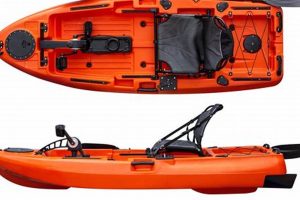
The cost of a specific fishing kayak, the Big Fish 108, is a crucial factor for prospective buyers. This figure represents the financial investment required to acquire this particular model, designed for angling. Understanding this cost allows consumers to compare it with similar kayaks, assess its value proposition, and ultimately decide if it aligns with their budget and needs. Factors influencing this cost can include materials, features, manufacturing location, and retailer markup.
Knowing the cost allows informed purchasing decisions. Budgeting for a kayak requires understanding the overall expense, which includes not only the base price but potentially also accessories like paddles, life vests, and fishing gear. Evaluating the cost in relation to the kayak’s features, such as stability, storage capacity, and specialized fishing features, provides a comprehensive view of its value. Historically, kayak pricing has evolved alongside material and manufacturing advancements, impacting affordability and accessibility.
This exploration of pricing provides a foundation for a deeper understanding of the Big Fish 108. Further examination will delve into specific features, performance characteristics, and comparisons with competing models, providing prospective buyers with a complete picture before making a purchase.
Tips for Evaluating Kayak Costs
Acquiring a kayak requires careful consideration of various factors beyond the initial price. The following tips offer guidance for assessing the overall investment involved in owning a fishing kayak like the Big Fish 108.
Tip 1: Research Retailer Pricing: Comparing prices across multiple retailers, both online and brick-and-mortar, can reveal potential savings. Consider factors like shipping costs, sales tax, and any included accessories.
Tip 2: Factor in Accessories: The base cost rarely represents the total investment. Essential accessories, such as paddles, personal flotation devices (PFDs), and fishing-specific gear like rod holders and fish finders, should be included in the budget.
Tip 3: Consider Long-Term Costs: Kayak ownership involves ongoing expenses. Storage, maintenance, repairs, and transportation costs should be factored into the overall cost assessment.
Tip 4: Evaluate Feature Value: Assess the kayak’s features in relation to the cost. Does the price align with the offered stability, storage capacity, comfort, and specialized fishing features?
Tip 5: Explore Used Options: Purchasing a used kayak can significantly reduce the initial investment. However, carefully inspect used kayaks for any damage or wear that could necessitate repairs.
Tip 6: Consider Financing Options: Explore available financing options if the upfront cost presents a barrier. Understanding interest rates and loan terms is crucial for responsible financial planning.
Tip 7: Think Long-Term Use: Consider how long the kayak is likely to meet angling needs. A higher initial investment in a durable, feature-rich kayak might be more cost-effective than frequent upgrades.
Careful consideration of these factors allows for informed decisions, maximizing the value of the investment and ensuring a positive long-term kayaking experience.
By understanding the true cost of kayak ownership, prospective buyers can confidently choose a model that aligns with their budget and fishing requirements. This comprehensive perspective facilitates a satisfying purchase experience.
1. Manufacturer's Suggested Retail Price (MSRP)

The Manufacturer’s Suggested Retail Price (MSRP) serves as an initial benchmark for the cost of a Big Fish 108 kayak. While the actual retail price can vary based on retailer decisions and market dynamics, the MSRP offers consumers and retailers a starting point for price determination. Understanding the MSRP’s role provides valuable context for evaluating pricing across different vendors.
- Recommended Baseline:
The MSRP represents the manufacturer’s recommendation for the selling price, reflecting perceived value based on production costs, features, and market positioning. It offers a consistent reference point, facilitating comparisons with competitors and aiding consumer evaluation. For the Big Fish 108, the MSRP provides an initial cost expectation, allowing potential buyers to gauge affordability.
- Influencing Retail Pricing:
Retailers often use the MSRP as a guide when setting their own prices. While they may deviate from it based on competitive pressures, inventory levels, or promotional strategies, the MSRP remains a significant influence. A retailer might offer the Big Fish 108 below MSRP to attract customers or above it to maximize profit margins if demand is high.
- Negotiation Starting Point:
The MSRP can serve as a starting point for negotiations, particularly in situations where haggling is common. Knowing the MSRP empowers consumers to engage in informed discussions with retailers, potentially securing a more favorable price. This knowledge is particularly relevant for higher-priced items like kayaks.
- Value Perception:
The MSRP plays a role in shaping consumer perceptions of a product’s value. A higher MSRP can sometimes convey a sense of premium quality, while a lower MSRP might signal affordability. This perceived value influences purchase decisions, even if the actual selling price differs. For the Big Fish 108, the MSRP contributes to its overall market positioning.
By understanding the MSRP’s multifaceted role, consumers gain valuable insights into the pricing landscape of the Big Fish 108 kayak. While the actual transaction price might vary, the MSRP offers a crucial reference point, facilitating informed comparisons and purchasing decisions. Combined with an understanding of retailer pricing strategies and market dynamics, the MSRP empowers consumers to navigate the marketplace effectively.
2. Retailer Markups

Retailer markups represent a critical component of the final price consumers pay for a Big Fish 108 kayak. These markups cover the retailer’s operational costs, including overhead, staffing, and profit margins. Understanding the dynamics of retailer markups is essential for interpreting price variations across different vendors and making informed purchasing decisions. A retailer might purchase the kayak from the manufacturer for $800 and then add a 25% markup, resulting in a retail price of $1000.
Several factors influence the extent of retailer markups. Location plays a significant role, with retailers in high-rent areas often implementing higher markups to offset expenses. Competition within a specific market also exerts pressure on markups, potentially leading to lower prices in highly competitive areas. Retailer pricing strategies, which might prioritize volume sales with lower markups or premium positioning with higher markups, further impact the final consumer price. Online retailers, facing different cost structures, might offer different pricing compared to brick-and-mortar stores. For example, an online retailer with lower overhead costs might offer the Big Fish 108 for $950, while a physical store in a prime location might price it at $1100.
Navigating the retail landscape requires awareness of these markup dynamics. Comparing prices from various retailers, both online and physical, provides valuable insights into prevailing market conditions and potential cost savings. Considering factors such as shipping costs for online purchases, sales tax variations, and any bundled accessories further informs the overall cost assessment. Recognizing the influence of retailer markups empowers consumers to make informed decisions, optimizing their investment in a Big Fish 108 kayak. This understanding facilitates cost-effective purchasing and ensures the best possible value.
3. Sales and Discounts
Sales and discounts exert a significant influence on the price of a Big Fish 108 kayak, creating opportunities for cost savings. These price reductions stem from various factors, including seasonal shifts, inventory management, promotional campaigns, and retailer-specific initiatives. Understanding these driving forces empowers consumers to make informed purchase decisions, maximizing value. For instance, retailers often offer discounts during the off-season (e.g., winter months) to stimulate demand. A retailer might discount the Big Fish 108 by 15% during the winter months, reducing a $1200 kayak to $1020. Similarly, clearance sales for older inventory or special promotions around holidays can present significant price advantages.
Recognizing the impact of sales and discounts requires proactive research. Monitoring retailer websites, subscribing to email newsletters, and following social media channels can alert prospective buyers to upcoming sales events. Comparing discounted prices across different retailers ensures the most favorable deal. Evaluating the timing of purchases strategically aligns with sales periods, optimizing budget allocation. For example, waiting for a holiday sale like Black Friday or Memorial Day could yield substantial savings compared to purchasing at full price. Furthermore, understanding the typical discount patterns for kayaks, such as deeper discounts during the off-season, allows for informed anticipation of price fluctuations.
Effectively leveraging sales and discounts enhances the affordability of the Big Fish 108 kayak. This informed approach allows consumers to acquire the desired kayak while minimizing expenditure. Proactive planning, combined with an understanding of market dynamics and retailer strategies, positions buyers to capitalize on cost-saving opportunities. This, in turn, maximizes the overall value proposition of the Big Fish 108, making it a more accessible option for budget-conscious consumers.
4. Seasonal Price Fluctuations
Seasonal price fluctuations significantly impact the cost of a Big Fish 108 kayak. Demand typically peaks during warmer months, driving prices upward. Conversely, demand wanes during colder seasons, often leading to price reductions. This cyclical pattern reflects the seasonal nature of kayaking, with warmer weather fostering greater participation. For example, a Big Fish 108 might retail for $1300 during peak season (summer) and drop to $1100 during the off-season (winter). This $200 price difference underscores the importance of considering seasonal influences. Understanding these fluctuations allows potential buyers to strategically time purchases, maximizing cost savings.
Several factors contribute to these seasonal variations. Increased consumer interest during favorable weather conditions creates higher demand, allowing retailers to maintain or increase prices. Conversely, reduced interest during less favorable weather conditions necessitates price adjustments to stimulate sales. Manufacturer production schedules also play a role. Increased production during anticipated peak seasons can moderate price increases, while limited production during off-seasons can constrain supply, potentially mitigating price drops despite lower demand. Understanding these interconnected elements provides a nuanced perspective on price dynamics. Recognizing these patterns enables consumers to anticipate price changes and make informed decisions, optimizing their investment.
Strategic timing of kayak purchases offers significant advantages. Planning purchases during the off-season, even if storage becomes necessary before usage, often yields substantial cost savings. Alternatively, those willing to purchase during peak season should anticipate potentially higher prices but benefit from immediate access to the kayak during optimal weather conditions. Balancing these considerationsprice versus immediate availabilityaligns with individual priorities and budget constraints. This informed approach maximizes the value proposition of the Big Fish 108 kayak, ensuring a cost-effective and satisfying purchase experience.
5. Used Kayak Market
The used kayak market significantly influences the pricing landscape of the Big Fish 108. Exploring this market provides valuable context for potential buyers, offering alternative acquisition avenues and impacting perceived value. Understanding the dynamics of the used kayak market is crucial for making informed purchasing decisions, particularly regarding cost considerations. This exploration offers insights into potential savings and allows for a more comprehensive assessment of the Big Fish 108’s overall value proposition.
- Condition and Depreciation:
Kayak condition directly impacts resale value. Normal wear and tear, significant damage, or extensive modifications influence pricing. Depreciation occurs over time, generally lowering the value of a used kayak compared to its original price. A well-maintained Big Fish 108 with minor scratches might retain a higher resale value compared to one with significant damage or repairs. Recognizing these factors helps buyers assess the fairness of asking prices in the used market.
- Availability and Demand:
Availability of used Big Fish 108 kayaks fluctuates based on market dynamics. Higher demand coupled with limited supply can drive up prices, while lower demand or abundant supply can exert downward pressure on prices. Seasonal factors also influence availability, with more used kayaks typically entering the market after peak seasons. Monitoring availability provides insights into potential pricing trends.
- Pricing Strategies:
Sellers in the used market employ various pricing strategies. Some prioritize quick sales with competitive pricing, while others aim to maximize returns, potentially overpricing kayaks. Researching comparable listings and understanding typical depreciation rates allows buyers to negotiate effectively and avoid overpaying. Comparing used Big Fish 108 prices across different platforms and sellers empowers informed decision-making.
- Inspection and Verification:
Thorough inspection is essential when considering a used kayak purchase. Physical examination reveals potential damage, repairs, or wear not readily apparent in online listings. Verifying ownership and ensuring no outstanding liens or financing obligations protect buyers from potential legal complications. Careful inspection of a used Big Fish 108, including checking the hull, deck, and outfitting, mitigates risks and ensures a sound investment.
The used kayak market presents both opportunities and challenges for prospective Big Fish 108 buyers. While offering potential cost savings, navigating this market requires careful consideration of condition, availability, pricing, and verification aspects. Understanding these factors empowers buyers to make informed decisions, aligning budget constraints with desired kayak quality. This comprehensive approach ensures a satisfying purchase experience and maximizes the long-term value derived from a used Big Fish 108 kayak.
Frequently Asked Questions
This FAQ section addresses common inquiries regarding the cost of the Big Fish 108 kayak, providing clarity and facilitating informed purchasing decisions. Understanding pricing dynamics empowers consumers to navigate the market effectively and optimize their investment.
Question 1: What is the typical price range for a new Big Fish 108 kayak?
The price of a new Big Fish 108 typically ranges between $1,100 and $1,400, depending on retailer, location, included accessories, and any applicable sales or discounts.
Question 2: How does the price of the Big Fish 108 compare to similar fishing kayaks?
The Big Fish 108 generally falls within the mid-price range for fishing kayaks with comparable features and specifications. Competitive analysis reveals variations in pricing based on brand, materials, and specific features.
Question 3: Do retailers offer financing options for the Big Fish 108?
Many retailers offer financing options for kayak purchases, including the Big Fish 108. Exploring these options, considering interest rates and repayment terms, enables budget management and facilitates acquisition.
Question 4: How does the price of a used Big Fish 108 compare to a new one?
Used Big Fish 108 kayaks typically sell for considerably less than new models. However, the specific price depends on condition, age, included accessories, and market demand. Potential cost savings must be weighed against potential maintenance or repair needs.
Question 5: Are there seasonal factors influencing the price of the Big Fish 108?
Prices often fluctuate seasonally, with higher prices during peak kayaking seasons (typically spring and summer) and potential discounts during the off-season (fall and winter). Strategic purchase timing can lead to cost savings.
Question 6: What factors contribute most significantly to the Big Fish 108’s price?
Key factors influencing the Big Fish 108’s price include manufacturing costs (materials, labor), retailer markups, included features and accessories, market demand, and seasonal fluctuations.
Understanding these pricing dynamics provides a comprehensive foundation for evaluating the Big Fish 108’s value proposition. This knowledge empowers potential buyers to make informed decisions aligning with individual budgets and priorities.
Beyond pricing, further research into the Big Fish 108’s performance, features, and user reviews provides a more holistic understanding. This comprehensive approach ensures a satisfying and informed purchasing decision.
Big Fish 108 Kayak Price
Analysis of the Big Fish 108 kayak’s cost reveals a multifaceted pricing landscape. Factors such as the manufacturer’s suggested retail price (MSRP), retailer markups, sales and discounts, seasonal fluctuations, and the used kayak market all contribute to the final cost. Understanding these elements empowers informed purchase decisions. Potential buyers benefit from comprehensive research, enabling cost-effective acquisition strategies.
The cost of a Big Fish 108 represents not merely a financial transaction but an investment in recreational opportunities. Careful consideration of pricing alongside performance characteristics and individual needs ensures a fulfilling kayaking experience. Thorough evaluation paves the way for informed choices and maximizes the value derived from this specialized fishing kayak.