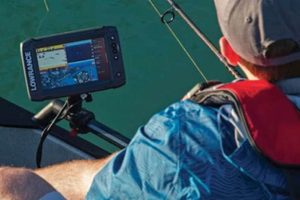
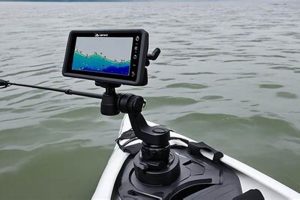
Compact sonar devices designed for use on kayaks offer anglers the ability to locate fish and underwater structures in real-time. These portable units typically feature a transducer, display screen, and power source, all integrated into a system easily mounted and operated within the limited space of a kayak. An example would be a unit with a high-frequency transducer for shallow water detection, coupled with a compact color display showing depth, fish icons, and bottom contour.
The advent of these specialized electronics has significantly enhanced the kayak fishing experience. Anglers gain a crucial advantage by identifying productive fishing areas, saving valuable time and effort. This technology allows for strategic placement of lines and lures in locations with higher probabilities of success, leading to increased catch rates. Historically, kayak anglers relied solely on experience and intuition to find fish, but these portable sonar units provide a data-driven approach, democratizing access to information previously only available with larger, more expensive equipment.
This discussion will delve into the key features to consider when selecting a suitable sonar unit for kayak fishing, explore various mounting options and techniques, and provide guidance on effective usage and interpretation of the data displayed. Further topics will include power management strategies and maintenance tips for optimal performance and longevity.
Tips for Effective Sonar Use in Kayak Fishing
Maximizing the effectiveness of compact sonar devices requires careful consideration of several factors. These tips provide guidance on optimizing performance and interpreting data effectively.
Tip 1: Transducer Placement is Crucial: Ensure the transducer is submerged below the waterline and clear of any obstructions. Mounting it on the hull, side, or using a specialized arm allows for optimal signal transmission and reception.
Tip 2: Understand Sonar Frequency: Higher frequencies (e.g., 200 kHz) provide detailed images in shallow water, while lower frequencies (e.g., 83 kHz) penetrate deeper but offer less detail. Select the appropriate frequency based on the target fishing depth.
Tip 3: Interpret Display Information: Learn to recognize fish arches, bottom contours, and vegetation on the display. Understanding these symbols allows for precise targeting of fish-holding structures.
Tip 4: Adjust Sensitivity Settings: Optimize sensitivity based on water clarity and depth. Higher sensitivity detects smaller objects but can also increase clutter in murky water.
Tip 5: Utilize GPS Functionality (if available): Mark waypoints for productive fishing areas and navigate back to them efficiently. This feature enhances repeatability and saves time searching for promising locations.
Tip 6: Manage Power Consumption: Utilize power-saving modes to extend battery life during long fishing trips. Consider carrying a spare battery or external power source for extended outings.
Tip 7: Regularly Clean the Transducer: Remove any debris or algae that may accumulate on the transducer surface to maintain optimal signal quality.
By understanding these fundamental principles, anglers can significantly improve their ability to locate fish, interpret sonar data accurately, and enhance their overall kayak fishing success.
The subsequent section will address frequently asked questions about utilizing these valuable tools in a kayak fishing environment.
1. Portability

Portability is a critical factor when selecting a fish finder for kayak use. The compact nature of kayaks necessitates equipment that is easy to transport, mount, and store. A portable fish finder allows anglers to bring essential technology onto the water without sacrificing valuable space or maneuverability.
- Compact Size and Weight
Units designed for kayak fishing are typically smaller and lighter than traditional fish finders. This reduced footprint minimizes bulk and weight, crucial factors in a kayak’s limited space. For example, a compact unit might weigh less than a pound and easily fit in a storage hatch. This allows anglers to transport and install the fish finder with minimal effort.
- Integrated Systems
Many portable fish finders feature all-in-one designs with the display, transducer, and battery combined in a single unit. This integrated approach simplifies installation and reduces clutter on the kayak. A single, self-contained unit eliminates the need for separate battery packs and wiring, streamlining the setup process.
- Versatile Mounting Options
Portable fish finders offer flexible mounting solutions compatible with kayak setups. These may include suction cup mounts, rail mounts, or specialized transducer arms. For instance, a suction cup mount allows for quick attachment and removal of the fish finder, while a rail mount offers a more permanent solution. This adaptability ensures compatibility with various kayak configurations.
- Power Source Options
Portable units typically operate on rechargeable lithium-ion batteries, eliminating the need for external power sources or complex wiring. Some models also offer compatibility with 12V power systems. Rechargeable batteries provide convenient, self-contained power, ideal for extended kayak fishing trips. The option for 12V connectivity allows integration with existing kayak power systems if desired.
The portability features of these specialized fish finders significantly enhance the kayak fishing experience. Their compact size, integrated design, versatile mounting options, and convenient power sources make them valuable tools for anglers seeking to maximize their efficiency and success on the water without compromising the inherent simplicity and maneuverability of kayak fishing.
2. Transducer Type

Transducer selection significantly impacts the performance of small fish finders designed for kayaks. The transducer acts as the sonar system’s eyes, transmitting and receiving sound waves to interpret underwater environments. Choosing the appropriate transducer type hinges on factors like target fishing depth, desired detail level, and kayak compatibility.
Several transducer types commonly suit kayak fishing. Single-beam transducers offer a conical beam providing depth readings and fish detection directly beneath the kayak. These are suitable for general-purpose use and relatively shallow waters. Down-imaging transducers emit a narrower, more focused beam, providing detailed images of the bottom structure and fish directly below. This detailed imagery excels in identifying specific targets and structures. Side-imaging transducers use multiple beams to scan areas to the sides of the kayak, creating a wider view of the underwater environment. This proves beneficial for locating fish-holding structures like drop-offs or submerged vegetation in wider areas. For example, a kayak angler fishing in shallow, weedy waters might benefit from a high-frequency single-beam transducer, while an angler targeting deep-water structures would likely prefer a down-imaging or side-imaging transducer with lower frequencies. Choosing a transducer incompatible with typical kayak usage, like a large, in-hull transducer designed for larger vessels, would be impractical and compromise portability.
Understanding transducer characteristics allows informed decisions based on individual fishing styles and target environments. Careful consideration of beam width, frequency, and mounting options ensures optimal performance. A transducer with an excessively narrow beam might miss fish outside the cone, while a transducer with an overly wide beam may sacrifice image detail. Mounting location also influences data quality. A transducer mounted too close to the kayak’s propeller, for instance, might experience interference from turbulence, reducing accuracy. Considering these factors maximizes the effectiveness of small fish finders in kayaks, leading to improved fish-finding capabilities and enhanced angling success.
3. Display Clarity

Display clarity is paramount for effective utilization of small fish finders in kayaks. Anglers must interpret on-screen information quickly and accurately, often under challenging lighting conditions. A clear, easily readable display enhances situational awareness, improves target identification, and ultimately contributes to a more successful fishing experience. Key factors influencing display clarity include screen resolution, size, color palette, and backlighting.
- Screen Resolution and Size
Higher resolution displays present sharper images and more detailed information. A larger screen size improves visibility and reduces eye strain, particularly beneficial in bright sunlight or choppy water conditions. For example, a fish finder with a 480×272 pixel resolution provides significantly greater detail than a 240×160 pixel display. A larger screen, even with a slightly lower resolution, can still offer improved readability.
- Color Palette and Contrast
Color displays differentiate between various underwater features like fish, vegetation, and bottom structure. High contrast between these elements and the background further enhances visibility. A vibrant color palette helps distinguish subtle variations in depth or bottom composition. Conversely, a washed-out display with poor contrast can make it difficult to identify key information.
- Backlighting and Sunlight Readability
Effective backlighting ensures screen visibility in low-light conditions or direct sunlight. Adjustable backlight settings cater to different lighting environments. A fish finder with poor backlighting becomes virtually unusable in bright sunlight, a common scenario in kayak fishing. Strong, adjustable backlighting enables clear viewing regardless of ambient light.
- Viewing Angle
Wide viewing angles maintain screen visibility even when the angler is not directly in front of the display. This flexibility proves particularly useful in kayaks, where the angler’s position may shift frequently. A display with a narrow viewing angle requires precise positioning for optimal viewing, which can be challenging in a dynamic kayak environment.
The cumulative impact of these display characteristics directly influences the angler’s ability to interpret sonar data effectively. Choosing a small fish finder with a clear, readable display significantly enhances the overall kayak fishing experience, enabling better decision-making, improved target identification, and ultimately, increased chances of success on the water. Investing in a fish finder with superior display quality often translates to a more productive and enjoyable fishing experience from a kayak.
4. Power Source

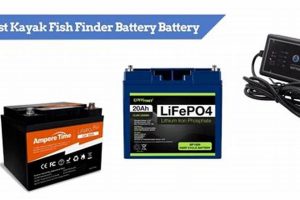
Power source selection is a critical aspect of utilizing small fish finders in kayaks. These devices require a reliable power supply for operation, and the chosen source significantly impacts the duration and feasibility of fishing trips. Kayak anglers must consider factors such as battery life, portability, and compatibility when selecting a power solution. The most common power sources for these fish finders include rechargeable lithium-ion batteries and 12V kayak power systems. Lithium-ion batteries offer portability and convenience, eliminating the need for external wiring. However, battery life is a constraint, necessitating careful power management or carrying spare batteries. A 12V system integrated into the kayak provides a continuous power supply, eliminating battery life concerns but potentially requiring more complex installation. For example, a kayak angler embarking on a multi-day fishing expedition might opt for a 12V system to ensure continuous operation, while an angler on a shorter trip might find a rechargeable lithium-ion battery sufficient. Choosing an incompatible power source, such as attempting to power a 12V fish finder directly from a small USB power bank, would lead to operational failure. Understanding power requirements and available options is crucial for ensuring uninterrupted fish finder operation.
Battery capacity directly influences operational duration. Higher capacity batteries provide longer run times but may increase weight and cost. Power consumption varies depending on fish finder settings, such as screen brightness and sonar frequency. Optimizing these settings can extend battery life. External factors, like temperature, also influence battery performance. Cold temperatures can reduce battery capacity. Practical strategies for power management include utilizing power-saving modes, reducing screen brightness when feasible, and carrying a spare battery or external charging solution for longer trips. Monitoring battery level throughout the fishing trip helps avoid unexpected power loss. For instance, an angler using a high-resolution, color display at full brightness will deplete the battery faster than an angler using a grayscale display at lower brightness. Understanding these factors enables informed decisions about power source selection and management, maximizing the effective operating time of small fish finders in kayaks.
Efficient power management is essential for maximizing the utility of small fish finders in kayak fishing. Careful selection of power sources, understanding factors influencing battery life, and employing practical power-saving strategies ensure continuous operation throughout fishing trips. Overlooking power requirements can lead to premature battery depletion, interrupting fishing and potentially necessitating an early return to shore. Effective power planning ensures uninterrupted fish finder functionality, enhancing the overall kayak fishing experience.
5. Mounting Options

Secure and adaptable mounting solutions are essential for effectively integrating small fish finders into kayak setups. The chosen mounting method influences transducer placement, display visibility, and overall user experience. Stable mounting ensures accurate sonar readings and convenient access to the display while maintaining a streamlined kayak configuration.
- Transducer Mounting
Several methods exist for mounting transducers on kayaks, each offering distinct advantages and disadvantages. Through-hull mounting provides optimal sonar performance but requires permanent modification to the kayak. Transom mounting is simpler to install but can be susceptible to turbulence. Side mounting avoids propeller interference but may affect accuracy in shallow water. Portable transducer deployments using specialized arms offer flexibility but require careful positioning. For example, a kayak angler primarily fishing in shallow, calm waters might choose a transom mount for simplicity, while an angler frequently navigating rougher waters or requiring precise depth readings might opt for a through-hull installation.
- Display Mounting
Display mounting options must balance visibility and accessibility with minimal intrusion into the kayak’s cockpit space. Common solutions include track mounts, suction cup mounts, and mounting arms. Track mounts offer adjustability and secure placement, while suction cup mounts allow for temporary installation without drilling. Mounting arms provide extended reach and flexibility for optimal viewing angles. An angler frequently changing fishing locations might prefer a suction cup mount for easy removal and reattachment, whereas an angler with a dedicated fishing kayak might choose a track mount for a more permanent and customizable setup.
- Power Source Integration
Mounting considerations extend to power sources. Battery packs can be secured in storage compartments or mounted directly to the kayak using straps or dedicated holders. Wiring for 12V systems should be routed cleanly and securely to avoid entanglement and ensure water resistance. Careful planning and execution of power source integration prevent accidental disconnections and optimize space utilization within the kayak.
- Cable Management
Effective cable management prevents tangling, minimizes interference, and maintains a clean, organized kayak setup. Cable ties, clips, and protective tubing keep wires secure and protected from damage. Proper routing prevents accidental snags and ensures smooth operation of the fish finder system. For example, an angler using a side-mounted transducer with a display mounted near the cockpit should carefully route the cable along the kayak’s gunwale to minimize interference and prevent entanglement with fishing gear.
Choosing appropriate mounting options is paramount for optimizing the performance and usability of small fish finders in kayaks. Careful consideration of transducer placement, display visibility, power source integration, and cable management ensures a streamlined, functional setup that enhances the overall fishing experience. Selecting unsuitable mounting solutions can lead to inaccurate sonar readings, compromised display visibility, and potential damage to equipment, ultimately hindering angling success. Properly mounting the fish finder enhances its effectiveness and integrates it seamlessly into the kayak fishing environment.
Frequently Asked Questions about Small Fish Finders for Kayaks
This section addresses common inquiries regarding the selection, installation, and utilization of compact sonar devices designed for kayak fishing. Clarity on these points facilitates informed decisions and promotes effective use of this technology.
Question 1: What is the typical battery life of a small fish finder for a kayak?
Battery life varies depending on factors such as screen brightness, sonar frequency, and ambient temperature. Generally, rechargeable lithium-ion batteries in these units provide between 4 to 8 hours of continuous use. Utilizing power-saving modes and reducing screen brightness can significantly extend operational time.
Question 2: Can these units be used in saltwater environments?
Most small fish finders designed for kayaks are suitable for both freshwater and saltwater use. However, rinsing the unit with fresh water after each saltwater trip is essential to prevent corrosion and maintain optimal performance.
Question 3: How does one interpret the information displayed on the screen?
Understanding the symbols and data displayed is crucial for effective fish finding. Fish typically appear as arches or icons on the screen. Bottom contours, depth readings, and vegetation density are also displayed, assisting in identifying promising fishing locations. Consulting the user manual provides detailed explanations of specific display elements for the chosen model.
Question 4: Are these devices difficult to install on a kayak?
Installation varies depending on the chosen mounting method and fish finder model. Many portable units offer simple installation procedures using suction cup mounts or rail mounts. More complex installations, such as through-hull transducer placements, may require specialized tools and expertise. Consulting the manufacturer’s instructions provides detailed guidance for specific installations.
Question 5: What is the optimal transducer mounting location on a kayak?
The best transducer location depends on the kayak’s hull design and the specific fishing environment. Common locations include the transom, side of the hull, or inside the hull for optimal sonar performance. Avoiding areas of turbulence, such as near the propeller, is essential for accurate readings. Experimentation and consideration of the manufacturer’s recommendations often lead to optimal placement.
Question 6: What is the price range for small fish finders suitable for kayaks?
Prices vary depending on features, display size, and transducer type. Basic models typically start around $100, while more advanced units with features like GPS and side-imaging can cost upwards of $500. Consider individual needs and budget constraints when selecting a suitable model.
Addressing these common queries facilitates informed decisions regarding the selection and utilization of small fish finders in kayaks. Understanding these aspects enhances the effectiveness of this valuable technology, ultimately contributing to a more successful and enjoyable kayak fishing experience.
The following section will offer concluding remarks and summarize the key benefits of incorporating these devices into kayak fishing practices.
Small Fish Finder for Kayak
Compact sonar devices tailored for kayak use offer significant advantages to anglers. This discussion explored critical aspects of these specialized electronics, including transducer selection, display clarity, power sources, mounting options, and effective utilization strategies. Portability, coupled with advanced features like GPS and various sonar imaging capabilities, enhances the kayak fishing experience, enabling strategic decision-making and increased angling success. Understanding the nuances of transducer types and optimizing display settings are essential for maximizing effectiveness. Careful consideration of power management and appropriate mounting solutions ensures uninterrupted operation and seamless integration with the kayak’s design.
The evolution of compact fish finders has transformed kayak angling, providing access to sophisticated technology previously limited to larger vessels. As technology continues to advance, further miniaturization and enhanced features will likely emerge, further refining the kayak fishing experience. Strategic adoption of these tools empowers anglers to explore underwater environments with greater precision and efficiency, maximizing their potential for success on the water. Continued exploration of these technologies promises to further refine the pursuit of angling from a kayak.