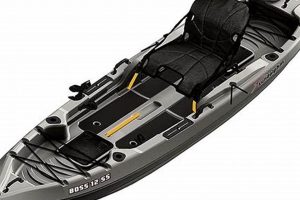
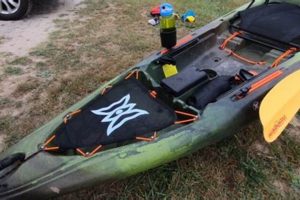
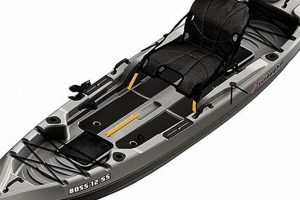
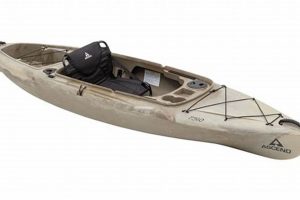
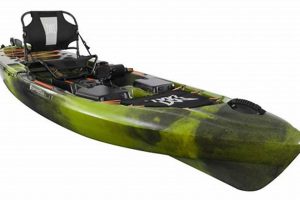
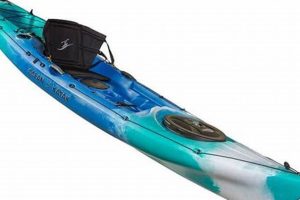
High-quality, enclosed-hull fishing kayaks offer anglers stability, protection from the elements, and ample storage for gear and equipment. These vessels are designed specifically for angling, often featuring specialized seating, rod holders, and mounting points for fish finders and other accessories. For example, some models incorporate adjustable foot braces and elevated seating positions for improved paddling ergonomics and casting vantage points.
Choosing the right kayak significantly enhances fishing experiences. A stable and well-equipped vessel allows anglers to focus on the sport, providing comfortable and efficient access to fishing grounds. This type of watercraft has evolved considerably, moving from basic recreational designs to highly specialized platforms optimized for different fishing styles and environments. The evolution has been driven by advancements in materials, construction techniques, and a deeper understanding of angler needs.
Key factors to consider when selecting a fishing kayak include hull design (for stability and tracking), material (durability and weight), features (rod holders, storage), and intended use (calm lakes, rivers, or open ocean). These considerations will be explored in detail in the sections below.
Tips for Selecting a Sit-In Fishing Kayak
Choosing a suitable sit-in fishing kayak requires careful consideration of various factors. The following tips offer guidance for making an informed decision.
Tip 1: Consider Hull Design: Hull design significantly impacts stability and maneuverability. Wider, flatter hulls offer greater initial stability, ideal for calm waters and stand-up fishing. Longer, narrower hulls track better and are more efficient for paddling longer distances.
Tip 2: Evaluate Material and Weight: Kayaks are typically constructed from polyethylene (durable and affordable) or composites (lighter and more performance-oriented). Consider the kayak’s weight, especially if portability and transport are concerns.
Tip 3: Assess Seating and Comfort: A comfortable seat is crucial for long hours on the water. Look for adjustable seating systems and ample back support. Consider the cockpit size and legroom for optimal comfort.
Tip 4: Examine Storage Options: Ample storage is essential for carrying fishing gear, tackle, and safety equipment. Evaluate the size, accessibility, and watertightness of storage compartments.
Tip 5: Prioritize Rod Holders and Gear Tracks: Dedicated rod holders and gear tracks allow for convenient rod placement and customization. Consider the number and placement of rod holders to suit individual fishing styles.
Tip 6: Factor in Propulsion Systems: Traditional paddle kayaks provide a quiet and immersive experience. Pedal-drive or motor-powered kayaks offer hands-free fishing and increased speed.
Tip 7: Think About Intended Use: Consider the type of water and fishing conditions. Ocean kayaks prioritize stability and seaworthiness, while river kayaks focus on maneuverability. Lake kayaks often emphasize stability and features for stand-up fishing.
Selecting the right kayak enhances fishing experiences by providing comfort, stability, and efficient access to fishing grounds. A well-chosen vessel allows anglers to focus on the sport and maximizes their time on the water.
By understanding these tips and applying them to individual needs, anglers can select the ideal sit-in fishing kayak for their preferred fishing style and environment.
1. Stability

Stability stands as a cornerstone of performance in fishing kayaks, directly influencing angler safety, comfort, and fishing effectiveness. A stable platform allows for casting, reeling, and landing fish without the constant threat of capsizing, particularly crucial in challenging conditions such as windy days or when battling larger fish. This stability fosters confidence, allowing anglers to focus on the task at hand rather than maintaining balance. A stable kayak also contributes to a more comfortable fishing experience, minimizing fatigue and maximizing enjoyment on the water. For example, the ability to stand and fish in certain sit-in kayaks significantly expands casting range and visibility, advantages directly linked to platform stability. Compromised stability, conversely, can restrict movement, limit fishing techniques, and present a significant safety risk.
Several factors contribute to kayak stability. Hull design plays a pivotal role; wider, flatter hulls generally offer greater initial stability, making them suitable for calmer waters. Features like outriggers and stabilizers can further enhance stability, especially valuable in challenging conditions or for anglers who prioritize stand-up fishing. Weight distribution within the kayak also influences stability. Properly distributing gear and maintaining a low center of gravity enhances stability, while uneven loading can compromise balance and increase the risk of capsizing. Understanding these factors empowers anglers to select kayaks and adopt practices that maximize stability, contributing to a safer and more rewarding fishing experience. Consider a scenario where an angler hooks a large fish in a narrow, less stable kayak; the struggle could easily lead to instability and potential capsize. Conversely, a wider, more stable platform provides a secure foundation during the fight, increasing the angler’s chances of landing the fish safely and efficiently.
In summary, stability forms an essential foundation for a successful fishing kayak. Prioritizing stability through informed kayak selection and mindful weight distribution enhances safety, improves fishing effectiveness, and contributes to a more comfortable and enjoyable on-the-water experience. Overlooking this crucial aspect can compromise safety, limit fishing techniques, and detract from the overall enjoyment of the sport.
2. Comfort

Comfort plays a pivotal role in the overall fishing kayak experience. Extended periods on the water necessitate a comfortable environment to minimize fatigue and maximize enjoyment. A well-designed, comfortable kayak allows anglers to focus on fishing, rather than discomfort, resulting in a more productive and enjoyable outing.
- Seat Design and Adjustability
Seat design significantly impacts comfort. Features like adjustable backrests, lumbar support, and breathable fabrics contribute to a comfortable seating posture, reducing strain and fatigue during long hours on the water. High-quality padding and adjustable straps allow for customization, catering to individual preferences and body types. A poorly designed seat can lead to backaches, stiffness, and a generally unpleasant experience, hindering fishing performance and enjoyment. Kayaks with adjustable seating systems allow anglers to fine-tune their position for optimal comfort and paddling efficiency.
- Legroom and Cockpit Size
Adequate legroom and a spacious cockpit contribute to overall comfort, especially during long fishing trips. Sufficient space allows for comfortable leg extension and movement within the kayak, reducing cramping and stiffness. A cramped cockpit can restrict movement, making entry and exit difficult and contributing to discomfort. Kayaks with adjustable foot braces and ample legroom accommodate anglers of varying heights and sizes, enhancing overall comfort and fishing experience.
- Back Support and Posture
Proper back support is crucial for maintaining a healthy posture and preventing back pain during extended periods in a kayak. Ergonomically designed seats with adjustable backrests and lumbar support provide crucial support, promoting good posture and reducing strain on the back. Inadequate back support can lead to discomfort, fatigue, and potential long-term back problems. Kayaks with adjustable backrests and lumbar support allow anglers to customize their seating position for optimal comfort and back health.
- Padding and Breathability
Seat padding and breathability significantly influence comfort, especially in warm weather. High-quality padding cushions the body, reducing pressure points and enhancing comfort. Breathable fabrics promote airflow, preventing overheating and moisture buildup, which can lead to discomfort and skin irritation. Kayaks with well-padded, breathable seats provide a more comfortable and enjoyable experience, especially during long hours in hot or humid conditions. Conversely, seats lacking adequate padding and breathability can become uncomfortable and contribute to fatigue.
These comfort features collectively contribute to a positive and productive fishing experience. A comfortable angler is a more focused and effective angler. By prioritizing comfort when selecting a sit-in fishing kayak, individuals enhance their enjoyment of the sport and maximize their time on the water. Discomfort can detract from the fishing experience, leading to fatigue, reduced focus, and a less enjoyable outing overall. Investing in a comfortable kayak significantly enhances the overall fishing experience and allows anglers to fully appreciate their time on the water.
3. Durability
Durability represents a critical factor in evaluating sit-in fishing kayaks, directly impacting the vessel’s lifespan, safety, and overall performance. A durable kayak withstands the rigors of regular use, including impacts, abrasion, and exposure to various environmental conditions. This resilience translates to a longer lifespan, reducing the need for frequent repairs or replacements. Durability also contributes significantly to safety; a robust hull is less likely to crack or puncture in the event of a collision or impact with submerged objects. These kayaks are often used in challenging environments, encountering rocks, logs, and other potential hazards. A durable construction minimizes the risk of damage and ensures angler safety in such situations. For example, a kayak constructed from high-density polyethylene can withstand significant impacts without sustaining structural damage, ensuring the angler’s safety and the kayak’s longevity.
Several factors influence kayak durability. Material selection plays a primary role. High-density polyethylene (HDPE) offers excellent impact resistance and UV resistance, contributing to a long lifespan even with frequent use. Other materials, such as composites (fiberglass, carbon fiber, or Kevlar), offer varying degrees of durability depending on the specific construction. Manufacturing processes also impact durability. Rotational molding, commonly used for HDPE kayaks, creates a seamless, uniform hull with excellent strength and impact resistance. Construction techniques, such as the use of reinforced seams and bulkheads, further enhance structural integrity and resistance to damage. For instance, kayaks with reinforced keels and sterns withstand abrasion and impacts in shallow water or rocky environments, preserving the vessel’s structural integrity and extending its lifespan. Neglecting durability can lead to premature wear and tear, costly repairs, and potentially dangerous situations on the water.
Investing in a durable fishing kayak offers significant long-term benefits. A robust construction minimizes the risk of damage, extends the kayak’s lifespan, and contributes to angler safety. Durability ultimately allows anglers to focus on fishing, confident in the resilience and reliability of their equipment. Choosing a kayak built to withstand the demands of the sport ultimately enhances the overall fishing experience and represents a worthwhile investment for serious anglers. The ability to withstand harsh conditions and resist damage ensures that the kayak remains a reliable tool for years to come, enabling anglers to explore various fishing locations and pursue their passion without compromise.
4. Storage Capacity

Ample storage capacity is a defining characteristic of best sit-in fishing kayaks, directly impacting practicality and the overall fishing experience. These vessels are designed to accommodate not only essential fishing gear but also safety equipment, personal belongings, and often, the catch of the day. Insufficient storage can lead to a cluttered cockpit, hindering movement and access to essential items. It can also limit the range of fishing trips, forcing anglers to prioritize gear and potentially compromise safety or preparedness. For instance, limited storage might necessitate leaving behind essential safety gear like a first-aid kit or extra layers of clothing, potentially creating dangerous situations in unforeseen circumstances. Conversely, generous storage facilitates organized packing, allowing anglers to carry a wider array of tackle, tools, and safety equipment, expanding fishing versatility and ensuring preparedness for various scenarios. A well-organized kayak contributes to a more efficient and enjoyable fishing experience, allowing anglers to focus on the sport rather than managing a cramped and cluttered environment.
Several factors contribute to effective storage solutions in these kayaks. Dedicated compartments, such as waterproof hatches and sealed storage wells, protect sensitive items from water damage. Bungee cords and rigging systems secure larger items like tackle boxes and coolers, preventing them from shifting during transit or rough water conditions. Recessed storage areas maximize cockpit space, allowing for comfortable movement and casting. The strategic placement of storage compartments also plays a crucial role. Easy-to-reach storage for frequently used items, such as lures and tools, minimizes disruption during fishing. Larger, more secure storage areas accommodate less frequently accessed items like extra clothing or emergency supplies. Consider a scenario where an angler needs to quickly access a first-aid kit in an emergency. A well-organized kayak with a dedicated and easily accessible compartment for such supplies facilitates a rapid response, potentially mitigating the severity of an injury. Conversely, rummaging through a cluttered cockpit wastes valuable time and can exacerbate the situation.
In conclusion, storage capacity is an integral component of best sit-in fishing kayaks. Adequate and well-designed storage directly enhances fishing practicality, safety, and overall enjoyment. Prioritizing storage solutions when selecting a kayak ensures that anglers can carry all essential gear, remain organized on the water, and focus on the sport without the limitations and frustrations imposed by inadequate storage space. This contributes not only to a more successful fishing experience but also to angler safety and preparedness on the water.
5. Maneuverability
Maneuverability represents a critical performance attribute in best sit-in fishing kayaks, directly influencing anglers’ ability to navigate diverse water conditions and access prime fishing locations. Efficient maneuvering enables precise boat control in tight quarters, such as navigating through dense vegetation or around submerged obstacles. It also contributes to effective fishing techniques, allowing anglers to position the kayak optimally for casting and retrieving lines. A highly maneuverable kayak enhances anglers’ ability to respond quickly to changing currents, wind conditions, and fish behavior, maximizing fishing opportunities. Conversely, a kayak lacking maneuverability can hinder access to desirable fishing spots and limit an angler’s ability to respond effectively to dynamic on-the-water situations.
- Hull Design and Length
Hull design significantly influences kayak maneuverability. Shorter kayaks with wider, flatter hulls generally offer greater maneuverability in tight spaces, facilitating quick turns and precise adjustments. Longer, narrower hulls, while offering better tracking and speed in open water, may be less nimble in confined areas or when navigating complex shorelines. For example, a shorter kayak excels in navigating narrow creeks or maneuvering through dense weed beds, allowing anglers to access secluded fishing spots. Conversely, a longer kayak might struggle in these environments, limiting access and potentially hindering fishing success.
- Waterline Length and Turning Radius
Waterline length directly impacts a kayak’s turning radius. Shorter waterlines generally result in tighter turning circles, allowing for quicker and more responsive maneuvering. Longer waterlines, while offering greater speed and tracking, require more space and effort to turn, potentially posing challenges in confined areas or rapidly changing currents. Understanding the relationship between waterline length and turning radius helps anglers select a kayak suited to their intended fishing environments. A kayak with a shorter waterline excels in navigating tight corners and quickly changing directions, crucial for pursuing fish in complex environments.
- Rudder and Skeg Systems
Rudders and skegs enhance kayak maneuverability and tracking, especially in windy conditions or moving water. Rudders provide active control over steering, allowing for precise course adjustments. Skegs enhance directional stability, reducing the tendency of the kayak to yaw or veer off course. These features contribute to greater efficiency and control, allowing anglers to maintain desired positions and navigate challenging conditions with greater ease. For instance, a rudder proves invaluable in strong crosswinds, allowing anglers to maintain a straight course and avoid being blown off course, while a skeg enhances tracking in currents, reducing the need for constant corrective strokes.
- Paddle Length and Technique
Paddle length and paddling technique also influence kayak maneuverability. Shorter paddles offer greater control for quick turns and maneuvering in tight spaces. Proper paddling technique, including sweep strokes and draw strokes, further enhances maneuvering precision. Effective paddle use allows for efficient turning and precise positioning, maximizing fishing effectiveness and responsiveness to changing on-the-water conditions. A skilled paddler can maneuver a kayak efficiently even in challenging environments, demonstrating the significant impact of technique on maneuverability.
Maneuverability is an essential consideration for anglers seeking optimal performance and access in their sit-in fishing kayaks. Understanding the interplay of hull design, waterline length, rudder/skeg systems, and paddling technique empowers anglers to select kayaks best suited to their target fishing environments and preferred fishing styles. Prioritizing maneuverability enhances fishing effectiveness, expands access to desirable fishing locations, and contributes to a safer and more rewarding on-the-water experience, allowing anglers to navigate complex waterways, respond efficiently to changing conditions, and ultimately maximize their fishing success.
6. Fishing Features
Specialized fishing features distinguish best sit-in fishing kayaks from recreational models, directly impacting angling effectiveness and overall experience. These features are designed to enhance convenience, organization, and fishing-specific functionality, enabling anglers to focus on the sport rather than managing equipment or adapting a non-specialized vessel. Integrated features like rod holders, tackle storage, and fish finder mounts contribute to a more streamlined and productive fishing experience. For example, dedicated rod holders secure rods while paddling or during inactive fishing periods, preventing loss or damage and freeing the angler’s hands for other tasks. Conversely, adapting a recreational kayak for fishing often involves makeshift solutions that compromise stability, convenience, and overall fishing effectiveness. The absence of purpose-built features necessitates improvisation, potentially detracting from the fishing experience.
Several key features contribute to a superior fishing kayak. Multiple rod holders, strategically positioned for easy access and varied fishing techniques, accommodate different rod types and fishing styles. Ample and organized tackle storage, including dedicated compartments for lures, hooks, and other small items, keeps essential gear readily accessible and prevents clutter in the cockpit. Integrated mounting systems for fish finders, GPS units, and other electronics provide seamless integration of technology, enhancing fish-finding capabilities and navigation. Further enhancements, like live wells or bait tanks, cater to specific fishing styles requiring live bait or the temporary storage of caught fish. For instance, a kayak equipped with a live well allows for keeping bait fish fresh and active, crucial for certain angling techniques. Without this dedicated feature, maintaining live bait becomes significantly more challenging, potentially limiting fishing success.
In summary, specialized fishing features represent a defining characteristic of best sit-in fishing kayaks. These features directly enhance fishing effectiveness, convenience, and overall enjoyment. Investing in a kayak equipped with purpose-built fishing features contributes to a more organized, efficient, and ultimately more successful angling experience. The integration of these features streamlines essential tasks, allowing anglers to maximize their time on the water and focus on what matters most catching fish. Understanding the role and importance of these features empowers anglers to make informed decisions when selecting a kayak tailored to their specific needs and fishing preferences.
7. Price Point
Price point plays a significant role in the selection of a sit-in fishing kayak, influencing the available features, materials, and overall quality. Kayaks span a wide price range, from budget-friendly options to high-end models with advanced features and premium construction. Understanding the relationship between price and features allows for informed decisions aligned with individual budgets and fishing needs. A higher price point often correlates with advanced materials like composites, enhancing durability and reducing weight. Features such as integrated electronics, advanced seating systems, and specialized storage solutions also tend to command higher prices. For example, a premium kayak might feature a lightweight carbon fiber hull, a fully adjustable ergonomic seat, and a built-in fish finder, features typically absent in lower-priced models. Conversely, budget-friendly kayaks often utilize less expensive materials like polyethylene and offer more basic features, focusing on core functionality and affordability. A less expensive kayak might offer a simpler seat, fewer rod holders, and limited storage options, representing a trade-off between cost and features.
Careful consideration of budget and desired features is crucial when selecting a fishing kayak. Prioritizing essential features within a defined budget leads to informed decisions and optimal value. Evaluating long-term costs, including potential repairs, maintenance, and upgrades, provides a comprehensive perspective on overall investment. A less expensive kayak might require more frequent repairs or upgrades in the long run, potentially exceeding the initial cost savings of a more durable, higher-priced model. Considering resale value also contributes to informed decision-making. Higher-quality kayaks often retain their value better than lower-priced models, potentially offsetting the initial investment. For instance, an angler focusing primarily on calm-water fishing might prioritize stability and comfort over speed and advanced features, potentially selecting a less expensive kayak that adequately meets those specific needs. Conversely, an angler frequently fishing in challenging conditions might prioritize durability and advanced features, justifying the higher cost of a premium kayak.
In conclusion, understanding the relationship between price point and features empowers informed kayak selection. Balancing desired features with budget constraints, considering long-term costs, and researching resale values contribute to sound decisions. Choosing a kayak aligned with individual fishing needs, budget, and long-term goals ensures a satisfying purchase and maximizes the value of the investment, enabling anglers to enjoy the sport without exceeding financial limitations. Recognizing that price reflects not only features but also material quality, construction techniques, and brand reputation provides a holistic perspective, enabling anglers to select the best sit-in fishing kayak within their budget and aligned with their fishing objectives.
Frequently Asked Questions
This section addresses common inquiries regarding the selection and use of high-quality, enclosed-hull fishing kayaks.
Question 1: What are the primary advantages of a sit-in kayak for fishing compared to a sit-on-top kayak?
Sit-in kayaks offer superior protection from the elements and typically provide greater storage capacity for gear. These designs also tend to track better in wind and current, offering a more efficient paddling experience. Sit-on-tops, while offering greater ease of entry and exit, can be more susceptible to wind and waves.
Question 2: How does hull design affect the performance of a sit-in fishing kayak?
Hull design significantly influences stability, speed, and maneuverability. Wider hulls provide greater initial stability, while longer, narrower hulls enhance tracking and speed. Specific hull shapes cater to different water conditions and fishing styles, making careful consideration of hull design essential.
Question 3: What materials are commonly used in the construction of sit-in fishing kayaks, and how do they differ in terms of durability and weight?
High-density polyethylene (HDPE) is a common material due to its durability, affordability, and impact resistance. Composite materials, such as fiberglass or carbon fiber, offer lighter weight and greater performance but often come at a higher price. Each material presents advantages and disadvantages regarding weight, durability, and cost.
Question 4: What essential features should one look for when choosing a sit-in fishing kayak?
Essential features include rod holders, ample storage compartments, comfortable seating with adjustable back support, and a stable hull design. Additional features like rudder systems, gear tracks, and integrated fish finder mounts enhance convenience and fishing performance, depending on individual needs and preferences.
Question 5: How does one determine the appropriate size and weight capacity for a sit-in fishing kayak?
Appropriate size and weight capacity depend on the angler’s body weight and the intended use of the kayak. Manufacturers provide weight capacity specifications, which should be adhered to for safety and optimal performance. Consider the combined weight of the angler, gear, and any potential catch when determining the appropriate weight capacity.
Question 6: What safety precautions should be taken when using a sit-in fishing kayak?
Always wear a personal flotation device (PFD). Inform someone of your fishing plans, including location and expected return time. Carry essential safety equipment, such as a whistle, signaling device, and first-aid kit. Check weather conditions before embarking on a fishing trip and be prepared for changing conditions. Understanding and practicing basic kayak safety procedures is paramount for a safe and enjoyable experience.
Careful consideration of these frequently asked questions provides a foundation for informed decision-making when selecting and using a sit-in fishing kayak. Prioritizing safety, understanding performance characteristics, and choosing features aligned with individual fishing needs contribute to a rewarding and successful on-the-water experience.
Further information regarding specific kayak models, fishing techniques, and safety practices enhances angling knowledge and contributes to a deeper appreciation of the sport.
Conclusion
Careful selection of high-quality, enclosed-hull fishing kayaks hinges upon a comprehensive understanding of key performance characteristics. Stability, comfort, durability, storage capacity, maneuverability, specialized fishing features, and price point all contribute significantly to the overall angling experience. Prioritizing these aspects, in conjunction with individual fishing styles and target environments, empowers informed decision-making, optimizing performance, safety, and long-term satisfaction. Thorough research, consideration of specific needs, and a balanced approach to features and budget lead to the selection of a vessel capable of enhancing fishing success and enjoyment.
The pursuit of angling excellence necessitates equipment capable of meeting the demands of the sport. High-quality, enclosed-hull fishing kayaks represent a significant investment, offering the potential to elevate fishing experiences. Informed selection processes empower anglers to acquire vessels perfectly aligned with individual needs, enhancing not only fishing effectiveness but also the overall connection with the aquatic environment. A thoughtfully chosen kayak becomes an extension of the angler, facilitating exploration, adventure, and the pursuit of prized catches.