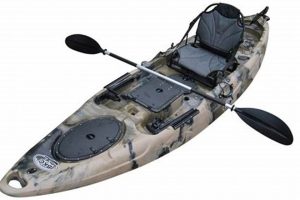
Selecting a high-quality kayak designed for fishing involves considering various factors, including stability, storage capacity, comfort, and maneuverability. A well-chosen vessel enhances the angling experience by providing a stable platform for casting, ample space for gear, and efficient movement across the water. For example, a kayak with a stable hull and built-in rod holders offers a superior fishing experience compared to a recreational kayak lacking these features.
Choosing the appropriate watercraft significantly impacts fishing success and overall enjoyment. A comfortable and efficient kayak allows anglers to cover more water, access hard-to-reach fishing spots, and focus on the activity rather than managing an unwieldy vessel. Historically, fishing from small, human-powered boats has been a common practice across cultures. Modern advancements in kayak design and materials have elevated this practice, offering specialized features tailored to the needs of anglers.
This article will delve into the key features to consider when selecting a fishing kayak, including hull design, propulsion systems, storage options, and essential accessories. Subsequent sections will explore different types of fishing kayaks suited to various environments and fishing styles, along with recommendations for top-rated models.
Tips for Selecting a Fishing Kayak
Choosing a suitable fishing kayak requires careful consideration of individual needs and preferences, as well as the intended fishing environment. The following tips offer guidance for making an informed decision.
Tip 1: Consider Hull Design: Kayak hull designs significantly impact stability and maneuverability. A wider, flatter hull provides greater stability, ideal for calm waters and stand-up fishing. A longer, narrower hull offers better tracking and speed, suited for covering larger distances or paddling in currents.
Tip 2: Evaluate Propulsion Options: Kayaks are propelled using paddles, pedals, or motors. Paddle kayaks offer affordability and exercise but require more physical effort. Pedal kayaks provide hands-free fishing and increased speed, while motor-powered kayaks cover vast distances effortlessly but come with a higher price tag.
Tip 3: Assess Storage Capacity: Ample storage is essential for carrying fishing gear, tackle boxes, and safety equipment. Consider the size and accessibility of storage compartments, including hatches, tank wells, and rod holders.
Tip 4: Prioritize Comfort and Ergonomics: A comfortable seat and adjustable footrests are crucial for long hours on the water. Ensure the kayak offers adequate legroom and back support for a comfortable paddling experience.
Tip 5: Factor in Weight Capacity: The kayak’s weight capacity should accommodate the angler’s weight, along with the weight of all gear and equipment. Exceeding the weight capacity compromises stability and performance.
Tip 6: Think About the Fishing Environment: Consider the type of water (calm lakes, rivers, or open ocean) and the target fish species when selecting a kayak. Specialized kayaks are designed for specific fishing environments and techniques.
Tip 7: Set a Budget: Fishing kayaks range in price from a few hundred to several thousand dollars. Establish a budget beforehand to narrow down the options and avoid overspending.
By carefully considering these factors, anglers can select a kayak that enhances their fishing experience, provides optimal performance, and ensures safety on the water.
The following section will explore different types of fishing kayaks and recommend top-rated models based on specific fishing styles and environments.
1. Stability

Stability stands as a cornerstone in evaluating fishing kayaks. A stable platform is paramount for various on-the-water activities, including casting, reeling, landing fish, and even standing to sight-cast in certain models. Compromised stability can lead to capsizing, jeopardizing not only the fishing experience but also safety. The degree of stability required depends on the intended fishing environment. Calm lakes and ponds demand less primary stability (resistance to initial tipping) than rivers or open ocean conditions. For example, anglers fishing in choppy coastal waters require a kayak with exceptional secondary stability (resistance to further tipping once tilted). This characteristic ensures the vessel remains upright even when encountering waves or wakes.
Several design elements contribute to kayak stability. Hull width and shape play a crucial role; wider, flatter hulls generally offer greater initial stability. Outrigger systems and pontoons further enhance stability, particularly valuable for anglers who prefer to stand while fishing. Weight distribution also influences stability; keeping the center of gravity low enhances balance. Understanding the interplay of these factors empowers informed decision-making when selecting a fishing kayak. For instance, an angler planning to fish in sheltered bays might prioritize maneuverability over extreme stability, opting for a slightly narrower hull. Conversely, an angler targeting large game fish in offshore waters requires maximum stability, justifying a wider, more stable platform.
In summary, stability directly impacts safety and fishing effectiveness. Evaluating stability requirements based on the intended fishing environment, understanding the influence of design features, and considering individual preferences collectively contribute to selecting a fishing kayak that maximizes both performance and on-the-water confidence. Neglecting this critical aspect can lead to an unsuitable choice, hindering fishing success and potentially compromising safety.
2. Maneuverability

Maneuverability represents a critical factor in determining a fishing kayak’s suitability for specific environments and fishing styles. The ability to navigate efficiently through tight spaces, swiftly change directions, and maintain control in challenging conditions directly impacts fishing success. A highly maneuverable kayak allows anglers to access secluded fishing spots, effectively work shorelines, and respond quickly to changing currents or fish movement. Conversely, a kayak lacking maneuverability can hinder access to prime fishing areas and impede responsiveness to opportunities. For example, navigating narrow creeks or mangrove tunnels requires a kayak with exceptional turning capabilities, while tackling swift river currents necessitates precise control and responsiveness.
Several design elements influence a kayak’s maneuverability. Hull length and shape play significant roles; shorter kayaks generally turn more quickly than longer ones. A kayak’s rocker (the curvature of the hull from bow to stern) also affects maneuverability; a higher rocker profile enhances turning performance, while a flatter rocker improves tracking in a straight line. The type of rudder or skeg system, if present, further impacts maneuverability. A well-designed rudder system allows for precise directional control, while a skeg enhances tracking and reduces yaw (side-to-side movement). Understanding these design elements allows for informed decisions tailored to specific fishing needs. For instance, an angler fishing in tight quarters might prioritize a shorter kayak with a higher rocker, while an angler paddling long distances on open water might favor a longer kayak with a flatter rocker and a well-designed skeg.
In summary, maneuverability plays a pivotal role in fishing kayak performance. Evaluating maneuverability requirements based on intended fishing locations, understanding the impact of design features, and aligning these factors with individual fishing styles optimizes on-the-water effectiveness. Overlooking maneuverability can lead to a kayak that restricts access to productive fishing areas or hinders responsiveness to changing conditions, ultimately diminishing the overall fishing experience.
3. Storage Capacity

Storage capacity represents a critical factor in evaluating fishing kayaks, directly impacting an angler’s ability to carry essential gear, tackle, and safety equipment. Adequate storage ensures convenient access to necessary items, promoting efficient fishing practices and enhancing overall on-the-water experiences. Insufficient storage can lead to cluttered decks, hindering movement and potentially compromising safety. The ideal storage configuration depends on individual fishing styles and the type and quantity of gear typically carried.
- Types of Storage Compartments
Fishing kayaks offer diverse storage solutions, including hatches, tank wells, and specialized compartments for tackle boxes and rods. Hatches provide secure, waterproof storage for valuable items and gear sensitive to moisture. Tank wells, typically located behind the seat, offer open storage for larger items like crates or coolers. Dedicated tackle storage compartments keep lures, hooks, and other small items organized and easily accessible. The choice of storage type depends on the specific gear carried and the angler’s organizational preferences. For example, fly fishermen might prioritize dedicated fly box storage, while bass anglers might prefer larger open tank wells for tackle bags and coolers.
- Storage Capacity and Kayak Size
Kayak size directly correlates with storage capacity. Longer kayaks generally offer more storage space than shorter models. However, larger kayaks can be more challenging to transport and maneuver, requiring consideration of individual needs and physical capabilities. Anglers planning extended trips or carrying substantial gear might prioritize larger kayaks with ample storage, while those fishing smaller bodies of water or prioritizing maneuverability might opt for smaller kayaks with less storage but greater agility. For instance, kayak anglers targeting large pelagic fish offshore require substantial storage for specialized gear and safety equipment, justifying a larger vessel. Conversely, anglers fishing small streams or ponds prioritize maneuverability over maximum storage capacity.
- Weight Capacity and Storage Considerations
A kayak’s weight capacity limits the total weight of the angler, gear, and equipment. Exceeding the weight capacity compromises stability and performance, potentially leading to safety risks. Anglers carrying heavier gear must carefully consider weight capacity when selecting a kayak. Distributing weight evenly within the kayak also contributes to stability and efficient handling. Overloading a kayak with gear reduces freeboard (the distance between the waterline and the deck), increasing the risk of capsizing, especially in rough conditions. Careful planning and packing are essential to ensure optimal weight distribution and safe operation within the kayak’s specified weight limits.
- Accessibility and Organization
Easy access to stored gear streamlines fishing activities and minimizes disruptions. Well-designed storage compartments with strategically placed hatches and readily accessible tackle boxes enhance efficiency. Consider the layout and accessibility of storage areas when evaluating different kayak models. Features like recessed rod holders, bungee cords, and gear tracks contribute to organized storage and efficient gear management. For example, readily accessible rod holders allow for quick changes in lures or techniques without disrupting the fishing flow. Similarly, strategically placed hatches and compartments prevent the need to rummage through gear, minimizing distractions and maximizing fishing time.
In conclusion, storage capacity significantly influences the overall fishing kayak experience. Carefully evaluating storage needs, considering different storage types, and prioritizing accessibility contribute to efficient gear management, enhanced fishing effectiveness, and a more enjoyable time on the water. Selecting a kayak with appropriate storage capacity tailored to individual fishing styles and gear requirements is paramount for maximizing on-the-water success and overall satisfaction.
4. Comfort
Comfort plays a crucial role in determining the overall enjoyment and effectiveness of a fishing kayak. Extended periods on the water require a comfortable and supportive seating arrangement to minimize fatigue and maximize focus on fishing. A poorly designed seat can lead to discomfort, back pain, and reduced fishing time, ultimately hindering the overall experience. Evaluating comfort features is essential in selecting a kayak that allows anglers to fish comfortably for hours, regardless of conditions.
- Seat Design and Adjustability
Seat design significantly impacts long-term comfort. Features like adjustable backrests, lumbar support, and padded seating surfaces contribute to a more ergonomic and supportive seating position. Adjustable features allow anglers to customize the seat to their individual body shape and preferences, promoting proper posture and reducing strain. High-quality seating materials, such as breathable mesh or padded cushions, enhance comfort and prevent overheating. A well-designed seat allows anglers to maintain focus on fishing rather than discomfort, ultimately maximizing enjoyment and effectiveness on the water. For example, a kayak with a poorly designed seat can lead to back pain and fatigue, shortening fishing trips and diminishing overall enjoyment. Conversely, a comfortable and adjustable seat allows anglers to fish for extended periods without discomfort, increasing their chances of success and enhancing the overall experience.
- Legroom and Footrests
Adequate legroom and adjustable footrests are essential for maintaining a comfortable and stable paddling position. Sufficient legroom allows for comfortable movement and prevents cramping during long paddling sessions. Adjustable footrests accommodate different leg lengths and paddling styles, promoting efficient power transfer and reducing fatigue. Proper leg and foot positioning contributes to overall body posture and balance, essential for maintaining stability and control of the kayak, especially in challenging conditions. For instance, cramped legroom can lead to discomfort and reduced paddling efficiency, while adjustable footrests allow anglers to maintain an optimal paddling position, enhancing both comfort and performance.
- Standing Platform Stability
For anglers who prefer to stand while fishing, a stable standing platform is essential. Kayaks designed for stand-up fishing typically feature wider hulls and specialized standing platforms that provide a secure and balanced surface. Standing platforms allow for better visibility, increased casting range, and improved leverage when fighting fish. A stable standing platform enhances both fishing effectiveness and safety, allowing anglers to confidently stand and cast without fear of capsizing. For example, a kayak with a stable standing platform allows anglers to sight-fish effectively in shallow water, while a kayak lacking this feature might restrict anglers to a seated position, limiting their fishing options and potentially reducing their chances of success.
- Cockpit Design and Ergonomics
The overall cockpit design and ergonomics contribute to angler comfort and ease of access. A well-designed cockpit provides ample space for movement and easy entry and exit. Features like strategically placed cup holders, accessory mounts, and storage compartments enhance convenience and organization, minimizing clutter and maximizing fishing efficiency. Ergonomic considerations, such as the placement of rod holders and paddle clips, ensure essential gear is within easy reach, reducing strain and maximizing comfort during long fishing trips. For instance, a cramped cockpit can restrict movement and make it difficult to access gear, while a spacious and well-organized cockpit enhances comfort and allows anglers to focus on fishing without distractions.
In summary, comfort is paramount in selecting the optimal fishing kayak. A comfortable and supportive seating arrangement, ample legroom and adjustable footrests, a stable standing platform (if desired), and a well-designed cockpit contribute to a more enjoyable and productive fishing experience. Prioritizing comfort features enables anglers to spend more time on the water, maximizing their chances of success and enhancing their overall enjoyment of the sport. Neglecting comfort considerations can lead to fatigue, discomfort, and reduced fishing time, ultimately hindering the overall experience.
5. Propulsion System
Propulsion systems represent a pivotal factor in determining the optimal fishing kayak, significantly influencing speed, efficiency, and overall fishing experience. Different propulsion methods offer distinct advantages and disadvantages, impacting an angler’s ability to cover water, access fishing spots, and conserve energy. Choosing the right propulsion system hinges on individual fishing styles, physical capabilities, and the intended fishing environment. Understanding the nuances of each propulsion method empowers informed decisions, aligning kayak selection with specific needs and maximizing on-the-water effectiveness.
Paddle propulsion, the traditional method, offers affordability, simplicity, and excellent exercise. However, paddling requires physical exertion, potentially limiting fishing time and reach, particularly in challenging conditions like strong currents or wind. Pedal-powered kayaks provide hands-free fishing, enabling anglers to focus on casting and reeling while maintaining speed and control. Pedal drives offer increased speed and efficiency compared to paddling but often come with a higher price tag. Motorized kayaks offer the greatest range and speed, allowing anglers to cover vast distances effortlessly. However, motors add weight and complexity, requiring battery management and potentially increasing maintenance requirements. For example, an angler fishing large lakes or reservoirs might benefit from a pedal or motor-driven kayak to cover more water, while an angler fishing small streams or ponds might prefer the simplicity and maneuverability of a paddle kayak.
Selecting the appropriate propulsion system requires careful consideration of individual needs and the intended fishing environment. Factors like physical fitness, fishing style, and target species influence the ideal choice. Prioritizing speed and range might necessitate a motorized or pedal-driven kayak, while anglers seeking exercise or fishing smaller bodies of water might prefer the simplicity and affordability of paddle propulsion. Evaluating the trade-offs between speed, efficiency, cost, and physical exertion ensures informed decisions, optimizing kayak selection for specific fishing scenarios and maximizing overall satisfaction on the water.
6. Durability

Durability stands as a critical factor in determining the long-term value and performance of a fishing kayak. A durable kayak withstands the rigors of the fishing environment, including impacts, abrasion, UV exposure, and extreme temperatures, ensuring reliable performance and longevity. Investing in a durable kayak minimizes repair costs and ensures consistent functionality over time. Conversely, a kayak lacking durability requires frequent repairs, potentially interrupting fishing trips and ultimately diminishing the overall experience.
- Construction Materials and Manufacturing Processes
Kayak durability hinges significantly on construction materials and manufacturing processes. High-quality materials, such as rotomolded polyethylene or thermoformed ABS, offer superior impact resistance and durability compared to less robust materials. Advanced manufacturing techniques, like seamless construction and reinforced hulls, further enhance durability, minimizing weak points and ensuring structural integrity. For example, a rotomolded polyethylene kayak typically withstands impacts and abrasion better than a kayak constructed from less durable materials, contributing to a longer lifespan and greater value over time. Careful consideration of construction materials and manufacturing techniques empowers informed decisions, ensuring long-term durability and minimizing the risk of damage.
- UV Resistance and Protection
Exposure to ultraviolet (UV) radiation from sunlight degrades kayak materials over time, causing fading, cracking, and reduced structural integrity. Kayaks constructed from UV-resistant materials and treated with UV protectants retain their color and structural integrity, extending their lifespan and preserving their appearance. Storing kayaks out of direct sunlight when not in use further mitigates UV damage and prolongs their functional life. For example, a kayak stored outdoors without adequate UV protection might experience premature fading and cracking, while a UV-resistant kayak retains its appearance and structural integrity for extended periods, even with regular sun exposure.
- Impact and Abrasion Resistance
Fishing kayaks frequently encounter impacts and abrasion from rocks, logs, and other obstacles in the water. Kayaks constructed from impact-resistant materials and featuring reinforced hulls withstand these encounters without sustaining significant damage. Features like skid plates and keel guards offer additional protection in high-wear areas, further enhancing durability and minimizing the risk of punctures or cracks. For instance, a kayak with a reinforced hull and skid plate performs better in rocky or shallow environments, minimizing the risk of damage compared to a kayak lacking these protective features.
- Hardware and Fittings
Durable hardware and fittings contribute significantly to a fishing kayak’s overall longevity and performance. High-quality stainless steel or marine-grade aluminum fittings resist corrosion and withstand the stresses of regular use. Reinforced attachment points and robust hardware ensure secure mounting of accessories and contribute to the kayak’s overall structural integrity. For example, using high-quality stainless steel hardware ensures long-term corrosion resistance, while inferior hardware might corrode and fail prematurely, compromising the kayak’s functionality and safety.
In conclusion, durability represents a crucial aspect of “which is the best fishing kayak,” directly impacting its long-term value, performance, and overall ownership experience. Investing in a durable kayak constructed from high-quality materials, featuring robust hardware, and offering resistance to UV degradation, impacts, and abrasion ensures reliable performance and longevity. Prioritizing durability minimizes repair costs, maximizes time on the water, and ultimately contributes to a more satisfying and rewarding fishing experience. Conversely, neglecting durability considerations can lead to frequent repairs, premature wear, and a diminished overall experience, ultimately compromising the investment in a fishing kayak.
Frequently Asked Questions
This section addresses common inquiries regarding the selection and use of fishing kayaks, providing concise and informative responses to facilitate informed decision-making.
Question 1: What are the primary differences between sit-on-top and sit-inside kayaks for fishing?
Sit-on-top kayaks offer superior stability and ease of entry/exit, making them suitable for warmer climates and calmer waters. Sit-inside kayaks provide better protection from the elements and greater storage capacity, advantageous in colder conditions or rougher waters. Choosing between these designs depends on individual preferences, climate, and water conditions.
Question 2: How does hull design influence fishing kayak performance?
Hull design significantly impacts stability, maneuverability, and tracking. Wider hulls offer increased stability, while longer, narrower hulls improve speed and tracking. The choice of hull design depends on the intended fishing environment and personal preferences.
Question 3: What are the key features to consider when choosing a fishing kayak propulsion system?
Key features include speed, efficiency, cost, and physical exertion. Paddle propulsion offers affordability and simplicity. Pedal drives provide hands-free fishing and increased speed. Motorized kayaks cover vast distances effortlessly but add cost and complexity. The optimal propulsion system depends on individual needs and fishing styles.
Question 4: How important is weight capacity in fishing kayak selection?
Weight capacity determines the total weight a kayak can safely carry, including the angler, gear, and equipment. Exceeding the weight capacity compromises stability and performance. Selecting a kayak with adequate weight capacity ensures safety and optimal performance.
Question 5: What safety precautions should one take when fishing from a kayak?
Essential safety precautions include wearing a personal flotation device (PFD), carrying a whistle or other signaling device, informing someone of fishing plans, checking weather conditions, and adhering to local boating regulations. Prioritizing safety enhances the overall fishing experience.
Question 6: How does one maintain and store a fishing kayak properly?
Proper maintenance includes rinsing the kayak after each use, storing it out of direct sunlight, and periodically inspecting and cleaning hardware and fittings. Proper storage practices prolong the kayak’s lifespan and maintain its performance. Regular maintenance ensures optimal functionality and long-term value.
Addressing these frequently asked questions provides valuable insights for selecting and utilizing fishing kayaks effectively. Careful consideration of these factors contributes to informed decision-making and enhances overall fishing experiences.
This concludes the FAQ section. The following section will offer concluding remarks and summarize key takeaways for selecting the best fishing kayak.
Conclusion
Determining the most suitable fishing kayak requires careful consideration of various factors, including stability, maneuverability, storage capacity, comfort, propulsion system, and durability. Each characteristic plays a crucial role in optimizing on-the-water performance and overall fishing experience. Aligning these factors with individual fishing styles, target species, and intended fishing environments ensures informed decision-making and maximizes long-term satisfaction. Prioritizing stability enhances safety and fishing effectiveness. Evaluating maneuverability requirements ensures access to desired fishing locations. Assessing storage capacity facilitates efficient gear management. Prioritizing comfort maximizes fishing time and enjoyment. Selecting the appropriate propulsion system optimizes speed, range, and effort. Considering durability ensures long-term value and minimizes maintenance requirements. A comprehensive understanding of these elements empowers informed choices, leading to a fishing kayak that enhances angling pursuits and fosters lasting enjoyment on the water.
Careful evaluation of these critical factors empowers anglers to select a fishing kayak that precisely aligns with individual needs and aspirations. The ideal fishing kayak serves as an extension of the angler’s skill and passion, facilitating access to coveted fishing grounds and enhancing the pursuit of targeted species. Ultimately, the best fishing kayak is the one that best meets the specific needs and preferences of the individual angler, enabling them to fully experience the joys and rewards of fishing. Therefore, a thorough assessment of individual requirements and a comprehensive understanding of kayak features are paramount in making a well-informed decision that will undoubtedly enrich angling experiences for years to come.