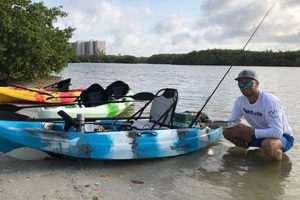
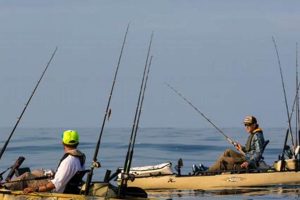
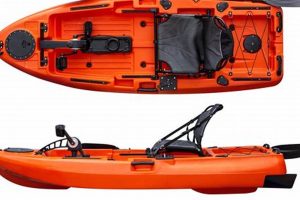
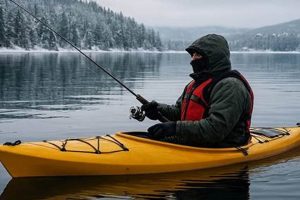
This specific model of recreational watercraft is designed for angling in less accessible natural environments. Its 13.5-foot length offers a balance of stability and maneuverability, suitable for navigating various waterways, from slow-moving rivers to calmer lakes. The vessel is typically constructed from durable, lightweight materials like polyethylene, enhancing portability and resilience against impacts. Specialized features, such as rod holders, storage compartments, and comfortable seating, contribute to an angler-focused experience.
The popularity of this type of watercraft stems from the increasing interest in outdoor activities and the pursuit of self-sufficient recreation. Reaching remote fishing locations, often inaccessible by larger boats, allows anglers to experience a deeper connection with nature. The stability and specialized design of these kayaks contribute to enhanced fishing success and overall enjoyment on the water. This form of recreation promotes physical activity and appreciation for natural environments.
Further exploration will delve into specific design features, manufacturing processes, and the impact this type of kayak has on angling experiences and environmental awareness. Subsequent sections will also address proper usage, maintenance, and safety considerations for operating this type of watercraft.
Tips for Kayak Fishing
Effective angling from a kayak requires preparation and adherence to specific techniques. These tips offer guidance for enhancing safety and optimizing fishing success in various environments.
Tip 1: Plan and Research: Prioritize thorough research of the intended fishing location. Understanding water conditions, weather forecasts, and local regulations is crucial for a safe and productive outing. Mapping routes and identifying potential hazards contributes to preparedness.
Tip 2: Prioritize Safety Gear: Always wear a personal flotation device (PFD). Carry a signaling device, such as a whistle or flare, and ensure communication equipment is functioning correctly. A first-aid kit should be readily accessible.
Tip 3: Master Basic Paddling Strokes: Proficiency in fundamental paddling techniques enhances maneuverability and efficiency on the water. Practice different strokes to control direction and maintain stability in varying conditions.
Tip 4: Organize and Secure Equipment: Distribute weight evenly within the kayak to maintain balance. Secure fishing rods, tackle boxes, and other gear to prevent loss or interference during paddling.
Tip 5: Employ Appropriate Anchoring Techniques: Proper anchoring prevents drifting and maintains position in desired fishing areas. Understand different anchoring methods suitable for various water depths and bottom conditions.
Tip 6: Respect Wildlife and the Environment: Practice catch-and-release fishing whenever possible. Minimize disturbance to wildlife and avoid littering. Adhere to Leave No Trace principles to preserve natural environments.
Tip 7: Dress Appropriately for the Conditions: Wearing appropriate clothing for expected weather conditions enhances comfort and safety. Consider layering options for adaptability. Protection from sun, wind, and water is essential.
Adhering to these guidelines promotes a safe and rewarding kayak fishing experience. Preparedness and mindful interaction with the environment contribute to both angling success and the preservation of natural resources.
The subsequent section will offer concluding remarks on the benefits and considerations associated with kayak fishing.
1. Maneuverability

Maneuverability represents a critical performance attribute for fishing kayaks, especially in wilderness settings. The Wilderness Ride 135 fishing kayak addresses this need through its design and features. Its length and hull design contribute to efficient turning and navigation through complex waterways. This responsiveness allows anglers to access secluded fishing spots, navigate around obstacles like fallen trees or rocks, and adjust positioning quickly in changing currents or wind conditions. Consider a scenario where an angler needs to maneuver through a narrow, winding creek choked with vegetation. The kayak’s maneuverability becomes essential for reaching prime fishing areas inaccessible to larger, less agile boats.
The practical significance of this maneuverability extends beyond simply reaching a fishing spot. It directly impacts angling effectiveness. Precise boat control allows for accurate casting and lure presentation, crucial for enticing fish in challenging environments. The ability to quickly change direction facilitates following fish movements or adjusting to shifting wind or current, maximizing fishing opportunities. For example, in a river setting, the angler can easily adjust position to maintain an optimal casting angle upstream, presenting the lure naturally with the current.
In summary, maneuverability in a fishing kayak like the Wilderness Ride 135 is not merely a convenience but a crucial factor influencing angling success and overall experience in wilderness environments. It allows access to remote fishing locations and provides the control necessary for effective fishing techniques. This characteristic, coupled with other design elements, contributes significantly to the kayak’s suitability for navigating and fishing in diverse and challenging waters.
2. Stability

Stability constitutes a critical performance characteristic in fishing kayaks, directly influencing angler safety and effectiveness. The Wilderness Ride 135 fishing kayak prioritizes stability through its hull design and construction. A broader hull, often featuring a flat-bottom or pontoon-style design, provides enhanced primary stability, resisting initial tipping. Secondary stability, the kayak’s ability to recover from greater angles of tilt, becomes crucial when encountering unexpected waves, currents, or movement within the kayak. This is particularly important for activities like casting, reeling, and landing fish, which inherently shift the center of gravity. Consider a scenario where an angler hooks a large fish. The kayak’s stability becomes paramount, providing a secure platform to fight the fish without compromising balance or risking capsize.
The practical significance of stability extends beyond simply preventing capsize. Enhanced stability allows anglers to stand up within the kayak, offering improved visibility for spotting fish and a wider casting range. This standing capability expands fishing options and provides crucial leverage when battling strong fish. For instance, in shallow-water fishing, sight fishing becomes more effective from a standing position. Moreover, stable kayaks reduce angler fatigue, allowing longer fishing trips without discomfort or compromise in performance. A stable platform allows for more relaxed body posture and less effort exerted to maintain balance, conserving energy for the activity of fishing.
In conclusion, stability in the Wilderness Ride 135, and fishing kayaks generally, represents a crucial design element impacting safety, fishing effectiveness, and overall enjoyment on the water. It provides a secure and confident platform for various angling activities, from casting and retrieving to landing fish. This characteristic, combined with maneuverability and other design features, contributes significantly to the kayak’s versatility and suitability for diverse fishing environments. Furthermore, stability promotes comfort and reduces fatigue, extending fishing time and enhancing the overall experience. The combination of stability with other performance attributes makes the Wilderness Ride 135 a viable option for anglers seeking a reliable and capable platform for exploring various waterways.
3. Storage Capacity

Storage capacity represents a critical factor in the effectiveness and enjoyment of kayak fishing, particularly in wilderness settings. The Wilderness Ride 135 fishing kayak addresses this need with thoughtfully designed storage compartments and features. Ample storage space allows anglers to carry essential gear, including tackle boxes, extra rods, safety equipment, and personal items. This capacity enables self-sufficiency during extended trips, crucial for exploring remote locations where resupply is impractical. Consider a multi-day fishing expedition in a remote wilderness area. Sufficient storage within the kayak becomes essential for carrying food, water, shelter, and other necessary supplies, ensuring safety and comfort throughout the trip. The ability to transport enough gear eliminates the need for frequent returns to shore, maximizing time spent fishing and exploring.
The practical significance of ample storage extends beyond simply carrying necessities. Organized storage contributes to efficient fishing. readily accessible tackle boxes and rods minimize time spent searching for equipment, allowing anglers to focus on fishing and respond quickly to changing conditions. Dedicated compartments for specific items, such as electronics or food, protect sensitive equipment from damage and prevent contamination. For instance, a dry storage compartment safeguards electronic devices and important documents from water damage, crucial in wet environments. Similarly, dedicated tackle storage facilitates quick lure changes and prevents tangles, maximizing fishing time.
In summary, storage capacity in the Wilderness Ride 135 fishing kayak plays a vital role in both the logistical and practical aspects of wilderness fishing. It enables self-sufficiency on extended trips, contributing to safety and comfort. Furthermore, well-designed storage enhances fishing efficiency by keeping essential gear organized and accessible. This contributes to a more productive and enjoyable experience on the water. The strategic placement and design of storage compartments maximize available space without compromising stability or maneuverability, reinforcing the kayak’s suitability for diverse fishing environments. A carefully considered storage solution transforms a fishing kayak from simply a means of transport into a mobile and efficient fishing platform.
4. Fishing Features
Specialized fishing features distinguish the Wilderness Ride 135 fishing kayak from recreational paddling kayaks, optimizing it for angling effectiveness. These features typically include integrated rod holders, strategically positioned for easy access and secure rod placement while paddling or fighting fish. Flush-mounted rod holders minimize interference with paddling strokes and reduce the risk of line entanglement. Adjustable rod holders accommodate various fishing techniques and rod lengths. Recessed tackle storage compartments keep essential gear organized and within reach, minimizing disruption during fishing. These compartments often incorporate features like waterproof seals or drainage systems to protect tackle from water damage. Consider a scenario where an angler needs to quickly switch between different rods or lures. Dedicated rod holders and organized tackle storage facilitate seamless transitions, maximizing fishing time and responsiveness to changing conditions. Furthermore, many models incorporate specialized features like anchor trolleys, facilitating controlled drift fishing, or mounting plates for fish finders or other electronic devices. These features enhance angling precision and strategic decision-making.
The inclusion of these purpose-built fishing features directly impacts angling success. Secure rod holders prevent rod loss during unexpected movements or encounters with obstacles, protecting valuable equipment. Organized tackle storage streamlines lure changes and prevents tangles, enabling anglers to adapt quickly to changing fish behavior or water conditions. The ability to mount electronic devices enhances situational awareness, providing crucial information about water depth, fish location, and bottom structure, ultimately increasing the likelihood of successful catches. For example, an angler using a fish finder mounted on the kayak can identify promising fishing spots, such as drop-offs or submerged structures, significantly increasing their chances of locating fish.
In conclusion, the integrated fishing features of the Wilderness Ride 135 represent a critical aspect of its functionality and suitability for angling. These design elements enhance fishing efficiency, improve organization, and contribute to a more productive and enjoyable experience on the water. While core kayak characteristics like stability and maneuverability are essential, the inclusion of specialized fishing features elevates the Wilderness Ride 135 from a simple paddling platform to a purpose-built fishing machine. The strategic integration of these features underscores the kayak’s design focus on enhancing angling performance in diverse environments. By understanding the functionality and benefits of these fishing features, anglers can maximize their effectiveness and fully appreciate the specialized design of the Wilderness Ride 135 fishing kayak.
5. Durable Construction

Durable construction represents a critical aspect of the Wilderness Ride 135 fishing kayak, directly influencing its longevity and suitability for wilderness environments. The materials used in its construction, typically high-density polyethylene (HDPE) or other impact-resistant polymers, contribute to its ability to withstand the rigors of navigating diverse waterways. These materials offer inherent resistance to abrasion, impacts, and UV degradation, crucial for enduring encounters with rocks, submerged logs, and prolonged exposure to sunlight. Consider navigating a shallow, rocky riverbed. The kayak’s durable construction becomes essential for resisting damage from scraping against rocks or impacts from submerged obstacles, ensuring the vessel’s structural integrity and preventing leaks. Furthermore, durable construction safeguards against wear and tear from transport and storage, extending the kayak’s lifespan and preserving its resale value. This durability allows the kayak to endure the stresses of being loaded and unloaded from vehicles, strapped to roof racks, and stored in various conditions.
The practical significance of durable construction extends beyond mere longevity. It directly contributes to safety and peace of mind in remote wilderness settings. A robust hull provides structural integrity in challenging conditions, reducing the risk of damage or failure in critical situations. This resilience provides confidence when navigating unpredictable waters, crucial for maintaining composure and focusing on angling. For instance, in the event of an unexpected collision with a submerged log or rock, a durably constructed kayak is more likely to withstand the impact without sustaining critical damage, ensuring the angler’s safety and the continuation of the trip. This inherent durability minimizes the risk of leaks or structural failures that could compromise safety, particularly in remote locations where immediate assistance might be unavailable. Furthermore, the robust construction allows for repeated use without significant degradation, making the Wilderness Ride 135 a reliable choice for frequent anglers and those seeking long-term value in their equipment. The ability to withstand repeated use without significant wear and tear contributes to the kayak’s overall cost-effectiveness and suitability for frequent or professional use.
In conclusion, durable construction in the Wilderness Ride 135 fishing kayak represents a fundamental design principle that significantly influences its performance, longevity, and suitability for wilderness environments. Its robust construction enhances safety, provides peace of mind in challenging conditions, and contributes to the kayak’s overall value. By selecting a kayak built with durability in mind, anglers invest in a reliable and long-lasting platform for exploring and enjoying diverse waterways. This focus on durability reinforces the Wilderness Ride 135’s purpose as a dependable tool for navigating and experiencing the challenges and rewards of wilderness fishing. Understanding the significance of durable construction empowers anglers to make informed decisions and choose equipment that aligns with their needs and usage patterns. The long-term benefits of durable construction ultimately contribute to a more rewarding and sustainable approach to kayak fishing.
6. Portability
Portability represents a defining characteristic of the Wilderness Ride 135 fishing kayak, significantly influencing its suitability for wilderness excursions. The kayak’s relatively lightweight construction, often achieved through the use of high-density polyethylene (HDPE) or similar materials, facilitates transport to and from remote locations. This portability expands access to waterways inaccessible by larger, less maneuverable boats, allowing exploration of secluded lakes, rivers, and coastal areas. Consider a scenario where an angler seeks to access a remote alpine lake reachable only by a challenging overland hike. The kayak’s portability becomes paramount, allowing transport across difficult terrain, expanding fishing opportunities beyond easily accessible locations. Furthermore, manageable weight simplifies loading and unloading from vehicles, reducing the logistical challenges associated with transporting larger watercraft. This ease of transport contributes to the kayak’s appeal for individuals without specialized trailers or lifting equipment.
The practical implications of portability extend beyond simply reaching the water’s edge. Lightweight construction simplifies maneuvering the kayak over obstacles, such as fallen trees or uneven terrain, common in wilderness settings. This maneuverability enhances access to secluded launch points and reduces the physical strain associated with transporting heavier craft. For example, an angler navigating a densely wooded area to reach a secluded river section benefits from the kayak’s lightweight nature, allowing easier passage through challenging terrain. Additionally, portability becomes crucial for multi-day expeditions, where carrying the kayak between waterways or portaging around rapids might be necessary. The ability to efficiently transport the kayak during these situations directly impacts the feasibility and enjoyment of extended wilderness trips.
In conclusion, portability in the Wilderness Ride 135 fishing kayak significantly contributes to its suitability for wilderness exploration. Its lightweight construction expands access to remote fishing locations, simplifies transport logistics, and enhances maneuverability in challenging terrain. This attribute, coupled with the kayak’s specialized fishing features and durable construction, makes it a versatile platform for anglers seeking to explore diverse and less accessible waterways. The ability to access remote and pristine environments enhances the overall wilderness fishing experience, promoting a deeper connection with nature and offering unique angling opportunities. Understanding the importance of portability empowers anglers to select equipment that aligns with their specific needs and desired fishing experiences.
Frequently Asked Questions
This section addresses common inquiries regarding the Wilderness Ride 135 fishing kayak, providing concise and informative responses to facilitate informed decision-making.
Question 1: What is the weight capacity of the Wilderness Ride 135?
Weight capacity varies depending on the specific model year and manufacturer specifications, but generally falls within the range of 400-500 lbs. Consulting official product documentation is recommended for precise figures.
Question 2: Is the Wilderness Ride 135 suitable for ocean use?
While designed primarily for lakes and rivers, the Wilderness Ride 135 can handle calmer coastal waters and protected bays. However, open ocean use or venturing into rough conditions is not advised due to its design limitations.
Question 3: What materials are used in the construction of the Wilderness Ride 135?
Typically, high-density polyethylene (HDPE) is utilized due to its durability, impact resistance, and UV stability. Specific model variations may incorporate other materials, necessitating consultation of product specifications.
Question 4: What is the warranty period for the Wilderness Ride 135?
Warranty coverage depends on the manufacturer and retailer policies. Reviewing warranty information provided by the seller at the point of purchase is essential.
Question 5: What are the recommended maintenance procedures for the Wilderness Ride 135?
Regular cleaning with mild soap and water, proper storage away from excessive sunlight or extreme temperatures, and periodic inspection for damage contribute to optimal performance and longevity. Manufacturer guidelines should be consulted for detailed maintenance procedures.
Question 6: Are there any recommended accessories for the Wilderness Ride 135?
Essential accessories include a personal flotation device (PFD), paddle, and appropriate safety equipment. Optional accessories, such as a fish finder, anchor, and specialized storage solutions, enhance functionality and customize the kayak to individual fishing preferences. Compatibility and proper installation should be confirmed prior to adding any accessories.
Understanding these key aspects contributes significantly to making an informed decision regarding the Wilderness Ride 135 fishing kayak and ensures its optimal usage. Consulting official product documentation and retailer information remains crucial for comprehensive understanding.
The subsequent section will explore user reviews and experiences with the Wilderness Ride 135 fishing kayak.
Wilderness Ride 135 Fishing Kayak
Exploration of the Wilderness Ride 135 fishing kayak reveals a vessel designed for accessing and navigating remote waterways. Key attributes such as maneuverability, stability, and ample storage contribute to its suitability for wilderness fishing excursions. Specialized fishing features, coupled with durable construction, enhance angling effectiveness and longevity. Portability further expands access to less accessible fishing locations, promoting exploration and connection with nature. Understanding these core characteristics facilitates informed evaluation and selection, aligning individual needs and preferences with appropriate equipment choices.
The Wilderness Ride 135 fishing kayak represents an opportunity to engage with the natural world through a specialized and rewarding pursuit. Careful consideration of its features and capabilities, coupled with responsible usage and respect for natural environments, ensures a fulfilling and sustainable approach to wilderness angling. Further research and direct experience will solidify understanding and contribute to informed decision-making for prospective kayak anglers.