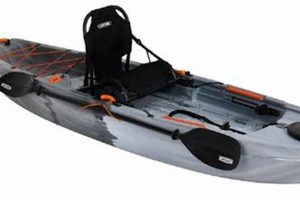
The distribution of kayaks designed for angling in bulk quantities to retailers represents a significant sector within the broader recreational fishing industry. These vessels are typically purchased by businesses for resale to individual consumers. A common example would be a sporting goods store acquiring a large shipment of specialized watercraft designed for fishing to stock their inventory for the upcoming season.
This business model offers advantages to both retailers and manufacturers. Retailers benefit from lower per-unit costs, allowing them to maintain competitive pricing and healthy profit margins. Manufacturers benefit from streamlined distribution, moving larger volumes of inventory more efficiently. Historically, the increasing popularity of kayak fishing has fueled the growth of this market segment, creating demand for specialized features like rod holders, livewells, and enhanced stability. This evolution reflects a broader trend toward more specialized recreational equipment catering to specific outdoor pursuits.
Further exploration of this topic will cover key aspects such as sourcing strategies, pricing models, market trends, and the crucial role of quality control in ensuring customer satisfaction and building brand reputation within this competitive landscape.
Successfully engaging with the market for bulk purchases of fishing-specific kayaks requires careful consideration of several key factors. These tips provide guidance for effective navigation of this specialized sector.
Tip 1: Understand Target Demographics: Thorough market research is crucial. Identifying the specific needs and preferences of the intended customer base (e.g., freshwater vs. saltwater anglers, recreational vs. tournament fishing) will inform appropriate product selection.
Tip 2: Prioritize Quality and Durability: Durability directly impacts customer satisfaction and long-term business relationships. Focus on sourcing vessels constructed with robust materials and proven manufacturing processes.
Tip 3: Evaluate Supplier Relationships: Reliable supply chains are essential for consistent inventory management. Assess supplier reputation, production capacity, and logistical capabilities.
Tip 4: Negotiate Favorable Terms: Volume purchasing offers leverage for negotiating pricing, payment schedules, and warranty agreements. Leverage this to maximize profitability and minimize risk.
Tip 5: Diversify Product Offerings: Offering a range of kayak models catering to different skill levels and fishing styles (e.g., sit-on-top vs. sit-inside) can broaden market reach and increase sales potential.
Tip 6: Invest in Effective Marketing: Reaching the target audience requires a well-defined marketing strategy. Utilize online platforms, industry publications, and partnerships with local fishing clubs to build brand awareness and generate leads.
Tip 7: Provide Excellent Customer Service: Post-sales support, including warranty service and readily available parts, is critical for building customer loyalty and positive word-of-mouth referrals.
By focusing on these key areas, businesses can establish a strong presence within this specialized market, fostering long-term growth and success.
Careful consideration of these points will prepare businesses for the challenges and opportunities presented by this dynamic and evolving market segment.
1. Sourcing
Effective sourcing is paramount within the wholesale fishing kayak sector. It directly impacts product quality, profitability, and ultimately, customer satisfaction. Locating reliable manufacturers capable of consistently delivering durable, well-designed kayaks is fundamental to building a successful business within this competitive market.
- Manufacturer Selection:
Identifying suitable manufacturers requires careful evaluation of several factors. Production capacity, quality control processes, and manufacturing techniques (e.g., rotational molding vs. thermoforming) all influence the final product. A manufacturer specializing in rotationally molded kayaks, for example, might be preferred for its ability to produce highly durable, UV-resistant hulls.
- Material Selection:
The materials used in kayak construction significantly impact performance and longevity. High-density polyethylene (HDPE) is a common choice due to its durability and resistance to impact and UV degradation. Understanding the properties of different materials, including their weight, strength, and cost, is essential for informed sourcing decisions.
- Production Lead Times:
Managing inventory effectively requires accurate forecasting and reliable production lead times. Understanding a manufacturer’s production schedule and capacity helps ensure timely delivery of kayaks, minimizing stockouts and maximizing sales opportunities. This is particularly crucial during peak seasons.
- Ethical Considerations:
Increasingly, consumers prioritize ethical sourcing practices. Factors such as fair labor practices and environmentally responsible manufacturing processes influence brand perception and purchasing decisions. Sourcing from manufacturers committed to sustainable practices can be a competitive advantage.
These facets of sourcing are integral to the overall success of a wholesale fishing kayak operation. Strategic sourcing decisions create a foundation for a robust supply chain, ensuring a consistent flow of high-quality products that meet market demand and contribute to long-term business viability. Choosing between a domestic manufacturer with shorter lead times but potentially higher costs versus an overseas manufacturer with longer lead times and lower costs exemplifies the complex considerations inherent in effective sourcing.
2. Pricing

Pricing within the wholesale fishing kayak market presents a complex interplay of factors influencing profitability and market competitiveness. Strategic pricing requires a comprehensive understanding of manufacturing costs, market dynamics, and perceived value. The interconnected nature of these elements necessitates a balanced approach, optimizing profit margins while remaining competitive within the broader recreational fishing landscape.
Manufacturer suggested retail price (MSRP) serves as a baseline, but actual wholesale pricing hinges on negotiated agreements between manufacturers and retailers. Volume discounts play a significant role, offering lower per-unit costs for larger orders. This incentivizes bulk purchasing but requires careful inventory management to avoid overstocking. Balancing the attractive pricing of bulk orders with the potential risks of holding excess inventory underscores the importance of accurate sales forecasting. For instance, a retailer anticipating high seasonal demand might negotiate a significant volume discount, accepting the risk of unsold inventory if demand fails to materialize. Conversely, a retailer focusing on niche markets might opt for smaller, more frequent orders, prioritizing reduced inventory holding costs over the potential savings of bulk purchases. Transportation costs, tariffs, and other logistical expenses also factor into the final wholesale price, influencing retailer margins and ultimately, consumer pricing.
Successfully navigating pricing within this market requires meticulous calculation and adaptability. Balancing cost considerations with market conditions and consumer demand is crucial for sustainable profitability. Understanding competitive pricing strategies, recognizing the impact of volume discounts, and accurately accounting for all associated costs are essential elements for retailers operating within this dynamic sector. Failure to account for these factors can lead to compressed margins, overstocking, or lost market share. Effective pricing strategies underpin a successful wholesale fishing kayak operation, enabling both profitability and competitive positioning within a rapidly evolving market.
3. Distribution
Distribution networks represent a critical component within the wholesale fishing kayak sector, bridging the gap between manufacturers and end consumers. Efficient and reliable distribution ensures timely delivery of products, minimizing storage costs and maximizing retail availability. The complexity of transporting bulky items like kayaks necessitates careful planning and strategic partnerships within the logistics industry. Effective distribution strategies directly impact customer satisfaction and overall business success within this specialized market segment.
- Logistics Partnerships:
Establishing strong relationships with freight carriers and logistics providers is crucial for seamless product movement. Factors like transportation costs, delivery timeframes, and geographical reach influence the choice of logistics partners. Choosing between a dedicated fleet of trucks for regional distribution or partnering with a national freight carrier for broader reach exemplifies the strategic decisions involved. Efficient logistics directly impact inventory management and responsiveness to market demand, particularly during peak seasons.
- Warehouse Management:
Effective warehousing plays a vital role in maintaining inventory integrity and ensuring timely order fulfillment. Proper storage facilities, inventory tracking systems, and efficient order picking processes minimize handling damage and expedite deliveries. The choice between utilizing a centralized warehouse versus regional distribution centers illustrates the trade-off between storage capacity and proximity to retail partners. Optimizing warehouse operations contributes to cost control and responsiveness to fluctuating market demand.
- Delivery Optimization:
Streamlining delivery routes and schedules minimizes transportation costs and ensures timely product arrival. Utilizing route optimization software and real-time tracking technologies enhances efficiency and transparency throughout the distribution process. Balancing the cost-effectiveness of consolidated deliveries with the time sensitivity of individual orders exemplifies the challenges inherent in delivery optimization. Efficient delivery practices directly impact customer satisfaction and contribute to a positive brand reputation.
- Retailer Relationships:
Maintaining strong communication and collaborative relationships with retail partners ensures smooth product flow and facilitates efficient inventory management. Providing retailers with accurate delivery schedules, order tracking information, and responsive customer support enhances trust and strengthens partnerships. Coordinating delivery schedules with retail store hours and storage capacity underscores the importance of collaborative planning. Strong retailer relationships contribute to long-term market success and foster a cohesive supply chain.
These facets of distribution form an integral part of the wholesale fishing kayak business. A well-structured distribution network ensures that kayaks reach retailers efficiently and cost-effectively, supporting sales efforts and contributing to customer satisfaction. Ultimately, the efficacy of the distribution network directly impacts a business’s ability to compete effectively within this specialized market and capitalize on growth opportunities. For example, a company with a robust distribution network can quickly respond to regional surges in demand, while a company with a less developed network might miss out on sales opportunities. Therefore, strategic investment in distribution infrastructure and partnerships is essential for long-term success in the wholesale fishing kayak sector.
4. Marketing
Marketing within the wholesale fishing kayak sector requires a nuanced approach, recognizing the distinct needs and preferences of the target audience retailers. Unlike direct-to-consumer marketing, the focus here is on building relationships with businesses, highlighting product value, and demonstrating the potential for profitability. Effective marketing strategies within this specialized niche require a deep understanding of the retail landscape, competitive dynamics, and the specific features that differentiate kayak offerings.
- Building Retailer Relationships
Cultivating strong relationships with retailers is paramount. This involves understanding their business models, target demographics, and inventory needs. Regular communication, product demonstrations, and participation in industry trade shows foster trust and facilitate mutually beneficial partnerships. For example, offering exclusive early access to new kayak models can incentivize retailers and strengthen relationships. These connections create a foundation for long-term collaboration and sustainable market growth.
- Highlighting Product Value Proposition
Effectively communicating the unique selling points of specific kayak models is crucial. This involves showcasing key features like durability, stability, storage capacity, and specialized fishing accessories. Detailed product specifications, high-quality images, and compelling videos can convey product value and differentiate offerings from competitors. For instance, emphasizing the superior UV resistance of a particular kayak model can resonate with retailers located in sun-drenched climates. This targeted approach ensures that marketing materials directly address the specific needs and priorities of potential retail partners.
- Demonstrating Profitability Potential
Retailers are primarily driven by profit potential. Marketing materials must clearly articulate the potential for profitability through competitive wholesale pricing, volume discounts, and marketing support. Providing detailed cost analysis, sales projections, and return-on-investment calculations can demonstrate the financial benefits of partnering with a specific wholesaler. Offering co-op marketing programs or providing point-of-sale materials can further incentivize retailers and increase sales potential. This focus on profitability reinforces the business rationale for partnering and fosters a shared interest in market success.
- Leveraging Industry Events and Platforms
Participating in industry trade shows, sponsoring fishing tournaments, and utilizing online platforms dedicated to the recreational fishing sector offer valuable opportunities to reach a targeted audience of retailers. These events provide a platform for product demonstrations, relationship building, and brand awareness. A well-executed presence at a major fishing industry trade show can generate valuable leads and solidify a brand’s position within the market. These targeted marketing efforts maximize exposure to the relevant audience and enhance brand visibility within the competitive wholesale landscape.
These interconnected facets of marketing form a cohesive strategy for reaching and engaging retailers within the wholesale fishing kayak sector. By focusing on building relationships, showcasing product value, and demonstrating profitability, wholesalers can effectively position their offerings within the market and drive sustainable growth. The successful execution of these marketing strategies directly impacts a wholesaler’s ability to establish a strong presence within the industry, secure valuable retail partnerships, and ultimately achieve long-term business objectives within this specialized market.
5. Inventory

Effective inventory management is crucial for success within the wholesale fishing kayak sector. Balancing the need to meet retailer demand with the costs associated with storing and managing a large inventory of bulky items presents a significant challenge. Strategic inventory control directly impacts profitability, customer satisfaction, and overall business efficiency. Mismanagement can lead to lost sales opportunities due to stockouts or financial losses from holding excess inventory, especially considering the seasonal nature of kayak fishing.
Several factors influence optimal inventory levels. Accurately forecasting demand based on historical sales data, current market trends, and anticipated seasonal fluctuations is essential. Lead times from manufacturers, transportation logistics, and warehouse storage capacity further complicate inventory planning. For example, a sudden surge in demand for a specific kayak model coupled with long manufacturer lead times can create a significant inventory gap, resulting in lost sales and frustrated retailers. Conversely, overestimating demand can lead to excess inventory, tying up capital and increasing storage costs. Finding the right balance requires sophisticated forecasting, efficient logistics, and adaptable inventory management practices.
Implementing robust inventory tracking systems, utilizing data analytics to predict demand patterns, and establishing strong communication channels with both manufacturers and retailers are key components of successful inventory management. Real-time visibility into inventory levels, automated reorder points, and efficient warehouse operations minimize storage costs, reduce the risk of stockouts, and ensure timely order fulfillment. Employing these strategies allows wholesalers to respond effectively to fluctuating market conditions, optimize inventory turnover, and maintain a healthy balance between meeting demand and minimizing carrying costs. This ultimately contributes to increased profitability and a stronger competitive position within the wholesale fishing kayak market.
6. Quality
Quality represents a critical factor within the wholesale fishing kayak market, directly influencing customer satisfaction, retailer confidence, and long-term business sustainability. Durable, well-designed kayaks withstand the rigors of regular use in diverse aquatic environments, ensuring positive user experiences and minimizing warranty claims. Conversely, subpar quality can lead to product failures, reputational damage, and ultimately, lost market share. Therefore, prioritizing quality throughout the supply chain, from material selection to manufacturing processes, is essential for success within this competitive landscape.
- Material Selection and Durability
The choice of materials directly impacts kayak durability and longevity. High-quality, UV-resistant polyethylene ensures resistance to cracking, fading, and impact damage. Inferior materials may become brittle over time, leading to premature failures. For example, a kayak constructed with linear low-density polyethylene (LLDPE) will typically offer better impact resistance than one made with high-density polyethylene (HDPE), albeit at a higher cost. Selecting appropriate materials ensures long-term product performance and minimizes warranty claims.
- Manufacturing Processes and Construction
Precise manufacturing processes and meticulous construction techniques are essential for producing high-quality kayaks. Advanced rotational molding techniques create uniform wall thickness and consistent hull integrity, while less precise methods may result in weak points prone to failure. For example, a kayak with poorly sealed seams is susceptible to water intrusion, compromising buoyancy and structural integrity. Careful attention to manufacturing processes ensures a finished product that meets stringent quality standards.
- Hardware and Components
The quality of hardware components, such as hatches, seating systems, and mounting hardware, directly impacts kayak functionality and user experience. Durable, corrosion-resistant stainless steel hardware ensures long-lasting performance, while lower-grade materials may quickly corrode in saltwater environments. For example, using marine-grade stainless steel for all exposed hardware significantly extends the lifespan of the kayak and enhances its resistance to the harsh marine environment. Selecting high-quality components enhances user satisfaction and minimizes maintenance issues.
- Quality Control and Testing
Rigorous quality control measures throughout the manufacturing process are essential for identifying and rectifying potential defects. Comprehensive testing procedures, including pressure testing, impact testing, and UV exposure testing, ensure that finished kayaks meet stringent quality standards. For example, pressure testing each kayak before shipment verifies hull integrity and prevents leaks. Implementing robust quality control measures minimizes the likelihood of defective products reaching consumers and protects brand reputation.
These interconnected elements of quality collectively determine the long-term performance and value of wholesale fishing kayaks. Prioritizing quality throughout the supply chain builds trust with retailers, enhances customer satisfaction, and ultimately contributes to sustainable business growth within this competitive market. Investing in quality differentiates a brand from competitors offering lower-grade products, justifying higher price points and attracting discerning customers who prioritize durability and performance. Therefore, a commitment to quality is not merely a cost of doing business but rather a strategic investment in long-term success within the wholesale fishing kayak sector.
7. Competition

The wholesale fishing kayak market exhibits robust competition, influenced by factors such as product differentiation, pricing strategies, distribution networks, and marketing effectiveness. Manufacturers and distributors continually vie for market share within a dynamic landscape characterized by evolving consumer preferences and technological advancements. This competitive environment necessitates strategic decision-making across all aspects of the business, from sourcing and production to sales and marketing. Understanding the competitive landscape is crucial for sustainable profitability and long-term success within this specialized sector. For example, a manufacturer specializing in lightweight, high-performance fishing kayaks might target a niche market of tournament anglers, differentiating itself from competitors offering more budget-friendly recreational models. This specialization allows for premium pricing and caters to a specific customer segment.
Competitive pressures influence pricing strategies, often leading to price wars or aggressive discounting to capture market share. Manufacturers and distributors must carefully balance competitive pricing with profitability, considering factors such as production costs, volume discounts, and retailer margins. Additionally, competition drives innovation, pushing manufacturers to develop new features, materials, and designs to attract discerning consumers. The introduction of pedal-powered kayaks, for instance, disrupted the traditional paddle kayak market, forcing competitors to adapt and innovate. This constant drive for improvement benefits consumers through enhanced product offerings and specialized features.
Effectively navigating the competitive landscape requires continuous market analysis, strategic product positioning, and a commitment to delivering value to both retailers and end consumers. Understanding competitor strengths and weaknesses, identifying emerging market trends, and adapting to evolving consumer preferences are essential for maintaining a competitive edge. Ultimately, competition within the wholesale fishing kayak market benefits consumers through increased product choices, competitive pricing, and continuous innovation. However, it also presents significant challenges for businesses, requiring adaptability, strategic planning, and a relentless focus on delivering quality products and services to thrive within this dynamic environment. Failure to adapt to competitive pressures can lead to declining market share, reduced profitability, and ultimately, business failure.
Frequently Asked Questions
This section addresses common inquiries regarding the wholesale distribution of fishing kayaks, providing clarity on key aspects of this specialized market.
Question 1: What are the typical minimum order quantities for wholesale fishing kayaks?
Minimum order quantities (MOQs) vary depending on the manufacturer and specific kayak models. Generally, MOQs range from a single pallet to a full truckload, influencing per-unit costs and logistical considerations.
Question 2: How are wholesale fishing kayaks typically shipped, and what are the associated costs?
Shipping methods depend on order volume and destination. Common methods include less-than-truckload (LTL) shipping for smaller orders and full truckload (FTL) shipping for larger volumes. Shipping costs vary significantly based on distance, fuel prices, and carrier rates. These costs are typically factored into the wholesale price.
Question 3: What types of warranties are offered on wholesale fishing kayaks?
Warranty terms vary by manufacturer, covering defects in materials and workmanship. Warranty periods typically range from one to five years, and some manufacturers offer extended warranties for specific components or models. Retailers should carefully review warranty terms and communicate them clearly to end consumers.
Question 4: What are the key differences between rotationally molded and thermoformed fishing kayaks, and how do these differences impact pricing?
Rotationally molded kayaks are generally more durable and UV resistant, commanding a higher price point. Thermoformed kayaks are often lighter and less expensive but may be less durable over time. The choice between these construction methods depends on target market preferences and budget considerations.
Question 5: What are the typical lead times for wholesale fishing kayak orders?
Lead times vary significantly depending on manufacturer production schedules, order volume, and shipping distances. Lead times can range from several weeks to several months, particularly during peak seasons. Retailers should plan accordingly to ensure timely inventory replenishment and avoid stockouts.
Question 6: What types of marketing support do manufacturers offer to wholesale partners?
Marketing support varies by manufacturer and may include co-op advertising programs, point-of-sale materials, online marketing resources, and participation in joint marketing campaigns. Retailers should inquire about available marketing support programs to maximize their sales efforts and brand visibility.
Understanding these key aspects of wholesale fishing kayak distribution facilitates informed decision-making and contributes to successful retail operations within this specialized market segment.
For further inquiries or more detailed information, please consult individual manufacturers or industry associations.
Conclusion
Navigating the wholesale fishing kayak market requires a comprehensive understanding of sourcing, pricing, distribution, marketing, inventory management, quality control, and competitive dynamics. Each element plays a crucial role in overall profitability and market success. Strategic sourcing decisions influence product quality and cost-effectiveness. Effective pricing strategies balance profitability with competitive pressures. Efficient distribution networks ensure timely product delivery and minimize logistical challenges. Targeted marketing efforts build retailer relationships and drive sales. Robust inventory management practices balance supply with demand, optimizing inventory turnover and minimizing carrying costs. Stringent quality control measures ensure customer satisfaction and protect brand reputation. Finally, recognizing and adapting to the competitive landscape is essential for long-term viability within this dynamic market.
The wholesale fishing kayak sector presents both opportunities and challenges for businesses. Success hinges on strategic planning, adaptability, and a commitment to delivering high-quality products and services. As the kayak fishing market continues to evolve, businesses must remain agile, responsive to changing consumer preferences, and innovative in their approach to product development, marketing, and distribution. Those who prioritize quality, efficiency, and customer satisfaction are best positioned for sustained growth and success within this competitive and dynamic market segment.