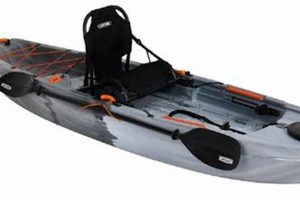
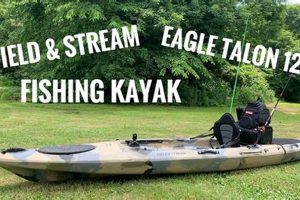
Anglers seeking specialized watercraft often choose vessels designed with their needs in mind. These purpose-built boats prioritize stability, storage, and features conducive to angling success. For example, recessed rod holders, tackle storage compartments, and comfortable seating configurations contribute to a more productive and enjoyable fishing experience.
Selecting the right fishing kayak can significantly enhance on-the-water performance. A stable platform allows anglers to cast and retrieve effectively, while ample storage keeps gear organized and accessible. Historically, fishing from small, human-powered vessels has been a common practice, but modern designs incorporate advanced materials and construction techniques for improved durability, maneuverability, and comfort. This evolution in design allows anglers to access a wider range of fishing locations, from shallow creeks to open waters.
This article will explore key considerations in selecting a fishing kayak, including hull design, features, materials, and popular models. It will also delve into essential accessories and safety practices for a rewarding and safe angling experience.
Tips for Selecting and Using a Fishing Kayak
Choosing and utilizing a fishing kayak effectively requires careful consideration of various factors. These tips offer guidance for maximizing on-the-water performance and safety.
Tip 1: Consider Hull Design: Different hull designs offer varying degrees of stability and maneuverability. A wider, flatter hull provides greater stability, ideal for calm waters and stand-up fishing, while a longer, narrower hull offers better tracking and speed in open water.
Tip 2: Prioritize Storage: Ample storage space is crucial for organizing tackle, rods, and other essential gear. Look for kayaks with dedicated compartments, hatches, and bungee systems.
Tip 3: Evaluate Seating Comfort: Long hours on the water demand a comfortable seating arrangement. Adjustable seats with proper back support are essential for minimizing fatigue.
Tip 4: Choose Appropriate Features: Features like rod holders, paddle clips, and anchor trolleys significantly enhance fishing efficiency. Consider specific fishing styles and needs when selecting these features.
Tip 5: Select Durable Materials: Kayak materials affect durability and weight. Polyethylene kayaks are durable and affordable, while composite materials offer lighter weight and improved performance.
Tip 6: Practice Proper Safety Procedures: Always wear a personal flotation device (PFD) and carry essential safety equipment, including a whistle, signaling device, and first-aid kit.
Tip 7: Plan Fishing Trips Carefully: Research fishing locations, check weather conditions, and inform someone of your plans before heading out on the water.
By considering these tips, anglers can select a kayak that aligns with their specific needs and enhances their fishing experience, while prioritizing safety on the water.
This information provides a solid foundation for informed decision-making. The subsequent sections will delve into specific kayak models and accessories to further refine selection choices.
1. Stability

Stability is a paramount consideration in fishing kayak design, significantly influencing angler performance and safety. A stable platform allows for comfortable casting, retrieval, and even stand-up fishing, crucial for sight fishing or maneuvering in shallow water. Kayak stability is affected by factors like hull design, width, and length. Wider, flatter hulls generally offer greater initial stability, resisting tipping, while longer, narrower hulls may provide secondary stability, recovering more easily from leans. Specific design features, such as pontoon hulls or outriggers, further enhance stability, allowing anglers to focus on fishing rather than balance. For instance, the Jackson Kilroy HD known for its exceptional stability due to its wide, flat hull, enabling anglers to confidently stand and cast.
The practical significance of stability in a fishing kayak extends beyond mere comfort. Increased stability directly translates to improved fishing efficacy. A stable platform enables anglers to make accurate casts, effectively manage fishing rods and tackle, and land fish more efficiently. Furthermore, enhanced stability provides a safer environment, minimizing the risk of capsizing, particularly in challenging conditions like windy days or choppy water. This is especially crucial for anglers fishing in remote locations or carrying expensive equipment. Consider a scenario where an angler hooks a large fish; a stable kayak allows for better leverage and control during the fight, increasing the chances of a successful landing.
In summary, stability is a critical factor impacting the performance and safety of fishing kayaks. Understanding the relationship between hull design, features, and stability empowers anglers to make informed decisions based on their individual needs and fishing styles. While stability enhances comfort and fishing effectiveness, it also contributes significantly to angler safety, allowing for a more confident and enjoyable experience on the water. The choice of a stable platform, therefore, underpins a successful and secure fishing expedition.
2. Storage Capacity

Storage capacity is a critical aspect of fishing kayak design, directly impacting organization, efficiency, and overall fishing success. Adequate storage allows anglers to carry essential gear, including tackle boxes, rods, safety equipment, and personal items, ensuring a prepared and productive experience on the water. Optimized storage solutions contribute to a clutter-free environment, facilitating easy access to necessary items and minimizing distractions during critical fishing moments. This discussion explores the multifaceted nature of storage capacity in fishing kayaks, highlighting its significance in various fishing scenarios.
- Dedicated Tackle Storage:
Purpose-built compartments for tackle boxes, often integrated into the kayak’s design, keep lures, hooks, and other small items organized and protected. These compartments may feature removable trays or dividers for customizable organization. Designated tackle storage eliminates the need for loose bags or boxes, streamlining access to essential gear and maximizing fishing time. Consider an angler searching for a specific lure; a well-organized tackle system allows for quick retrieval, minimizing disruption to the fishing flow.
- Rod Management Systems:
Secure rod holders, strategically positioned for easy access and safe transport, are essential for kayak anglers. Flush-mounted rod holders keep rods out of the way while paddling or maneuvering, while adjustable rod holders accommodate different fishing techniques. Efficient rod management prevents tangling, protects rods from damage, and keeps them readily available for action. Imagine an angler needing to quickly switch rods; a well-designed rod management system enables a seamless transition without wasted time or effort.
- Dry Storage Compartments:
Watertight hatches and compartments protect sensitive items like electronics, phones, and wallets from water damage. These compartments maintain a dry environment, preserving the functionality and longevity of essential equipment. Dry storage is paramount for anglers venturing into rough waters or experiencing unexpected splashes. For example, an angler caught in a sudden downpour can rest assured that essential electronics remain protected in a dedicated dry storage compartment.
- Bungee Systems and Deck Rigging:
Bungee cords and deck rigging provide versatile storage options for larger items like coolers, dry bags, or extra clothing. These systems secure gear to the kayak’s deck, keeping it readily accessible while preventing it from shifting during movement. Bungee systems and deck rigging enhance the kayak’s overall carrying capacity, accommodating a wider range of equipment and supplies. Consider an angler needing to quickly stow a paddle; a strategically placed bungee cord provides a convenient and secure storage solution.
In conclusion, well-designed storage solutions in fishing kayaks significantly enhance organization, efficiency, and overall fishing performance. From dedicated tackle storage to versatile bungee systems, these features contribute to a streamlined and productive experience on the water. By optimizing storage capacity, anglers can focus on the task at hand catching fish without the distractions of a disorganized or cluttered environment. The ability to readily access essential gear, protect sensitive equipment, and maximize carrying capacity directly translates to a more successful and enjoyable fishing trip. Consider the specific storage needs dictated by different fishing styles and target species when evaluating kayak options. A well-equipped fishing kayak serves as a mobile fishing platform, empowering anglers to explore diverse waters and pursue their passion with confidence and efficiency.
3. Maneuverability
Maneuverability is a critical performance attribute in fishing kayaks, directly influencing anglers’ ability to navigate diverse water environments and access prime fishing locations. This characteristic encompasses the kayak’s responsiveness to paddling input, turning radius, and ability to track a straight course. In the context of fishing kayaks, maneuverability translates to efficient navigation through tight spaces, swift adjustments to changing currents, and precise positioning for optimal casting angles. Several factors contribute to a kayak’s maneuverability, including hull design, length, width, and the presence of specialized features like rudders or skegs. For example, the Jackson Cruise 10 offers excellent maneuverability for navigating rivers and creeks due to its shorter length and responsive hull design, while the Jackson Coosa HD, designed for stability in lakes and ponds, offers more limited maneuverability.
The practical significance of maneuverability becomes evident when considering real-world fishing scenarios. Navigating through narrow channels lined with vegetation, approaching a submerged structure quietly, or adjusting position in response to changing wind or current conditions all necessitate a highly maneuverable kayak. Consider an angler pursuing fish in a mangrove-lined creek; a maneuverable kayak allows precise navigation through complex root systems and tight turns, maximizing access to productive fishing areas. Similarly, in river fishing, a kayak’s ability to quickly adjust to changing currents and maintain desired positioning contributes significantly to angling success. Conversely, a less maneuverable kayak may require greater effort to control, potentially spooking fish or limiting access to desirable fishing spots. The choice of kayak maneuverability should, therefore, align with the intended fishing environment and target species.
In summary, maneuverability represents a critical factor influencing fishing kayak performance and overall angling success. The ability to efficiently navigate various water conditions, access hard-to-reach areas, and maintain precise positioning directly impacts fishing effectiveness. Understanding the interplay between hull design, features, and maneuverability empowers anglers to select kayaks tailored to specific fishing environments and target species. While stability and storage capacity are essential considerations, maneuverability plays a crucial role in maximizing on-the-water efficiency and overall fishing success. The selection of a kayak with appropriate maneuverability characteristics ultimately enhances anglers’ ability to explore diverse waters, pursue their targeted species effectively, and fully enjoy the fishing experience.
4. Specialized Features
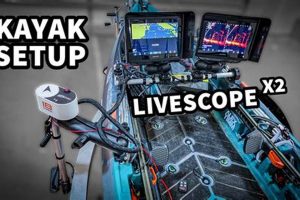
Specialized features distinguish fishing kayaks from recreational models, enhancing angling effectiveness and overall experience. These purpose-built additions cater specifically to the needs of anglers, addressing challenges and optimizing performance in various fishing scenarios. Consider the cause-and-effect relationship between these features and successful angling outcomes. Features like rod holders, tackle management systems, and integrated electronics directly impact an angler’s ability to efficiently manage gear, present lures effectively, and locate fish. For example, the multiple rod holders on a Jackson Kraken allow anglers to troll different lures simultaneously, increasing the chance of a strike. Similarly, the integrated fish finder mounts on a Jackson Big Rig facilitate accurate sonar readings without requiring cumbersome external setups. The presence and thoughtful integration of these specialized features elevate a standard kayak into a dedicated fishing platform.
The practical significance of specialized features becomes evident when examining their impact on real-world fishing situations. Imagine an angler needing to quickly switch rods while fighting a fish. A readily accessible rod holder allows for a seamless transition, maximizing control and minimizing the risk of losing the catch. Consider the scenario of navigating shallow, weed-choked waters. A retractable skeg or rudder system allows for precise maneuvering and prevents entanglement, enabling access to prime fishing spots. Furthermore, integrated gear tracks offer versatile mounting options for accessories like fish finders, cameras, and rod holders, customizing the kayak to individual preferences and fishing styles. These features demonstrate a direct correlation between specialized design and optimized fishing performance.
In summary, specialized features play a crucial role in transforming a standard kayak into a high-performance fishing platform. These features are not mere additions but carefully integrated components that enhance efficiency, improve angling success, and elevate the overall fishing experience. Understanding the practical applications of these features in real-world scenarios underscores their importance in tackling fishing challenges and maximizing opportunities on the water. Selecting a fishing kayak equipped with appropriate specialized features, therefore, represents a strategic investment in improved angling performance and a more rewarding experience. Further exploration of individual features and their specific benefits will provide a more comprehensive understanding of their role in optimizing fishing success.
5. Durability
Durability is a critical factor in fishing kayak selection, directly influencing lifespan, performance, and overall value. Fishing kayaks are subjected to harsh conditions, including exposure to UV radiation, saltwater, impacts with rocks and submerged obstacles, and the rigors of transport and storage. A durable kayak withstands these challenges, maintaining structural integrity and performance over extended periods. This discussion explores key facets of durability in fishing kayaks, emphasizing their contribution to long-term reliability and angler satisfaction. The ability of a kayak to withstand these conditions affects its long-term usability and value retention, making durability a significant consideration for anglers seeking a reliable and long-lasting investment.
- Material Selection
Kayak construction materials significantly influence durability. Polyethylene kayaks are known for impact resistance and affordability, while higher-end models may utilize thermoformed ABS or composite materials like fiberglass or Kevlar for increased strength and lighter weight. Material selection impacts the kayak’s ability to withstand impacts, abrasion, and UV degradation. For example, a roto-molded polyethylene kayak might resist impacts with rocks better than a fiberglass kayak, but the fiberglass kayak might offer better abrasion resistance against dragging across sandy beaches. Choosing the appropriate material depends on the anticipated fishing environment and usage patterns.
- Construction Techniques
Manufacturing techniques play a crucial role in overall kayak durability. Rotomolding, a common process for polyethylene kayaks, creates a seamless, one-piece hull with uniform thickness and inherent strength. Other construction methods, such as thermoforming or hand-laid fiberglass, offer varying degrees of strength and stiffness depending on the specific techniques employed. Examining construction details, such as weld quality in polyethylene kayaks or the layering of fiberglass in composite kayaks, can provide insights into the kayak’s long-term durability.
- Hardware and Fittings
The quality of hardware components, including hatches, latches, handles, and seat fittings, contributes significantly to a fishing kayak’s longevity. Corrosion-resistant materials, like stainless steel or marine-grade aluminum, are essential for hardware exposed to saltwater environments. Durable hardware ensures reliable functionality over time, preventing failures that could compromise the kayak’s usability or safety. For instance, high-quality stainless steel hinges and latches on hatches maintain watertight seals and prevent premature wear, preserving the integrity of dry storage compartments.
- UV Resistance
Exposure to ultraviolet (UV) radiation from sunlight can degrade kayak materials over time, causing fading, brittleness, and reduced structural integrity. UV-resistant coatings or additives in the kayak’s construction help mitigate these effects, extending the lifespan and maintaining the kayak’s aesthetic appeal. Choosing a kayak with proven UV resistance is particularly important for anglers who frequently fish in sunny climates or store their kayaks outdoors. A kayak with superior UV resistance will retain its color and structural integrity longer than one without adequate protection.
The durability of a fishing kayak directly impacts its long-term value and performance. By considering factors like material selection, construction techniques, hardware quality, and UV resistance, anglers can make informed decisions that align with their budget and intended usage. Investing in a durable kayak ensures reliable performance and extended lifespan, maximizing the enjoyment and value derived from the investment. A durable kayak can withstand years of use and abuse, providing a reliable platform for countless fishing adventures. This makes durability a key consideration when selecting a fishing kayak, especially for those seeking a long-term investment in their fishing passion.
Frequently Asked Questions
This section addresses common inquiries regarding the selection, use, and maintenance of fishing kayaks, providing concise and informative responses to facilitate informed decision-making.
Question 1: What key features distinguish fishing kayaks from recreational models?
Fishing kayaks typically incorporate specialized features like rod holders, tackle storage compartments, anchor trolleys, and mounting points for fish finders or other accessories. These features enhance angling efficiency and overall on-the-water experience.
Question 2: How does hull design influence kayak stability and performance?
Hull design significantly impacts stability and maneuverability. Wider, flatter hulls generally provide greater initial stability, while longer, narrower hulls offer better tracking and speed. Specific hull designs, such as pontoon hulls, cater to specialized fishing styles.
Question 3: What materials are commonly used in fishing kayak construction, and how do they affect durability?
Common materials include polyethylene, ABS, and composites like fiberglass or Kevlar. Polyethylene offers durability and affordability, while composites provide lighter weight and increased stiffness. Material choice influences resistance to impacts, abrasion, and UV degradation.
Question 4: What safety precautions should anglers observe when kayaking?
Essential safety measures include wearing a personal flotation device (PFD), carrying a whistle and signaling device, informing someone of trip plans, checking weather conditions, and adhering to local boating regulations.
Question 5: How does one choose the appropriate paddle length for a fishing kayak?
Paddle length depends on factors like kayak width, angler height, and paddling style. Consulting sizing charts or seeking expert advice can assist in selecting the correct paddle length for optimal performance and comfort.
Question 6: What maintenance practices ensure the longevity of a fishing kayak?
Regular cleaning, proper storage, and periodic inspection of hardware and fittings contribute to kayak longevity. Rinsing with freshwater after saltwater use, storing the kayak out of direct sunlight, and lubricating moving parts help prevent corrosion and maintain functionality.
Understanding these fundamental aspects contributes to informed decisions and enhanced on-the-water experiences. Careful consideration of individual needs, fishing styles, and target environments ensures optimal kayak selection and long-term satisfaction.
The next section offers an in-depth exploration of various fishing kayak models, highlighting key features and performance characteristics to guide selection based on specific angling needs and preferences.
Conclusion
Careful selection of fishing kayaks optimized for specific angling pursuits contributes significantly to enhanced on-the-water experiences. Factors such as stability, storage capacity, maneuverability, specialized features, and durability directly influence performance and long-term satisfaction. Prioritizing these elements ensures a well-matched vessel, enabling anglers to efficiently navigate diverse environments, effectively manage gear, and maximize fishing success. The exploration of these key attributes provides a framework for informed decision-making, empowering anglers to select kayaks aligned with individual needs and target species. From navigating tight creeks to tackling open waters, purpose-built fishing kayaks elevate angling pursuits, fostering deeper connections with the aquatic environment.
The evolution of fishing kayak design continues to refine performance and functionality, offering anglers increasingly specialized tools for pursuing their passion. As technology advances and angler insights evolve, the future of fishing kayaks promises further enhancements in efficiency, comfort, and environmental integration. Choosing a well-equipped fishing kayak represents an investment in not just equipment, but in the pursuit of a deeper connection with nature and the enduring thrill of angling. This pursuit embodies a blend of tradition, innovation, and a profound respect for the aquatic world, enriching angling experiences for generations to come.