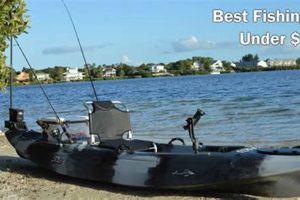
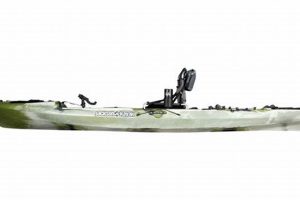
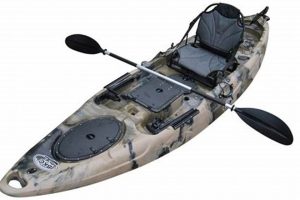
Selecting an appropriate vessel for kayak angling involves considering various factors, including stability, storage capacity, maneuverability, and personal comfort. For example, a wider, sit-on-top model offers excellent stability and ample space for gear, while a narrower, sit-inside design prioritizes speed and efficiency for covering larger distances. Understanding these trade-offs is crucial for a successful and enjoyable fishing experience.
Choosing the right kayak significantly impacts fishing success and safety. A stable platform allows anglers to cast, reel, and land fish effectively, even in challenging conditions. Adequate storage accommodates tackle, rods, and potential catches, while maneuverability enables navigation through diverse waterways, from open lakes to narrow creeks. Historically, kayaks have been used for fishing and transportation, evolving from traditional designs to the specialized fishing kayaks available today. This evolution underscores the importance of selecting a kayak tailored to modern angling needs.
The following sections will delve into specific kayak types commonly used for fishing, outlining their advantages, disadvantages, and ideal applications. This detailed analysis will assist anglers in making informed decisions when choosing the optimal kayak for their fishing style and environment.
Tips for Selecting a Fishing Kayak
Choosing a fishing kayak requires careful consideration of individual needs and intended fishing environments. The following tips offer guidance for making an informed decision.
Tip 1: Prioritize Stability: Stability is paramount for fishing kayaks. Wider hulls and sit-on-top designs generally offer greater stability than narrower, sit-inside models. Consider the water conditions typically encountered and choose a kayak that provides a secure platform, even when reeling in a fish or navigating choppy water.
Tip 2: Evaluate Storage Capacity: Adequate storage is essential for carrying fishing gear, tackle boxes, and potential catches. Look for kayaks with built-in storage compartments, tank wells, and attachment points for securing gear. Consider the length of typical fishing trips and the amount of equipment required.
Tip 3: Consider Maneuverability: Maneuverability affects how easily a kayak can be paddled and controlled. Shorter kayaks are generally more maneuverable in tight spaces like creeks and rivers, while longer kayaks track better in open water and cover distance more efficiently.
Tip 4: Assess Comfort and Ergonomics: Comfort is crucial, especially during longer fishing trips. Consider the seat design, backrest, and footrests. Adjustable features allow for customization and proper posture, reducing fatigue. Test out different kayak seats before making a purchase, if possible.
Tip 5: Factor in Propulsion: Kayaks can be propelled by paddles, pedals, or motors. Paddle kayaks offer simplicity and affordability, while pedal kayaks provide hands-free operation, beneficial for fishing. Motorized kayaks offer greater speed and range. Choose the propulsion system best suited to individual preferences and fishing locations.
Tip 6: Determine Budget: Fishing kayaks range in price depending on features, materials, and propulsion systems. Set a realistic budget and prioritize essential features based on fishing needs. Consider both initial purchase costs and potential ongoing expenses, such as maintenance and accessories.
Tip 7: Research and Compare Models: Research different kayak models and compare their features, specifications, and user reviews. Consult online resources, visit local kayak dealers, and consider attending kayak fishing events to gather information and gain insights from experienced anglers.
By carefully considering these factors, anglers can select a kayak optimized for their fishing style, environment, and budget, enhancing both their enjoyment and success on the water.
The subsequent section will provide a concluding overview of key selection criteria and emphasize the importance of choosing the right kayak for a safe and productive fishing experience.
1. Sit-on-top Kayaks

Sit-on-top kayaks represent a popular choice for fishing due to their inherent stability, open design, and specialized features. Their construction directly addresses key considerations for anglers, including ease of entry and exit, gear storage, and maneuverability in various fishing environments.
- Stability and Safety
The wide, flat hull design of sit-on-top kayaks provides inherent stability, reducing the likelihood of capsizing, especially beneficial for anglers casting lines or reeling in fish. Self-bailing scupper holes further enhance safety by draining water that splashes onto the deck. This stability inspires confidence, allowing anglers to focus on fishing rather than balance.
- Accessibility and Comfort
The open deck allows for easy entry and exit, a significant advantage for anglers who may need to quickly adjust their position or re-enter the kayak after a swim. This design also accommodates anglers of varying sizes and mobility levels. The elevated seating position often found in sit-on-tops provides better visibility and a more comfortable fishing experience, reducing fatigue during long hours on the water.
- Gear Storage and Organization
Sit-on-top kayaks typically feature ample storage space, including tank wells, recessed compartments, and attachment points for securing rods, tackle boxes, and other fishing gear. This dedicated storage keeps essential equipment within easy reach and organized, maximizing fishing efficiency. Many models also incorporate specialized features like rod holders and fish finders further enhancing the angling experience.
- Maneuverability and Tracking
While generally not as fast as sit-inside kayaks, sit-on-tops offer excellent maneuverability, particularly in shallow water and tight spaces. This characteristic is advantageous for navigating around vegetation, structure, and other obstacles commonly encountered in fishing environments. Shorter sit-on-tops excel in maneuverability, while longer models offer better tracking in open water.
The combination of stability, accessibility, storage capacity, and maneuverability makes sit-on-top kayaks a practical and versatile choice for various fishing styles and environments. From calm lakes and slow-moving rivers to sheltered coastal areas, sit-on-tops offer a platform well-suited to the demands of angling, contributing to a safe, comfortable, and productive fishing experience.
2. Sit-inside Kayaks

Sit-inside kayaks offer a different approach to kayak fishing, prioritizing speed, efficiency, and protection from the elements. Their enclosed cockpit design presents distinct advantages and disadvantages compared to sit-on-tops, influencing their suitability for specific fishing styles and environments.
- Performance and Efficiency
The lower profile and streamlined shape of sit-inside kayaks reduce wind resistance and improve hydrodynamics, resulting in greater speed and paddling efficiency. This characteristic allows anglers to cover longer distances and access remote fishing spots more quickly. The enclosed cockpit also reduces water drag, contributing to enhanced performance. This efficiency can be crucial when navigating larger bodies of water or strong currents.
- Protection from the Elements
The enclosed cockpit of a sit-inside kayak offers protection from wind, rain, and cold water, extending the fishing season into less favorable conditions. A spray skirt can further enhance this protection by creating a watertight seal around the cockpit, keeping the angler dry and warm. This feature is particularly advantageous in colder climates or during periods of inclement weather.
- Gear Storage and Accessibility
While sit-inside kayaks typically offer less readily accessible storage space compared to sit-on-tops, they often provide dry storage compartments within the hull for protecting sensitive gear from water damage. This can be crucial for electronic devices, cameras, and other valuable items. Anglers may need to prioritize and organize gear more carefully due to the more limited and less accessible storage.
- Maneuverability and Stability
Sit-inside kayaks tend to be narrower than sit-on-tops, offering increased maneuverability in certain situations, especially when navigating tight turns and swift currents. However, this narrower hull design can compromise stability, particularly for anglers unfamiliar with sit-inside kayaks. Careful consideration of individual balance and experience is essential when choosing between stability and maneuverability.
The choice between a sit-inside and a sit-on-top kayak for fishing depends on individual priorities and the intended fishing environment. Sit-insides excel in speed, efficiency, and protection from the elements, making them suitable for colder climates, longer distances, and open water. However, anglers seeking maximum stability and ease of access may prefer the open design of a sit-on-top. Careful consideration of these factors ensures selection of the optimal kayak type for a safe and productive fishing experience.
3. Inflatable Kayaks

Inflatable kayaks present a unique option for anglers, offering portability and convenience often unmatched by traditional hard-shell kayaks. Their compact nature and ease of transport make them attractive for those with limited storage space or who frequently travel to different fishing locations. While often perceived as less durable or stable, advancements in inflatable kayak technology have led to significant improvements in performance and durability, making them increasingly viable for serious fishing applications.
- Portability and Storage
Inflatable kayaks excel in portability. Deflated, they pack down to a compact size, easily fitting into car trunks, closets, or even airplane luggage compartments. This portability expands fishing opportunities to remote locations or areas inaccessible with larger, rigid kayaks. The ease of storage eliminates the need for roof racks or dedicated storage space, making them suitable for apartment dwellers or those with limited storage capacity.
- Durability and Construction
Modern inflatable kayaks utilize durable materials like PVC and reinforced fabrics, offering impressive resistance to punctures and abrasion. Multi-chamber designs enhance safety, ensuring buoyancy even if one chamber is compromised. While requiring inflation and deflation, advancements in pump technology minimize setup and takedown time, making them surprisingly practical for regular use. Reinforced seams and robust construction enhance their resilience, enabling them to withstand the rigors of navigating various water conditions and encountering potential obstacles.
- Performance and Stability on the Water
While generally not as fast or efficient as hard-shell kayaks, inflatable fishing kayaks have seen significant improvements in tracking and stability. Wider inflatable designs and drop-stitch construction enhance stability, providing a secure platform for casting and reeling. While not ideal for challenging whitewater or extreme conditions, they perform admirably in calm lakes, slow-moving rivers, and protected coastal areas, offering a stable and comfortable fishing experience. Modern designs incorporate features like rigid inflatable floors and high-pressure inflation, contributing to improved tracking and performance on the water.
- Cost and Maintenance
Inflatable kayaks typically represent a more affordable option compared to comparable hard-shell kayaks, making them an attractive entry point into kayak fishing. Maintenance requirements are generally minimal, involving cleaning and proper storage. While punctures can occur, repair kits readily address minor damage, ensuring continued use. The lower initial investment and reduced maintenance costs contribute to their overall affordability and accessibility.
Inflatable kayaks offer a compelling solution for anglers seeking portability, convenience, and affordability. While perhaps not suitable for all fishing environments or styles, advancements in materials and design have significantly expanded their capabilities, making them a viable option for many anglers. Careful consideration of individual needs, fishing style, and target environment remains crucial for determining if an inflatable kayak is the right choice. Understanding the trade-offs between portability, performance, and durability informs an effective decision-making process, ensuring a satisfying and successful fishing experience.
4. Pedal-driven Kayaks

Pedal-driven kayaks offer a significant advantage in fishing applications: hands-free propulsion. This feature allows anglers to maintain position, maneuver precisely, and focus entirely on fishing, rather than paddling. The impact on fishing effectiveness is substantial, particularly in situations requiring precise boat control, such as trolling, presenting lures in specific currents, or maintaining position near structure. For example, a pedal-driven kayak allows an angler to work a weed bed methodically, controlling speed and direction with foot pedals while simultaneously casting and retrieving a lure, a task challenging to accomplish efficiently with a paddle kayak. This hands-free operation significantly enhances fishing success by freeing up the angler’s hands for casting, retrieving, and landing fish.
Several propulsion systems exist for pedal kayaks, including propeller-based and fin-based systems. Propeller systems offer speed and efficiency in open water, while fin systems excel in shallow water and environments with potential underwater obstacles, as they are less susceptible to entanglement with vegetation or debris. The choice of propulsion system depends on the typical fishing environment. Furthermore, pedal-driven kayaks often incorporate features tailored to fishing, such as rod holders, fish finders, and integrated tackle storage. These specialized features, combined with hands-free propulsion, contribute to a highly effective and streamlined fishing platform. Considering the propulsion type and the specific fishing needs informs the optimal kayak selection.
The integration of pedal drives represents a significant advancement in kayak fishing technology. Hands-free propulsion enhances fishing effectiveness, improves maneuverability, and allows anglers to focus entirely on the task at hand. While pedal-driven kayaks often represent a higher initial investment compared to paddle kayaks, the advantages they offer in terms of fishing efficiency and overall experience can significantly enhance on-the-water success. Selecting the appropriate propulsion system and considering the integration of fishing-specific features further optimize the kayak for specific angling needs and target environments.
5. Motorized Kayaks

Motorized kayaks represent a significant evolution in kayak fishing, providing increased range, speed, and access to distant fishing grounds. Integrating a motor fundamentally alters the dynamic of kayak fishing, transforming it from a primarily physical activity reliant on paddling to a more strategically focused pursuit. This shift allows anglers to cover larger distances quickly, conserve energy for fishing, and reach previously inaccessible areas. For example, a motorized kayak enables anglers to traverse large lakes or reservoirs efficiently, reaching distant coves or inlets within a reasonable timeframe. This expanded range significantly broadens fishing opportunities, providing access to diverse habitats and potentially larger fish populations. Additionally, motorized kayaks offer advantages in challenging conditions, such as strong currents or headwinds, where paddling becomes significantly more demanding.
Several motor options exist for kayaks, including transom-mounted outboard motors, integrated electric motors, and even trolling motors. Transom-mounted outboards offer power and speed, suitable for larger bodies of water. Integrated electric motors provide a streamlined and quieter option, often controlled with a handheld remote or foot pedal. Trolling motors offer a balance of affordability and functionality, particularly for smaller kayaks and calmer waters. The choice of motor depends on individual needs and the intended fishing environment. Factors such as budget, required range, desired speed, and the specific characteristics of the fishing location influence motor selection. Understanding the trade-offs between power, efficiency, noise, and cost informs the optimal choice. For instance, an angler fishing in a shallow, vegetated area might prioritize a trolling motor for its maneuverability and weedless design, while an angler targeting offshore species might opt for a more powerful outboard motor for its speed and range.
Motorization significantly expands the possibilities of kayak fishing, offering enhanced access, increased range, and reduced physical exertion. Careful consideration of motor type, intended use, and specific fishing environment remains crucial for maximizing the benefits of a motorized kayak. Selecting the appropriate motor and integrating it effectively into the kayak setup contributes significantly to fishing success and enjoyment. Balancing power, efficiency, cost, and environmental impact ensures a responsible and productive approach to motorized kayak fishing.
Frequently Asked Questions
This section addresses common inquiries regarding kayak selection for fishing, providing concise and informative responses to assist anglers in making informed decisions.
Question 1: What hull design is most stable for kayak fishing?
Wider, flatter hulls generally offer greater primary stability, reducing the likelihood of tipping. Pontoon-style hulls provide exceptional stability, while catamaran designs offer a balance of stability and speed. Consider the typical water conditions and fishing style when prioritizing stability.
Question 2: How important is storage space in a fishing kayak?
Adequate storage is crucial for accommodating fishing gear, tackle boxes, safety equipment, and potential catches. Evaluate storage capacity based on the duration of typical fishing trips and the amount of equipment required. Prioritize kayaks with well-designed storage compartments and attachment points for securing gear.
Question 3: What are the advantages of a pedal-driven kayak for fishing?
Pedal kayaks offer hands-free propulsion, enabling anglers to focus on fishing techniques rather than paddling. This is particularly advantageous for trolling, maintaining position, and maneuvering in specific currents or near structure. Consider the type of fishing pursued and the need for precise boat control when evaluating pedal kayaks.
Question 4: Are inflatable kayaks suitable for serious fishing?
Modern inflatable kayaks utilize durable materials and advanced construction techniques, making them increasingly viable for serious fishing. While not as durable as hard-shell kayaks, they offer portability and convenience unmatched by traditional designs. Consider the intended fishing environment and the importance of portability when evaluating inflatable options.
Question 5: What factors influence the choice between a sit-inside and a sit-on-top kayak for fishing?
Sit-on-tops prioritize stability and ease of access, while sit-insides offer better protection from the elements and greater speed. Consider the prevailing weather conditions, water temperature, and personal comfort preferences when choosing between these designs.
Question 6: How does kayak length affect fishing performance?
Longer kayaks generally track better in open water and offer greater speed, while shorter kayaks provide enhanced maneuverability in tight spaces and rivers. Consider the typical fishing environment and the need for speed versus maneuverability when determining the optimal kayak length.
Careful consideration of these frequently asked questions empowers anglers to make informed decisions regarding kayak selection, aligning kayak features with individual fishing styles, target environments, and overall preferences. Choosing the appropriate kayak significantly enhances both the enjoyment and success of fishing excursions.
The following section will offer concluding remarks and summarize key considerations for selecting the optimal fishing kayak.
Selecting the Optimal Kayak for Fishing
Determining the most suitable kayak for angling requires careful evaluation of various factors, including hull design, propulsion system, storage capacity, and intended fishing environment. Stability, maneuverability, and comfort significantly influence fishing effectiveness and overall experience. Sit-on-top kayaks prioritize stability and ease of access, while sit-inside models offer speed and protection from the elements. Inflatable kayaks provide portability and convenience, whereas pedal-driven and motorized versions enhance mobility and range. Careful consideration of these factors ensures selection of a kayak optimized for individual needs and fishing styles.
Successful kayak angling relies heavily on appropriate equipment selection. A well-chosen kayak enhances fishing effectiveness, safety, and overall enjoyment on the water. Thorough research, careful consideration of individual needs, and informed decision-making ultimately determine the optimal kayak choice, leading to a more rewarding and productive fishing experience. The evolution of kayak design continues to provide anglers with increasingly specialized options, further emphasizing the importance of informed selection based on specific fishing requirements and preferences.