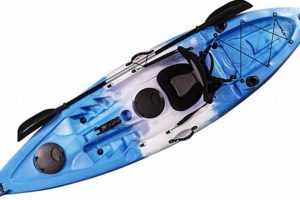
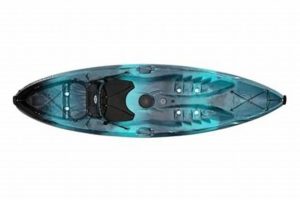
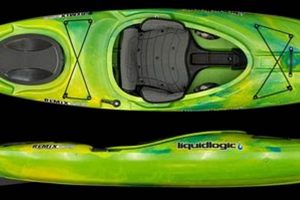
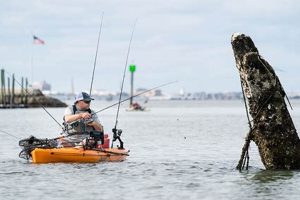
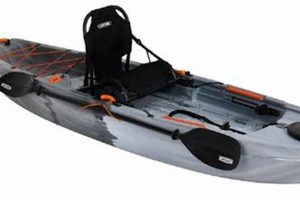
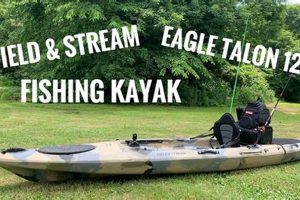
This specific model of recreational watercraft is designed for angling activities. Characterized by its compact 13-foot, 2-inch length, this vessel provides stability and maneuverability, making it suitable for various aquatic environments. Its construction typically incorporates durable, lightweight materials to enhance portability and performance.
The vessel’s dimensions and design prioritize stability and ease of paddling, enabling anglers to focus on fishing. This model offers convenient features such as built-in rod holders, storage compartments, and often a comfortable seating system. Such features contribute to an enhanced fishing experience by streamlining access to equipment and promoting comfort during long hours on the water. This particular size and style of kayak have gained popularity due to a growing demand for smaller, more versatile fishing platforms.
Further exploration of this particular model will encompass topics such as construction materials, performance characteristics, user reviews, and comparisons with similar products on the market. This information will provide potential users with a comprehensive understanding of the vessel’s capabilities and suitability for their individual fishing needs.
Tips for Utilizing a 13-Foot, 2-Inch Fishing Kayak
Effective use of this type of watercraft requires attention to several key areas, impacting both safety and fishing success.
Tip 1: Prioritize Stability: Weight distribution is crucial for balance. Gear should be evenly distributed and secured to prevent shifting during movement. Low center of gravity enhances stability.
Tip 2: Master Paddling Techniques: Efficient paddling conserves energy and maximizes maneuverability. Proper technique minimizes strain and allows for precise boat control in various water conditions.
Tip 3: Select Appropriate Safety Gear: A personal flotation device (PFD) is essential. Carrying a whistle, signaling device, and first-aid kit is also recommended. Awareness of local regulations and weather conditions is paramount.
Tip 4: Plan Fishing Strategies: Researching target species and their habitats is crucial. Adapting fishing techniques to suit the specific environment and species behavior increases success rates.
Tip 5: Organize and Secure Equipment: Designated compartments and specialized storage solutions keep gear readily accessible and prevent loss or damage. Rod leashes and tackle organizers maintain order and efficiency.
Tip 6: Practice Proper Launching and Landing Techniques: Selecting suitable launch sites minimizes risk. Understanding how to enter and exit the vessel safely in various conditions is essential for a smooth experience.
Tip 7: Respect the Environment: Adhering to “leave no trace” principles preserves natural habitats. Proper disposal of fishing line and other waste minimizes environmental impact.
Adherence to these practices enhances safety, improves fishing success, and promotes responsible enjoyment of the sport.
By understanding and implementing these tips, individuals can maximize their experience on the water and contribute to a safe and sustainable fishing environment. This concludes the practical guidance section of this article.
1. Purpose-built fishing platform

The concept of a “purpose-built fishing platform” is central to understanding the Weber 132 fishing kayak. It signifies a design philosophy prioritizing angling functionality over general-purpose recreation. This focus manifests in specific features and design choices that cater directly to the needs of anglers.
- Stability and Maneuverability
A stable platform is essential for casting, retrieving, and landing fish. The Weber 132’s hull design contributes to stability, enabling anglers to maintain balance in various water conditions. Maneuverability is also crucial for navigating tight spots, approaching fish-holding areas quietly, and adjusting position efficiently. Its compact size contributes to its agility on the water. For example, the relatively short length and defined keel allow for quick turns and precise adjustments, unlike longer, touring-oriented kayaks.
- Integrated Features and Accessories
Purpose-built fishing kayaks often include features like rod holders, tackle storage compartments, and anchor trolleys. These integrated elements streamline the fishing process, keeping essential gear organized and readily accessible. The Weber 132 incorporates such features, eliminating the need for aftermarket modifications and maximizing usable deck space. Examples include flush-mounted rod holders that keep lines clear of obstructions and recessed storage compartments that protect tackle from the elements.
- Ergonomics and Comfort
Long hours on the water require a comfortable seating system and ergonomic design. Features such as adjustable seating positions, footrests, and back support contribute to angler comfort and reduce fatigue. The Weber 132’s design considers these factors, promoting sustained fishing activity without compromising physical well-being. An example is the adjustable seat back, allowing anglers to customize their posture for optimal comfort and support.
- Durability and Construction
Fishing kayaks often face harsher conditions than recreational kayaks, requiring robust construction. Durable materials and reinforced hulls are essential for withstanding impacts, abrasion, and exposure to the elements. The Weber 132 is typically constructed from resilient materials designed for the rigors of fishing environments, ensuring longevity and reliable performance. The use of rotomolded polyethylene, for instance, contributes to impact resistance and overall durability.
These elements combine to create a fishing platform tailored to the specific demands of angling. The Weber 132 exemplifies this philosophy, offering a compact and efficient vessel equipped to enhance fishing success and overall experience. Its purpose-built design differentiates it from general-purpose kayaks, making it a suitable choice for anglers seeking a dedicated fishing craft.
2. Compact and maneuverable design

The Weber 132 fishing kayak’s compact and maneuverable design directly influences its suitability for specific fishing environments and techniques. The kayak’s shorter length, typically around 13 feet 2 inches, allows for efficient turning and navigation in confined spaces. This characteristic proves advantageous when fishing in narrow creeks, rivers with obstacles, or areas with dense vegetation. The maneuverability also facilitates precise boat positioning for optimal casting angles and presentations. For example, navigating through tight mangrove tunnels or approaching shallow-water structure becomes significantly easier with a compact, responsive kayak. This design element distinguishes the Weber 132 from longer, less agile kayaks often preferred for open-water paddling or touring.
The compact nature of the Weber 132 also impacts transportation and storage. Its smaller size simplifies loading and unloading from vehicles, requiring less space on roof racks or trailers. Storage in garages or sheds becomes less challenging compared to larger kayaks. This practicality enhances accessibility for individuals with limited storage space or smaller vehicles. Consider, for instance, the ease of transporting a Weber 132 in a compact pickup truck compared to a longer sea kayak, which might necessitate a dedicated trailer. This aspect contributes significantly to the overall convenience and usability of the kayak, broadening its appeal to a wider range of anglers.
The relationship between the Weber 132’s compact design and its maneuverability constitutes a defining characteristic, shaping its suitability for particular fishing scenarios and impacting its overall practicality. While not designed for speed or long-distance paddling, the emphasis on maneuverability and compact dimensions positions this kayak as a specialized tool for anglers prioritizing agility and access in specific environments. This specialized focus differentiates the Weber 132 from kayaks designed for other purposes, underscoring its role as a dedicated fishing platform tailored to environments where maneuverability is paramount.
3. Stability and performance

Stability and performance are critical interconnected factors influencing the overall effectiveness of the Weber 132 fishing kayak. A stable platform is essential for various fishing activities, from casting and retrieving to landing fish. Performance encompasses factors such as tracking, speed, and maneuverability, which contribute to an efficient and enjoyable fishing experience. Examining these elements reveals how they contribute to the Weber 132’s suitability as a dedicated fishing platform.
- Primary Stability
Primary stability refers to the kayak’s initial resistance to tipping. A wider hull and lower center of gravity contribute to greater primary stability. This characteristic is essential for maintaining balance while stationary or making subtle movements, such as casting or retrieving. The Weber 132’s design prioritizes primary stability to provide a secure platform for anglers engaged in these activities. For example, a wider hull allows anglers to shift their weight slightly without feeling unstable, which is important for sight fishing or making delicate presentations.
- Secondary Stability
Secondary stability describes the kayak’s resistance to tipping when leaned. This factor becomes relevant during turning or maneuvering in rough water. While primary stability is crucial for stationary activities, secondary stability provides confidence and control during dynamic movements. The Weber 132’s hull design aims to balance primary and secondary stability, offering a platform secure enough for static fishing yet responsive enough for maneuvering in varying conditions. For example, a moderate chine design and a well-defined keel can provide secondary stability without compromising initial stability.
- Tracking and Maneuverability
Tracking refers to the kayak’s ability to maintain a straight course. Maneuverability, conversely, describes its responsiveness to turning inputs. The Weber 132’s design balances these two aspects. A moderate keel enhances tracking, allowing anglers to cover distances efficiently, while the shorter length contributes to maneuverability in tight spaces. This combination caters to both open-water paddling and navigating complex shorelines or confined waterways. For instance, the ability to hold a straight line while trolling and then quickly maneuver around obstacles showcases the balance between these attributes.
- Speed and Efficiency
While not designed for racing, speed and efficiency are still relevant performance considerations for fishing kayaks. The Weber 132’s hull design seeks to minimize drag and maximize glide, allowing anglers to cover water efficiently without excessive effort. This factor is particularly relevant for anglers who frequently change fishing spots or cover larger areas during a fishing trip. For instance, a streamlined hull shape can reduce water resistance, allowing for longer paddling distances with less fatigue.
The interplay between stability and performance characteristics significantly influences the Weber 132’s overall effectiveness as a fishing kayak. The design prioritizes stability to provide a secure platform for fishing activities, while also balancing maneuverability and efficiency for navigating diverse environments. The result is a specialized craft tailored to the demands of angling, offering anglers a suitable balance of stability and performance attributes to enhance their fishing experience.
4. Targeted Angler Features
The “targeted angler features” of the Weber 132 fishing kayak differentiate it from recreational kayaks and contribute significantly to its effectiveness as a dedicated fishing platform. These features are not merely add-ons but integrated design elements that enhance functionality and angler performance. Understanding these features provides insight into the kayak’s intended purpose and practical applications.
Several key features exemplify this targeted design approach. Flush-mounted rod holders provide secure storage and quick access to fishing rods, keeping them readily available while maintaining a clear deck space. Recessed tackle storage compartments offer organized storage for lures, hooks, and other essential gear, protecting them from the elements and preventing loss. An adjustable seat allows anglers to customize their position for optimal comfort and support, reducing fatigue during long fishing trips. These integrated features exemplify the design philosophy focused specifically on angling needs.
Consider a practical scenario: an angler targeting bass in a shallow, weedy lake. The flush-mounted rod holders keep rods secure and accessible for quick casts, while the recessed tackle compartments ensure easy access to lures without cluttering the deck. The adjustable seat allows the angler to maintain a comfortable position while sight fishing for extended periods. This scenario highlights the practical significance of targeted angler features in a real-world fishing context.
Furthermore, the integration of these features streamlines the fishing process. Rod holders eliminate the need for makeshift storage solutions, minimizing the risk of tangles and lost gear. Dedicated tackle compartments reduce time spent searching for specific lures, allowing anglers to focus on fishing. The adjustable seat enhances comfort and reduces fatigue, promoting longer and more productive fishing sessions. These practical benefits translate directly to an enhanced fishing experience.
In summary, the targeted angler features of the Weber 132 are not mere accessories but integral components that define its identity as a dedicated fishing kayak. These features enhance functionality, streamline the fishing process, and contribute directly to angler success and comfort. Understanding the purpose and practical application of these features is essential for appreciating the kayak’s specialized design and its suitability for targeted fishing applications. This analysis underscores the distinction between a purpose-built fishing kayak and a general-purpose recreational vessel.
5. Recreational Fishing Utility

Recreational fishing utility describes the practical application of a kayak for leisure fishing activities. The Weber 132 fishing kayak exemplifies this concept, offering a platform specifically designed for anglers seeking a balance of functionality, performance, and enjoyment. Exploring its utility requires examining how its design and features contribute to a fulfilling recreational fishing experience.
- Accessibility and Ease of Use
The Weber 132’s compact size and relatively lightweight construction contribute to its accessibility. Transporting and launching the kayak are manageable tasks, even for individuals without specialized equipment. This ease of use encourages spontaneous fishing trips and expands access to diverse fishing locations. For example, the kayak’s portability allows anglers to explore smaller lakes, ponds, and rivers that might be inaccessible to larger boats. This accessibility broadens recreational opportunities and enhances the overall fishing experience.
- Stability and Comfort
Stability is paramount for a comfortable and enjoyable fishing experience. The Weber 132’s hull design prioritizes stability, allowing anglers to cast, retrieve, and fight fish without feeling unsteady. Features such as an adjustable seat and footrests further enhance comfort, reducing fatigue during longer fishing outings. This combination of stability and comfort allows anglers to focus on the enjoyment of fishing rather than physical discomfort or concerns about balance. This translates to a more relaxed and fulfilling recreational experience.
- Fishing-Specific Features
Integrated features like rod holders, tackle storage, and anchor trolleys contribute significantly to the Weber 132’s recreational fishing utility. These features streamline the fishing process, keeping essential gear organized and readily accessible. This efficient organization allows anglers to maximize their time on the water and focus on the enjoyment of fishing rather than logistical challenges. For instance, readily accessible rod holders allow for quick transitions between fishing techniques, enhancing versatility and increasing the likelihood of success, which ultimately adds to the recreational value.
- Adaptability to Diverse Environments
The Weber 132’s maneuverability makes it adaptable to various fishing environments, from calm lakes to slow-moving rivers. This versatility expands recreational fishing opportunities, allowing anglers to explore different waterways and target diverse fish species. Its compact size also allows access to shallow or confined areas often inaccessible to larger boats. This adaptability enhances the overall recreational value by providing a wider range of fishing experiences. For example, exploring secluded coves or navigating narrow creeks becomes feasible with the Weber 132, adding an element of exploration and discovery to the recreational fishing experience.
The convergence of these elements contributes to the Weber 132’s overall recreational fishing utility. By prioritizing accessibility, stability, specialized features, and adaptability, this kayak provides a platform designed to enhance the enjoyment and effectiveness of recreational fishing. It caters to anglers seeking a balanced and versatile craft suited to diverse environments and fishing styles, solidifying its role as a valuable tool for pursuing the recreational aspects of fishing.
Frequently Asked Questions
This section addresses common inquiries regarding the Weber 132 fishing kayak, providing concise and informative responses to facilitate informed decision-making among prospective purchasers and users.
Question 1: What weight capacity does the Weber 132 fishing kayak support?
Weight capacity varies depending on the specific model year and configuration. Consulting manufacturer specifications provides precise figures. Exceeding the specified weight limit compromises stability and safety.
Question 2: Is the Weber 132 suitable for ocean fishing?
While capable of handling calm coastal waters and protected bays, the Weber 132 is primarily designed for inland waters. Ocean use requires careful consideration of weather and water conditions. Its compact size may limit its suitability for challenging offshore environments.
Question 3: What materials comprise the construction of the Weber 132?
Rotomolded polyethylene is frequently utilized in the construction of the Weber 132. This material offers durability, impact resistance, and UV protection, contributing to the kayak’s longevity. Specific material composition may vary based on model year.
Question 4: Does the Weber 132 come equipped with a paddle?
Paddle inclusion varies depending on the specific retailer and package. Confirming paddle inclusion with the seller prior to purchase prevents potential misunderstandings. Acquiring a suitable paddle separately might be necessary.
Question 5: How does the Weber 132 perform in windy conditions?
The Weber 132’s shorter length and higher profile can make it susceptible to wind drift. Strong winds may necessitate adjustments to paddling technique or route planning. Adding a rudder or drift anchor can mitigate wind impact.
Question 6: What maintenance is required for a Weber 132 fishing kayak?
Regular rinsing with fresh water after each use removes salt, sand, and other debris. Periodic inspection for damage and UV protectant application prolong the kayak’s lifespan. Storing the kayak out of direct sunlight prevents material degradation.
Careful consideration of these frequently asked questions facilitates a thorough understanding of the Weber 132 fishing kayak. This information empowers individuals to make informed decisions regarding its suitability for their individual needs and intended usage.
The following sections delve further into specific aspects of the Weber 132, offering a comprehensive overview of its features, performance, and overall utility as a dedicated fishing platform.
Conclusion
This exploration of the Weber 132 fishing kayak encompassed key aspects defining its purpose and functionality. Its compact, maneuverable design, coupled with targeted angler features, positions this model as a specialized platform for recreational fishing. Stability, performance considerations, and practical utility were examined to provide a comprehensive understanding of its capabilities and limitations. The information presented serves to inform prospective users evaluating its suitability for their individual needs and intended fishing environments. Features such as integrated rod holders, tackle storage, and adjustable seating contribute to its effectiveness as a dedicated fishing craft. Its compact size enhances maneuverability in confined waterways, while its stability provides a secure platform for casting and retrieving.
The Weber 132 fishing kayak represents a specific niche within the broader kayak market, catering to anglers prioritizing maneuverability and specialized features. Potential users should carefully consider their individual fishing styles, target species, and preferred environments when evaluating this model. Further research, including user reviews and comparisons with similar kayaks, is recommended. Ultimately, the Weber 132 presents a viable option for anglers seeking a dedicated fishing platform tailored to specific needs and preferences within the realm of recreational fishing.