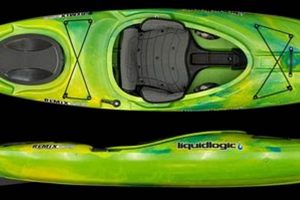
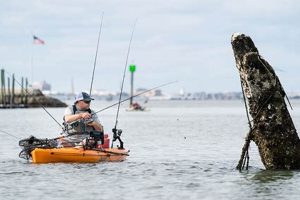
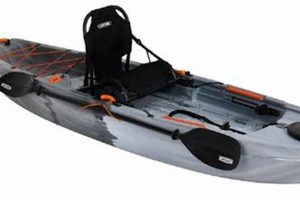
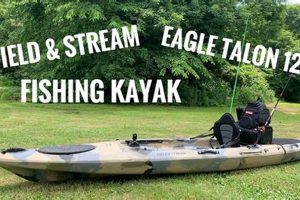
Evaluations of Vibe kayaks designed for fishing, from various sources, provide prospective buyers with valuable insights. These assessments typically cover aspects like stability, comfort, features, durability, and performance on the water. A sample evaluation might analyze the kayak’s storage capacity, the effectiveness of its rod holders, or its maneuverability in different water conditions.
Access to this aggregated information empowers consumers to make informed purchasing decisions. Objective and subjective data points, gathered from expert reviews and user feedback, offer a comprehensive picture of each model’s strengths and weaknesses. This knowledge base can be particularly helpful for anglers seeking specific features or performance characteristics. Historically, researching products relied on limited resources like catalogs and word-of-mouth. The digital age provides a far richer landscape for pre-purchase research, allowing consumers to compare models, understand pricing, and identify potential issues before investing. This contributes to greater satisfaction and potentially avoids costly mistakes.
The following sections will delve deeper into the specific criteria used in these evaluations, offering guidance on interpreting the data and ultimately selecting the optimal fishing kayak based on individual needs and preferences.
Tips for Utilizing Fishing Kayak Evaluations
Potential purchasers can maximize the value derived from fishing kayak assessments by employing several key strategies. These methods help ensure a comprehensive understanding of available products and facilitate selection of the ideal vessel.
Tip 1: Identify Specific Needs: Before examining evaluations, clearly define desired features. Fishing style, target species, and typical water conditions influence optimal kayak characteristics.
Tip 2: Consult Multiple Sources: Relying on a single review can provide a skewed perspective. Gathering information from diverse sources, including expert reviews, user forums, and retailer websites, offers a more balanced view.
Tip 3: Focus on Verified Purchases: User reviews marked as “verified purchase” offer increased credibility, as they indicate firsthand experience with the product.
Tip 4: Scrutinize Specific Details: Look beyond general comments. Focus on reviews addressing specific features of interest, such as stability, storage, or seat comfort.
Tip 5: Consider the Reviewer’s Experience Level: A beginner’s assessment may differ significantly from that of a seasoned angler. Contextualizing reviews based on experience level provides valuable nuance.
Tip 6: Evaluate Long-Term Durability: Seek out reviews that address long-term performance and durability, including resistance to wear and tear, UV damage, and potential manufacturing defects.
Tip 7: Pay Attention to Customer Service Feedback: Reviews often contain information regarding manufacturer responsiveness and warranty support. This data can be crucial in case of future issues.
By implementing these strategies, prospective buyers can leverage available information effectively, leading to a more informed and satisfying kayak purchase.
The insights gained through careful evaluation of fishing kayak reviews ultimately empower informed decisions, contributing to enhanced on-the-water experiences.
1. Stability

Stability forms a cornerstone of fishing kayak evaluations, directly influencing angler safety and fishing effectiveness. Reviews frequently assess primary and secondary stability. Primary stability refers to the kayak’s resistance to initial tipping, crucial for entering and exiting the vessel and maintaining balance while stationary. Secondary stability describes the kayak’s ability to remain upright when leaned or subjected to external forces like waves or currents, vital for confident casting and retrieval. Evaluations often include details on hull design, width, and center of gravity, factors contributing to overall stability. A kayak demonstrating superior stability in reviews, particularly in challenging conditions, garners positive attention from anglers prioritizing safety and performance.
For example, a review might highlight a specific Vibe kayak model’s wide, flat-bottom hull design as contributing to exceptional primary stability, making it ideal for stand-up fishing. Conversely, another review could discuss how a kayak’s rounded hull, while offering greater maneuverability, compromises primary stability, making it less suitable for less experienced anglers or rough water conditions. Practical demonstrations of stability, often included in video reviews, offer valuable visual insights into real-world performance. Understanding these nuances allows prospective buyers to select kayaks aligned with their skill level and intended fishing environment.
In summary, stability represents a critical evaluation criterion for fishing kayaks. Thorough assessments of both primary and secondary stability, combined with an understanding of influencing design factors, empower informed decisions. This knowledge translates to increased angler confidence, improved safety margins, and ultimately, a more enjoyable and productive fishing experience. The insights gleaned from stability assessments in reviews directly impact purchasing decisions and contribute significantly to overall satisfaction with a chosen kayak.
2. Comfort & Features
Comfort and integrated features significantly influence fishing kayak evaluations. These elements directly impact the overall angling experience, affecting both enjoyment and effectiveness. Evaluations often scrutinize seat design, adjustability, and padding, crucial for long hours on the water. Backrests, footrests, and storage compartments are also key considerations, contributing to angler comfort and efficient gear organization. Integrated features such as rod holders, tackle storage, and mounting points for fish finders or other accessories are frequently assessed, impacting functionality and fishing success. Reviews commonly analyze the layout and accessibility of these features, considering their practicality and user-friendliness.
For instance, a review might highlight a Vibe kayak’s adjustable seat with lumbar support, emphasizing its contribution to all-day comfort. Conversely, a critique might address inadequate storage or poorly positioned rod holders, potentially detracting from the overall fishing experience. The presence and quality of integrated features directly influence a kayak’s suitability for specific fishing styles. A kayak designed for trolling might prioritize rod holders and storage for tackle boxes, while a kayak intended for fly fishing might emphasize maneuverability and a comfortable standing platform. Reviews often compare and contrast these features across different Vibe kayak models, assisting consumers in selecting the most appropriate vessel for their needs.
In conclusion, comfort and integrated features play a crucial role in shaping fishing kayak reviews. A thorough understanding of these elements empowers informed purchasing decisions. Analyzing seat comfort, storage solutions, and specialized features enables anglers to choose kayaks optimized for their individual preferences and fishing styles. This knowledge translates to enhanced on-the-water comfort, improved fishing efficiency, and ultimately, a more satisfying and productive angling experience. The insights gained from these assessments contribute significantly to overall satisfaction with the chosen kayak, underscoring the importance of this aspect in comprehensive product evaluations.
3. Durability & Construction

Durability and construction represent critical aspects of Vibe fishing kayak reviews, directly impacting a kayak’s lifespan and overall value. Evaluations typically examine the materials used, construction methods, and resistance to wear and tear. Common materials include rotomolded polyethylene, known for its impact resistance and durability, and thermoformed ABS, offering rigidity and lighter weight. Construction methods, such as single-piece or multi-piece designs, influence overall structural integrity. Reviews often assess the kayak’s resistance to UV damage, scratches, and punctures, factors affecting long-term performance and maintenance requirements. A kayak demonstrating robust construction and durable materials in reviews tends to command higher consumer confidence, reflecting an anticipated extended lifespan and reduced risk of damage. This directly influences purchasing decisions, as anglers seek kayaks capable of withstanding the rigors of regular use in diverse environments.
For example, a review might highlight a Vibe kayak’s rotomolded polyethylene construction, emphasizing its resistance to impact and abrasion, making it suitable for rocky or shallow-water environments. Another review might discuss a specific model’s reinforced hull, providing additional protection against punctures and impacts. Conversely, a review could identify potential weaknesses in a kayak’s construction, such as inadequate seam sealing or susceptibility to UV degradation, impacting its long-term durability. Analyzing these factors allows potential buyers to assess a kayak’s resilience and anticipate its performance over time. The practical significance of this understanding lies in the ability to choose a kayak built to withstand the intended usage and environmental conditions, maximizing the return on investment.
In summary, assessments of durability and construction within Vibe fishing kayak reviews contribute significantly to informed purchase decisions. Understanding the materials, construction techniques, and resistance to various forms of wear allows consumers to evaluate a kayak’s long-term viability. This knowledge translates to greater confidence in the product’s longevity, reducing the risk of premature failure and maximizing the enjoyment derived from the investment. Durability and construction, therefore, represent core components within comprehensive kayak evaluations, directly influencing consumer perceptions of value and overall satisfaction.
4. Performance on Water
Performance on the water constitutes a pivotal element within Vibe fishing kayak reviews, directly influencing angler satisfaction and fishing success. Evaluations typically assess tracking, maneuverability, speed, and stability in various water conditions. Tracking refers to the kayak’s ability to maintain a straight course, crucial for paddling efficiency and trolling. Maneuverability dictates ease of turning and navigating tight spaces, essential for accessing shallow waters or avoiding obstacles. Speed influences travel time and the ability to cover larger fishing areas. Stability, as previously discussed, affects casting comfort and safety. Reviews often analyze these performance characteristics in different environments, including calm lakes, flowing rivers, and open ocean conditions. A kayak demonstrating superior on-water performance, particularly in conditions relevant to the target audience, receives positive attention in reviews, influencing purchasing decisions.
For instance, a review might highlight a specific Vibe kayak model’s exceptional tracking and stability in open water, making it ideal for offshore fishing. Conversely, another review might emphasize a kayak’s maneuverability in tight rivers and creeks, appealing to anglers targeting specific species in confined waterways. Practical demonstrations of on-water performance, often featured in video reviews, offer valuable visual insights into real-world capabilities. Understanding these nuances allows prospective buyers to align kayak selection with intended fishing locations and techniques. An angler frequently fishing in windy conditions would prioritize stability and tracking, while someone fishing in mangrove forests would value maneuverability above all else. The interplay between these performance characteristics dictates a kayak’s suitability for specific fishing scenarios. Analyzing these factors empowers informed decisions, increasing the likelihood of a satisfying and productive on-water experience.
In summary, on-water performance represents a critical evaluation criterion within Vibe fishing kayak reviews. Thorough assessments of tracking, maneuverability, speed, and stability across diverse water conditions provide essential information for prospective buyers. This knowledge translates to enhanced angler satisfaction by ensuring the chosen kayak aligns with individual fishing styles and target environments. Understanding a kayak’s performance capabilities contributes significantly to overall enjoyment and fishing success, solidifying its importance within comprehensive product evaluations.
5. User Experiences

User experiences form a cornerstone of comprehensive Vibe fishing kayak reviews, offering invaluable insights into real-world performance and satisfaction. These firsthand accounts provide practical perspectives often absent from manufacturer specifications or expert analyses. Examining user experiences allows prospective buyers to understand how a specific kayak model performs in diverse conditions and fishing scenarios, directly influencing purchasing decisions. Aggregating these experiences creates a comprehensive picture of a kayak’s strengths and weaknesses, contributing to more informed and confident consumer choices.
- Real-World Performance Feedback
User reviews provide critical feedback on a kayak’s performance in various conditions. Anglers often share experiences related to stability in rough water, tracking in windy conditions, and maneuverability in tight spaces. For example, a user might describe how a specific Vibe kayak model performed exceptionally well during a long fishing trip in choppy water, highlighting its stability and comfortable seat. Conversely, another user might detail difficulties maneuvering the same kayak in shallow, weed-choked areas. These real-world performance insights complement technical specifications, offering a practical understanding of a kayak’s capabilities and limitations.
- Feature-Specific Assessments
User experiences provide valuable assessments of specific kayak features. Reviews often detail the effectiveness of rod holders, the convenience of storage compartments, and the comfort of adjustable seats. For instance, a user might praise the ample storage space in a particular Vibe kayak, highlighting its capacity to hold tackle boxes, fishing rods, and other essential gear. Conversely, another user might criticize the placement or design of rod holders, impacting their fishing efficiency. These feature-specific assessments provide practical perspectives on a kayak’s design and functionality, informing purchasing decisions based on individual angler needs and preferences.
- Durability and Longevity Insights
Long-term user experiences offer valuable insights into a kayak’s durability and longevity. Reviews from anglers who have owned a specific Vibe kayak model for an extended period provide information on its resistance to wear and tear, UV damage, and potential manufacturing defects. For example, a long-term user might commend a kayak’s robust construction and resistance to scratches, while another might report issues with fading or cracking after prolonged sun exposure. These insights are crucial for assessing a kayak’s long-term value and anticipating potential maintenance needs.
- Customer Service Interactions
User experiences often include details regarding interactions with the kayak manufacturer’s customer service department. Reviews may describe experiences related to warranty claims, repair processes, and general customer support responsiveness. Positive experiences with customer service can enhance overall satisfaction with a Vibe kayak, while negative interactions can significantly detract from the ownership experience. This information provides valuable insights into the manufacturer’s commitment to customer support and can influence purchasing decisions, particularly for anglers concerned about post-purchase assistance.
By considering the collective insights gleaned from user experiences, potential buyers gain a comprehensive understanding of a Vibe fishing kayak’s strengths and weaknesses. This knowledge empowers informed decisions aligned with individual needs, fishing styles, and target environments. The practical perspectives shared within user reviews offer invaluable context, bridging the gap between technical specifications and real-world performance, ultimately contributing to a more satisfying and successful kayak fishing experience.
Frequently Asked Questions
This section addresses common inquiries regarding Vibe fishing kayaks, providing concise and informative responses based on aggregated user experiences and expert reviews.
Question 1: How do Vibe kayaks compare to other fishing kayak brands in terms of stability?
Vibe kayaks are generally considered stable platforms, particularly models with wider hulls and flat bottoms. Evaluations suggest comparable stability to other reputable fishing kayak brands within similar price ranges, though individual models vary. Specific model comparisons are recommended for detailed stability assessments.
Question 2: What is the typical lifespan of a Vibe fishing kayak with proper care and maintenance?
With appropriate care and maintenance, including proper storage and UV protection, a Vibe kayak can last for many years. Rotomolded polyethylene kayaks, known for their durability, often exhibit lifespans exceeding a decade. Regular inspections and timely repairs contribute significantly to extended longevity.
Question 3: Are Vibe kayaks suitable for use in both freshwater and saltwater environments?
Vibe kayaks are generally suitable for both freshwater and saltwater use. However, thorough rinsing with fresh water after saltwater exposure is crucial to prevent corrosion of metal components and degradation of materials. Proper maintenance practices ensure optimal performance and longevity in both environments.
Question 4: What are the key features that differentiate Vibe fishing kayaks from other brands?
Vibe kayaks often feature integrated fishing-specific amenities, such as adjustable seating systems, multiple rod holders, ample storage compartments, and pre-installed mounting points for fish finders and other accessories. The specific feature set varies across models but typically emphasizes angler comfort and functionality.
Question 5: How do Vibe kayaks perform in windy or choppy water conditions?
Performance in windy or choppy conditions varies across Vibe kayak models. Kayaks with longer hulls and higher weight capacities generally offer improved tracking and stability in challenging conditions. User reviews and expert evaluations often provide insights into specific model performance in various water environments.
Question 6: What is the warranty coverage offered by Vibe Kayaks, and what does it typically include?
Vibe Kayaks typically offers a limited lifetime warranty on the hull and a shorter warranty period on other components, such as seats and accessories. Specific warranty details are available on the manufacturer’s website and may vary depending on the model and purchase location. Reviewing the warranty terms before purchase is recommended.
Understanding these key aspects of Vibe fishing kayaks facilitates informed purchasing decisions, contributing to enhanced angler satisfaction and on-the-water experiences.
The following section offers concluding thoughts and recommendations regarding Vibe fishing kayaks.
Conclusion
Evaluations of Vibe fishing kayaks provide prospective buyers with crucial information for informed decision-making. Analyses of stability, comfort, features, durability, on-water performance, and user experiences offer a comprehensive understanding of each model’s strengths and weaknesses. Thorough research, encompassing multiple information sources and a focus on specific needs, empowers consumers to select kayaks aligned with individual fishing styles and target environments.
The insights gleaned from comprehensive Vibe fishing kayak reviews contribute significantly to enhanced angler satisfaction and on-water success. Investing time in research and evaluation ultimately translates to greater confidence in purchase decisions, maximizing enjoyment and long-term value derived from chosen kayak models. This informed approach empowers anglers to select equipment optimized for their individual needs and contributes to a more enriching and rewarding fishing experience.