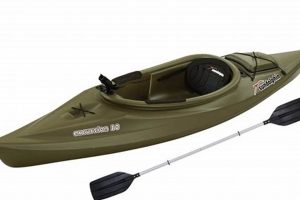
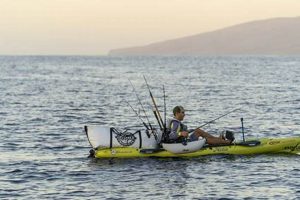
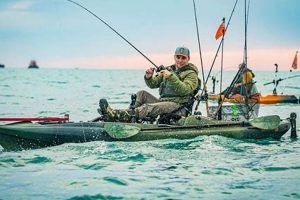
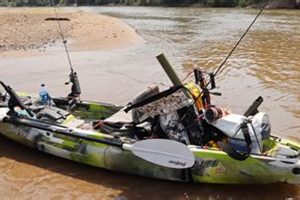
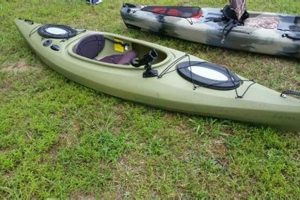
Specialized small watercraft designed for angling in freshwater habitats are increasingly popular for pursuing salmonids. These vessels offer anglers enhanced access to rivers, streams, lakes, and ponds, allowing them to reach prime fishing locations often inaccessible from shore or larger boats. A stable platform for casting, gear storage, and even livewell capabilities are common features. For example, an angler might employ such a vessel to drift quietly down a secluded stream, presenting artificial flies or lures with precision.
The advantages of this approach include improved maneuverability in shallow waters, minimal disturbance to fish, and a closer connection to the natural environment. Historically, anglers relied on wading or shore fishing, but advancements in design and materials have made these specialized watercraft increasingly accessible and effective. This evolution allows for longer fishing trips, exploration of diverse water bodies, and a greater likelihood of success.
This discussion will further explore key aspects of selecting, equipping, and utilizing these specialized boats, including considerations for stability, propulsion, and safety. Topics such as essential gear, effective techniques, and responsible angling practices will also be examined.
Tips for Effective Kayak Angling
Optimizing angling success from a kayak requires careful consideration of various factors, from vessel selection to on-the-water strategies. The following tips provide valuable insights for enhancing the overall experience and improving catch rates.
Tip 1: Prioritize Stability: A stable platform is paramount for casting effectively and landing fish. Wider hulls generally offer greater stability, especially for anglers new to kayak fishing. Consider testing various hull designs before making a purchase.
Tip 2: Choose Appropriate Propulsion: Paddle propulsion offers a quiet, stealthy approach, ideal for shallow waters and minimizing disturbance to fish. Pedal-powered kayaks allow hands-free fishing and faster travel over longer distances. Electric motors provide an effortless means of covering extensive water bodies.
Tip 3: Organize Gear Efficiently: Accessible and organized gear is crucial for a smooth and productive fishing trip. Utilize tackle boxes, rod holders, and storage compartments to keep essential equipment within easy reach while maintaining balance and stability.
Tip 4: Utilize Stealth Tactics: Minimize noise and movement to avoid spooking fish. Drifting quietly with the current or using a slow, controlled paddling technique allows for a more natural presentation of lures or bait.
Tip 5: Master Kayak Control: Practice maneuvering the kayak effectively before venturing into challenging waters. Understanding how wind, current, and waves impact kayak control is essential for safe and efficient navigation.
Tip 6: Emphasize Safety Precautions: Always wear a personal flotation device (PFD) and inform someone of your fishing plans, including location and expected return time. Carry essential safety gear, such as a whistle, signaling device, and first-aid kit.
Tip 7: Respect the Environment: Practice catch-and-release whenever possible to conserve fish populations. Properly dispose of fishing line and other waste to minimize environmental impact. Adhere to local fishing regulations and respect private property.
By incorporating these tips, anglers can significantly enhance their kayak fishing experience, improving both safety and success on the water. These practices contribute to a more rewarding and sustainable approach to angling.
This discussion concludes with a brief overview of essential gear recommendations and resources for further exploration of kayak fishing techniques.
1. Kayak Stability
Kayak stability is a critical factor in successful trout fishing, directly impacting angler safety, comfort, and effectiveness. A stable platform is essential for various on-the-water activities, including casting, retrieving fish, and navigating varying water conditions. Understanding the elements that contribute to stability is crucial for selecting and utilizing a trout fishing kayak effectively.
- Hull Design and Stability
Hull design significantly influences stability. Wider, flatter hulls generally provide primary stability, resisting initial tipping. However, they may be slower and less maneuverable. Longer, narrower hulls offer secondary stability, recovering more easily from larger leans but feeling less stable initially. For trout fishing, a balance between primary and secondary stability is desirable, allowing for both secure casting and efficient maneuvering in rivers and streams.
- Center of Gravity and Balance
The combined center of gravity of the angler, kayak, and gear affects overall stability. A lower center of gravity enhances stability. Distributing weight evenly within the kayak and avoiding sudden movements minimizes the risk of capsizing. Proper seating position and gear placement are crucial, especially when casting or landing fish. Anglers should practice entering, exiting, and moving within the kayak to understand its balance characteristics.
- Water Conditions and Stability
Water conditions, such as current, wind, and waves, can significantly impact kayak stability. Moving water exerts forces on the hull, requiring adjustments in paddling and body positioning to maintain balance. Wind can create drift and affect casting accuracy, while waves can destabilize the kayak. Understanding how these factors influence stability is essential for safe and effective trout fishing in various environments.
- Stability Enhancements
Various stability enhancements can improve kayak performance. Outriggers, stabilizers, and wider platforms can increase primary stability. Properly adjusted seating and foot braces contribute to a secure and balanced position. Anglers can also utilize techniques like leaning into turns to maintain stability in moving water. Selecting a kayak with features that enhance stability is crucial for a confident and enjoyable fishing experience.
By carefully considering these facets of kayak stability, anglers can choose a vessel and employ techniques that maximize safety and fishing effectiveness. A stable platform allows for focused casting, confident fish handling, and efficient navigation in diverse water conditions, ultimately contributing to a more rewarding trout fishing experience.
2. Propulsion Choice

Propulsion choice significantly influences the effectiveness and experience of trout fishing from a kayak. The selected method impacts access to fishing locations, stealth, and overall fishing strategy. Each propulsion typepaddle, pedal, or motoroffers distinct advantages and disadvantages relevant to specific fishing environments and angler preferences.
Paddle propulsion provides a quiet, non-intrusive approach ideal for shallow waters and stealthy maneuvering near trout. This traditional method allows for precise boat control and minimal disturbance to fish, enhancing angling success in clear streams and rivers. However, paddling can be physically demanding over long distances or against strong currents, potentially limiting access to more remote fishing areas. For instance, navigating a slow-moving, shallow stream benefits from the subtle control of a paddle, allowing anglers to approach feeding trout discreetly.
Pedal-powered kayaks offer hands-free fishing, enabling anglers to maintain casting position and react quickly to strikes. The increased speed and range compared to paddling provide access to wider stretches of water and cover more ground efficiently. However, pedal systems can be more complex and require higher initial investment. They may also be less effective in very shallow water or areas with dense vegetation. Navigating a larger lake or reservoir with a pedal kayak enables anglers to reach distant coves or inlets without the fatigue of continuous paddling, maximizing fishing time and area coverage.
Motorized kayaks offer the greatest speed and range, allowing access to distant fishing grounds and efficient travel against strong currents or wind. This advantage is particularly valuable in larger bodies of water or when targeting migratory trout. However, motors introduce noise and potential disturbance to fish, requiring careful approach and consideration of environmental impact. Navigating a swift-flowing river with a motor allows anglers to maintain position and effectively present lures or bait, overriding the river’s current and accessing prime fishing spots otherwise challenging to reach.
Selecting the appropriate propulsion system involves careful consideration of factors including fishing location characteristics, target species behavior, angler physical capabilities, and budget constraints. The optimal choice maximizes fishing effectiveness while minimizing environmental impact and aligning with individual preferences for a rewarding trout fishing experience.
3. Gear Organization
Effective gear organization is paramount for successful and enjoyable trout fishing from a kayak. Limited space and the dynamic nature of kayak angling necessitate a systematic approach to gear storage and accessibility. A well-organized system enhances efficiency, minimizes distractions, and maximizes fishing time on the water. Disorganized gear can lead to tangled lines, lost tackle, and compromised safety, especially in challenging conditions. For example, a misplaced landing net can result in a lost trophy trout, while tangled lines can interrupt a crucial moment in the fishing action.
Several strategies contribute to efficient gear organization. Utilizing specialized tackle boxes designed for kayak fishing, incorporating rod holders and gear tracks, and strategically positioning essential items within easy reach are key considerations. Waterproof bags and containers protect sensitive electronics and gear from moisture. Prioritizing frequently used items, such as pliers, clippers, and extra leaders, ensures they are readily accessible. Practical examples include mounting a frequently used fly box within arm’s reach and storing less frequently used items, such as rain gear, in a waterproof compartment at the rear of the kayak. Careful pre-trip planning and consideration of anticipated fishing conditions are essential for tailoring gear organization to specific needs.
Efficient gear organization contributes significantly to a safe and productive trout fishing experience. It minimizes distractions, allowing anglers to focus on fishing, and optimizes response time in critical moments. Furthermore, a well-organized kayak enhances overall stability and maneuverability. Challenges such as limited space and the potential for gear shifting during movement require careful planning and utilization of appropriate storage solutions. Addressing these challenges proactively enhances both safety and fishing success, contributing to a more rewarding experience on the water.
4. Stealth Techniques

Stealth techniques are essential for successful trout fishing from a kayak. Trout are easily spooked by unnatural sounds and movements, making a discreet approach crucial. The low profile of a kayak offers an inherent advantage, allowing anglers to sit close to the waterline and minimize visual disturbance. However, maximizing this advantage requires conscious effort and the application of specific techniques. For example, minimizing paddle splashes and avoiding sudden movements are fundamental to maintaining a low profile. Drifting quietly with the current allows for a natural presentation of lures or flies, increasing the likelihood of enticing wary trout. Approaching a likely holding spot with slow, deliberate paddle strokes, as opposed to rapid, splashing movements, significantly increases the chances of a successful presentation.
The connection between stealth and kayak fishing for trout extends beyond simply minimizing visible presence. Sound control is equally crucial. Kayaks, while generally quieter than motorized boats, can still produce noise that alerts trout. Minimizing gear clatter, choosing quiet paddle strokes, and avoiding bumping the hull against rocks or submerged logs are all vital aspects of maintaining stealth. For instance, using soft-sided tackle bags rather than hard plastic boxes reduces noise and vibration, minimizing disturbance to fish. Similarly, employing a paddle with a streamlined blade design minimizes splashing and water disturbance, enhancing the stealthy approach.
Mastering stealth techniques significantly enhances the effectiveness of trout fishing from a kayak. This approach allows anglers to get closer to fish without detection, increasing opportunities for successful presentations. The inherent advantages of a kayak’s low profile and maneuverability are amplified by the conscious application of stealth principles. Challenges such as wind, current, and water clarity influence the effectiveness of these techniques and require adaptation based on prevailing conditions. Adapting paddle strokes, drift speed, and casting angles to suit the environment maximizes stealth and improves fishing success, contributing to a more rewarding angling experience.
5. River/Lake Conditions
River and lake conditions significantly influence trout behavior and, consequently, the effectiveness of kayak angling strategies. Water temperature, clarity, current speed, and depth all play crucial roles in determining trout location, feeding patterns, and overall activity levels. Understanding these factors is essential for successful kayak angling. For example, trout often seek refuge in cooler, deeper water during periods of high temperatures, influencing angler choice of fishing location and techniques. Similarly, changes in water clarity affect visibility and light penetration, impacting both trout behavior and lure effectiveness. Adapting fishing strategies based on prevailing river or lake conditions is crucial for maximizing angling success.
Current speed and water depth further dictate kayak positioning and fishing techniques. Strong currents necessitate adjustments in kayak control and anchoring strategies, while also influencing the presentation of lures or flies. Water depth determines suitable fishing locations and affects the choice of tackle and retrieval methods. In a fast-flowing river, anglers might employ a heavier weight or specialized fly line to maintain contact with the bottom and present the lure effectively. Conversely, in a still, deep lake, a slow-sinking lure or a suspended fly might be more effective. Adapting to these conditions requires careful observation and a nuanced understanding of how river and lake dynamics influence trout behavior.
Successfully navigating river and lake conditions in a kayak requires careful planning and on-the-water adjustments. Awareness of potential hazards, such as rapids, submerged obstacles, and changing weather patterns, is paramount for angler safety. Utilizing appropriate safety gear, including personal flotation devices and communication devices, is essential. Furthermore, respecting local regulations and practicing ethical angling principles contributes to the sustainability of the fishery. By understanding the interplay between river/lake conditions and trout behavior, anglers can refine techniques, enhance safety, and maximize their chances of a successful and rewarding kayak fishing experience. This understanding translates to more effective lure selection, optimized presentation techniques, and ultimately, improved angling success while minimizing environmental impact.
6. Safety Equipment

Safety equipment is integral to responsible trout fishing from a kayak. The inherent risks associated with on-the-water activities, compounded by the specialized challenges of kayak angling, necessitate careful consideration of safety precautions. A personal flotation device (PFD) is paramount, providing essential buoyancy in the event of capsize or accidental immersion. Cold water environments pose additional risks, making proper insulation and thermal protection crucial. Swift currents and unpredictable weather patterns underscore the importance of communication devices, signaling tools, and emergency preparedness. For example, an angler unexpectedly encountering strong winds or rapid changes in weather conditions benefits significantly from having a waterproof VHF radio or a personal locator beacon (PLB) for summoning assistance. Similarly, a readily accessible first-aid kit can prove invaluable in addressing minor injuries or providing initial care in more serious situations.
Beyond essential safety gear, preparedness extends to pre-trip planning and awareness of environmental conditions. Checking weather forecasts, informing someone of fishing plans, and understanding local water conditions are crucial safety practices. Carrying a readily accessible bilge pump and paddle float assists in kayak recovery after capsize. Navigation lights and reflective gear enhance visibility in low-light conditions, reducing the risk of collisions with other vessels. Practical examples include familiarizing oneself with local emergency procedures, carrying a map and compass or GPS device, and understanding self-rescue techniques specific to kayak angling. These proactive measures mitigate potential risks and contribute significantly to angler safety.
Prioritizing safety equipment and preparedness significantly reduces the risks associated with trout fishing from a kayak. This proactive approach allows anglers to focus on the enjoyment of the sport while minimizing potential hazards. Challenges such as limited storage space on a kayak necessitate careful selection and efficient organization of safety gear. Integrating safety considerations into pre-trip planning and on-the-water practices enhances angler confidence and promotes a culture of responsible angling, ensuring a safer and more rewarding experience for all. Understanding the potential hazards of kayak angling and implementing appropriate safety measures contributes to a sustainable and enjoyable pursuit of this increasingly popular sport.
Frequently Asked Questions
This section addresses common inquiries regarding specialized small watercraft designed for freshwater angling.
Question 1: What type of hull design is most suitable for angling stability?
Wider, flatter hulls generally offer greater initial stability, while longer, narrower hulls provide better secondary stability (recovery from leans). The optimal choice depends on individual angler preferences and anticipated water conditions. A balance between primary and secondary stability is often desirable.
Question 2: What propulsion method is most effective?
Paddle propulsion offers stealth and control, pedal drives provide hands-free fishing and increased range, and motors offer the greatest speed and access. The ideal choice depends on the specific fishing environment, angler physical capabilities, and desired level of exertion.
Question 3: How can gear be organized effectively in limited space?
Utilizing specialized tackle boxes, rod holders, and storage compartments maximizes space efficiency. Prioritizing frequently used items and employing waterproof bags protects gear from moisture and ensures accessibility.
Question 4: What are key stealth techniques?
Minimizing paddle splashes, avoiding sudden movements, and controlling noise are crucial. Drifting quietly and approaching fishing spots with slow, deliberate strokes enhances stealth and reduces disturbance to fish.
Question 5: How do river and lake conditions influence fishing strategies?
Water temperature, clarity, current speed, and depth all impact trout behavior. Adapting lure selection, retrieval methods, and kayak positioning based on prevailing conditions is essential for success.
Question 6: What essential safety equipment should be carried?
A personal flotation device (PFD), signaling devices, a first-aid kit, and communication tools are crucial. Appropriate clothing for prevailing weather conditions and knowledge of self-rescue techniques are also highly recommended.
Careful consideration of these factors contributes to a safer, more efficient, and ultimately more rewarding fishing experience. Selecting appropriate equipment and techniques based on individual needs and environmental conditions enhances angling success and promotes responsible enjoyment of the sport.
The subsequent section will explore recommended gear and resources for further exploration of this specialized angling method.
Conclusion
Effective pursuit of trout from specialized kayaks requires a nuanced understanding of equipment, techniques, and environmental factors. Hull design, propulsion choice, and gear organization significantly influence angling success and overall experience. Stealth techniques, adapted to prevailing river or lake conditions, are crucial for approaching wary trout. Prioritizing safety equipment and preparedness ensures responsible enjoyment of the sport. Consideration of these elements contributes to a more informed and rewarding angling experience.
Successful integration of these factors, combined with a dedication to ethical angling practices, fosters a sustainable and fulfilling approach to this specialized pursuit. Continued exploration of advanced techniques and a deeper understanding of trout behavior will further enhance angling proficiency and contribute to the long-term conservation of these valuable freshwater resources.