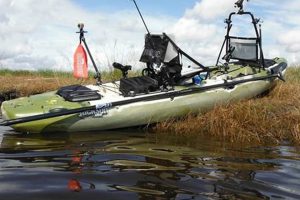
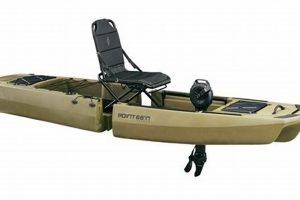
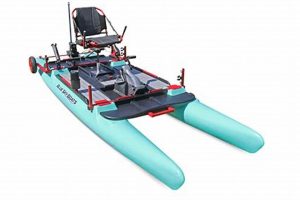
Premium fishing kayaks represent the pinnacle of design, technology, and performance within the kayaking industry. These vessels are characterized by advanced features, cutting-edge materials, and superior construction. Examples include integrated sonar systems, highly adjustable seating, and specialized storage compartments designed for fishing gear.
Investing in such a high-quality kayak offers several key advantages. Enhanced stability and maneuverability contribute to a more successful and enjoyable fishing experience. Durable construction ensures longevity and resilience in various water conditions. Comfort features like ergonomic seating and ample storage reduce fatigue and allow anglers to focus on the task at hand. Historically, fishing kayaks have evolved from basic recreational models to highly specialized platforms, reflecting the growing demand for performance and angler-specific features.
Further exploration will delve into specific features, materials, and brands commonly associated with these elite kayaks, offering prospective buyers valuable insights for informed decision-making. Considerations such as hull design, propulsion systems, and accessory integration will be examined in detail.
Tips for Selecting Premium Fishing Kayaks
Choosing a high-quality fishing kayak requires careful consideration of various factors. The following tips offer guidance for making an informed purchase decision.
Tip 1: Prioritize Stability and Hull Design: Consider the intended fishing environment. Wider, flatter hulls offer enhanced stability in calm waters, while longer, V-shaped hulls perform better in rough conditions. A well-designed hull contributes significantly to tracking and maneuverability.
Tip 2: Evaluate Propulsion Systems: Paddle kayaks provide excellent exercise and control, while pedal-driven options offer hands-free fishing and increased speed. Motorized kayaks cover larger distances efficiently. Consider personal preferences and fishing styles.
Tip 3: Assess Seating and Comfort: Long hours on the water demand comfortable seating. Look for adjustable backrests, ample legroom, and breathable materials. Proper support minimizes fatigue and maximizes enjoyment.
Tip 4: Examine Storage Capacity and Accessibility: Adequate storage for tackle, gear, and catches is essential. Consider specialized compartments, rod holders, and accessible storage areas. Efficient organization enhances fishing efficiency.
Tip 5: Consider Material and Construction: Durable materials such as rotomolded polyethylene or fiberglass contribute to longevity and impact resistance. High-quality construction ensures a reliable and resilient vessel.
Tip 6: Research Reputable Brands and Reviews: Established brands often offer better warranties and customer support. Reading reviews and seeking expert opinions provide valuable insights into performance and reliability.
Tip 7: Budget Wisely: Premium features come at a premium price. Establish a budget and prioritize essential features. Consider long-term value and potential resale value.
Careful consideration of these factors contributes to selecting a fishing kayak that optimizes performance, comfort, and longevity, ultimately enhancing the overall fishing experience. The right kayak becomes a valuable asset, facilitating successful and enjoyable outings on the water.
By understanding the nuances of premium fishing kayaks, anglers can make informed decisions that align with their individual needs and fishing styles. The subsequent conclusion will summarize the key takeaways and offer final recommendations.
1. Advanced Hull Design

Advanced hull designs represent a cornerstone of premium fishing kayaks, directly influencing performance, stability, and maneuverability. These designs go beyond basic hull shapes, incorporating specialized features tailored to specific fishing environments and styles. Consider, for example, the integration of multi-chine hulls, which combine stability with efficient tracking. This design allows anglers to maintain stability while casting or reeling in fish, yet also facilitates effortless paddling or pedaling across various water conditions. Another example lies in the development of tunnel hulls, which enhance stability in shallow water and improve maneuverability in tight spaces, ideal for navigating mangrove forests or shallow creeks. These advanced designs differentiate top-tier kayaks from standard recreational models.
The practical significance of advanced hull design becomes evident in real-world fishing scenarios. A kayak with a well-designed hull tracks efficiently, minimizing course deviations and reducing paddling effort. This translates to more time spent fishing and less time correcting course. Enhanced stability provided by advanced hull designs allows anglers to stand and cast with confidence, expanding fishing techniques and increasing sight-fishing opportunities. Moreover, specific hull designs cater to particular fishing styles. For instance, kayaks designed for offshore fishing prioritize speed and tracking in rougher waters, while those intended for inshore use emphasize stability and maneuverability in calmer environments.
In summary, advanced hull design signifies more than just aesthetics. It represents a critical component that elevates top-of-the-line fishing kayaks. Understanding the nuances of hull design empowers anglers to select a vessel perfectly suited to their individual needs and fishing styles. This knowledge translates directly to improved performance on the water, contributing to a more efficient, comfortable, and ultimately, successful fishing experience. By prioritizing advanced hull design, manufacturers demonstrate a commitment to providing anglers with the tools necessary to excel in their pursuit of fish.
2. Superior Stability

Superior stability stands as a defining characteristic of top-tier fishing kayaks, directly impacting angler performance, safety, and overall fishing experience. Stability in a kayak allows for comfortable casting, reeling, and landing fish, particularly crucial when handling larger species or navigating challenging water conditions. This enhanced stability stems from factors such as wider hull designs, strategically positioned outriggers, and innovative ballast systems. These design elements work in concert to minimize tipping or rocking, providing a secure and stable platform even when anglers shift their weight or encounter unexpected waves or currents.
The practical implications of superior stability become readily apparent in various fishing scenarios. Consider an angler sight-fishing in shallow water. A stable platform enables standing and casting with confidence, expanding visibility and reach. Similarly, when battling a strong fish, a stable kayak provides the leverage and control necessary to successfully land the catch. Furthermore, enhanced stability fosters confidence and reduces fatigue, allowing anglers to focus on the task at hand rather than constantly correcting balance. This translates directly to a more enjoyable and productive fishing experience, particularly during longer outings or in challenging conditions.
In essence, superior stability represents a non-negotiable feature in top-of-the-line fishing kayaks. It distinguishes these vessels from standard recreational models and contributes significantly to angler success and safety. Understanding the mechanisms that contribute to enhanced stability empowers informed purchase decisions. Ultimately, a stable platform enhances not only fishing effectiveness but also the overall enjoyment derived from time spent on the water, ensuring a positive and rewarding experience regardless of skill level or fishing environment.
3. Integrated Technology

Integrated technology distinguishes top-of-the-line fishing kayaks, transforming them into sophisticated angling platforms. This integration goes beyond simple accessory mounts, encompassing advanced electronics designed to enhance fishing effectiveness and overall experience. Consider the integration of fish finders, GPS systems, and trolling motor controls. These technologies provide anglers with real-time data about water depth, fish location, and navigation, enabling strategic decision-making and increasing the likelihood of success. Furthermore, seamless integration minimizes clutter and maximizes efficiency, allowing anglers to focus on the task at hand rather than managing separate devices.
The practical significance of integrated technology becomes evident in various fishing scenarios. Imagine an angler navigating a complex waterway in search of specific fish species. Integrated GPS and fish finder systems provide crucial information about location, depth, and underwater structures, enabling targeted fishing efforts. Similarly, motorized kayaks benefit from integrated trolling motor controls, allowing for precise speed adjustments and hands-free navigation. This integration streamlines the fishing process, maximizing efficiency and allowing anglers to cover more water effectively. Real-life examples include kayaks equipped with wireless pedal-controlled trolling motors and integrated sonar systems that display directly on a mounted screen, offering seamless control and real-time feedback.
In summary, integrated technology represents a defining characteristic of top-tier fishing kayaks. This integration enhances fishing effectiveness, improves navigational capabilities, and streamlines the overall angling experience. Understanding the practical applications of these technologies empowers informed purchase decisions, allowing anglers to select a kayak equipped with the tools necessary to maximize success on the water. While challenges such as battery life and potential technological failures exist, ongoing advancements continue to refine these systems, further solidifying the crucial role integrated technology plays in the evolution of premium fishing kayaks.
4. Ergonomic Seating
Ergonomic seating constitutes a critical differentiator between top-of-the-line fishing kayaks and standard models. Comfort directly impacts endurance and focus, essential factors for successful angling, particularly during extended outings. Properly designed seating systems minimize fatigue, allowing anglers to maintain optimal performance throughout the fishing experience.
- Adjustable Backrests:
Adjustable backrests accommodate individual preferences and body types. Offering a range of positions, from upright for paddling to reclined for relaxed fishing, these systems maximize comfort and minimize strain. High-end kayaks frequently feature customizable lumbar support, further enhancing comfort and reducing long-term back fatigue. Examples include kayaks with sliding track systems allowing for fore-and-aft adjustment, optimizing weight distribution and balance.
- Cushioning and Breathability:
High-quality cushioning and breathable materials contribute significantly to angler comfort. Materials such as closed-cell foam offer excellent support and resist water absorption, maintaining comfort even in wet conditions. Breathable fabrics promote airflow, preventing overheating and moisture buildup. This combination enhances comfort during long hours on the water, crucial for maintaining focus and enjoying the experience.
- Seat Height and Legroom:
Optimal seat height and ample legroom contribute to overall comfort and paddling efficiency. Elevated seating positions improve visibility and casting range, while adequate legroom allows for comfortable positioning and reduces cramping. Kayaks designed with adjustable seat heights cater to individual preferences and fishing styles, accommodating both seated and standing positions.
- Durability and Stability:
Durable construction ensures long-lasting comfort and performance. Robust frames and high-quality materials withstand the rigors of regular use and exposure to the elements. Stable seat platforms minimize rocking and shifting, contributing to a secure and comfortable fishing experience, especially in challenging conditions.
These facets of ergonomic seating collectively contribute to the enhanced performance and enjoyment offered by top-of-the-line fishing kayaks. By prioritizing comfort and support, these kayaks empower anglers to focus on the task at hand, maximizing their time on the water and increasing their chances of success. The investment in ergonomic design signifies a commitment to providing anglers with not just a vessel, but a comfortable and efficient fishing platform.
5. Ample Storage Capacity
Ample storage capacity directly correlates with the elevated functionality expected of top-of-the-line fishing kayaks. Effective angling necessitates carrying various equipment, including rods, reels, tackle boxes, safety gear, and potentially captured fish. Insufficient storage compromises organization, accessibility, and overall fishing efficiency. Premium kayaks address this need through thoughtfully designed storage solutions, maximizing space utilization and ensuring convenient access to essential gear. Dedicated compartments for specific items, such as rod holders and tackle storage trays, contribute to efficient organization and prevent equipment damage. Examples include integrated live wells for keeping bait or caught fish fresh, and dry storage hatches for protecting sensitive electronics or personal belongings. These features differentiate top-tier kayaks from basic recreational models, reflecting a focus on angler-specific needs.
Practical benefits of ample storage become readily apparent during actual fishing excursions. Consider a scenario involving changing fishing techniques or targeting different species. A well-organized kayak allows for seamless transitions, with all necessary gear readily accessible. This eliminates the need to return to shore for equipment changes, maximizing time spent fishing. Furthermore, secure storage prevents equipment loss or damage, protecting valuable investments. Ample storage also contributes to safety by maintaining a clutter-free deck, reducing trip hazards and ensuring clear access to essential safety gear. Real-life examples include kayaks equipped with specialized compartments for specific fishing accessories, such as anchor trolleys or landing nets, further enhancing efficiency and organization.
In summary, ample, well-designed storage represents a critical component of top-of-the-line fishing kayaks. This feature directly enhances fishing efficiency, safety, and overall enjoyment. While challenges such as weight distribution and potential space limitations exist, manufacturers continuously refine storage solutions to maximize utility. Understanding the practical significance of ample storage empowers informed purchasing decisions, allowing anglers to select kayaks that meet their specific storage requirements and contribute to a more productive and enjoyable fishing experience. This focus on storage underscores the commitment to providing anglers with the tools they need to excel on the water.
6. Durable Construction
Durable construction represents a cornerstone of top-of-the-line fishing kayaks, inextricably linked to longevity, performance, and overall value. These kayaks face demanding conditions, from rocky shorelines to abrasive sands and fluctuating temperatures. Robust construction ensures resilience against impacts, UV degradation, and general wear and tear, preserving the kayak’s structural integrity and extending its lifespan. This durability translates directly into sustained performance and reduced maintenance requirements, crucial factors for anglers seeking long-term reliability and a return on investment. Materials such as rotomolded polyethylene and fiberglass, known for their impact resistance and durability, commonly feature in premium kayak construction. Rotomolding, for instance, creates a seamless, one-piece hull with uniform thickness, maximizing strength and eliminating potential weak points. Similarly, fiberglass construction offers high strength-to-weight ratios, contributing to both durability and performance.
The practical significance of durable construction becomes readily apparent in real-world scenarios. Consider a kayak navigating rocky shallows or encountering submerged debris. Robust construction minimizes the risk of punctures or cracks, safeguarding the vessel and its occupants. Furthermore, resistance to UV degradation preserves the kayak’s appearance and structural integrity, even after prolonged exposure to sunlight. This durability translates into a higher resale value, an important consideration for anglers who may eventually upgrade their equipment. Real-life examples include kayaks constructed from military-grade polyethylene, showcasing exceptional impact resistance and longevity, or those featuring reinforced hulls designed to withstand extreme conditions.
In summary, durable construction constitutes a fundamental attribute of top-of-the-line fishing kayaks. This durability ensures longevity, maintains performance, and contributes to overall value. While material selection and construction techniques influence cost, the long-term benefits of a durable kayak outweigh the initial investment. Understanding the connection between durable construction and long-term performance empowers informed purchase decisions, enabling anglers to select kayaks that withstand the rigors of regular use and provide years of reliable service. This focus on durability underscores the commitment of premium manufacturers to providing anglers with equipment built to last.
7. Enhanced Maneuverability
Enhanced maneuverability distinguishes top-of-the-line fishing kayaks, contributing significantly to angling effectiveness and overall on-the-water experience. Precise control and effortless navigation enable anglers to access secluded fishing spots, navigate complex waterways, and respond quickly to changing fish behavior. This superior maneuverability stems from a combination of factors, including refined hull designs, advanced rudder systems, and lighter weight construction. Shorter kayaks with a defined keel, for instance, turn more quickly and efficiently, while retractable or adjustable skeg systems enhance tracking and stability in varying conditions. Lighter kayaks require less effort to maneuver, particularly beneficial in windy or current-prone environments. These features, collectively, empower anglers to navigate challenging waters and position themselves optimally for fishing success.
The practical significance of enhanced maneuverability becomes evident in various fishing scenarios. Navigating tight quarters, such as mangrove tunnels or shallow creeks, demands precise control. A highly maneuverable kayak allows anglers to navigate these areas effectively, accessing prime fishing locations often inaccessible to larger vessels. Similarly, when pursuing fast-moving fish or responding to sudden changes in current or wind, quick and responsive handling proves crucial. The ability to change direction swiftly and maintain precise positioning significantly increases the chances of a successful hookup. Consider a kayak equipped with a responsive rudder system and a streamlined hull design. Such a vessel allows for effortless turning and precise tracking, even in challenging conditions, optimizing angling effectiveness.
In summary, enhanced maneuverability constitutes a key attribute of top-of-the-line fishing kayaks. This characteristic enhances angling effectiveness, expands access to prime fishing locations, and improves overall on-the-water performance. While factors like hull length and weight influence maneuverability, manufacturers continue to refine design and technology to optimize control and responsiveness. Understanding the practical implications of enhanced maneuverability empowers informed purchasing decisions, allowing anglers to prioritize this essential feature and select a kayak best suited to their specific fishing needs and environment. This focus on maneuverability underscores the commitment to providing anglers with the tools necessary to excel in their pursuit of fish.
Frequently Asked Questions
This section addresses common inquiries regarding premium fishing kayaks, providing concise and informative responses to facilitate informed purchasing decisions.
Question 1: What differentiates premium fishing kayaks from standard recreational models?
Premium fishing kayaks distinguish themselves through specialized features designed for angling, including advanced hull designs for stability and tracking, integrated technology like fish finders and GPS, ergonomic seating for enhanced comfort, ample storage for gear, durable construction for longevity, and enhanced maneuverability for precise control.
Question 2: How does hull design impact fishing kayak performance?
Hull design significantly influences stability, speed, and maneuverability. Wider, flatter hulls offer greater stability, while longer, V-shaped hulls enhance tracking and speed in rougher waters. Specialized designs, such as tunnel hulls, optimize performance in specific environments like shallow water.
Question 3: What are the advantages of pedal-powered kayaks for fishing?
Pedal-powered kayaks offer hands-free propulsion, allowing anglers to focus on fishing. They often provide greater speed and efficiency compared to paddling, particularly over longer distances, and enable precise maneuverability in challenging conditions.
Question 4: Why is ergonomic seating important in a fishing kayak?
Ergonomic seating minimizes fatigue during long fishing trips, enhancing comfort and allowing anglers to maintain focus and performance. Adjustable backrests, breathable materials, and ample legroom contribute to a more comfortable and enjoyable experience.
Question 5: How does storage capacity impact fishing efficiency?
Ample storage capacity allows anglers to carry all necessary gear, including rods, reels, tackle boxes, and safety equipment, without compromising organization or accessibility. Dedicated compartments and specialized storage solutions enhance efficiency and maintain a clutter-free deck.
Question 6: What materials contribute to durable kayak construction?
Rotomolded polyethylene and fiberglass represent common materials used in durable kayak construction. Rotomolding creates seamless, one-piece hulls with uniform thickness, while fiberglass offers a high strength-to-weight ratio, contributing to longevity and impact resistance.
Careful consideration of these frequently asked questions equips prospective buyers with essential knowledge for evaluating premium fishing kayaks and making informed decisions aligned with individual needs and fishing styles.
The subsequent section will offer concluding remarks and summarize the key takeaways regarding top-of-the-line fishing kayaks.
Top of the Line Fishing Kayaks
Top of the line fishing kayaks represent a significant investment, offering anglers unparalleled performance, comfort, and durability. This exploration has highlighted key features that distinguish these premium vessels, including advanced hull designs for optimized tracking and stability, integrated technology for enhanced fishing effectiveness, ergonomic seating for sustained comfort, ample storage for efficient gear organization, durable construction for longevity, and enhanced maneuverability for precise control. These features, collectively, contribute to a superior on-the-water experience, empowering anglers to pursue their passion with confidence and efficiency.
The evolution of fishing kayaks continues, driven by advancements in materials, technology, and design. As manufacturers refine existing features and introduce innovative solutions, top of the line fishing kayaks will continue to redefine the boundaries of angling performance. An informed understanding of these advancements empowers anglers to make strategic investments in equipment that aligns with their individual needs and aspirations, maximizing their enjoyment and success on the water for years to come. The pursuit of the perfect fishing kayak remains an ongoing journey, fueled by a passion for innovation and a dedication to enhancing the angling experience.