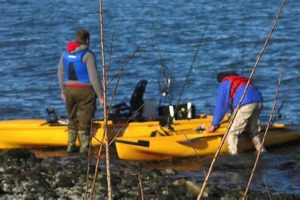
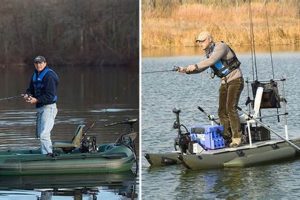
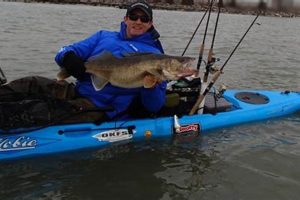
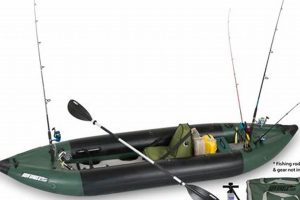
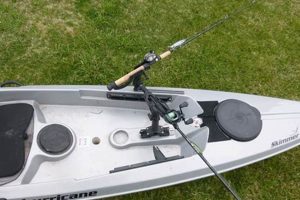
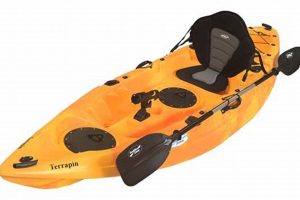
This specific model of personal watercraft is designed for angling, offering features such as rod holders, storage compartments, and a stable hull. Such vessels are typically constructed from durable, lightweight materials like rotomolded polyethylene, prioritizing stability and maneuverability for navigating various water bodies, from lakes and rivers to calmer coastal waters. They frequently incorporate specialized seating designed for comfort during extended fishing trips.
The popularity of this type of watercraft stems from its ability to provide anglers access to otherwise difficult-to-reach fishing spots. This enhanced access, combined with the hands-free nature of kayak fishing, allows for a more immersive and engaging angling experience. Over time, these specialized kayaks have evolved alongside advancements in materials and design, leading to improved performance, comfort, and durability. They represent a significant development in the sport of fishing, offering a blend of recreation and practicality.
The following sections will delve into specific aspects of choosing, using, and maintaining this type of specialized fishing vessel. Topics covered will include key features to consider during selection, essential safety guidelines, recommended accessories, and proper storage and maintenance practices.
Tips for Kayak Fishing
Proper preparation and technique are essential for a successful and enjoyable kayak fishing experience. The following tips offer guidance for maximizing efficiency and safety on the water.
Tip 1: Stability is Paramount: Prioritize stability when selecting a watercraft. A wider hull generally provides greater stability, which is crucial for casting, reeling, and landing fish. Consider weight capacity and balance.
Tip 2: Plan and Prepare: Research fishing locations beforehand, checking weather conditions, water currents, and any specific regulations. Pack essential gear, including safety equipment, fishing tackle, and navigation tools.
Tip 3: Dress Appropriately: Wear comfortable, quick-drying clothing suitable for the expected weather conditions. Layering is recommended for adaptability. Always wear a personal flotation device.
Tip 4: Master Basic Paddling Techniques: Efficient paddling conserves energy and allows for precise maneuvering. Practice different strokes for navigating varying water conditions and wind.
Tip 5: Organize and Secure Gear: Utilize storage compartments and secure loose items to prevent loss or interference during paddling and fishing. A well-organized vessel enhances safety and efficiency.
Tip 6: Respect Wildlife and the Environment: Practice catch-and-release whenever possible and adhere to local fishing regulations. Pack out all trash and minimize disturbance to natural habitats.
Tip 7: Practice Safety First: Inform someone of your fishing plans, including location and expected return time. Carry a communication device and be aware of changing weather conditions.
By adhering to these guidelines, anglers can enhance their fishing experience while prioritizing safety and environmental responsibility.
These tips provide a solid foundation for a successful kayak fishing trip. The next section will explore advanced techniques for specific fishing scenarios.
1. Stability

Stability forms a cornerstone of the Teton Pro fishing kayak’s design and functionality. A stable platform is essential for various on-the-water activities, including casting, reeling, landing fish, and even entering and exiting the kayak. Compromised stability can lead to capsizing, jeopardizing safety and potentially losing valuable equipment. The Pro’s stability derives from several design features, including its wider hull, a lower center of gravity, and strategically placed seating. These elements combine to create a balanced and secure platform, even in challenging conditions such as choppy water or strong currents. For instance, the wide hull distributes weight more evenly, reducing the likelihood of tipping, while the lower center of gravity enhances stability by keeping the majority of the mass close to the waterline. This inherent stability allows anglers to focus on fishing rather than constantly battling to maintain balance.
The practical significance of this stability becomes particularly apparent when engaging in activities that shift the kayak’s center of gravity. Casting, for example, involves a dynamic movement that can destabilize less stable vessels. The Teton Pro’s inherent stability minimizes this risk, enabling anglers to cast confidently, even in demanding situations. Retrieving a struggling fish also presents a stability challenge, as the fish’s movements can exert unpredictable forces on the kayak. The Pro’s robust stability helps anglers maintain control during these critical moments, increasing the likelihood of a successful landing. Consider a scenario where an angler hooks a large fish in windy conditions. A less stable kayak might capsize under the combined forces of the wind and the fish’s struggles, whereas the Teton Pro’s stability provides a secure platform for a protracted fight.
In summary, the Teton Pro fishing kayak prioritizes stability through its design and construction. This stability translates to enhanced safety, improved fishing performance, and greater confidence on the water. While factors such as weather and water conditions always influence overall stability, the inherent stability of the Teton Pro provides a crucial foundation for a successful and enjoyable fishing experience. Understanding this connection between design and performance empowers anglers to make informed decisions and maximize their time on the water.
2. Storage Capacity

Storage capacity is a critical factor influencing the practicality and enjoyment of using a Teton Pro fishing kayak. Adequate storage facilitates organized transport of essential gear, including tackle boxes, rods, safety equipment, and personal items. Insufficient storage can lead to a cluttered deck, hindering movement and potentially compromising safety. Understanding the various storage options available on this specific model enables anglers to maximize their efficiency and overall fishing experience.
- Rear Tank Well Storage:
The rear tank well, a common feature in sit-on-top kayaks, provides open storage space behind the seating area. This area is ideal for larger items such as tackle crates or dry bags containing extra clothing. Bungee cords typically secure items within the tank well, preventing loss during transport. The Teton Pro’s rear tank well offers convenient access to frequently used gear while maintaining a clear cockpit.
- Front Hatch Storage:
Many fishing kayaks, including the Teton Pro, incorporate a front hatch providing enclosed storage protected from the elements. This compartment is suitable for sensitive items such as electronics, wallets, or fishing licenses. The sealed hatch safeguards contents from water damage, even in wet conditions or accidental submersion. This dry storage is crucial for preserving valuable equipment.
- Side Storage Compartments:
Smaller storage compartments located along the sides of the kayak offer additional storage options for readily accessible items like pliers, line cutters, or sunscreen. These compartments often feature quick-access lids or pockets, allowing anglers to retrieve items without disrupting their fishing rhythm. Such convenient storage solutions minimize distractions and maximize fishing time.
- Rod Holders:
Dedicated rod holders, integrated into the kayak’s design, provide secure storage for fishing rods while not in use. These holders often incorporate features like rod leashes or straps for added security. The Teton Pro typically features multiple rod holders, enabling anglers to carry several rigged rods, prepared for different fishing techniques. This feature keeps rods organized and accessible, minimizing tangling and maximizing fishing readiness.
The strategic placement and variety of storage options on the Teton Pro contribute significantly to its functionality as a fishing platform. Anglers can organize and secure their gear efficiently, ensuring a clutter-free and safe fishing experience. This focus on storage solutions underscores the kayak’s design intent: to provide a practical and well-equipped vessel for serious anglers. By considering these storage features, prospective buyers can assess their suitability for individual needs and fishing styles.
3. Comfort
Comfort plays a crucial role in the overall fishing experience offered by the Teton Pro fishing kayak. Extended periods on the water, often in varying weather conditions, necessitate a comfortable seating arrangement to minimize fatigue and maximize fishing enjoyment. Discomfort can detract significantly from the experience, leading to premature fatigue and a diminished ability to focus on fishing. The Teton Pro addresses comfort through several key design features.
The seating system typically features an adjustable, high-backed seat designed to provide lumbar support. This adjustable design accommodates individual preferences and body types, allowing for customized comfort. The high back offers support during long hours on the water, reducing strain on the back and promoting a more relaxed posture. Further enhancing comfort, many models include padding and breathable mesh materials in the seat construction. These materials promote airflow, reducing heat buildup and perspiration, particularly beneficial in warmer climates. Padding enhances cushioning, minimizing pressure points and contributing to overall comfort during extended fishing trips. Consider a scenario where an angler spends several hours on the water in choppy conditions. A comfortable, supportive seat significantly reduces fatigue and allows for greater focus on fishing, despite the challenging environment.
Beyond the seat itself, other design elements contribute to the overall comfort of the Teton Pro. Footrests, often adjustable, allow anglers to customize leg positioning, further enhancing comfort and stability. Proper leg support promotes better posture and reduces lower back strain. Additionally, the kayak’s deck layout often prioritizes ergonomics, placing essential features within easy reach, minimizing unnecessary movement and stretching. This thoughtful design reduces fatigue and contributes to a more efficient and enjoyable fishing experience. In summary, the Teton Pro fishing kayak prioritizes comfort through its design and features. This focus on comfort contributes significantly to the overall fishing experience, allowing anglers to stay on the water longer, fish more effectively, and ultimately enjoy their time to the fullest. Understanding the relationship between comfort and performance empowers anglers to make informed decisions and maximize their time on the water.
4. Durability
Durability is a paramount consideration when evaluating fishing kayaks, especially for those intending to use their vessels in diverse environments and challenging conditions. The Teton Pro fishing kayak addresses this concern through robust construction and material selection, ensuring longevity and reliable performance. Understanding the factors contributing to the Pro’s durability empowers informed purchasing decisions and promotes responsible use and maintenance.
- Material Selection:
Rotomolded polyethylene is frequently employed in the construction of the Teton Pro. This material is known for its impact resistance, UV stability, and overall durability. Rotomolding creates a seamless, one-piece hull, eliminating potential weak points associated with joints or seams. This construction method contributes to the kayak’s ability to withstand impacts from rocks, logs, or other obstacles encountered in various waterways. The material’s UV resistance prevents degradation from prolonged sun exposure, ensuring the kayak maintains its structural integrity over time. For instance, a rotomolded polyethylene kayak is less likely to crack or puncture upon impact compared to a kayak constructed from less durable materials.
- Hull Design:
The hull design itself contributes to the kayak’s overall durability. Features such as a reinforced keel and thicker hull sections in high-impact areas enhance resistance to abrasion and damage. The reinforced keel protects the bottom of the kayak from scraping against rocks or other underwater obstacles. Thicker hull sections in areas prone to impact, such as the bow and stern, further reinforce the kayak’s structure. These design elements collectively contribute to the kayak’s ability to withstand the rigors of regular use in diverse environments.
- Hardware and Fittings:
Durable hardware and fittings are essential components of a long-lasting fishing kayak. The Teton Pro typically utilizes marine-grade stainless steel or corrosion-resistant hardware for components such as handles, D-rings, and attachment points. These materials withstand exposure to saltwater and freshwater environments without corroding or weakening. High-quality hardware ensures the kayak’s components remain functional and reliable over time, contributing to overall durability and user satisfaction.
- UV Resistance:
Prolonged exposure to ultraviolet radiation from the sun can degrade certain materials, leading to fading, cracking, and reduced structural integrity. The Teton Pro’s construction typically incorporates UV inhibitors in the polyethylene material, protecting the kayak from the damaging effects of the sun. This UV resistance helps maintain the kayak’s color and prevents premature aging of the material, ensuring long-term durability and aesthetic appeal. This is particularly important for kayaks frequently stored outdoors or used in sunny climates.
These elements of construction and design contribute significantly to the Teton Pro fishing kayak’s overall durability. This durability translates to a longer lifespan, reduced maintenance requirements, and enhanced reliability in various fishing environments. By understanding the factors that contribute to durability, anglers can make informed decisions regarding purchase, use, and maintenance, ensuring their investment provides years of reliable service on the water. This inherent durability allows anglers to focus on the fishing experience rather than worrying about the kayak’s ability to withstand challenging conditions. The Teton Pro’s robust construction makes it a suitable choice for anglers seeking a dependable and long-lasting fishing platform.
5. Maneuverability

Maneuverability represents a critical performance attribute of the Teton Pro fishing kayak, directly influencing its suitability for various fishing environments. Efficient maneuvering enables anglers to navigate tight spaces, access shallow waters, and respond effectively to changing currents or wind conditions. Restricted maneuverability can limit access to prime fishing locations and hinder the ability to reposition quickly when necessary. The Teton Pro’s maneuverability stems from a combination of design elements, including hull shape, length, and rudder or skeg systems.
The kayak’s hull design typically features a moderate rocker profile, balancing stability with responsiveness. A moderate rocker allows for efficient tracking in open water while retaining the ability to turn quickly when needed. This balance is crucial for navigating diverse water conditions. Shorter kayak lengths generally enhance maneuverability, allowing for tighter turns and quicker adjustments to direction. The Teton Pro’s length falls within a range that prioritizes maneuverability without sacrificing stability or tracking performance. Furthermore, some models incorporate rudder or skeg systems, providing additional control over tracking and maneuverability. A rudder assists in maintaining a straight course in windy conditions or strong currents, while a skeg enhances tracking in calm water. Consider a scenario where an angler needs to navigate through a narrow channel lined with submerged obstacles. The Teton Pro’s maneuverability, combined with a rudder or skeg, allows for precise control and minimizes the risk of collision. Similarly, in windy conditions, a rudder-equipped Pro enables anglers to maintain their desired course, conserving energy and maximizing fishing time.
The practical significance of maneuverability becomes evident in various fishing scenarios. Accessing shallow, vegetated areas, often prime fishing locations, requires a kayak capable of navigating tight spaces and turning quickly. The Teton Pro’s maneuverability excels in these environments. Similarly, when fishing in moving water, the ability to adjust position quickly and maintain control is crucial. The Pro’s responsiveness allows anglers to hold their position effectively in currents or reposition swiftly to follow moving fish. In summary, the Teton Pro fishing kayak’s maneuverability, influenced by its design and features, significantly enhances its versatility and effectiveness as a fishing platform. Understanding the relationship between maneuverability and fishing performance empowers anglers to choose the right vessel for their specific needs and maximize their success on the water. This focus on maneuverability contributes significantly to the Pro’s suitability for diverse fishing environments and scenarios, making it a versatile choice for anglers seeking to explore a range of waterways.
6. Portability
Portability significantly influences the practicality and accessibility of the Teton Pro fishing kayak. Transporting a kayak from storage to launch site often involves navigating various terrains and logistical challenges. A readily portable kayak simplifies this process, expanding access to diverse fishing locations and minimizing the physical strain associated with transport. Reduced portability can restrict access to certain waterways, limiting fishing opportunities. The Teton Pro addresses portability through several key design features and considerations. Weight, dimensions, and integrated carrying handles contribute significantly to the ease of transport. Lighter kayaks require less effort to lift and carry, reducing strain and facilitating transport over longer distances or challenging terrains. Compact dimensions simplify loading onto vehicles and maneuvering through tight spaces. Integrated carrying handles, strategically placed for balanced lifting, further enhance portability. For example, the inclusion of side handles, in addition to a front and rear handle, allows for two-person carrying, distributing the weight and further easing transport, especially over uneven terrain. Imagine needing to carry a kayak across a sandy beach or down a steep embankment. A lighter, more compact kayak with well-placed handles simplifies this process significantly.
The practical implications of portability extend beyond simply transporting the kayak. Consider launching from a remote location inaccessible by vehicle. A portable kayak allows anglers to access these otherwise unreachable fishing spots, expanding their angling opportunities. Similarly, navigating through dense vegetation or across shallow water to reach a secluded launch point becomes more manageable with a portable kayak. The ability to transport the kayak easily enhances the overall fishing experience by providing access to a wider range of fishing locations. Furthermore, storage considerations benefit from enhanced portability. A lighter, more compact kayak requires less storage space, whether stored in a garage, shed, or on a vehicle roof rack. This simplified storage contributes to the overall convenience and practicality of owning and using the Teton Pro. Consider an angler living in an apartment with limited storage space. A portable kayak allows them to enjoy the sport despite these constraints, enhancing the accessibility of kayak fishing.
In summary, portability plays a crucial role in the overall utility and accessibility of the Teton Pro fishing kayak. Its thoughtful design considerations regarding weight, dimensions, and carrying features contribute significantly to ease of transport, expanding fishing opportunities and simplifying storage. Understanding this connection between portability and practical application empowers anglers to make informed decisions and maximize their enjoyment on the water. This emphasis on portability enhances the versatility of the Teton Pro, making it a suitable choice for anglers seeking access to diverse fishing locations and simplified transport and storage solutions. The Teton Pros portability broadens the horizons of kayak fishing, enabling exploration and adventure on a variety of waterways.
Frequently Asked Questions
Addressing common inquiries regarding this specific model of fishing kayak provides clarity for prospective buyers and current owners. The following questions and answers offer insights into key aspects of the kayak’s features, performance, and usage.
Question 1: What is the weight capacity of this particular model?
Weight capacity varies depending on the specific model year and version. Consulting the manufacturer’s specifications provides the most accurate information for a particular kayak. Exceeding the specified weight capacity can compromise stability and safety.
Question 2: Is this model suitable for use in saltwater environments?
The kayak is typically constructed from materials resistant to saltwater corrosion. However, regular rinsing with fresh water after saltwater use is recommended to prolong the lifespan of the hardware and hull. Proper maintenance ensures optimal performance and longevity in saltwater environments.
Question 3: What type of rod holders are included with this kayak?
Specific rod holder configurations vary by model year and version. Flush-mounted rod holders and adjustable rod holders are common features. Reviewing product specifications or consulting authorized dealers clarifies the specific rod holder configuration for a given model.
Question 4: How does one transport this model of kayak?
Transport options include roof racks, trailers, and truck beds. Securing the kayak properly during transport is essential to prevent damage or loss. Utilizing appropriate tie-down straps and padding protects the kayak during transit. Adhering to safe transport practices ensures the kayak arrives at the destination undamaged.
Question 5: What safety precautions should one take when using this specific kayak?
Wearing a personal flotation device (PFD) is paramount. Checking weather conditions before embarking on a fishing trip is crucial for safety. Informing someone of planned fishing locations and estimated return times enhances safety protocols. Responsible preparation contributes significantly to a safe and enjoyable fishing experience.
Question 6: What maintenance is required for this particular kayak model?
Regular rinsing with fresh water, especially after saltwater use, is essential. Inspecting and cleaning hardware periodically prevents corrosion and ensures proper function. Storing the kayak out of direct sunlight prolongs the lifespan of the hull material. Proper maintenance practices preserve the kayak’s condition and performance over time.
These frequently asked questions address common concerns and misconceptions regarding the Teton Pro fishing kayak. Consulting the manufacturer’s documentation or contacting authorized dealers provides additional information specific to model variations and features. Thorough research empowers informed decisions and promotes safe and responsible kayak usage.
The next section offers in-depth reviews and comparisons with other popular fishing kayak models.
Conclusion
This exploration of the Teton Pro fishing kayak encompassed key aspects of its design, features, and performance attributes. Stability, storage capacity, comfort, durability, maneuverability, and portability were examined in detail, highlighting their individual contributions to the overall fishing experience. Understanding these interconnected elements provides prospective buyers and current owners with a comprehensive perspective on the kayak’s capabilities and suitability for various fishing scenarios.
The Teton Pro fishing kayak presents a compelling option for anglers seeking a versatile and well-equipped vessel. Its design prioritizes functionality and performance on the water, offering a balanced combination of stability, comfort, and storage capacity. Careful consideration of individual needs and fishing styles, coupled with thorough research, empowers informed decisions and ensures a fulfilling fishing experience. Ultimately, the true measure of any fishing kayak lies in its ability to enhance angling pursuits, and the Teton Pro stands poised to facilitate countless successful fishing adventures.