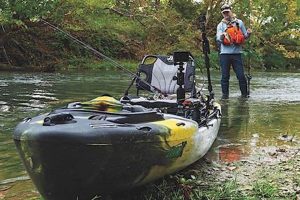
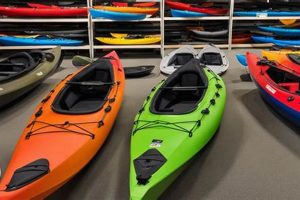
This activity involves assuming an upright position on a specialized kayak designed for stability. These watercraft are wider and more buoyant than traditional kayaks, offering a platform for fishing, birdwatching, or simply enjoying a unique perspective on the water. Imagine the elevated vantage point, providing enhanced visibility for spotting marine life or casting a fishing line.
The increased stability and maneuverability of these specialized vessels allow for a dynamic experience. This approach to kayaking opens up new possibilities for water-based activities, particularly fishing and leisurely observation. Historically, kayaking has evolved from its origins as a hunting and transportation method, and this contemporary adaptation reflects the ongoing pursuit of innovation and enhanced interaction with aquatic environments.
This article will further explore the specifics of vessel design, necessary equipment, and techniques for achieving balance and safe operation. It will also delve into the various applications, advantages, and potential drawbacks associated with this evolving style of kayaking.
Tips for Elevated Kayaking
Safe and successful upright kayaking requires careful preparation and adherence to specific guidelines. The following tips offer essential advice for a positive experience.
Tip 1: Select an appropriate vessel. Wider, flatter hulls provide significantly greater stability than traditional kayak designs. Consider weight capacity and intended use when selecting a watercraft.
Tip 2: Utilize a paddle leash. Retaining the paddle after an unexpected shift in weight is crucial. A leash ensures the paddle remains within reach.
Tip 3: Wear a personal flotation device (PFD). A PFD is essential safety equipment and should always be worn, regardless of perceived skill level.
Tip 4: Begin in calm, shallow water. Practice achieving a standing position and maintaining balance in a controlled environment before venturing into deeper or more turbulent waters.
Tip 5: Start slowly and maintain a low center of gravity. Avoid sudden movements and keep weight centered over the kayak for optimal balance.
Tip 6: Be mindful of wind and current conditions. Wind and current can significantly impact stability. Exercise caution and avoid paddling in challenging conditions until experience is gained.
Tip 7: Use proper paddling technique. Employing efficient paddle strokes enhances maneuverability and reduces the risk of capsizing.
By following these guidelines, one can significantly enhance safety and enjoyment while engaging in this unique watersport. A focus on preparation and mindful execution allows for a more controlled and rewarding experience.
This foundational knowledge equips individuals to approach elevated kayaking with confidence and competence. The subsequent sections will delve into specific techniques and equipment recommendations for a successful outing.
1. Stability

Stability forms the cornerstone of stand-on kayaking, directly influencing its feasibility and safety. The ability to maintain an upright position while elevated on the water’s surface dictates the practicality of this activity. Wider hulls, strategically designed with flatter bottoms, displace more water, creating a more stable platform compared to traditional kayak designs. This increased surface area reduces the likelihood of tipping, allowing individuals to confidently shift weight and perform actions like casting a fishing line or observing wildlife. Consider the inherent instability of attempting to stand on a narrow, rounded hull; the increased risk of capsizing becomes immediately apparent. The design considerations prioritizing stability are crucial for transforming kayaking into a stand-up activity.
Specialized features, such as outriggers or pontoon-like attachments, further enhance stability, particularly in challenging conditions. These additions increase the overall width and buoyancy of the vessel, providing additional support even in choppy water or when encountering wakes. The importance of stability extends beyond simply remaining upright; it instills confidence, allowing for more controlled movements and a greater focus on the intended activity. Imagine an angler concentrating on casting accuracy rather than preoccupied with maintaining balance; this demonstrates the practical significance of stability in enhancing performance and enjoyment.
Ultimately, the success and safety of stand-on kayaking hinges on a stable platform. While design innovations contribute significantly to stability, individual actions, such as maintaining a low center of gravity and avoiding sudden movements, remain critical. Understanding the physics involved, coupled with proper technique and equipment selection, empowers individuals to enjoy the unique benefits of elevated kayaking while mitigating inherent risks.
2. Balance

Balance is fundamental to the successful execution of stand-on kayaking. A dynamic interplay between the individual, the watercraft, and the environment necessitates constant adjustment and awareness. Cause and effect are directly linked; shifts in weight, external forces like wind or current, and even subtle changes in water conditions can compromise balance, potentially leading to instability and even capsizing. Consider the impact of a sudden gust of wind on an elevated kayaker; the ability to counter this force through subtle shifts in weight and paddle adjustments demonstrates the crucial role of balance. This highlights its importance, not merely as a component of the activity, but as the defining factor in maintaining an upright position.
Practical application of balance principles involves maintaining a low center of gravity, distributing weight evenly across the kayak, and employing anticipatory movements to counteract external forces. Imagine an angler reeling in a fish; the shifting weight of the catch requires corresponding adjustments in posture and weight distribution to maintain equilibrium. This example underscores the practical significance of understanding balance principles, enabling kayakers to adapt to dynamic situations and preserve stability. Specialized equipment, such as wider, more stable kayak designs and adjustable paddles, contribute to balance control but cannot replace the individual’s active role in maintaining stability.
Mastering balance in stand-on kayaking requires practice, awareness, and a continuous assessment of environmental conditions. Challenges arise from unpredictable factors such as wind gusts, boat wakes, and shifting currents. Acknowledging these challenges and adopting proactive measures to mitigate their impactsuch as choosing calm water conditions for practice, using a leash to retain the paddle, and wearing a personal flotation deviceimproves safety and allows for a more controlled and enjoyable experience. Ultimately, balance dictates success in this activity, underlining its critical role in transforming kayaking from a seated pursuit into an elevated and dynamic interaction with the aquatic environment.
3. Specialized Kayaks
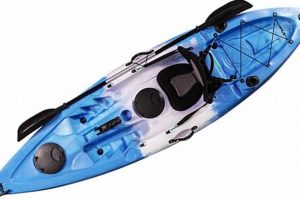
Specialized kayaks are integral to the practice of stand-on kayaking. Conventional kayaks, designed for seated paddling, lack the inherent stability required for standing. Cause and effect are directly related: attempting to stand on a traditional, narrow-hulled kayak inevitably leads to instability and capsize. Therefore, specialized designs are essential, providing a platform conducive to upright balance. These specialized watercraft feature wider, flatter hulls, often incorporating design elements like outriggers or pontoons, which significantly increase stability. This broadened base displaces more water, creating greater buoyancy and resistance to tipping. Consider the contrast between balancing on a narrow beam versus a wide platform; the increased stability offered by the wider surface translates directly to the design principles behind stand-on kayaks.
Beyond hull design, specialized kayaks often include features tailored to the demands of stand-on activities. Elevated platforms or non-slip padding provide secure footing, while strategically placed handles or rails offer additional points of contact for balance. Fishing-oriented models may incorporate rod holders, tackle storage, and even anchor systems, further optimizing the kayak for specific applications. The practical significance of these design adaptations becomes clear when envisioning an angler standing securely while casting a line, unhindered by instability or the need to constantly adjust position. Specialized design directly enhances performance, safety, and overall enjoyment of the activity.
The development of specialized kayaks has been crucial in transforming stand-on kayaking from a niche activity into a more accessible and popular watersport. The enhanced stability, coupled with features tailored to specific applications, allows individuals to experience a unique perspective and engage in activities like fishing or observation with greater confidence and control. While inherent challenges remain, such as adapting to changing water conditions and mastering balance techniques, the evolution of specialized kayak design has significantly lowered the barrier to entry and broadened the appeal of this dynamic form of kayaking.
4. Elevated Perspective

The elevated perspective afforded by stand-on kayaks distinguishes this activity from traditional, seated kayaking. This shift in vantage point offers practical advantages and transforms the overall experience of interacting with the aquatic environment. The following facets explore the significance of this elevated perspective.
- Enhanced Visibility
Standing above the waterline provides a broader field of vision. This enhanced visibility proves advantageous for spotting marine life, navigating shallow waters, and identifying potential hazards. Consider a fly fisherman seeking trout in a clear stream; the elevated perspective allows for easier identification of fish and optimal casting positions. This improved visibility translates directly into enhanced performance and a deeper connection with the underwater world.
- Improved Casting Angles
The higher vantage point offered by stand-on kayaks facilitates improved casting angles, particularly beneficial for anglers. A standing position allows for greater reach and more precise casting control, especially in challenging conditions such as wind or overhanging vegetation. Imagine casting a lure beneath a low-hanging branch; the elevated stance makes this maneuver significantly easier and more accurate compared to a seated position. This advantage directly translates to increased fishing success and efficiency.
- Increased Sense of Engagement
Standing on a kayak fosters a heightened sense of connection with the surrounding environment. This elevated perspective provides a more immersive experience, allowing for greater observation of wildlife and a more direct interaction with the water. Consider paddling through a marsh teeming with birds; the standing position offers a closer, more engaging view of these creatures in their natural habitat. This amplified connection enhances appreciation for the natural world and transforms a simple paddle into an enriching experience.
- Potential Challenges
While the elevated perspective offers numerous advantages, it also presents potential challenges. Maintaining balance becomes more demanding, requiring increased core strength and awareness. Exposure to wind and waves is also amplified, potentially leading to instability. Understanding these challenges and taking appropriate precautions, such as wearing a personal flotation device and choosing calm water conditions for practice, mitigates risks and allows for a safer and more enjoyable experience.
The elevated perspective inherent in stand-on kayaking fundamentally alters the relationship between the paddler and the water. While challenges related to balance and environmental exposure exist, the enhanced visibility, improved casting angles, and increased sense of engagement offer compelling advantages. This unique perspective contributes significantly to the appeal of stand-on kayaking, transforming a traditional activity into a more dynamic and immersive experience.
5. Fishing Applications
The intersection of stand-on kayaks and fishing applications represents a significant evolution in angling techniques. The inherent stability and elevated perspective offered by these specialized kayaks provide distinct advantages for anglers, transforming the way they approach various fishing scenarios. The following facets explore this synergy in detail.
- Enhanced Sight Fishing
The elevated vantage point of a stand-on kayak dramatically improves sight fishing capabilities. Anglers gain a clearer view into the water, allowing for easier identification of fish, observation of their behavior, and precise targeting. Imagine spotting a redfish cruising over a shallow flat; the elevated perspective allows for accurate casting and increases the likelihood of a successful hookup. This advantage is particularly relevant in clear water environments and for species that are readily visible.
- Improved Casting Accuracy and Reach
Standing on a kayak provides greater casting range and accuracy, especially beneficial in challenging environments. Overhead obstructions, such as low-hanging branches or bridge pilings, pose less of a constraint when casting from an elevated position. Consider targeting snook hiding beneath mangrove roots; the standing position allows for precise casts into tight spaces, increasing the chances of enticing a strike. This expanded casting range also benefits anglers fishing in open water or targeting species that require longer casts.
- Hands-Free Fishing and Maneuverability
Many stand-on kayaks are designed with features that facilitate hands-free fishing. Rod holders, integrated tackle storage, and anchor systems allow anglers to focus on fishing rather than managing equipment. This becomes particularly advantageous when fighting a fish, allowing for more effective maneuvering of the kayak and control of the line. Picture battling a powerful tarpon; the stability of the stand-on kayak and the hands-free operation allow the angler to focus on the fight, increasing the chances of landing the fish.
- Adaptability to Diverse Environments
Stand-on kayaks offer adaptability to a variety of fishing environments, from shallow flats and rivers to open bays and lakes. Their stability and maneuverability allow anglers to navigate diverse water conditions and access areas unreachable by traditional boats. Consider fishing in a shallow, winding creek; a stand-on kayak allows for effortless navigation and access to prime fishing spots, expanding angling opportunities.
The integration of stand-on kayaks with fishing applications has revolutionized angling practices. The advantages of enhanced visibility, improved casting, hands-free operation, and adaptability to diverse environments have solidified the stand-on kayak’s position as a valuable tool for anglers seeking a more dynamic and effective approach to their craft. While specialized techniques and considerations for balance are necessary, the benefits offered by this specialized equipment enhance the overall fishing experience and contribute significantly to success on the water.
6. Safety Precautions
Safety precautions are paramount in stand-on kayaking, mitigating inherent risks associated with elevated, open-water activity. Cause and effect are directly linked: neglecting safety protocols significantly increases the likelihood of accidents, injuries, or even fatalities. Consider the potential consequences of falling from a stand-on kayak without a personal flotation device (PFD) in cold water; hypothermia and drowning become immediate threats. Therefore, understanding and adhering to safety precautions is not merely a component of stand-on kayaking; it’s a prerequisite for responsible participation.
Practical application of safety principles involves a multi-faceted approach. Wearing a properly fitted PFD is non-negotiable. A leash connecting the paddle to the kayak prevents loss in the event of a fall, particularly crucial in moving water. Choosing appropriate environmental conditions is also vital. Attempting to stand on a kayak in strong winds, choppy water, or swift currents dramatically increases the risk of capsize. Imagine the difficulty of regaining balance after being knocked off a kayak in turbulent conditions; the potential for serious injury becomes evident. Therefore, assessing environmental factors before embarking is a critical safety measure. Furthermore, understanding self-recovery techniques, such as righting a capsized kayak and re-boarding from the water, is essential. Practice in a controlled environment, such as a calm, shallow lake, allows individuals to develop these skills without the added pressure of challenging conditions.
Consistent adherence to safety protocols reduces inherent risks, fostering a safer and more enjoyable experience. Challenges, such as unexpected changes in weather or unforeseen obstacles, remain inherent in any watersport. However, a proactive approach to safety management minimizes these risks and empowers individuals to react effectively in emergencies. This understanding underscores the fundamental connection between safety precautions and successful stand-on kayaking, transforming potential hazards into manageable risks through informed preparation and responsible execution.
Frequently Asked Questions
This section addresses common inquiries regarding stand-on kayaks, providing concise and informative responses to facilitate informed decision-making and safe practices.
Question 1: What are the primary advantages of using a stand-on kayak?
Elevated perspective for enhanced visibility, improved casting angles for fishing, and a more dynamic interaction with the aquatic environment are key advantages. These benefits contribute to enhanced fishing success, improved wildlife observation, and a more immersive paddling experience.
Question 2: Are stand-on kayaks suitable for beginners?
While designed for stability, stand-on kayaks require practice and balance. Beginners should start in calm, shallow water and prioritize mastering fundamental techniques before venturing into more challenging conditions. Professional instruction can significantly accelerate the learning process and enhance safety.
Question 3: What safety precautions are essential when using a stand-on kayak?
Wearing a personal flotation device (PFD) is mandatory. Utilizing a paddle leash prevents loss in the event of a fall. Checking weather forecasts and water conditions before embarking is crucial. Understanding self-recovery techniques is also highly recommended. Prioritizing safety significantly reduces inherent risks.
Question 4: How do stand-on kayaks differ from traditional kayaks?
Stand-on kayaks feature wider, flatter hulls designed for stability while standing. They often include specialized features like non-slip padding, elevated platforms, and integrated fishing accessories. These design adaptations cater specifically to the demands of standing and engaging in activities like fishing or observation.
Question 5: What factors should be considered when choosing a stand-on kayak?
Intended use, weight capacity, hull design, and included features are key considerations. Fishing enthusiasts may prioritize integrated rod holders and tackle storage, while recreational users might focus on comfort and maneuverability. Careful evaluation of individual needs and preferences ensures optimal selection.
Question 6: Are there any specific techniques for maintaining balance on a stand-on kayak?
Maintaining a low center of gravity, distributing weight evenly, and making subtle adjustments to counteract external forces are essential techniques. Practicing in calm water helps develop balance and coordination. Proper paddling technique further enhances stability and control.
Understanding these frequently asked questions equips individuals with essential knowledge for safe and successful stand-on kayaking experiences. Prioritizing safety, selecting appropriate equipment, and practicing fundamental techniques contribute to a rewarding and enjoyable interaction with the aquatic environment.
The following section will offer advanced techniques for maneuvering and maximizing performance on a stand-on kayak.
Conclusion
This exploration has provided a comprehensive overview of elevated kayaking, encompassing key aspects from specialized vessel design and essential safety precautions to the unique advantages offered by the elevated perspective. The evolution of kayak design, coupled with a growing understanding of balance and maneuvering techniques, has transformed this activity, expanding its appeal beyond traditional paddling experiences. The practical benefits for fishing applications, combined with the enhanced engagement with the natural environment, underscore the significant appeal of this evolving watersport.
Continued innovation in kayak design and a growing emphasis on safety awareness promise further advancements and increased accessibility within this specialized field. Individuals seeking a dynamic and immersive interaction with aquatic environments will find elevated kayaking offers a unique and rewarding pursuit. Further exploration and practical experience will undoubtedly deepen appreciation for the distinct advantages and inherent challenges associated with this evolving approach to water-based recreation.