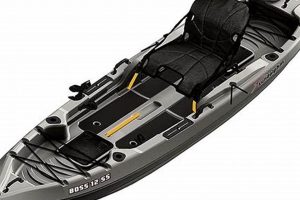
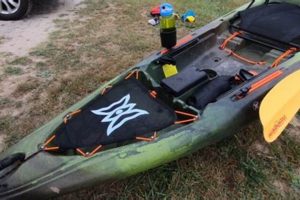
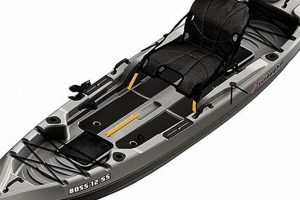
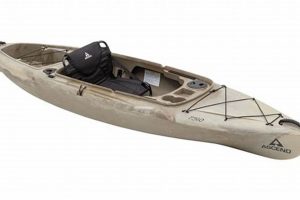
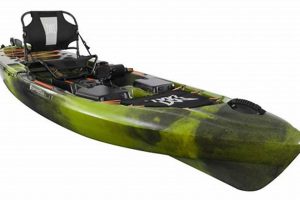
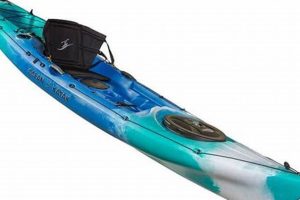
This specific type of watercraft is designed for anglers who desire versatility and stability on the water. It features a flat, open deck allowing for easy movement and casting, crucial for sight fishing and fly fishing. Unlike traditional sit-inside kayaks, the elevated seating position provides improved visibility and a wider range of motion. The hull is typically wider and more stable than a traditional kayak, permitting anglers to stand and fish comfortably, much like on a stand-up paddleboard, while retaining the maneuverability and speed of a kayak. This hybrid design offers anglers the best of both worlds the stability of a paddleboard and the efficiency of a kayak.
The enhanced stability and elevated perspective offered by these vessels contribute significantly to fishing success. The open deck design allows for easier maneuvering and casting, while the stand-up capability provides better sight lines for spotting fish and navigating shallow waters. This type of watercraft has gained popularity in recent years due to its adaptability and effectiveness for various fishing styles, from fly fishing in calm rivers to lure casting in open bays. Their evolution reflects a growing demand for specialized equipment catering to specific angling needs and enhancing the overall fishing experience.
The subsequent sections will explore key features to consider when selecting such a vessel, including hull design, stability, propulsion systems, and integrated fishing accessories. Furthermore, different fishing techniques suitable for this type of kayak will be examined, along with essential safety considerations and recommended gear.
Tips for Utilizing This Type of Kayak
Maximizing the advantages of this specialized watercraft requires careful consideration of various factors, from selecting the appropriate model to employing effective fishing techniques. The following tips offer valuable insights for enhancing on-the-water experiences.
Tip 1: Prioritize Stability: Hull design significantly impacts stability. Wider hulls generally offer more stability, especially for stand-up fishing. Consider the intended fishing environment and choose a hull design that balances stability and maneuverability.
Tip 2: Evaluate Propulsion Options: Paddle propulsion offers excellent maneuverability in shallow waters and tight spaces. Pedal-driven systems provide hands-free fishing and greater speed over longer distances. Consider individual needs and fishing styles when selecting a propulsion method.
Tip 3: Select Appropriate Gear: Rod holders, tackle storage, and anchor trolleys are essential accessories. Choose high-quality, corrosion-resistant gear designed for marine environments. Ensure proper installation and placement for efficient access and functionality.
Tip 4: Practice Standing and Casting: Transitioning from a seated to a standing position requires practice. Start in calm, shallow water to develop balance and confidence. Practice casting techniques while standing to improve accuracy and efficiency.
Tip 5: Understand Water Conditions: Wind, currents, and tides can significantly impact stability and maneuverability. Check weather forecasts before heading out and adjust fishing locations and techniques accordingly. Exercise caution in challenging conditions.
Tip 6: Prioritize Safety: Always wear a personal flotation device (PFD) and carry essential safety equipment, including a whistle, signaling device, and first-aid kit. Inform someone of the intended fishing location and estimated return time.
Tip 7: Respect the Environment: Adhere to local fishing regulations and practice leave-no-trace principles. Properly dispose of fishing line and other waste materials. Respect wildlife and their habitats.
By adhering to these guidelines, anglers can significantly enhance their fishing experience and maximize the unique advantages offered by this specialized watercraft. Careful planning, appropriate gear selection, and a focus on safety contribute to successful and enjoyable outings.
The concluding section will summarize the key benefits and considerations discussed throughout this article, offering a comprehensive overview for prospective purchasers and experienced anglers alike.
1. Stability

Stability is a critical factor influencing the performance and safety of a sit-on-top stand-up fishing kayak. The ability to remain upright and balanced, both when seated and standing, directly impacts casting accuracy, fish fighting, and overall angler confidence. Understanding the factors contributing to stability is essential for selecting the right kayak and maximizing its potential on the water.
- Hull Design
Hull design plays a pivotal role in stability. Wider hulls generally provide greater initial stability, making them ideal for stand-up fishing. A flatter hull bottom enhances stability at rest, while a more rounded or V-shaped hull improves tracking and performance in rougher water. Pontoon-style hulls offer exceptional stability but may sacrifice maneuverability. The specific hull design should align with the intended fishing environment and angler preferences.
- Weight Capacity and Distribution
Weight capacity and its distribution significantly influence stability. Exceeding the manufacturer’s recommended weight capacity compromises stability and performance. Evenly distributing weight within the kayak is crucial, especially when standing. Proper placement of gear and equipment contributes to balanced stability. Understanding weight dynamics is essential for safe and efficient operation.
- Center of Gravity
A lower center of gravity enhances stability. Sitting closer to the waterline and keeping weight low within the kayak improves balance. Standing up raises the center of gravity, potentially reducing stability. Anglers should practice standing and moving on the kayak in calm water to develop balance and confidence. Awareness of center of gravity dynamics is crucial for maintaining stability in various fishing situations.
- Water Conditions
Water conditions, including wind, currents, and waves, significantly impact stability. Calm, flat water provides the most stable environment. Wind and waves can destabilize the kayak, particularly when standing. Currents can affect balance and tracking. Anglers should assess water conditions before heading out and exercise caution in challenging environments. Adapting fishing techniques and positioning based on water conditions is essential for maintaining stability and safety.
These interconnected facets of stability collectively influence the overall performance and safety of a sit-on-top stand-up fishing kayak. Careful consideration of hull design, weight distribution, center of gravity, and water conditions is essential for anglers seeking to maximize stability and confidence on the water. Choosing a kayak that prioritizes stability features and practicing proper techniques contributes to a more enjoyable and successful fishing experience.
2. Maneuverability

Maneuverability is a crucial aspect of sit-on-top stand-up fishing kayaks, directly influencing their effectiveness in various fishing scenarios. The ability to navigate tight spaces, quickly change direction, and efficiently position the kayak for optimal casting angles significantly impacts fishing success. Understanding the factors affecting maneuverability empowers anglers to select and utilize their kayaks effectively.
- Hull Length and Shape
Shorter kayaks generally offer greater maneuverability, allowing for tighter turns and easier navigation in confined areas like creeks and mangrove tunnels. Longer kayaks track better in open water and offer increased speed but may sacrifice maneuverability in tight spaces. Hull shape also plays a role; a flatter hull allows for quicker turns, while a more rounded or V-shaped hull improves tracking but may reduce turning responsiveness. The optimal hull length and shape depend on the intended fishing environment.
- Waterline Length and Width
The length of the kayak’s waterline directly impacts its turning radius. A shorter waterline allows for tighter turns, while a longer waterline increases tracking and speed. Wider kayaks offer increased stability but often require more effort to turn. Narrower kayaks provide enhanced maneuverability but may sacrifice stability. Balancing waterline length and width is essential for achieving optimal maneuverability and stability.
- Propulsion System
The chosen propulsion system significantly influences maneuverability. Paddle propulsion allows for precise control and quick maneuvering in tight spaces. Pedal-driven systems offer hands-free fishing and greater speed but can be less maneuverable in confined areas. Motorized kayaks provide the most speed and range but may be restricted in certain environments. Selecting the appropriate propulsion system aligns with individual fishing styles and target locations.
- Rudder or Skeg
A rudder or skeg can significantly enhance tracking and control, particularly in windy or current-prone conditions. A rudder provides active steering control, while a skeg offers passive directional stability. These features improve maneuverability in challenging environments and allow for more efficient paddling or pedaling.
The interplay of these elements determines the overall maneuverability of a sit-on-top stand-up fishing kayak. Selecting a kayak with the appropriate hull design, length, width, and propulsion system, complemented by features like a rudder or skeg, empowers anglers to navigate diverse fishing environments effectively. Understanding these factors enhances on-the-water performance and contributes to a more successful and enjoyable fishing experience.
3. Fishing Features
Specialized fishing features distinguish sit-on-top stand-up fishing kayaks from recreational models, enhancing their utility and effectiveness on the water. These features are integral to the overall design, directly impacting angler efficiency, comfort, and success. They represent a core component of the specialized nature of these kayaks, catering specifically to the demands of angling.
Rod holders, often strategically positioned for easy access and varied fishing techniques, exemplify a key fishing feature. Flush-mounted rod holders offer a streamlined profile and reduce line tangling, while adjustable rod holders accommodate different rod lengths and fishing styles. Integrated tackle storage compartments provide organized storage for lures, hooks, and other essential gear, minimizing clutter and maximizing efficiency. These compartments are typically designed with water resistance and secure closures to protect equipment from the elements. Livewells, often incorporated into the kayak’s design, allow for keeping caught fish alive and fresh, crucial for tournament fishing or catch-and-release practices. Anchor trolleys facilitate controlled drifting and precise boat positioning, particularly useful in current-prone areas or when targeting specific structures. Examples of these features in action illustrate their practical significance: an angler quickly switching between rods stored in readily accessible rod holders while sight fishing, or another angler efficiently retrieving a lure from a well-organized tackle compartment without disrupting their fishing flow.
These integrated fishing features collectively contribute to a more streamlined and productive fishing experience. They minimize distractions, optimize gear organization, and enhance overall angling efficiency. Understanding the purpose and functionality of these features is essential for maximizing their benefits. Selecting a kayak with well-designed and appropriately positioned fishing features significantly impacts on-the-water success and enjoyment. The inclusion of such specialized features distinguishes these kayaks from recreational models, underscoring their purpose-built nature and their value to serious anglers.
4. Propulsion
Propulsion systems are fundamental to the functionality and versatility of sit-on-top stand-up fishing kayaks. The chosen method of propulsion directly impacts an angler’s ability to cover water efficiently, position the kayak effectively, and conserve energy for fishing. Different propulsion systems offer distinct advantages and disadvantages, catering to diverse fishing styles and environments.
Traditional paddle propulsion offers excellent maneuverability and control, particularly in shallow water and tight spaces. It allows for precise adjustments in position and direction, crucial for navigating complex shorelines or targeting specific structures. However, paddling can be physically demanding over long distances or in challenging conditions, potentially reducing time and energy available for fishing. Pedal-driven systems provide hands-free operation, allowing anglers to focus on fishing while maintaining boat control and position. This is particularly advantageous for techniques like trolling or casting lures, where maintaining a consistent retrieve or boat speed is essential. Pedal kayaks often achieve higher speeds than paddle kayaks, enabling anglers to cover more water and reach distant fishing spots more quickly. However, pedal drives can be more complex and require greater maintenance than paddles, and they may limit maneuverability in extremely shallow water or vegetation-dense areas. Motorized kayaks offer the greatest speed and range, enabling anglers to cover vast distances and access remote fishing grounds. Electric motors provide quiet operation and environmental friendliness, while gasoline-powered motors offer increased power and range. However, motorized kayaks are typically heavier and less maneuverable than paddle or pedal kayaks, and they may be subject to specific regulations and access restrictions depending on the waterway. Choosing between a paddle, pedal, or motor-driven system requires careful consideration of individual fishing needs, target environments, and desired levels of speed, maneuverability, and hands-free operation. For instance, an angler fishing in a shallow, mangrove-lined estuary would likely prioritize the maneuverability of a paddle kayak, while an angler trolling for pelagic fish in open water might prefer the speed and hands-free operation of a pedal or motor-driven kayak.
The choice of propulsion system significantly impacts the overall fishing experience. Understanding the advantages and limitations of each system, and aligning those characteristics with individual fishing styles and target environments, is crucial for maximizing efficiency, effectiveness, and enjoyment on the water. Careful consideration of propulsion options empowers anglers to select the most suitable system for their specific needs, ultimately contributing to a more productive and satisfying fishing experience.
5. Comfort
Comfort is a crucial factor often overlooked when selecting a sit-on-top stand-up fishing kayak. Extended periods on the water, especially when engaging in physically demanding activities like stand-up fishing, necessitate a comfortable and supportive environment. A comfortable kayak enhances endurance, reduces fatigue, and contributes significantly to overall fishing enjoyment and success. Discomfort, conversely, can detract from the experience, limiting fishing time and potentially impacting performance.
- Seating
Seat design and adjustability significantly impact comfort. A well-designed seat provides adequate back support, cushioning, and adjustable features to accommodate individual preferences and body types. High-quality materials that are breathable and resistant to moisture and UV degradation enhance comfort and durability. Examples include adjustable lumbar support, breathable mesh fabric, and multiple seating positions. Proper seating promotes good posture, reduces strain, and allows anglers to fish comfortably for extended periods.
- Standing Platform
The standing platform’s size, shape, and surface texture directly influence comfort and stability while standing. A spacious platform with a non-slip surface provides secure footing and reduces fatigue during long periods of stand-up fishing. Features like padding or ergonomic shaping can further enhance comfort. Examples include textured surfaces for grip, recessed footwells for stability, and ample space for movement. A comfortable and stable standing platform is crucial for maintaining balance and effectively casting and retrieving while standing.
- Deck Layout and Ergonomics
The overall deck layout and ergonomic design contribute significantly to comfort and efficiency. Easy access to storage compartments, rod holders, and other essential gear reduces strain and maximizes fishing time. Well-placed footrests and adjustable features further enhance comfort and control. Examples include strategically positioned rod holders within easy reach, recessed storage compartments that minimize tripping hazards, and adjustable foot braces for optimal paddling leverage. A well-designed deck layout promotes efficient movement and minimizes fatigue, allowing anglers to focus on fishing.
- Accessories and Customization
Accessories and customization options can further enhance comfort and personalize the kayak to individual needs. Backrests, seat cushions, and footrests can improve support and reduce fatigue. Customizable features like adjustable rod holders and mounting systems allow anglers to tailor the kayak to their specific fishing styles and preferences. Examples include aftermarket seat upgrades, adjustable backrests, and custom-fitted footrests. These additions can significantly enhance comfort and improve overall fishing experience, especially during long hours on the water.
Comfort considerations play a crucial role in the overall design and functionality of a sit-on-top stand-up fishing kayak. Prioritizing comfort features like a supportive seat, stable standing platform, ergonomic deck layout, and customizable accessories significantly enhances the fishing experience. A comfortable kayak allows anglers to fish longer, more efficiently, and with greater enjoyment, ultimately contributing to increased success and satisfaction on the water. By carefully considering comfort factors, anglers can choose a kayak that meets their individual needs and enhances their overall fishing experience.
Frequently Asked Questions
This section addresses common inquiries regarding sit-on-top stand-up fishing kayaks, providing concise and informative responses to assist prospective buyers and current owners.
Question 1: What are the primary advantages of a sit-on-top design for fishing kayaks?
Sit-on-top kayaks offer superior stability and ease of entry and exit compared to sit-inside models. Their open design allows for greater freedom of movement, making them ideal for stand-up fishing and casting. Self-bailing scupper holes drain water effectively, enhancing safety and convenience.
Question 2: How stable are these kayaks when standing?
Stability varies depending on hull design, width, and length. Wider, flatter hulls generally offer greater stability. Practicing in calm water is recommended before attempting to stand in more challenging conditions. Anglers should consider their individual balance and experience when evaluating stability.
Question 3: What are the different propulsion options available?
Common propulsion methods include traditional paddles, pedal drives, and electric motors. Paddles offer maneuverability, pedal drives provide hands-free fishing, and motors offer speed and range. Each option presents distinct advantages and disadvantages depending on fishing style and environment.
Question 4: What essential features should one look for in a fishing kayak?
Essential features include rod holders, tackle storage, comfortable seating, a stable standing platform, and an appropriate propulsion system. Additional features like anchor trolleys, livewells, and mounting systems enhance functionality and cater to specific fishing needs.
Question 5: What safety precautions should be taken when using these kayaks?
Always wear a personal flotation device (PFD). Check weather conditions before heading out and be aware of potential hazards like currents and changing tides. Inform someone of the intended fishing location and estimated return time. Carry essential safety equipment, including a whistle, signaling device, and first-aid kit.
Question 6: How does one choose the right kayak for individual needs?
Consider factors such as fishing style, target species, typical fishing environment, budget, and personal preferences. Researching different models, reading reviews, and if possible, testing kayaks before purchase can inform decision-making and ensure a suitable choice.
Careful consideration of these frequently asked questions empowers informed decision-making for selecting and utilizing a sit-on-top stand-up fishing kayak. Prioritizing individual needs, safety considerations, and intended usage ensures a productive and enjoyable fishing experience.
The next section offers a comprehensive comparison of various sit-on-top stand-up fishing kayak models currently available, providing valuable insights for prospective buyers.
Sit-On-Top Stand-Up Fishing Kayak
Sit-on-top stand-up fishing kayaks represent a specialized category of watercraft designed to enhance angling experiences. This exploration has highlighted the defining characteristics of these vessels, emphasizing stability, maneuverability, integrated fishing features, propulsion options, and comfort considerations. Each element plays a crucial role in overall performance and suitability for diverse fishing environments and techniques. The analysis of stability underscored the importance of hull design, weight distribution, and awareness of center of gravity, while the discussion of maneuverability emphasized the influence of hull dimensions and propulsion systems. The examination of fishing features highlighted the value of integrated rod holders, tackle storage, and other specialized equipment. Propulsion options, ranging from traditional paddles to pedal drives and motors, were assessed based on their respective advantages and limitations. Finally, comfort considerations, encompassing seating, standing platforms, and overall ergonomics, were recognized as critical factors influencing angler endurance and enjoyment.
The evolving landscape of fishing kayak design reflects a continuous pursuit of enhanced performance and angler-centric features. Careful consideration of the elements explored within this analysis empowers informed decision-making, enabling anglers to select vessels best suited to individual needs and fishing styles. Ultimately, the successful integration of stability, maneuverability, specialized features, efficient propulsion, and optimized comfort defines the effectiveness and value of a sit-on-top stand-up fishing kayak, contributing to enhanced angling experiences and fostering a deeper connection with the aquatic environment.