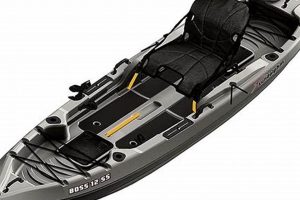
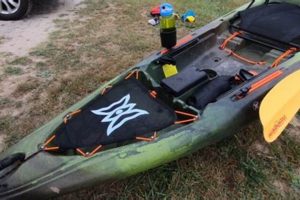
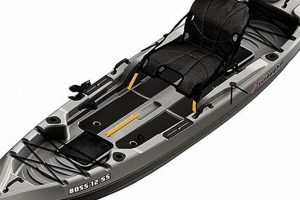
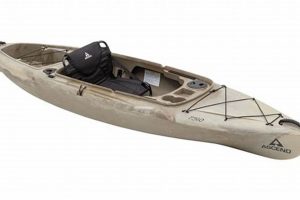
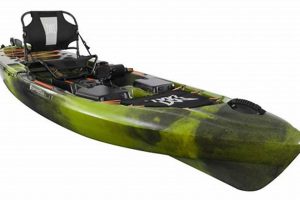
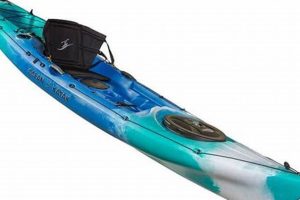
Kayaks designed for fishing fall into two primary categories based on the paddler’s seating position: vessels where the angler sits inside a cockpit with legs extended forward, and those where the angler sits atop a molded seat or platform. This fundamental design difference impacts stability, maneuverability, comfort, and gear storage, thus influencing angler choice depending on the fishing environment and personal preferences. An angler in a closed cockpit kayak, for instance, typically experiences enhanced protection from the elements and greater tracking performance, while those on an open platform design benefit from increased freedom of movement and easier entry and exit.
The evolution of fishing kayak design reflects the diverse demands of anglers seeking specialized watercraft for various fishing styles and environments. Historically, closed-cockpit kayaks adapted from traditional designs offered initial advantages in tracking and protection. The emergence of open-platform designs addressed the need for greater casting range and maneuverability, especially in calmer waters. This design dichotomy allows anglers to prioritize specific performance characteristics, leading to a more tailored and effective fishing experience. Selecting the appropriate style is crucial for maximizing comfort, safety, and efficiency on the water.
The following sections will delve into the specific advantages and disadvantages of each design, examining factors such as stability, maneuverability, comfort, gear storage, and suitability for different fishing environments. This information will provide prospective buyers with the knowledge necessary to make informed decisions aligned with their individual fishing needs and preferences.
Tips for Choosing Between Sit-In and Sit-On-Top Kayaks for Fishing
Selecting the appropriate kayak for fishing requires careful consideration of various factors. These tips offer guidance in navigating the decision-making process, focusing on the inherent differences between sit-in and sit-on-top designs.
Tip 1: Evaluate the Fishing Environment. Calm lakes and slow-moving rivers present different challenges than open ocean or fast-flowing currents. Sit-on-top kayaks offer enhanced stability in calmer waters, while sit-in kayaks provide greater protection in rougher conditions.
Tip 2: Consider Physical Limitations and Comfort. Entering and exiting a sit-in kayak can be more challenging, particularly for individuals with mobility limitations. Sit-on-tops provide easier access and greater freedom of movement.
Tip 3: Assess Gear Storage Needs. Sit-in kayaks typically offer more enclosed storage options, protecting gear from the elements. Sit-on-tops often feature more open deck space for readily accessible equipment.
Tip 4: Prioritize Stability vs. Maneuverability. Sit-on-top kayaks offer excellent primary stability (initial resistance to tipping), while sit-in kayaks excel in secondary stability (resistance to capsizing once leaned). Maneuverability is generally higher in sit-on-top designs due to their higher center of gravity.
Tip 5: Factor in Weather Conditions. Sit-in kayaks offer better protection from wind, rain, and cold water. Sit-on-tops provide more ventilation and are better suited for warmer climates.
Tip 6: Account for Transportation and Storage. Sit-in kayaks can be slightly more challenging to transport and store due to their enclosed design. Sit-on-tops are generally easier to load and unload.
Tip 7: Consider Fishing Style. Anglers frequently standing to cast or sight fish will benefit from the stability and open platform of a sit-on-top. Those trolling or fishing in colder conditions might prefer the protection and gear storage of a sit-in kayak.
By carefully considering these factors, anglers can select the optimal kayak design to enhance their fishing experience, ensuring comfort, safety, and efficiency on the water.
The following conclusion summarizes the key distinctions between sit-in and sit-on-top kayaks and reinforces the importance of making an informed choice based on individual needs and fishing preferences.
1. Stability

Stability is a paramount consideration when selecting a fishing kayak, directly influencing angler safety, comfort, and fishing effectiveness. Sit-in and sit-on-top kayaks exhibit distinct stability characteristics stemming from their fundamental design differences. Sit-on-top kayaks, with their wider base and higher center of gravity, offer exceptional primary stability resistance to initial tipping. This characteristic makes them well-suited for calm waters, allowing anglers to stand and cast with relative ease. Conversely, sit-in kayaks, possessing a lower center of gravity, excel in secondary stability resistance to capsizing once leaned. This design provides greater confidence in rougher conditions, where waves and currents pose a greater risk of overturning. An angler fishing in a choppy ocean environment, for example, would benefit from the secondary stability of a sit-in kayak, while someone fly fishing in a shallow, calm river might prefer the primary stability of a sit-on-top for easier standing and casting.
Understanding the nuances of stability is crucial for matching kayak design to intended fishing environments. While primary stability offers a sense of security in calm waters, secondary stability becomes vital when navigating challenging conditions. Anglers prioritizing stability above all else might opt for specialized fishing kayaks designed with wider hulls and outriggers, further enhancing their resistance to tipping. Consideration should also be given to the angler’s experience and comfort level. A novice kayaker might feel more secure in a sit-on-top with its inherent stability, while a seasoned paddler might prefer the performance and responsiveness of a sit-in kayak in more dynamic environments. The practical application of this understanding lies in selecting a kayak that instills confidence and allows the angler to focus on fishing, rather than constantly battling instability.
Ultimately, the choice between a sit-in and sit-on-top kayak hinges on a careful assessment of intended use and personal preferences. Recognizing the distinct stability characteristics of each design allows anglers to prioritize performance features aligned with their individual needs and the demands of their target fishing environments. Failing to consider stability can lead to discomfort, compromised fishing effectiveness, and potentially dangerous situations, particularly in challenging conditions. Careful selection based on a thorough understanding of stability principles ensures a safer, more enjoyable, and productive fishing experience.
2. Comfort

Comfort significantly influences fishing kayak selection, directly impacting endurance and enjoyment on the water. Sit-in and sit-on-top kayaks offer distinct comfort profiles stemming from their design variations. Sit-in kayaks provide back support and legroom, promoting comfort during longer trips, particularly in colder conditions where the enclosed cockpit offers protection from wind and water. Conversely, sit-on-top kayaks allow greater freedom of movement, enabling anglers to shift positions and stretch. This design suits warmer climates where ventilation and breathability are paramount. An angler with back issues, for example, might find the structured seating of a sit-in kayak more comfortable, while someone preferring unrestricted movement would likely favor a sit-on-top. The trade-off between support and freedom of movement represents a critical consideration in the selection process.
Beyond basic seating design, comfort is further influenced by factors such as seat padding, adjustability, and leg support. High-end fishing kayaks often feature adjustable seats with enhanced lumbar support and breathable fabrics, catering to diverse body types and preferences. Leg length and positioning also play a role; anglers with longer legs may find sit-in kayaks cramped, while those with shorter legs might struggle to reach the footrests in some sit-on-top models. Practical considerations, like the ease of entering and exiting the kayak, also contribute to overall comfort. Sit-on-tops generally offer easier access, particularly for individuals with mobility restrictions. Assessing these factors alongside intended fishing duration helps anglers prioritize comfort according to their individual needs.
Prioritizing comfort enhances the fishing experience, reducing fatigue and allowing anglers to focus on the task at hand. Failing to consider comfort can lead to discomfort, reduced fishing time, and potentially long-term physical strain. Selecting a kayak with appropriate seating, adjustability, and accessibility ensures a more enjoyable and productive outing, particularly during extended fishing trips. This understanding of comfort’s importance empowers informed decision-making, aligning kayak choice with individual physical needs and preferences for an optimized on-the-water experience.
3. Maneuverability

Maneuverability represents a critical performance characteristic differentiating sit-in and sit-on-top kayaks, particularly within the context of fishing. Sit-on-top kayaks, possessing a higher center of gravity and typically shorter lengths, generally offer greater maneuverability, allowing for quicker turns and easier navigation in tight spaces, such as shallow creeks or mangrove tunnels. This agility proves advantageous when pursuing fish in complex environments or navigating obstacle-laden waterways. Conversely, sit-in kayaks, often designed with longer hulls and lower profiles for enhanced tracking and speed, may exhibit reduced turning responsiveness. However, this design characteristic contributes to greater stability in open water and efficiency over longer distances, favoring trolling or covering vast stretches of water. Consider a scenario where an angler targets bass in a densely vegetated pond. The nimble nature of a sit-on-top kayak allows precise maneuvering through narrow passages and around submerged obstacles, maximizing access to prime fishing locations. Conversely, an angler trolling for offshore species benefits from the tracking and stability of a sit-in kayak, allowing them to maintain a consistent course and cover greater distances efficiently.
The impact of hull design on maneuverability extends beyond simple turning radius. Features like rocker (the curvature of the hull from bow to stern) and keel shape influence tracking and responsiveness. A kayak with significant rocker turns more readily but tracks less effectively in a straight line. A pronounced keel, on the other hand, enhances tracking but compromises turning performance. Furthermore, water conditions play a significant role in perceived maneuverability. Strong currents or windy conditions can exacerbate stability challenges, making even highly maneuverable kayaks feel less responsive. Understanding these factors enables anglers to select kayak designs optimized for their specific fishing environments and techniques. An angler fishing in strong currents might prioritize a sit-in kayak with enhanced tracking capabilities over the maneuverability of a sit-on-top, while someone fishing in calm, shallow water would benefit from the responsiveness of a sit-on-top.
Selecting a fishing kayak based on maneuverability requirements significantly impacts on-the-water effectiveness. Matching kayak design to the intended fishing environment and technique allows anglers to navigate efficiently, access desired fishing locations, and optimize presentation. Overlooking maneuverability considerations can lead to frustration, reduced fishing success, and potential safety concerns in challenging conditions. A thoughtful assessment of maneuverability characteristics empowers informed decision-making, ensuring anglers choose a kayak that aligns with their specific needs and fishing style, ultimately enhancing their overall experience.
4. Gear Storage

Gear storage considerations significantly influence fishing kayak selection. Sit-in and sit-on-top kayaks offer distinct storage solutions impacting organization, accessibility, and protection from the elements. Sit-in kayaks typically feature enclosed hatches and compartments providing secure, dry storage for sensitive electronics, tackle boxes, and other essential gear. This design safeguards equipment from water damage and keeps items organized within the kayak’s hull. Conversely, sit-on-top kayaks often prioritize open deck space and readily accessible storage areas, facilitating quick retrieval of frequently used items like rods, lures, and tools. This open design allows for larger items, such as coolers or crates, to be secured on deck, though they remain exposed to the elements. Consider an angler embarking on a multi-day fishing expedition in remote waters. The ample, protected storage within a sit-in kayak accommodates substantial gear and provisions, essential for self-sufficiency in extended trips. Conversely, an angler fishing in a local pond for a few hours might prefer the readily accessible gear on a sit-on-top kayak, prioritizing convenience over large storage capacity.
Practical applications of gear storage considerations extend beyond simple capacity and accessibility. Weight distribution and balance play critical roles in kayak performance and stability. Properly distributing gear within a sit-in kayak enhances stability and tracking. On sit-on-top kayaks, strategically securing gear prevents shifting and maintains balance, particularly in rough conditions. Specialized storage solutions, such as integrated rod holders, tackle management systems, and dry bags, further optimize gear organization and accessibility, contributing to a more efficient and enjoyable fishing experience. Understanding these nuances enables anglers to tailor storage strategies based on their fishing style, environment, and gear requirements. An angler fly fishing in a river, for instance, might prioritize readily accessible rods and flies on a sit-on-top, while someone trolling offshore benefits from the secure storage of multiple rods and tackle within a sit-in kayak’s compartments.
Effective gear storage contributes significantly to a successful and organized fishing experience. Careful evaluation of storage capacity, accessibility, and protection from the elements allows anglers to match kayak design to individual needs and fishing styles. Overlooking gear storage considerations can lead to disorganized gear, compromised accessibility, potential equipment damage, and decreased fishing efficiency. A thoughtful assessment of storage solutions empowers informed decision-making, ensuring anglers select a kayak that supports their specific gear requirements and enhances their overall on-the-water performance.
5. Weather Protection
Weather protection represents a critical consideration when selecting a fishing kayak, directly influencing angler comfort, safety, and overall fishing experience. Sit-in and sit-on-top kayaks offer vastly different levels of protection from the elements, impacting their suitability for various weather conditions and fishing environments.
- Exposure to Elements
Sit-in kayaks offer significantly greater protection from wind, rain, and cold water due to their enclosed cockpits. This design keeps anglers drier and warmer, extending fishing time in less favorable conditions. Conversely, sit-on-top kayaks expose anglers directly to the elements, making them better suited for warmer climates and calm conditions. Anglers fishing in cold or choppy waters benefit from the shelter provided by a sit-in kayak, while those fishing in warm, sunny conditions might prefer the open design of a sit-on-top. Choosing the appropriate kayak type based on expected weather conditions enhances comfort and safety.
- Water Ingress and Drainage
Sit-in kayaks are susceptible to water ingress through hatches or from splashing waves, requiring effective drainage systems like scupper holes or bilge pumps. Sit-on-top kayaks, while inherently exposed to water, feature self-bailing systems that allow water to drain quickly, minimizing water accumulation on deck. An angler navigating rough seas in a sit-in kayak must manage water ingress, while those on a sit-on-top remain relatively dry due to continuous drainage. Understanding these drainage characteristics is crucial for selecting the appropriate kayak for specific water conditions.
- Temperature Regulation
The enclosed cockpit of a sit-in kayak retains heat, providing warmth in colder conditions but potentially causing overheating in warmer climates. Sit-on-top kayaks offer superior ventilation, promoting airflow and preventing overheating in hot weather. Anglers fishing in frigid environments benefit from the insulating properties of a sit-in kayak, while those in tropical climates prefer the breathability of a sit-on-top. Appropriate clothing and layering strategies further enhance temperature regulation in both kayak types.
- Wind Impact
The lower profile of sit-in kayaks reduces wind resistance, enhancing paddling efficiency and stability in windy conditions. Sit-on-top kayaks, with their higher profile and exposed seating position, are more susceptible to wind impact, potentially affecting tracking and stability. Anglers fishing in exposed areas or during windy conditions benefit from the lower wind profile of a sit-in kayak. Those fishing in sheltered areas might find the wind impact on a sit-on-top negligible.
Considering weather protection is essential for selecting the optimal fishing kayak. Matching kayak design to anticipated weather conditions ensures comfort, safety, and extended fishing time. Failing to account for weather can lead to discomfort, hypothermia or heat exhaustion, and potentially dangerous situations. Careful evaluation of weather protection features empowers anglers to make informed decisions aligning kayak choice with environmental conditions and personal preferences for an optimized on-the-water experience.
6. Fishing Style
Fishing style significantly influences kayak choice, dictating necessary features and design elements for an effective and enjoyable experience. Specific fishing techniques necessitate particular kayak characteristics, aligning vessel selection with angler needs and target species. Understanding the interplay between fishing style and kayak design is crucial for optimizing on-the-water performance.
- Stillwater Angling
Calm lakes and ponds offer opportunities for diverse fishing styles, from casting for bass to trolling for trout. Sit-on-top kayaks excel in these environments, providing stability for stand-up casting and sight fishing. Their open design facilitates easy access to gear and maneuverability in shallow water. Sit-in kayaks also function effectively, offering greater protection from elements and efficient trolling capabilities.
- River Fishing
Navigating rivers presents unique challenges and opportunities. Maneuverability is paramount, making sit-on-top kayaks often preferred for navigating tight bends and shallow rapids. Their stability assists in maintaining balance in currents. Sit-in kayaks, while less agile, offer protection from splashes and rapids, particularly in colder water conditions.
- Ocean Kayak Fishing
Offshore fishing demands stability and seaworthiness. Sit-in kayaks, with their lower center of gravity and ability to handle rougher conditions, generally provide a safer and more comfortable experience in open water. Their storage capacity accommodates necessary gear for longer expeditions. Specialized sit-on-top kayaks designed for ocean fishing also exist, offering increased stability and storage.
- Fly Fishing
Fly fishing often requires standing and casting, making the stability of sit-on-top kayaks advantageous. Their open design provides ample room for casting motions and quick access to flies. Sit-in kayaks can also accommodate fly fishing, though with less casting freedom. Hybrid designs combining features of both types cater specifically to fly anglers.
Matching kayak design to fishing style optimizes performance and enjoyment. Consideration of target species, fishing environment, and preferred techniques informs appropriate kayak selection. Choosing a kayak aligned with fishing style enhances efficiency, comfort, and overall success on the water.
7. Accessibility

Accessibility considerations play a crucial role in kayak selection, particularly for individuals with mobility limitations or physical constraints. Choosing between a sit-in and sit-on-top kayak significantly impacts ease of entry and exit, overall comfort, and adaptability to individual needs. Understanding these accessibility differences empowers informed decision-making, ensuring a safe and enjoyable kayaking experience for all.
- Entering and Exiting
Sit-on-top kayaks offer superior accessibility due to their open design. Entering and exiting require simply sitting or stepping onto the deck, presenting minimal challenges for individuals with limited mobility. Sit-in kayaks, conversely, necessitate maneuvering into a confined cockpit, potentially posing difficulties for those with back problems, joint stiffness, or balance issues. This difference in accessibility can be a decisive factor for individuals with physical limitations.
- Seating and Positioning
Once seated, sit-in kayaks provide structured back support and a defined seating position, which can be beneficial for individuals requiring postural support. Sit-on-top kayaks offer more freedom of movement, allowing for adjustments and stretching, but may lack the same level of support. Anglers with specific back conditions, for instance, might find the structured seating of a sit-in kayak more comfortable, while those preferring greater flexibility might choose a sit-on-top.
- Adaptability and Modifications
Sit-on-top kayaks offer greater adaptability for modifications catering to individual needs. Accessories like specialized seating systems, backrests, and outriggers can enhance stability and comfort for users with disabilities. Modifying sit-in kayaks presents more limitations due to the enclosed cockpit design. This adaptability makes sit-on-top kayaks a more versatile platform for accommodating diverse accessibility requirements.
- Stability Considerations
Stability plays a crucial role in accessibility, particularly for individuals with balance concerns. Sit-on-top kayaks generally offer greater primary stability, reducing the likelihood of tipping, which can be reassuring for less experienced or less mobile paddlers. While sit-in kayaks provide excellent secondary stability, the initial stability of a sit-on-top can be a significant advantage for those prioritizing safety and balance.
Careful consideration of accessibility factors ensures a safe and enjoyable kayaking experience for individuals of all abilities. Choosing between a sit-in and sit-on-top kayak based on individual mobility needs, comfort preferences, and adaptability requirements empowers informed decision-making and promotes inclusive participation in the sport of fishing. Prioritizing accessibility not only expands participation but also enhances overall safety and enjoyment on the water.
Frequently Asked Questions
This section addresses common inquiries regarding the choice between sit-in and sit-on-top kayaks specifically for fishing applications. Clear and concise answers aim to provide prospective buyers with the information necessary to make informed decisions.
Question 1: Which kayak type offers greater stability for fishing?
Stability characteristics differ between kayak types. Sit-on-tops excel in primary stability (resistance to initial tipping), advantageous in calm waters for stand-up fishing. Sit-ins offer superior secondary stability (resistance to capsizing after tipping), crucial in rough conditions.
Question 2: Which kayak type is better suited for different fishing environments?
Kayak suitability depends on the environment. Sit-on-tops are favored in calm lakes and slow rivers for their stability and maneuverability. Sit-ins excel in oceans or fast rivers due to their tracking and protection in challenging conditions.
Question 3: How does gear storage differ between the two kayak types?
Gear storage varies significantly. Sit-ins offer enclosed hatches for dry, secure storage, protecting gear from elements. Sit-on-tops prioritize open deck space, offering quick access but exposing gear to potential water damage.
Question 4: Which kayak type is more comfortable for longer fishing trips?
Comfort depends on individual preferences and conditions. Sit-ins provide back support and protection from elements, beneficial in colder climates. Sit-on-tops allow greater freedom of movement, ideal for warmer weather and anglers who prefer to change positions frequently.
Question 5: Which kayak type is easier to enter and exit?
Sit-on-tops provide easier entry and exit due to their open design, advantageous for individuals with mobility limitations. Entering and exiting sit-in kayaks requires more agility and flexibility.
Question 6: Which kayak type is better for maneuverability in tight spaces?
Sit-on-tops generally offer greater maneuverability due to their shorter length and higher center of gravity. This makes them ideal for navigating shallow waters, tight turns, and obstacle-laden environments. Sit-in kayaks excel in tracking for open-water fishing.
Careful consideration of individual fishing styles, physical limitations, and target environments is essential for selecting the optimal kayak design. Understanding these key differences empowers informed purchasing decisions, leading to a safer, more efficient, and enjoyable fishing experience.
Further research into specific kayak models and features is recommended based on the information provided in this FAQ section.
Sit-In vs. Sit-On-Top Kayaks for Fishing
The choice between a sit-in and a sit-on-top kayak for fishing hinges on a comprehensive understanding of individual needs and intended usage. This exploration has highlighted key differentiators, including stability characteristics, maneuverability, comfort levels, gear storage solutions, weather protection capabilities, and accessibility considerations. Recognizing the distinct advantages and disadvantages of each design empowers informed decision-making, aligning kayak selection with specific fishing styles and environmental demands. No single design universally outperforms the other; rather, the optimal choice depends on a careful balance of prioritized features and anticipated usage scenarios.
Ultimately, successful kayak selection rests on a thorough self-assessment of fishing preferences, physical limitations, and target environments. Further research into specific models and features, coupled with hands-on experience whenever possible, solidifies informed decisions. A well-chosen kayak becomes an invaluable tool, enhancing fishing experiences and fostering deeper connections with the aquatic environment. The decision represents an investment in both equipment and experience, impacting not only fishing success but also overall enjoyment and safety on the water.