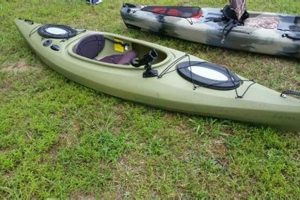
A device designed to securely attach a camera to a kayak for the purpose of recording fishing expeditions offers anglers the ability to document catches, capture underwater footage, and create shareable content. These devices typically consist of clamps, adjustable arms, and mounting plates compatible with action cameras and other recording equipment. A stable and secure platform allows for high-quality video and photos, even in challenging on-the-water conditions.
Capturing fishing experiences provides a valuable record for personal reflection, analysis of techniques, and sharing memorable moments with others. Documentation of catches can serve as proof of size and species, valuable for tournament participation or personal record-keeping. Furthermore, underwater footage provides unique insights into fish behavior and habitat. The evolution of these devices has mirrored advancements in camera technology, leading to smaller, more durable, and higher-quality recording options readily available to anglers. This accessibility has broadened the ability to share fishing adventures and educate others about aquatic environments.
The following sections will delve into specific types of mounting solutions, factors influencing selection, proper installation techniques, and tips for capturing compelling footage from a kayak.
Tips for Effective Camera Usage in Kayak Fishing
Maximizing the utility of a camera setup requires careful consideration of several factors, from mount selection and placement to camera settings and safety precautions. The following tips provide guidance for capturing high-quality footage and ensuring a safe and productive fishing experience.
Tip 1: Prioritize Stability: Select a mount offering robust construction and secure attachment mechanisms to minimize vibrations and unwanted camera movement, especially in rough water conditions. Consider mounts specifically engineered for kayak use.
Tip 2: Optimize Camera Placement: Experiment with various mounting locations to achieve desired perspectives. Consider angles capturing both the angler’s actions and the surrounding environment. Avoid obstructing paddling strokes or fishing activities.
Tip 3: Utilize Camera-Specific Features: Explore features like image stabilization, time-lapse recording, and slow-motion capture to enhance footage and provide diverse perspectives. Understand the camera’s capabilities to fully leverage its potential.
Tip 4: Emphasize Safety: Ensure the mounting system does not interfere with essential safety equipment or obstruct access to it. Securely tether the camera and mount components to the kayak to prevent loss in case of capsizing.
Tip 5: Consider Lighting Conditions: Adjust camera settings based on available light. Utilize filters or adjust exposure settings to optimize image quality in varying lighting conditions. Consider a waterproof camera housing for low-light or underwater filming.
Tip 6: Plan for Battery Life: Carry spare batteries or external power sources to ensure continuous recording throughout the fishing trip. Cold temperatures can impact battery performance, so take precautions in colder climates.
Tip 7: Practice Camera Operation: Familiarize oneself with camera controls and settings before heading out on the water. This allows for efficient adjustments and maximizes recording time while minimizing distractions during fishing.
By adhering to these guidelines, anglers can effectively integrate camera technology into their kayak fishing experience, capturing valuable footage while maintaining safety and maximizing enjoyment on the water.
Equipped with a properly configured camera system and an understanding of best practices, anglers can confidently document and share their fishing adventures.
1. Stability

Stability forms the foundation of effective video capture in kayak fishing. A stable camera mount minimizes unwanted movement and vibrations, ensuring smooth, professional-looking footage. Without adequate stability, even minor kayak movements can translate into shaky, unusable video. This section explores the crucial elements contributing to a stable camera platform in a dynamic kayak fishing environment.
- Rigidity of Mounting Arm
A rigid mounting arm resists flexing and bending, minimizing vibrations transmitted from the kayak to the camera. Materials like aluminum or carbon fiber offer high strength-to-weight ratios, providing robust support without excessive bulk. A flexible arm, on the other hand, can amplify kayak movement, leading to shaky footage, especially in windy or choppy conditions.
- Secure Base Attachment
The base of the mount must be firmly attached to the kayak. Utilizing appropriate mounting hardware and techniques specific to the kayak’s construction ensures a secure connection. Insufficiently secured bases can shift or loosen during use, compromising stability and potentially damaging the kayak or the camera equipment.
- Camera Weight and Balance
The weight and balance of the camera itself influence overall stability. Heavier cameras may require more robust mounting systems to prevent excessive movement. Properly balancing the camera on the mount helps minimize vibrations and unwanted rotation. Understanding the camera’s weight and dimensions aids in selecting an appropriate mount.
- Environmental Factors
Wind, waves, and currents directly impact stability. A stable mount must withstand these forces without excessive movement. In challenging conditions, additional stabilization measures, such as using a gimbal or adjusting camera settings, may be necessary. Anticipating environmental conditions influences mount selection and placement decisions.
By considering these facets of stability, anglers can select and configure a camera mount that captures clear, professional-quality footage. A stable platform allows viewers to focus on the fishing action rather than distracting camera shake, enhancing the overall viewing experience and preserving valuable fishing memories.
2. Durability

Durability is paramount for kayak fishing camera mounts given the harsh marine environment. Exposure to saltwater, UV radiation, and physical impacts necessitates robust construction and corrosion-resistant materials. A durable mount ensures reliable performance and longevity, safeguarding the investment in camera equipment and capturing valuable footage throughout numerous fishing expeditions.
- Material Selection
Mount construction materials directly impact durability. Marine-grade aluminum or stainless steel offer excellent corrosion resistance, withstanding prolonged saltwater exposure. High-impact plastics provide lightweight alternatives, but careful selection is crucial to ensure sufficient strength and UV resistance. Inferior materials can degrade rapidly, leading to premature failure and potential equipment loss.
- Hardware and Fasteners
Corrosion-resistant hardware, such as stainless steel screws and bolts, is essential. These components secure the mount to the kayak and connect various parts of the mounting system. Using non-corrosive hardware prevents rust and degradation, maintaining the structural integrity of the mount and ensuring long-term reliability.
- Weatherproofing and Sealing
Exposure to rain, splashing water, and even submersion is common in kayak fishing. Weatherproof seals and gaskets protect sensitive components from moisture damage. Well-sealed mounts prevent water intrusion, ensuring reliable operation and preventing corrosion of internal parts.
- Construction Quality
Robust construction, including reinforced joints and high-quality welds, contributes to overall durability. A well-built mount withstands the stresses of kayak fishing, including vibrations, impacts, and the forces exerted by heavier cameras. Inferior construction can lead to structural weaknesses and premature failure, especially in demanding conditions.
A durable kayak fishing camera mount withstands the rigors of the marine environment, providing a reliable platform for capturing fishing adventures. Investing in a mount constructed with durable materials, corrosion-resistant hardware, and robust construction ensures long-term performance and protects valuable camera equipment. This allows anglers to focus on fishing, confident in their ability to document their experiences for years to come.
3. Adjustability

Adjustability in a kayak fishing camera mount is crucial for capturing diverse perspectives and adapting to changing on-the-water situations. A flexible mounting system allows anglers to quickly modify camera angles, framing shots effectively and documenting the fishing experience comprehensively. Without adjustability, capturing specific moments or achieving desired compositions becomes significantly more challenging. This section explores key facets of adjustability in kayak fishing camera mounts.
- Angle Adjustment
The ability to adjust the camera’s vertical and horizontal angles is fundamental. Angling the camera downwards allows capturing underwater footage or showcasing lure retrieval techniques. Conversely, upward angles can capture the angler’s actions, surrounding scenery, or even aerial views with the help of extension arms. Smooth and secure angle adjustment mechanisms ensure quick and precise repositioning without loosening or drifting.
- Reach and Extension
Adjustable reach, often achieved through telescoping arms or extensions, allows positioning the camera closer to or further away from the action. Extending the camera outwards provides wider perspectives, capturing more of the surrounding environment. Conversely, retracting the arm allows for close-up shots of fish handling or tackle adjustments. Secure locking mechanisms ensure the camera remains at the desired distance without creeping or collapsing.
- Rotation and Panning
Rotational adjustability enables panning the camera horizontally, following fish movements or capturing panoramic views of the waterway. This feature is essential for documenting fish fights or showcasing the surrounding landscape. Smooth and controlled rotation mechanisms are vital for capturing professional-looking footage, avoiding jerky or uneven panning movements.
- Quick-Release Mechanisms
Quick-release mechanisms allow for rapid detachment and reattachment of the camera. This facilitates switching between different mounting locations or quickly removing the camera for safekeeping during challenging conditions. Secure and reliable quick-release systems ensure efficient transitions without compromising camera security.
The adjustability of a kayak fishing camera mount significantly enhances its versatility and utility. By offering flexible positioning options, adjustable mounts empower anglers to capture dynamic footage from diverse perspectives, documenting the fishing experience comprehensively and creatively. A well-designed, adjustable mount becomes an invaluable tool for preserving fishing memories and sharing the thrill of the catch.
4. Compatibility

Compatibility between a camera mount and both the kayak and the camera itself is essential for a secure and functional setup. A compatible mount ensures proper fit and function, preventing damage to equipment and ensuring reliable operation in demanding on-the-water conditions. Ignoring compatibility can lead to instability, equipment failure, and ultimately, the loss of valuable footage.
Kayak Compatibility: Kayaks vary significantly in construction and design. Sit-on-top kayaks, sit-inside kayaks, and inflatable kayaks each present unique mounting challenges. Some mounts utilize track systems, while others require clamps or adhesive mounts. Selecting a mount compatible with the specific kayak model ensures secure attachment and minimizes the risk of damage to the kayak’s structure. For example, a track-mounted system won’t work on an inflatable kayak without an adapter. Similarly, certain clamp-style mounts may not be suitable for thin-walled inflatable kayaks. Evaluating the kayak’s construction and available mounting points is crucial for selecting a suitable and compatible mounting system.
Camera Compatibility: Camera compatibility encompasses factors such as mounting screw threads, weight capacity, and dimensional constraints. Action cameras, 360-degree cameras, and traditional camcorders each possess unique mounting requirements. The mount must securely hold the camera without obstructing lens functionality or button access. Exceeding the mount’s weight capacity can lead to instability or failure. For instance, attempting to mount a heavy professional camcorder on a mount designed for lightweight action cameras can create an unbalanced and potentially dangerous setup. Understanding the camera’s specifications and selecting a mount designed to accommodate those parameters ensures a secure and stable platform for capturing high-quality footage.
Compatibility considerations directly impact the safety, functionality, and longevity of a kayak fishing camera setup. A compatible mount ensures proper fit and secure attachment, minimizing the risk of equipment damage and maximizing the chances of capturing valuable footage. Careful evaluation of both kayak and camera specifications is essential for selecting a mount that provides a stable, reliable, and functional platform for documenting fishing adventures.
5. Placement

Strategic camera placement is crucial for capturing compelling footage while maintaining functionality and safety during kayak fishing. Optimal placement balances capturing desired perspectives with avoiding interference with paddling, casting, and other essential on-the-water activities. Careful consideration of mounting locations maximizes the effectiveness of the camera setup and contributes to a seamless and productive fishing experience.
- Forward-Facing Perspective
Positioning the camera facing forward, typically mounted on the bow or near the angler’s feet, provides a captivating view of the water ahead. This perspective captures the lure’s action, fish strikes, and the angler’s retrieval techniques. It offers an immersive experience for viewers, allowing them to witness the fishing action unfold as if they were in the kayak. However, care must be taken to ensure the mount does not interfere with paddle strokes or obstruct the angler’s view.
- Angler-Facing Perspective
Mounting the camera facing the angler, often attached to a hat brim, chest mount, or behind the seat, documents the angler’s actions, facial expressions, and reactions. This perspective adds a personal touch to the footage, conveying the angler’s emotions and providing insights into their techniques. However, this placement can sometimes limit the view of the surrounding environment and fishing action.
- Side-Mounted Perspective
A side-mounted camera, attached to the gunwale or a side-mounted rail system, offers a unique perspective showcasing both the angler and the surrounding waterscape. This placement captures paddling strokes, casting motions, and fish fighting alongside scenic views. It provides a balanced perspective, documenting both the fishing action and the environment. However, it can be more susceptible to splashing or accidental submersion if not properly positioned.
- Underwater Perspective
Mounting a camera underwater, typically attached to the hull or a specialized underwater housing, reveals the hidden world beneath the surface. This perspective captures lure action, fish behavior, and underwater structures. It provides invaluable insights into fish habitat and feeding patterns. However, this placement requires specialized equipment and careful consideration of lighting and water clarity.
Effective camera placement in kayak fishing requires balancing capturing engaging footage with maintaining functionality and safety. By strategically positioning the camera, anglers can document their fishing experience comprehensively, capturing diverse perspectives and creating compelling content while ensuring an unobstructed and productive time on the water.
Frequently Asked Questions
Addressing common inquiries regarding kayak fishing camera mounts helps anglers select and utilize these devices effectively, ensuring a safe and productive experience while capturing high-quality footage.
Question 1: What types of mounts are best suited for different kayak types?
Track-based mounts offer versatility for kayaks equipped with track systems. Clamp mounts provide adaptability for various kayak designs, while adhesive mounts offer solutions for smooth surfaces. Inflatable kayaks often benefit from specialized straps or flexible mounts accommodating their unique construction.
Question 2: How does one ensure the camera mount remains stable in rough water?
Stability is enhanced through robust mount construction, secure attachment mechanisms, and proper camera weight distribution. Minimizing vibrations requires rigid mounting arms and tight connections. In challenging conditions, supplementary stabilization accessories, such as gimbals, further enhance stability.
Question 3: What materials offer the best durability for saltwater environments?
Marine-grade aluminum, stainless steel, and high-impact corrosion-resistant plastics offer optimal durability. These materials withstand saltwater exposure, UV radiation, and physical impacts, ensuring long-term performance. Selecting corrosion-resistant hardware and fasteners further enhances longevity.
Question 4: How does camera placement influence captured footage?
Forward-facing placements capture the fishing action and underwater perspectives. Angler-facing views document techniques and reactions. Side-mounted positions offer balanced perspectives, showcasing both the angler and the environment. Optimal placement depends on the desired narrative and fishing style.
Question 5: What safety precautions should be considered when using camera mounts?
Ensure the mount does not interfere with essential safety equipment or paddling strokes. Securely tether the camera and mount components to the kayak to prevent loss. Regularly inspect the mount for wear and tear, addressing any potential issues promptly.
Question 6: How can one optimize video quality in varying lighting conditions?
Adjust camera settings, such as exposure and white balance, according to available light. Utilizing filters can enhance color saturation and reduce glare. Waterproof camera housings protect equipment and enable underwater filming in low-light conditions.
Selecting an appropriate camera mount requires careful consideration of kayak compatibility, camera specifications, desired perspectives, and environmental conditions. Prioritizing stability, durability, and adjustability ensures high-quality footage and a safe fishing experience.
Exploring specific product recommendations and real-world applications further assists anglers in making informed decisions regarding kayak fishing camera mounts. The following section will showcase several recommended products for your consideration.
Kayak Fishing Camera Mounts
Optimal utilization of kayak fishing camera mounts necessitates careful consideration of several interconnected factors. Selecting a mount requires evaluating compatibility with both kayak and camera, prioritizing stability and durability in demanding marine environments, and ensuring sufficient adjustability to capture desired perspectives. Strategic placement balances capturing compelling footage with maintaining angler safety and an unobstructed fishing experience. Understanding these elements empowers anglers to integrate camera technology effectively, documenting fishing adventures while preserving the integrity of the experience.
As technology continues to evolve, advancements in camera stabilization, image quality, and mounting systems promise further enhancements to on-the-water videography. Embracing these developments while adhering to fundamental principles of stability, durability, and thoughtful placement will undoubtedly enrich the ability to document and share the unique perspectives afforded by kayak fishing. The careful selection and utilization of a kayak fishing camera mount elevates the fishing experience, transforming fleeting moments into lasting memories and fostering a deeper appreciation for the aquatic environment.