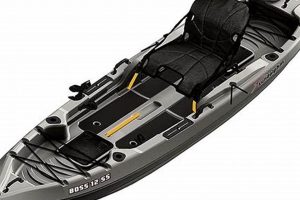
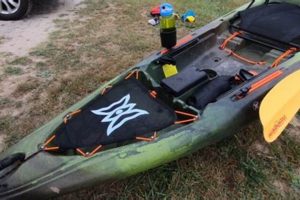
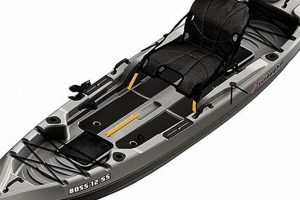
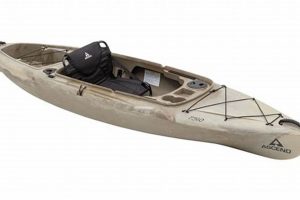
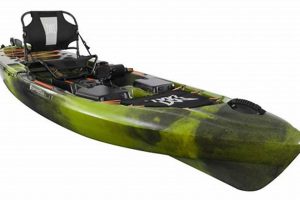
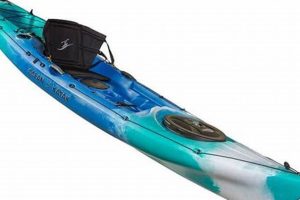
A closed-cockpit kayak configured for angling provides a stable and immersive platform for pursuing fish from the water. This configuration typically involves integrating rod holders, fish finders, tackle storage, and other specialized equipment to enhance the angling experience. An example might include a kayak with two flush-mounted rod holders behind the seat, a transducer mounted inside the hull for a fish finder, and a crate secured in front of the paddler for tackle and accessories.
This style of kayak angling offers distinct advantages, including increased protection from the elements and a lower center of gravity which contributes to stability. This setup allows anglers to access shallower waters and navigate tight spaces often inaccessible to larger boats, opening up a wider range of fishing opportunities. While kayaks have been used for fishing for centuries, the development and refinement of specialized fishing kayaks, including the closed-cockpit design, is a more recent innovation, driven by advancements in materials and design.
The following sections will delve into the key aspects of configuring a closed-cockpit kayak for fishing, covering topics such as choosing the right kayak, essential equipment, safety considerations, and effective fishing techniques from this platform.
Tips for Optimizing a Closed-Cockpit Kayak Fishing Experience
Optimizing a closed-cockpit kayak for fishing involves careful consideration of several factors, from equipment choices to safety precautions. The following tips offer guidance for enhancing on-the-water performance and overall fishing success.
Tip 1: Prioritize Stability and Comfort: Kayak selection is paramount. A wider, flatter hull generally offers greater stability, particularly beneficial for anglers standing to cast. Ensure adequate cockpit space for comfortable seating during extended outings.
Tip 2: Plan Equipment Layout Strategically: Efficient organization is crucial in a limited space. Position frequently accessed items, such as pliers and tackle boxes, within easy reach. Utilize vertical space with storage compartments and consider mounting rod holders for hands-free trolling.
Tip 3: Choose Appropriate Paddles and Personal Flotation Devices (PFDs): Opt for a paddle length suited to the kayak’s width and the angler’s physique. Always wear a properly fitted PFD designed for paddling; inflatable PFDs offer increased comfort and mobility.
Tip 4: Utilize Anchoring or Stake-Out Systems: Maintaining position in current or wind is essential for effective fishing. Anchor systems, including anchor trolleys, or stake-out poles allow anglers to stay on target.
Tip 5: Integrate Electronics Strategically: Fish finders and GPS units offer significant advantages. Consider transducer mounting locations that minimize interference and ensure clear readings. Mount displays within easy view for quick access to information.
Tip 6: Practice Essential Safety Procedures: Carry a communication device (e.g., VHF radio or waterproof cell phone) and inform someone of planned fishing locations and estimated return times. Understand basic navigation principles and be prepared for changing weather conditions.
Tip 7: Master Kayak Control Techniques: Practice maneuvering the kayak efficiently using paddle strokes for forward and reverse movement, turning, and maintaining position. This proficiency enhances fishing effectiveness and safety.
By following these tips, anglers can enhance their closed-cockpit kayak fishing experience, maximizing both comfort and on-the-water effectiveness while prioritizing safety.
The subsequent conclusion will summarize the key advantages of this specialized angling approach and its growing popularity within the fishing community.
1. Kayak Selection

Kayak selection represents a foundational element within a successful sit-in kayak fishing setup. The chosen vessel directly influences stability, maneuverability, and overall fishing efficacy. A kayak’s hull design, length, and width significantly impact performance in specific fishing environments. For example, a shorter, wider kayak offers enhanced stability in calm, shallow waters, ideal for sight fishing or casting in tight spaces. Conversely, a longer, narrower kayak tracks better in open water and covers distance more efficiently, suited for trolling or navigating larger bodies of water. The interplay between kayak characteristics and the intended fishing environment requires careful consideration during the selection process.
Matching kayak features to specific fishing styles further enhances the setup’s effectiveness. Anglers targeting larger game fish often prioritize stability and ample storage for specialized equipment. A kayak with a higher weight capacity and integrated rod holders facilitates these requirements. Alternatively, anglers pursuing smaller species in confined areas might prioritize maneuverability and a smaller profile, enabling navigation through tight vegetation or shallow creeks. Understanding the cause-and-effect relationship between kayak design and fishing application ensures a harmonious and productive setup. A well-chosen kayak becomes an extension of the angler, facilitating efficient casting, retrieval, and fish fighting.
Selecting the appropriate kayak proves crucial for maximizing fishing success and overall enjoyment on the water. Challenges may arise from balancing competing priorities, such as stability versus speed or storage capacity versus maneuverability. However, careful consideration of individual fishing styles, target species, and prevailing environmental conditions allows anglers to overcome these challenges and select a kayak optimized for their specific needs. This informed decision lays the groundwork for a productive and enjoyable fishing experience, highlighting the integral role kayak selection plays within the broader context of a sit-in kayak fishing setup.
2. Equipment Layout

Equipment layout plays a critical role in a successful sit-in kayak fishing setup. A well-organized kayak maximizes efficiency and safety, allowing anglers to focus on fishing rather than managing gear. Strategic placement of rods, tackle, and other accessories contributes significantly to a streamlined and productive fishing experience. The following facets illustrate the importance of a thoughtful equipment layout.
- Accessibility of Essential Gear
Frequently used items, such as pliers, line cutters, and extra lures, require readily accessible placement. Storing these items within arm’s reach minimizes disruptive movements and maintains angler focus. For example, attaching a small tackle box to the kayak’s gunwale near the seat provides convenient access to essential tools. Conversely, stowing frequently used items in the kayak’s bow or stern necessitates disruptive reaching and stretching, potentially compromising stability.
- Rod Holder Placement and Management
Rod holders serve as integral components of a sit-in kayak fishing setup. Positioning rod holders within easy reach yet out of the paddling arc promotes efficient rod retrieval and casting. Adjustable rod holders further enhance versatility, accommodating different fishing techniques and rod lengths. Anglers targeting multiple species might utilize a combination of angled and vertical rod holders to accommodate various fishing styles.
- Balancing Weight Distribution
Proper weight distribution significantly impacts kayak stability and maneuverability. Distributing weight evenly throughout the kayak prevents tilting and enhances tracking. Placing heavier items, such as batteries or tackle boxes, closer to the kayak’s center of gravity minimizes instability. An uneven weight distribution, such as concentrating heavy gear in the stern, can negatively impact kayak performance, hindering maneuverability and increasing the risk of capsizing.
- Minimizing Clutter and Maximizing Space
Limited space within a sit-in kayak necessitates efficient organization and clutter reduction. Utilizing storage compartments, dry bags, and gear tracks maximizes space utilization and keeps essential items secure. A cluttered kayak hinders movement, impedes access to equipment, and creates a less enjoyable fishing experience. Streamlining the layout contributes significantly to an efficient and productive fishing trip.
These facets collectively highlight the importance of a well-planned equipment layout within a sit-in kayak fishing setup. By prioritizing accessibility, rod management, weight distribution, and clutter reduction, anglers create a safe, efficient, and enjoyable fishing platform. A well-organized kayak allows anglers to focus on the task at hand catching fish and enhances the overall experience on the water.
3. Paddle Choice

Paddle choice represents a crucial element within a sit-in kayak fishing setup, directly influencing maneuverability, efficiency, and overall fishing success. The paddle functions as the primary means of propulsion and control, impacting an angler’s ability to navigate various water conditions, position effectively for casting, and maintain stability during retrieves. Selecting an appropriate paddle involves considering blade shape, shaft length, and material construction, each factor contributing to overall performance. For instance, a paddle with a shorter, wider blade offers greater power for maneuvering in tight spaces or against strong currents, while a longer, narrower blade prioritizes efficiency and speed over raw power, better suited for open water paddling.
The relationship between paddle characteristics and fishing applications becomes particularly significant in specific scenarios. Anglers fishing in shallow, vegetated areas benefit from a shorter paddle with a more aggressive blade shape for enhanced maneuverability around obstacles. Conversely, anglers trolling in open water require a longer paddle with a narrower blade to maintain efficient paddling over extended periods. Material construction further influences paddle performance and durability. Lightweight materials, such as carbon fiber, reduce fatigue during long paddling sessions, while more durable materials, like fiberglass or aluminum, offer increased resistance to impacts and wear. Choosing a paddle appropriate for the intended fishing environment and style enhances control, reduces fatigue, and contributes to a more productive and enjoyable experience. For example, an angler using a paddle too short for their torso will experience reduced efficiency and increased fatigue, hindering their ability to cover water and maintain optimal fishing positions.
Selecting the correct paddle represents a key aspect of optimizing a sit-in kayak fishing setup. While challenges may arise from balancing competing priorities, such as power versus efficiency or weight versus durability, understanding the interplay between paddle characteristics and fishing applications allows anglers to make informed decisions. A well-chosen paddle enhances boat control, reduces physical strain, and ultimately contributes to a more successful and enjoyable fishing experience, reinforcing its significant role within the broader context of a comprehensive sit-in kayak fishing setup.
4. Safety Gear
Safety gear represents a non-negotiable aspect of a responsible sit-in kayak fishing setup. Prioritizing safety ensures angler well-being and allows for a focused and enjoyable fishing experience. Understanding and utilizing appropriate safety equipment mitigates potential risks inherent in the on-the-water environment.
- Personal Flotation Devices (PFDs)
A properly fitted PFD stands as the most crucial piece of safety equipment. PFDs provide buoyancy and increase survival chances in the event of capsizing or accidental immersion. Inflatable PFDs offer increased comfort and mobility during paddling while still providing essential flotation assistance when activated. Neglecting to wear a PFD significantly increases the risk of drowning, especially in cold water or challenging conditions.
- Communication Devices
Carrying a reliable communication device, such as a VHF radio or a waterproofed cell phone, allows anglers to contact emergency services or shore-based contacts in case of unforeseen circumstances. Communicating planned fishing locations and estimated return times with someone onshore provides an additional safety net. A lack of communication options isolates anglers in emergencies, delaying assistance and potentially escalating adverse situations.
- Signaling Devices
Visual and auditory signaling devices, such as whistles, flares, and signal mirrors, aid in attracting attention in emergency situations. These devices prove invaluable if an angler becomes separated from their kayak or requires assistance beyond communication range. The absence of signaling devices limits an angler’s ability to signal distress, potentially delaying rescue efforts.
- First-Aid and Safety Kit
A basic first-aid kit equipped to address common fishing-related injuries, such as hook removals, cuts, and sunburns, should be readily accessible. Including essential safety items like a knife, multi-tool, and headlamp further enhances preparedness for unexpected situations. An adequately stocked kit allows for immediate response to minor injuries and facilitates self-sufficiency in remote locations. Lack of preparedness for minor injuries can escalate situations and prematurely end fishing trips.
These facets of safety gear contribute significantly to a responsible and prepared sit-in kayak fishing setup. Integrating these elements into pre-fishing planning and on-the-water practices enhances angler safety and promotes a more enjoyable and worry-free fishing experience. Prioritizing safety not only protects individual well-being but also contributes to the overall positive experience of kayak fishing.
5. Fishing Accessories
Fishing accessories play a pivotal role in optimizing a sit-in kayak fishing setup, bridging the gap between a basic paddling platform and a specialized angling vessel. These accessories enhance fishing effectiveness, improve organization, and contribute to a more comfortable and productive experience on the water. The integration of specific accessories directly impacts an angler’s ability to target species, manage gear, and respond effectively to varying fishing conditions. For example, incorporating a fish finder allows anglers to locate underwater structures and fish concentrations, increasing the likelihood of successful hookups. Conversely, attempting to fish without such technology relies heavily on guesswork and limits an angler’s ability to identify productive fishing zones.
Several key fishing accessories contribute significantly to a well-equipped sit-in kayak. Rod holders secure rods, freeing hands for paddling, landing fish, or managing tackle. Anchor systems, including anchor trolleys and stake-out poles, maintain kayak position in desired locations, particularly crucial in current or wind. Fish finders and GPS units provide valuable underwater intelligence and navigation assistance, respectively. Specialized tackle storage systems, designed to fit within the confines of a kayak, keep lures, hooks, and other essential gear organized and readily accessible. These accessories, when integrated thoughtfully, transform a standard kayak into a highly effective fishing platform. An angler using a well-equipped kayak can quickly adapt to changing conditions and target fish more effectively than one limited by a lack of specialized tools. For instance, an angler equipped with an anchor trolley can precisely control drift speed and maintain position along a promising weed bed, maximizing fishing opportunities.
Understanding the role and practical application of fishing accessories proves essential for maximizing the potential of a sit-in kayak fishing setup. While challenges may arise from balancing cost considerations with desired features, careful selection of essential accessories significantly enhances fishing success. Prioritizing accessories that align with specific fishing styles and target species maximizes their value. An angler pursuing bass in shallow cover might prioritize a shallow water anchor and specialized rod holders, while an offshore angler might invest in a high-quality fish finder and GPS unit. This tailored approach ensures that investments enhance fishing effectiveness and contribute directly to a more rewarding experience on the water.
6. Personalization
Personalization represents the final, crucial step in optimizing a sit-in kayak fishing setup. It transforms a functional, generic configuration into a personalized fishing platform tailored to individual anglers’ needs, preferences, and fishing styles. This customization process considers physical attributes, target species, preferred fishing techniques, and environmental conditions. Personalization maximizes comfort, efficiency, and overall fishing effectiveness.
- Physical Adaptation
Physical considerations, such as height, weight, and any physical limitations, play a significant role in personalization. Adjusting seat position, backrest height, and footrest placement ensures comfortable paddling and casting posture. Modifying the kayak’s outfitting to accommodate specific physical needs, like adding thigh braces or lumbar support, further enhances comfort and reduces strain during extended fishing trips. Failure to address these ergonomic factors can lead to discomfort, fatigue, and potentially injury, hindering overall fishing performance.
- Target Species and Techniques
Personalization considers the target species and preferred fishing techniques. Anglers targeting larger game fish might install heavy-duty rod holders and reinforced mounting points for fighting chairs. Those focusing on finesse presentations might prioritize lighter, more sensitive rod setups and specialized tackle storage solutions. Aligning the setup with specific fishing styles maximizes efficiency and effectiveness. An angler using a setup designed for trolling while attempting to cast lures in shallow water will encounter limitations and frustrations.
- Environmental Considerations
Prevailing environmental conditions, such as typical water temperatures, wind patterns, and potential hazards, influence personalization choices. Anglers fishing in cold climates might add thermal layering to their clothing and incorporate insulated storage compartments for food and beverages. Those fishing in areas with strong winds or currents might install drift chutes or anchor trolleys for enhanced boat control. Failing to account for environmental factors can compromise safety and negatively impact fishing success. For example, an angler unprepared for sudden changes in weather can face hazardous situations and potentially cut a fishing trip short.
- Technological Integration
Integrating technology plays an increasingly important role in personalized kayak fishing setups. Customizing electronics installations, such as fish finders, GPS units, and underwater cameras, caters to individual preferences and fishing styles. Positioning displays for optimal visibility, integrating transducer mounts for accurate readings, and incorporating power management systems ensures seamless technological integration. A poorly planned electronics setup can lead to cluttered cockpits, tangled wiring, and difficulty interpreting data, hindering rather than enhancing the fishing experience. A well-integrated system, however, provides valuable information and enhances on-the-water decision-making.
These personalization facets highlight the transformative impact of customizing a sit-in kayak fishing setup. By addressing individual physical needs, target species, environmental factors, and technological preferences, anglers create a truly personalized fishing platform. This tailored approach maximizes comfort, efficiency, and overall fishing effectiveness, resulting in a more rewarding and enjoyable experience on the water. A personalized kayak setup becomes an extension of the angler, seamlessly integrating with their fishing style and maximizing their potential on the water.
Frequently Asked Questions
Addressing common inquiries regarding closed-cockpit kayak fishing setups provides clarity and facilitates informed decision-making for anglers considering this specialized approach.
Question 1: What are the primary advantages of a closed-cockpit kayak for fishing?
Closed-cockpit designs offer enhanced protection from the elements and increased stability due to a lower center of gravity. These features contribute to angler comfort and safety, particularly in challenging conditions.
Question 2: How does one choose the right closed-cockpit kayak for fishing?
Kayak selection involves considering factors like hull design, length, width, and weight capacity. Matching these characteristics to the intended fishing environment, target species, and angler preferences ensures optimal performance.
Question 3: What essential equipment is recommended for a closed-cockpit kayak fishing setup?
Essential equipment includes a properly fitted PFD, a paddle appropriate for kayak width and angler physique, rod holders, tackle storage solutions, and a communication device. Additional accessories, such as fish finders and anchor systems, further enhance functionality.
Question 4: How does one maintain stability and balance in a closed-cockpit kayak while fishing?
Stability is maintained through proper weight distribution within the kayak, smooth and controlled movements, and utilizing stabilizing features like outriggers or stabilizers when appropriate. Practicing basic paddling and maneuvering techniques enhances balance and control.
Question 5: What safety precautions should anglers observe when fishing from a closed-cockpit kayak?
Essential safety precautions include always wearing a PFD, informing someone of fishing plans and estimated return times, carrying a communication device, and being aware of weather conditions and potential hazards. Regularly checking equipment for wear and tear further promotes safety.
Question 6: How does the cost of a closed-cockpit kayak fishing setup compare to other fishing platforms?
Closed-cockpit kayaks generally represent a more affordable entry point into fishing compared to larger boats requiring trailers and significant maintenance expenses. The overall cost varies depending on kayak features, chosen accessories, and equipment quality.
Careful consideration of these frequently asked questions empowers anglers to make informed decisions regarding closed-cockpit kayak fishing setups, fostering safe, enjoyable, and productive fishing experiences.
The following section offers concluding remarks on the benefits and growing popularity of this specialized angling approach.
Conclusion
This exploration of closed-cockpit kayak fishing setups has highlighted the key elements contributing to a successful and enjoyable experience. From kayak selection and equipment layout to safety considerations and personalized adaptations, each facet plays a crucial role in optimizing performance and maximizing angling potential. The advantages of this specialized approach, including enhanced stability, access to shallow waters, and a closer connection to the environment, contribute to its growing popularity within the angling community. Careful consideration of these factors empowers anglers to create customized setups tailored to individual needs and fishing styles.
The evolution of kayak fishing continues to drive innovation in equipment design and angling techniques. As more anglers embrace this immersive and versatile approach, the potential for exploration and discovery within the sport expands. Continued emphasis on safety, responsible angling practices, and environmental stewardship will ensure the sustainability and enjoyment of closed-cockpit kayak fishing for generations to come. Anglers are encouraged to explore available resources, connect with experienced kayak anglers, and embark on their own personalized kayak fishing journeys.