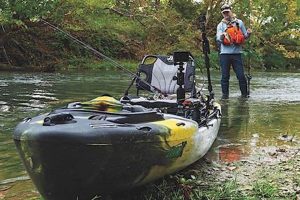
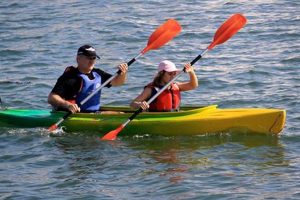
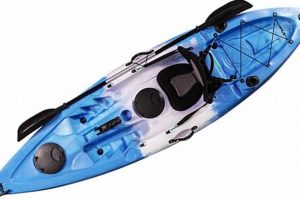
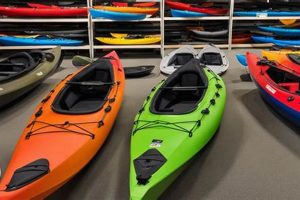
Ocean-going small crafts designed for paddling are typically constructed of durable materials like polyethylene or fiberglass to withstand the corrosive effects of the marine environment. These vessels are built for stability and maneuverability in coastal waters, bays, and open ocean conditions, often featuring specialized features like watertight compartments and rudder systems.
Paddling in the ocean environment offers unique opportunities for exploration, exercise, and wildlife viewing. It provides access to remote coastlines, secluded beaches, and diverse marine ecosystems, fostering a deeper connection with nature. Historically, similar small watercraft played vital roles in coastal communities for fishing, transportation, and exploration, laying the groundwork for modern recreational designs.
The following sections will delve into essential topics for safe and enjoyable coastal paddling, including equipment selection, navigation techniques, safety precautions, and responsible environmental practices.
Tips for Ocean Kayaking
Safe and enjoyable coastal paddling requires careful planning and preparation. The following tips offer guidance for mitigating risks and maximizing the experience.
Tip 1: Check Weather Forecasts and Tides: Consult marine weather forecasts and tide charts before embarking on any trip. Wind, waves, and currents can significantly impact paddling conditions. Avoid paddling in adverse conditions.
Tip 2: Dress for Immersion: Wear appropriate clothing for the water temperature, not the air temperature. A wetsuit or drysuit is recommended in colder conditions. Avoid cotton clothing, which loses its insulating properties when wet.
Tip 3: Carry Essential Safety Gear: A personal flotation device (PFD), a signaling device (whistle or VHF radio), and a bilge pump are essential safety items. A first-aid kit, navigation tools (chart, compass, GPS), and a communication device should also be included.
Tip 4: Practice Self-Rescue Techniques: Knowing how to re-enter a kayak after capsizing is crucial. Practice self-rescue techniques in a controlled environment before venturing into open water.
Tip 5: Navigate Responsibly: Be aware of local regulations, navigational hazards, and environmentally sensitive areas. Maintain a safe distance from wildlife and avoid disturbing marine ecosystems.
Tip 6: Paddle with a Buddy: Paddling with a partner enhances safety and provides assistance in case of an emergency. Inform someone on shore of your planned route and estimated return time.
Tip 7: Stay Hydrated and Energized: Pack plenty of water and snacks to maintain energy levels during extended paddles. Electrolyte drinks can help replenish lost fluids.
Adherence to these guidelines will contribute significantly to a safer and more rewarding paddling experience.
By considering these elements, individuals can approach coastal paddling with confidence and preparedness, ensuring a fulfilling adventure on the water.
1. Ocean-worthy Kayak Selection

Ocean-worthy kayak selection is paramount for safe and successful coastal paddling. The marine environment presents unique challenges, including wind, waves, currents, and potential exposure to harsh weather conditions. A kayak designed for these conditions prioritizes stability, durability, and specific design features not found in recreational flatwater kayaks. Choosing an inappropriate vessel increases the risk of capsizing, equipment failure, and difficulty managing challenging conditions. For instance, a short, recreational kayak lacks the length and tracking ability required for open water paddling, making it susceptible to being blown off course and difficult to control in waves. A longer, sea kayak with a defined keel provides better tracking and stability, essential for navigating ocean environments.
Key considerations for selecting an ocean-worthy kayak include length, width, hull design, and material construction. Longer kayaks generally track better in a straight line, while wider kayaks offer increased stability. Hull design significantly influences performance; a V-shaped hull provides better speed and efficiency, while a rounded hull offers greater initial stability. Material selection impacts durability and weight. Rotationally molded polyethylene kayaks are durable and impact-resistant, while composite kayaks (fiberglass or Kevlar) offer lighter weight and improved performance. Selecting the appropriate kayak based on experience level and intended useday trips, expeditions, or surfis also crucial. For longer expeditions, kayaks equipped with watertight hatches and bulkheads offer secure storage and buoyancy in case of capsize.
Appropriate kayak selection directly impacts safety and enjoyment in the coastal environment. Investing time and consideration in choosing a suitable vessel, matched to skill level and intended use, significantly mitigates risks and enhances the overall paddling experience. Understanding the features and performance characteristics of various kayak designs empowers paddlers to make informed decisions, contributing to safer and more rewarding ocean adventures.
2. Essential Safety Equipment

The inherent risks of ocean kayaking necessitate carrying specific safety equipment. The unpredictable nature of the marine environment, coupled with the potential for isolation from immediate assistance, underscores the critical importance of preparedness. Equipment failures, sudden weather changes, capsizing, and encounters with marine hazards can create life-threatening situations. Carrying and knowing how to use essential safety gear mitigates these risks and increases the likelihood of a positive outcome in emergencies. For example, a properly fitted personal flotation device (PFD) provides essential buoyancy in the event of a capsize, while a VHF radio enables communication with rescue services in areas beyond cellular coverage.
Essential safety equipment for ocean kayaking extends beyond basic flotation and communication devices. A bilge pump allows for rapid removal of water from the cockpit after a capsize or wave inundation. Navigation tools, including a chart, compass, and GPS, are crucial for maintaining course and avoiding hazards, especially in conditions of reduced visibility. A first-aid kit equipped to handle marine-specific injuries, such as jellyfish stings or lacerations from sharp objects, proves invaluable in remote locations. Carrying signaling devices, like flares or a signal mirror, enhances visibility to potential rescuers. Spare paddle, towline, and repair kit address potential equipment failures and provide options for self-rescue or assisting others. Finally, dressing appropriately for immersion, with a wetsuit or drysuit in colder waters, protects against hypothermia, a serious risk even in moderately cool temperatures.
Ocean kayaking safety relies heavily on proper equipment selection and consistent use. Understanding the function and application of each safety item ensures effective deployment in emergencies. Regular practice with safety equipment, including self-rescue techniques and communication protocols, builds confidence and proficiency, promoting informed decision-making under pressure. Comprehensive preparation through meticulous safety planning enhances the overall kayaking experience by reducing the likelihood of incidents and providing the tools to manage unforeseen challenges effectively.

Effective navigation and route planning are paramount for safe and successful ocean kayaking. The dynamic nature of the marine environment, with its changing tides, currents, and weather patterns, necessitates careful consideration of these factors before and during any paddling trip. A well-planned route minimizes risks associated with navigational hazards, tidal flows, and exposure to adverse weather conditions. It also ensures efficient use of energy and time, allowing paddlers to maximize their enjoyment and achieve their objectives.
- Chart and Compass Skills
Proficiency in chart reading and compass use forms the foundation of effective navigation. Understanding nautical charts, including symbols, scales, and depths, enables paddlers to interpret navigational information and identify potential hazards like reefs, shoals, and restricted areas. Compass use, in conjunction with chart reading, allows for maintaining course, especially in conditions of reduced visibility. This combination of skills provides a reliable method for determining position and direction, crucial for navigating coastal waters.
- Tidal Current Predictions
Tidal currents significantly influence paddling conditions, affecting speed, direction, and access to certain areas. Consulting tide tables and current charts before embarking on a trip allows paddlers to anticipate tidal flows and plan routes accordingly. Understanding tidal cycles helps in choosing optimal launch and landing times, avoiding strong currents, and utilizing tidal assistance for efficient travel. Neglecting tidal predictions can lead to challenging paddling conditions, delays, and potential stranding.
- Weather Forecast Interpretation
Weather forecasts play a critical role in ocean kayaking safety. Wind speed, direction, and wave height significantly impact paddling conditions and can create hazardous situations. Interpreting marine weather forecasts allows paddlers to make informed decisions about trip timing and route selection, avoiding potentially dangerous conditions. Staying updated on weather changes during a trip enables adjustments to plans and ensures preparedness for unexpected shifts in conditions.
- GPS and Electronic Navigation Aids
While traditional navigation skills remain essential, GPS devices and electronic charts provide valuable supplementary information. GPS units offer precise location data, aiding in route tracking and confirming position. Electronic charts provide readily accessible navigational information and can be integrated with GPS data for real-time position updates. These tools enhance situational awareness and provide a backup to traditional navigation methods, particularly in challenging conditions.
Integrating these facets of navigation and route planning into ocean kayaking practice enhances safety and contributes to a more enjoyable and successful paddling experience. Careful consideration of charts, tides, weather, and available navigational aids empowers paddlers to make informed decisions, minimize risks, and navigate the coastal environment with confidence.
4. Weather and Tide Awareness

Weather and tide awareness are inextricably linked to safe and successful ocean kayaking. The marine environment is dynamic, influenced by fluctuating weather patterns and tidal cycles. Wind, waves, currents, and visibility are all affected by these factors, creating conditions that can range from ideal to hazardous. A lack of awareness regarding weather and tide conditions exposes paddlers to significant risks, including capsizing, stranding, and difficulty navigating. For example, paddling against a strong ebb tide can deplete energy reserves and make progress challenging, while venturing out in conditions of fog or approaching storms significantly increases the risk of disorientation and exposure to dangerous waves. Conversely, understanding weather and tide patterns allows paddlers to plan routes that utilize favorable currents, avoid adverse weather, and maximize efficiency and enjoyment.
Tidal currents, driven by the gravitational forces of the moon and sun, create predictable flows of water that can either assist or impede progress depending on their direction and strength. Paddling against a strong current can be exhausting and even dangerous, particularly in narrow channels or near headlands. Understanding tidal predictions allows paddlers to time their trips to coincide with favorable currents, conserving energy and enhancing safety. Weather forecasts provide critical information regarding wind speed and direction, wave height, and visibility. Strong winds can create challenging paddling conditions, particularly for less experienced paddlers, while large waves can capsize kayaks and pose a serious threat. Reduced visibility due to fog or rain limits navigational abilities and increases the risk of collisions with other vessels or submerged objects. Real-time weather updates enable informed decision-making, allowing paddlers to adjust plans or seek shelter if conditions deteriorate.
Integrating weather and tide awareness into pre-trip planning and on-the-water decision-making is essential for mitigating risks and maximizing the enjoyment of ocean kayaking. Consulting tide charts and marine weather forecasts before embarking on a trip allows paddlers to select appropriate routes, avoid potentially hazardous conditions, and anticipate changes in currents and weather patterns. On the water, continuous observation of weather conditions and awareness of tidal flows allows for adaptive decision-making, ensuring a safe and rewarding experience. Failing to consider these factors can jeopardize safety and negatively impact the overall paddling experience.
5. Proper Paddling Technique

Proper paddling technique is fundamental to efficient and enjoyable ocean kayaking. In the demanding marine environment, efficient propulsion minimizes energy expenditure, maximizes boat control, and enhances overall performance. An effective paddling stroke conserves energy, reduces strain on joints and muscles, and allows for sustained paddling over longer distances. Conversely, improper technique can lead to fatigue, reduced boat speed, and decreased maneuverability, increasing the risk of incidents in challenging conditions.
- Forward Stroke:
The forward stroke is the foundational element of efficient kayaking. A proper forward stroke involves a combination of core rotation, torso engagement, and leg drive. The paddle enters the water near the paddler’s feet and exits at the hip, maximizing power and minimizing wasted motion. Proper blade angle and a smooth, continuous motion contribute to efficient propulsion. Examples include maintaining a vertical paddle shaft and engaging core muscles during the stroke. In ocean kayaking, an efficient forward stroke is essential for covering distances, maintaining course against currents and wind, and navigating challenging conditions. Improper technique, such as using primarily arm strength or a shallow paddle angle, reduces efficiency and increases fatigue.
- Sweep Strokes:
Sweep strokes are essential for turning the kayak. These strokes involve a wide arc, with the paddle blade moving from the bow to the stern or vice-versa. Forward sweep strokes turn the kayak away from the paddle side, while reverse sweep strokes turn the kayak toward the paddle side. Efficient sweep strokes utilize core rotation and a controlled blade angle, maximizing turning efficiency. In ocean kayaking, sweep strokes are crucial for maneuvering in tight spaces, avoiding obstacles, and correcting course in changing conditions. They are particularly important for navigating surf zones and rocky coastlines.
- Bracing Strokes:
Bracing strokes are essential for maintaining stability and preventing capsize. These strokes involve quickly placing the paddle blade flat on the water surface to provide support and counteract destabilizing forces. High and low braces are used depending on the direction of the destabilizing force. Effective bracing technique requires quick reflexes and a firm grip on the paddle. In ocean kayaking, bracing strokes are essential for maintaining balance in waves, currents, and windy conditions. They provide a critical tool for recovering from near capsizes and maintaining stability in challenging environments.
- Reverse Stroke:
The reverse stroke is used to slow down or move the kayak backward. It involves a backward pull of the paddle blade through the water, starting at the hip and exiting near the feet. Proper technique involves a controlled blade angle and core engagement, maximizing braking force or reverse propulsion. In ocean kayaking, the reverse stroke is used for slowing down in approaching waves, maneuvering in tight spaces, and backing away from hazards. It’s an essential skill for controlled navigation in dynamic environments.
Mastering these fundamental paddling techniques contributes significantly to efficient and safe ocean kayaking. Proper technique not only improves boat control and conserves energy but also enhances the overall paddling experience, allowing paddlers to navigate the challenging coastal environment with confidence and skill. Combining these techniques allows for seamless maneuvering and efficient propulsion in a wide range of conditions, contributing to a safer and more rewarding ocean kayaking experience.
6. Respect for the Marine Environment
Respect for the marine environment is integral to responsible ocean kayaking. Coastal ecosystems are delicate and susceptible to disruption from human activity. Kayaking offers a unique opportunity to experience these environments intimately, but this privilege comes with a responsibility to minimize impact and preserve their integrity. Irresponsible kayaking practices, such as disturbing wildlife, polluting waterways, or damaging sensitive habitats, can have detrimental consequences for marine life and ecosystem health. For example, approaching seals too closely can cause stress and disrupt their natural behaviors, while discarded fishing line can entangle marine animals and cause injury or death. The cumulative impact of such actions can degrade the very environment that kayakers seek to enjoy.
Minimizing environmental impact requires conscious effort and adherence to responsible kayaking practices. Avoiding sensitive areas, such as nesting grounds or seagrass beds, helps protect vulnerable habitats. Maintaining a safe distance from wildlife allows animals to engage in natural behaviors without disturbance. Proper waste disposal, including packing out all trash and disposing of human waste appropriately, prevents pollution and protects water quality. Utilizing designated launch and landing sites minimizes erosion and disturbance to shoreline vegetation. Educating oneself about local regulations and environmental guidelines specific to the paddling area enhances responsible practices and promotes stewardship. Kayakers serve as ambassadors for the sport and can contribute positively by modeling responsible behavior and educating others about the importance of environmental protection.
Responsible ocean kayaking fosters a sustainable relationship between human recreation and the marine environment. By understanding the potential impacts of kayaking activities and adopting environmentally conscious practices, paddlers can minimize their footprint and contribute to the preservation of coastal ecosystems. This approach not only protects marine life and habitats but also enhances the overall kayaking experience by fostering a deeper appreciation for the natural world. The commitment to environmental stewardship ensures that future generations can continue to enjoy the unique opportunities offered by ocean kayaking in a healthy and thriving marine environment.
7. Emergency Preparedness and Self-Rescue

In the dynamic environment of ocean kayaking, emergencies can arise unexpectedly. Conditions can change rapidly, equipment can fail, and human error can occur. Preparedness for such situations is paramount for mitigating risks and ensuring a safe return. Self-rescue, the ability to recover from capsize or other difficulties without external assistance, forms a cornerstone of this preparedness. Possessing the skills and equipment to manage emergencies independently significantly enhances safety and reduces reliance on outside rescue, which may be delayed or unavailable in remote locations.
- Capsize Recovery and Re-entry
Capsizing presents a significant risk in ocean kayaking. Cold water immersion, even for short periods, can lead to hypothermia and impair physical abilities. Practicing self-rescue techniques, such as wet exits and re-entry methods (using a paddle float or rolling), builds confidence and proficiency in managing capsizes. Regular practice in calm, controlled environments allows paddlers to develop muscle memory and react effectively under pressure. Examples include practicing the “Eskimo roll” for quick recovery or using a paddle float for assisted re-entry. The ability to quickly and efficiently re-enter a kayak after a capsize is crucial for minimizing exposure to cold water and maintaining control in challenging conditions.
- Essential Safety Equipment Carriage
Carrying essential safety equipment is integral to emergency preparedness. A properly fitted personal flotation device (PFD) provides immediate buoyancy in the event of a capsize. A VHF radio allows for communication with rescue services and other vessels, particularly in areas beyond cellular range. Signaling devices, such as flares or a signal mirror, increase visibility to potential rescuers. A bilge pump enables rapid removal of water from the cockpit after capsize or swamping. A first-aid kit equipped to address marine-specific injuries, such as jellyfish stings or lacerations, provides essential medical resources in remote locations. Carrying these items consistently and ensuring their proper functioning significantly improves outcomes in emergency situations.
- Communication and Signaling Procedures
Knowing how to effectively communicate and signal for assistance is vital in emergencies. Understanding VHF radio protocols, including distress calls and communication channels, allows for efficient communication with rescue services. Knowing how to use signaling devices, such as flares or a signal mirror, increases visibility to potential rescuers. Pre-trip planning should include informing someone on shore of the intended route and estimated return time. Establishing communication protocols enhances preparedness and facilitates rapid response in the event of an emergency. Examples include regular radio checks with shore contacts and familiarity with distress signals.
- Hypothermia Prevention and Management
Cold water immersion poses a serious threat to ocean kayakers, even in moderately cool temperatures. Hypothermia, a dangerous drop in body temperature, can impair physical and cognitive function, leading to incapacitation and potentially fatal consequences. Dressing appropriately for immersion, with a wetsuit or drysuit in colder waters, significantly reduces the risk of hypothermia. Carrying extra layers of dry clothing in a waterproof bag allows for changing into warm clothes after a capsize or unexpected immersion. Understanding the symptoms of hypothermia and knowing how to provide basic first aid, including warming the core body temperature, are crucial for managing this potential emergency.
Integrating these elements of emergency preparedness and self-rescue into ocean kayaking practice enhances safety and builds confidence in challenging conditions. Developing the skills and carrying the equipment to manage emergencies independently improves the likelihood of a safe outcome. This proactive approach to safety allows paddlers to enjoy the rewards of ocean kayaking while mitigating the inherent risks of the marine environment.
Frequently Asked Questions
Addressing common inquiries regarding ocean kayaking promotes informed participation and enhances safety awareness within the paddling community. Clarifying key aspects of equipment, technique, and safety protocols contributes to a more comprehensive understanding of this rewarding yet demanding activity.
Question 1: What differentiates a sea kayak from a recreational kayak, and why is this distinction important for ocean paddling?
Sea kayaks are designed specifically for open-water conditions, featuring longer lengths, narrower beams, and sealed bulkheads for enhanced tracking, stability, and buoyancy. Recreational kayaks, typically shorter and wider, prioritize stability over speed and lack the design features necessary for handling ocean conditions safely. This distinction is crucial for ocean paddling as sea kayaks provide the necessary performance characteristics to manage wind, waves, and currents effectively.
Question 2: What essential safety gear should always be carried on an ocean kayaking trip?
Essential safety gear includes a properly fitted personal flotation device (PFD), a signaling device (whistle, VHF radio, flares), a bilge pump, navigation tools (chart, compass, GPS), a first-aid kit, a spare paddle, a towline, and a repair kit. Carrying and knowing how to use this equipment is crucial for managing potential emergencies and ensuring a safe return.
Question 3: How does one prepare for changing weather conditions during an ocean kayaking excursion?
Preparation involves checking marine weather forecasts before embarking and continuously monitoring conditions during the trip. Developing an understanding of weather patterns and their impact on paddling conditions is essential. Having a “Plan B” route or a readily accessible safe landing spot allows for adjustments based on changing weather. Carrying appropriate clothing for immersion, such as a wetsuit or drysuit, mitigates the risk of hypothermia in case of capsize or unexpected immersion.
Question 4: What are the key considerations when planning a kayaking route in a tidal environment?
Route planning should incorporate tidal current predictions. Understanding how tides affect currents, water levels, and access to certain areas is critical. Planning routes to utilize favorable currents maximizes efficiency and minimizes risk. Consulting tide tables and current charts before departure informs decision-making and contributes to safer navigation.
Question 5: How can paddlers minimize their impact on the marine environment while kayaking?
Minimizing impact involves adhering to Leave No Trace principles. Staying a safe distance from wildlife, avoiding sensitive habitats like nesting grounds or seagrass beds, packing out all trash, and using designated launch and landing sites helps preserve the integrity of coastal ecosystems. Educating oneself about local regulations and specific environmental concerns in the paddling area further promotes responsible practices.
Question 6: What are the recommended steps to take if a kayaker capsizes in the ocean?
In the event of capsize, the immediate priority is to remain calm and stay with the kayak. Attempt self-rescue by performing a wet exit and re-entering the kayak using an assisted re-entry method or an Eskimo roll, if proficient. If self-rescue proves unsuccessful, activate signaling devices to alert others to the situation. Wearing a PFD significantly enhances buoyancy and survival time while awaiting assistance.
Prioritizing safety through education, preparation, and responsible practices allows individuals to enjoy the unique rewards of ocean kayaking while mitigating inherent risks. Continuously seeking knowledge and refining skills contributes to safer and more fulfilling experiences on the water.
The following sections will delve further into specific aspects of ocean kayaking technique, equipment selection, and safety protocols.
Conclusion
Coastal paddling presents unique opportunities and challenges. Safe and enjoyable experiences necessitate careful consideration of equipment, technique, environment, and safety protocols. Vessel selection appropriate for ocean conditions, coupled with proficiency in essential paddling techniques, forms the foundation for successful navigation and efficient propulsion. Consistent adherence to established safety practices, including carrying essential gear and practicing self-rescue techniques, mitigates inherent risks. Respect for the marine environment, demonstrated through responsible paddling practices, ensures the preservation of these valuable ecosystems.
Continued learning and skill development remain crucial for enhancing both safety and enjoyment in the dynamic coastal environment. Informed participation, coupled with a commitment to responsible paddling practices, fosters a deeper appreciation for the unique rewards offered by ocean kayaking while contributing to the long-term preservation of these remarkable natural spaces.