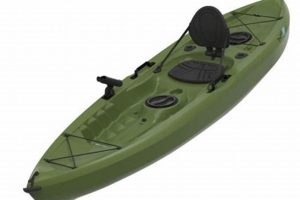
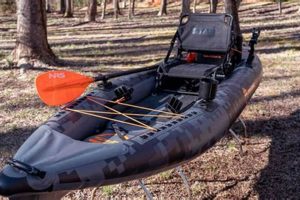
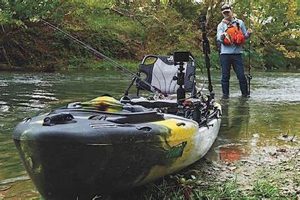
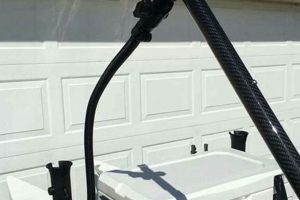
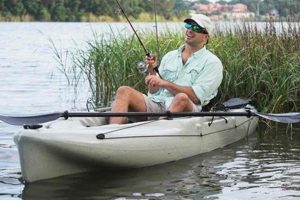
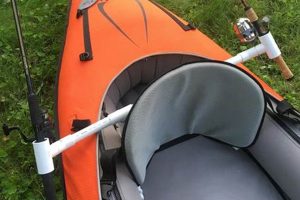
This sit-on-top vessel, designed for angling, combines stability and maneuverability in a compact, lightweight package. Its shorter length allows for easy navigation in tighter waterways, while thoughtful features like rod holders and gear storage cater specifically to the needs of anglers.
The blend of portability, stability, and fishing-specific design elements makes this watercraft a popular choice for both novice and experienced anglers. Its manageable size contributes to ease of transport and storage, eliminating some of the common barriers to entry for kayak fishing. Historically, fishing kayaks have evolved from basic, repurposed recreational kayaks to highly specialized vessels. This particular model represents a modern iteration, reflecting design advancements that prioritize both performance and angler comfort.
Further exploration will cover topics such as specific design features, performance characteristics, target user profiles, and comparisons with similar options available in the market. This detailed analysis will provide a thorough understanding of this craft’s place within the broader landscape of fishing kayaks.
Tips for Utilizing a Compact Fishing Kayak
Effective use of a smaller fishing kayak maximizes its advantages maneuverability and portability while mitigating potential drawbacks. These tips offer guidance for optimizing the on-water experience.
Tip 1: Plan Gear Placement Strategically: Limited deck space necessitates careful organization. Prioritize frequently accessed items and utilize storage compartments efficiently to maintain balance and accessibility.
Tip 2: Practice Paddling Techniques: Smaller kayaks can be more susceptible to wind and current. Mastering efficient paddling strokes conserves energy and improves tracking.
Tip 3: Consider Weight Distribution: Proper weight distribution enhances stability. Distribute gear evenly and avoid overloading the kayak, especially in challenging conditions.
Tip 4: Choose Appropriate Water Conditions: While versatile, smaller kayaks are best suited for calmer waters. Assess weather forecasts and water conditions before embarking on any fishing trip.
Tip 5: Utilize Anchor or Stake-Out Systems Effectively: Maintaining position in current or wind requires a reliable anchoring system. Practice deployment and retrieval techniques before venturing into open water.
Tip 6: Dress for Immersion: Even in calm conditions, the possibility of capsizing exists. Dressing for the water temperature, not the air temperature, mitigates risks associated with unexpected immersion.
Tip 7: Prioritize Safety Equipment: Carry essential safety gear, including a personal flotation device (PFD), whistle, and signaling device. Adhering to safety regulations ensures a responsible and enjoyable experience.
By adhering to these guidelines, anglers can significantly improve their on-water experience, leveraging the unique advantages offered by compact fishing kayaks.
This information provides a foundation for informed decision-making regarding kayak selection and utilization. The concluding section will offer final thoughts and recommendations.
1. Stability

Stability is a critical factor in kayak fishing, directly influencing angler comfort, safety, and effectiveness. For the Riot Mako 10, stability contributes significantly to its suitability for a range of fishing environments and angler experience levels. A stable platform allows for confident casting, fighting fish, and maneuvering in various water conditions.
- Hull Design and Stability
The Mako 10’s hull design plays a crucial role in its stability. The wider beam and flatter bottom profile create a stable platform, especially beneficial for activities like stand-up fishing. This design feature minimizes tipping and allows anglers to shift weight without compromising balance. The specific hull shape contributes to primary stability (initial resistance to tipping) and secondary stability (resistance to capsizing once tilted).
- Weight Capacity and Stability
The kayak’s weight capacity directly impacts stability. Exceeding the recommended weight limit can compromise stability and make the vessel more susceptible to tipping. Staying within the specified weight range ensures optimal performance and maintains the intended level of stability. The Mako 10s listed capacity factors in angler weight, gear, and any potential catch.
- Center of Gravity and Stability
Maintaining a low center of gravity is essential for kayak stability. Distributing weight evenly within the kayak and avoiding high stacking of gear contributes to enhanced balance. Proper weight distribution minimizes the risk of tipping and improves overall stability in various conditions, from calm lakes to moving water.
- Water Conditions and Stability
While a stable platform is inherent in the Mako 10’s design, external factors like wind and waves can influence stability. Anglers should be aware of prevailing water conditions and exercise caution in challenging environments. Understanding how the kayak behaves in different conditions contributes to safer and more effective fishing experiences.
The stability features of the Riot Mako 10 contribute significantly to its overall performance as a fishing kayak. By considering factors such as hull design, weight capacity, center of gravity, and water conditions, anglers can maximize stability and enhance their on-water fishing experience. This understanding translates to increased confidence, improved fishing effectiveness, and a safer experience on the water.
2. Maneuverability

Maneuverability is a key performance attribute for fishing kayaks, enabling anglers to navigate diverse water environments effectively. For the Riot Mako 10, maneuverability plays a crucial role in its suitability for accessing tight fishing spots, navigating complex waterways, and responding to changing conditions.
- Hull Design and Turning Radius
The Mako 10’s hull design directly influences its turning radius and overall maneuverability. The shorter length contributes to a tighter turning circle, allowing for quick directional changes. This is advantageous when navigating shallows, avoiding obstacles, or repositioning for optimal casting angles. The specific hull shape balances maneuverability with tracking performance, allowing for efficient paddling in various water conditions.
- Tracking and Directional Stability
While maneuverability focuses on turning, tracking refers to the kayak’s ability to maintain a straight course. The Mako 10’s design balances maneuverability with reasonable tracking performance, ensuring the kayak remains relatively course-stable while paddling in a straight line. This characteristic minimizes the need for constant corrective strokes and contributes to efficient paddling over longer distances.
- Water Conditions and Maneuverability
Water conditions, including current and wind, can significantly impact maneuverability. The Mako 10’s compact size and lighter weight can make it more susceptible to wind drift compared to larger, heavier kayaks. However, its maneuverability allows for quicker adjustments to maintain position or navigate changing currents. Understanding the kayak’s behavior in various conditions is crucial for effective maneuvering and safe navigation.
- Paddle Length and Technique
Paddle length and paddling technique influence maneuverability. A shorter paddle generally provides greater control for quick turns and maneuvers, while proper paddling technique maximizes efficiency and control. Using appropriate paddling techniques, such as sweep strokes and draws, enhances maneuverability and allows for precise boat control in various situations.
The maneuverability characteristics of the Riot Mako 10 contribute significantly to its versatility as a fishing platform. Understanding the interplay between hull design, tracking, water conditions, and paddling technique allows anglers to leverage the kayak’s maneuverability effectively, enhancing their ability to access prime fishing locations and navigate diverse water environments.
3. Compact Size

The compact size of the Riot Mako 10 fishing kayak is a defining characteristic, influencing its portability, storage, and suitability for specific water environments. This attribute presents distinct advantages and considerations for anglers, impacting transportation, maneuverability, and overall fishing experience.
- Transportation and Storage
The shorter length and lighter weight of the Mako 10 simplify transportation and storage. It can be easily loaded onto a vehicle roof rack, transported in a truck bed, or carried shorter distances by hand. Compact dimensions allow for convenient storage in garages, sheds, or even smaller apartments, eliminating the need for extensive storage space. This ease of transport and storage expands access to fishing locations and reduces logistical barriers.
- Maneuverability in Tight Spaces
The compact size enhances maneuverability, particularly in confined waterways. Its shorter length allows for tighter turns and easier navigation through narrow channels, shallows, and areas with dense vegetation or obstacles. This agility provides advantages when fishing in small creeks, rivers, ponds, and other restricted environments inaccessible to larger kayaks.
- Water Conditions and Stability
While compact size benefits maneuverability, it can also influence stability in certain conditions. Smaller kayaks can be more susceptible to wind drift and wave impact compared to larger, heavier models. Anglers should consider prevailing water conditions and exercise caution in open water or challenging environments. Understanding the kayak’s behavior in various conditions enhances safety and allows for informed decision-making regarding suitable fishing locations.
- Capacity and Gear Storage
The compact size inherently limits storage capacity. While the Mako 10 offers designated storage compartments for essential gear, anglers must prioritize and pack efficiently. Understanding the available storage space and planning gear placement strategically ensures essential items remain accessible without compromising stability or comfort. This necessitates thoughtful gear selection and organization.
The compact size of the Riot Mako 10 presents a trade-off between portability and capacity. While its smaller dimensions offer advantages in transportation, storage, and maneuverability in tight spaces, anglers must consider the limited storage and potential impact on stability in certain conditions. Evaluating these factors in relation to individual fishing needs and target environments ensures informed decision-making and maximizes the benefits of the kayak’s compact design.
4. Fishing Features
Dedicated fishing features distinguish specialized fishing kayaks from recreational models. These features enhance angler efficiency, comfort, and overall success on the water. In the context of the Riot Mako 10 fishing kayak, these integrated features contribute significantly to its utility and appeal to anglers.
- Rod Holders
Flush-mounted and adjustable rod holders provide secure storage and easy access to fishing rods. These specialized holders accommodate different rod types and angling techniques. The placement and configuration of rod holders on the Mako 10 allow anglers to keep multiple rods rigged and ready for action, facilitating quick transitions between techniques or targeting different species. Secure rod storage also minimizes the risk of rod loss or damage during transport or while maneuvering in challenging environments.
- Tackle Storage
Integrated tackle storage compartments offer organized storage for lures, hooks, lines, and other essential fishing accessories. These compartments often feature waterproof seals or closures to protect gear from the elements. The Mako 10’s tackle storage solutions are designed to keep essential gear readily accessible, minimizing time spent searching for items and maximizing fishing time. Organized storage also contributes to a clutter-free deck, enhancing safety and efficiency.
- Gear Tracks and Mounting Points
Gear tracks and mounting points allow for customization and the addition of accessories such as fish finders, GPS units, cameras, and other specialized equipment. These adaptable platforms provide flexibility to tailor the kayak to individual fishing preferences and target species. The Mako 10’s inclusion of gear tracks offers anglers the opportunity to personalize their setup and integrate technology for enhanced fishing success.
- Paddle Holder/Rest
A designated paddle holder or rest secures the paddle when not in use, preventing loss and freeing hands for fishing activities. This feature contributes to a clutter-free deck and allows for uninterrupted focus on fishing. The Mako 10’s paddle holder ensures the paddle is readily available when needed while minimizing interference with casting and reeling.
The integrated fishing features of the Riot Mako 10 contribute significantly to its overall effectiveness as a fishing platform. These specialized features enhance angler convenience, organization, and efficiency on the water, allowing for a more focused and productive fishing experience. The combination of rod holders, tackle storage, gear tracks, and a paddle rest demonstrates a design focused on meeting the specific needs of kayak anglers.
5. Lightweight Construction

Lightweight construction is a significant design element of the Riot Mako 10 fishing kayak, directly influencing its portability, maneuverability, and overall usability. Reduced weight simplifies transport and handling, making it easier to load onto vehicles, carry across short distances, and launch into the water. This portability expands access to fishing locations, particularly those requiring portages or challenging access points. Furthermore, the lighter weight contributes to improved maneuverability on the water, allowing for quicker acceleration, easier turning, and greater responsiveness to paddle strokes. This enhanced maneuverability is particularly advantageous in tight waterways, shallows, and areas with obstacles.
The Mako 10 achieves its lightweight construction through material selection and manufacturing processes. Utilizing high-density polyethylene (HDPE) provides a balance of durability and light weight. HDPE offers impact resistance and UV protection while maintaining a manageable weight for transport and handling. Rotomolding, a common manufacturing process for kayaks, contributes to a uniform wall thickness and a consistent, lightweight structure. This manufacturing method ensures structural integrity while minimizing excess weight.
The practical significance of lightweight construction extends beyond ease of transport and maneuverability. Reduced weight also contributes to fuel efficiency during transport and requires less physical exertion during handling, reducing strain and fatigue. This advantage becomes particularly noticeable during longer portages or when launching and retrieving the kayak from challenging locations. The combination of portability, maneuverability, and reduced physical exertion enhances the overall fishing experience, allowing anglers to focus on fishing rather than logistical challenges.
6. Sit-on-Top Design
The Riot Mako 10 utilizes a sit-on-top kayak design, a key feature influencing its functionality and suitability for fishing. This design distinguishes it from traditional sit-inside kayaks, offering distinct advantages and considerations for anglers.
- Self-Bailing and Water Drainage
Sit-on-top kayaks are inherently self-bailing, featuring scupper holes that allow water to drain directly through the hull. This design eliminates the need for bilge pumps or manual bailing, keeping the kayak relatively dry and preventing water accumulation from affecting stability. On the Mako 10, this self-bailing system provides a significant advantage in rougher conditions or when encountering waves and splashes. Anglers can focus on fishing without concern for water accumulation inside the cockpit.
- Ease of Entry and Exit
The open design of sit-on-top kayaks simplifies entry and exit, eliminating the need to squeeze into a confined cockpit. This is particularly beneficial for anglers with mobility limitations or those who prefer the ease of quickly entering or exiting the kayak. In the Mako 10, this ease of access contributes to convenience when launching, landing, or re-entering the kayak after a swim. This design also simplifies fishing activities like wading or standing, offering greater flexibility and freedom of movement.
- Stability and Comfort
Sit-on-top kayaks generally offer enhanced stability compared to sit-inside models, particularly for activities like stand-up fishing. The wider, flatter decks provide a more stable platform, reducing the risk of tipping. The Mako 10 benefits from this inherent stability, providing anglers with a secure and confident platform for casting, reeling, and fighting fish. The open design also contributes to comfort, allowing for greater freedom of movement and reducing feelings of confinement.
- Gear Storage and Accessibility
While sit-on-top kayaks may offer less protected storage compared to sit-inside models, they often feature strategically placed storage compartments and deck rigging for securing gear. The Mako 10 incorporates tank wells, hatches, and deck rigging to accommodate fishing gear and essential items. While gear may be more exposed to the elements, this design allows for quicker access to frequently used items and provides flexibility in gear organization.
The sit-on-top design of the Riot Mako 10 directly influences its performance characteristics, enhancing stability, simplifying entry and exit, and providing a self-bailing system. While considerations regarding gear storage and exposure to the elements exist, the advantages offered by this design contribute significantly to the Mako 10’s suitability for fishing and its popularity among anglers seeking a versatile and user-friendly platform.
Frequently Asked Questions
This section addresses common inquiries regarding the Riot Mako 10 fishing kayak, providing concise and informative responses to facilitate informed decision-making.
Question 1: What is the maximum weight capacity of the Riot Mako 10?
The Mako 10 typically has a weight capacity of 320 lbs. This includes the combined weight of the angler, gear, and any potential catch.
Question 2: Is the Riot Mako 10 suitable for ocean fishing?
While designed for stability, the Mako 10’s shorter length makes it better suited for calmer waters. Ocean use requires careful consideration of weather and sea conditions. It is generally recommended for sheltered bays, estuaries, and calmer coastal areas rather than open ocean environments.
Question 3: What is the overall length and width of the Riot Mako 10?
The Mako 10 measures approximately 10 feet in length and 30 inches in width. These dimensions contribute to its maneuverability and stability.
Question 4: What materials are used in the construction of the Riot Mako 10?
The Mako 10 is typically constructed from high-density polyethylene (HDPE), a durable and UV-resistant plastic known for its impact resistance and relatively light weight.
Question 5: Does the Riot Mako 10 come with a paddle and seat?
Paddles and seats are sometimes included, but this can vary depending on the retailer and specific package offerings. It is advisable to confirm included accessories with the seller before purchase.
Question 6: What is the warranty coverage for the Riot Mako 10?
Warranty coverage can vary, but Riot Kayaks typically offers a limited lifetime warranty on their kayaks. Specific terms and conditions should be confirmed through authorized retailers or directly with the manufacturer.
Addressing these frequently asked questions provides clarity regarding key features and considerations associated with the Riot Mako 10 fishing kayak. This information equips potential buyers with a better understanding of the kayak’s capabilities and suitability for individual needs and intended uses.
Further sections will explore user reviews, comparisons with similar kayaks, and offer final recommendations regarding the Riot Mako 10.
Conclusion
Analysis of the Riot Mako 10 fishing kayak reveals a design prioritizing stability, maneuverability, and portability. Its compact size, fishing-specific features, and lightweight construction cater to anglers seeking a versatile platform suitable for diverse environments, particularly calmer waters and tighter waterways. Careful consideration of weight capacity, storage limitations, and performance in varying conditions remains crucial for informed purchasing decisions. This model represents a compelling option for anglers prioritizing ease of transport, maneuverability, and a stable fishing platform.
The evolving landscape of kayak fishing necessitates continuous evaluation of available options. Prospective buyers are encouraged to conduct thorough research, compare models based on individual needs and intended uses, and prioritize safety considerations to ensure a rewarding and secure on-water experience.