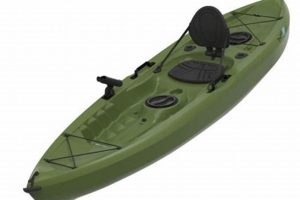
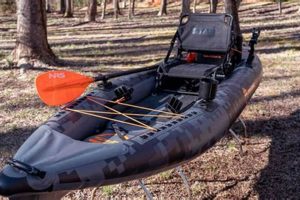
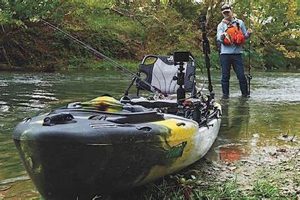
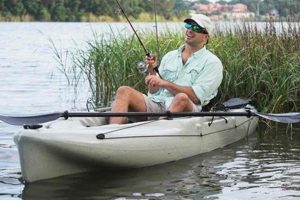
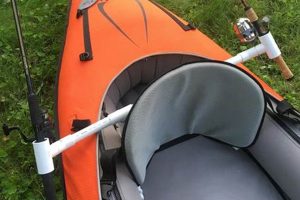
Battery-powered kayaks designed for angling offer a unique blend of mobility and stability on the water. These vessels typically feature integrated motor systems, often with variable speed controls and forward/reverse capabilities, eliminating the need for manual paddling. This allows anglers to cover more water, conserve energy for fishing, and access hard-to-reach spots with ease. They frequently incorporate features like rod holders, tackle storage, and even fish finders, optimizing the fishing experience. Consider a scenario where an angler wants to explore a distant section of a lake known for its bass population. A motorized kayak enables them to reach the location quickly and quietly, maximizing fishing time and minimizing physical exertion.
The advent of these specialized watercraft represents a significant advancement in angling technology. They enhance accessibility for anglers with physical limitations or those seeking a less strenuous fishing experience. Furthermore, their quiet operation minimizes disturbance to aquatic life, potentially improving fishing success. Historically, anglers relied on paddles or gasoline-powered boats. While effective, paddling can be tiring, especially over long distances or against currents. Gas-powered boats, though powerful, are often noisy, expensive to operate, and restricted in shallow waters or protected areas. These motorized fishing kayaks offer a compelling alternative, combining efficiency, quiet performance, and environmental friendliness.
This discussion will further explore key considerations regarding these vessels, including factors such as battery life, motor power, hull design, and the various features available to anglers. It will also examine the different types available on the market, ranging from compact, sit-on-top models to larger, sit-inside versions designed for more challenging waters. Finally, maintenance requirements and safety considerations will be addressed to ensure responsible and enjoyable use.
Tips for Utilizing Motorized Fishing Kayaks
Maximizing the advantages of a motorized fishing kayak requires careful consideration of several key factors. These tips offer guidance on optimizing performance, safety, and the overall fishing experience.
Tip 1: Battery Management: Understanding battery capacity and range is crucial. Always carry a fully charged battery and consider investing in a spare. Monitor battery levels throughout the trip and plan routes accordingly. Avoid completely draining the battery, as this can shorten its lifespan.
Tip 2: Weight Distribution: Proper weight distribution is essential for stability and efficient operation. Distribute gear evenly throughout the kayak, placing heavier items lower and closer to the center. This prevents tipping and improves tracking in the water.
Tip 3: Navigation and Safety: Familiarize oneself with navigational aids, including GPS devices and charts. Always carry essential safety equipment, such as a personal flotation device, a whistle, and a first-aid kit. Inform someone of the intended fishing location and estimated return time.
Tip 4: Respecting the Environment: Minimize disturbance to aquatic life by operating the motor at a reasonable speed, especially in shallow waters. Avoid anchoring in sensitive areas like seagrass beds or coral reefs. Properly dispose of all fishing line and other waste.
Tip 5: Regular Maintenance: Regularly inspect and maintain the kayak and its motor. Rinse the kayak with fresh water after each use to remove salt and debris. Lubricate moving parts and check for any signs of wear or damage. Follow the manufacturer’s recommendations for battery maintenance and storage.
Tip 6: Choosing the Right Kayak: Select a kayak suited to the intended fishing environment. Consider factors such as hull design, size, and weight capacity. A sit-on-top kayak is generally preferred for warmer climates and calmer waters, while a sit-inside kayak offers greater protection in colder conditions and rougher seas.
Tip 7: Understanding Local Regulations: Be aware of and comply with all local regulations regarding the use of motorized vessels, including licensing requirements and speed limits. Respect designated no-wake zones and other restricted areas.
By adhering to these guidelines, anglers can enhance their fishing experience, ensuring both safety and responsible enjoyment of the waterways. These practices contribute to preserving the environment and ensuring the sustainability of this rewarding pastime.
The next section will offer a concluding perspective on the integration of technology and angling, emphasizing the benefits and responsibilities associated with motorized fishing kayaks.
1. Motor Power
Motor power represents a critical performance characteristic in electric fishing kayaks, directly influencing speed, range, and the ability to navigate various water conditions. Higher motor power facilitates faster travel, enabling anglers to cover greater distances and reach fishing spots more quickly. This is particularly advantageous in larger bodies of water or when battling strong currents or winds. For example, a kayak with a higher power motor can more effectively navigate upstream against a river current, expanding fishing opportunities. Conversely, lower power motors may prove sufficient for smaller lakes or calmer waters where speed and long-distance travel are less critical. Understanding the relationship between motor power and intended use is essential for optimizing performance and efficiency.
The impact of motor power extends beyond simple speed considerations. It also affects the kayak’s ability to handle challenging conditions. A more powerful motor provides greater thrust, enabling the vessel to contend with adverse winds and currents more effectively. This translates to enhanced stability and control, contributing to a safer and more comfortable fishing experience, especially in unpredictable weather. For instance, an angler fishing in a coastal estuary experiencing tidal flows would benefit from a higher motor power to maintain position and control against the changing currents. Selecting an appropriate motor power also influences battery consumption. While higher power motors offer increased performance, they typically draw more energy, potentially reducing overall range. Balancing power requirements with battery capacity is essential for ensuring sufficient operating time on the water.
Careful consideration of motor power is crucial for selecting an electric fishing kayak that aligns with individual angling needs and intended usage scenarios. Evaluating factors such as target fishing locations, typical water conditions, and desired travel distances allows anglers to choose a motor power that optimizes performance without compromising battery life or exceeding budget limitations. This informed decision enhances the overall fishing experience, facilitating efficient access to desired fishing locations and providing the necessary power to navigate diverse aquatic environments effectively.
2. Battery Life
Battery life represents a critical factor influencing the usability and range of electric powered fishing kayaks. Understanding the various aspects that affect battery performance is essential for maximizing fishing time and ensuring a safe return to shore. This exploration delves into the key components impacting battery life, providing practical insights for anglers.
- Amp-Hour Rating
The amp-hour (Ah) rating indicates the battery’s capacity, essentially reflecting how much energy it can store. A higher Ah rating generally translates to longer run times. For instance, a 50Ah battery can theoretically deliver 50 amps for one hour, or 25 amps for two hours. However, real-world performance varies based on motor power and usage patterns. Choosing a battery with an appropriate Ah rating is crucial for matching intended fishing duration and travel distances.
- Motor Consumption
The motor’s power consumption directly impacts battery drain. Higher power motors draw more current, reducing battery life. Variable speed control allows anglers to adjust motor output, conserving energy when maximum speed is not required. Consider a scenario where an angler trolls at low speed for extended periods. Utilizing lower speed settings significantly extends battery life compared to continuous high-speed operation.
- Environmental Factors
Environmental conditions, such as water temperature and current, can influence battery performance. Cold temperatures can reduce battery efficiency, leading to shorter run times. Strong currents or winds require higher motor output to maintain progress, further increasing battery drain. Anglers should account for these factors when estimating range and plan accordingly.
- Battery Maintenance
Proper battery maintenance is essential for preserving its lifespan and ensuring optimal performance. This includes storing the battery in a cool, dry place and avoiding complete discharge. Regularly charging the battery, even during periods of non-use, helps maintain its health and prevent premature degradation. Following manufacturer recommendations for charging and storage procedures is crucial for maximizing battery longevity.
Careful consideration of these interconnected factors empowers anglers to effectively manage battery life, maximizing fishing time and ensuring a safe and enjoyable experience on the water. Understanding the interplay between battery capacity, motor consumption, environmental conditions, and maintenance practices allows for informed decisions regarding battery selection and usage, optimizing the performance and range of electric powered fishing kayaks.
3. Hull Design

Hull design significantly influences the performance and suitability of electric powered fishing kayaks for various fishing environments and angler preferences. The hull’s shape, size, and construction determine stability, maneuverability, tracking, and overall efficiency in the water. Understanding the nuances of different hull designs empowers informed decision-making, ensuring optimal performance and a comfortable fishing experience.
- Stability
Hull stability, crucial for casting, reeling, and landing fish, is significantly affected by width and shape. Wider hulls generally offer greater initial stability, resisting tipping, particularly important for stand-up fishing. A flatter bottom enhances stability at rest but may compromise maneuverability. For example, a wide, flat-bottomed hull provides a stable platform ideal for calm lakes or slow-moving rivers, while a narrower, more rounded hull offers better performance in rougher waters or when navigating tight spaces.
- Tracking
Tracking, the kayak’s ability to maintain a straight course, is influenced by hull length and shape. Longer kayaks typically track better than shorter ones, requiring fewer corrective strokes. A pronounced keel or skeg enhances tracking, especially in windy conditions. Consider a kayak designed for open-water fishing. Superior tracking minimizes course deviations caused by wind or currents, allowing anglers to focus on fishing rather than constant course correction. A shorter, more maneuverable hull might be preferred for navigating complex shorelines or tight river bends.
- Maneuverability
Maneuverability refers to the kayak’s responsiveness to steering input. Shorter kayaks with a more rounded hull tend to turn more quickly, making them ideal for navigating tight spaces or quickly changing directions. However, this can compromise tracking in open water. A kayak intended for fishing in mangrove forests or shallow creeks benefits from enhanced maneuverability, allowing anglers to navigate intricate waterways effectively. Longer, less maneuverable designs excel in open water where maintaining a straight course is paramount.
- Draft and Speed
Draft, the depth of the hull below the waterline, affects access to shallow areas. Shallower drafts allow navigation in very shallow water, essential for accessing areas inaccessible to deeper-draft vessels. Hull shape also influences speed and efficiency. Sleeker, more streamlined hulls minimize water resistance, allowing higher speeds with the same motor power. This translates to faster travel and extended range, particularly advantageous for covering large distances. A shallower draft hull is preferred for accessing shallow flats or backwater areas, while a deeper, more streamlined hull designed for open water or larger lakes prioritizes speed and efficient long-distance travel.
Understanding these interconnected facets of hull design allows anglers to select electric powered fishing kayaks optimized for specific fishing environments and preferences. Matching hull characteristics to target waters and fishing styles enhances performance, improves stability and control, and maximizes overall enjoyment on the water. Whether prioritizing stability for stand-up fishing, maneuverability for navigating complex waterways, or speed for covering large distances, selecting the appropriate hull design is crucial for a successful and rewarding fishing experience.
4. Weight Capacity

Weight capacity represents a critical specification for electric-powered fishing kayaks, directly impacting performance, safety, and overall usability. Understanding the factors influencing weight capacity and its implications is essential for informed kayak selection and responsible operation. This exploration delves into the various facets of weight capacity, providing anglers with practical insights for optimizing their fishing experience.
- Maximum Load
The maximum load specifies the total weight a kayak can safely carry, including passengers, gear, and any other onboard items. Exceeding this limit compromises stability, increases the risk of capsizing, and can damage the kayak. For example, a kayak with a maximum load of 350 lbs. carrying a 200 lb. angler, 50 lbs. of fishing gear, and a 120 lb. companion exceeds its safe operating limit. Staying within the specified weight capacity is paramount for maintaining stability and ensuring safe operation.
- Performance Impact
Weight significantly affects kayak performance. A heavier load reduces speed, maneuverability, and battery life. A kayak nearing its maximum capacity will move slower, require more effort to paddle or motor, and experience reduced battery range. For instance, a fully loaded kayak navigating against a current will require significantly more motor power and deplete the battery faster than a lightly loaded kayak in calm water. Understanding the relationship between weight and performance is crucial for optimizing efficiency and planning fishing trips effectively.
- Gear Considerations
Anglers frequently carry substantial gear, including rods, reels, tackle boxes, coolers, and safety equipment. Accurately estimating the total weight of all onboard items is crucial for determining whether a particular kayak offers sufficient capacity. For example, an angler planning an extended multi-day fishing trip with camping gear requires a kayak with significantly higher weight capacity than an angler fishing for a few hours on a local lake. Carefully considering gear requirements and selecting a kayak with ample capacity ensures safe and comfortable operation without compromising performance.
- Stability and Safety
Weight distribution plays a critical role in maintaining kayak stability. Evenly distributing weight throughout the hull, with heavier items placed lower and closer to the center, enhances stability and reduces the risk of tipping. Uneven weight distribution can compromise stability, making the kayak more susceptible to capsizing, especially in rough water or when making sudden movements. Proper weight distribution, combined with staying within the specified maximum load, contributes significantly to safe and stable kayak operation.
Careful consideration of weight capacity is essential for maximizing the safety, performance, and enjoyment of electric-powered fishing kayaks. Understanding the relationship between weight, stability, performance, and gear requirements empowers anglers to make informed decisions regarding kayak selection, loading, and operation. Adhering to manufacturer specifications regarding weight capacity and practicing responsible weight distribution contribute significantly to a safe, efficient, and rewarding fishing experience.
5. Integrated Features

Integrated features significantly enhance the functionality and convenience of electric-powered fishing kayaks, transforming them into specialized angling platforms. These features, often designed specifically for fishing applications, streamline workflows, improve efficiency, and contribute to a more productive and enjoyable fishing experience. Examining the relationship between these integrated features and the overall performance of electric fishing kayaks reveals their practical significance.
Rod holders, a common integrated feature, secure fishing rods, freeing hands for other tasks like paddling, navigating, or handling tackle. Multiple rod holders allow anglers to employ diverse fishing techniques simultaneously, increasing catch potential. Tracks and mounting systems provide flexibility for customizing accessory placement, accommodating fish finders, GPS units, cameras, and other electronic devices. These integrated systems streamline equipment management, minimizing clutter and maximizing deck space. Recessed storage compartments offer secure and organized storage for tackle, tools, and personal items, protecting them from the elements and preventing loss or damage. Consider an angler targeting different species requiring various rod and reel setups. Integrated rod holders and tracks accommodate this versatility, optimizing the fishing approach and enhancing efficiency. Similarly, built-in cup holders, paddle clips, and anchor trolleys, seemingly minor details, contribute significantly to overall convenience and user experience.
The strategic integration of features directly impacts fishing success. A well-placed fish finder transducer, facilitated by integrated mounting points, provides accurate depth readings and locates fish concentrations, improving angling efficiency. Similarly, strategically positioned rod holders allow for optimal rod placement, enhancing casting accuracy and minimizing line tangling. These integrated features synergistically enhance fishing effectiveness. The practical implications of these integrated features extend beyond mere convenience. Enhanced organization and readily accessible equipment improve safety, particularly in dynamic fishing environments. Securely stowed gear minimizes the risk of tripping or entanglement, while readily accessible safety equipment ensures rapid response in emergencies. Understanding the purpose and effective utilization of integrated features allows anglers to optimize their fishing experience, maximizing efficiency, safety, and overall enjoyment on the water.
6. Maneuverability
Maneuverability in electric-powered fishing kayaks represents a critical performance attribute, directly influencing angling effectiveness and overall on-the-water experience. It dictates the vessel’s responsiveness to steering input, impacting its ability to navigate tight spaces, execute precise movements, and efficiently reposition in dynamic fishing environments. Several factors contribute to a kayak’s maneuverability, including hull design, length, and the presence of specialized features like rudders or fins.
Shorter kayaks generally exhibit greater maneuverability than longer ones, turning more quickly and requiring less effort to change direction. This agility proves advantageous when navigating complex shorelines, tight river bends, or areas with dense vegetation. Consider an angler targeting fish in a shallow creek or mangrove forest. A highly maneuverable kayak allows precise navigation through narrow channels and around obstacles, maximizing access to prime fishing locations. Conversely, longer kayaks, while offering superior tracking in open water, may struggle in confined spaces, requiring more effort and space to execute turns. Hull design also plays a significant role. Wider, flatter hulls tend to be less maneuverable, while narrower, more rounded hulls offer greater agility. Features like rudders or retractable fins enhance maneuverability, providing additional control and precision, particularly in windy conditions or strong currents. A rudder allows for fine-tuning of course adjustments, improving tracking and enabling precise turns, even against prevailing forces. This proves particularly beneficial when fishing in open water or navigating challenging currents.
The practical significance of maneuverability extends beyond simple navigation. It directly impacts fishing effectiveness by enabling anglers to position themselves strategically for optimal casting and presentation. Consider an angler sight-fishing in shallow water. A maneuverable kayak allows precise adjustments to approach fish stealthily and cast accurately without spooking them. Similarly, in moving water, maneuverability enables anglers to maintain position relative to structure or current seams, maximizing fishing efficiency. Understanding the interplay between kayak design, features, and maneuverability empowers anglers to select vessels best suited to their target fishing environments and techniques. Prioritizing maneuverability unlocks access to challenging fishing locations, enhances angling precision, and contributes significantly to a more productive and enjoyable fishing experience.
Frequently Asked Questions
This section addresses common inquiries regarding electric-powered fishing kayaks, providing concise and informative responses to facilitate informed decision-making and responsible usage.
Question 1: How far can one typically travel on a single charge?
Range varies significantly depending on battery capacity, motor power, speed, water conditions, and payload weight. Consult manufacturer specifications for estimated range under specific conditions. Conservative use and lower speeds generally extend range.
Question 2: What maintenance is required for these kayaks?
Regular maintenance includes rinsing with fresh water after each use, especially in saltwater environments. Periodic inspection of wiring, connections, and moving parts is recommended. Battery maintenance, including proper charging and storage, is crucial for longevity.
Question 3: Are these kayaks suitable for use in saltwater?
Many models are designed for saltwater use, but corrosion resistance varies. Thorough rinsing after each use is essential to prevent saltwater damage. Choose kayaks constructed with corrosion-resistant materials, such as marine-grade aluminum or stainless steel hardware.
Question 4: How noisy are electric motors compared to gasoline outboards?
Electric motors are significantly quieter than gasoline outboards, minimizing disturbance to aquatic life and enhancing the fishing experience. This reduced noise pollution contributes to a more peaceful and natural environment.
Question 5: What safety precautions should be taken when using these kayaks?
Always wear a personal flotation device (PFD). Carry essential safety equipment, including a whistle, signaling device, and first-aid kit. Inform someone of the intended fishing location and estimated return time. Check weather conditions before embarking and adhere to local boating regulations.
Question 6: Are there specific regulations regarding the use of electric motors on kayaks?
Regulations vary by jurisdiction. Consult local authorities for specific rules regarding registration, licensing, and permitted usage areas. Respect designated no-wake zones and other restricted areas.
Understanding these key aspects contributes to safe, responsible, and enjoyable use of electric-powered fishing kayaks. Thorough research and adherence to manufacturer guidelines and local regulations ensure a rewarding and sustainable fishing experience.
The following section delves into advanced techniques for maximizing fishing success with electric-powered kayaks.
Electric Powered Fishing Kayaks
Electric powered fishing kayaks represent a significant advancement in angling technology, offering a unique blend of mobility, stealth, and environmental responsibility. This exploration has examined the multifaceted aspects of these specialized vessels, from core components like motor power and battery life to critical design considerations such as hull design and weight capacity. The importance of integrated features and their impact on fishing efficiency and overall user experience has been highlighted. Furthermore, the discussion emphasized the significance of maneuverability in diverse fishing environments and its direct correlation with angling success. Practical considerations, including maintenance requirements and essential safety precautions, underscore the importance of responsible usage and informed decision-making.
The convergence of technology and angling continues to evolve, shaping the future of fishing. Electric powered fishing kayaks stand as a testament to this evolution, offering anglers a powerful tool for exploring new waters, accessing previously unreachable fishing grounds, and minimizing environmental impact. As technology progresses, further advancements in battery technology, motor efficiency, and integrated features promise to enhance the capabilities and accessibility of these remarkable vessels. The responsibility lies with anglers to embrace these advancements responsibly, prioritizing safety, environmental stewardship, and the preservation of aquatic ecosystems for future generations. Informed selection, diligent maintenance, and responsible operation ensure the continued enjoyment and sustainability of this evolving angling pursuit.