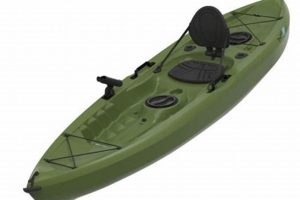
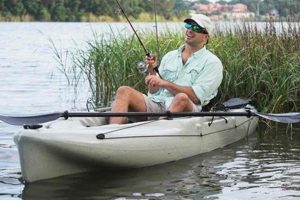
This specific model designates a sit-on-top vessel designed for angling. Such watercraft are typically characterized by stability, specialized storage for fishing gear, and features like rod holders and paddle parks. They offer anglers enhanced mobility and access to shallow waters compared to traditional boats.
Small, human-powered watercraft specifically designed for angling offer significant advantages for fishing enthusiasts. Their compact size allows navigation in shallow waters and hard-to-reach areas inaccessible to larger boats. Integrated features enhance the fishing experience, providing readily accessible storage for tackle and equipment. Moreover, the relatively low cost and ease of transport and storage contribute to the growing popularity of these vessels. The evolution of these craft reflects advancements in materials and design, leading to improved stability, durability, and comfort.
The subsequent sections will delve into specific design features, performance characteristics, user experiences, and comparisons with similar options available in the market. This detailed analysis aims to provide a comprehensive understanding of this particular type of fishing kayak.
Tips for Sit-On-Top Kayak Fishing
Effective angling from a sit-on-top kayak requires preparation and adherence to specific practices. These guidelines aim to enhance safety and improve fishing success.
Tip 1: Stability Enhancement: Maintaining a low center of gravity is crucial for balance. Distribute weight evenly and avoid sudden movements. Practice entering and exiting the kayak in shallow water to build confidence.
Tip 2: Essential Gear Preparation: Pack essential safety equipment, including a personal flotation device, a whistle, and a signaling device. Ensure fishing gear is readily accessible and securely stored to prevent loss or entanglement.
Tip 3: Paddle and Rod Management: Utilize a paddle leash to prevent loss. Employ rod holders and leashes to secure fishing rods while paddling or landing a fish.
Tip 4: Weather Awareness: Check weather forecasts before embarking on a fishing trip. Avoid paddling in strong winds, lightning storms, or rough water conditions.
Tip 5: Navigation Planning: Plan routes and identify potential hazards beforehand. Carry a map, compass, or GPS device and be aware of tidal currents and water depths.
Tip 6: Respect for the Environment: Practice Leave No Trace principles. Pack out all trash and avoid disturbing wildlife or sensitive habitats. Adhere to local fishing regulations and licensing requirements.
Tip 7: Proper Anchoring Techniques: Utilize appropriate anchor types and deployment methods to secure the kayak in desired fishing locations. Be mindful of bottom conditions and potential snags.
Adhering to these practices can significantly improve safety and fishing success. Proper preparation and mindful execution are essential for an enjoyable and productive kayak fishing experience.
This information provides a foundational understanding of safe and effective kayak fishing techniques. The following section will delve into specific product recommendations and comparisons.
1. Stability

Stability forms a cornerstone of the Renegade XT fishing kayak’s design and overall performance. A stable platform is paramount for anglers, enabling confident casting, reeling, and landing fish, especially in challenging conditions. This stability derives from a combination of factors, including hull design, weight distribution, and the kayak’s center of gravity. A broader hull generally provides greater initial stability, resisting tipping, while a well-designed keel enhances tracking and reduces lateral movement. Strategic placement of seating and storage compartments contributes to balanced weight distribution, further improving stability. For instance, a wider, flatter hull design offers a more stable platform, particularly beneficial in calm waters, while a slightly V-shaped hull might provide better performance in choppy conditions, though potentially at the expense of some initial stability. The practical implication is a kayak that allows anglers to focus on fishing rather than constantly battling to maintain balance.
The Renegade XT’s stability contributes significantly to its suitability for diverse fishing environments. Its design facilitates various angling styles, from stand-up fishing in shallow flats to seated casting in open water. This versatility expands the range of fishing opportunities available to users. Consider an angler sight-fishing in shallow water. The kayak’s stability allows the angler to stand and cast with accuracy, improving visibility and control. Conversely, in rougher conditions, the stability ensures a secure and predictable platform, reducing the risk of capsizing. Furthermore, the stability enhances safety when entering and exiting the kayak, a critical aspect, particularly in challenging environments like rocky shorelines or swift currents.
In summary, stability emerges as a defining characteristic of the Renegade XT fishing kayak, influencing its performance, versatility, and user experience. Understanding the factors contributing to this stability empowers informed decision-making, enabling anglers to select a kayak suited to their specific needs and fishing style. While stability is crucial, balancing it with other performance characteristics like maneuverability and speed is essential for optimal performance. The subsequent discussion will explore the Renegade XT’s maneuverability and how it complements its stable platform for a comprehensive fishing experience.
2. Storage Capacity

Storage capacity is a critical factor in fishing kayak selection, directly impacting organization, accessibility, and overall fishing experience. Ample and well-designed storage facilitates efficient tackle management, ensuring essential gear remains readily available while minimizing clutter and maximizing fishing time. The Renegade XT fishing kayak addresses these needs with a dedicated storage system designed for the angler.
- Tankwell Storage:
Located at the rear of the kayak, the tankwell provides open storage for larger items like tackle crates, coolers, and even small batteries for fish finders. Bungee cords typically secure these items, ensuring they remain in place during transit and on the water. This open design allows for quick access to frequently used gear. For example, anglers can quickly grab a different lure box or retrieve a landing net without having to rummage through smaller compartments.
- Dry Storage Compartments:
Sealed hatches protect sensitive items like phones, wallets, and cameras from water damage. These compartments offer a secure space for essential gear that must remain dry. The inclusion of dry storage contributes to peace of mind, allowing anglers to focus on fishing without worrying about water damage to valuables. For instance, anglers can confidently bring their phones for communication or photography without the risk of water intrusion.
- Rod Holders:
Dedicated rod holders, typically flush-mounted or adjustable, provide secure storage for fishing rods while paddling or when multiple rods are in use. This feature keeps rods organized, prevents tangling, and protects them from damage. The number and placement of rod holders vary depending on the kayak model but generally offer convenient access and secure storage during transport and fishing. This allows anglers to have multiple rods rigged and ready for action, facilitating quick changes in fishing techniques.
- Side-Mounted Storage:
Smaller compartments or pockets located along the sides of the kayak offer additional storage for readily accessible items like pliers, line cutters, and leader material. This keeps essential tools within easy reach, streamlining the fishing process. For example, an angler can quickly grab pliers to remove a hook without having to search through a larger storage area. This efficient organization contributes to a more streamlined and enjoyable fishing experience.
The combination of these storage features contributes significantly to the Renegade XT’s practicality and overall effectiveness as a fishing platform. Adequate and well-organized storage enhances the angler’s experience by promoting efficiency, reducing clutter, and ensuring essential gear remains readily accessible. This ultimately allows for a more focused and enjoyable fishing trip. The thoughtful integration of various storage solutions highlights the kayak’s design focus on meeting the specific needs of anglers.
3. Maneuverability

Maneuverability is a critical performance attribute influencing a fishing kayak’s effectiveness, particularly in complex or confined waterways. The ability to navigate tight spots, swiftly change direction, and efficiently position the kayak for optimal casting angles significantly impacts fishing success. This section explores the maneuverability of the Renegade XT fishing kayak, examining the factors contributing to its performance in various on-water scenarios.
- Hull Design and Length:
The hull design significantly influences a kayak’s maneuverability. Shorter kayaks generally turn more quickly than longer ones, making them ideal for navigating tight creeks, mangrove tunnels, and areas with dense vegetation. However, shorter kayaks can be less stable and track less effectively in open water. Longer kayaks, while less agile, offer better tracking and glide, making them suitable for larger bodies of water and open ocean conditions. The Renegade XT’s specific hull design balances maneuverability and stability, catering to diverse fishing environments. Its length and hull shape contribute to its responsiveness while maintaining adequate stability for various fishing styles.
- Waterline Length and Width:
The length of the kayak’s waterlinethe portion of the hull in contact with the waterdirectly impacts its turning performance. A shorter waterline generally translates to quicker turns, while a longer waterline improves tracking and speed. Similarly, a narrower kayak tends to turn more easily than a wider one. The Renegade XT’s dimensions are optimized for balanced performance, offering sufficient maneuverability without compromising stability. This balance allows anglers to navigate various waterways, from narrow creeks to open lakes, without feeling overly restricted or unstable.
- Rudder or Skeg System (if applicable):
Some fishing kayaks feature a rudder or skeg system to enhance tracking and directional control. A rudder, controlled by foot pedals, allows for precise steering adjustments, particularly helpful in windy conditions or strong currents. A skeg, a fixed or retractable fin, improves directional stability but offers less maneuverability than a rudder. The presence and type of tracking system on the Renegade XT will influence its performance characteristics. A rudder system enhances maneuverability by providing precise directional control, while a skeg improves tracking in open water.
- Paddler Input and Technique:
While the kayak’s design plays a significant role, paddler skill and technique are crucial for maximizing maneuverability. Efficient paddling strokes and proper body positioning contribute significantly to controlled turns and precise maneuvering. Understanding how to use edging techniques and various paddle strokes allows anglers to maximize the kayak’s responsiveness. For example, sweep strokes are effective for turning, while draw strokes aid in lateral movement. Combining proper technique with the Renegade XT’s inherent maneuverability allows anglers to navigate efficiently and position themselves effectively for casting.
The Renegade XT’s maneuverability results from a combination of design features and user interaction. Its balanced performance caters to diverse fishing environments, allowing anglers to navigate effectively in various conditions. The ability to precisely position the kayak, combined with its stability and storage capacity, makes the Renegade XT a versatile platform suitable for various fishing styles and locations. Ultimately, the interplay of these factors contributes to a more successful and enjoyable fishing experience.
4. Comfort

Comfort is paramount in fishing kayaks, directly influencing angling effectiveness and overall enjoyment, especially during extended trips. Discomfort can lead to fatigue, reduced focus, and a diminished fishing experience. The Renegade XT fishing kayak addresses comfort through several key design elements. The seat design plays a crucial role. A well-designed seat provides adequate support, cushioning, and adjustability to accommodate individual preferences and body types. Adjustable backrests and seat padding contribute to long-term comfort, allowing anglers to maintain focus and energy throughout the day. For example, a high-backed seat with lumbar support can significantly reduce back strain during long hours on the water. Similarly, breathable seat materials enhance comfort in warm weather, preventing overheating and discomfort. Practical implications include improved concentration, reduced fatigue, and a more enjoyable fishing experience.
Beyond seating, other design elements contribute to overall comfort. Legroom and footrests allow for proper posture and leg extension, reducing cramping and discomfort. Adjustable footrests accommodate different leg lengths, ensuring a comfortable and customized fit. Ample deck space provides freedom of movement and allows for changes in position, further enhancing comfort during extended fishing trips. This space is crucial for standing, stretching, and shifting weight, reducing stiffness and fatigue. Consider an angler spending hours on the water. Adequate legroom and adjustable footrests allow for comfortable positioning, while ample deck space enables movement and stretching, preventing stiffness and discomfort. The cumulative effect of these comfort features enhances the angler’s overall experience, promoting focus and enjoyment.
In summary, the Renegade XT fishing kayak prioritizes comfort through thoughtful design features, including a well-designed seat, adjustable footrests, and ample deck space. These elements contribute to a more enjoyable and productive fishing experience by reducing fatigue, promoting proper posture, and allowing for freedom of movement. Understanding the importance of comfort and how it is addressed in the Renegade XT empowers informed decision-making, enabling anglers to choose a kayak that meets their specific needs and priorities. Addressing comfort directly translates to enhanced fishing performance and long-term enjoyment on the water.
5. Durability

Durability is a critical factor influencing the lifespan and overall value of a fishing kayak, especially given the demanding conditions these vessels often endure. The Renegade XT fishing kayak’s construction and material selection directly impact its ability to withstand impacts, abrasion, UV exposure, and fluctuating temperatures. Durable construction translates to a longer lifespan, reduced maintenance requirements, and sustained performance over time. Cause and effect are directly linked; robust construction materials and manufacturing processes result in a kayak capable of withstanding harsh conditions. For example, using high-density polyethylene (HDPE) or other impact-resistant plastics contributes significantly to the kayak’s ability to resist damage from rocks, logs, or other obstacles encountered in various waterways. Reinforced seams and stress points further enhance durability, preventing leaks and structural failures. This robust construction enables the kayak to maintain its structural integrity and performance characteristics over extended periods, even with regular use in challenging environments.
The practical significance of durability extends beyond the kayak’s structural integrity. UV resistance prevents fading and material degradation caused by prolonged sun exposure, preserving the kayak’s appearance and structural integrity over time. Resistance to temperature fluctuations prevents warping and cracking, particularly in environments with extreme temperature variations. Consider a kayak frequently used in saltwater environments. Durable construction materials resist corrosion and deterioration caused by saltwater exposure, extending the kayak’s lifespan and maintaining its performance. Similarly, a kayak stored outdoors benefits from UV resistance, preventing fading and material degradation caused by prolonged sun exposure. These practical considerations underscore the importance of durability in ensuring long-term value and performance.
In summary, durability represents a key aspect of the Renegade XT fishing kayak’s design and construction. The selection of robust materials and manufacturing processes contributes to the kayak’s ability to withstand various environmental stressors, ensuring a long lifespan and sustained performance. Understanding the factors contributing to durability empowers informed decision-making, enabling consumers to select a kayak that meets their long-term needs and provides lasting value. Ultimately, the emphasis on durability reflects a commitment to quality and performance, essential attributes for a reliable and enjoyable fishing kayak experience.
Frequently Asked Questions
This section addresses common inquiries regarding the Renegade XT fishing kayak, providing concise and informative responses to facilitate informed decision-making.
Question 1: What is the weight capacity of the Renegade XT fishing kayak?
Weight capacity varies depending on the specific model year and configuration. Consulting the manufacturer’s specifications provides the most accurate information. Exceeding the specified weight capacity can compromise stability and safety.
Question 2: What materials are used in the construction of the Renegade XT?
The Renegade XT typically utilizes high-density polyethylene (HDPE) or a similar durable plastic known for its impact resistance, UV resistance, and overall durability. Specific material composition may vary depending on the model year.
Question 3: Does the Renegade XT come with a paddle and seat included?
Standard inclusions can vary depending on the retailer and specific package offerings. Confirming included accessories with the seller before purchase is recommended. Some retailers may offer bundled packages including paddles, seats, and other accessories.
Question 4: How does the Renegade XT perform in rough water conditions?
While designed for stability, performance in rough water depends on various factors, including water conditions, paddler experience, and kayak configuration. Exercise caution and adhere to safety guidelines when paddling in any challenging environment.
Question 5: Is the Renegade XT suitable for beginners?
The Renegade XT’s stability and user-friendly design make it suitable for beginners. However, familiarizing oneself with basic paddling techniques and safety procedures before embarking on any kayaking trip is essential.
Question 6: What maintenance is required for the Renegade XT fishing kayak?
Regular rinsing with fresh water after each use, particularly in saltwater environments, helps prevent corrosion and material degradation. Periodic inspections for damage and proper storage contribute to the kayak’s longevity.
Addressing these common questions provides a foundational understanding of the Renegade XT fishing kayak’s key features and considerations. Consulting the manufacturer’s specifications and reputable retailers offers further detailed information.
The following section will provide a comprehensive review encompassing user experiences and performance evaluations.
Conclusion
This exploration of the Renegade XT fishing kayak encompassed key features impacting performance and user experience. Stability, storage capacity, maneuverability, comfort, and durability were examined in detail, highlighting the kayak’s suitability for diverse fishing environments and angling styles. Design elements contributing to each characteristic were analyzed, providing a comprehensive understanding of the kayak’s strengths and potential limitations. Understanding these attributes empowers informed purchasing decisions and enhances user satisfaction.
The Renegade XT fishing kayak represents a confluence of design and functionality tailored to angling pursuits. Careful consideration of individual needs and preferences remains paramount in kayak selection. Further research, including user reviews and comparisons with similar models, provides a comprehensive perspective, enabling informed decisions and maximizing long-term enjoyment on the water.