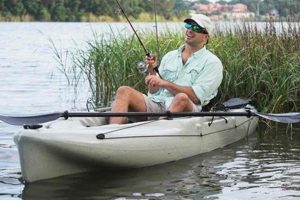
An evaluation of the Catch PWR 100 fishing kayak encompasses aspects such as performance, features, stability, and overall value. This typically involves hands-on testing and detailed analysis to provide potential buyers with insights into the kayak’s suitability for various fishing styles and conditions. Example topics covered might include speed and maneuverability, comfort and ergonomics, storage capacity, and the effectiveness of integrated features like rod holders and fish finders.
Objective assessments of fishing kayaks play a vital role in informing consumer purchasing decisions. They empower individuals to select watercraft best suited to their individual needs and preferences, ultimately contributing to a more enjoyable and successful fishing experience. Historically, kayak reviews relied heavily on print media. The digital age has expanded access to diverse perspectives and multimedia formats like videos and interactive demonstrations, offering a more comprehensive understanding of a kayak’s capabilities.
This article will delve deeper into specific aspects of the Catch PWR 100, examining its construction, design features, performance on the water, and suitability for different fishing environments. Further analysis will also compare the Catch PWR 100 to competing kayaks in its class, providing a broader market perspective.
Tips for Utilizing the Catch PWR 100 Fishing Kayak
Maximizing the potential of the Catch PWR 100 involves understanding its features and employing appropriate techniques. The following tips offer guidance for a safer and more productive fishing experience.
Tip 1: Weight Distribution: Proper weight distribution is crucial for stability. Gear should be evenly distributed throughout the kayak, with heavier items placed low and centrally. This enhances stability and prevents tipping.
Tip 2: Paddle Selection: Choosing the correct paddle length is essential for efficient paddling. Factors such as torso height and kayak width should be considered when selecting a paddle. An appropriately sized paddle reduces fatigue and improves performance.
Tip 3: Safety Gear: Always wear a personal flotation device (PFD). Essential safety equipment, including a whistle, signaling device, and first-aid kit, should be readily accessible.
Tip 4: Anchor Positioning: Deploying the anchor effectively is vital for maintaining position in currents or wind. Consider water depth and bottom conditions when selecting an anchoring location. Proper anchoring technique prevents drifting and maximizes fishing time in a desired spot.
Tip 5: Understanding the Features: Familiarization with the kayak’s features, including rod holders, storage compartments, and rudder systems, allows for efficient use on the water. Consulting the owner’s manual provides comprehensive information.
Tip 6: Pre-Trip Planning: Planning a trip involves checking weather conditions, informing someone of the intended route, and understanding local regulations. Adequate preparation ensures a safe and enjoyable outing.
Tip 7: Regular Maintenance: Regularly rinsing the kayak with fresh water after each use and storing it properly prolongs its lifespan. Proper maintenance prevents damage from UV exposure and saltwater corrosion.
By following these guidelines, users can optimize their experience with the Catch PWR 100, promoting safety and enhancing fishing success.
These practical tips, combined with further analysis of the Catch PWR 100’s performance and features, offer a complete understanding of this fishing kayak. The following concluding section will summarize the key advantages and disadvantages.
1. Stability

Stability forms a cornerstone of any fishing kayak review, particularly for the Catch PWR 100, a kayak often used in diverse on-the-water environments. Stability directly influences not only the angler’s safety but also their ability to effectively fish. A stable platform allows for comfortable casting, reeling, and landing fish without the constant worry of capsizing. Consider the scenario of an angler hooking a large fish in choppy water; a stable kayak allows them to focus on the fight, while an unstable one might compromise their safety and lead to a lost catch.
Evaluation of stability within a Catch PWR 100 fishing kayak review considers several factors. Hull design plays a crucial role, with wider hulls generally offering greater primary stability (resistance to initial tipping). Secondary stability, the ability to recover from a significant lean, is also crucial, especially in rougher waters or when engaging with larger fish. Reviewers often assess stability through practical tests, such as leaning the kayak to different angles or simulating common fishing movements. Analysis may also encompass the impact of added weight from gear and the angler on the kayak’s overall stability. A practical example is comparing the Catch PWR 100’s stability to other kayaks in its class, providing context and valuable insight for potential buyers.
Understanding the Catch PWR 100’s stability profile is essential for informed purchasing decisions. Anglers fishing in calm lakes or slow-moving rivers might prioritize features other than ultimate stability. However, those venturing into more challenging conditions, such as coastal areas or faster currents, should prioritize stability as a key purchasing criterion. Reviews offering detailed analysis of stability equip prospective buyers with the knowledge to choose a kayak that aligns with their specific needs and intended fishing environment.
2. Maneuverability

Maneuverability represents a critical aspect of a Catch PWR 100 fishing kayak review. It dictates the kayak’s responsiveness to paddle strokes and its ability to navigate various water conditions efficiently. This characteristic significantly impacts the overall fishing experience, particularly when precise boat control is required, such as navigating tight waterways, maneuvering around obstacles, or following schools of fish. Consider a scenario where an angler needs to quickly position the kayak for an optimal cast in a narrow creek; superior maneuverability becomes essential for capitalizing on the opportunity. Conversely, a sluggish, unresponsive kayak can hinder fishing success and lead to frustration.
Evaluating maneuverability within a Catch PWR 100 review involves assessing factors like hull design, length, and rudder system (if equipped). Shorter kayaks generally offer greater maneuverability, enabling tighter turns and quicker adjustments in direction. Longer kayaks, while potentially faster in a straight line, often sacrifice agility. Hull shape also contributes significantly, with some designs favoring maneuverability over tracking (the ability to maintain a straight course). The presence and effectiveness of a rudder system can enhance maneuverability, particularly in windy conditions or when dealing with currents. Reviewers often conduct on-water tests to gauge turning radius, responsiveness to paddle input, and the kayak’s ability to handle various water conditions, providing quantifiable data for analysis.
Understanding the Catch PWR 100’s maneuverability profile provides potential buyers with valuable insights. Anglers frequently fishing in confined spaces or requiring quick changes in direction should prioritize maneuverability. Those fishing primarily in open water might prioritize speed and tracking over nimble handling. A comprehensive review, incorporating both qualitative observations and quantitative measurements of maneuverability, empowers informed decision-making, aligning kayak selection with individual fishing styles and target environments.
3. Comfort

Comfort plays a pivotal role in a catch pwr 100 fishing kayak review, significantly impacting the overall fishing experience. Extended periods on the water demand a comfortable seating arrangement and ergonomic design to minimize fatigue and maximize enjoyment. Discomfort can detract from the fishing experience, potentially cutting trips short and hindering overall satisfaction. A comprehensive review must, therefore, carefully consider comfort features and their impact on user experience.
- Seat Design and Adjustability
Seat design is paramount. A well-designed seat provides adequate back support, cushioning, and adjustability to accommodate different body types and preferences. An adjustable seat allows anglers to fine-tune their position for optimal comfort and paddling efficiency. A poorly designed seat can lead to back pain, stiffness, and overall discomfort, especially during long fishing trips. Reviews often assess the seat’s material, construction, and adjustability options, providing valuable insights into long-term comfort.
- Legroom and Footrests
Adequate legroom and adjustable footrests contribute significantly to comfort and paddling efficiency. Sufficient legroom allows for comfortable stretching and movement, reducing cramping and fatigue. Adjustable footrests enable paddlers to maintain proper posture and leverage, maximizing power transfer and minimizing strain. Reviews typically evaluate the available legroom and the adjustability and positioning of footrests, highlighting their impact on comfort and performance.
- Storage and Accessibility
While not directly related to seating, the layout and accessibility of storage compartments impact comfort and convenience. Easy access to essential gear, tackle boxes, and personal items minimizes disruption and enhances the overall fishing experience. A well-organized storage system reduces the need for awkward reaching or bending, contributing to a more comfortable and enjoyable fishing trip. Reviews often analyze storage capacity, layout, and accessibility, providing practical insights into their impact on user experience.
- Deck Height and Stability
Deck height and stability indirectly influence comfort by affecting the angler’s sense of security and confidence on the water. A higher deck might offer a drier ride but can compromise stability, while a lower deck enhances stability but increases the risk of getting wet. This balance between deck height and stability affects the angler’s psychological comfort and should be considered in a comprehensive review.
These interconnected elements of comfort contribute significantly to the overall evaluation of the Catch PWR 100 fishing kayak. A comfortable kayak enhances the fishing experience, allowing anglers to focus on their passion rather than physical discomfort. By assessing these factors, a comprehensive review provides potential buyers with the necessary information to determine whether the Catch PWR 100 meets their comfort requirements and aligns with their individual preferences and intended usage scenarios.
4. Features
Features constitute a crucial element within a Catch PWR 100 fishing kayak review, directly influencing its suitability for various fishing styles and environments. Analysis of features provides potential buyers with insights into the kayak’s practicality, functionality, and overall value proposition. Features distinguish a dedicated fishing kayak from recreational models, offering specialized functionality designed to enhance the angling experience. For example, integrated rod holders facilitate hands-free fishing, while dedicated storage compartments accommodate tackle and gear. A well-designed transducer mount simplifies fish finder installation, improving angling success. Conversely, poorly designed or inadequate features can detract from the kayak’s usability and overall value.
Consider the practical implications of features within a real-world fishing scenario. An angler targeting large game fish in open water benefits from features like adjustable rod holders, ample storage for tackle and equipment, and a stable platform for fighting fish. Conversely, an angler fishing in narrow creeks or rivers might prioritize maneuverability and a compact design over extensive storage. Features like a rudder system or shallow-water anchors gain importance depending on the specific fishing environment. A thorough review assesses the availability, functionality, and quality of these features, providing practical context for potential buyers.
Understanding the interplay between features and overall kayak performance is essential for a comprehensive Catch PWR 100 review. While individual features contribute to specific functionalities, their integration and overall design determine the kayak’s effectiveness as a fishing platform. Analyzing features within the context of intended use, target species, and fishing environment provides a holistic assessment. The review should address potential shortcomings or areas where features could be improved, offering valuable feedback to both manufacturers and consumers. This detailed analysis empowers informed purchasing decisions, aligning kayak selection with individual fishing needs and preferences.
5. Durability

Durability represents a critical factor in evaluating the Catch PWR 100 fishing kayak, directly impacting its lifespan and long-term value. A durable kayak withstands the rigors of regular use, including exposure to various weather conditions, impacts, and abrasion. Assessing durability within a Catch PWR 100 review informs potential buyers about the kayak’s resilience and its ability to maintain performance over time. This analysis considers materials, construction techniques, and potential wear points, offering insights into the kayak’s long-term reliability and overall value proposition.
- Material Selection
The choice of materials significantly influences a kayak’s durability. High-quality polyethylene is commonly used for fishing kayaks due to its impact resistance and UV stability. Different grades and blends of polyethylene offer varying degrees of durability. Reviews often analyze the specific materials used in the Catch PWR 100’s construction, providing insights into its resistance to cracking, fading, and other forms of degradation. For instance, a higher-density polyethylene might offer superior impact resistance compared to a lower-density variant. Understanding the material composition empowers informed comparisons with competing kayaks and informs long-term ownership expectations.
- Construction Quality
Construction techniques play a crucial role in determining a kayak’s structural integrity and resistance to leaks. Proper welding, molding, and assembly ensure a robust and watertight hull. Reviews often examine the Catch PWR 100’s construction, looking for potential weaknesses in seams, joints, and fittings. A well-constructed kayak should exhibit consistent quality throughout, indicating attention to detail and manufacturing precision. Examining these aspects helps assess the kayak’s ability to withstand stress and maintain its structural integrity over time.
- UV Resistance
Ultraviolet (UV) radiation from sunlight can degrade kayak materials, leading to fading, brittleness, and reduced lifespan. UV resistance is crucial, especially for kayaks frequently exposed to direct sunlight. Reviews assess the Catch PWR 100’s UV resistance, often through analysis of material composition and protective coatings. A kayak with superior UV resistance maintains its structural integrity and aesthetic appeal for an extended period, offering better long-term value.
- Impact and Abrasion Resistance
Fishing kayaks inevitably encounter impacts and abrasion from rocks, logs, and other obstacles. A durable kayak withstands these encounters without sustaining significant damage. Reviews often analyze the Catch PWR 100’s resistance to impact and abrasion, considering material thickness, hull design, and protective features. For example, reinforced keel guards and impact-resistant skid plates enhance durability in high-wear areas, contributing to a longer lifespan and reduced maintenance requirements.
These interconnected facets of durability collectively influence the Catch PWR 100’s long-term performance and value. A durable kayak withstands the demands of regular fishing use, providing reliable performance over an extended period. By analyzing these aspects within the context of intended use, a comprehensive review provides valuable information to prospective buyers. This enables informed decisions, balancing performance, features, and durability to select a kayak that meets individual needs and budgetary constraints. Ultimately, a durable kayak represents a long-term investment, offering years of reliable service and enjoyable fishing experiences.
6. Value
Value, within the context of a Catch PWR 100 fishing kayak review, represents a critical assessment of the kayak’s overall worth considering its features, performance, durability, and price. It encompasses a complex interplay between these elements, requiring careful consideration of how each contributes to the overall package. A high-value kayak offers a compelling combination of desirable features, robust performance, and acceptable durability at a competitive price point. Conversely, a low-value kayak might exhibit deficiencies in one or more of these areas, resulting in a less attractive proposition for potential buyers. Understanding the multifaceted nature of value is essential for interpreting reviews and making informed purchasing decisions. Consider, for example, two kayaks priced similarly; the one offering superior durability, features tailored for fishing, and comparable performance represents a higher value proposition.
Analyzing value within a Catch PWR 100 review requires a comparative approach. Reviewers often benchmark the kayak against competitors within a similar price range, assessing relative strengths and weaknesses. This comparative analysis considers factors like material quality, construction techniques, feature sets, and on-water performance. For instance, if the Catch PWR 100 offers comparable features and performance to a higher-priced competitor, it might be considered a high-value option. Conversely, if a lower-priced competitor offers similar features and performance, the Catch PWR 100’s value proposition might be diminished. Real-world examples, such as comparing storage capacity, rod holder configurations, or tracking performance against competing models, provide tangible context for evaluating value. Furthermore, considering long-term ownership costs, including potential maintenance or repairs, contributes to a comprehensive value assessment.
A comprehensive understanding of value empowers informed purchasing decisions. It allows potential buyers to weigh the relative importance of various factors, such as features, performance, and durability, against the overall cost. A thorough Catch PWR 100 review provides the necessary data and analysis for this assessment. This equips consumers with the knowledge to select a kayak that aligns with their individual needs, budgetary constraints, and long-term ownership expectations. Ultimately, value represents a subjective assessment based on individual priorities and perceived benefits. A comprehensive review facilitates this assessment by providing objective data and informed analysis, enabling consumers to determine the true value proposition of the Catch PWR 100 fishing kayak.
Frequently Asked Questions
This FAQ section addresses common inquiries regarding the Catch PWR 100 fishing kayak, providing concise and informative responses to facilitate informed purchasing decisions.
Question 1: What is the weight capacity of the Catch PWR 100?
The Catch PWR 100 typically boasts a weight capacity between 350 and 400 lbs. However, always consult the manufacturer’s specifications for the most accurate information as weight capacities can vary slightly depending on the model year and specific configuration.
Question 2: Does the Catch PWR 100 come with a paddle?
Typically, the Catch PWR 100 is sold as a kayak only; paddles are often purchased separately. It is advisable to confirm this with the specific retailer before purchase. Selecting a paddle length tailored to the user’s height and the kayak’s width is essential for optimal paddling efficiency and comfort.
Question 3: What is the Catch PWR 100 made of?
The Catch PWR 100 is typically constructed from high-density polyethylene (HDPE), a durable and UV-resistant material well-suited for kayak construction. HDPE offers a balance of impact resistance, affordability, and weight, making it a common choice for fishing kayaks.
Question 4: How stable is the Catch PWR 100 for standing and fishing?
While the Catch PWR 100 offers reasonable stability, individual experiences with standing and fishing can vary. Factors such as user weight, balance, and water conditions influence stability. Reviews often offer insights into its stability for stand-up fishing, but ultimately, personal testing provides the most accurate assessment.
Question 5: Is the Catch PWR 100 suitable for ocean use?
While the Catch PWR 100 is designed primarily for lakes and rivers, it can be used in calm coastal waters. Venturing into open ocean or rough conditions is generally not recommended. Always prioritize safety and consider prevailing weather and water conditions before use.
Question 6: How does the Catch PWR 100 compare to other kayaks in its price range?
Comprehensive comparisons with competing kayaks require careful consideration of features, performance, durability, and price. Reviews often offer valuable insights into these comparative aspects. Focus on factors most relevant to individual fishing styles and intended use to determine relative value and suitability.
Addressing these frequently asked questions offers additional clarity regarding the Catch PWR 100. Prospective buyers should consider these points in conjunction with detailed reviews to make informed decisions tailored to their specific needs and preferences.
This information, combined with thorough research and consideration of individual fishing styles and target environments, empowers informed purchase decisions. The subsequent concluding section will summarize the key findings and offer final recommendations.
Conclusion
This comprehensive examination of the Catch PWR 100 fishing kayak has explored key aspects relevant to prospective buyers. Analysis of stability, maneuverability, comfort, features, durability, and value provides a detailed understanding of this kayak’s capabilities and limitations. The review highlighted the kayak’s strengths, such as its ample storage and stable platform, while also addressing potential weaknesses, like its maneuverability in tight spaces. Careful consideration of these factors, combined with an understanding of individual fishing styles and target environments, empowers informed purchase decisions. Frequently asked questions offered additional clarity on common inquiries, further aiding the evaluation process.
Ultimately, the Catch PWR 100 presents a compelling option for anglers seeking a stable and feature-rich fishing platform. Thorough research and thoughtful consideration of individual needs remain crucial for determining suitability. Prospective buyers are encouraged to consult multiple reviews and, if possible, test the kayak personally before purchase. Informed decision-making ensures long-term satisfaction and maximizes enjoyment on the water.