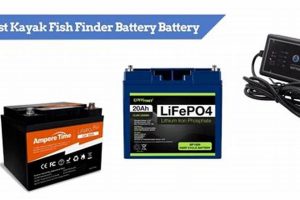
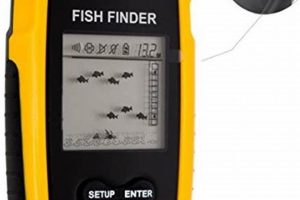
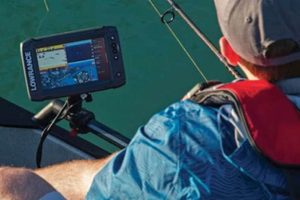
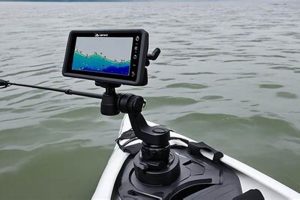
A portable sonar device designed for anglers using kayaks offers the convenience of cordless operation powered by a rechargeable battery. These units typically include a transducer, display screen, and mounting hardware adaptable to kayak setups. A compact, battery-powered sonar system allows kayak anglers to locate fish and underwater structures without the need for complex wiring or access to a boat’s power system.
Compact sonar systems powered by rechargeable batteries significantly enhance the kayak fishing experience. They provide valuable underwater insights, leading to improved fish-finding capabilities and more strategic angling. This technology allows anglers to explore diverse fishing locations with greater efficiency and independence, unburdened by traditional power constraints. The development of these portable and user-friendly units has broadened accessibility to sophisticated sonar technology, democratizing a tool previously more common in larger vessels.
This discussion will delve into various aspects of these devices, including key features, battery life considerations, popular models, mounting options, and effective utilization techniques for optimal fishing success. Furthermore, the comparison between rechargeable units and alternative power solutions will be explored.
Tips for Utilizing Portable Sonar Devices in Kayaks
Effective use of a compact, battery-powered sonar device can significantly enhance angling success from a kayak. The following tips offer guidance on maximizing the benefits of this technology.
Tip 1: Transducer Placement is Crucial: Optimal transducer placement is critical for accurate readings. Consider mounting the transducer on the kayak’s hull, using a specialized mounting arm, or deploying it on a float tube for improved signal clarity in shallow water.
Tip 2: Understand Sonar Settings: Familiarization with sonar settings, such as sensitivity, frequency, and depth range, allows for customized readings based on water conditions and target species.
Tip 3: Monitor Battery Life: Regularly monitor battery levels to avoid unexpected power loss during fishing trips. Carrying a backup battery or a portable charging solution is recommended for extended outings.
Tip 4: Interpret Sonar Readings Effectively: Learning to interpret sonar imagery, including identifying fish arches, bottom structure, and vegetation, is essential for successful fish finding.
Tip 5: Integrate Sonar Data with Environmental Factors: Combine sonar readings with observations of water temperature, current, and wind patterns to develop a comprehensive understanding of fish behavior and location.
Tip 6: Maintain and Clean the Device: Regular maintenance, including cleaning the transducer and ensuring proper storage, prolongs the lifespan of the device and ensures consistent performance.
Tip 7: Utilize GPS Functionality (If Available): Devices with integrated GPS allow for marking waypoints of productive fishing spots, enabling efficient return trips and accurate location tracking.
By following these guidelines, anglers can harness the full potential of their portable sonar systems, leading to improved fish-finding capabilities and a more rewarding kayak fishing experience.
The concluding section will summarize key takeaways and offer final recommendations for selecting and utilizing these valuable tools in a kayak fishing context.
1. Portability

Portability is a defining characteristic of rechargeable kayak fish finders, directly influencing their practicality and usability in a kayak fishing context. The compact nature of these devices, combined with their independent power source, allows anglers to easily transport, deploy, and operate sonar technology without the constraints of traditional wired systems or the need for a larger vessel.
- Compact Form Factor
Rechargeable kayak fish finders are designed with a compact form factor, minimizing bulk and weight. This allows for easy storage within a kayak’s limited space and simplifies transportation to and from fishing locations. For example, some units are small enough to fit in a tackle box or backpack.
- Independent Power Source
The rechargeable battery eliminates the need for external power sources or complex wiring, enhancing portability and setup speed. Anglers can quickly deploy the fish finder without being tethered to a kayak’s electrical system or requiring a separate battery pack. This independence expands fishing location possibilities.
- Adaptable Mounting Options
Portable fish finders offer versatile mounting solutions designed for kayak use, including suction cup mounts, transducer arm mounts, and portable floats. These adaptable options allow for quick setup and repositioning of the transducer based on fishing conditions or angler preference.
- Wireless Connectivity (in some models)
Some rechargeable fish finders offer wireless connectivity to smartphones or tablets, further enhancing portability and convenience. This allows anglers to view sonar data on a larger screen and utilize additional features, such as GPS mapping and data logging, without being physically connected to the fish finder unit.
The portability of these devices ultimately empowers kayak anglers to access sophisticated sonar technology in diverse environments. The combination of compact size, independent power, and adaptable mounting options makes them a valuable tool for enhancing fishing success and overall on-the-water experience.
2. Battery Life

Battery life is a critical factor influencing the practicality and effectiveness of a rechargeable kayak fish finder. The duration a unit can operate on a single charge directly impacts the length of fishing trips and the overall user experience. Extended battery life allows for longer excursions without the concern of power loss, ensuring uninterrupted sonar functionality and maximizing fishing time. Conversely, limited battery capacity can restrict usage and necessitate carrying spare batteries or charging solutions, adding complexity and potentially curtailing fishing sessions. For example, a fish finder with a 5-hour battery life may be sufficient for short trips, but inadequate for a full day of fishing. A model offering 10 hours or more provides greater flexibility and peace of mind.
Several factors affect battery life, including screen brightness, sonar frequency, and usage patterns. Higher brightness settings and continuous sonar operation consume more power, potentially shortening operational time. Selecting power-saving modes, adjusting screen brightness as needed, and strategically utilizing sonar functionality can optimize battery consumption and extend usage duration. Real-world scenarios further illustrate the importance of battery life. Consider an angler kayaking in a remote location; a fish finder with insufficient battery life could leave them without crucial navigational and fish-finding capabilities, compromising both safety and fishing success. Conversely, a unit with robust battery performance ensures reliable operation throughout extended trips, enhancing the overall experience.
Understanding the relationship between battery life and operational parameters enables informed decisions regarding fish finder selection and usage. Prioritizing models with longer battery life or employing power-saving strategies are essential for maximizing fishing time and minimizing the risk of power failure, particularly during longer excursions or in remote locations. Balancing functionality with power consumption ensures a seamless and productive kayak fishing experience. Further research into specific model specifications and battery performance tests provides valuable insights for selecting a fish finder tailored to individual angling needs and preferences.
3. Sonar Technology

Sonar technology forms the core functionality of rechargeable kayak fish finders, enabling anglers to gain crucial underwater insights. Understanding the underlying principles and variations within sonar technology is essential for selecting and effectively utilizing these devices. Sonar systems transmit sound waves into the water, analyze the returning echoes, and interpret these reflections to create visual representations of the underwater environment.
- CHIRP Sonar
CHIRP (Compressed High-Intensity Radar Pulse) sonar transmits a range of frequencies simultaneously, providing greater detail and clarity compared to traditional single-frequency sonar. CHIRP allows for better target separation, improved bottom contour definition, and clearer identification of fish and structure. For example, CHIRP can distinguish between individual fish in a tight school, a capability traditional sonar often lacks. In the context of rechargeable kayak fish finders, CHIRP offers enhanced accuracy and detail, particularly in shallow water or complex environments.
- Down Imaging/DownScan Imaging
Down Imaging and DownScan Imaging technologies provide near-photographic views of the underwater terrain directly beneath the kayak. These systems use high-frequency sound waves to create detailed images of bottom structure, vegetation, and submerged objects. Down Imaging helps anglers identify specific features, such as rock piles or submerged logs, that often attract fish. The high resolution of these imaging techniques provides a clear advantage when targeting specific structures in a kayak fishing scenario.
- Side Imaging/SideScan Imaging
Side Imaging and SideScan Imaging extend the sonar’s view to either side of the kayak, creating a wider perspective of the underwater landscape. This broader view allows anglers to cover more water and locate fish or structure beyond the area directly beneath the kayak. Side Imaging is particularly useful for scanning large flats or identifying drop-offs and channels. The wider coverage offered by these technologies expands the search area significantly, enhancing fish-finding capabilities from a kayak.
- Traditional 2D Sonar
Traditional 2D sonar, while less detailed than newer technologies, remains a valuable tool for kayak anglers. 2D sonar displays information as a graphical representation of depth, bottom contour, and fish arches. This technology provides a basic but effective way to locate fish and understand underwater topography. While lacking the detail of CHIRP or imaging sonar, 2D sonar remains a cost-effective and reliable option for rechargeable kayak fish finders.
Selecting a rechargeable kayak fish finder with the appropriate sonar technology depends on individual angling needs and preferences. Understanding the capabilities and limitations of each sonar type, coupled with consideration of fishing locations and target species, ensures optimal selection and effective utilization of this crucial technology on the water. Further research into specific models and their sonar capabilities provides valuable insight for making informed purchasing decisions. Features like dual-frequency transducers or combinations of CHIRP and imaging technologies offer increased versatility and adaptability to various fishing conditions.
4. Display Clarity
Display clarity is paramount for effective utilization of a rechargeable kayak fish finder. A clear, easily readable display translates complex sonar data into actionable information, enabling anglers to interpret underwater conditions quickly and accurately. Sunlight readability is a critical aspect of display clarity, ensuring visibility even in bright, challenging conditions often encountered while kayak fishing. Screen resolution directly impacts the level of detail presented; higher resolution displays provide sharper images, allowing for better differentiation between fish, structure, and bottom contour. Color displays further enhance interpretation by providing visual differentiation between various sonar returns, making it easier to identify fish, vegetation, and bottom composition.
Consider a scenario where an angler is searching for submerged timber in murky water. A high-resolution, color display with excellent sunlight readability would allow for clear identification of the timber structure, even in challenging light conditions. Conversely, a low-resolution display or one that washes out in sunlight could obscure the target structure, hindering fishing success. The practical implications of display clarity extend beyond simply locating fish; it contributes to efficient navigation, accurate depth readings, and a safer overall kayaking experience. For example, a clear display facilitates precise navigation through shallow water, avoiding potential hazards and maximizing fishing time in productive areas. Furthermore, a readily visible display reduces the need for anglers to constantly adjust viewing angles or squint, minimizing distractions and enhancing overall on-the-water focus.
Investing in a rechargeable kayak fish finder with a high-quality display is essential for maximizing its utility. Prioritizing display clarity, sunlight readability, and sufficient resolution ensures that sonar data is readily interpretable, enhancing fishing success and contributing to a more informed and enjoyable kayaking experience. Evaluating display performance in various lighting conditions and considering screen size relative to kayak setup are crucial factors when selecting a suitable unit. The ability to quickly and accurately interpret sonar data, regardless of ambient light, significantly impacts angling efficiency and overall situational awareness on the water.
5. Mounting Options

Secure and adaptable mounting options are essential for maximizing the effectiveness of a rechargeable kayak fish finder. The transducer’s position directly influences sonar performance; stable mounting ensures consistent data acquisition and accurate readings. Various mounting solutions cater to different kayak configurations and fishing styles, offering flexibility and customization for optimal transducer placement.
- Track Mounts
Track mounts utilize existing tracks commonly found on kayaks, providing a secure and adjustable platform for attaching the fish finder and transducer. This mounting method allows for easy repositioning of the unit and offers a stable base, minimizing vibrations and ensuring consistent sonar readings. For example, an angler might adjust the transducer’s position along the track based on water depth or fishing technique.
- Suction Cup Mounts
Suction cup mounts offer a temporary, non-permanent mounting solution suitable for smooth kayak surfaces. These mounts are easy to install and remove, providing flexibility for anglers who prefer not to drill holes in their kayaks. However, suction cup mounts may be less stable than track mounts, especially in rough water conditions. They offer a convenient option for temporary or rental kayaks.
- Transducer Arm Mounts
Transducer arm mounts extend from the kayak, providing adjustable positioning for the transducer. These arms allow anglers to fine-tune the transducer’s depth and angle, optimizing sonar performance in various fishing scenarios. For example, an angler might lower the transducer deeper in clearer water or adjust its angle to compensate for kayak lean. This versatility makes arm mounts a popular choice for serious kayak anglers.
- Portable Mounting Solutions (Float Tubes)
Portable mounting solutions, such as float tubes, allow for quick and easy deployment of the transducer without permanent fixtures. This method is particularly useful for shallow water fishing or in situations where a fixed mount is impractical. The transducer is suspended from a floating tube, providing stability and flexibility for temporary deployment.
Selecting appropriate mounting options based on kayak type, fishing style, and water conditions ensures optimal sonar performance and maximizes the benefits of a rechargeable kayak fish finder. The stability and adjustability offered by various mounting solutions directly influence data accuracy and contribute to a more informed and productive fishing experience. Considering factors like kayak compatibility, ease of installation, and desired level of adjustability ensures optimal transducer placement and enhances the overall effectiveness of the sonar system.
6. User Interface

The user interface of a rechargeable kayak fish finder significantly impacts its usability and effectiveness on the water. An intuitive and well-designed interface simplifies operation, allowing anglers to access critical information quickly and efficiently without diverting attention from the fishing environment. Key elements of the user interface contribute to a seamless and productive experience.
- Menu Navigation
Intuitive menu navigation simplifies access to various settings and functionalities. Logical menu structures, clear labeling, and responsive controls minimize the time required to adjust settings or access specific features. For example, a well-designed menu system allows for quick adjustments to sonar sensitivity or depth range without requiring extensive navigation through multiple sub-menus. Efficient menu navigation contributes to a more streamlined and focused fishing experience.
- Keypad/Button Layout
The layout and tactile feedback of the keypad or buttons influence operational ease, especially in challenging conditions such as rocking kayaks or wet hands. Well-spaced buttons with distinct tactile feedback minimize accidental key presses and allow for confident operation even when wearing gloves or facing adverse weather. A thoughtfully designed keypad layout contributes to efficient one-handed operation, allowing anglers to maintain control of their kayak while adjusting fish finder settings.
- Screen Layout and Customization
Screen layout and customization options allow anglers to tailor the displayed information to their specific needs and preferences. Customizable data fields, adjustable window sizes, and user-selectable color palettes enhance visibility and data interpretation. For instance, an angler might choose to display water temperature, depth, and battery life prominently while minimizing other less critical information. The ability to customize the screen layout contributes to a more personalized and effective user experience.
- User Feedback and Alerts
Clear user feedback and alerts provide essential information and notifications regarding fish finder status and performance. Audible alerts for fish detection, low battery warnings, and GPS status updates ensure anglers remain informed without constantly monitoring the display. Visual indicators, such as battery level icons or connection status symbols, provide at-a-glance feedback, minimizing distractions and enhancing situational awareness. Effective user feedback contributes to a more informed and responsive fishing experience.
A well-designed user interface integrates seamlessly with the overall functionality of the rechargeable kayak fish finder, enhancing its practicality and effectiveness on the water. Prioritizing intuitive navigation, responsive controls, and clear user feedback contributes to a more efficient and enjoyable fishing experience, allowing anglers to focus on the task at hand without being hindered by complex or cumbersome interface elements. Careful consideration of these factors during fish finder selection is crucial for maximizing its potential and optimizing on-the-water performance.
Frequently Asked Questions
This section addresses common inquiries regarding rechargeable kayak fish finders, providing concise and informative responses to facilitate informed decision-making and optimal product utilization.
Question 1: How long does the battery typically last on a rechargeable kayak fish finder?
Battery life varies depending on the model, usage patterns, and settings. Generally, rechargeable fish finders offer between 5 and 12 hours of operation on a single charge. Factors such as screen brightness and sonar frequency impact power consumption.
Question 2: What are the key advantages of using a rechargeable fish finder for kayak fishing?
Key advantages include portability, ease of installation, and freedom from external power sources. Rechargeable models eliminate the need for complex wiring or access to a boat’s electrical system, simplifying setup and expanding fishing location possibilities.
Question 3: Are rechargeable kayak fish finders waterproof and durable enough for marine environments?
Most reputable models are designed with waterproof and durable construction to withstand the rigors of kayak fishing. However, verifying the specific waterproof rating (e.g., IPX7) before purchase is recommended to ensure suitability for intended usage.
Question 4: Can rechargeable kayak fish finders be used in both freshwater and saltwater environments?
Many models are designed for use in both freshwater and saltwater. However, it’s essential to rinse the unit with fresh water after saltwater use to prevent corrosion and maintain optimal performance. Always refer to the manufacturer’s recommendations regarding specific usage environments.
Question 5: What types of mounting options are available for rechargeable kayak fish finders?
Common mounting options include track mounts, suction cup mounts, transducer arm mounts, and portable mounting solutions like float tubes. The optimal mounting method depends on individual kayak configurations and angler preferences.
Question 6: How do I interpret the sonar readings on a rechargeable kayak fish finder?
Learning to interpret sonar readings involves understanding how fish arches, bottom contours, and other underwater features are represented on the display. Consulting the device’s user manual and practicing interpretation in various fishing scenarios are crucial for maximizing effectiveness.
Understanding these key aspects of rechargeable kayak fish finders empowers anglers to make informed purchasing decisions and effectively utilize these tools to enhance their fishing experience. Consulting detailed product specifications and user reviews provides additional insights for selecting the optimal model for individual needs and preferences.
The following section will offer concluding remarks and summarize the key benefits of incorporating this technology into kayak fishing practices.
Conclusion
Rechargeable kayak fish finders represent a significant advancement in angling technology, offering kayak anglers portable, versatile, and powerful tools for exploring underwater environments. Key features such as sonar capabilities, display clarity, battery life, and mounting options contribute significantly to enhanced fish-finding success and overall on-the-water experience. Understanding the nuances of these features, alongside proper interpretation of sonar data, empowers anglers to make informed decisions regarding device selection and utilization.
The integration of rechargeable kayak fish finders into angling practices holds substantial potential for increased fishing success and a deeper understanding of aquatic ecosystems. Continued advancements in sonar technology, battery efficiency, and user interface design promise further enhancements to these valuable tools, solidifying their role in the future of kayak fishing. Careful consideration of individual needs and preferences, coupled with thorough research of available models, ensures optimal selection and a rewarding investment in enhanced angling capabilities.