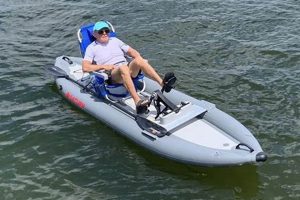
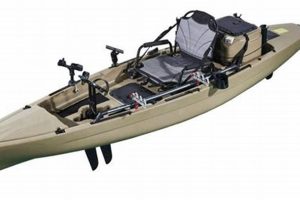
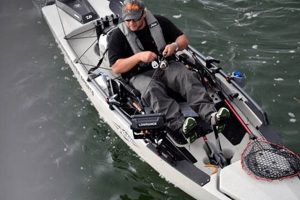
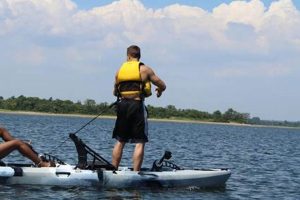
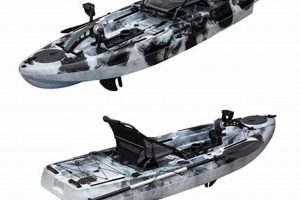
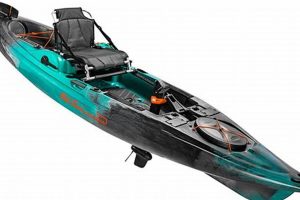
This specific model designates a kayak designed for fishing, manufactured by Erewhon, likely part of their Balsam series. The 12-foot length suggests stability and sufficient storage for fishing gear. The pedal-drive system differentiates it from traditional paddle kayaks, offering hands-free propulsion and maneuverability, beneficial for anglers. The inclusion of a paddle provides a backup propulsion method and allows for navigation in shallow water or areas with dense vegetation.
Pedal-driven kayaks offer significant advantages for fishing. The hands-free operation allows anglers to focus on casting, reeling, and landing fish. The increased speed and maneuverability compared to paddling can be advantageous when chasing fish or covering larger areas of water. Twelve-foot kayaks generally offer a good balance between stability and maneuverability. The Balsam series from Erewhon likely incorporates features specifically designed for fishing, such as rod holders, storage compartments, and potentially anchor trolleys or other specialized equipment mounts. This type of watercraft represents a significant advancement in kayak fishing technology, allowing for more efficient and enjoyable angling experiences.
This discussion will further explore the specific features, advantages, and potential drawbacks of this kayak model. Further topics include comparisons to other similar kayaks on the market, maintenance considerations, and recommended accessories. Anglers of all skill levels can benefit from understanding the functionalities and capabilities of this specialized fishing platform.
Tips for Utilizing a Pedal-Driven Fishing Kayak
Optimizing the use of a pedal-driven fishing kayak requires an understanding of its specific features and operational nuances. These tips offer guidance for enhanced performance and safety on the water.
Tip 1: Adjust Pedal Drive System: Ensure proper adjustment of the pedal drive system for optimal biomechanics and comfort. Correct seat positioning relative to the pedals is crucial for efficient power transfer and preventing fatigue. Experiment with different seat positions during practice sessions.
Tip 2: Master Rudder Control: Practice maneuvering the rudder to maintain course and compensate for wind or current. Smooth, controlled rudder adjustments are essential for precise navigation, especially when fishing in challenging conditions.
Tip 3: Plan Fishing Routes Strategically: Before launching, consider water depth, currents, wind direction, and potential fishing hotspots. Pre-planning routes maximizes fishing time and minimizes unnecessary paddling or pedaling.
Tip 4: Utilize Anchor or Stake-Out Pole Effectively: Learn how to effectively deploy an anchor or stake-out pole to maintain position in desired fishing locations. This is particularly important in currents or windy conditions.
Tip 5: Distribute Gear Evenly: Proper weight distribution enhances stability and performance. Distribute fishing gear, tackle boxes, and other equipment evenly throughout the kayak to prevent imbalances.
Tip 6: Practice Emergency Procedures: Familiarize oneself with self-rescue techniques and emergency procedures specific to pedal kayaks. Practice re-entering the kayak from the water in a controlled environment.
Tip 7: Maintain the Pedal Drive System: Regular maintenance of the pedal drive system ensures smooth and reliable operation. Rinse the system with fresh water after each use, especially in saltwater environments. Consult the manufacturer’s guidelines for lubrication and other maintenance tasks.
By adhering to these guidelines, anglers can maximize the advantages of their pedal-driven fishing kayak, improve fishing efficiency, and ensure a safe and enjoyable experience on the water.
This information provides a foundational understanding for effective kayak fishing. Further research and practice will contribute to mastery of this specialized angling technique.
1. Erewhon (Brand)

Erewhon’s presence as the brand name immediately establishes the kayak’s lineage and expected quality. Erewhon, known for its outdoor and sporting equipment, particularly in watersports, lends credibility to the “erehwon balsam fishing pedal 12′ kayak with paddle” as a specialized product. This connection implies a design philosophy focused on performance, durability, and features tailored for the intended usefishing. Consumers associate brand recognition with specific expectations; in this case, the Erewhon name suggests a higher-tier product compared to lesser-known or generic brands. This brand association influences purchasing decisions and contributes to the overall perception of value. For example, an angler seeking a reliable, well-designed fishing kayak might prioritize Erewhon due to its established reputation within the paddling community.
Understanding the brand’s history and product lines provides further context. Erewhon might specialize in kayaks designed for specific niches, such as fishing or recreational paddling. This specialization often translates into design features tailored to those activities. In the case of the fishing kayak, this could manifest in specialized seating, rod holders, storage compartments, and other fishing-specific accessories. Erewhon’s focus, as reflected in its product offerings, directly impacts the features and functionality of the “erehwon balsam fishing pedal 12′ kayak with paddle.” The brand’s commitment to innovation and quality control influences the materials used, construction methods, and overall performance characteristics. This understanding allows consumers to make informed decisions based on brand reputation and product lineage.
In essence, the “Erewhon” brand designation signifies more than just a name; it represents a set of expectations regarding quality, design, and performance. This association directly influences consumer perception and purchasing decisions. The brand’s history of innovation and specialization within watersports contributes to the perceived value and expected capabilities of the “erehwon balsam fishing pedal 12′ kayak with paddle.” Analyzing this brand association provides crucial insights into the kayak’s intended purpose and target audience within the broader context of the fishing kayak market. This understanding empowers consumers to make informed decisions based on their specific needs and priorities.
2. Balsam Series
“Balsam Series” designates a specific product line within the Erewhon brand. This categorization implies shared design philosophies, target demographics, and feature sets across multiple kayak models. Understanding the Balsam Series’ characteristics provides crucial context for evaluating the “erehwon balsam fishing pedal 12′ kayak with paddle.” For instance, if the Balsam Series emphasizes stability and load capacity, this suggests the subject kayak prioritizes these attributes. Conversely, a series known for speed and maneuverability would indicate different design priorities. Real-world examples might include other kayaks within the Balsam Series, such as recreational paddling models or different-sized fishing kayaks. Examining these related products can reveal shared design elements and construction techniques, offering further insights into the “erehwon balsam fishing pedal 12′ kayak with paddle.” This understanding enables potential buyers to assess whether the Balsam Series aligns with their individual needs and preferences. For instance, an angler seeking a stable fishing platform might find the Balsam Series appealing, while someone prioritizing speed might explore a different Erewhon product line.
The “Balsam Series” designation functions as more than just a categorization; it represents a cohesive design philosophy within the Erewhon brand. This series likely incorporates specific hull designs, material choices, and feature sets tailored to a particular paddling style or activity. In the case of a fishing kayak, this might include features like rod holders, integrated tackle storage, and a stable hull design optimized for casting and reeling. Consider a hypothetical comparison: the “Balsam Series” might prioritize stability and load capacity, while another Erewhon series, perhaps the “Cedar Series,” emphasizes speed and maneuverability. This distinction allows consumers to select kayaks based on specific needs and paddling styles. The practical significance of understanding the Balsam Series lies in its predictive power. Knowing the series’ characteristics helps potential buyers anticipate the performance and features of the “erehwon balsam fishing pedal 12′ kayak with paddle” before even examining the specific model in detail. This preemptive understanding streamlines the decision-making process.
In summary, “Balsam Series” provides essential context for evaluating the “erehwon balsam fishing pedal 12′ kayak with paddle.” It signifies shared design principles and target demographics within the Erewhon brand, offering insights into the kayak’s intended use and performance characteristics. Analyzing the Balsam Series alongside other Erewhon product lines helps consumers identify kayaks best suited to their individual needs. This informed approach to kayak selection maximizes the likelihood of a satisfying purchase and enhances the overall paddling experience. Further research into the specific attributes of the Balsam Series will provide a deeper understanding of its design philosophy and target audience within the broader kayaking market.
3. Pedal-driven propulsion

“Pedal-driven propulsion” represents a core feature of the “erehwon balsam fishing pedal 12′ kayak with paddle,” distinguishing it from traditional paddle-powered kayaks. This propulsion system significantly impacts the kayak’s functionality, performance, and suitability for fishing applications. Analyzing the mechanics, advantages, and limitations of pedal drive provides crucial insights into this kayak’s capabilities and intended usage.
- Hands-Free Operation
Pedal drive allows anglers to maintain constant forward motion or maneuver without using their hands. This hands-free operation proves invaluable for fishing, enabling simultaneous casting, reeling, and handling of fishing gear. Imagine an angler fighting a fish; pedal propulsion allows for maintaining tension and control while keeping both hands engaged in the process. This advantage distinguishes pedal kayaks from paddle kayaks, where maneuvering requires pausing fishing activities. This aspect significantly enhances fishing efficiency and overall experience.
- Increased Speed and Range
Pedal-driven systems often provide higher sustained speeds compared to paddling, allowing anglers to cover larger areas of water more quickly. This expanded range benefits activities like trolling or exploring multiple fishing spots. Consider a large lake or reservoir; pedal drive enables efficient travel between distant locations, maximizing fishing opportunities within a limited timeframe. This increased speed and range differentiates pedal kayaks from paddle kayaks, offering advantages in covering water and searching for fish. The impact on fishing success can be substantial, especially in larger bodies of water.
- Maneuverability and Control
Pedal-driven kayaks often incorporate rudder systems for precise steering, allowing anglers to navigate tight spaces, hold position against currents, or adjust their approach to fishing targets. Consider navigating a narrow channel or maintaining position near a submerged structure; the rudder control offered by pedal drive enables fine-tuned adjustments, critical for successful fishing in complex environments. This maneuverability surpasses that of paddle kayaks, providing enhanced control and precision essential for navigating challenging waterways and optimizing fishing strategies.
- Maintenance and Complexity
While pedal-driven systems offer advantages, they introduce mechanical complexity compared to traditional paddles. This complexity can lead to increased maintenance requirements and potential repair costs. For example, saltwater environments necessitate thorough rinsing and occasional lubrication of the pedal drive system to prevent corrosion and ensure optimal performance. This maintenance aspect differentiates pedal kayaks from paddle kayaks, requiring additional care and attention. While offering enhanced functionality, the added complexity requires consideration regarding upkeep and potential maintenance costs.
These facets collectively demonstrate the integral role of pedal-driven propulsion in defining the “erehwon balsam fishing pedal 12′ kayak with paddle.” While enhancing fishing capabilities through hands-free operation, increased speed and range, and enhanced maneuverability, the added complexity of the pedal drive system requires consideration regarding maintenance and potential repair. Weighing these advantages and disadvantages against individual fishing needs and preferences becomes crucial in determining the suitability of this specialized kayak.
4. 12-foot length

The 12-foot length of the “erehwon balsam fishing pedal 12′ kayak with paddle” represents a crucial design element influencing its performance characteristics and suitability for specific fishing applications. This length impacts stability, maneuverability, tracking, and storage capacity, all essential factors to consider when evaluating a fishing kayak. Analyzing the implications of this length provides valuable insights into the kayak’s intended use and target audience.
- Stability
A 12-foot kayak generally offers good stability, a crucial factor for fishing, particularly when standing to cast or reel. Compared to shorter kayaks, the increased length provides a larger platform, reducing the likelihood of tipping. This stability enhances angler confidence and allows for more dynamic movements while fishing. For example, standing to sight-cast in shallow water becomes more feasible in a stable 12-foot kayak. This length contributes to a secure and balanced fishing platform, facilitating various fishing techniques.
- Maneuverability
While offering good stability, a 12-foot kayak might exhibit slightly reduced maneuverability compared to shorter models. Turning radius increases with length, requiring more effort or rudder input for sharp turns. Navigating tight, confined spaces, such as narrow creeks or mangrove tunnels, might present challenges. However, the inclusion of a pedal-drive system and rudder, as present in the “erehwon balsam fishing pedal 12′ kayak with paddle,” can mitigate this reduced maneuverability. The pedal drive allows for quick directional adjustments, while the rudder provides precise control, enhancing maneuverability in challenging environments.
- Tracking and Speed
Longer kayaks, like the 12-foot model in question, generally track straighter and maintain momentum more effectively than shorter kayaks. This enhanced tracking reduces the need for constant course corrections, especially in open water or when paddling against wind or current. The increased waterline length also contributes to potentially higher speeds, beneficial for covering larger distances or trolling. Consider paddling across a large lake; the 12-foot length promotes efficient forward movement, conserving energy and reducing paddling time compared to a shorter kayak. This aspect contributes to efficient travel and exploration of broader fishing areas.
- Storage Capacity
The 12-foot length typically translates into increased storage capacity compared to shorter kayaks. This additional space accommodates fishing gear, tackle boxes, and other essential equipment. For example, longer storage wells can accommodate fishing rods without disassembly, while larger hatches offer ample space for tackle boxes and other supplies. This increased storage capacity proves invaluable for longer fishing trips or situations requiring specialized equipment. This aspect directly contributes to the kayak’s practicality and suitability for extended fishing excursions.
In summary, the 12-foot length of the “erehwon balsam fishing pedal 12′ kayak with paddle” represents a balanced design choice, offering a compromise between stability, maneuverability, speed, and storage capacity. This length makes it well-suited for a variety of fishing environments, from open lakes and reservoirs to slower-moving rivers and coastal areas. While slightly less maneuverable than shorter kayaks, the inclusion of a pedal drive and rudder system compensates for this, enhancing its versatility and making it a suitable platform for diverse fishing applications. This analysis of the length’s implications contributes to a comprehensive understanding of the kayak’s design philosophy and target audience within the fishing kayak market.
5. Fishing-oriented design
“Fishing-oriented design” distinguishes the “erehwon balsam fishing pedal 12′ kayak with paddle” from recreational or touring kayaks. This design philosophy prioritizes features and functionalities that enhance angling efficiency, comfort, and overall experience. Analysis of these specialized design elements provides crucial insight into the kayak’s intended purpose and target audience.
- Rod Holders
Integrated rod holders represent a fundamental element of fishing kayak design. These specialized mounts secure fishing rods, freeing hands for other tasks like paddling, maneuvering, or handling tackle. Flush-mounted rod holders minimize interference with paddling strokes, while adjustable rod holders allow anglers to position rods at optimal angles for trolling or still-fishing. The “erehwon balsam fishing pedal 12′ kayak with paddle” likely incorporates multiple rod holders, facilitating diverse fishing techniques and accommodating various rod types. This feature exemplifies the kayak’s focus on practicality and user convenience for anglers.
- Tackle Storage
Dedicated tackle storage compartments represent another crucial design element. These compartments provide organized storage for lures, hooks, weights, and other essential fishing accessories. Dry storage compartments protect sensitive electronics or gear from water damage. Easy-access storage compartments allow anglers to quickly retrieve necessary items without disrupting their fishing flow. The “erehwon balsam fishing pedal 12′ kayak with paddle” likely features various storage compartments designed specifically for fishing tackle, enhancing organization and efficiency on the water.
- Stability and Hull Design
Fishing kayaks often feature wider, flatter hulls designed to maximize stability. This enhanced stability proves crucial for standing to cast, fighting fish, or landing catches. The “erehwon balsam fishing pedal 12′ kayak with paddle’s” 12-foot length contributes to its stability, offering a secure platform for anglers. This stability-focused hull design directly addresses the specific needs of anglers, allowing for more dynamic movements and a secure fishing experience.
- Other Specialized Features
Fishing-oriented kayaks often include additional features like anchor trolleys, gear tracks, and transducer mounts. Anchor trolleys allow controlled drifting and positioning in current. Gear tracks provide mounting points for fish finders, GPS units, and other accessories. Transducer mounts facilitate the installation of sonar systems for locating fish. While the specific features of the “erehwon balsam fishing pedal 12′ kayak with paddle” require further investigation, its fishing-oriented design suggests the inclusion of such specialized components, enhancing its versatility and functionality for serious anglers. These additions reflect a commitment to optimizing the kayak’s utility for diverse fishing scenarios.
These fishing-oriented design elements collectively define the “erehwon balsam fishing pedal 12′ kayak with paddle” as a specialized tool for anglers. Each feature contributes to enhanced efficiency, comfort, and overall fishing experience. From integrated rod holders and tackle storage to stability-focused hull designs and specialized mounting options, this kayak demonstrates a design philosophy centered around the practical needs of anglers. This focus differentiates it from recreational or touring kayaks and reinforces its intended purpose within the fishing kayak market.
6. Included paddle

The inclusion of a paddle with the “erehwon balsam fishing pedal 12′ kayak with paddle,” despite its pedal-driven propulsion system, represents a crucial design consideration with practical implications for anglers. This seemingly redundant feature serves several essential purposes, enhancing the kayak’s versatility and addressing potential limitations of the primary propulsion system. The connection between the included paddle and the overall functionality of the kayak warrants careful examination.
The paddle functions as a backup propulsion method in situations where the pedal drive proves impractical or ineffective. Shallow water, dense vegetation, or mechanical malfunction can render pedal drive unusable. In such scenarios, the paddle provides an alternative means of propulsion, ensuring continued mobility and preventing anglers from becoming stranded. Consider navigating shallow, weedy flats or encountering an unexpected mechanical issue with the pedal drive; the included paddle enables continued fishing and safe return to shore. This backup functionality enhances safety and provides peace of mind, crucial aspects of any on-the-water experience. Furthermore, the paddle facilitates precise maneuvering in tight spaces or situations requiring delicate control. Docking, navigating through narrow channels, or approaching fish stealthily often necessitates the nuanced control offered by a paddle. While the pedal drive excels in open water or sustained travel, the paddle complements its capabilities, providing an alternative for situations requiring fine-tuned adjustments. This nuanced control enhances angling precision and maximizes fishing success in specific scenarios. Lastly, the paddle serves as an essential safety item in emergency situations. Capsizing or encountering unforeseen circumstances might necessitate using the paddle for self-rescue or signaling for assistance. Its presence adds an extra layer of security, crucial for mitigating potential risks associated with on-water activities. This safety aspect underscores the importance of the included paddle beyond its primary propulsion role.
In summary, the inclusion of a paddle with the “erehwon balsam fishing pedal 12′ kayak with paddle” demonstrates a thoughtful design approach that addresses practical considerations and prioritizes angler safety. While the pedal drive system provides the primary means of propulsion, the paddle functions as a crucial backup, enhances maneuverability in specific situations, and serves as an essential safety device. Understanding the multifaceted role of the included paddle underscores its significance as an integral component of this specialized fishing kayak, contributing to its overall versatility, functionality, and user safety. This seemingly simple inclusion significantly impacts the kayak’s usability and reinforces its suitability for a wide range of fishing environments and scenarios.
Frequently Asked Questions
This FAQ section addresses common inquiries regarding the Erewhon Balsam fishing pedal-driven 12-foot kayak with paddle, providing concise and informative responses.
Question 1: What differentiates this kayak from other pedal-driven fishing kayaks on the market?
The Erewhon Balsam series typically emphasizes stability and load capacity, potentially differentiating it from kayaks prioritizing speed or maneuverability. Specific features, such as storage options and included accessories, might further distinguish it within the pedal-driven fishing kayak market segment. Direct comparisons with competitor models require further research based on individual needs and priorities.
Question 2: How does the pedal-drive system perform in shallow water or areas with submerged obstacles?
While pedal drives offer advantages in open water, shallow water or submerged obstacles can pose challenges. The included paddle serves as a crucial alternative propulsion method in such situations. Operational guidelines and practical tips for navigating shallows or avoiding underwater obstructions warrant further investigation.
Question 3: What maintenance is required for the pedal-drive system, particularly in saltwater environments?
Saltwater environments necessitate thorough rinsing of the pedal drive system after each use. Regular lubrication and periodic inspections, as outlined in the manufacturer’s guidelines, are crucial for preventing corrosion and ensuring long-term functionality. Specific maintenance procedures and recommended lubricants require further consultation of the product manual.
Question 4: What is the maximum weight capacity of the kayak, and how does weight distribution affect performance?
The kayak’s maximum weight capacity should be clearly specified in the product specifications. Proper weight distribution is crucial for stability and optimal performance. Exceeding the weight limit or uneven distribution can compromise stability and handling, particularly in challenging conditions. Guidelines for proper weight distribution and recommended loading practices require further investigation within the product documentation.
Question 5: Are there any recommended accessories for enhancing the fishing experience with this kayak?
Recommended accessories might include rod holders, fish finders, GPS units, anchor systems, and specialized storage solutions. Specific compatibility and optimal configurations depend on individual fishing styles and preferences. Further research into compatible accessories and recommended configurations based on specific angling needs is advised.
Question 6: What safety precautions should be taken when operating this kayak in various water conditions?
Standard safety precautions for kayaking apply, including wearing a personal flotation device, carrying communication devices, and being aware of weather conditions. Specific safety considerations related to pedal drive systems and fishing activities require further investigation. Consulting relevant safety guidelines and resources specific to kayak fishing is highly recommended.
This FAQ section provides a starting point for understanding key aspects of the Erewhon Balsam fishing kayak. Consulting the product documentation and conducting further research are essential steps in making informed decisions regarding its suitability for individual needs.
Further sections will explore specific features, user experiences, and comparisons with alternative kayak models.
Conclusion
This exploration has provided a comprehensive overview of the “erehwon balsam fishing pedal 12′ kayak with paddle.” Key features, including the pedal-drive system, fishing-oriented design elements, and the significance of the included paddle, have been examined in detail. The analysis considered the implications of the kayak’s 12-foot length regarding stability, maneuverability, and storage capacity. Furthermore, the context of the Erewhon brand and Balsam series within the broader kayaking market has been established, providing a framework for evaluating the kayak’s intended purpose and target audience. Frequently asked questions addressed practical considerations regarding maintenance, accessory compatibility, and safety precautions.
Potential purchasers are encouraged to conduct further research, compare specifications with alternative models, and consider individual fishing styles and preferences before making a final decision. Practical on-water experience provides invaluable insights into the kayak’s performance characteristics and suitability for specific fishing environments. The information presented here serves as a foundational resource for understanding the key features and functionalities of the “erehwon balsam fishing pedal 12′ kayak with paddle,” empowering informed decision-making and contributing to a more informed purchasing process within the specialized realm of fishing kayaks.