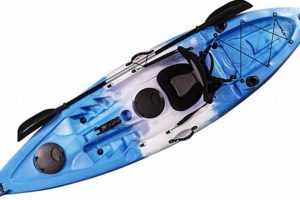
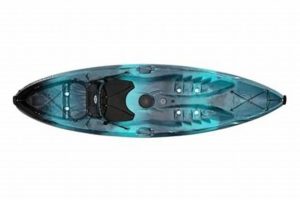
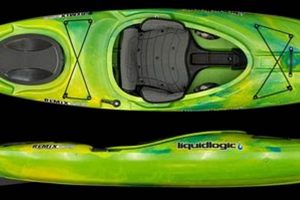
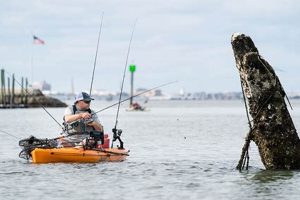
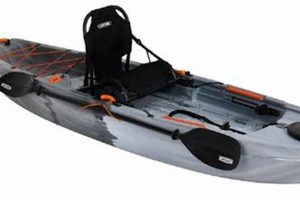
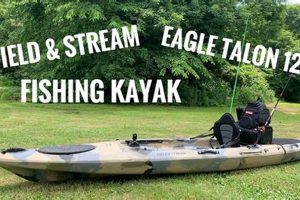
This specific model is a sit-on-top vessel designed for angling. Characterized by its 10.5-foot length, it offers stability and maneuverability on the water. Such kayaks are typically constructed from durable materials like high-density polyethylene, and often feature specialized accessories such as rod holders, storage compartments, and adjustable seating systems. They cater to anglers seeking a balance between performance and comfort in various aquatic environments.
Smaller watercraft like this one provide an accessible and engaging way to experience fishing. They allow anglers to explore shallow waters, navigate narrow waterways, and reach areas inaccessible to larger boats. The compact size often translates to easier transport and storage, reducing logistical barriers. Furthermore, these kayaks contribute to a more intimate connection with nature and offer a physically active approach to the sport.
The subsequent sections will delve deeper into the specifics of this kayak model, exploring its design features, performance characteristics, and suitability for different fishing styles. Discussions on essential accessories, safety considerations, and maintenance procedures will also be provided.
Tips for Kayak Fishing
Proper preparation and technique enhance safety and enjoyment while kayak fishing. These tips provide guidance for a successful outing.
Tip 1: Plan and Research: Check weather forecasts, water conditions, and local regulations before embarking on a fishing trip. Understanding potential hazards and access points ensures a safer and more productive experience.
Tip 2: Prioritize Safety Gear: A personal flotation device (PFD) is essential. Carrying a whistle, signaling device, and first-aid kit is also recommended. Inform someone of the intended fishing location and estimated return time.
Tip 3: Balance and Stability: Distribute weight evenly within the kayak to maintain stability. Avoid sudden movements and practice entering and exiting the kayak in shallow water before venturing further out.
Tip 4: Efficient Paddling Techniques: Use proper paddling techniques to conserve energy and navigate effectively. Maintain a consistent rhythm and engage core muscles for power.
Tip 5: Respect Wildlife and the Environment: Practice catch-and-release fishing whenever possible. Dispose of fishing line and other waste responsibly to preserve the natural environment.
Tip 6: Master Anchor Positioning: Learn effective anchoring techniques to maintain position in desired fishing spots, especially in currents or windy conditions. Consider using a drift sock or stake-out pole in shallow water.
Tip 7: Organize Fishing Gear: Keep fishing gear organized and accessible. Utilize rod holders, tackle boxes, and storage compartments to prevent clutter and maximize efficiency while on the water.
Adhering to these guidelines promotes a safe, enjoyable, and environmentally responsible kayak fishing experience. Preparation and mindful practices contribute significantly to a successful outing.
The following section will summarize key findings and offer concluding remarks on optimizing kayak fishing practices.
1. Stability

Stability is a critical factor in kayak fishing, directly influencing angler safety, comfort, and fishing effectiveness. For the Perception Sound 10.5 fishing kayak, stability considerations are paramount, especially given its intended use in diverse aquatic environments. Understanding the factors contributing to stability enhances user experience and promotes confident angling.
- Hull Design:
The hull design plays a pivotal role in a kayak’s stability. The Sound 10.5 typically features a wider, flatter hull providing primary stability, resisting initial tipping. This design characteristic is beneficial for casting, reeling, and landing fish, enabling anglers to maintain balance during these activities. However, this design can sometimes compromise maneuverability in tight spaces or swift currents.
- Center of Gravity:
A lower center of gravity enhances stability. The sit-on-top design of the Sound 10.5 naturally contributes to a lower center of gravity compared to sit-inside kayaks. Weight distribution within the kayak further influences stability. Evenly distributing gear and maintaining a balanced posture minimize the risk of capsizing. Shifting body weight can also be used to counteract external forces, such as wind or waves.
- Water Conditions:
Calm, flat water generally presents fewer stability challenges. However, wind, waves, and currents can significantly impact kayak stability. The Sound 10.5’s wider hull provides a degree of stability in moderate conditions. However, caution and appropriate safety measures are crucial in rougher waters. Understanding limitations and adapting to changing conditions ensures a safe and successful fishing experience.
- Angler Experience:
An angler’s experience level and familiarity with kayak fishing influences stability perceptions and outcomes. Beginners may find the initial instability disconcerting, while experienced kayakers develop a feel for maintaining balance. Practicing basic maneuvers and understanding how to react to unexpected movements builds confidence and enhances stability control. Starting in calm, shallow water allows for acclimatization and skill development before venturing into more challenging environments.
The interplay of these factors determines the overall stability of the Perception Sound 10.5. While the kayak’s design contributes inherent stability characteristics, external factors and angler behavior also play significant roles. Understanding these elements allows anglers to maximize stability, enhancing safety and optimizing fishing performance in diverse on-water environments.
2. Maneuverability

Maneuverability is a crucial performance attribute in kayak fishing, impacting an angler’s ability to navigate various water conditions and access desired fishing locations. For the Perception Sound 10.5 fishing kayak, maneuverability considerations directly influence its suitability for different fishing environments and techniques. Understanding the factors affecting maneuverability facilitates informed decision-making and enhances on-water performance.
- Hull Design:
The hull design significantly influences a kayak’s maneuverability. The Sound 10.5’s hull, while prioritizing stability, may exhibit moderate turning performance. Shorter kayaks generally turn more quickly than longer ones. A shallower hull tends to be more responsive to paddle strokes, enabling tighter turns, while a deeper hull tracks more straightly but requires more effort to turn. The Sound 10.5’s hull design represents a balance between stability and maneuverability, catering to a range of fishing situations.
- Length and Width:
The kayak’s length and width affect its maneuverability. The 10.5-foot length of the Sound 10.5 offers a compromise between tracking and turning. Shorter kayaks turn more easily, while longer kayaks maintain a straighter course. Width also plays a role; narrower kayaks tend to be more nimble, while wider kayaks provide greater stability but may require more effort to turn.
- Water Conditions:
Water conditions, including current, wind, and obstacles, influence maneuverability. Strong currents or winds can challenge a kayak’s tracking and turning capabilities. The Sound 10.5, with its balanced design, performs adequately in moderate conditions. However, navigating tight spaces or complex waterways may require more deliberate paddling and maneuvering techniques. Adapting to prevailing conditions is essential for efficient and safe navigation.
- Paddling Technique:
Effective paddling techniques are essential for maximizing maneuverability. Proper stroke mechanics and efficient use of sweep strokes and rudder strokes enhance turning performance. Understanding how to leverage body weight and paddle angle improves control and responsiveness. Practicing various paddling techniques allows anglers to optimize the kayak’s maneuverability potential and navigate efficiently in different situations.
The interplay of these factors determines the overall maneuverability of the Perception Sound 10.5 fishing kayak. While its design prioritizes stability, understanding the influence of hull characteristics, environmental conditions, and paddling techniques allows anglers to effectively navigate and position themselves for optimal fishing success. This kayak’s maneuverability characteristics make it suitable for a variety of fishing environments, though anglers should consider the specific conditions and their individual paddling skills when evaluating its suitability for particular fishing scenarios.
3. Comfort
Comfort significantly impacts the overall fishing experience, especially during longer outings. The Perception Sound 10.5 fishing kayak addresses comfort through several key design features. The seat design plays a crucial role. An adjustable seat with adequate back support allows anglers to customize their position, reducing fatigue and strain during extended periods on the water. Sufficient legroom and strategically placed footrests contribute to overall comfort and allow for adjustments throughout the day. Cushioning and breathable materials enhance comfort in various weather conditions. A comfortable angler can focus on fishing, maximizing enjoyment and success on the water.
Beyond the seat, other design elements contribute to angler comfort. The kayak’s stability plays a role, as a stable platform reduces fatigue associated with constant adjustments and balancing. Accessibility of storage compartments and fishing accessories minimizes unnecessary movement and strain, allowing anglers to maintain a comfortable posture. Consider, for example, an angler spending several hours on the water. A well-designed seat, coupled with easy access to tackle and gear, reduces physical strain, enabling sustained focus on fishing. Conversely, an uncomfortable seating position can lead to back pain, reduced fishing efficiency, and a shortened trip.
The Perception Sound 10.5 fishing kayak prioritizes comfort through its design features. The adjustable seat, ample legroom, and strategically placed footrests contribute to an ergonomic experience, reducing fatigue and promoting sustained focus during fishing trips. These comfort features, combined with the kayak’s stability and convenient storage options, enhance the overall fishing experience, allowing anglers to fully enjoy their time on the water. Understanding these comfort features enables informed decision-making and contributes to a more positive and productive angling experience.
4. Storage Capacity

Storage capacity directly impacts the practicality and functionality of a fishing kayak. The Perception Sound 10.5 fishing kayak addresses this need through integrated storage solutions designed for angling essentials. Ample storage enables anglers to carry tackle boxes, fishing rods, safety gear, and personal items. Dedicated compartments, such as a rear tank well and front hatch, offer organized storage, keeping gear secure and easily accessible. Consider an angler preparing for a full-day fishing trip. Sufficient storage accommodates essential equipment, including rods, reels, tackle boxes, and safety gear like a first-aid kit and signaling devices. Without adequate storage, anglers face limitations on gear choices, potentially compromising fishing effectiveness and safety.
The type and layout of storage influence organizational efficiency. Recessed rod holders secure rods during transport and allow for quick access while fishing. Bungee cords and tie-down points provide additional gear security, preventing loss or damage. A well-designed storage system contributes to a clutter-free deck, maximizing fishing space and enhancing angler comfort. For instance, dedicated storage for tackle boxes keeps lures and hooks organized and readily available, streamlining the fishing process and minimizing disruptions. Conversely, inadequate or poorly designed storage can lead to a cluttered deck, increasing the risk of tangles, lost gear, and frustration, ultimately detracting from the fishing experience.
The Perception Sound 10.5 fishing kayak offers practical storage solutions tailored to the needs of anglers. The combination of dedicated compartments, rod holders, and secure tie-down points provides ample and organized storage for essential fishing gear and personal items. This well-designed storage system enhances both functionality and on-water experience. Adequate storage capacity translates directly to a more organized, efficient, and ultimately more enjoyable fishing trip. Anglers can focus on the task at hand, confident that essential gear is readily available and securely stored.
5. Fishing Features
Specialized features distinguish fishing kayaks from recreational models. These features enhance angling efficiency and overall experience. The Perception Sound 10.5 fishing kayak incorporates several key features designed to cater specifically to the needs of anglers. Understanding these features provides insight into the kayak’s functionality and suitability for various fishing styles and environments.
- Rod Holders:
Integrated rod holders provide secure storage and quick access to fishing rods. Flush-mounted and adjustable rod holders accommodate different fishing techniques and preferences. Multiple rod holders allow anglers to carry various rod setups for different target species or fishing styles. Securely stored rods prevent tangling and minimize the risk of damage or loss during transport and on the water.
- Tackle Storage:
Dedicated tackle storage compartments keep lures, hooks, and other essential fishing gear organized and readily accessible. Dry storage compartments protect sensitive items from water damage. Strategically placed storage compartments minimize movement and disruption while fishing, allowing for efficient tackle changes and adjustments. Easy access to tackle enhances fishing efficiency and maximizes time spent actively fishing.
- Gear Tracks and Mounting Points:
Gear tracks and mounting points allow for customization and the addition of accessories such as fish finders, GPS units, and camera mounts. These adaptable features enhance the kayak’s versatility, allowing anglers to tailor their setup to specific needs and preferences. The ability to add or remove accessories provides flexibility for different fishing styles and environments.
- Paddle Holders/Parks:
Dedicated paddle holders or parks secure the paddle when not in use, freeing hands for fishing and preventing accidental paddle loss. Secure paddle storage minimizes clutter on the deck, maximizing fishing space and reducing the risk of entanglement. Easily accessible paddle storage facilitates smooth transitions between paddling and fishing.
These fishing-specific features contribute significantly to the overall functionality and effectiveness of the Perception Sound 10.5 fishing kayak. The combination of rod holders, tackle storage, gear tracks, and paddle parks enhances angling efficiency, organization, and overall on-water experience. These features, combined with the kayak’s stability and maneuverability, make it a suitable platform for various fishing styles and environments.
6. Durability
Durability is a critical factor influencing the lifespan and overall value of a kayak, especially in demanding fishing environments. For the Perception Sound 10.5 fishing kayak, durability considerations are paramount. This kayak is often used in diverse conditions, encountering various environmental factors that can contribute to wear and tear. Understanding the factors contributing to the kayak’s durability informs purchasing decisions and ensures long-term performance.
- Material Selection:
The choice of construction material significantly impacts a kayak’s durability. The Perception Sound 10.5 typically utilizes high-density polyethylene (HDPE), a robust thermoplastic known for its impact resistance, UV resistance, and overall resilience. HDPE can withstand impacts from rocks, logs, and other obstacles commonly encountered in fishing environments. This material’s inherent durability contributes to the kayak’s longevity, minimizing the risk of damage and extending its usable lifespan.
- Construction Process:
The construction process influences the overall structural integrity of the kayak. Rotational molding, a common manufacturing technique for HDPE kayaks, creates a seamless, one-piece hull with uniform wall thickness. This process eliminates weak points and enhances overall durability, making the kayak more resistant to stress cracking and deformation. A robust construction process ensures the kayak can withstand the rigors of regular use and transport.
- UV Resistance:
Exposure to ultraviolet (UV) radiation from sunlight can degrade kayak materials over time, causing fading, brittleness, and reduced structural integrity. The Perception Sound 10.5 incorporates UV inhibitors in its construction, protecting it from the damaging effects of sunlight. UV resistance preserves the kayak’s appearance and structural integrity, extending its lifespan and maintaining its performance characteristics over time.
- Maintenance and Care:
Proper maintenance and care contribute significantly to a kayak’s durability. Regular cleaning, rinsing with fresh water after use, and proper storage practices protect the kayak from environmental factors and premature wear and tear. Addressing minor scratches or abrasions promptly prevents further damage and preserves the kayak’s structural integrity. Proper care maximizes the kayak’s lifespan and ensures optimal performance over time.
The Perception Sound 10.5 fishing kayak prioritizes durability through its material selection, construction process, UV resistance, and recommended maintenance practices. These factors contribute to a robust and reliable kayak capable of withstanding the demands of diverse fishing environments. The kayak’s durability ensures long-term performance and value, making it a suitable investment for anglers seeking a reliable and long-lasting fishing platform.
7. Portability
Portability significantly influences the accessibility and overall convenience of a kayak, particularly for anglers who frequently transport their vessels to various fishing locations. For the Perception Sound 10.5 fishing kayak, portability considerations are essential. Understanding the factors affecting portability, including weight, dimensions, and available transportation solutions, enhances the overall fishing experience by streamlining logistics and expanding access to diverse fishing spots.
- Weight and Dimensions:
The kayak’s weight and dimensions directly impact its portability. The Perception Sound 10.5, while offering stability and fishing features, necessitates consideration of its weight and length when transporting. A lighter kayak is easier to load, unload, and carry, particularly for individuals transporting it solo. Shorter kayaks are generally easier to maneuver and require less storage space. Understanding the kayak’s dimensions aids in selecting appropriate transportation methods and assessing its compatibility with available vehicle space.
- Transportation Methods:
Various transportation methods exist for kayaks, each with its own advantages and limitations. Roof racks, trailers, and truck beds offer common transport solutions. The Sound 10.5’s length and weight influence the suitability of different methods. Roof racks provide a versatile option for many vehicles, but require proper loading and securing techniques. Trailers offer greater carrying capacity for longer distances, while truck beds provide a convenient option for shorter trips. Evaluating available transport options and their compatibility with the kayak’s dimensions is crucial for safe and efficient transport.
- Launch and Landing Considerations:
Portability extends beyond transportation to encompass launch and landing considerations. The kayak’s weight and hull design affect its ease of launching and landing in different environments. Shallow-water access points, boat ramps, and shoreline conditions influence the practicality of using the kayak in specific locations. A lighter kayak is generally easier to maneuver in shallow water or across uneven terrain, while a wider hull may provide more stability during launching and landing.
- Storage Solutions:
Storage considerations are integral to portability. The kayak’s dimensions dictate required storage space, influencing whether garage storage, outdoor storage, or alternative solutions are necessary. Compact storage options, such as vertical or overhead storage racks, can maximize space efficiency. Consideration of storage solutions ensures the kayak’s protection when not in use and contributes to overall convenience.
The portability of the Perception Sound 10.5 fishing kayak, while influenced by its size and weight, benefits from various transportation and storage solutions. Careful consideration of these factors allows anglers to effectively transport and store the kayak, maximizing access to preferred fishing locations. Ultimately, understanding the kayak’s portability characteristics contributes to a more convenient and enjoyable fishing experience.
Frequently Asked Questions
This section addresses common inquiries regarding the Perception Sound 10.5 fishing kayak, providing concise and informative responses to facilitate informed decision-making.
Question 1: What is the weight capacity of the kayak?
The weight capacity typically ranges from 325 to 375 pounds, encompassing angler weight, gear, and any additional cargo. Exceeding this limit can compromise stability and performance.
Question 2: Is this kayak suitable for ocean use?
While designed primarily for calmer waters, careful consideration of weather conditions and appropriate safety precautions can allow for coastal use in sheltered areas. Open ocean use is generally not recommended.
Question 3: What materials are used in its construction?
The kayak is typically constructed from high-density polyethylene (HDPE), a durable thermoplastic known for its impact resistance and UV stability.
Question 4: How does it perform in windy conditions?
The kayak’s wider hull provides reasonable stability in moderate winds. However, strong winds can significantly impact tracking and maneuverability.
Question 5: What are the recommended maintenance procedures?
Regular rinsing with fresh water after each use and proper storage practices are recommended to maximize lifespan and performance. Periodic inspection for damage and prompt repairs are also advisable.
Question 6: What accessories are compatible with this kayak?
A range of accessories, including rod holders, fish finders, anchors, and storage crates, can enhance functionality. Compatibility depends on specific mounting options and individual preferences.
These responses provide a general overview. Consulting specific product documentation and retailer information provides further clarification on details relevant to individual needs.
The subsequent section will offer concluding remarks on the Perception Sound 10.5 fishing kayak.
Conclusion
The Perception Sound 10.5 fishing kayak presents a compelling option for anglers seeking a balance of stability, maneuverability, and specialized features. Its design caters to diverse fishing styles and environments, while prioritizing comfort and storage capacity. Durability and portability considerations further enhance its practicality for frequent use and transport. Understanding the kayak’s performance characteristics, features, and limitations allows for informed evaluation and alignment with individual angler needs and preferences. Exploration of these aspects provides a comprehensive overview of this specific kayak model.
Careful consideration of these factors empowers informed purchasing decisions and contributes to a more fulfilling on-water experience. Potential users are encouraged to assess individual needs and conduct thorough research, including seeking expert advice and user reviews, before making a final purchase decision. This comprehensive understanding ensures selection of equipment optimized for individual fishing styles, contributing to enhanced angling success and enjoyment.