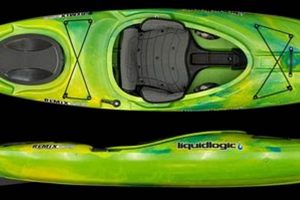
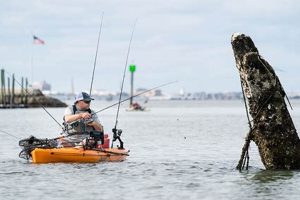
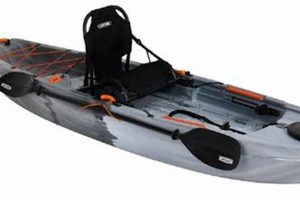
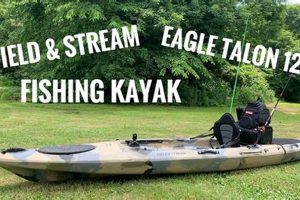
A sit-on-top vessel designed for angling offers stability and specialized features for anglers. These features often include rod holders, tackle storage, and anchor trolleys, enhancing the fishing experience. For instance, an angler might choose this type of watercraft for its open deck, providing ample space for casting and fighting fish.
The stability and specialized design of these kayaks contribute significantly to angler success and enjoyment. The hands-free operation provided by integrated features allows for efficient lure retrieval and fish landing. Historically, fishing from small, human-powered watercraft has been a common practice. Modern designs, however, incorporate advanced materials and engineering, resulting in enhanced performance and comfort for a wider range of fishing styles and environments.
This discussion will further explore specific design elements, popular models, and effective techniques for utilizing this type of watercraft, offering valuable insights for both novice and experienced anglers.
Tips for Angling from a Sit-on-Top Kayak
Proper preparation and technique are essential for a successful and enjoyable fishing experience from a sit-on-top kayak. The following tips offer valuable guidance for anglers of all skill levels.
Tip 1: Prioritize Stability: Choose a kayak with a wide and stable hull, especially for beginners or when fishing in rough waters. Consider adding outriggers for increased stability if needed. This provides a secure platform for casting and reeling.
Tip 2: Organize Tackle Efficiently: Utilize readily accessible storage compartments and tackle boxes designed specifically for kayaks. This keeps essential gear within easy reach and minimizes clutter.
Tip 3: Master Kayak Control: Practice paddling and maneuvering the kayak effectively before venturing out to fish. Understanding how the kayak responds to wind and currents allows for precise positioning.
Tip 4: Choose Appropriate Paddles: Select a paddle of appropriate length and blade shape for efficient paddling and reduced fatigue. Lightweight paddles with ergonomic grips enhance comfort during long outings.
Tip 5: Utilize Anchor Systems: Learn to effectively deploy and retrieve an anchor or anchor trolley system. This allows anglers to maintain position in desired fishing locations, especially in moving water.
Tip 6: Employ Safety Precautions: Always wear a personal flotation device (PFD) and carry essential safety equipment, such as a whistle, signaling device, and first-aid kit. Inform someone of your fishing plans and expected return time.
Tip 7: Respect the Environment: Practice catch-and-release whenever possible and adhere to local fishing regulations. Properly dispose of fishing line and other waste to preserve the natural environment.
By implementing these strategies, anglers can enhance their safety, efficiency, and overall enjoyment while fishing from a sit-on-top kayak. Preparation and mindful practice contribute significantly to a rewarding angling experience.
This information provides a foundation for a successful fishing trip. Further exploration of specific techniques and equipment choices can further refine an angler’s skills and knowledge.
1. Stability

Stability is a paramount consideration when selecting a fishing kayak, directly influencing angler safety, comfort, and fishing effectiveness. A stable platform allows for confident casting, reeling, and landing fish, especially in challenging conditions. This discussion explores the key facets contributing to kayak stability.
- Hull Design:
Hull design plays a critical role in stability. Wider hulls generally offer greater initial stability, resisting tipping during common fishing movements. A flatter hull provides a stable platform in calm waters, while a slightly rounded or V-shaped hull enhances performance in choppy conditions. For example, a wide, flat-bottomed hull is ideal for still-water fishing, while a moderate V-hull handles waves more effectively. The chosen hull design should align with the intended fishing environment.
- Center of Gravity:
A lower center of gravity enhances stability. Sitting closer to the waterline improves balance and reduces the likelihood of capsizing. Weight distribution within the kayak also affects stability. Properly distributing gear and maintaining a balanced posture contribute significantly to overall stability. For instance, storing heavier items low and centrally within the kayak improves balance. Anglers should be mindful of their body position and weight shifts, particularly when casting or retrieving fish.
- Kayak Width and Length:
Wider kayaks generally offer more stability than narrower models, providing a larger base of support. Shorter kayaks tend to be more maneuverable but can be less stable than longer kayaks. The optimal length and width depend on the angler’s size, weight, and intended fishing environment. A wider, shorter kayak might be suitable for smaller, calmer bodies of water, while a longer, narrower kayak might be preferred for open water or covering longer distances.
- Water Conditions:
Calm, flat water allows for greater stability compared to rough or choppy conditions. Wind, currents, and waves can significantly impact stability. Anglers should choose a kayak with appropriate stability characteristics for the anticipated water conditions. For instance, a highly stable kayak is essential for fishing in windy or wavy conditions, while a less stable, more maneuverable kayak might be suitable for calm lakes or rivers.
By understanding these interconnected factors, anglers can make informed decisions about kayak selection and usage, prioritizing stability for a safe and successful fishing experience. Choosing a kayak with appropriate stability features for the intended fishing environment and angler’s skill level enhances both performance and safety on the water.
2. Comfort

Comfort plays a pivotal role in the overall fishing kayak experience, directly influencing angler endurance, focus, and enjoyment. Discomfort can lead to premature fatigue, reduced concentration, and a diminished appreciation of the angling experience. This exploration examines the key elements that contribute to comfort in a fishing kayak and their practical implications.
Seat Design and Adjustability: A well-designed seat provides crucial support and cushioning, reducing pressure points and promoting proper posture. Adjustability allows anglers to customize the seat position for optimal comfort and paddling efficiency. A high-back seat with lumbar support and adjustable height enhances long-term comfort, reducing back strain and fatigue. For example, an angler spending hours on the water benefits significantly from a comfortable, adjustable seat. Conversely, an ill-fitting or poorly designed seat can detract considerably from the overall experience.
Legroom and Footrests: Adequate legroom and adjustable footrests accommodate anglers of varying heights and promote comfortable leg positioning. Proper leg support prevents cramping and allows for efficient paddling. Adjustable footrests accommodate varying leg lengths, ensuring a comfortable and efficient paddling position. Ample legroom allows anglers to shift position and stretch, reducing discomfort during long fishing trips.
Kayak Width and Stability: Kayak width influences seating space and stability. A wider kayak generally offers more room and a more stable platform, contributing to overall comfort. Increased stability reduces the need for constant adjustments and enhances angler confidence. This is particularly beneficial for anglers who prefer to stand while fishing.
Padding and Materials: Seat padding and kayak materials contribute to overall comfort. High-quality padding provides cushioning and support, while breathable materials enhance ventilation and reduce heat buildup. For instance, a padded seat with breathable fabric enhances comfort, especially during warmer weather. Durable, weather-resistant materials contribute to long-term comfort and kayak longevity.
Comfort directly impacts an angler’s ability to focus on fishing and enjoy the experience. Addressing comfort considerations when selecting a fishing kayak ensures a more productive and enjoyable time on the water. Prioritizing ergonomic design and features tailored to individual needs enhances the overall angling experience.
3. Storage Capacity

Storage capacity is a critical factor influencing the practicality and effectiveness of a perception fishing kayak. Adequate storage allows anglers to carry essential gear, including tackle, safety equipment, and personal items, contributing to a well-prepared and enjoyable fishing experience. Insufficient storage can limit fishing options and compromise safety.
- Types of Storage:
Fishing kayaks offer various storage options, including front and rear tank wells, hatches, and side pockets. Tank wells accommodate larger items like tackle crates and coolers, while hatches provide secure storage for sensitive electronics and gear. Side pockets offer quick access to frequently used items such as pliers and lures. The specific types and configuration of storage compartments should align with the angler’s needs and fishing style. For instance, a kayak angler targeting larger species might prioritize a large tank well for a cooler, while a fly fisherman might prefer smaller, easily accessible compartments for fly boxes.
- Capacity and Accessibility:
The overall storage capacity and accessibility of compartments significantly impact usability. Ample storage space allows for carrying all necessary equipment, while easy access ensures efficient retrieval during the fishing trip. Difficult-to-reach compartments can be frustrating and time-consuming, hindering the fishing experience. For example, a readily accessible hatch for tackle boxes streamlines lure changes and maximizes fishing time. Conversely, a cramped or poorly designed storage area can lead to disorganization and wasted time.
- Weight Capacity and Distribution:
Kayak weight capacity dictates the total weight of gear and angler that the kayak can safely support. Proper weight distribution is essential for maintaining stability and performance. Overloading a kayak compromises stability and safety, while uneven weight distribution can negatively impact tracking and maneuverability. Distributing weight evenly throughout the kayak, with heavier items positioned lower and centrally, optimizes performance and stability. Understanding the kayak’s weight capacity and adhering to recommended weight limits is crucial for safety.
- Material and Durability:
Storage compartments constructed from durable, weather-resistant materials ensure long-term performance and protect stored gear from the elements. Watertight hatches and seals prevent water intrusion, safeguarding sensitive equipment. Durable storage compartments withstand the rigors of fishing environments, contributing to the overall longevity of the kayak. For instance, a well-sealed hatch protects electronic devices and other essential gear from water damage, ensuring reliable performance throughout the fishing trip.
Careful consideration of storage capacity and features directly contributes to a more organized, efficient, and enjoyable fishing experience. Selecting a kayak with appropriate storage solutions for the intended fishing style and gear requirements enhances angler preparedness and on-the-water performance. Prioritizing durable, accessible storage solutions contributes significantly to a positive and productive fishing experience.
4. Maneuverability
Maneuverability is a critical performance attribute in fishing kayaks, directly influencing an angler’s ability to navigate diverse water environments and effectively target fish. The connection between maneuverability and a fishing kayak lies in the vessel’s responsiveness to paddle input and its capacity to efficiently traverse varying water conditions. A highly maneuverable kayak allows for precise positioning in tight spots, swift turns in moving water, and efficient navigation through complex obstacles like submerged vegetation or rocky shorelines. Conversely, a less maneuverable kayak can hinder access to prime fishing locations and impede an angler’s ability to respond quickly to changing conditions or fish behavior.
Several factors contribute to kayak maneuverability, including hull design, length, and waterline. Shorter kayaks with a more rounded hull tend to turn more quickly, while longer kayaks with a flatter hull track straighter and offer greater speed. A kayak’s waterline lengththe portion of the hull in contact with the wateralso affects maneuverability. A shorter waterline generally results in increased maneuverability, while a longer waterline promotes better tracking. For example, a shorter, wider kayak excels in navigating narrow creeks and maneuvering around tight cover, while a longer, narrower kayak is better suited for open water paddling and covering greater distances. Understanding these design characteristics allows anglers to select a kayak with the appropriate maneuverability for their target fishing environment.
The practical significance of maneuverability in a fishing kayak is evident in various fishing scenarios. In rivers and streams, a maneuverable kayak enables anglers to navigate currents, eddies, and obstacles effectively. In stillwater environments, maneuverability facilitates precise boat positioning for casting to specific targets, such as submerged structures or weed beds. Furthermore, a highly maneuverable kayak enhances an angler’s ability to follow and land fish, especially in challenging conditions. The choice of kayak maneuverability should align with the angler’s target species, fishing style, and prevalent water conditions. Selecting a kayak with appropriate maneuverability characteristics optimizes fishing efficiency and enhances overall on-the-water performance.
5. Fishing Features
Specialized fishing features distinguish perception fishing kayaks from recreational models, directly enhancing angling effectiveness and overall experience. These integrated features are designed to streamline fishing processes, improve angler organization, and maximize on-the-water success. The relationship between these features and the perception fishing kayak is symbiotic: the features enhance the kayak’s utility as a fishing platform, while the kayak provides the stable and accessible foundation for these features to function optimally. For instance, rod holders securely hold fishing rods, freeing the angler’s hands for other tasks like paddling or landing fish. Similarly, integrated tackle storage systems keep essential gear organized and within easy reach, minimizing clutter and maximizing efficiency. Without these specialized features, the kayak’s effectiveness as a fishing platform would be significantly diminished.
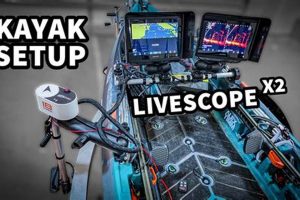
Examples of key fishing features include rod holders, tackle storage compartments, anchor trolleys, and fish finder mounts. Rod holders secure rods during paddling and allow for hands-free fishing. Tackle storage compartments keep lures, lines, and other essential gear organized and readily accessible. Anchor trolleys allow for precise anchor positioning, crucial for maintaining position in desired fishing locations. Fish finder mounts provide a stable platform for electronic fish finders, aiding in locating fish and understanding underwater terrain. These features contribute significantly to a more efficient and productive fishing experience. An angler using a kayak equipped with these features can easily switch between paddling, fishing, and landing fish, optimizing their time on the water. Conversely, an angler lacking these features would face challenges in managing rods, tackle, and boat positioning, potentially hindering their fishing success.
Understanding the function and importance of integrated fishing features is crucial for selecting the appropriate perception fishing kayak for individual angling needs. Consideration of fishing style, target species, and preferred fishing techniques guides the selection process. An angler targeting large game fish might prioritize rod holders capable of accommodating heavy tackle, while a fly fisherman might benefit from specialized fly line management systems. Evaluating the availability and placement of these features ensures compatibility with the angler’s fishing preferences and enhances overall on-the-water performance. A well-equipped fishing kayak directly contributes to a more organized, efficient, and successful angling experience.
6. Durability

Durability is a paramount consideration when evaluating fishing kayaks, directly impacting the vessel’s longevity, performance, and overall value. A durable kayak withstands the rigors of fishing environments, including impacts, abrasion, and exposure to the elements, ensuring reliable performance over extended periods. This discussion explores key facets of durability relevant to fishing kayaks.
- Construction Materials:
Kayak construction materials significantly influence durability. Common materials include high-density polyethylene (HDPE), rotomolded polyethylene, and thermoformed ABS. HDPE offers excellent impact resistance and UV protection, making it a popular choice for fishing kayaks. Rotomolded polyethylene provides superior durability and structural integrity, while thermoformed ABS offers a lighter weight option with good rigidity. Material selection should align with the intended usage and environmental conditions. For instance, a kayak intended for rocky rivers or coastal environments benefits from the robust nature of rotomolded polyethylene. The material’s inherent properties directly affect the kayak’s ability to withstand impacts, abrasion, and long-term exposure to sunlight and water.
- Hull Thickness and Design:
Hull thickness and design contribute to overall durability and impact resistance. A thicker hull generally provides greater protection against punctures and impacts, while hull design features, such as reinforced keels and chines, enhance resistance to abrasion and damage from underwater obstacles. A well-designed hull distributes impact forces effectively, minimizing structural stress and preventing cracks or deformation. For example, a kayak designed for shallow water fishing often incorporates a reinforced keel to protect against impacts with rocks or submerged logs. The hull’s structural integrity directly influences the kayak’s ability to withstand the demands of various fishing environments.
- Hardware and Fittings:
Hardware components, including handles, latches, and deck rigging, play a crucial role in overall durability. High-quality, corrosion-resistant hardware ensures long-term functionality and resists degradation from exposure to saltwater and UV radiation. Durable hardware maintains the kayak’s structural integrity and ensures reliable performance of essential features. For instance, stainless steel or marine-grade aluminum hardware provides superior corrosion resistance in saltwater environments. The quality and durability of hardware components directly impact the kayak’s longevity and resistance to wear and tear.
- UV Resistance and Weathering:
UV resistance is critical for preventing material degradation and color fading from prolonged sun exposure. High-quality kayak materials incorporate UV inhibitors to protect against the damaging effects of sunlight. Proper storage and maintenance practices, such as storing the kayak out of direct sunlight and applying UV protectants, further enhance its resistance to weathering. A kayak with superior UV resistance maintains its structural integrity and aesthetic appeal over time. For example, a kayak stored outdoors benefits from a UV-resistant coating to prevent fading and material degradation. The kayak’s ability to withstand environmental factors directly impacts its long-term durability and performance.
Evaluating these facets of durability provides valuable insights into a fishing kayak’s long-term performance and resilience. A durable kayak represents a sound investment, providing reliable performance and extended lifespan in demanding fishing environments. Prioritizing durability ensures the kayak withstands the rigors of regular use and maintains its functionality over time, contributing to a positive and productive fishing experience.
Frequently Asked Questions
This section addresses common inquiries regarding specialized angling kayaks, providing concise and informative responses to facilitate informed decision-making.
Question 1: What differentiates specialized angling kayaks from recreational models?
Angling kayaks typically incorporate features like rod holders, tackle storage, and anchor trolleys, enhancing fishing functionality compared to recreational models. These features optimize angling efficiency and convenience.
Question 2: How does hull design impact stability and performance?
Wider, flatter hulls generally provide greater initial stability, while longer, V-shaped hulls enhance tracking and speed in open water. Hull design should align with intended fishing environment and angler preferences.
Question 3: What factors should be considered when selecting paddle length?
Paddle length depends on factors such as angler height, kayak width, and paddling style. Proper paddle length ensures efficient paddling and reduces fatigue.
Question 4: What safety precautions are essential when angling from a kayak?
Wearing a personal flotation device (PFD), carrying a whistle and signaling device, informing someone of fishing plans, and checking weather conditions are crucial safety measures.
Question 5: How does proper weight distribution affect kayak performance?
Evenly distributing weight within the kayak enhances stability and tracking. Heavier items should be positioned lower and centrally to optimize balance and prevent tipping.
Question 6: What maintenance practices contribute to kayak longevity?
Rinsing the kayak after each use, storing it out of direct sunlight, and regularly inspecting hardware and fittings contribute to prolonged kayak lifespan. Proper maintenance preserves material integrity and prevents premature wear.
Addressing these frequently asked questions provides a foundational understanding of specialized angling kayaks. Further research and consultation with experienced anglers can provide additional insights tailored to individual needs and preferences.
The following section will delve into advanced techniques for utilizing these specialized watercraft, expanding upon the fundamental principles discussed herein.
Conclusion
Specialized fishing kayaks offer distinct advantages for anglers seeking enhanced on-the-water performance. Careful consideration of stability, comfort, storage, maneuverability, specialized features, and durability is essential for selecting the appropriate vessel. Understanding these elements empowers anglers to make informed decisions, optimizing their fishing experience and maximizing success. Appropriate kayak selection significantly influences angler efficiency, comfort, and overall enjoyment on the water.
Continued exploration of advanced paddling techniques, fishing strategies, and safety practices further refines angling skills and promotes responsible enjoyment of the sport. Investing time in skill development and responsible angling practices contributes to a rewarding and sustainable fishing experience. The future of kayak angling hinges on responsible resource management and a continued commitment to ethical fishing practices.