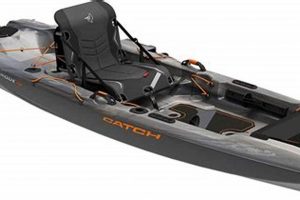
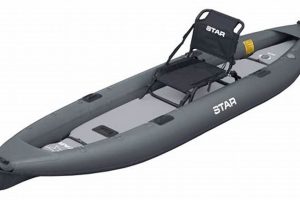
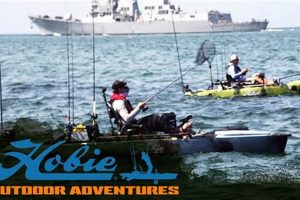
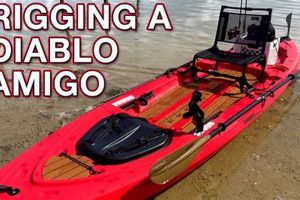
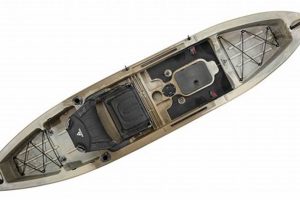
This specific model of recreational watercraft is designed for angling activities. It combines a stable hull platform with specialized features like rod holders, gear tracks, and often a comfortable, elevated seat. The numerical designation likely refers to its length, suggesting a compact and maneuverable vessel suitable for various water environments.
Smaller kayaks offer distinct advantages for anglers. Their reduced size and weight enhance portability and ease of storage, making them particularly appealing for those with limited space or transportation options. Furthermore, their maneuverability allows access to shallower waters and tighter fishing spots often inaccessible to larger boats. This particular model’s stability contributes significantly to angler safety and comfort, allowing for confident casting and retrieval, even in challenging conditions. The evolution of kayak design for fishing has led to increasingly specialized features that cater to the needs of anglers, making the experience more efficient and enjoyable.
Further exploration will cover topics such as material construction, specific design elements, performance on the water, target species suitability, user reviews, and comparisons with similar models. This information aims to provide a comprehensive understanding of this particular vessel and its suitability for various fishing applications.
Tips for Kayak Fishing
Effective kayak angling requires preparation and an understanding of specific techniques relevant to this unique fishing platform.
Tip 1: Prioritize Stability: A stable hull platform is paramount for safe and effective fishing. Consider water conditions and personal balance when choosing a kayak.
Tip 2: Plan and Organize Gear: Efficient storage and accessibility of fishing gear are crucial in a limited space. Utilize onboard storage and consider waterproof bags or containers.
Tip 3: Master Paddling Techniques: Efficient paddling conserves energy and allows anglers to reach desired fishing spots quickly and quietly. Practice various paddling strokes for maneuvering in different conditions.
Tip 4: Understand Water Conditions: Wind, currents, and tides significantly impact kayak control and fishing success. Check forecasts before venturing out and adjust fishing strategies accordingly.
Tip 5: Employ Appropriate Anchoring Techniques: Secure anchoring prevents drifting and maintains position in desired fishing locations. Choose an anchor system suitable for the bottom type and water conditions.
Tip 6: Practice Safe Catch and Release: Proper handling and release techniques minimize stress on fish populations and ensure their continued health. Use appropriate tools and handle fish gently.
Tip 7: Prioritize Safety Equipment: A personal flotation device (PFD) is essential, along with a whistle, signaling devices, and a first-aid kit. Communicate planned fishing locations and estimated return times.
Tip 8: Respect Wildlife and the Environment: Minimize disturbance to wildlife and adhere to Leave No Trace principles. Pack out all trash and avoid disturbing nesting areas.
Implementing these practices enhances angler safety, improves fishing success, and contributes to the preservation of natural resources.
These insights provide a strong foundation for a safe and rewarding kayak fishing experience. Subsequent sections will delve into specific gear recommendations, advanced techniques, and location-specific considerations.
1. Stability

Stability represents a critical performance attribute in fishing kayaks, directly influencing angler safety, comfort, and fishing effectiveness. The Perception 11.5 fishing kayak addresses stability through design elements such as hull shape, width, and center of gravity. A wider hull generally provides enhanced primary stability (resistance to initial tipping), while a well-designed hull shape contributes to secondary stability (the ability to recover from greater lean angles). A lower center of gravity further enhances stability. These factors collectively influence the kayak’s ability to remain stable during activities such as casting, retrieving, and landing fish. For example, a stable platform allows anglers to stand and fish in calmer waters, significantly expanding casting range and visibility. Conversely, a less stable kayak may restrict movement and increase the risk of capsizing, particularly in challenging conditions like windy or choppy water.
The practical significance of stability becomes evident in various fishing scenarios. Consider an angler sight fishing in shallow water. A stable kayak allows for subtle adjustments in position and precise casting without compromising balance. Similarly, when battling a strong fish, a stable platform provides the angler with leverage and control, minimizing the risk of capsizing. In contrast, an unstable kayak can create anxiety and hinder performance, especially in challenging conditions or when handling larger fish. This understanding underscores the importance of stability as a key performance indicator in fishing kayak selection.
Ultimately, stability contributes significantly to a positive and productive fishing experience. By prioritizing stability, anglers can enhance safety, improve fishing effectiveness, and enjoy greater confidence on the water. While other factors like maneuverability and speed are important, stability forms the foundation for a secure and enjoyable fishing platform, especially in a kayak designed for diverse fishing environments like the Perception 11.5.
2. Maneuverability
Maneuverability in a fishing kayak directly impacts an angler’s ability to navigate various water environments and access prime fishing locations. For the Perception 11.5, its maneuverability characteristics significantly influence its suitability for different fishing scenarios, from navigating tight creeks and rivers to open lakes and ponds. Understanding the factors contributing to maneuverability allows for informed evaluation of this kayak’s performance potential.
- Hull Design and Length
The hull design and length play a crucial role in determining how easily a kayak turns and responds to paddle strokes. Shorter kayaks, like the Perception 11.5, generally offer greater maneuverability compared to longer, touring-oriented kayaks. The specific hull design, including features like a shallow-V or flat bottom, further influences tracking (the ability to paddle straight) versus turning performance. A flatter hull often enhances maneuverability, while a more pronounced V-shape improves tracking but may sacrifice turning responsiveness. This balance between tracking and turning is a key consideration for anglers choosing a kayak suited to their preferred fishing locations.
- Water Conditions
Water conditions, such as current, wind, and waves, significantly influence maneuverability. In calm conditions, the Perception 11.5’s maneuverability allows precise positioning and easy navigation through complex environments. However, strong winds or currents can challenge maneuverability, requiring more effort to maintain desired course and position. Anglers must consider prevailing water conditions in their target fishing areas when evaluating the suitability of the kayak’s maneuverability.
- Paddling Technique
Effective paddling techniques are essential for maximizing a kayak’s maneuverability. Proper use of forward, reverse, and sweep strokes enables precise control and efficient turning. Anglers proficient in these techniques can leverage the Perception 11.5’s maneuverability to navigate tight spaces, avoid obstacles, and position themselves optimally for fishing. Conversely, inefficient paddling can hinder maneuverability and limit access to desirable fishing spots.
- Weight Capacity and Load Distribution
The kayak’s weight capacity and how the load is distributed onboard affect maneuverability. Exceeding the recommended weight capacity or uneven load distribution can reduce responsiveness and make the kayak more difficult to turn. Maintaining proper weight distribution and staying within the specified capacity ensures optimal performance and maximizes the Perception 11.5’s maneuverability.
In conclusion, maneuverability represents a crucial performance attribute for fishing kayaks. Understanding how hull design, water conditions, paddling technique, and load distribution influence maneuverability allows anglers to assess the suitability of the Perception 11.5 for their specific fishing needs and target environments. Balancing maneuverability with other factors like stability and tracking ensures a well-rounded fishing platform optimized for diverse on-the-water experiences.
3. Portability

Portability represents a significant factor influencing the practical usability of a fishing kayak, particularly for individuals with limited storage space or transportation options. The Perception 11.5 fishing kayak’s portability characteristics directly impact its convenience and suitability for various user scenarios. This section explores key facets of portability relevant to this specific kayak model.
- Weight and Dimensions
The kayak’s weight and dimensions directly influence ease of transport. The Perception 11.5, with its relatively compact size and manageable weight, offers advantages for individuals transporting the kayak on a car roof rack, in a truck bed, or even carrying it short distances. Its lighter weight simplifies handling and reduces strain during loading and unloading. Exact specifications should be consulted for accurate assessment, as variations can exist between model years or configurations. Comparing these specifications with competing models provides further context for evaluating portability.
- Transportation Options
Various transportation options exist for kayaks, and the Perception 11.5’s portability makes it compatible with several methods. Roof racks, trailers, and even kayak carts facilitate transport. The kayak’s weight and dimensions influence the suitability of each method. A lighter kayak, like the Perception 11.5, expands the range of viable transport options, including potentially carrying it short distances to launch points inaccessible by vehicle. This adaptability enhances access to diverse fishing locations.
- Storage Considerations
Storage space availability represents a crucial consideration for kayak owners. The Perception 11.5’s compact size offers advantages for storage in garages, sheds, or even apartments. Its relatively smaller footprint compared to larger kayaks allows for easier integration into limited storage spaces. This compact design enhances its practicality for individuals residing in urban environments or with limited storage capacity.
- Impact on Fishing Accessibility
Portability significantly impacts fishing accessibility, enabling anglers to reach remote or otherwise difficult-to-access fishing locations. The Perception 11.5’s portability makes it suitable for exploring smaller rivers, ponds, and lakes often inaccessible to larger boats. This expanded access broadens fishing opportunities and allows exploration of diverse aquatic environments. The ability to easily transport and launch the kayak contributes significantly to overall fishing versatility.
In summary, portability plays a crucial role in determining the overall usability and accessibility of a fishing kayak. The Perception 11.5, with its focus on portability, offers advantages for individuals seeking a convenient and versatile fishing platform suitable for diverse environments and transportation scenarios. Careful consideration of these portability factors contributes to informed purchase decisions aligned with individual needs and logistical constraints.
4. Storage Capacity

Storage capacity in a fishing kayak directly influences an angler’s ability to carry essential gear, impacting both fishing effectiveness and overall comfort. For the Perception 11.5 fishing kayak, understanding its storage features and capacity is crucial for evaluating its suitability for various fishing styles and excursion durations. This section examines the key aspects of storage relevant to this particular model.
- Onboard Storage Compartments
Dedicated storage compartments within the kayak’s hull provide secure and protected space for essential gear. These compartments, often designed for specific items like tackle boxes or batteries, safeguard equipment from water damage and maintain organization. The size, location, and accessibility of these compartments significantly impact their practicality and overall utility. For example, a readily accessible front hatch allows for quick retrieval of frequently used items while larger rear compartments accommodate bulkier gear.
- Tankwell Storage
The rear tankwell, an open storage area typically located behind the seat, offers versatile storage space for larger items such as crates, coolers, or dry bags. Bungee cords or tie-down points secure these items during transport and fishing. The tankwell’s size and configuration affect its capacity and the types of gear it can accommodate. A larger tankwell allows for extended trips with more gear or the inclusion of specialized equipment like fish finders or livewells.
- Rod Holders and Gear Tracks
Integrated rod holders and gear tracks enhance fishing efficiency and organization. Rod holders secure rods while paddling or when not actively fishing, freeing hands for other tasks. Gear tracks provide mounting points for accessories like fish finders, cameras, or additional rod holders. The number, placement, and type of rod holders and gear tracks directly influence the kayak’s adaptability to different fishing styles and equipment preferences. Flush-mounted rod holders offer a streamlined profile while adjustable rod holders provide greater flexibility in positioning.
- Weight Capacity Considerations
While storage space itself is important, the kayak’s overall weight capacity limits the total amount of gear that can be safely carried. Exceeding the weight capacity compromises stability and performance. Understanding the weight capacity in relation to storage volume allows anglers to realistically assess how much gear they can bring without compromising safety or maneuverability. Balancing gear needs with weight limitations ensures a safe and efficient fishing experience.
In conclusion, storage capacity represents a key consideration when evaluating the suitability of a fishing kayak like the Perception 11.5. Understanding the types of storage available, their capacity, and the kayak’s weight limitations allows anglers to make informed decisions based on individual fishing styles, target species, and typical excursion durations. Balancing storage needs with other factors like portability and maneuverability ensures a well-rounded fishing platform optimized for specific angling preferences.
5. Comfort
Comfort significantly influences the overall enjoyment and duration of kayak fishing excursions. An uncomfortable kayak can lead to fatigue, discomfort, and even physical strain, potentially curtailing fishing trips. The Perception 11.5 fishing kayak addresses comfort through various design elements, impacting its suitability for extended use and diverse angling activities. Understanding these comfort-related features allows for informed evaluation of the kayak’s suitability for individual needs and preferences.
- Seat Design and Adjustability
The seat plays a crucial role in overall comfort. A well-designed seat provides adequate support, cushioning, and adjustability to accommodate different body types and preferences. Features like adjustable backrests, breathable fabrics, and elevated seating positions contribute to long-term comfort and reduce fatigue. An uncomfortable seat can lead to back pain, stiffness, and a diminished fishing experience, particularly during longer outings. Consider the seat’s design, materials, and adjustability options when evaluating a fishing kayak for extended use.
- Legroom and Footrests
Adequate legroom and adjustable footrests contribute significantly to comfort and paddling efficiency. Proper leg positioning allows for comfortable stretching and reduces cramping during extended periods on the water. Adjustable footrests accommodate different leg lengths and paddling styles, promoting efficient power transfer and reducing fatigue. Restricted legroom or poorly positioned footrests can hinder paddling performance and lead to discomfort, impacting the overall fishing experience.
- Deck Layout and Accessibility
The kayak’s deck layout influences comfort and fishing efficiency. A well-designed deck provides easy access to essential gear, rod holders, and other fishing accessories. Conveniently placed storage compartments and a clutter-free deck enhance comfort and allow anglers to focus on fishing rather than managing gear. A poorly designed deck can lead to frustration, wasted time searching for items, and an overall less enjoyable fishing experience.
- Stability and its Impact on Comfort
While not directly a comfort feature, stability indirectly contributes to comfort by providing a secure and confidence-inspiring platform. A stable kayak reduces anxiety and allows for more relaxed fishing, especially in challenging conditions. Conversely, an unstable kayak can create tension and discomfort, hindering enjoyment and potentially leading to fatigue. Consider stability as an indirect contributor to overall comfort, especially for anglers fishing in varied water conditions.
Comfort features significantly influence the overall enjoyment and practicality of a fishing kayak. In the Perception 11.5, these elements contribute to its suitability for extended fishing trips and diverse angling activities. Evaluating these comfort-related aspects alongside performance characteristics provides a comprehensive understanding of the kayak’s suitability for individual needs and preferences. A comfortable kayak allows anglers to focus on fishing, maximizing enjoyment and time spent on the water.
6. Fishing Features

Specialized fishing features distinguish fishing kayaks from recreational models, enhancing angler effectiveness and overall experience. These features, integral to the Perception 11.5 fishing kayak’s design, contribute significantly to its utility as a dedicated fishing platform. An examination of these features provides insights into their practical application and impact on angling performance.
- Rod Holders
Rod holders provide secure storage and convenient access to fishing rods. Multiple rod holders, strategically positioned on the kayak, allow anglers to carry several rigged rods simultaneously, facilitating quick transitions between different techniques or targeting various species. The Perception 11.5 typically incorporates flush-mounted and adjustable rod holders, offering both streamlined storage and adaptable positioning for active fishing. This facilitates techniques like trolling or having a second rod readily available while actively fishing with another.
- Gear Tracks
Gear tracks, integrated into the kayak’s deck, offer versatile mounting points for accessories like fish finders, GPS units, camera mounts, and additional rod holders. These tracks provide customization options, allowing anglers to tailor their kayak setup to specific fishing styles and preferences. The ability to easily add or reposition accessories enhances adaptability and optimizes the fishing experience. For example, mounting a fish finder on a gear track provides real-time depth and fish location data, improving angling success.
- Tackle Storage
Dedicated tackle storage compartments within the kayak’s hull keep essential fishing gear organized and protected from the elements. These compartments, often designed to accommodate tackle boxes and other small items, maintain order and prevent gear from shifting during paddling or fishing. Ready access to tackle enhances efficiency and reduces time spent searching for specific lures or tools. Dry storage compartments further protect sensitive electronics and other items susceptible to water damage.
- Paddle Parks
Paddle parks provide designated locations to secure the paddle when not in use, preventing accidental loss or interference with fishing activities. These simple yet effective features free the angler’s hands for casting, reeling, and handling fish without the paddle obstructing movement or creating entanglement hazards. Paddle parks contribute to a more streamlined and efficient fishing experience, minimizing distractions and maximizing focus on the task at hand.
These integrated fishing features contribute significantly to the Perception 11.5’s effectiveness as a dedicated fishing platform. The strategic placement and design of these features enhance angling efficiency, organization, and overall enjoyment on the water. Considering these features in conjunction with the kayak’s performance characteristics provides a comprehensive understanding of its suitability for various fishing styles and environments. The thoughtful integration of these features distinguishes the Perception 11.5 as a purpose-built fishing kayak, catering specifically to the needs of anglers.
Frequently Asked Questions
This section addresses common inquiries regarding the Perception 11.5 fishing kayak, providing concise and informative responses to facilitate informed evaluation and purchase decisions.
Question 1: What is the weight capacity of the Perception 11.5 fishing kayak?
Weight capacity specifications can vary slightly depending on the model year and specific configuration. Consulting the manufacturer’s official specifications for the relevant model year is recommended for precise weight capacity information. This information is crucial for safe operation and optimal performance.
Question 2: Is the Perception 11.5 suitable for ocean fishing?
While the Perception 11.5 is designed for stability and maneuverability, its suitability for ocean fishing depends on specific conditions and angler experience. Calm bays and protected coastal areas may be suitable, but open ocean conditions with significant wave action or strong currents are generally not recommended. Prioritizing safety and adhering to appropriate usage guidelines is paramount.
Question 3: What materials are used in the construction of the Perception 11.5?
High-density polyethylene (HDPE) is commonly used in kayak construction due to its durability, impact resistance, and UV stability. Specific material composition and construction details for the Perception 11.5 can be confirmed through the manufacturer’s official product information. Understanding material properties informs assessments of durability and long-term performance.
Question 4: What is the warranty coverage for the Perception 11.5 fishing kayak?
Warranty terms and conditions are subject to change and vary by manufacturer policy. Consulting the manufacturer’s official warranty information for the specific model and purchase date provides accurate details regarding coverage duration and specific inclusions/exclusions. Understanding warranty terms protects consumer interests and provides recourse in case of manufacturing defects.
Question 5: How does the Perception 11.5 compare to other kayaks in its class?
Direct comparisons with competing models require consideration of individual needs, fishing styles, and budgetary constraints. Factors such as stability, maneuverability, features, and price point contribute to informed comparisons. Independent reviews, online forums, and expert opinions provide valuable insights for objective evaluations. Prioritizing specific performance attributes and features relevant to individual fishing preferences facilitates informed decision-making.
Question 6: What essential accessories are recommended for the Perception 11.5?
Essential accessories enhance safety, functionality, and overall fishing experience. A personal flotation device (PFD), paddle leash, dry bag, and appropriate safety equipment are highly recommended. Additional accessories such as a fish finder, anchor system, and rod holders cater to specific fishing styles and preferences. Prioritizing safety and considering individual fishing needs guide accessory selection.
Understanding these key aspects facilitates informed decisions regarding the Perception 11.5’s suitability for individual angling needs and preferences. Thorough research and consideration of these frequently asked questions empower potential buyers to make informed choices aligned with their specific requirements and fishing goals.
The subsequent section provides a concluding overview of the Perception 11.5 fishing kayak, summarizing key attributes and overall value proposition.
Conclusion
The Perception 11.5 fishing kayak presents a compelling option for anglers seeking a balance of stability, maneuverability, and specialized features within a compact and portable platform. Its design prioritizes angler comfort and efficiency, incorporating features like adjustable seating, multiple rod holders, gear tracks, and ample storage. While suitability for specific fishing environments and individual preferences requires careful consideration of factors like weight capacity, storage limitations, and hull characteristics, the kayak offers a versatile platform adaptable to diverse fishing styles and locations. Objective evaluation of these attributes alongside individual needs and budgetary constraints facilitates informed purchase decisions.
The evolution of kayak fishing underscores the increasing demand for specialized watercraft catering to diverse angling pursuits. Continued advancements in kayak design and technology promise further enhancements in performance, comfort, and fishing-specific features. Thorough research and consideration of individual needs remain crucial for selecting the optimal kayak to enhance on-the-water experiences and maximize angling success. Potential buyers are encouraged to seek additional information, consult expert opinions, and conduct comparative analyses to arrive at informed decisions aligned with individual fishing goals and preferences. Ultimately, the right kayak serves as an extension of the angler, facilitating deeper connections with the aquatic environment and enhancing the pursuit of angling passion.