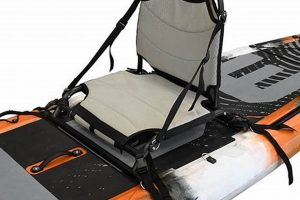
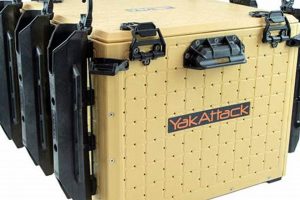
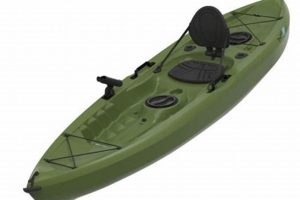
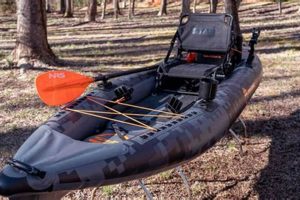
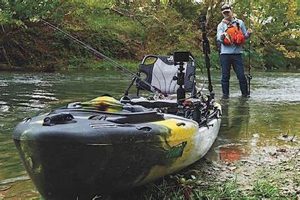
This type of recreational watercraft is designed specifically for anglers, combining the stability and maneuverability of a kayak with features tailored to enhance the fishing experience. These features often include rod holders, tackle storage compartments, and even anchor trolleys. A typical example might be a sit-on-top model constructed from durable polyethylene plastic, offering a stable platform for casting and reeling in fish.
Affordable and accessible, these vessels open up opportunities for fishing in diverse environments, from calm lakes and slow-moving rivers to coastal waters. Their relatively compact size and lightweight construction make transportation and storage significantly easier compared to larger boats. The evolution of this type of watercraft reflects the growing popularity of kayak fishing as a sport, providing a cost-effective and enjoyable way to connect with nature while pursuing this pastime.
The following sections will delve deeper into specific aspects, covering topics such as choosing the right model, essential gear and accessories, and popular fishing techniques best suited for this style of angling.
Tips for Kayak Fishing
Careful planning and preparation contribute significantly to a successful and enjoyable fishing excursion. The following tips offer valuable insights into optimizing one’s time on the water.
Tip 1: Prioritize Stability. Selecting a wider, flatter hull design enhances stability, especially for beginners. This is crucial for casting lines and landing fish without compromising balance.
Tip 2: Research Regulations. Understanding local fishing regulations, including licensing requirements and catch limits, ensures a legal and ethical fishing experience.
Tip 3: Plan for Weather. Checking weather forecasts before heading out is essential. Sudden changes in weather conditions can impact safety and fishing success.
Tip 4: Organize Tackle. Utilizing tackle boxes or bags keeps essential gear organized and readily accessible, minimizing time spent searching for specific items.
Tip 5: Practice Paddling Techniques. Mastering basic paddling strokes improves maneuverability and efficiency on the water, allowing anglers to reach desired fishing spots with ease.
Tip 6: Consider Safety Gear. Wearing a personal flotation device (PFD) and carrying a whistle are crucial safety precautions. A first-aid kit should also be readily available.
Tip 7: Learn Basic Knots. Familiarizing oneself with essential fishing knots, such as the improved clinch knot and the Palomar knot, ensures secure line connections and minimizes lost catches.
Tip 8: Respect Wildlife and the Environment. Practicing catch-and-release whenever possible helps conserve fish populations. Proper disposal of fishing line and other waste minimizes environmental impact.
By following these guidelines, anglers can enhance their overall fishing experience, maximizing both enjoyment and success on the water.
With these preparations complete, one can focus on the core aspects of fishing from a kayak, discussed in the following conclusion.
1. Affordable Price Point

Cost considerations play a significant role in purchasing decisions, particularly within recreational activities like kayak fishing. The Ozark Trail brand often occupies a unique space in the market by offering kayaks at a price point generally lower than many competitors. This affordability factor significantly influences market accessibility and purchase decisions.
- Budget-Conscious Consumers:
Ozark Trail kayaks cater to budget-conscious anglers seeking an entry point into the sport without a substantial financial investment. This allows individuals and families to experience kayak fishing without the barrier of high upfront costs. For example, a family looking for a weekend activity might find the Ozark Trail’s price attractive compared to higher-end brands.
- Value Proposition:
While affordability is a key feature, Ozark Trail kayaks strive to provide a balance between price and essential features. They generally include core functionalities such as rod holders and storage compartments, offering sufficient utility for casual anglers. This allows consumers to access the basic necessities of kayak fishing without premium pricing. A comparison with similarly priced inflatable kayaks might highlight the added features of a hard-shell Ozark Trail kayak.
- Trade-offs and Considerations:
The lower price point may entail certain trade-offs compared to more expensive kayaks. These might include material choices, overall weight, and additional features. Understanding these potential trade-offs enables informed decisions based on individual needs and priorities. For instance, an angler focused on long expeditions might need to consider weight capacity and hull design limitations.
- Market Competition:
The presence of affordable options like Ozark Trail influences the broader kayak market, potentially driving price competition and innovation. This can benefit consumers through greater choice and value across various brands. This competitive pressure encourages other manufacturers to offer competitive pricing and features, ultimately benefiting the consumer market.
The affordability of Ozark Trail kayaks contributes to their accessibility, allowing a wider range of individuals to participate in kayak fishing. While acknowledging potential trade-offs, the value proposition of these kayaks remains a significant factor for budget-conscious anglers seeking an entry point into this popular recreational activity.
2. Sit-on-top Design

The sit-on-top design is a defining characteristic of many Ozark Trail fishing kayaks, influencing stability, maneuverability, and overall fishing experience. This design choice directly impacts angler comfort, accessibility, and adaptation to various water conditions. Understanding the implications of this design is crucial for informed kayak selection and usage.
- Enhanced Stability:
The sit-on-top design contributes to enhanced stability, particularly beneficial for fishing activities. The wider hull and higher center of gravity offer a more stable platform compared to traditional sit-inside kayaks. This stability is crucial for casting, reeling, and landing fish without compromising balance. For example, an angler standing to cast in an Ozark Trail sit-on-top kayak experiences greater stability than in a sit-inside kayak of similar dimensions. This stability translates into a more secure and confident fishing experience.
- Self-Bailing System:
Most sit-on-top kayaks feature scupper holes, creating a self-bailing system that drains water effectively. This prevents water accumulation within the kayak, maintaining buoyancy and stability even in choppy conditions or after a wave splashes over the deck. This feature is particularly advantageous in fishing scenarios where the angler might be handling fish or equipment, minimizing the risk of capsizing due to accumulated water. An angler fishing in a light rain or encountering small waves benefits from this self-bailing feature.
- Ease of Entry and Exit:
The open design simplifies entry and exit, especially beneficial for individuals with mobility limitations or those who prefer a more accessible platform. This feature also proves advantageous in situations requiring quick entry or exit, such as unexpected changes in weather conditions. For example, an angler experiencing a sudden shift in weather can quickly exit the kayak and seek shelter without navigating a confined cockpit. This enhanced accessibility also contributes to a more user-friendly experience, especially for beginners.
- Versatility and Adaptability:
The sit-on-top design lends itself well to diverse fishing environments, from calm lakes and rivers to coastal waters. The open deck allows for easy movement and adjustment of fishing positions, accommodating various casting techniques and fishing styles. This adaptability makes Ozark Trail sit-on-top kayaks suitable for different fishing scenarios, whether trolling in open water or casting near the shoreline. An angler targeting different fish species in varying water depths can easily adapt their position and technique within a sit-on-top kayak.
The sit-on-top design of Ozark Trail fishing kayaks contributes significantly to their functionality and user-friendliness. The combination of stability, self-bailing capabilities, ease of access, and adaptability makes these kayaks suitable for a wide range of anglers and fishing environments, reinforcing their position as a popular choice within the recreational fishing market.
3. Built-in Rod Holders

Built-in rod holders represent a crucial design element integral to the functionality of Ozark Trail fishing kayaks. These integrated holders offer anglers a secure and convenient method for managing fishing rods while navigating waterways, changing lures, or landing fish. This feature directly impacts fishing efficiency and overall angling experience.
Integrating rod holders eliminates the need for aftermarket installations or cumbersome DIY solutions, streamlining kayak setup and enhancing on-water organization. Anglers can dedicate more time to fishing and less to equipment management. For example, an angler trolling with multiple lines can securely position rods in the built-in holders, allowing simultaneous monitoring and quick reaction to strikes. Similarly, having rods readily accessible facilitates seamless transitions between casting and retrieving lures, maximizing fishing time and potential catch rates. Furthermore, dedicated holders prevent rod tangling and damage, preserving equipment integrity and minimizing potential disruptions during fishing sessions. An angler navigating through dense vegetation or shallow water benefits from secured rods, minimizing the risk of entanglement or breakage.
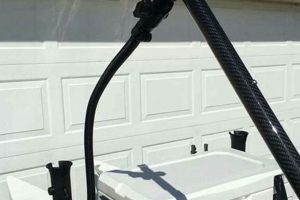
The strategic placement and design of these holders often reflect specific fishing styles and preferences. Flush-mounted holders offer a streamlined profile for paddling and maneuvering through tight spaces. Adjustable or rotating holders provide flexibility for different fishing techniques and target species. The presence of multiple rod holders caters to diverse fishing approaches, from trolling to jigging. Understanding the type and placement of rod holders assists anglers in selecting the Ozark Trail kayak model best suited to their individual fishing practices and target species. The availability of built-in rod holders contributes significantly to the overall value and practicality of Ozark Trail fishing kayaks, enhancing their appeal as efficient and user-friendly platforms for anglers of varying skill levels.
4. Sufficient Storage

Adequate storage capacity is a critical factor influencing the practicality and enjoyment of kayak fishing excursions, especially in vessels like the Ozark Trail fishing kayak. Effective storage solutions directly impact organization, accessibility, and the overall fishing experience by allowing anglers to carry essential gear and maintain an uncluttered, efficient fishing platform. The strategic design and placement of storage compartments are crucial for optimizing space utilization and ensuring ease of access to essential equipment.
- Tackle Organization:
Dedicated compartments for tackle boxes, trays, and individual lures contribute significantly to organized storage. This prevents tangling, facilitates quick retrieval of specific lures, and maximizes fishing efficiency. For example, an angler seeking specific hooks or weights can quickly locate them in a designated compartment rather than rummaging through a disorganized bag. This efficient organization minimizes wasted time and maximizes on-water fishing time.
- Gear Storage:
Sufficient storage space for essential gear, such as safety equipment (PFD, first-aid kit, whistle), extra clothing, and food/water provisions, enhances safety and preparedness. Dry storage compartments protect sensitive items from water damage. Easy access to these items contributes to a safer and more enjoyable experience. An angler encountering unexpected weather conditions can quickly access dry clothing from a dedicated compartment, enhancing comfort and safety.
- Catch Storage:
Designated areas or integrated features for storing caught fish, such as live wells or coolers, are crucial for anglers intending to keep their catch. Proper storage preserves fish freshness and quality. This feature is essential for anglers practicing selective harvest and ensures compliance with regulations regarding fish handling and transport. Anglers practicing catch-and-release benefit from temporary holding areas for fish while preparing for release.
- Space Optimization:
Efficiently designed storage compartments maximize space utilization within the limited confines of a kayak. Recessed compartments, bungee cord systems, and tank wells offer secure storage solutions without compromising deck space or paddling comfort. This optimization is essential for maintaining a clutter-free deck and ensuring freedom of movement while fishing. An angler casting from a standing position benefits from a clear deck free from obstructions.
The incorporation of sufficient and well-designed storage in Ozark Trail fishing kayaks significantly enhances their overall utility and functionality. By enabling organized storage of tackle, gear, and catch, these kayaks contribute to a more efficient, enjoyable, and safe fishing experience. This feature directly addresses the practical needs of anglers, reinforcing the value proposition of these kayaks within the recreational fishing market.
5. Durable Construction

Durable construction is a critical aspect of Ozark Trail fishing kayaks, directly influencing their longevity, performance, and overall value. Kayaks are subjected to various stressors, including UV exposure, impacts with obstacles, and the general wear and tear of regular use. A robust construction ensures the kayak withstands these challenges, providing reliable performance over extended periods and in diverse environments. This directly impacts the kayak’s lifespan and the user’s long-term investment.
- Material Selection:
Ozark Trail kayaks typically utilize high-density polyethylene (HDPE) plastic for their construction. HDPE is known for its impact resistance, UV stability, and overall durability. This material choice contributes significantly to the kayak’s ability to withstand impacts, resist cracking or fading from sun exposure, and maintain structural integrity over time. For example, an HDPE hull can withstand minor collisions with rocks or submerged logs without sustaining significant damage. This material resilience contributes to the kayak’s longevity and suitability for diverse water environments.
- Construction Process:
Rotational molding is a common manufacturing process for Ozark Trail kayaks. This process creates a seamless, one-piece hull, eliminating potential weak points or seams that could be prone to leaks or failure. The uniform wall thickness achieved through rotational molding further enhances durability and impact resistance. This seamless construction contributes to the kayak’s overall structural integrity and resistance to water ingress, ensuring a reliable and long-lasting vessel.
- UV Resistance:
Prolonged exposure to sunlight can degrade plastics, leading to fading, cracking, and reduced structural integrity. UV stabilizers incorporated into the HDPE material of Ozark Trail kayaks protect against these harmful effects, ensuring the kayak maintains its color and structural integrity even after extended periods in the sun. This UV resistance preserves the kayak’s appearance and extends its functional lifespan, contributing to its overall value.
- Impact Resistance:
Kayaks inevitably encounter obstacles in the water, ranging from submerged rocks and logs to collisions with docks or other vessels. The inherent impact resistance of HDPE, combined with the robust construction of Ozark Trail kayaks, allows them to withstand minor impacts without sustaining significant damage. This resilience ensures the kayak remains functional even after encountering unexpected obstacles, enhancing safety and minimizing the risk of disruptive damage during fishing trips. For instance, a minor collision with a submerged branch might scratch an Ozark Trail kayak but is unlikely to compromise its structural integrity, allowing the angler to continue fishing without interruption.
The durable construction of Ozark Trail fishing kayaks, characterized by robust material selection, a seamless construction process, UV resistance, and impact resistance, contributes significantly to their longevity and performance. This durability ensures these kayaks can withstand the rigors of regular use in diverse environments, offering anglers a reliable and cost-effective platform for pursuing their passion. This combination of durability and affordability makes Ozark Trail kayaks a viable option for both novice and experienced anglers seeking a dependable fishing platform.
Frequently Asked Questions
This section addresses common inquiries regarding this specific type of recreational fishing kayak, providing concise and informative responses to facilitate informed purchase decisions and optimal usage.
Question 1: What weight capacity can one typically expect?
Weight capacities vary depending on the specific model, generally ranging from 250 to 400 pounds. Consulting the manufacturer’s specifications for the chosen model is recommended.
Question 2: Are these kayaks suitable for ocean use?
While designed primarily for calm waters such as lakes and slow-moving rivers, some models can handle calmer coastal bays or estuaries. However, they are generally not recommended for open ocean conditions or rough surf.
Question 3: What essential accessories should one consider?
Essential accessories include a personal flotation device (PFD), a paddle, and appropriate fishing gear. Additional accessories such as an anchor, rod holders, and dry storage bags can enhance the fishing experience.
Question 4: How does one transport this type of kayak?
Roof racks are the most common transportation method. Some models are lightweight enough to be carried by a single person, while others may require two people or a cart for transport.
Question 5: What maintenance is required?
Rinsing the kayak with fresh water after each use and storing it away from direct sunlight will prolong its lifespan. Periodic inspections for damage and necessary repairs should be performed.
Question 6: Are these kayaks appropriate for beginners?
The sit-on-top design and stability of these kayaks often make them suitable for beginners. Starting in calm waters and gradually progressing to more challenging environments is recommended.
Addressing these common inquiries aims to provide a comprehensive understanding of these kayaks, encompassing key aspects from weight capacity and intended usage to essential accessories and maintenance requirements. This information assists potential buyers in making informed decisions and ensures optimal usage for enhanced enjoyment and safety on the water.
The following section provides concluding thoughts regarding the value and utility of this type of kayak within the recreational fishing landscape.
Conclusion
Ozark Trail fishing kayaks represent an accessible entry point into the sport of kayak fishing. Their affordability, combined with features such as built-in rod holders, ample storage, and a stable sit-on-top design, caters to anglers seeking a practical and budget-friendly fishing platform. While trade-offs regarding material choice and performance compared to higher-end models exist, their overall value proposition remains compelling for recreational anglers. The durable construction, typically using high-density polyethylene, ensures these kayaks withstand regular use and diverse environmental conditions, providing a reliable platform for pursuing this popular pastime.
The growing popularity of kayak fishing underscores the demand for accessible and functional watercraft. Ozark Trail kayaks occupy a significant niche within this market segment, offering an affordable and practical option for individuals seeking to experience the joys of fishing from a kayak. Careful consideration of individual needs and priorities, coupled with an understanding of the kayak’s capabilities and limitations, empowers informed purchase decisions and ensures an enjoyable and rewarding fishing experience. Continued innovation within the kayak fishing industry promises further advancements in design and functionality, enhancing accessibility and enjoyment for anglers of all skill levels.