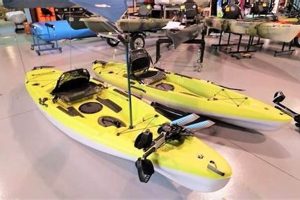
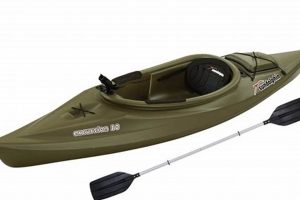
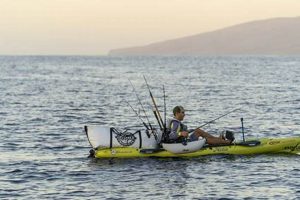
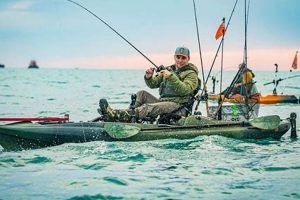
A small, human-powered watercraft specifically designed for angling, often brightly colored for visibility, can be a valuable tool for the sport. This type of vessel typically features specialized components like rod holders, storage compartments for tackle, and a stable hull design to enhance the fishing experience.
The vibrant hue enhances visibility on the water, a crucial safety factor for anglers. This increased detectability by other boaters reduces the risk of collisions, especially in low-light conditions or crowded waterways. Furthermore, the specialized design of these vessels contributes to angler success by providing a stable platform and convenient access to fishing gear. While traditional fishing boats have long served anglers, these smaller, more agile craft have gained popularity due to their affordability, portability, and maneuverability in shallow waters.
This discussion will explore the key features that distinguish these specialized watercraft, including hull design, materials, and essential accessories. Further topics will cover safety considerations, popular fishing techniques suited to this type of vessel, and tips for selecting the appropriate model for individual needs and preferences.
Tips for Enhanced Kayak Fishing
Optimizing angling experiences from a small, brightly-colored, human-powered watercraft requires careful consideration of various factors. These tips offer guidance for maximizing safety and success on the water.
Tip 1: Prioritize Visibility: High-visibility apparel and accessories, including a flag, enhance detectability, crucial for safety in shared waterways.
Tip 2: Master Stability Techniques: Learning to enter, exit, and balance on the vessel, especially in varying water conditions, is essential for preventing capsizing.
Tip 3: Organize Tackle Strategically: Utilizing specialized storage compartments and readily accessible tackle boxes ensures efficient gear management and reduces retrieval time.
Tip 4: Choose Appropriate Paddles: Selecting paddles designed for fishing kayaks, considering factors like blade shape and length, improves paddling efficiency and maneuverability.
Tip 5: Plan Fishing Locations Carefully: Researching suitable fishing spots with accessible launch points and appropriate fish habitats maximizes angling opportunities.
Tip 6: Check Weather Conditions: Monitoring weather forecasts before embarking on any fishing trip ensures safe and comfortable conditions on the water.
Tip 7: Practice Catch and Release Techniques: Proper handling and release methods contribute to fish conservation and the sustainability of aquatic ecosystems.
By adhering to these guidelines, anglers can significantly improve their safety, efficiency, and overall enjoyment while fishing from these specialized watercraft.
These tips provide a starting point for anglers seeking to enhance their experiences. Further research and practice will contribute to greater proficiency and success on the water. This article will conclude with a summary of key takeaways and resources for further exploration.
1. Visibility
Visibility plays a crucial role in the safety and effectiveness of a fishing kayak. The bright orange hue significantly increases the vessel’s detectability on the water, reducing the risk of collision with other watercraft, especially in conditions of reduced light such as dawn, dusk, or fog. This heightened visibility is particularly important in busy waterways or areas with heavy boat traffic. Consider a scenario where an angler is fishing in a popular lake during early morning hours. The orange kayak stands out against the backdrop of the water, making it easily noticeable to motorized boats entering or exiting the area. This enhanced visibility contributes significantly to the angler’s safety.
Beyond collision avoidance, enhanced visibility can be advantageous in emergency situations. Should an angler experience difficulty or require assistance, a brightly colored kayak is more likely to be spotted by rescue personnel or other boaters. For example, if a kayak capsizes in open water, the vibrant orange hull is easier to locate than a less conspicuous color, facilitating a swift response. This factor can be critical in ensuring a timely rescue and mitigating potential harm.
The high visibility offered by an orange fishing kayak contributes significantly to both preventative safety measures and effective emergency response. This characteristic is a vital consideration for anglers prioritizing safety on the water, particularly in environments with variable light conditions or substantial boat traffic. Understanding the connection between visibility and safety underscores the importance of selecting appropriately colored equipment for all on-water activities.
2. Safety

Safety is paramount in kayak fishing, and the color orange plays a significant role in mitigating risks. The inherent visibility of an orange kayak contributes substantially to angler safety by increasing detectability in various on-water situations. This high visibility is crucial for avoiding collisions with other vessels, particularly in conditions of limited visibility or heavy traffic. Consider a scenario involving a motorized boat navigating a congested waterway. An angler in an orange kayak is significantly more likely to be seen by the boat operator, reducing the potential for a collision. This enhanced visibility is especially vital during dawn, dusk, or foggy conditions where visibility is naturally compromised.
Beyond collision avoidance, the bright orange hue aids in locating a kayak in emergency situations. Should an angler capsize or experience another unforeseen event requiring assistance, the vibrant color increases the likelihood of being spotted by rescue personnel or other boaters. A brightly colored kayak stands out against the water’s surface, facilitating rapid location and potentially life-saving intervention. For instance, if an angler encounters difficulty in rough waters, a highly visible orange kayak enhances the chances of a timely rescue, minimizing the duration of exposure to hazardous conditions. This can be critical in situations involving cold water or adverse weather.
The connection between kayak color and safety is undeniable. While other safety measures, such as wearing a personal flotation device and carrying signaling equipment, are essential, the inherent visibility provided by an orange kayak adds another layer of protection. This heightened visibility serves as a passive safety feature, continuously working to enhance the angler’s presence on the water and mitigate potential risks. Understanding this connection empowers anglers to make informed decisions about equipment choices, prioritizing safety alongside performance and other factors. Choosing an orange kayak contributes proactively to a safer and more enjoyable fishing experience.
3. Stability
Stability is a critical factor in kayak fishing, directly influencing angler safety, comfort, and fishing effectiveness. A stable platform is essential for various activities, including casting, reeling, landing fish, and navigating varied water conditions. The stability of an orange fishing kayak contributes significantly to the overall angling experience.
- Hull Design:
Hull design significantly impacts stability. Wider, flatter hulls generally offer greater initial stability, making them ideal for calmer waters and activities like stand-up fishing. Conversely, narrower, V-shaped hulls provide better secondary stabilityresistance to tipping after initial tiltingsuitable for rougher waters and increased maneuverability. The specific hull design of an orange fishing kayak contributes to its performance characteristics and suitability for different water conditions. A wider hull might be preferable for fishing in calm lakes, while a narrower hull might be more suitable for navigating rivers or coastal areas.
- Center of Gravity:
Maintaining a low center of gravity is crucial for kayak stability. Factors influencing the center of gravity include the angler’s weight distribution, gear placement, and the kayak’s design. Proper weight distribution, achieved by evenly distributing gear and maintaining a balanced posture, enhances stability. Consider an angler standing to cast in a kayak. A lower center of gravity, achieved by bending the knees and keeping weight centered, significantly reduces the risk of capsizing. The inherent design of the orange fishing kayak, with its designated seating and storage compartments, contributes to a balanced center of gravity.
- Water Conditions:
Water conditions significantly affect kayak stability. Calm, flat water generally presents fewer stability challenges, while rough water with waves and currents requires increased vigilance and potentially different paddling techniques. Understanding how various water conditions impact stability is essential for safe kayak operation. For instance, an angler fishing in choppy coastal waters needs to be more aware of balance and utilize bracing techniques to maintain stability. The stability characteristics of an orange fishing kayak influence its suitability for specific water environments.
- Stability Enhancements:
Various accessories and modifications can enhance kayak stability. Outriggers, stabilizers, and anchor systems provide additional support and improve balance, especially in challenging conditions. These enhancements can be particularly beneficial for anglers fishing in open water or strong currents. For example, deploying outriggers significantly increases stability, allowing for more confident stand-up fishing or maneuverability in windy conditions. Understanding the availability and functionality of such enhancements for an orange fishing kayak can broaden its range of applications and enhance angler confidence.
These factors collectively contribute to the overall stability of an orange fishing kayak, impacting its suitability for different fishing environments and angler preferences. Understanding these elements allows for informed decision-making regarding kayak selection and safe operation on the water. Choosing a kayak with appropriate stability characteristics enhances safety, comfort, and ultimately, fishing success.
4. Maneuverability
Maneuverability is a defining characteristic of fishing kayaks, directly influencing their effectiveness in diverse aquatic environments. The ability to navigate tight spaces, swiftly change direction, and efficiently cover water significantly impacts angling success. Several factors contribute to the maneuverability of an orange fishing kayak.
Hull design plays a pivotal role. Shorter kayaks generally offer greater maneuverability, allowing for tighter turns and quicker adjustments in direction. Longer kayaks, while offering superior tracking and speed in open water, may be less agile in confined spaces. A shorter orange fishing kayak excels in navigating shallow creeks, maneuvering through dense vegetation, or accessing secluded fishing spots. Consider an angler targeting fish in a narrow, winding river. A highly maneuverable kayak enables precise navigation through the waterway’s complexities, maximizing access to prime fishing locations.
Water conditions also influence maneuverability. Calm, flat water presents fewer challenges, allowing for predictable kayak movement. Conversely, strong currents, wind, and waves can significantly impact maneuverability, requiring greater paddling effort and refined techniques. Understanding how specific water conditions affect kayak control is essential for efficient navigation and angler safety. For instance, an angler navigating a windy coastal area benefits from a kayak with enhanced maneuverability, enabling adjustments to course and position against the prevailing wind.
The practical significance of kayak maneuverability extends beyond mere navigation. It directly affects fishing effectiveness by enabling precise boat positioning for optimal casting and presentation. A maneuverable kayak allows anglers to approach fish stealthily, adjust position quickly to follow moving schools, and hold position effectively in currents. This precision contributes significantly to angling success, particularly in challenging environments.
In summary, maneuverability is a critical attribute of an orange fishing kayak. Its impact on fishing effectiveness and overall on-water experience is substantial. The interplay between hull design, water conditions, and angler skill determines the extent of maneuverability and its practical implications. Understanding these factors empowers anglers to choose kayaks suited to their target fishing environments and refine their paddling techniques for optimal control and performance. Selecting a kayak with appropriate maneuverability characteristics unlocks access to diverse fishing locations and enhances angling success.
5. Storage

Storage capacity is a crucial factor in fishing kayak selection, directly impacting organization, efficiency, and overall angling experience. Adequate storage facilitates convenient access to essential gear, minimizing clutter and maximizing fishing time. Understanding the storage features of an orange fishing kayak is essential for informed decision-making.
- Types of Storage Compartments
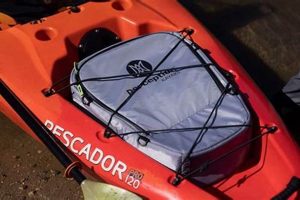
Fishing kayaks offer various storage options, including hatches, tank wells, and integrated storage compartments. Hatches provide secure, waterproof storage for sensitive items like electronics and clothing. Tank wells, typically located behind the seat, offer open storage for larger items such as tackle boxes and coolers. Integrated compartments within the kayak’s hull provide designated spaces for specific gear, like rods and paddles. The availability and configuration of these storage types influence the kayak’s suitability for different fishing styles and gear requirements. An angler carrying substantial fishing gear might prioritize a kayak with a large tank well and multiple hatches, while a minimalist angler might prefer a simpler setup with fewer, smaller compartments.
- Storage Capacity and Weight Distribution
The total storage capacity and its distribution within the kayak influence weight distribution and stability. Evenly distributing weight throughout the kayak enhances stability and paddling efficiency. Overloading a specific storage area can negatively impact balance and performance. Consider an angler storing heavy tackle in the stern of the kayak. This uneven weight distribution can create drag and hinder maneuverability. Understanding the storage capacity and recommended weight distribution guidelines for an orange fishing kayak ensures optimal performance and safety on the water.
- Accessibility and Organization
Easy access to stored gear is crucial for maintaining fishing momentum. Well-designed storage compartments with readily accessible openings and intuitive organization systems facilitate efficient gear retrieval and minimize disruptions during fishing. Consider an angler needing to quickly change lures. Easily accessible tackle boxes within reach enable swift lure changes without compromising fishing position or stability. The accessibility and organization features of the storage system contribute to a seamless and efficient angling experience.
- Security and Protection
Protecting gear from the elements and potential loss is paramount. Waterproof hatches and sealed compartments safeguard sensitive items from water damage, while secure closures and tie-down points prevent gear from shifting or being lost overboard. Consider an angler fishing in rough conditions with splashing waves. Waterproof storage compartments ensure essential electronics and personal belongings remain dry and functional. The security and protection offered by the storage system contribute to peace of mind and preserve valuable equipment.
These facets of storage collectively influence the overall functionality and suitability of an orange fishing kayak for various angling needs. Choosing a kayak with appropriate storage features enhances organization, efficiency, and ultimately, fishing success. Understanding the interplay between storage capacity, accessibility, security, and weight distribution empowers anglers to make informed decisions and maximize their time on the water.
6. Comfort
Comfort is a crucial factor influencing the overall enjoyment and duration of kayak fishing excursions. An uncomfortable seating arrangement or inadequate support can lead to fatigue, discomfort, and a diminished fishing experience. Understanding the comfort features of an orange fishing kayak is essential for maximizing time on the water and ensuring an enjoyable outing.
- Seat Design and Adjustability
The seat design significantly impacts comfort. Features like adjustable backrests, padded seating surfaces, and breathable materials contribute to prolonged comfort and reduced fatigue. An adjustable backrest allows anglers to customize the seat to their individual preferences, accommodating different body types and fishing styles. A well-designed seat minimizes pressure points and provides adequate support, allowing for extended periods on the water without discomfort. Consider an angler spending hours on the water. A comfortable, adjustable seat can significantly enhance their endurance and overall enjoyment of the fishing trip.
- Legroom and Footrests
Adequate legroom and adjustable footrests are essential for maintaining a comfortable paddling position and reducing leg fatigue. Adjustable footrests accommodate varying leg lengths and allow for optimal paddling leverage. Sufficient legroom enables anglers to shift position and maintain circulation during long fishing sessions. Consider an angler with longer legs. Adjustable footrests allow them to extend their legs fully, preventing cramping and maintaining a comfortable paddling posture. Ample legroom enables stretching and movement, reducing stiffness and promoting circulation during extended periods on the water.
- Kayak Stability and Comfort
Kayak stability indirectly influences comfort. A stable platform reduces the need for constant adjustments and bracing, minimizing fatigue and enhancing relaxation. Anglers can focus on fishing rather than maintaining balance, increasing overall comfort and enjoyment. Consider an angler fishing in choppy water. A stable kayak platform minimizes rocking and swaying, allowing the angler to maintain a comfortable and secure position. This enhanced stability reduces fatigue and allows for greater focus on fishing.
- Ergonomics and Accessibility
Ergonomic design principles, including the placement of rod holders, storage compartments, and other accessories, contribute to comfort and efficiency. Easily accessible gear and strategically positioned components minimize reaching and straining, promoting a comfortable and effortless fishing experience. Consider an angler needing to access tackle stored within the kayak. Conveniently located and easily accessible storage compartments minimize awkward reaching and bending, enhancing comfort and efficiency. Ergonomic design principles prioritize user comfort and minimize physical strain, contributing to a more enjoyable fishing experience.
These comfort features collectively influence the overall kayak fishing experience. A comfortable and well-designed kayak promotes longer fishing trips, reduces fatigue, and enhances overall enjoyment on the water. Understanding the interplay between seat design, legroom, stability, and ergonomics empowers anglers to select kayaks that prioritize comfort and maximize their time on the water. Choosing a comfortable orange fishing kayak enhances not only the fishing experience but also the overall well-being of the angler.
7. Specialization

Specialization distinguishes fishing kayaks from recreational models, optimizing them for angling pursuits. Features like rod holders, tackle storage, and fish finders enhance functionality and efficiency on the water. These specialized components streamline the fishing process, allowing anglers to focus on the sport. Cause and effect are evident: specialized features lead directly to improved fishing outcomes. For example, integrated rod holders secure rods, freeing hands for other tasks, while specialized storage keeps tackle organized and readily accessible, minimizing time spent searching for equipment.
Specialization as a component of the orange fishing kayak is essential for maximizing angling potential. Consider an angler targeting specific species in a challenging environment. Specialized features, such as a livewell for keeping bait fresh or an anchor system for maintaining position in currents, become crucial for success. These adaptations cater to specific fishing styles and environments, highlighting the importance of specialization in achieving desired outcomes. Furthermore, the bright orange color, while contributing to visibility and safety, can also serve a specialized purpose in certain fishing scenarios. In murky waters or dense vegetation, the bright hue can attract certain fish species, increasing the likelihood of a successful catch.
Understanding the practical significance of specialization empowers anglers to select kayaks tailored to their individual needs and target species. Recognizing the connection between specialized features and improved fishing outcomes enables informed decision-making and enhances on-water performance. While a basic kayak may suffice for casual paddling, a specialized fishing kayak, with its dedicated features and design, elevates the angling experience, increasing efficiency, comfort, and ultimately, the likelihood of success. This understanding empowers anglers to invest wisely in equipment that aligns with their specific fishing goals and aspirations.
Frequently Asked Questions
This section addresses common inquiries regarding specialized small, brightly-colored watercraft designed for angling.
Question 1: Does the bright color affect fish behavior and reduce catch rates?
While some fish species are sensitive to bright colors, the impact of a brightly-colored kayak on catch rates is generally minimal, especially in deeper or murky water. Furthermore, the enhanced visibility provided by the bright color contributes significantly to angler safety, outweighing any potential minor impact on fish behavior.
Question 2: Are these specialized watercraft suitable for all water types?
Specific models cater to different water conditions. Shorter, wider hulls are generally preferred for calm lakes and ponds, while longer, narrower hulls are better suited to rivers and coastal waters. Selecting an appropriate model depends on the intended fishing environment.
Question 3: What are the essential safety precautions for using these vessels?
Essential safety measures include wearing a personal flotation device, carrying a whistle or other signaling device, informing someone of the fishing plan, and checking weather conditions before embarking. Adhering to these precautions significantly reduces risks associated with on-water activities.
Question 4: How does one choose the correct size and type of specialized fishing watercraft?
Consider factors like angler weight and height, intended fishing location, and storage needs when selecting a suitable vessel. Researching various models and seeking expert advice can aid in informed decision-making.
Question 5: What are the advantages of using a specialized small, brightly-colored watercraft compared to traditional fishing boats?
Advantages include affordability, portability, maneuverability in shallow water, and stealth. These vessels offer unique access to fishing locations often inaccessible to larger boats. Their lighter weight and smaller size simplify transportation and storage.
Question 6: How does one maintain and care for a specialized small, brightly-colored fishing watercraft?
Regular cleaning, proper storage, and periodic inspections for damage contribute to the longevity and performance of these vessels. Following manufacturer guidelines for maintenance ensures optimal condition and safe operation.
Understanding these common inquiries provides a foundation for informed decisions regarding the selection, use, and maintenance of specialized fishing watercraft. Thorough research and adherence to safety guidelines contribute to a rewarding and safe angling experience.
The following section will offer a concluding summary and resources for further exploration.
Conclusion
An orange fishing kayak represents a specialized tool designed to enhance angling experiences. Its vibrant hue contributes significantly to on-water visibility, a crucial safety factor. Specialized features, including rod holders, storage compartments, and a stable hull design, optimize functionality and efficiency for angling pursuits. Understanding the interplay between design, features, and intended use empowers informed selection and maximizes the benefits offered by this specialized vessel.
The increasing popularity of this specialized vessel underscores its effectiveness and adaptability for diverse fishing environments. Continued advancements in design and technology promise further enhancements to performance, safety, and overall angling experience. Careful consideration of individual needs, fishing style, and target environments ensures appropriate selection and contributes to a rewarding and safe on-water experience. Prioritizing safety, responsible use, and respect for aquatic ecosystems ensures the sustainability of this specialized fishing platform for future generations of anglers.