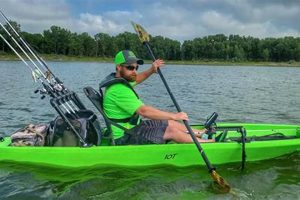
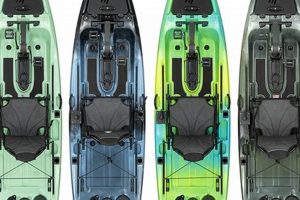
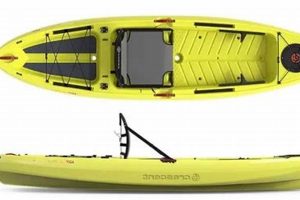
The concept of a small, maneuverable vessel designed for angling, capable of facilitating a large haul, represents a significant development in recreational fishing. This type of watercraft offers anglers increased access to diverse fishing locations, often unreachable by larger boats, while potentially enhancing their catch. An example would be a compact, lightweight vessel designed for stability and equipped with features like rod holders, storage compartments, and even livewells, all aimed at optimizing the fishing experience and maximizing potential yield.
Historically, fishing from small, human-powered craft has been a common practice across cultures. Modern advancements in materials and design have led to specialized kayaks tailored specifically for angling. These purpose-built vessels offer increased stability, comfort, and functionality compared to traditional kayaks, benefiting anglers by allowing longer fishing trips, improved access to shallow or confined waterways, and ultimately, the potential for a more productive and enjoyable fishing experience. This focus on angler needs has driven innovation in kayak design, leading to features that directly address the challenges and opportunities inherent in pursuing a plentiful catch from a small watercraft.
This article will further explore various aspects related to selecting, outfitting, and utilizing such specialized fishing kayaks, covering topics such as hull design, propulsion systems, essential accessories, and effective fishing techniques tailored to these versatile platforms. A deeper understanding of these factors will empower anglers to make informed choices and maximize their success on the water.
Tips for Maximizing Kayak Fishing Success
Achieving a substantial catch from a kayak requires careful planning and execution. The following tips offer guidance for enhancing on-the-water performance and maximizing fishing potential.
Tip 1: Stability is Paramount: Select a kayak designed for stability, especially in challenging conditions. A wider hull generally provides a more stable platform for casting, reeling, and landing fish. Consider kayaks specifically designed for fishing, often featuring wider beams and flatter bottoms.
Tip 2: Optimize Kayak Layout: Organize gear strategically within the kayak for easy access and to maintain balance. Distribute weight evenly and secure essential items to prevent shifting during movement.
Tip 3: Master Paddle Techniques: Efficient paddling conserves energy and allows for precise maneuvering. Practice different paddle strokes to navigate effectively in varying currents and wind conditions.
Tip 4: Utilize Anchoring Systems: Employ appropriate anchoring techniques to maintain position in desired fishing locations, especially in currents or windy conditions. Consider anchor types specifically designed for kayaks and shallow water.
Tip 5: Choose Appropriate Fishing Gear: Select fishing rods, reels, and tackle suitable for kayak fishing. Shorter rods often provide better control in the confined space of a kayak, and specialized tackle can enhance effectiveness in specific target environments.
Tip 6: Practice Safe Kayak Handling: Prioritize safety by wearing a personal flotation device and carrying essential safety equipment, including a whistle, signaling device, and bilge pump. Familiarize oneself with self-rescue techniques.
Tip 7: Respect the Environment: Practice ethical angling by adhering to catch-and-release guidelines when appropriate and minimizing environmental impact. Properly dispose of fishing line and other waste.
By implementing these strategies, anglers can significantly enhance their chances of a successful and rewarding kayak fishing experience. Preparation and informed decision-making are key to maximizing on-the-water efficiency and overall catch.
This information provides a foundation for successful kayak angling. The subsequent sections will delve into more specific techniques and considerations for various fishing environments and target species.
1. Kayak Stability

Kayak stability plays a crucial role in the pursuit of a plentiful catch from a fishing kayak. A stable platform allows for effective casting, accurate lure presentation, and secure hooksets, all essential components of successful angling. Compromised stability, often caused by factors like rough water conditions or improper weight distribution, can hinder casting accuracy, leading to missed strikes and reduced catch rates. Consider a scenario where an angler attempts a long cast in choppy water from an unstable kayak. The shifting platform can disrupt the casting motion, resulting in inaccurate lure placement and decreased chances of attracting fish. Conversely, a stable kayak allows for controlled casts even in challenging conditions, maximizing the angler’s chances of success.
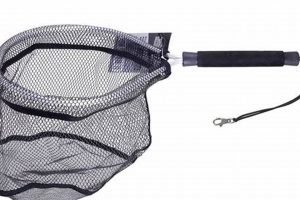
The importance of stability extends beyond casting. A stable kayak provides a secure platform for fighting and landing fish. When a fish is hooked, the angler needs to maintain balance while exerting pressure on the line. An unstable kayak can compromise this process, potentially leading to lost fish, especially larger, more powerful species. Furthermore, landing a fish from an unstable platform presents safety risks. A stable kayak provides a secure base for maneuvering the fish and utilizing landing tools like nets or grips, reducing the risk of capsizing or injury. For instance, landing a large fish in a narrow, unstable kayak could cause the vessel to tip, potentially resulting in the loss of both the fish and valuable equipment, or even personal injury.
Understanding the critical connection between kayak stability and fishing success allows anglers to make informed decisions regarding kayak selection, outfitting, and on-the-water practices. Choosing a kayak with a stable hull design, appropriate for the intended fishing environment, forms the foundation for a successful outing. Proper weight distribution within the kayak further enhances stability, optimizing performance and safety. Ultimately, prioritizing kayak stability significantly contributes to achieving a substantial catch and a safe, enjoyable fishing experience. Neglecting this crucial aspect can lead to frustration, diminished success, and potential safety hazards.
2. Efficient Propulsion

Efficient propulsion forms a cornerstone of successful fishing kayak outings, directly influencing the ability to reach productive fishing grounds and maximize catch potential. Consider the scenario of a vast lake or expansive estuary. Limited propulsion efficiency translates to restricted access to prime fishing locations, consequently reducing the likelihood of encountering target species. Conversely, a kayak equipped with an efficient propulsion system enables anglers to cover greater distances, explore diverse habitats, and ultimately increase their chances of locating and landing a substantial catch. This might involve leveraging a pedal-driven system for hands-free movement or utilizing a trolling motor to navigate swiftly across larger bodies of water, conserving energy for the actual fishing activity.
Beyond simply reaching fishing destinations, efficient propulsion allows for strategic maneuvering within those locations. Maintaining precise positioning while drifting or slow trolling is crucial for presenting lures effectively and targeting specific structures where fish congregate. An inefficient propulsion system can hinder this precision, leading to missed opportunities. For instance, struggling against a current with a cumbersome paddle can disrupt lure presentation, spooking fish and diminishing catch rates. In contrast, a responsive and efficient system, such as a well-designed pedal drive, allows for subtle adjustments in position, optimizing lure presentation and maximizing the chances of enticing a strike.
The practical significance of efficient propulsion becomes particularly apparent in scenarios involving changing weather or tidal conditions. A sudden shift in wind or current can create challenging conditions, demanding efficient propulsion for maintaining control and navigating safely back to shore. An angler struggling against a strong headwind with an inefficient paddle faces increased risk and reduced fishing effectiveness. However, an efficiently propelled kayak, perhaps equipped with a powerful motor, offers increased maneuverability and safety in such situations. Therefore, prioritizing efficient propulsion not only enhances fishing success but also contributes to overall safety and preparedness on the water.
3. Strategic Gear Storage

Strategic gear storage plays a vital role in maximizing efficiency and catch potential in kayak fishing. Organized and accessible equipment allows anglers to adapt quickly to changing conditions, present lures effectively, and ultimately land more fish. Inefficient storage, conversely, leads to wasted time, frustration, and missed opportunities. The following facets highlight the key components and implications of strategic gear storage within the context of achieving a substantial catch from a fishing kayak.
- Accessibility of Essential Tackle:
Rapid access to frequently used items like lures, hooks, and line is crucial for maintaining fishing momentum. Fumbling through disorganized storage disrupts fishing flow and can spook fish. Imagine a scenario where a fish is actively feeding on a specific type of lure. An angler with readily accessible tackle can quickly switch to the appropriate lure and capitalize on the opportunity. Conversely, an angler struggling to locate the correct lure amidst a cluttered kayak may miss the feeding window entirely. Strategic organization, utilizing tackle boxes with compartments and readily accessible storage solutions, keeps essential gear at hand, maximizing responsiveness and fishing success.
- Efficient Space Utilization:
Kayaks offer limited storage space, necessitating efficient organization to accommodate essential gear. Maximizing available space ensures anglers can carry a diverse selection of tackle and equipment to address varying fishing conditions and target different species. Carrying excess or unnecessary gear, or inefficiently packing available space, compromises maneuverability and stability. For example, an overloaded kayak sits lower in the water, reducing stability and increasing the risk of capsizing. Strategic packing, utilizing dry bags, specialized kayak crates, and thoughtful arrangement, optimizes space utilization and enhances overall kayak performance.
- Maintaining Kayak Balance:
Proper weight distribution within the kayak is paramount for maintaining stability and maneuverability. Unevenly distributed gear can create imbalances, impacting tracking and increasing the risk of capsizing, especially in challenging conditions like wind or currents. Consider a scenario where an angler has concentrated heavy gear on one side of the kayak. This imbalance can cause the kayak to lean, hindering paddling efficiency and compromising stability. Strategic gear placement, distributing weight evenly throughout the vessel, ensures optimal balance and enhances overall kayak control, contributing to a safer and more productive fishing experience.
- Protection of Equipment:
Protecting valuable fishing gear from the elements is essential for maintaining its functionality and longevity. Exposure to water, sun, and other environmental factors can damage rods, reels, electronics, and tackle. Imagine a scenario where sensitive electronic equipment, like a fish finder, is exposed to rain or splashing water. This exposure can damage the device, rendering it useless and hindering fishing success. Utilizing waterproof storage solutions, such as dry bags and sealed containers, safeguards equipment, ensuring its reliability and extending its lifespan.
By implementing these strategic gear storage practices, anglers enhance their efficiency, safety, and overall catch potential. Organized and accessible gear allows for quick adaptation to changing conditions, maximizing fishing opportunities and contributing to a more rewarding experience on the water. The ability to quickly change lures, maintain kayak balance, and protect valuable equipment significantly contributes to the pursuit of a substantial catch from a fishing kayak.
4. Effective Fish Finding
Effective fish finding represents a cornerstone of achieving a substantial catch from a fishing kayak. Locating areas where target species congregate significantly increases the probability of successful hookups and contributes directly to overall angler success. Without effective fish finding strategies, anglers may expend considerable effort with minimal returns, diminishing the overall fishing experience. The following facets explore the crucial components and implications of effective fish finding within the context of maximizing catch potential from a fishing kayak.
- Understanding Fish Behavior:
Knowledge of fish behavior, including preferred habitats, feeding patterns, and responses to environmental factors, forms the foundation of effective fish finding. Anglers familiar with the target species’ habits can predict their locations based on factors such as water temperature, depth, structure, and prey availability. For instance, understanding that certain species prefer cooler, deeper water during warmer months allows anglers to focus their search efforts in those areas. Conversely, lacking this knowledge can lead to unproductive fishing in unsuitable locations. Practical application of this understanding might involve seeking shaded areas along shorelines during peak sun hours or focusing on drop-offs and ledges where fish often ambush prey.
- Utilizing Fish Finding Technology:
Modern fish finding technology, such as sonar and GPS units, provides valuable insights into underwater structures and fish locations. These tools allow anglers to identify promising fishing spots, pinpoint fish aggregations, and navigate precisely to target areas. Consider a scenario where an angler uses sonar to identify a submerged reef structure. This information enables targeted fishing efforts, increasing the likelihood of encountering fish holding near the reef. Without such technology, locating these hidden structures and the fish they attract would prove significantly more challenging. Effectively interpreting sonar readings and utilizing GPS waypoints enhances fishing efficiency and increases catch potential.
- Observing Natural Cues:
Observing natural cues offers valuable insights into fish presence and activity. These cues can include surface disturbances, bird activity, baitfish schools, and changes in water clarity or temperature. For example, noticing a flock of birds diving repeatedly in a specific area suggests the presence of baitfish and potentially larger predatory fish feeding on them. Similarly, changes in water clarity, such as a muddy plume entering a clear area, can indicate feeding activity or changes in current patterns that attract fish. Attuned observation skills enhance fish finding capabilities, especially when combined with other techniques like sonar or knowledge of fish behavior.
- Leveraging Local Knowledge:
Local knowledge, gained through experience or consultation with experienced anglers, can provide invaluable insights into productive fishing spots and local fish behavior patterns. Local anglers often possess intimate knowledge of specific waterways, including seasonal fish movements, preferred bait types, and effective fishing techniques tailored to the area. For instance, a local angler might recommend specific lures or fishing techniques effective during a particular time of year or in a specific location within a larger body of water. Leveraging this local knowledge can significantly reduce search time and increase catch rates, particularly for anglers unfamiliar with a given area.
Effective fish finding, encompassing understanding fish behavior, utilizing technology, observing natural cues, and leveraging local knowledge, constitutes a critical element for maximizing catch potential from a fishing kayak. By implementing these strategies, anglers increase their efficiency, locate productive fishing areas, and ultimately enhance their chances of achieving a substantial and rewarding catch. The ability to consistently find fish transforms a fishing trip from a hopeful endeavor into a successful pursuit.
5. Proper Techniques

Proper techniques represent the culmination of preparation and knowledge, bridging the gap between potential and actualized success in kayak fishing. While factors like kayak stability and fish finding play crucial roles, proper techniques directly influence the interaction with fish, ultimately determining the outcome of each encounter. This exploration delves into the critical techniques that contribute significantly to achieving a substantial catch from a fishing kayak.
- Casting Accuracy and Precision:
Accurate casting places lures in the optimal position to attract target species. Precision casting allows for targeted presentations to specific structures, cover, or feeding zones. A poorly placed cast can spook fish or render a lure ineffective. Conversely, a well-placed cast, delivered with the appropriate trajectory and landing softly, increases the likelihood of enticing a strike. Consider a scenario where an angler targets a submerged log known to hold fish. A precisely placed cast alongside the log maximizes the lure’s visibility and effectiveness, significantly increasing the chance of a hookup.
- Lure Presentation and Retrieval:
Effective lure presentation mimics the natural movements of prey, triggering predatory instincts in fish. Retrieval techniques, including speed, rhythm, and pauses, further enhance the lure’s appeal. An angler skilled in lure presentation understands how to impart lifelike action to the lure, making it irresistible to target species. For instance, varying the retrieval speed of a crankbait can mimic the erratic movement of an injured baitfish, triggering a predatory response. Similarly, pausing a topwater lure can create enticing ripples, attracting fish from a distance.
- Hookset Technique and Fighting Fish:
A properly executed hookset secures the hook in the fish’s mouth, initiating the fight. Effective fish fighting techniques involve maintaining appropriate line tension, utilizing rod angles to control the fish, and patiently tiring the fish before attempting to land it. A poorly executed hookset can result in a lost fish, while improper fighting techniques can lead to line breakage or the fish throwing the hook. An angler skilled in these techniques maximizes landing success, especially with larger, more powerful fish.
- Landing and Handling Fish:
Safe and efficient landing and handling techniques minimize stress on the fish and ensure angler safety. Proper use of landing nets or grips facilitates a controlled landing process, minimizing the risk of injury to both the angler and the fish. Consider a scenario where an angler attempts to land a large fish without a net in a confined kayak. This presents risks of the fish thrashing and causing injury or escaping. Utilizing appropriate landing tools and handling techniques ensures a smooth and controlled process, protecting both the fish and the angler.
Mastery of these techniques directly correlates with increased catch rates and a more fulfilling kayak fishing experience. While achieving a specific number like 100 fish may depend on various factors, including fish availability and environmental conditions, proper techniques undeniably maximize the potential for success. These skills transform a fishing outing from a passive endeavor into an active pursuit, where knowledge and skill directly influence the outcome. The ability to consistently apply these techniques, adapting to changing conditions and fish behavior, distinguishes the consistently successful angler from the occasional one. By prioritizing the development and application of these techniques, kayak anglers significantly enhance their chances of reaching their catch goals and experiencing the full potential of this rewarding pursuit.
Frequently Asked Questions
This section addresses common inquiries regarding the pursuit of a substantial catch from a fishing kayak, providing concise and informative responses.
Question 1: What type of fishing kayak is best suited for maximizing catch potential?
Kayak selection depends on target species and fishing environment. Stable platforms, offering ample storage and optimized for specific fishing styles (e.g., trolling, sight casting), generally enhance catch potential. Consider factors like hull design, length, and weight capacity when selecting a kayak.
Question 2: How does propulsion choice impact catch maximization?
Efficient propulsion expands access to fishing grounds. Paddle propulsion suits smaller, calmer waters; pedal drives offer hands-free fishing; and motorized kayaks cover greater distances efficiently. Consider the fishing environment and target species when choosing a propulsion system.
Question 3: What essential gear contributes most significantly to a large catch?
Essential gear includes appropriate rods, reels, and tackle tailored to the target species; fish finders for locating fish; and efficient storage solutions for organized access. Prioritize quality equipment suited to the specific fishing environment.
Question 4: How does understanding fish behavior influence catch rates?
Knowledge of fish behavior, including preferred habitats, feeding patterns, and responses to environmental factors, guides effective angling strategies. Targeting specific locations and using appropriate lures based on fish behavior increases catch potential.
Question 5: What role do weather and water conditions play in maximizing catch?
Weather and water conditions significantly influence fish behavior and activity levels. Adapting fishing strategies based on these factors, including temperature, wind, and currents, optimizes catch potential. Consult weather forecasts and observe local conditions before and during fishing trips.
Question 6: How does angler experience contribute to achieving a substantial catch?
Experience enhances fish-finding skills, casting accuracy, lure presentation, and overall angling proficiency. Continuous learning, practice, and adaptation to varying conditions contribute significantly to increased catch rates. Consider seeking guidance from experienced anglers or participating in fishing workshops to improve skills.
Addressing these common questions provides a foundational understanding of the factors contributing to a successful kayak fishing experience. Preparation, informed decision-making, and continuous learning are key to maximizing catch potential.
The following section offers further guidance on advanced techniques and specialized strategies for enhancing kayak fishing success.
Conclusion
This exploration has examined the multifaceted aspects of maximizing catch potential from a fishing kayak. From the foundational element of kayak stability to the nuanced art of lure presentation, each component contributes significantly to overall success. Efficient propulsion expands access to promising fishing grounds, while strategic gear storage optimizes efficiency and responsiveness. Effective fish finding, driven by an understanding of fish behavior and aided by technology, pinpoints productive areas, and proper techniques translate potential into tangible results. Each element, while significant individually, contributes synergistically to the overarching goal of a rewarding and productive fishing experience.
The pursuit of a substantial catch from a fishing kayak represents a dynamic interplay of preparation, knowledge, and adaptability. While the specific number of fish caught may vary based on environmental factors and angler skill, the principles outlined herein provide a framework for consistent success. Continued learning, refinement of techniques, and a deep appreciation for the aquatic environment will undoubtedly enhance future fishing endeavors, transforming each outing into a journey of skill development and connection with nature.