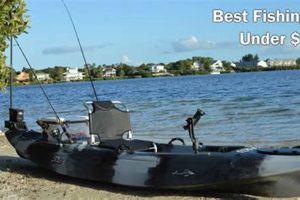
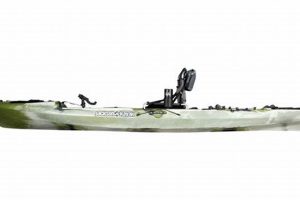
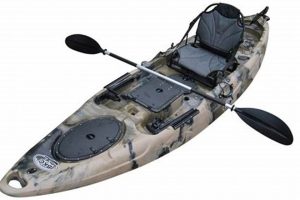
A premium, stable watercraft designed for angling offers enhanced visibility and casting range compared to traditional seated kayaks. These specialized vessels prioritize stability features like wider hulls, flat decks, and outriggers, enabling anglers to stand comfortably and securely while fishing. A high-quality example might feature a non-slip deck surface, ample storage for gear, and integrated rod holders.
Elevated sightlines allow for better fish spotting and more accurate casting, particularly in shallow waters or when targeting specific structures. The ability to stand and move freely provides greater leverage for fighting larger fish, contributing to a more dynamic and successful fishing experience. The development of these specialized kayaks reflects the growing demand for comfort and performance in the sport of kayak fishing.
This discussion will further explore key features to consider when selecting a stable fishing kayak, including hull design, weight capacity, and additional accessories that enhance on-the-water performance and angler comfort. It will also cover relevant safety considerations and maintenance practices.
Tips for Selecting a Stable Fishing Kayak
Choosing a suitable vessel for stand-up fishing requires careful consideration of several factors. These tips offer guidance for selecting a kayak that balances stability, performance, and angler needs.
Tip 1: Prioritize Stability: Look for features that maximize stability, such as a wide hull, a flat deck, and potentially outriggers or pontoons. Consider the intended fishing environment; calmer waters may allow for slightly less stable designs.
Tip 2: Evaluate Weight Capacity: Ensure the kayak’s weight capacity comfortably accommodates the angler’s weight, plus fishing gear, and any potential catches. Exceeding the capacity can compromise stability and performance.
Tip 3: Consider Hull Design: Different hull designs offer varying levels of stability and maneuverability. A flatter hull provides greater initial stability, while a slightly more rounded hull may offer improved tracking in moving water.
Tip 4: Assess Deck Features: A spacious, uncluttered deck allows for comfortable standing and easy movement. Look for features like non-slip surfaces, recessed rod holders, and strategically placed gear tracks.
Tip 5: Test Before Purchasing: If possible, test the kayak on the water before making a purchase. This allows for a firsthand assessment of its stability, maneuverability, and overall comfort.
Tip 6: Factor in Transportation and Storage: Consider the kayak’s length and weight, along with available transportation and storage options. A lighter, shorter kayak might be more practical for some individuals.
Tip 7: Research Reputable Brands: Choose kayaks from established manufacturers known for quality construction and reliable performance. Consult reviews and compare different models to find the best fit.
By carefully considering these factors, anglers can choose a kayak that provides a safe and enjoyable platform for stand-up fishing, enhancing both comfort and performance on the water.
Understanding these elements contributes significantly to informed decision-making and ultimately leads to a more rewarding fishing experience.
1. Stability

Stability forms the cornerstone of a successful stand-up fishing kayak experience. A stable platform is essential for casting effectively, landing fish, and ensuring angler safety. Compromised stability can lead to falls, difficulty maneuvering, and an overall diminished fishing experience. The relationship between stability and kayak design is multifaceted, encompassing factors like hull width, shape, and the presence of stabilizing features such as outriggers or pontoons. Wider, flatter hulls generally offer greater initial stability, crucial for maintaining balance while standing. A kayak designed specifically for stand-up fishing prioritizes these elements. For example, a kayak with a wide, flat hull and a lower center of gravity will provide a more stable platform than a narrow, rounded hull designed for speed. Specialized features like outriggers further augment stability, particularly in challenging conditions.
The practical significance of stability in a fishing kayak becomes readily apparent when considering real-world scenarios. Standing allows for greater casting distance and accuracy, crucial for reaching prime fishing spots or presenting lures effectively. Fighting a fish from a standing position offers improved leverage and control, particularly when dealing with larger species. However, these advantages become liabilities without adequate stability. Imagine hooking a sizable fish while standing in a wobbly kayak; the situation quickly becomes precarious. A stable platform transforms these actions from risky maneuvers into confident and controlled movements. Furthermore, stability contributes significantly to angler confidence, allowing for a more focused and enjoyable experience. Knowing the platform is secure allows anglers to concentrate on the task at hand fishing rather than constantly worrying about balance.
In summary, stability is not merely a desirable feature in a stand-up fishing kayak; it is a fundamental requirement. It directly impacts performance, safety, and overall angler experience. Choosing a kayak specifically engineered for stand-up fishing, incorporating design elements that maximize stability, is crucial for a productive and enjoyable time on the water. Investing in a stable platform ultimately allows anglers to fully leverage the advantages of stand-up fishing, maximizing their potential for success and enjoyment on the water.
2. Hull Design
Hull design significantly influences a fishing kayak’s performance, especially for stand-up angling. The hull’s shape, width, and length directly affect stability, maneuverability, and tracking, making it a crucial consideration when selecting a kayak for this purpose. Understanding the nuances of hull design empowers informed decisions, optimizing the on-water experience.
- Width and Stability
Wider hulls generally provide greater initial stability, a critical factor for standing and casting. Increased width creates a larger surface area and lower center of gravity, reducing the likelihood of tipping. However, excessive width can compromise maneuverability. A wider hull, such as a pontoon-style hull, provides a very stable platform ideal for stand-up fishing in calm waters, but sacrifices maneuverability in tight spaces or moving water. A narrower hull, while less stable for standing, allows for quicker turns and easier navigation through obstacles. Finding the optimal balance between stability and maneuverability is crucial, dependent on the intended fishing environment.
- Hull Shape and Performance
Hull shapes categorized as flat, rounded, or V-shaped each offer distinct performance characteristics. Flat hulls maximize stability for stand-up fishing but sacrifice tracking, the kayak’s ability to maintain a straight course. Rounded hulls offer a balance between stability and maneuverability. V-shaped hulls excel in tracking and speed but compromise stability, making them less suitable for stand-up fishing. Consider a flatter hull for calm lakes and ponds, while a slightly rounded hull might be preferable for rivers with gentle currents. Matching hull shape to the intended water conditions optimizes performance.
- Length and Tracking
Longer kayaks generally track better than shorter ones, maintaining direction more effectively. However, increased length can hinder maneuverability in tight spaces. Shorter kayaks turn more easily but may require more frequent corrections to stay on course. A longer kayak is beneficial in open water or when covering longer distances, while a shorter kayak is preferable for navigating narrow creeks or maneuvering around dense vegetation. Choosing the appropriate length requires balancing tracking performance with maneuverability needs.
- Specialized Hull Features
Some fishing kayaks incorporate specialized hull features to enhance performance. Tunnel hulls, for example, improve tracking in shallow water, while multi-chine hulls combine stability with efficient tracking. Features like integrated skegs or rudders can also improve tracking, especially in windy conditions. Considering these features expands the range of options available and allows for finer performance tuning.
Careful consideration of these hull design elements is essential for selecting a kayak well-suited for stand-up fishing. Prioritizing stability without compromising maneuverability too heavily relies on understanding the interplay between hull width, shape, length, and specialized features. A well-chosen hull design contributes significantly to a comfortable, efficient, and ultimately successful fishing experience.
3. Weight Capacity

Weight capacity is a critical factor when selecting a fishing kayak, particularly for stand-up angling. It directly impacts stability, performance, and safety. Insufficient weight capacity compromises stability, making standing and casting difficult and potentially dangerous. Conversely, excessive capacity adds unnecessary weight and bulk, hindering maneuverability. Understanding weight capacity and its implications is essential for informed decision-making.
- Total Weight vs. Kayak Weight
Weight capacity refers to the total weight a kayak can safely carry, including the angler, gear, and any potential catch. It’s essential to distinguish this from the kayak’s own weight, which influences portability and handling. A kayak’s listed weight capacity should comfortably exceed the anticipated total load. For example, an angler weighing 175 pounds with 50 pounds of gear needs a kayak with a capacity exceeding 225 pounds. Choosing a kayak with a slightly higher capacity provides a margin of safety and improved performance.
- Stability and Performance Implications
Exceeding a kayak’s weight capacity significantly compromises stability, making standing and casting challenging and potentially dangerous. The kayak sits lower in the water, increasing the risk of capsizing, especially in rough conditions or when fighting a fish. Reduced freeboardthe distance between the waterline and the deckalso increases the likelihood of water entering the cockpit. Conversely, a kayak significantly below its weight capacity may feel less stable due to reduced contact with the water. Operating within the specified weight range optimizes stability and performance.
- Calculating Realistic Load Requirements
Accurately assessing load requirements involves considering not only the angler’s weight and gear but also potential catches. Overestimating weight requirements ensures safe operation and avoids performance compromises. Consider typical fishing gear, including rods, reels, tackle boxes, and safety equipment, along with an estimate of the average weight of expected catches. Adding a safety margin to these calculations ensures adequate capacity even in unexpected situations.
- Capacity and Kayak Size
Weight capacity often correlates with kayak size. Larger kayaks generally have higher capacities but sacrifice maneuverability. Smaller kayaks offer increased agility but may have limited capacity. Balancing capacity needs with maneuverability preferences requires careful consideration of fishing style and environment. For example, a larger, higher-capacity kayak might be suitable for open-water fishing targeting larger species, while a smaller, more maneuverable kayak is preferable for navigating narrow creeks or shallow waters.
Selecting a fishing kayak with appropriate weight capacity is crucial for safety, performance, and overall enjoyment on the water. Careful consideration of angler weight, gear, potential catches, and the interplay between capacity and kayak size ensures informed decision-making. A kayak with adequate weight capacity provides a stable and efficient platform for stand-up fishing, enabling anglers to focus on the sport and maximize their chances of success.
4. Deck Features

Deck features significantly influence the functionality and practicality of a fishing kayak designed for stand-up angling. These features contribute directly to angler comfort, efficiency, and overall fishing success. A well-designed deck facilitates ease of movement, secure gear storage, and efficient tackle management, essential elements for a productive and enjoyable fishing experience. Ignoring deck features can lead to frustration, wasted time, and compromised safety.
Several key deck features distinguish a premium stand-up fishing kayak. Non-slip surfaces provide secure footing, crucial for maintaining balance while standing and casting. Recessed rod holders keep rods organized and readily accessible, minimizing tangles and maximizing fishing time. Gear tracks offer versatile mounting options for accessories like fish finders, GPS units, and camera mounts. Ample storage compartments, including hatches and tank wells, accommodate tackle boxes, dry bags, and other essential gear. Strategically placed D-rings and bungee cords provide additional tie-down points for securing equipment. Consider a kayak with a recessed area designed for a cooler to keep drinks and catches fresh. A well-organized deck contributes to a safer and more efficient fishing experience.
The practical significance of these features becomes evident during actual fishing scenarios. Imagine standing in a rocking kayak, attempting to unhook a fish while simultaneously managing a tangled fishing line and searching for pliers. A well-designed deck, with readily accessible tools and secure storage, transforms this chaotic scenario into a manageable task. Non-slip surfaces maintain footing, dedicated tool holders keep pliers within easy reach, and a designated area for storing tackle prevents unnecessary clutter. This streamlined setup allows anglers to focus on the task at hand, increasing efficiency and minimizing frustration. Furthermore, a clutter-free deck contributes to angler safety by reducing tripping hazards and ensuring clear pathways for movement. Ultimately, thoughtfully designed deck features transform a standard kayak into a specialized fishing platform, maximizing angler comfort, efficiency, and overall fishing success.
5. Propulsion System

Propulsion systems significantly influence the performance and fishing experience offered by a stand-up fishing kayak. Traditional paddle propulsion, while effective, requires upper body engagement, potentially compromising stability while standing and casting. Pedal-powered systems, employing either propeller or fin drives, offer hands-free operation, enhancing stability and allowing anglers to focus on fishing. Electric motor propulsion provides effortless maneuverability and speed, beneficial for covering larger distances or combating currents. Each propulsion method exhibits distinct advantages and disadvantages, impacting kayak selection based on individual fishing styles and target environments.
Consider a scenario involving sight fishing in shallow water. Paddle propulsion necessitates pausing paddling to cast, potentially spooking fish or missing fleeting opportunities. A pedal-powered system allows continuous, subtle adjustments of position, maintaining optimal casting angles without disturbing the water. Alternatively, when fishing vast lakes or facing strong currents, an electric motor offers efficient and effortless navigation, conserving angler energy for the actual fishing. A propeller-driven pedal system delivers speed and power, suitable for open water or covering long distances. A fin-driven system excels in shallow water and vegetated areas, minimizing the risk of entanglement. Choosing the appropriate propulsion aligns with specific fishing needs.
Selecting the optimal propulsion system for a stand-up fishing kayak requires careful consideration of fishing style, target environment, and personal preferences. Paddle propulsion suits anglers prioritizing simplicity and affordability. Pedal drives offer hands-free fishing, enhancing stability and casting efficiency. Electric motors provide effortless navigation, particularly advantageous in challenging conditions. Understanding the nuances of each system empowers informed decision-making, aligning kayak selection with individual fishing needs and maximizing on-the-water success. Choosing wisely ensures anglers can fully leverage the advantages of stand-up fishing while minimizing potential drawbacks.
6. Storage Capacity
Ample storage capacity is a defining characteristic of a high-quality fishing kayak designed for stand-up angling. Kayak fishing necessitates carrying a variety of gear, including rods, reels, tackle boxes, safety equipment, and personal items. Insufficient storage leads to a cluttered deck, hindering movement and compromising both efficiency and safety. Conversely, well-designed storage solutions facilitate organized gear management, optimizing space utilization and enhancing the overall fishing experience. Dedicated compartments for specific items, such as rods, tackle boxes, and even fish or beverages, maximize space efficiency and minimize the risk of gear damage or loss. Dry storage compartments protect sensitive electronics and personal items from water damage, essential in a frequently wet environment. A kayak designed specifically for fishing incorporates these storage considerations.
The practical implications of inadequate storage become readily apparent during a typical fishing excursion. Imagine attempting to navigate through dense vegetation or shallow water while managing a precariously balanced pile of gear on the deck. Not only does this pose a safety risk, but it also hinders fishing efficiency. A cluttered deck restricts movement, making standing, casting, and landing fish more challenging. Searching for specific items amidst the clutter wastes valuable fishing time and increases frustration. In contrast, a kayak with well-designed storage compartments keeps essential gear organized and readily accessible. Rods are securely stored in dedicated holders, tackle boxes are within easy reach, and personal items are protected in dry storage. This organized approach maximizes fishing time, minimizes frustration, and contributes to a safer and more enjoyable experience.
In summary, adequate storage capacity is not merely a convenience but a critical component of a well-designed stand-up fishing kayak. It directly impacts angler safety, efficiency, and overall enjoyment on the water. Investing in a kayak with ample and well-organized storage solutions allows for a more streamlined and productive fishing experience, maximizing the potential for success and enjoyment. The ability to maintain a clutter-free deck, readily access essential gear, and protect sensitive items from the elements contributes significantly to a positive and productive fishing outing.
7. Comfort Features

Comfort features directly influence the overall experience delivered by a best standing fishing kayak. Extended periods spent on the water, often under challenging conditions, necessitate thoughtful design considerations that prioritize angler comfort. Ignoring ergonomic principles can lead to fatigue, discomfort, and even pain, significantly detracting from the enjoyment and effectiveness of a fishing trip. A kayak engineered with comfort in mind enhances endurance, allowing anglers to fish longer and more effectively. Features like adjustable seating, supportive backrests, and strategically placed footrests contribute significantly to long-term comfort and reduced fatigue.
Consider a scenario involving a full day of fishing in choppy water. An uncomfortable seat, lacking proper back support and adjustable features, quickly leads to fatigue and back pain, hindering performance and diminishing enjoyment. In contrast, an ergonomically designed seat with adjustable height, lumbar support, and breathable fabric allows the angler to maintain focus and energy throughout the day. Similarly, adjustable footrests accommodate varying leg lengths and paddling styles, ensuring optimal biomechanics and reducing strain. The practical significance of these features extends beyond mere comfort; they directly contribute to improved fishing performance. A comfortable angler is a more focused and effective angler, capable of making precise casts, reacting quickly to strikes, and enduring longer fishing sessions without fatigue. Imagine sight fishing for extended periods, requiring constant adjustments to maintain an optimal casting position. Proper footrests and a supportive seat ensure comfort and stability, allowing the angler to focus on the fish rather than physical discomfort.
In summary, comfort features are not mere luxuries in a best standing fishing kayak; they are essential components contributing directly to angler performance, endurance, and overall enjoyment. Investing in a kayak designed with ergonomic principles in mind, incorporating features like adjustable seating, backrests, and footrests, significantly enhances the fishing experience. A comfortable angler is a more effective angler, capable of maximizing fishing time and enjoying every moment on the water. Understanding the importance of comfort in kayak design empowers informed decisions and ensures a more rewarding and productive fishing experience overall.
Frequently Asked Questions
This section addresses common inquiries regarding kayaks designed for stand-up fishing, offering concise and informative responses to facilitate informed purchasing decisions and enhance on-water experiences.
Question 1: How stable are standing fishing kayaks compared to traditional sit-on-top kayaks?
Kayaks designed specifically for stand-up fishing prioritize stability through features like wider hulls, flatter decks, and potentially outriggers. While offering enhanced stability compared to traditional sit-on-top kayaks, individual stability levels vary depending on specific design and angler experience. Caution and proper technique remain crucial.
Question 2: What is the typical weight capacity of a standing fishing kayak?
Weight capacities vary depending on kayak size and design, typically ranging from 300 to 500 pounds. Confirming adequate capacity for the combined weight of the angler, gear, and potential catch is crucial for safe and optimal performance.
Question 3: Are standing fishing kayaks more difficult to paddle than traditional kayaks?
Due to their wider hulls, standing fishing kayaks might offer slightly reduced paddling efficiency compared to narrower, touring-oriented kayaks. However, specialized hull designs and propulsion systems, such as pedal drives, mitigate this potential drawback, optimizing performance for specific fishing environments.
Question 4: What are the key features to consider when choosing a standing fishing kayak?
Essential features include a stable hull design, ample weight capacity, sufficient deck space for comfortable standing, strategically placed rod holders, ample storage compartments, and a comfortable seating system for transitioning between standing and sitting.
Question 5: How important is the propulsion system for stand-up fishing?
Propulsion system choice significantly impacts the stand-up fishing experience. Traditional paddles require upper body engagement, potentially affecting balance. Pedal drives offer hands-free operation, enhancing stability and casting efficiency. Electric motors facilitate covering larger distances or navigating challenging currents.
Question 6: What safety precautions should one take when stand-up fishing from a kayak?
Always wear a personal flotation device (PFD). Start practicing standing in calm, shallow water. Distribute weight evenly. Avoid sudden movements. Be mindful of weather conditions and water currents. Carry a whistle or other signaling device for emergencies.
Addressing these common questions provides valuable insights into the specialized world of stand-up fishing kayaks. Prioritizing stability, carefully considering capacity needs, and selecting appropriate features and propulsion systems contribute significantly to a safe, efficient, and enjoyable fishing experience.
The subsequent section will explore popular models of best standing fishing kayaks, offering detailed reviews and comparisons to further assist in the selection process.
Conclusion
Optimal selection hinges upon a comprehensive understanding of key features. Stability, influenced by hull design and weight capacity, forms the foundation for a secure and effective fishing platform. Deck layout, propulsion systems, storage capacity, and comfort features further contribute to overall performance and angler experience. Careful consideration of these factors ensures a harmonious balance between functionality and individual needs, maximizing on-the-water success and enjoyment. Prioritizing these elements enables informed decision-making, transforming the selection process from a potentially daunting task into a confident stride toward enhanced fishing adventures.
The pursuit of the ideal vessel represents an investment in enhanced fishing experiences. Thorough research, combined with a clear understanding of individual requirements, empowers informed choices, leading to increased on-the-water confidence and success. Embracing these principles elevates angling pursuits, fostering a deeper connection with the sport and the natural world. The journey toward finding the perfect kayak mirrors the pursuit of the perfect catcha rewarding endeavor demanding patience, knowledge, and a passion for the sport.