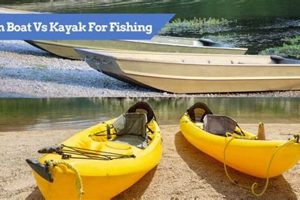
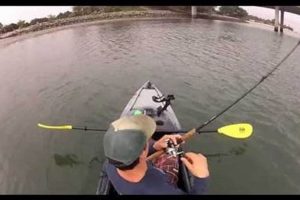
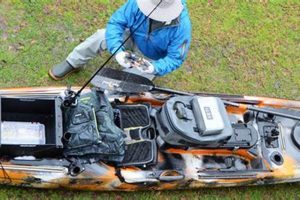
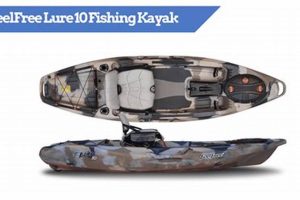
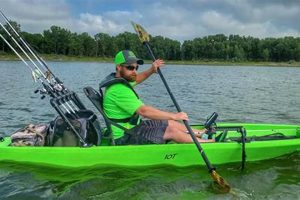
A customized arrangement of equipment on a kayak designed for angling encompasses various elements, including rod holders, fish finders, storage compartments for tackle, and often specialized seating. For example, a typical arrangement might include two flush-mounted rod holders behind the seat, a small fish finder mounted near the paddle area, and a crate secured in the front for storing lures and other gear. This approach allows anglers mobility and access to otherwise difficult-to-reach fishing spots.
This specialized approach to angling offers significant advantages over shore or boat fishing. It provides access to shallow waters and secluded areas often teeming with fish but inaccessible to larger vessels. The relatively low cost of entry compared to motorized boats, combined with the inherent stealth of a kayak, allows for a more natural and less intrusive fishing experience, potentially increasing success rates. Over the past few decades, the increasing popularity of this method has driven innovation in kayak design and specialized fishing accessories, resulting in a wide range of options for anglers of all skill levels.
Considerations for selecting appropriate equipment, configuring it effectively, and employing successful techniques will be explored further.
Tips for Effective Kayak Fishing Setups
Optimizing a kayak for fishing requires careful consideration of various factors to ensure both safety and success on the water. The following tips offer guidance on creating an efficient and productive setup.
Tip 1: Prioritize Stability: Kayak stability is paramount, especially when battling strong currents or larger fish. Wider kayaks generally offer greater stability, while shorter lengths enhance maneuverability in tighter spaces.
Tip 2: Plan Equipment Layout: Before permanently mounting any accessories, consider reach and accessibility. Frequently used items should be within easy reach, minimizing the need for disruptive movements.
Tip 3: Choose Appropriate Rod Holders: Rod holders should securely hold rods while allowing quick release when a fish strikes. Flush-mounted or adjustable holders offer versatility for different fishing techniques.
Tip 4: Integrate a Fish Finder: A fish finder provides crucial information about water depth, structure, and fish location. Choose a model compatible with kayak power systems and mount it for easy viewing.
Tip 5: Secure Essential Gear: Tackle boxes, dry bags, and other gear should be securely fastened to the kayak to prevent loss in case of capsizing. Utilize bungee cords, straps, and dedicated storage compartments.
Tip 6: Consider Comfort and Ergonomics: A comfortable seat and adjustable footrests significantly improve endurance, allowing longer fishing sessions without fatigue. Proper posture also reduces strain and potential injuries.
Tip 7: Practice Safety Precautions: Always wear a personal flotation device and carry essential safety equipment, including a whistle, signaling mirror, and first-aid kit. Inform someone of your fishing plans and expected return time.
By implementing these tips, anglers can create personalized configurations that maximize efficiency, comfort, and safety on the water. A well-planned setup allows focus on the essential task: catching fish.
With a thorough understanding of these key aspects, anglers can confidently transition to practical application and enjoy the rewarding experience of kayak fishing.
1. Kayak Selection

Kayak selection forms the foundation of effective kayak fishing setups. The chosen vessel directly influences stability, maneuverability, storage capacity, and overall fishing experience. A stable platform is crucial for casting, reeling, and landing fish, particularly in challenging conditions. Maneuverability dictates access to shallow waters and precise positioning near target areas. Sufficient storage accommodates essential gear, including rods, tackle, and safety equipment. For example, a longer, narrower kayak excels in open water and covering distance but may compromise stability, while a shorter, wider kayak prioritizes stability for fishing in rivers or sheltered bays, albeit with reduced tracking ability. Understanding these trade-offs is crucial for selecting a kayak appropriate to the intended fishing environment and style.
Consideration of hull design further refines kayak selection within the context of fishing setups. Sit-on-top kayaks offer inherent stability and self-bailing capabilities, advantageous in warmer climates and calmer waters. Sit-inside kayaks provide greater protection from the elements and enhanced paddling efficiency, suitable for colder conditions or longer expeditions. Furthermore, pedal-powered kayaks offer hands-free propulsion, allowing anglers to focus on fishing, though their larger size and weight may limit portability and access to shallow areas. Evaluating these characteristics alongside intended fishing locations and personal preferences ensures compatibility between kayak selection and overall setup.
Careful kayak selection optimizes the entire fishing setup. A thoughtfully chosen vessel provides a stable and efficient platform, allowing anglers to focus on the intricacies of fishing rather than managing an unsuitable craft. Recognizing the interplay between kayak characteristics, intended fishing environment, and personal preferences enables informed decisions, ultimately contributing to a more productive and enjoyable angling experience.
2. Rod Holder Placement

Rod holder placement significantly impacts the efficacy of kayak fishing setups. Strategic positioning optimizes access, minimizes interference, and enhances angling versatility. Incorrect placement can lead to tangled lines, impeded casting, and difficulty retrieving rods, compromising both efficiency and safety. Consider a scenario where an angler trolls with two rods. Positioning holders near the stern, angled outwards, allows for effective line spread and reduces the risk of tangling. Conversely, placing holders too far forward might obstruct paddling and casting. Understanding the interplay between rod holder placement and other setup components is crucial for maximizing fishing potential.
Practical applications underscore the importance of thoughtful rod holder placement. Anglers frequently employ multiple rods for different techniques. Dedicated holders for trolling rods, positioned further back and angled appropriately, maintain line separation. Conversely, readily accessible holders near the cockpit, designed for casting rods, facilitate quick reactions to fish activity. Adaptable setups, utilizing adjustable rod holders, cater to diverse fishing styles, accommodating spinning, baitcasting, and fly fishing techniques. Integrating rod holder placement within the broader context of kayak layout, considering factors like seating position, storage compartments, and fish finder placement, creates a cohesive and functional fishing platform.
Effective rod holder placement contributes significantly to successful kayak angling. Strategic positioning facilitates efficient rod management, minimizes interference with other activities, and maximizes fishing versatility. Careful consideration of fishing style, kayak layout, and individual preferences informs optimal placement. A well-designed setup enhances angling performance, allowing anglers to focus on the pursuit of fish rather than the mechanics of equipment management. This meticulous attention to detail translates to a more rewarding and productive experience on the water.
3. Fish Finder Integration

Fish finder integration represents a pivotal advancement in contemporary kayak fishing setups. These electronic devices provide real-time underwater insights, dramatically enhancing angling effectiveness. By transmitting sonar pulses and interpreting the returning echoes, fish finders generate visual representations of the underwater environment, including depth contours, bottom structure, vegetation, and fish locations. This information empowers anglers to make informed decisions regarding location selection, lure presentation, and retrieval techniques. For example, identifying a submerged drop-off adjacent to a weed bed allows anglers to target specific areas likely to hold fish, optimizing casting efforts and increasing the probability of success. Without fish finder integration, such strategic precision remains elusive, relegating anglers to less efficient search patterns.
The practical significance of fish finder integration extends beyond mere fish identification. Understanding bottom composition, be it rocky, sandy, or muddy, informs lure selection and presentation. Recognizing thermoclines, or temperature gradients, allows anglers to target specific depths where fish may congregate. Furthermore, GPS functionality in many modern fish finders enables precise navigation, marking productive fishing spots, and facilitating safe return to launch points, particularly in unfamiliar waters or challenging conditions. This combination of real-time underwater intelligence and navigational precision significantly elevates the sophistication of kayak fishing setups, transforming them from basic platforms into highly effective fishing instruments.
Fish finder integration has become an indispensable component of optimized kayak fishing setups. The ability to visualize the underwater world empowers informed decision-making, enhancing fishing efficiency and overall success. From identifying promising fishing locations to understanding bottom structure and navigating effectively, fish finders provide a crucial advantage in the pursuit of fish. While traditional angling techniques retain their value, the integration of modern technology, exemplified by fish finders, represents a paradigm shift in kayak fishing, enabling anglers to connect with the underwater environment in unprecedented ways.
4. Tackle Organization
Tackle organization plays a crucial role in effective kayak fishing setups. Efficient organization directly influences fishing efficiency and safety. A cluttered kayak impedes movement, complicates lure retrieval, and increases the risk of entanglement or equipment loss. Conversely, a well-organized system streamlines the fishing process, allowing anglers to quickly locate and deploy the appropriate tackle, maximizing fishing time and minimizing distractions. Consider a scenario where an angler encounters a school of feeding fish. Rapid access to the correct lure, facilitated by organized storage, allows immediate engagement, significantly increasing the chance of a successful hookup. Disorganized tackle, on the other hand, leads to fumbled searches, potentially spooking the fish and losing the opportunity. The cause-and-effect relationship between tackle organization and fishing success is undeniable.
Practical examples further illustrate the significance of tackle organization within kayak fishing setups. Utilizing compartmentalized tackle boxes, dedicated lure storage systems, and clearly labeled containers allows for quick identification and retrieval of specific items. For instance, separating topwater lures from crankbaits and soft plastics ensures that anglers can swiftly adapt to changing fish behavior or water conditions. Moreover, securing these containers within easy reach, using bungee cords or dedicated storage compartments within the kayak, minimizes disruption and maintains a stable fishing platform. Failure to prioritize tackle organization often results in wasted time, frustration, and diminished fishing success. A well-organized system, tailored to individual fishing styles and target species, contributes significantly to a productive and enjoyable experience.
In summary, effective tackle organization constitutes a fundamental element of successful kayak fishing setups. It streamlines the fishing process, maximizes efficiency, and enhances safety. The ability to quickly locate and deploy the appropriate tackle directly impacts fishing success. By prioritizing organization, anglers can focus on the nuances of fishing rather than the challenges of equipment management. This meticulous approach translates to a more rewarding and productive experience on the water, where every moment counts.
5. Safety Equipment

Safety equipment constitutes an indispensable aspect of responsible kayak fishing setups. Prioritizing safety ensures angler well-being and preparedness for unforeseen circumstances. While the focus often rests on optimizing fishing effectiveness, neglecting safety compromises the entire experience. Understanding and implementing appropriate safety measures transforms a fishing trip from potentially hazardous to confidently enjoyable. The following facets illuminate the crucial role of safety equipment within comprehensive kayak fishing setups.
- Personal Flotation Devices (PFDs)
PFDs are non-negotiable components of kayak fishing setups. These devices provide essential buoyancy in the event of capsizing or accidental immersion, preventing drowning. A properly fitted PFD, worn consistently throughout the fishing trip, significantly increases survival chances. Modern PFDs designed specifically for fishing incorporate features like pockets for small tools and high-visibility colors for enhanced visibility in emergencies. Neglecting this fundamental piece of safety equipment exposes anglers to unnecessary risk.
- Signaling Devices
Signaling devices, including whistles, air horns, and flares, enable communication in emergency situations. A whistle, readily accessible on a PFD, can attract attention over considerable distances. Air horns provide an even louder signal, capable of reaching further in foggy or noisy conditions. Flares offer visual distress signals, especially effective at night. These devices facilitate communication with other boaters or rescue personnel, expediting assistance if required. Their compact size and ease of use make them essential additions to any kayak fishing setup.
- First-Aid Kit
A well-stocked first-aid kit addresses minor injuries that may occur during a fishing trip. Hooks, knives, and other sharp objects present inherent risks. A first-aid kit equipped with bandages, antiseptic wipes, pain relievers, and other essential supplies allows for immediate treatment of minor cuts, scrapes, and other injuries. Prompt attention minimizes the risk of infection and promotes faster healing. Carrying a comprehensive first-aid kit demonstrates preparedness and contributes to a safer fishing experience.
- Communication Devices
Communication devices, such as waterproof VHF radios or mobile phones in waterproof cases, provide a vital link to shore or other boaters. In emergencies, these devices enable communication with rescue services or family members, relaying crucial information regarding location and situation. Pre-programming important contact numbers and ensuring devices are fully charged before embarking on a fishing trip maximizes their effectiveness. Reliable communication enhances safety and provides peace of mind during solo trips or excursions in remote locations.
Integrating these safety equipment components within a kayak fishing setup enhances angler preparedness and mitigates potential risks. While optimizing fishing effectiveness remains a primary goal, prioritizing safety ensures a responsible and enjoyable experience. A comprehensive approach, encompassing both effective fishing practices and robust safety measures, transforms kayak fishing from a potentially hazardous activity into a confidently pursued recreational endeavor. By acknowledging the importance of safety equipment and incorporating these essential elements into their setups, anglers demonstrate a commitment to responsible angling and enhance their overall enjoyment of the sport.
6. Paddle/Propulsion Choice

Paddle or propulsion system selection significantly influences kayak fishing setups and overall angling effectiveness. This choice impacts maneuverability, speed, and fatigue levels, directly affecting access to fishing locations and the duration anglers can comfortably remain on the water. Traditional paddle propulsion offers simplicity, affordability, and quiet operation, advantageous in shallow waters and environments requiring stealth. However, paddling requires physical exertion, potentially limiting range and causing fatigue, particularly during longer fishing trips or against strong currents. Conversely, pedal-powered kayaks offer hands-free propulsion, allowing anglers to focus on fishing and reducing fatigue. This advantage proves particularly beneficial when trolling or maintaining position in moving water. However, pedal systems add complexity, cost, and weight to the kayak, potentially limiting portability and access to extremely shallow areas. Furthermore, motorized kayaks provide increased speed and range, enabling access to distant fishing grounds. However, they introduce noise and environmental considerations, potentially impacting fish behavior and requiring adherence to specific regulations.
The practical implications of propulsion choice become evident when considering specific fishing scenarios. In confined creeks or shallow flats, a paddle kayak offers superior maneuverability, navigating tight turns and shallow depths inaccessible to larger, pedal-powered or motorized kayaks. When targeting offshore species or covering vast distances, a motorized kayak might prove more suitable, minimizing travel time and maximizing fishing time. For anglers seeking a balance between hands-free operation and maneuverability, pedal-powered kayaks provide a compelling compromise, particularly in moderately deep waters where trolling or precise positioning are advantageous. Matching propulsion choice to the intended fishing environment and target species optimizes the overall kayak fishing setup.
Effective propulsion selection necessitates careful consideration of fishing style, target species, and environmental factors. Each propulsion method presents distinct advantages and disadvantages, influencing maneuverability, speed, range, and angler fatigue. A well-informed decision, aligning propulsion choice with specific fishing needs and environmental conditions, enhances overall efficiency, enjoyment, and ultimately, fishing success. Understanding these nuances allows anglers to tailor their setups for specific scenarios, maximizing their time on the water and their potential for a rewarding fishing experience.
7. Personal Comfort
Personal comfort significantly impacts the effectiveness and enjoyment of kayak fishing setups. An uncomfortable angler experiences reduced focus, diminished endurance, and a decreased ability to respond effectively to fish activity. Discomfort manifests in various forms, from an inadequately supportive seat causing back pain to poorly positioned footrests leading to leg cramps. These seemingly minor inconveniences accumulate over time, detracting from the overall fishing experience and potentially shortening trips. Conversely, a comfortable and ergonomic setup allows anglers to maintain focus, react quickly to strikes, and endure longer hours on the water, maximizing fishing opportunities. Consider an angler battling a strong fish. A comfortable seating position and secure footing provide the stability and leverage necessary for a successful outcome. Conversely, an uncomfortable angler struggles to maintain balance and control, increasing the risk of losing the fish or even capsizing.
Practical applications highlight the importance of prioritizing personal comfort within kayak fishing setups. Adjustable seating systems, customized to individual body types, provide crucial back support and alleviate pressure points. Ergonomically designed footrests, offering multiple adjustment positions, ensure proper leg extension and prevent cramping. Furthermore, incorporating padded backrests, lumbar support cushions, and even specialized fishing apparel enhances comfort and extends endurance. These seemingly minor adjustments contribute significantly to overall fishing enjoyment and effectiveness. Neglecting personal comfort, however, often results in premature fatigue, diminished performance, and a less rewarding experience on the water.
In conclusion, personal comfort represents a crucial, often overlooked, aspect of effective kayak fishing setups. Prioritizing comfort enhances focus, extends endurance, and improves responsiveness, contributing directly to fishing success and overall enjoyment. While selecting appropriate fishing gear and electronics remains essential, neglecting personal comfort undermines the entire experience. A well-designed setup, tailored to individual physical needs, transforms kayak fishing from a potentially arduous activity into a comfortable and rewarding pursuit. Recognizing this connection allows anglers to maximize their time on the water, focusing on the nuances of fishing rather than the distractions of discomfort.
Frequently Asked Questions about Kayak Fishing Setups
Addressing common inquiries regarding optimized configurations provides clarity for anglers seeking to enhance their kayak fishing experience. The following questions and answers offer practical insights and address potential concerns.
Question 1: How does kayak selection influence overall setup effectiveness?
Kayak choice dictates stability, maneuverability, and storage capacity, directly impacting equipment placement, comfort, and fishing style. Selecting a kayak appropriate to the intended fishing environment and target species is paramount.
Question 2: What factors determine optimal rod holder placement?
Rod holder positioning should prioritize accessibility, minimize interference with paddling and casting, and accommodate intended fishing techniques. Strategic placement enhances efficiency and safety.
Question 3: What are the key benefits of integrating a fish finder into a kayak setup?
Fish finders provide crucial underwater insights, including depth contours, bottom structure, and fish location, enabling informed decisions regarding location selection and lure presentation. They enhance fishing efficiency and overall success.
Question 4: Why is tackle organization crucial for successful kayak angling?
Efficient tackle organization streamlines lure retrieval, minimizes clutter, and reduces the risk of entanglement. Rapid access to appropriate tackle maximizes fishing time and responsiveness to fish activity.
Question 5: What essential safety equipment should be included in every kayak fishing setup?
Essential safety equipment includes a properly fitted personal flotation device (PFD), signaling devices (whistle, air horn, flares), a comprehensive first-aid kit, and communication devices (VHF radio or waterproofed mobile phone).
Question 6: How does the choice of paddle or propulsion system affect kayak fishing?
Propulsion choice influences maneuverability, speed, range, and angler fatigue. Paddles offer simplicity and quiet operation, while pedal or motor-driven systems provide hands-free propulsion and increased range, each suited to specific fishing environments and preferences.
Understanding these fundamental aspects of kayak fishing setups empowers anglers to make informed decisions, enhancing both safety and fishing success. A well-planned setup, tailored to individual needs and preferences, contributes significantly to a more rewarding and productive experience on the water.
Further exploration of specific techniques and advanced setup customizations will enhance angling proficiency.
Kayak Fishing Setups
Optimized kayak fishing setups are integral to successful angling. From kayak selection and rod holder placement to fish finder integration and safety equipment considerations, each component contributes to a cohesive and effective system. Strategic tackle organization and appropriate propulsion choices further enhance efficiency and enjoyment on the water. Prioritizing personal comfort ensures sustained focus and endurance, maximizing fishing opportunities. A well-planned setup, tailored to individual needs and the targeted fishing environment, transforms a simple kayak into a highly effective fishing platform.
Mastery of these multifaceted configurations unlocks the full potential of kayak fishing. Continual refinement of techniques and adaptation to evolving technologies will further elevate angling experiences, fostering a deeper connection with the aquatic environment and enhancing prospects for success. The pursuit of optimized kayak fishing setups represents an ongoing journey, driven by innovation and a commitment to maximizing angling potential.