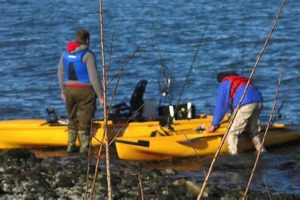
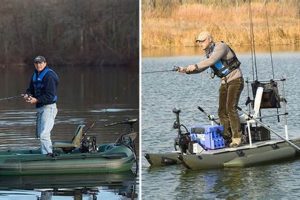
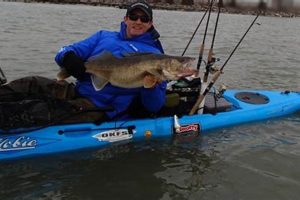
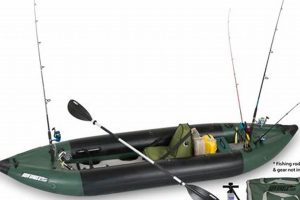
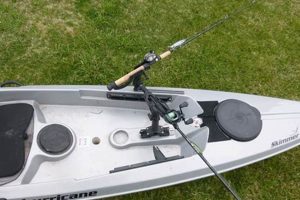
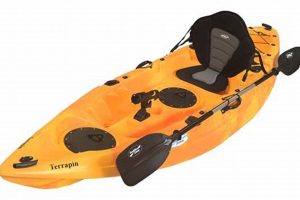
This specific model is a sit-on-top vessel designed for angling. Its compact size and stability make it suitable for various water environments, from lakes and rivers to calmer coastal areas. Features often include integrated rod holders, storage compartments for tackle and gear, and comfortable seating arrangements designed for extended fishing trips.
Compact fishing vessels offer anglers enhanced maneuverability and access to shallow or heavily vegetated areas often inaccessible to larger boats. This particular design emphasizes stability and portability, allowing for easy transport and launch. The evolution of such watercraft reflects a growing demand for versatile and user-friendly fishing platforms that cater to a wide range of angling styles and environments.
Further exploration will cover specific design elements, performance characteristics, user experiences, and comparisons with similar products on the market, providing a complete understanding of this specialized watercraft.
Tips for Utilizing a Compact Fishing Kayak
Optimizing the use of a compact fishing kayak involves understanding its capabilities and limitations. These tips aim to enhance fishing success and overall experience on the water.
Tip 1: Plan and Organize Gear: Limited storage space necessitates careful gear selection and organization. Prioritize essential tackle and safety equipment. Utilize waterproof bags and containers to protect items from moisture.
Tip 2: Practice Paddling and Maneuvering: Familiarize oneself with the vessel’s handling characteristics in calm water before venturing into more challenging conditions. Mastering basic paddling strokes and turning techniques enhances control and efficiency.
Tip 3: Consider Weight Distribution: Proper weight distribution contributes significantly to stability. Distribute gear evenly throughout the kayak, avoiding overloading any single area. Consider the impact of body weight on balance.
Tip 4: Utilize Anchor or Stake-Out Systems: Maintaining position in current or wind requires an effective anchoring system. A lightweight anchor or stake-out pole allows for stationary fishing in desired locations.
Tip 5: Choose Appropriate Paddles: Paddle length and blade shape affect paddling efficiency and comfort. Select paddles suitable for one’s height and paddling style. Consider lightweight, durable options.
Tip 6: Prioritize Safety Gear: Always wear a personal flotation device (PFD) and carry essential safety equipment, including a whistle, signaling device, and first-aid kit. Check weather conditions before embarking and inform someone of the planned fishing location.
Tip 7: Respect Wildlife and the Environment: Adhere to leave-no-trace principles. Pack out all trash, avoid disturbing wildlife, and respect sensitive ecosystems. Be mindful of fishing regulations and licensing requirements.
By adhering to these guidelines, anglers can maximize the advantages of a compact fishing kayak, enhancing both safety and enjoyment on the water.
The following section will offer concluding thoughts on the value and versatility of this specialized fishing platform.
1. Stability

Stability forms a cornerstone of the design, directly influencing its suitability for fishing. A stable platform is paramount for anglers, enabling comfortable casting, reeling, and landing fish without compromising safety. The hull design, featuring a wide beam and a flat bottom, contributes significantly to stability. This broader base reduces rocking and tipping, allowing anglers to shift weight and move around with greater confidence. Consider the scenario of an angler hooking a larger fish; a stable platform becomes crucial for maintaining balance and control during the fight. Additionally, stability enhances safety in various water conditions, from calm lakes to choppy coastal waters.
The practical significance of this stability becomes apparent when considering the diverse activities anglers undertake while on the water. Changing lures, adjusting tackle, reaching for gear, and even landing fish all require a stable base. A lack of stability can lead to frustrating tip-overs, lost gear, and potentially dangerous situations, especially in challenging conditions. Furthermore, enhanced stability allows for more comfortable fishing experiences, reducing fatigue and allowing anglers to focus on the task at hand. For instance, standing to cast, a common practice among anglers, requires a remarkably stable platform, and this model is designed to accommodate such maneuvers.
In conclusion, stability represents a critical design element for the , directly impacting performance, safety, and overall user experience. The emphasis on stability through a well-engineered hull design makes this particular model a viable option for anglers seeking a confident and reliable fishing platform. This stability factor contributes significantly to its suitability for diverse fishing styles and environments.
2. Compact Size

The compact size of the Nucanoe Frontier 10 fishing kayak directly influences its portability, maneuverability, and suitability for specific fishing environments. Understanding the implications of this compact design is crucial for evaluating its overall effectiveness and determining its fit for individual angling needs.
- Transportation and Storage
The shorter length and lighter weight compared to larger kayaks simplify transportation and storage. It can be easily loaded onto a car roof rack, transported in a truck bed, or stored in a garage or shed. This ease of transport expands access to a wider range of fishing locations, including those with limited access points or challenging terrain. Consider, for example, accessing remote ponds or small creeks inaccessible to larger vessels. The compact size minimizes logistical challenges, making spontaneous fishing trips more feasible.
- Maneuverability in Tight Spaces
The Frontier 10’s compact dimensions enhance its agility in confined waterways. Navigating narrow creeks, maneuvering through dense vegetation, and accessing shallow areas become significantly easier. This maneuverability proves advantageous when targeting species that inhabit such environments. Consider a scenario of fishing in a mangrove forest or a heavily vegetated river system; the kayak’s compact size allows for precise navigation and efficient exploration of these complex ecosystems.
- Suitability for Smaller Water Bodies
The Frontier 10’s design makes it well-suited for smaller lakes, ponds, and rivers. Its compact size allows for efficient coverage of these areas, and its maneuverability enhances the ability to target specific fishing spots. This focused approach can be particularly effective when fishing for species that inhabit confined areas. Consider fishing in a small pond or a narrow river; the compact size avoids excessive paddling and allows for concentrated fishing efforts.
- Weight Capacity Considerations
While offering advantages in portability and maneuverability, the compact size may also present limitations in terms of weight capacity. Anglers carrying heavier gear or larger individuals may need to consider weight distribution carefully to maintain stability and performance. This factor highlights the importance of understanding the kayak’s weight limitations and packing gear accordingly. Choosing lightweight tackle and minimizing unnecessary equipment contribute to optimal performance within the specified weight capacity.
The compact size of the Nucanoe Frontier 10 presents a trade-off between portability and capacity. While its smaller dimensions enhance transportability and maneuverability, they also necessitate careful consideration of weight capacity and gear selection. Ultimately, the suitability of this compact design depends on individual angling preferences, target species, and the characteristics of the intended fishing environments. Comparing its dimensions and weight capacity to larger kayak models provides a more comprehensive understanding of its advantages and limitations within the broader context of fishing kayak options.
3. Fishing Features
Dedicated fishing features distinguish specialized fishing kayaks from recreational models. These integrated elements enhance angling efficiency and overall on-the-water experience. The Nucanoe Frontier 10 fishing kayak incorporates several key features designed to cater specifically to the needs of anglers.
- Rod Holders
Flush-mounted rod holders secure fishing rods while paddling or when not actively in use. Various rod holder configurations accommodate different fishing styles and rod types. For example, angled rod holders facilitate trolling, while vertical holders keep rods ready for immediate action. The strategic placement of rod holders minimizes line tangling and maximizes fishing efficiency.
- Storage Compartments
Integrated storage compartments provide designated spaces for tackle boxes, gear, and personal items. Dry storage compartments protect sensitive electronics and other essentials from water damage. Ample storage capacity allows anglers to carry a variety of lures, lines, and tools, enhancing adaptability to changing fishing conditions. Consider the scenario of needing different lures for various depths or species; readily accessible storage compartments streamline the process of switching gear.
- Gear Tracks and Mounting Points
Gear tracks and mounting points offer versatile options for attaching accessories such as fish finders, GPS units, cameras, and additional rod holders. This customization potential allows anglers to tailor the kayak to their specific needs and preferences. For instance, mounting a fish finder provides valuable underwater insights, while a camera allows for capturing memorable catches.
- Anchor Trolley System
An anchor trolley system allows for controlled anchoring and positioning in various current or wind conditions. This feature enables anglers to maintain a desired position relative to structure or cover, maximizing fishing effectiveness. Consider fishing in a river with varying currents; an anchor trolley system allows for precise boat control and optimal presentation of bait or lures.
These integrated fishing features collectively enhance the angling functionality of the Nucanoe Frontier 10. The strategic design and placement of these elements contribute to a more efficient, organized, and ultimately successful fishing experience. Comparing these features with those found on other fishing kayaks provides valuable insights into the specific advantages offered by this particular model. This comparative analysis can assist anglers in selecting the most appropriate kayak based on individual fishing styles, target species, and preferred fishing environments.
4. Portability

Portability significantly influences the accessibility and overall usability of a fishing kayak. For the Nucanoe Frontier 10, portability directly impacts its suitability for diverse fishing locations and ease of transport. Understanding the factors contributing to its portability provides valuable insights for anglers considering this specific model.
- Weight and Dimensions
The Frontier 10’s relatively light weight and compact dimensions contribute significantly to its portability. Its shorter length and manageable weight facilitate easier loading, unloading, and carrying. This is particularly advantageous for individuals who may have limitations in lifting or transporting heavier kayaks. Consider, for example, carrying the kayak across uneven terrain or loading it onto a vehicle roof rack; the manageable weight simplifies these tasks. Specific weight and dimension comparisons with other kayak models further highlight the Frontier 10’s portability advantages.
- Transport Options
The kayak’s compact size allows for various transport options. It can be easily transported on a car roof rack, in a truck bed, or even carried short distances. This versatility expands access to diverse fishing locations, including those with limited access points or challenging terrain. Consider accessing a remote mountain lake or a secluded river section; the kayak’s portability makes reaching these otherwise inaccessible locations feasible.
- Launch and Retrieval Simplicity
The Frontier 10’s lightweight design simplifies launch and retrieval processes. This ease of handling allows for quicker transitions between transport and on-water activity, maximizing fishing time. Consider launching from a steep bank or retrieving the kayak from shallow water; the manageable weight and size reduce the effort and complexity of these maneuvers.
- Storage Considerations
The compact dimensions of the Frontier 10 make storage more convenient. It requires less space compared to larger kayaks, simplifying storage in garages, sheds, or even apartments. This space-saving aspect is particularly relevant for individuals with limited storage capacity. Consider storing the kayak in a small garage or an apartment balcony; the compact size makes it easier to accommodate within confined spaces.
The portability of the Nucanoe Frontier 10 fishing kayak enhances its overall practicality and accessibility. The combination of manageable weight, compact dimensions, and versatile transport options expands the range of fishing locations accessible to anglers. These portability advantages contribute significantly to the kayak’s appeal for individuals seeking a convenient and easy-to-handle fishing platform. Ultimately, evaluating portability alongside other key features such as stability and fishing-specific design elements provides a comprehensive understanding of the Frontier 10’s suitability for individual angling needs and preferences.
5. Durability
Durability represents a critical factor influencing the long-term value and performance of a fishing kayak, especially in demanding environments. For the Nucanoe Frontier 10, durability directly impacts its resistance to wear and tear, contributing to its lifespan and overall cost-effectiveness. This examination explores key aspects of durability relevant to this specific kayak model.
- Construction Material
The Frontier 10 typically utilizes high-density polyethylene (HDPE) for its hull construction. HDPE offers a balance of impact resistance, UV resistance, and affordability. This material’s inherent robustness allows the kayak to withstand impacts from rocks, submerged logs, and other potential hazards encountered in various water environments. Consider navigating rocky rivers or shallow coastal areas; HDPE’s resilience minimizes the risk of damage from such encounters, contributing to the kayak’s long-term structural integrity.
- Hull Design and Thickness
The hull design and thickness contribute significantly to the kayak’s overall durability. A thicker hull generally provides greater resistance to punctures and impacts. The Frontier 10’s hull design, while prioritizing stability, also considers durability requirements. Reinforced areas, particularly in high-impact zones, further enhance its resistance to damage. Consider dragging the kayak over rough terrain during transport or encountering unexpected impacts on the water; a robust hull design minimizes the risk of structural compromise.
- UV Resistance
Prolonged exposure to sunlight can degrade the structural integrity of kayaks. The Frontier 10’s HDPE construction typically incorporates UV inhibitors, protecting it from the damaging effects of ultraviolet radiation. This UV resistance helps prevent material degradation, color fading, and loss of strength, preserving the kayak’s structural integrity and aesthetic appeal over time. Consider storing the kayak outdoors or using it frequently in sunny conditions; UV resistance becomes crucial for maintaining its long-term durability.
- Hardware and Fittings
The durability of hardware components, such as handles, latches, and mounting points, contributes to the overall longevity of the kayak. Corrosion-resistant materials and robust construction ensure these components withstand exposure to water, salt, and other environmental factors. Consider frequent use in saltwater environments or exposure to harsh weather conditions; durable hardware maintains functionality and prevents premature failure, contributing to the overall lifespan of the kayak.
Durability plays a crucial role in the long-term performance and value of the Nucanoe Frontier 10 fishing kayak. The selection of robust materials, a well-engineered hull design, and attention to hardware durability contribute to its ability to withstand the rigors of diverse fishing environments. Understanding these aspects of durability empowers informed purchasing decisions and ensures realistic expectations regarding the kayak’s lifespan and maintenance requirements. Comparing the Frontier 10’s durability features with those of other kayaks provides further insights into its relative robustness and long-term value proposition within the broader context of fishing kayak options.
6. Maneuverability
Maneuverability represents a critical performance characteristic for fishing kayaks, directly influencing their effectiveness in various on-the-water scenarios. For the Nucanoe Frontier 10 fishing kayak, maneuverability affects its suitability for navigating diverse environments, accessing specific fishing locations, and responding effectively to changing conditions. The following facets explore the key components and implications of maneuverability within the context of this specific kayak model.
- Hull Design and Length
The Frontier 10’s hull design and shorter length contribute significantly to its maneuverability. The relatively shorter length reduces turning radius, allowing for quicker turns and more agile navigation in tight spaces. This characteristic proves advantageous when navigating narrow creeks, maneuvering through dense vegetation, or accessing shallow, confined areas. Consider a scenario of fishing in a mangrove forest or a heavily vegetated river system; the kayak’s maneuverability allows for efficient exploration and access to prime fishing spots within these complex environments. Comparing the Frontier 10’s length and turning radius with those of longer kayaks highlights its maneuverability advantages in such situations.
- Tracking and Stability
While maneuverability often prioritizes turning agility, maintaining a straight course (tracking) is also essential for efficient paddling. The Frontier 10’s hull design balances maneuverability with reasonable tracking performance, allowing for efficient movement across open water while retaining the ability to turn quickly when needed. This balance is crucial for covering larger distances or navigating currents effectively. Furthermore, the kayak’s inherent stability contributes to predictable handling and control during maneuvers, enhancing overall confidence and safety. Consider paddling against a mild current or traversing open water to reach a distant fishing spot; the combination of maneuverability and tracking facilitates efficient progress.
- Paddling Efficiency and Effort
Maneuverability influences the efficiency of paddling efforts. The Frontier 10’s design allows for responsive handling with minimal effort, reducing fatigue during longer paddling sessions. This efficiency becomes particularly important when navigating changing currents, wind conditions, or covering larger distances. Consider paddling against a headwind or exploring a large lake; the kayak’s maneuverability and responsive handling minimize the physical demands of paddling, allowing for extended fishing trips.
- Influence of Water Conditions
Water conditions, such as current and wind, significantly impact maneuverability. The Frontier 10’s design, while generally maneuverable, may experience performance variations in challenging conditions. Strong winds or swift currents can affect tracking and require additional paddling effort to maintain desired course or position. Understanding the influence of water conditions on maneuverability is crucial for safe and effective kayak operation. Consider fishing in a tidal river or a windy coastal area; anticipating and adapting to the influence of these conditions on maneuverability becomes essential for maintaining control and ensuring safety.
Maneuverability represents a key performance attribute of the Nucanoe Frontier 10 fishing kayak. Its design balances agility with stability and tracking performance, making it suitable for navigating diverse fishing environments. Understanding the factors contributing to its maneuverability, including hull design, length, and the influence of water conditions, allows anglers to assess its suitability for specific fishing locations and anticipated on-the-water scenarios. Comparing the Frontier 10’s maneuverability characteristics with those of other kayak models provides further insights into its relative agility and handling performance within the broader context of fishing kayak options.
Frequently Asked Questions
This section addresses common inquiries regarding the Nucanoe Frontier 10 fishing kayak, providing concise and informative responses.
Question 1: What is the maximum weight capacity of the Nucanoe Frontier 10?
Weight capacity specifications are available from the manufacturer and should be consulted for precise figures. Exceeding the recommended weight capacity can compromise stability and performance.
Question 2: Is the Nucanoe Frontier 10 suitable for saltwater fishing?
The kayak’s HDPE construction provides inherent resistance to saltwater corrosion. However, regular rinsing with fresh water after saltwater use is recommended to maximize its lifespan.
Question 3: What is the warranty coverage for the Nucanoe Frontier 10?
Warranty details are available from authorized dealers and the manufacturer’s website. Warranty coverage typically addresses manufacturing defects and varies in duration depending on specific components.
Question 4: What are the recommended transportation methods for the Nucanoe Frontier 10?
The kayak’s compact size allows for various transport options, including roof racks, truck beds, and specialized kayak trailers. Selecting an appropriate method depends on vehicle type and individual preferences.
Question 5: What are the key differences between the Nucanoe Frontier 10 and other similar fishing kayaks on the market?
Comparative analyses, readily available online and in specialized publications, provide detailed comparisons of features, performance characteristics, and pricing among different kayak models. These resources facilitate informed decision-making based on individual needs and preferences.
Question 6: What maintenance procedures are recommended for the Nucanoe Frontier 10?
Regular rinsing with fresh water, especially after saltwater use, helps prevent corrosion and prolongs the lifespan of the kayak. Periodic inspections of hardware, hull integrity, and storage compartments are also recommended.
Understanding these key aspects contributes to informed purchasing decisions and ensures realistic expectations regarding the kayak’s performance and maintenance requirements. Consulting manufacturer specifications and authorized dealer information provides further details specific to individual model years and configurations.
The subsequent section will provide concluding remarks on the Nucanoe Frontier 10 fishing kayak’s overall suitability for diverse angling applications.
Conclusion
The Nucanoe Frontier 10 fishing kayak presents a compelling option for anglers seeking a compact, stable, and feature-rich fishing platform. Its maneuverability in tight spaces, combined with integrated fishing features like rod holders and storage compartments, enhances angling efficiency. Portability considerations, influenced by its size and weight, expand access to diverse fishing locations. Durability, stemming from robust construction materials and design, contributes to its long-term value. However, weight capacity limitations and potential performance variations in challenging water conditions warrant consideration.
Ultimately, the suitability of the Nucanoe Frontier 10 hinges on individual angler requirements and preferences. Careful evaluation of its features, performance characteristics, and limitations, in conjunction with comparisons to other available models, empowers informed purchasing decisions. Thorough research and consideration of intended fishing environments and angling styles remain crucial for maximizing satisfaction and ensuring a successful on-the-water experience. Continued advancements in kayak design and technology promise further enhancements in performance, portability, and angler-focused features in the future, driving innovation within this specialized segment of the fishing industry.