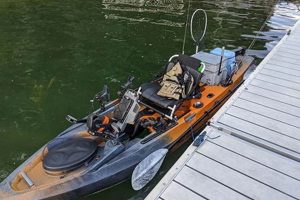
A plastic storage container, originally designed for dairy transport, is frequently employed by kayak anglers to organize and carry equipment. These containers are lightweight, durable, and easily modified to suit specific needs, offering a cost-effective storage solution.
Adaptable and affordable, these readily available containers provide a practical approach to gear management in the limited space of a fishing kayak. Their open design allows for quick access to tackle, tools, and safety equipment, while their robust construction withstands the harsh marine environment. This practice has become increasingly popular among recreational anglers seeking efficient and budget-friendly storage solutions. Customization options range from simple additions like rod holders and anchor trolleys to more complex setups involving electronics and livewells.
This article will further explore the versatile applications of these containers, covering topics such as customization techniques, mounting options, and recommended accessories. It will also delve into specific examples of how these adaptable carriers can enhance various fishing styles and kayak configurations.
Tips for Kayak Crate Customization and Usage
Optimizing storage containers enhances fishing kayak organization and efficiency. The following tips offer practical guidance for customization and usage.
Tip 1: Secure Mounting: Ensure containers are firmly affixed to the kayak using straps, bungee cords, or specialized mounts. This prevents shifting during movement and potential loss of equipment.
Tip 2: Drainage Considerations: Drill drainage holes in the bottom to prevent water accumulation and protect stored items. Consider the size and number of holes based on typical weather conditions.
Tip 3: Customization for Specific Gear: Add rod holders, tackle organizers, and other accessories tailored to individual fishing styles. This maximizes space utilization and streamlines access to essential equipment.
Tip 4: Weight Distribution: Distribute weight evenly across the kayak to maintain stability. Avoid overloading one section, which can affect maneuverability and safety.
Tip 5: Prioritize Essential Gear: Store frequently used items in readily accessible locations. Less frequently used items can be placed in lower or less convenient areas.
Tip 6: Safety First: Ensure modifications do not interfere with kayak safety features or impede paddling. Maintain clear access to essential safety equipment.
Tip 7: Regular Maintenance: Inspect containers and mounting hardware regularly for wear and tear. Replace damaged components promptly to maintain functionality and safety.
Proper planning and customization significantly improve the utility of storage containers on fishing kayaks. These tips provide a foundation for efficient gear management and an enhanced angling experience.
By implementing these strategies, anglers can optimize their kayak setup for improved functionality and focus on the task at hand: catching fish.
1. Storage

Effective storage solutions are crucial for kayak angling, where space is limited and organization is key. The repurposed milk crate offers a versatile and practical approach to this challenge.
- Capacity and Organization:
Milk crates provide ample space for various fishing essentials. Internal dividers and strategically placed smaller containers further enhance organization, keeping tackle, tools, and other gear neatly separated and readily accessible. This organized system prevents tangling and facilitates quick retrieval of necessary items, crucial during active fishing.
- Security and Stability:
Properly secured crates minimize movement during transit and on the water. Bungee cords, straps, or dedicated mounting systems ensure that equipment remains in place, preventing loss or damage. Secure storage also contributes to overall kayak stability, an essential safety consideration.
- Accessibility and Efficiency:
The crate’s open design allows for quick access to stored items. This eliminates the need to rummage through bags or compartments, streamlining the fishing process and maximizing time spent actively fishing. Rapid access to essential gear can be critical in certain fishing situations.
- Adaptability and Customization:
The modular nature of milk crates allows for customization based on individual needs. Rod holders, tool mounts, and other accessories can be readily added, further optimizing the crate’s functionality and tailoring it to specific fishing styles or target species. This adaptability makes the milk crate a versatile storage solution for diverse angling requirements.
The combination of capacity, security, accessibility, and adaptability makes the milk crate a valuable asset for kayak anglers seeking efficient storage solutions. Its ability to be customized and integrated seamlessly into the kayak environment contributes significantly to a streamlined and productive fishing experience.
2. Customization

Customization is paramount for optimizing a fishing kayak’s functionality, and the adaptable nature of milk crates makes them ideal platforms for personalization. Modifying these crates to suit individual angling needs enhances efficiency and organization on the water.
- Rod Holders:
Integrating rod holders allows anglers to keep multiple rods organized and readily accessible, critical for techniques involving frequent rod changes or trolling. Various rod holder designs exist, from simple PVC attachments to commercially available mounts, catering to different rod types and fishing styles. This customization keeps rods secure and prevents tangling, maximizing fishing time.
- Tackle Storage:
Customizing internal storage through dividers, trays, and smaller containers optimizes tackle organization. This ensures lures, hooks, weights, and other small items are easily located, minimizing search time and maintaining a clutter-free environment. Dedicated compartments for specific tackle types improve efficiency and prevent damage to sensitive gear.
- Accessory Mounts:
Milk crates provide ample surface area for mounting accessories like fish finders, GPS units, cutting boards, and even cup holders. Strategic placement of these items enhances workflow and convenience on the water. Secure mounting systems prevent equipment loss and maintain a safe and organized cockpit.
- Crate Modification:
Cutting, drilling, and shaping the crate itself allows for further customization. Creating specialized compartments, adding drainage holes, or integrating anchor trolley systems tailors the crate to precise needs. Careful planning and execution ensure structural integrity and avoid compromising the crate’s stability.
These customization options transform the standard milk crate into a personalized fishing workstation, enhancing organization, accessibility, and overall efficiency on the kayak. Anglers can tailor their setup to specific fishing styles and preferences, maximizing their time on the water and improving the overall angling experience.
3. Accessibility

Accessibility plays a vital role in kayak fishing, impacting efficiency and overall angling success. The inherent design of milk crates contributes significantly to this aspect, offering advantages in gear organization and retrieval.
The open structure of a milk crate allows for immediate visual identification and access to frequently used items. This eliminates the need to search through closed compartments or bags, saving valuable time and minimizing disruption during critical fishing moments. Rapid access to essential tools, tackle, or safety equipment can be crucial for a successful and safe angling experience. For example, a readily accessible net allows for efficient landing of a hooked fish, while quick access to pliers can be essential for hook removal or line cutting. Positioning frequently used lures within easy reach streamlines lure changes, optimizing fishing time and responsiveness to changing water conditions.
Strategic placement of the milk crate within the kayak’s cockpit further enhances accessibility. Positioning the crate within arm’s reach minimizes movement and maintains balance, crucial factors in a potentially unstable environment. Furthermore, customization through the addition of rod holders, tool mounts, and other accessories allows anglers to personalize their setups for optimal accessibility based on individual preferences and fishing styles. This personalized approach transforms the milk crate from a simple storage container into an efficient and accessible workstation tailored to the specific needs of each angler.
4. Affordability

Affordability often dictates equipment choices for recreational anglers. Repurposing milk crates as kayak fishing organizers offers a cost-effective alternative to commercially available storage solutions. New purpose-built kayak crates can range from $50 to over $200, while a used milk crate can often be acquired for a few dollars, or even free. This significant price difference allows anglers to allocate their budget towards other essential gear, such as rods, reels, and tackle. The affordability of this approach makes kayak fishing accessible to a wider audience, removing a potential financial barrier to entry.
This cost-effectiveness extends beyond the initial purchase. Customization options, such as DIY rod holders and accessory mounts, further reduce expenses compared to purchasing specialized kayak fishing accessories. Simple modifications using readily available materials, like PVC pipe and zip ties, allow anglers to create personalized setups without significant financial investment. This focus on affordability fosters ingenuity and resourcefulness within the angling community.
While cost-effectiveness is a primary advantage, it’s crucial to acknowledge potential trade-offs. Durability and aesthetics might differ compared to purpose-built products. However, the practical benefits and significant cost savings often outweigh these considerations, particularly for anglers prioritizing functionality over form. Ultimately, the affordability of using repurposed milk crates democratizes kayak fishing, making it a more accessible and inclusive recreational activity.
5. Durability

Durability is a critical factor in kayak fishing equipment, given the demanding marine environment. Milk crates, typically constructed from high-density polyethylene (HDPE), offer inherent robustness suitable for this application. HDPE exhibits resistance to impact, UV degradation, and chemical exposure, ensuring the crate withstands the rigors of saltwater, sun exposure, and fluctuating temperatures. This inherent durability contributes to the longevity of the crate, making it a reliable storage solution for extended use. For example, a milk crate can withstand impacts from accidental drops, jostling against rocks, or exposure to rough water conditions without significant structural compromise. This resilience ensures stored gear remains protected and the crate itself continues to function effectively over time.
The practical significance of this durability extends beyond the crate’s structural integrity. Its ability to withstand harsh conditions translates to reliable protection of stored equipment. Sensitive items like fishing reels and electronic devices remain safe from the elements and physical damage, ensuring their continued functionality and minimizing replacement costs. Furthermore, the crate’s robust construction contributes to overall safety on the water. A secure and stable crate minimizes the risk of equipment shifting or becoming dislodged, reducing potential hazards during navigation or challenging weather conditions. This stability contributes to a safer and more focused fishing experience.
While inherently durable, milk crate longevity can be further enhanced through proper care and maintenance. Regular cleaning removes salt and grime, preventing corrosion or material degradation. Inspecting for cracks or damage and addressing them promptly ensures continued structural integrity and prevents potential failures. Ultimately, the durability of milk crates, combined with proper care, provides a reliable and cost-effective storage solution for kayak anglers, contributing to a more efficient, safe, and enjoyable fishing experience.
Frequently Asked Questions
This section addresses common inquiries regarding the utilization of milk crates for kayak fishing, providing practical insights and clarifying potential concerns.
Question 1: How are crates secured to a kayak?
Secure attachment methods include straps, bungee cords, or specialized mounting hardware. Selection depends on kayak design and individual preferences. Ensuring stability and preventing movement is crucial for safety and gear protection.
Question 2: Do drainage holes need to be added?
Drainage holes prevent water accumulation within the crate, protecting stored items from damage. The number and size of holes depend on typical weather conditions and storage needs.
Question 3: What customization options are available?
Customization options are extensive and range from simple additions like rod holders and tackle organizers to more complex modifications involving electronics and specialized mounts. Personalization enhances functionality and efficiency.
Question 4: How does crate usage impact kayak stability?
Proper weight distribution is essential. Overloading one area can compromise stability. Evenly distributing weight across the kayak maintains balance and maneuverability.
Question 5: Are there any safety concerns to consider?
Modifications should not interfere with kayak safety features or impede paddling. Maintaining clear access to essential safety equipment is paramount.
Question 6: What maintenance is required?
Regular inspection of the crate and mounting hardware for wear and tear is recommended. Prompt replacement of damaged components ensures continued functionality and safety.
Careful consideration of these frequently asked questions ensures safe and effective utilization of milk crates for kayak fishing. Understanding these practical aspects contributes to a more enjoyable and productive angling experience.
For further information on specific customization techniques and recommended accessories, consult the following resources…
Milk Crate for Fishing Kayak
This exploration has highlighted the multifaceted utility of repurposed dairy containers for kayak angling. From cost-effective storage and customizable organization to enhanced accessibility and surprising durability, the benefits are substantial. Key considerations include secure mounting, drainage, weight distribution, and thoughtful customization tailored to individual fishing styles. Proper implementation enhances both efficiency and enjoyment on the water.
The enduring popularity of this simple yet effective solution underscores its practical value in the angling community. As kayak fishing continues to evolve, the adaptable milk crate remains a relevant and valuable tool, offering anglers a versatile platform for optimizing their experience and focusing on what truly matters: the pursuit of fish.