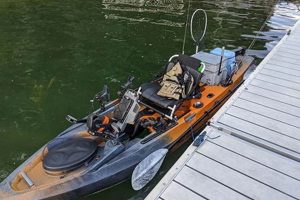
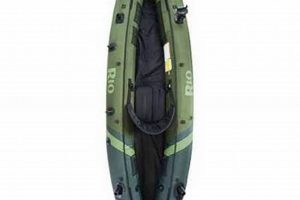
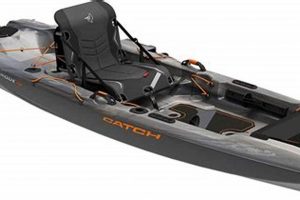
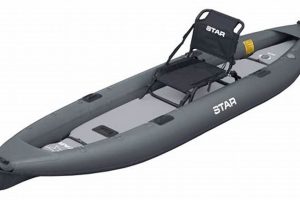
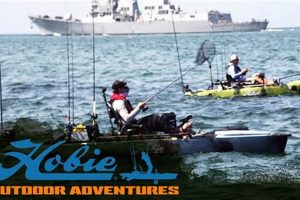
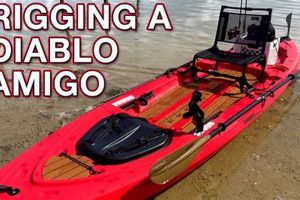
This specific model of watercraft is designed for anglers seeking a stable and efficient platform for on-the-water angling. Characteristically, it offers features like rod holders, ample storage for tackle and gear, and a comfortable seating system built for extended fishing trips. Often constructed from durable materials like rotomolded polyethylene, this type of vessel provides a balance of performance, stability, and durability.
Anglers benefit from increased access to diverse fishing locations, from calm lakes and ponds to slow-moving rivers and inshore coastal waters. The design facilitates hands-free fishing, allowing for easier casting, retrieval, and overall maneuverability. Historically, fishing from small, human-powered vessels has been a common practice, but advancements in materials and design have led to the development of specialized watercraft that significantly enhance the angling experience.
Further exploration of this vessel type will cover topics including specific design features, performance characteristics in various water conditions, recommended accessories, and comparisons with other popular fishing kayak models.
Tips for Kayak Fishing
Effective angling from a kayak requires preparation and awareness. These tips offer guidance for a safe and productive experience.
Tip 1: Plan and Research: Consult weather forecasts, check water conditions, and understand local fishing regulations before embarking on any fishing trip. Awareness of potential hazards like currents, tides, and weather changes is crucial.
Tip 2: Prioritize Safety: Always wear a personal flotation device (PFD). Carry a whistle, signaling device, and communication equipment. Inform someone of the planned fishing location and estimated return time.
Tip 3: Organize and Secure Gear: Distribute weight evenly within the kayak for optimal stability. Utilize storage compartments and secure loose items to prevent loss or interference during paddling and casting.
Tip 4: Practice Paddling and Maneuvering: Become comfortable with basic paddling strokes and maneuvering techniques before venturing into open water. This allows for efficient navigation and precise boat control when approaching fishing spots.
Tip 5: Master Casting Techniques: Practice casting from a seated position. Consider using shorter rods and specialized kayak fishing techniques for improved accuracy and control in a confined space.
Tip 6: Respect the Environment: Practice catch-and-release whenever possible. Adhere to Leave No Trace principles by packing out all trash and minimizing disturbance to the natural environment.
Tip 7: Stay Hydrated and Sun-Protected: Carry ample water and apply sunscreen regularly, especially during extended periods on the water. Consider wearing protective clothing like a hat and long sleeves.
Proper planning and execution enhance safety and increase the likelihood of a successful fishing excursion. These practices contribute to a more enjoyable and responsible approach to kayak angling.
By following these guidelines and adapting them to specific fishing conditions, anglers can maximize their time on the water while minimizing risks.
1. Stability

Stability is a paramount consideration for anglers using a fishing kayak, directly influencing safety, comfort, and fishing effectiveness. A stable platform allows for confident casting, reeling, and landing fish, particularly in challenging conditions. The Predator 13 fishing kayak’s stability profile impacts its suitability for various fishing environments and angler preferences.
- Hull Design:
The hull design, often a pontoon or tri-hull configuration, significantly influences stability. Wider hulls generally provide greater initial stability, resisting tipping during common movements like casting. The Predator 13’s specific hull design contributes to its stability profile, making it suitable for calmer waters. However, wider hulls may compromise maneuverability in tighter spaces or faster currents.
- Center of Gravity:
A lower center of gravity enhances stability. The Predator 13’s design and seating position contribute to a lower center of gravity, aiding stability. Anglers can further influence stability by distributing weight evenly within the kayak and avoiding sudden movements. High seating positions can raise the center of gravity, potentially decreasing stability.
- Water Conditions:
Calm water conditions generally enhance stability, while wind, waves, and currents can present challenges. The Predator 13’s stability characteristics make it well-suited for calm lakes, ponds, and slow-moving rivers. However, caution is advised in rougher conditions. Understanding the kayak’s performance limitations in varying water conditions is essential for safe operation.
- Angler Movement:
Standing or making sudden movements can compromise stability. The Predator 13’s stability profile, while generally suitable for seated fishing, may not be ideal for frequent standing. Anglers should exercise caution when shifting weight or reaching for objects. Practicing balance and movement within the kayak enhances stability and confidence on the water.
Understanding the interplay of these stability factors is vital for maximizing the Predator 13’s performance and ensuring a safe and enjoyable fishing experience. Choosing a kayak with appropriate stability characteristics for the intended fishing environment and angler activities is paramount.
2. Maneuverability

Maneuverability significantly impacts a fishing kayak’s effectiveness, influencing its ability to navigate diverse waterways and access prime fishing locations. Efficient maneuvering enables anglers to position the kayak precisely for casting, follow fish movements, and negotiate obstacles like currents, vegetation, and shallow water. Understanding the factors affecting the Predator 13’s maneuverability is essential for informed selection and optimal on-the-water performance.
- Hull Design:
The Predator 13’s hull design, while prioritizing stability, can influence its maneuverability. Shorter, wider hulls generally offer greater stability but may sacrifice some turning responsiveness. Longer, narrower hulls tend to track straighter and glide more efficiently, enhancing speed and maneuverability in open water. The Predator 13’s hull design represents a balance between stability and maneuverability, making it suitable for a range of fishing environments but potentially less agile in tight spaces or strong currents.
- Water Conditions:
Calm water conditions typically enhance maneuverability, allowing for precise control and effortless paddling. Wind, currents, and waves can significantly impact maneuverability, requiring increased effort and skill to maintain desired positioning. The Predator 13’s maneuverability may be affected by challenging water conditions, emphasizing the importance of considering environmental factors when planning fishing trips.
- Paddling Technique:
Efficient paddling techniques contribute significantly to maneuverability. Proper stroke execution and blade angle control enhance turning responsiveness and forward momentum. Mastering basic paddling strokes and practicing maneuvering exercises can improve control and efficiency on the water, regardless of the kayak’s inherent design characteristics.
- Rudder or Skeg System (if equipped):
Some fishing kayaks, including certain configurations of the Predator 13, may feature a rudder or skeg system to enhance tracking and directional control. Rudders provide active control over steering, while skegs offer passive directional stability. The presence and type of steering system impact maneuverability, particularly in windy or current-prone environments. Understanding the function and operation of these systems is crucial for maximizing their benefits.
The interplay of these factors determines the overall maneuverability of the Predator 13 fishing kayak. Matching the kayak’s maneuverability characteristics to the intended fishing environment and angler preferences ensures optimal performance and a more productive fishing experience. Considerations such as anticipated water conditions, fishing techniques, and personal paddling skills should inform selection and utilization of this specialized watercraft.
3. Storage Capacity

Adequate storage capacity is essential for fishing kayaks, directly impacting organization, efficiency, and overall fishing success. The ability to transport tackle, gear, and personal items efficiently influences both comfort and preparedness on the water. The Predator 13 fishing kayak’s storage solutions contribute significantly to its practicality and suitability for various fishing styles.
- Front Hatch:
A front hatch provides readily accessible storage for frequently used items like tackle boxes, lures, and safety gear. Its location allows for convenient retrieval without disrupting fishing activities. The Predator 13’s front hatch design contributes to efficient organization and streamlined access to essential equipment.
- Rear Tankwell:
Larger items like crates, coolers, and dry bags find space in the rear tankwell. Bungee cords or tie-down systems secure these items, preventing shifting during transport. The Predator 13’s rear tankwell expands carrying capacity, accommodating essential gear for longer trips or specialized fishing techniques.
- Side Storage:
Smaller compartments or pockets located along the sides of the kayak offer quick access to tools, snacks, or personal items. These designated spaces contribute to organized storage and reduce clutter within the main cockpit area. The Predator 13’s side storage options enhance convenience and efficiency on the water.
- Rod Holders:
Dedicated rod holders, whether flush-mounted or adjustable, provide secure storage for fishing rods during transit or while not in use. This feature protects rods from damage and keeps them readily accessible. The Predator 13’s rod holders are strategically positioned for convenience and efficiency, minimizing interference with paddling or other fishing activities.
The strategic placement and design of these storage solutions contribute significantly to the Predator 13’s practicality as a fishing platform. Effective utilization of these storage areas maximizes organization, improves efficiency, and enhances the overall fishing experience. The ability to carry necessary gear comfortably and securely allows anglers to focus on fishing, leading to a more productive and enjoyable time on the water.
4. Comfort

Comfort directly influences an angler’s endurance and focus during extended fishing trips. Discomfort can detract from the experience, leading to premature fatigue and reduced fishing effectiveness. The Predator 13 fishing kayak’s comfort features are crucial considerations, impacting overall enjoyment and on-the-water performance.
- Seat Design:
A well-designed seat provides crucial support and cushioning, reducing strain on the back, legs, and buttocks. Features like adjustable backrests, breathable fabric, and ample padding contribute significantly to long-term comfort. The Predator 13’s seat design plays a vital role in angler comfort, impacting endurance during extended fishing sessions. A comfortable seat allows for sustained focus on fishing, enhancing the overall experience.
- Leg Room and Footrests:
Adequate legroom and adjustable footrests promote proper posture and circulation, reducing fatigue and discomfort. The ability to customize leg positioning accommodates different body types and preferences, ensuring a comfortable and ergonomic paddling experience. The Predator 13’s legroom and footrest system contribute to overall comfort and paddling efficiency, enabling anglers to maintain a comfortable position for extended periods.
- Cockpit Design:
The cockpit’s dimensions and layout influence comfort and accessibility. A spacious cockpit allows for easy entry and exit, while strategically placed features like cup holders and storage compartments enhance convenience. The Predator 13’s cockpit design aims to balance comfort and functionality, providing ample space for movement while keeping essential items within reach. A well-designed cockpit contributes to a more relaxed and enjoyable fishing experience.
- Stability and Handling:
A stable and predictable kayak contributes to angler comfort by reducing anxiety and promoting a sense of security. Smooth handling characteristics minimize effort and fatigue during paddling and maneuvering. The Predator 13’s stability and handling characteristics influence comfort by providing a predictable and manageable platform for fishing activities. A stable and responsive kayak enhances confidence and reduces fatigue, contributing to a more enjoyable experience.
These comfort-related factors significantly influence an angler’s overall experience with the Predator 13 fishing kayak. Prioritizing comfort features, such as an ergonomic seat and ample legroom, can enhance endurance, improve focus, and contribute to a more enjoyable and productive fishing trip. Selecting a kayak with appropriate comfort features for individual needs and preferences is crucial for maximizing on-the-water satisfaction.
5. Durability

Durability is a critical factor in evaluating fishing kayaks, particularly for anglers navigating diverse and potentially challenging environments. A durable kayak withstands impacts, abrasions, and exposure to the elements, ensuring longevity and reliable performance over time. The Predator 13 fishing kayak’s durability directly influences its suitability for various fishing locations and its overall value proposition.
The Predator 13 typically utilizes rotomolded polyethylene construction. This single-piece molding process creates a robust hull resistant to cracks, punctures, and UV degradation. Rotomolding enhances impact resistance, protecting the kayak from collisions with rocks, submerged obstacles, or during transportation and storage. This inherent durability allows anglers to confidently navigate challenging environments, including shallow waters, rocky coastlines, and debris-laden rivers. The robust construction minimizes the risk of damage, contributing to the kayak’s long-term performance and reducing the need for frequent repairs.
While rotomolded polyethylene provides inherent durability, appropriate care and maintenance practices further enhance the kayak’s lifespan. Regular cleaning, proper storage, and timely repairs of any minor damage contribute significantly to long-term performance. Avoiding prolonged exposure to extreme temperatures and UV radiation can also mitigate potential degradation. Understanding the material properties and implementing appropriate care measures ensures the Predator 13 fishing kayak provides reliable performance for extended periods, maximizing its value and contributing to a positive ownership experience.
6. Fishing Features

Specialized features distinguish fishing kayaks from recreational models, enhancing angling effectiveness and overall on-the-water experience. The Predator 13 fishing kayak incorporates several key features designed to improve angler performance and comfort. Rod holders, strategically positioned for easy access and secure rod storage, allow anglers to manage multiple lines or quickly switch between techniques. Integrated tackle storage compartments keep essential gear organized and within reach, minimizing clutter and maximizing fishing efficiency. Often, dedicated transducer mounts facilitate seamless fish finder integration, providing crucial underwater insights. These integrated features contribute significantly to a streamlined and productive fishing experience.
Consider an angler targeting bass in a heavily vegetated area. Multiple rod holders allow for pre-rigged setups with different lures, enabling quick adaptation to changing conditions or fish behavior. Integrated tackle storage keeps essential lures and tools readily accessible, minimizing disruptions during critical moments. A fish finder, mounted via a dedicated transducer scupper, provides real-time information about water depth, structure, and fish location, enhancing the angler’s ability to target specific areas. These integrated features work synergistically to improve fishing success and overall efficiency.
The practical significance of these integrated fishing features extends beyond mere convenience. They contribute to a more organized, efficient, and ultimately more successful fishing experience. By streamlining essential tasks and providing critical information, these features allow anglers to focus on the core aspects of fishing: locating, enticing, and landing their target species. The strategic incorporation of these features underscores the Predator 13’s purpose-built design for angling, enhancing its value and appeal to serious fishermen.
7. Portability
Portability significantly influences the practical usability of a fishing kayak, affecting transportation, launch ease, and overall accessibility to diverse fishing locations. The Predator 13 fishing kayak’s portability characteristics directly impact its suitability for various angling scenarios and transportation methods. Understanding the factors influencing portability is crucial for informed selection and efficient utilization.
- Weight and Dimensions:
The Predator 13’s weight and dimensions directly impact its portability. Heavier kayaks require greater effort to lift, carry, and load onto vehicles. Longer kayaks necessitate larger vehicles or specialized roof racks for transport. Understanding the kayak’s specific weight and dimensions allows anglers to assess its compatibility with their physical capabilities and available transportation options. Weight distribution also plays a role, affecting handling during transport.
- Transportation Methods:
Various transportation methods exist for kayaks, including roof racks, trailers, and even carrying by hand for shorter distances. The Predator 13’s size and weight determine the most suitable transportation method. Roof rack systems require secure tie-down straps and appropriate padding to prevent damage during transit. Trailers offer greater carrying capacity and easier loading for longer kayaks or multiple vessels. Carrying by hand necessitates manageable weight and balanced distribution for safe and comfortable transport.
- Launch Site Accessibility:
Launch site accessibility influences portability considerations. Kayaks must be transported from the vehicle to the water’s edge, sometimes over uneven terrain or obstacles. The Predator 13’s weight and dimensions influence the ease of transport to and from launch sites. Lightweight kayaks or those equipped with carrying handles simplify this process, especially in remote or challenging locations. Pre-planning and assessment of launch site conditions are essential for smooth and efficient deployment.
- Storage Considerations:
Storage requirements, both during transport and long-term, influence portability considerations. Kayaks require adequate space for storage, whether on a vehicle, in a garage, or at a storage facility. The Predator 13’s dimensions determine its storage footprint. Compact storage solutions, such as vertical or overhead storage systems, maximize space efficiency. Proper storage practices, including protection from the elements and secure placement, prevent damage and maintain the kayak’s condition.
These interconnected factors determine the Predator 13’s overall portability, affecting its suitability for various fishing environments and angler preferences. Carefully evaluating these elements ensures efficient transport, easy launch and retrieval, and ultimately, broader access to desirable fishing locations. A thorough understanding of portability considerations empowers anglers to maximize the utility and enjoyment of the Predator 13 fishing kayak.
Frequently Asked Questions
This section addresses common inquiries regarding the Predator 13 fishing kayak, providing concise and informative responses to facilitate informed decision-making.
Question 1: What differentiates the Predator 13 from other fishing kayaks on the market?
The Predator 13 distinguishes itself through a combination of stability, specialized fishing features, and a durable construction suitable for diverse fishing environments. Its design prioritizes a balance of performance and practicality for anglers.
Question 2: Is the Predator 13 suitable for ocean fishing?
While capable of handling calm inshore waters, the Predator 13 is primarily designed for lakes, ponds, and slow-moving rivers. Ocean use requires careful consideration of weather and water conditions due to its design focus on stability over open-water performance.
Question 3: What is the maximum weight capacity of the Predator 13?
The maximum weight capacity varies depending on the specific model year and configuration but generally falls within a range suitable for most anglers and their gear. Consulting manufacturer specifications provides precise weight limits for safe operation.
Question 4: What materials comprise the Predator 13’s construction?
Rotomolded polyethylene is the primary construction material, offering durability and impact resistance. This material contributes to the kayak’s robust nature and longevity in various environments.
Question 5: Are there different propulsion options available for the Predator 13?
While traditionally paddle-powered, certain Predator 13 models offer compatibility with pedal-drive or motor systems. These options provide alternative propulsion methods for increased speed, range, and hands-free fishing.
Question 6: What maintenance is required for the Predator 13 fishing kayak?
Regular cleaning with mild soap and water, along with proper storage practices, ensures long-term performance. Inspecting for damage and addressing any necessary repairs promptly contribute to the kayak’s longevity and continued functionality.
Addressing these common questions provides valuable insights into the Predator 13’s capabilities and characteristics, facilitating informed purchase decisions and promoting optimal utilization for a rewarding fishing experience.
Further exploration of specific features and performance comparisons with other models will provide a comprehensive understanding of the Predator 13 within the broader context of fishing kayak options.
Predator 13 Fishing Kayak
This exploration of the Predator 13 fishing kayak has provided a detailed examination of its key features, including stability, maneuverability, storage capacity, comfort, durability, specialized fishing features, and portability. Each aspect contributes to the kayak’s overall performance and suitability for various fishing environments and angler preferences. Understanding the interplay of these factors allows for informed evaluation and selection, aligning the kayak’s capabilities with individual needs and angling styles.
The Predator 13 fishing kayak presents a compelling option for anglers seeking a stable and feature-rich platform for on-the-water pursuits. Careful consideration of its attributes, alongside comparisons with other available models, empowers informed purchasing decisions and contributes to a more rewarding and productive fishing experience. Continued exploration of kayak fishing techniques and responsible angling practices further enhances enjoyment and promotes sustainable interaction with aquatic environments.