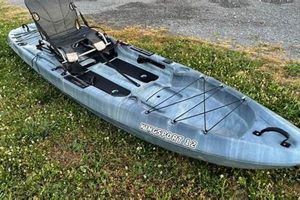
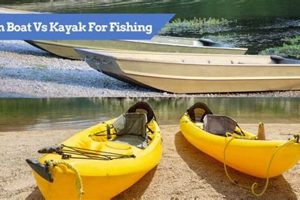
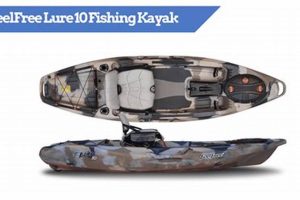
Compact, easily transportable vessels designed for angling offer enhanced maneuverability and access to shallow or otherwise difficult-to-reach fishing spots. These boats are often constructed from materials like rotomolded polyethylene or composite blends, prioritizing both durability and reduced weight for convenient carrying and launching. For instance, a smaller, lighter vessel allows an angler to easily navigate narrow creeks or launch from a remote shoreline without the need for a trailer or specialized ramp.
Portability and ease of use are significant advantages, particularly for anglers frequently changing locations or lacking access to traditional boat launch facilities. Historically, fishing from small, human-powered craft has been a common practice, evolving from simple dugout canoes to the modern, purpose-built designs available today. The emphasis on minimizing weight allows individuals to transport and launch these boats without assistance, opening up a wider range of fishing opportunities.
The subsequent sections will explore various aspects of these specialized watercraft, covering topics such as material selection, design considerations, popular features, and recommended accessories for enhancing on-the-water performance and angling success.
Tips for Selecting and Using Compact Fishing Kayaks
Choosing and utilizing a compact, easily-transported fishing kayak effectively requires careful consideration of various factors. The following tips offer guidance for maximizing performance and enjoyment on the water.
Tip 1: Consider Hull Design: Hull shape significantly impacts stability and maneuverability. A flatter hull provides greater initial stability, ideal for calm waters and stand-up fishing. A V-shaped hull offers better tracking and performance in choppy conditions but may feel less stable initially.
Tip 2: Evaluate Weight Capacity: Ensure the vessel’s weight capacity accommodates the angler’s weight, fishing gear, and any additional equipment. Exceeding the capacity can compromise stability and safety.
Tip 3: Prioritize Storage: Ample storage space is crucial for carrying tackle, safety equipment, and personal items. Consider built-in compartments, bungee cords, and other storage solutions.
Tip 4: Assess Seat Comfort: Long hours on the water necessitate a comfortable and supportive seat. Look for adjustable seating systems and breathable materials.
Tip 5: Choose Appropriate Paddles: Select paddles of the correct length and blade shape for optimal performance and efficiency. Lightweight, adjustable paddles are often preferred.
Tip 6: Practice Launching and Landing: Become familiar with launching and landing techniques before venturing into challenging environments. Practice in calm, shallow water initially.
Tip 7: Prioritize Safety Equipment: Always wear a personal flotation device (PFD) and carry essential safety gear, including a whistle, signaling device, and first-aid kit.
By carefully considering these factors, anglers can select and utilize compact fishing kayaks that enhance their on-the-water experiences and contribute to successful fishing excursions.
The concluding section will summarize the key advantages of compact fishing kayaks and reinforce their value for anglers seeking enhanced portability and access to diverse fishing locations.
1. Portability

Portability is a defining characteristic of lightweight fishing kayaks, directly influencing their appeal and practicality. Easy transport and deployment are crucial for accessing diverse fishing locations, particularly those inaccessible to larger vessels. This section explores the multifaceted nature of portability in the context of these specialized watercraft.
- Transport Methods
Transport methods are directly impacted by a kayak’s weight and dimensions. Lightweight models can be car-topped, carried short distances, or transported using specialized kayak carts. This eliminates the need for trailers and expands access to launch sites beyond traditional boat ramps. For example, a lightweight kayak can be easily transported to a remote mountain lake or carried down a narrow path to a secluded riverbank.
- Launch Site Accessibility
Portability expands fishing opportunities by enabling access to diverse launch sites. Lightweight kayaks can be launched from shallow shorelines, rocky banks, or even directly from the water’s edge, circumventing the limitations imposed by boat ramps and marinas. This is particularly advantageous in areas with limited infrastructure or where larger vessels are restricted.
- Storage Considerations
Compact dimensions and lighter weight simplify storage requirements. These kayaks can be stored in garages, sheds, or even apartments, minimizing the space needed compared to larger boats. This ease of storage contributes to their overall convenience and makes them a practical option for anglers with limited storage space.
- Solo Use and Maneuverability
The manageable weight of lightweight kayaks allows for independent handling. Individuals can easily transport, launch, and maneuver these vessels without assistance, promoting self-sufficiency and expanding access to solo fishing experiences. This aspect is particularly relevant for anglers who prefer to fish independently or explore remote locations.
The inherent portability of lightweight fishing kayaks significantly enhances their versatility and appeal. By enabling access to diverse fishing locations, simplifying transport and storage, and promoting solo use, these vessels offer a distinct advantage for anglers seeking to maximize their on-the-water experiences.
2. Maneuverability

Maneuverability represents a critical performance attribute of lightweight fishing kayaks, directly impacting their effectiveness in various fishing environments. Reduced weight significantly contributes to enhanced responsiveness and control, allowing anglers to navigate complex waterways and precisely position themselves for optimal fishing opportunities. This inherent agility stems from the decreased inertia associated with lower mass, enabling quicker turns, faster acceleration, and effortless adjustments to changing currents or wind conditions. For example, navigating tight, shallow creeks or maneuvering through dense vegetation becomes significantly easier with a lightweight kayak, providing access to prime fishing spots often inaccessible to larger, less agile vessels. This nimble performance is crucial for targeting specific fish habitats and adapting to dynamic on-the-water scenarios.
The practical implications of enhanced maneuverability extend beyond basic navigation. Lightweight kayaks allow anglers to execute precise casting techniques, maintain optimal boat positioning in moving water, and efficiently follow fish movements. In river fishing, for instance, the ability to quickly adjust to changing currents and eddy lines is essential for maintaining an ideal drift and presenting lures effectively. Similarly, in stillwater environments, the ease of subtle repositioning allows for quiet approaches to target areas without disturbing fish. This level of control contributes significantly to angling success by maximizing fishing opportunities and optimizing presentation techniques.
In summary, the maneuverability offered by lightweight fishing kayaks represents a substantial advantage, particularly in environments requiring precise navigation and control. This advantage stems from the reduced weight, translating directly into improved responsiveness and agility on the water. From navigating intricate waterways to executing precise fishing techniques, maneuverability plays a pivotal role in enhancing the overall fishing experience and maximizing angling success. Challenges associated with maintaining stability in windy conditions, particularly in lightweight designs, underscore the importance of balanced hull design and appropriate paddling techniques for optimal performance.
3. Material (e.g., polyethylene)

Material selection significantly influences the performance and durability of lightweight fishing kayaks. Polyethylene, particularly in its high-density cross-linked form (HDPE), stands out as a prevalent choice due to its advantageous properties. HDPE offers a compelling combination of lightweight, impact resistance, and UV resistance, making it well-suited for the demands of on-the-water use. The inherent buoyancy of polyethylene contributes to the kayak’s overall lightness, facilitating easier transport and maneuverability. Its impact resistance ensures durability against rocks, submerged obstacles, and accidental impacts during transport or launching. Furthermore, HDPE’s UV resistance protects the kayak from degradation caused by prolonged sun exposure, extending its lifespan. Alternative materials, such as composites (e.g., fiberglass, carbon fiber), offer further weight reductions and enhanced performance characteristics, albeit at a higher price point. The choice between HDPE and composite construction often involves balancing performance, durability, and budget considerations.
The practical implications of material selection extend beyond basic performance. A lightweight material like HDPE enables easier car-topping, carrying, and maneuvering of the kayak, expanding access to remote fishing locations. Its durability translates to a longer lifespan, reducing the need for frequent replacements and representing a sound investment for anglers. Furthermore, the material’s resistance to UV degradation ensures the kayak maintains its structural integrity and aesthetic appeal over time, even with extended exposure to sunlight. Specific examples illustrate these advantages. Consider an angler transporting a kayak across uneven terrain to reach a secluded fishing spot; the lighter weight of an HDPE kayak significantly reduces the physical strain involved. Similarly, the impact resistance of HDPE proves invaluable when navigating rocky rivers or shallow coastal areas, protecting the kayak from damage and ensuring its continued functionality.
In summary, the selection of appropriate materials plays a crucial role in the design and performance of lightweight fishing kayaks. HDPE’s blend of lightweight, impact resistance, and UV resistance makes it a popular and practical choice for many anglers. Understanding the properties of various materials and their impact on performance, durability, and cost empowers informed decision-making, ultimately contributing to a more satisfying and productive fishing experience. While HDPE offers an excellent balance of properties, exploring alternative materials like composites can further enhance performance for those seeking specific advantages, such as increased speed or responsiveness, balanced against potential cost considerations and specific usage requirements.
4. Stability

Stability is a paramount concern in lightweight fishing kayak design, directly influencing angler safety and fishing effectiveness. The inherent challenge lies in balancing reduced weight with the need for a stable platform, particularly in dynamic on-the-water conditions. A less stable kayak compromises casting accuracy, increases the risk of capsizing, and limits the angler’s ability to confidently maneuver in various environments. Several design factors contribute to stability, including hull design (e.g., flatter hulls generally offer greater initial stability), width, and weight distribution. Consider, for instance, the difference between a wider, flatter-hulled kayak designed for calm lakes and a narrower, V-hulled kayak intended for ocean conditions. The former prioritizes stability for stand-up fishing, while the latter sacrifices some initial stability for improved tracking and performance in waves. Understanding these design trade-offs is crucial for selecting a kayak appropriate for the intended fishing environment and angler experience level.
The practical implications of stability extend beyond simply preventing capsizes. A stable platform allows anglers to confidently stand and cast, reach for gear, and fight fish without excessive wobble or risk of falling overboard. This enhanced stability translates directly to improved fishing performance, particularly in techniques requiring precise casting, such as fly fishing or lure presentation in moving water. Imagine an angler attempting to land a large fish from a wobbly kayak; the lack of stability not only makes the task more challenging but also increases the risk of losing the fish or even capsizing. In contrast, a stable platform provides the angler with the confidence and control necessary to effectively manage the fish and successfully bring it onboard. Furthermore, stability significantly contributes to angler comfort and reduces fatigue during long hours on the water, allowing for extended fishing sessions.
In conclusion, stability is a crucial performance attribute in lightweight fishing kayaks, impacting both safety and fishing effectiveness. Balancing weight reduction with stability requirements presents a design challenge, requiring careful consideration of hull design, width, and weight distribution. The practical implications of stability are substantial, influencing casting accuracy, maneuverability, and the angler’s ability to confidently handle various on-the-water situations. Understanding the factors that contribute to stability and their impact on performance empowers informed decision-making, enabling anglers to select kayaks appropriate for their individual needs and intended fishing environments. Overcoming the inherent challenges of stability in lightweight designs remains a key focus of kayak manufacturers, employing innovations like wider hulls, outriggers, and advanced hull geometries to enhance stability without significantly compromising weight or performance.
5. Storage Capacity

Storage capacity represents a critical design consideration in lightweight fishing kayaks, directly impacting their practicality and effectiveness for angling excursions. The inherent challenge lies in balancing the need for ample storage space with the overarching goal of minimizing weight. Adequate storage facilitates carrying essential fishing gear, safety equipment, and personal items, enabling longer and more self-sufficient trips. Conversely, insufficient storage can limit the range of fishing techniques employed, compromise safety by restricting essential gear, and necessitate multiple trips or inconvenient packing strategies. Consider, for example, an angler planning an extended trip to a remote location. Ample storage allows for carrying a variety of rods, reels, tackle boxes, and other equipment necessary for diverse fishing scenarios. Conversely, limited storage might restrict the angler to a single fishing technique or necessitate leaving behind essential safety gear, compromising preparedness for unforeseen circumstances.
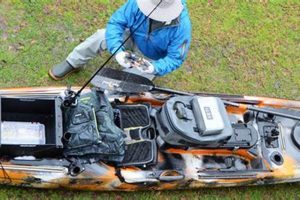
Practical considerations regarding storage capacity extend beyond simply carrying essential items. Efficient organization within storage compartments enhances accessibility and streamlines workflow during fishing. Dedicated compartments for specific items, such as tackle boxes, rods, and electronic devices, prevent tangling, minimize searching time, and maximize usable space. Furthermore, secure storage solutions, such as waterproof hatches and bungee cord systems, protect gear from water damage and prevent loss during transport or challenging on-the-water conditions. Imagine an angler needing to quickly access a specific lure while battling a strong current; a well-organized storage system allows for efficient retrieval without disrupting the fishing process. Conversely, a disorganized or inadequate storage system can lead to frustration, lost time, and potentially missed fishing opportunities. The integration of specialized storage features, such as rod holders, paddle parks, and anchor trolleys, further enhances the kayak’s functionality and contributes to a more streamlined and productive fishing experience.
In summary, storage capacity plays a pivotal role in the overall utility and effectiveness of lightweight fishing kayaks. Balancing storage needs with weight minimization requires careful design and consideration of the angler’s intended use. The practical implications of storage capacity extend beyond simply carrying gear, encompassing organization, accessibility, and security. A well-designed storage system enhances efficiency, streamlines workflow, and contributes to a more enjoyable and productive fishing experience. Addressing the inherent challenges of maximizing storage within weight constraints remains a focus of kayak design, employing innovative solutions like recessed compartments, integrated storage systems, and lightweight, durable materials to optimize storage capacity without compromising portability or performance.
6. Fishing Features (e.g., Rod Holders)
Specialized features designed for angling significantly enhance the functionality and effectiveness of lightweight fishing kayaks. These features cater specifically to the needs of anglers, optimizing performance, improving safety, and streamlining workflow on the water. Integrating these features directly into the kayak’s design eliminates the need for aftermarket modifications, preserving the vessel’s balance and minimizing weight. This section explores key fishing features and their impact on the overall angling experience.
- Rod Holders
Rod holders provide secure storage and convenient access to fishing rods, freeing the angler’s hands for other tasks like paddling, landing fish, or adjusting tackle. Various rod holder designs exist, including flush-mounted, adjustable, and rotating models. For example, a flush-mounted rod holder keeps rods close to the kayak’s hull, minimizing interference while paddling, while an adjustable rod holder allows for positioning rods at different angles for trolling or specific fishing techniques. The strategic placement and selection of rod holders contribute significantly to efficient fishing and prevent rod entanglement or loss.
- Tackle Storage
Integrated tackle storage compartments keep essential fishing gear organized and readily accessible. These compartments often feature waterproof seals, protecting tackle from water damage. Designated storage areas for tackle boxes, lures, and other small items minimize clutter and streamline workflow. For instance, a well-designed tackle storage system allows anglers to quickly switch lures without rummaging through a disorganized bag, maximizing fishing time and minimizing disruptions. Efficient tackle storage is particularly crucial in lightweight kayaks, where space is often at a premium.
- Gear Tracks and Mounts
Gear tracks and mounts offer versatile attachment points for accessories like fish finders, GPS units, cameras, and other electronic devices. These mounting systems provide a standardized platform for customizing the kayak to individual preferences and fishing styles. For example, a gear track allows an angler to easily reposition a fish finder for optimal viewing angles or add a camera mount for capturing underwater footage. This adaptability enhances the kayak’s versatility and accommodates evolving technological advancements.
- Paddle/Rod Leashes and Anchor Trolleys
Paddle leashes and anchor trolleys enhance safety and convenience. Paddle leashes prevent accidental paddle loss, while anchor trolleys allow for controlled anchoring and drifting, particularly useful in river or current fishing. An anchor trolley allows an angler to adjust the anchor’s position, maintaining optimal boat positioning relative to the current or structure. These seemingly small features contribute significantly to safety and efficient fishing techniques.
The thoughtful integration of fishing-specific features distinguishes lightweight fishing kayaks from general-purpose recreational kayaks. These features not only enhance fishing performance but also contribute to a more organized, efficient, and enjoyable on-the-water experience. By carefully considering these features, anglers can select kayaks optimized for their individual needs and fishing styles, maximizing their success and enjoyment on the water. Furthermore, the seamless integration of these features into the kayak’s design preserves its balance, minimizes weight, and ensures optimal performance without compromising stability or maneuverability.
7. Target Fishing Environment (e.g., rivers, lakes)

The intended fishing environment significantly influences the suitability of a lightweight fishing kayak. Specific design characteristics, such as hull shape, length, and maneuverability, optimize performance in particular settings. For river fishing, where currents and obstacles necessitate agility, shorter, more maneuverable kayaks with a planning hull excel. Conversely, lake fishing, often characterized by calmer waters and longer paddling distances, benefits from longer, more stable kayaks with a displacement hull for efficient tracking. Consider a shallow, fast-flowing river; a short, lightweight kayak allows navigation through tight channels and rapid adjustments to changing currents, whereas a longer, heavier kayak might prove cumbersome and difficult to control. In contrast, on a large, open lake, a longer kayak with a displacement hull efficiently covers distance and provides a stable platform for casting, while a shorter, planning hull kayak might feel less stable and require more effort to maintain a straight course. Matching kayak design to the target environment maximizes efficiency, safety, and overall fishing success.
Practical implications of this relationship extend beyond basic performance. Kayak selection based on the target environment impacts factors such as storage capacity requirements, seating comfort, and specialized feature utility. For instance, river fishing often requires less storage space than lake fishing, where anglers may carry more diverse tackle and equipment for varied fishing techniques. Similarly, seating comfort becomes more critical during longer paddling distances typical of lake fishing. Specialized features, such as anchor trolleys for river fishing or rod holders optimized for trolling on lakes, further illustrate the importance of environment-specific considerations. Selecting a kayak appropriate for the intended environment enhances comfort, efficiency, and overall fishing effectiveness. Failure to consider the target environment can lead to compromised performance, reduced safety margins, and a less enjoyable fishing experience. For example, using a short, planning hull kayak in open ocean conditions could prove dangerous due to its lower stability in waves, while employing a long, displacement hull kayak in narrow, winding creeks could limit maneuverability and access to prime fishing spots.
In summary, the relationship between target fishing environment and lightweight fishing kayak selection is crucial for optimizing on-the-water performance and safety. Matching kayak characteristics to specific environmental demands enhances efficiency, maneuverability, and overall fishing effectiveness. Careful consideration of hull design, length, and specialized features ensures the kayak is well-suited for the intended purpose, contributing to a more successful and enjoyable fishing experience. Understanding this relationship empowers informed decision-making and allows anglers to maximize their time on the water. Continued advancements in kayak design further refine this relationship, incorporating innovative features and materials to address specific environmental challenges and enhance angler performance in diverse fishing settings.
Frequently Asked Questions
This section addresses common inquiries regarding lightweight fishing kayaks, providing concise and informative responses to facilitate informed decision-making.
Question 1: What defines a lightweight fishing kayak?
Lightweight fishing kayaks typically weigh under 55 pounds, facilitating easier transport and handling. This weight range allows for car-topping, carrying short distances, and maneuvering without specialized equipment.
Question 2: How does weight impact on-the-water performance?
Reduced weight enhances maneuverability and responsiveness, allowing for quicker turns and easier paddling. This is particularly advantageous in challenging environments requiring precise navigation, such as shallow creeks or rocky coastlines.
Question 3: Are lightweight kayaks less durable?
Not necessarily. Modern construction materials, such as high-density polyethylene (HDPE), offer a balance of lightweight and durability. While lighter than some traditional materials, HDPE provides excellent impact and UV resistance.
Question 4: What are the primary advantages of a lightweight design for fishing?
Key advantages include increased portability, enhanced maneuverability, and reduced physical strain during transport and launching. These factors expand access to diverse fishing locations and simplify logistical challenges.
Question 5: How does one choose the appropriate lightweight fishing kayak?
Selection involves considering factors such as target fishing environment (e.g., rivers, lakes, oceans), angler weight and size, desired features (e.g., rod holders, storage capacity), and budget. Careful evaluation of these factors ensures optimal performance and satisfaction.
Question 6: What safety considerations are relevant to lightweight fishing kayaks?
Similar to any watercraft, safety precautions remain essential. Always wear a personal flotation device (PFD), inform someone of your fishing plans, check weather conditions before departure, and carry essential safety equipment, including a whistle, signaling device, and first-aid kit.
Addressing these common questions provides a foundational understanding of lightweight fishing kayaks and their unique attributes. Considering these factors empowers informed purchasing decisions and contributes to a safer and more enjoyable fishing experience.
The following section will offer concluding thoughts on the advantages and considerations surrounding lightweight fishing kayaks.
Lightweight Fishing Kayak
Lightweight fishing kayaks represent a significant advancement in angling accessibility and versatility. Exploration of key attributesportability, maneuverability, material selection, stability considerations, storage capacity, specialized fishing features, and target environment suitabilityreveals the multifaceted nature of these specialized vessels. Careful consideration of these factors empowers informed decision-making, aligning kayak selection with individual angler needs and intended usage scenarios. The analysis underscores the importance of balancing weight reduction with performance, durability, and safety requirements. Understanding the interplay of these elements optimizes kayak selection and enhances the overall fishing experience.
The evolution of lightweight fishing kayak design continues to refine the balance between portability and performance. Advancements in materials, construction techniques, and feature integration promise further enhancements in areas such as stability, storage capacity, and specialized functionality. As angling techniques evolve and access to diverse waterways becomes increasingly important, lightweight fishing kayaks stand poised to play an increasingly prominent role in the future of recreational and professional fishing. Choosing a lightweight fishing kayak necessitates careful consideration of individual needs and priorities, reflecting the diverse range of angling styles and environmental conditions encountered on the water. This careful evaluation ensures a rewarding and productive synergy between angler, equipment, and the aquatic environment.