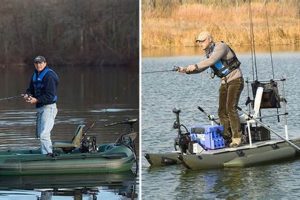
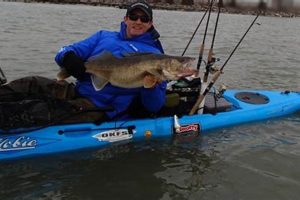
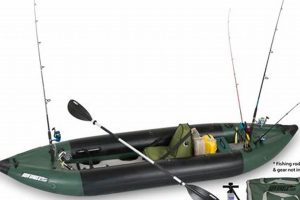
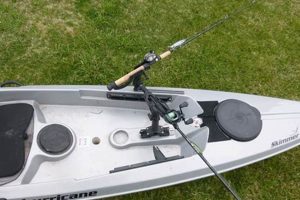
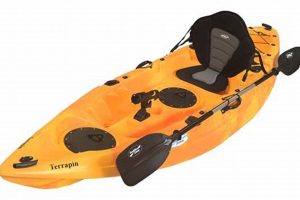
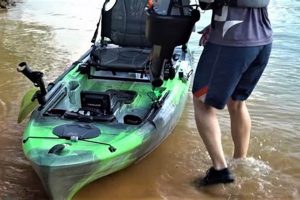
Small, human-powered boats designed for navigating waterways offer a unique approach to angling in flowing waters. This method combines the quiet, close-to-the-water advantages of paddling with the excitement of pursuing fish in their natural habitat. A specialized vessel, often featuring customizations like rod holders, anchor trolleys, and storage compartments for tackle, facilitates this activity.
This approach provides anglers with enhanced access to shallow or otherwise hard-to-reach areas, allowing for a stealthy presentation of bait or lures, often resulting in higher catch rates. It also promotes a deeper connection with nature and offers a low-impact, environmentally friendly way to experience the outdoors. While the concept of using small boats for fishing dates back centuries, the modern adaptation with specialized equipment and materials represents a relatively recent evolution in sport fishing.
This article will delve deeper into the various aspects of selecting, outfitting, and safely employing such specialized watercraft for angling in flowing waters. Topics covered will include different hull designs, essential equipment, safety precautions, and best practices for a successful and enjoyable experience.
Tips for River Fishing from a Kayak
Successful river fishing from a kayak requires careful planning and execution. These tips offer guidance for a safe and productive experience.
Tip 1: Understand River Dynamics: Current speed, water depth, and potential obstacles like rocks and strainers (partially submerged trees or debris) should be assessed before entering the river. Consult river maps and flow reports for up-to-date information.
Tip 2: Choose the Right Vessel: Different kayak designs perform better in specific river conditions. Shorter, wider kayaks offer greater stability in slower-moving water, while longer, narrower kayaks are better suited for faster currents.
Tip 3: Prioritize Safety Equipment: A properly fitted personal flotation device (PFD) is essential. A whistle, throw rope, and first-aid kit should also be readily accessible.
Tip 4: Master Basic Paddling Strokes: Effective paddling techniques are crucial for maneuvering in currents and avoiding obstacles. Practice forward, reverse, and sweep strokes before venturing onto the river.
Tip 5: Employ Proper Anchoring Techniques: A well-placed anchor allows anglers to hold position in desired fishing spots. Utilize an anchor trolley system for optimal control and avoid anchoring from the stern.
Tip 6: Respect Wildlife and the Environment: Avoid disturbing nesting areas and maintain a safe distance from wildlife. Pack out all trash and fishing line to preserve the natural environment.
Tip 7: Check Fishing Regulations: Familiarize oneself with local fishing regulations, including licensing requirements, catch limits, and permitted fishing methods.
Adhering to these guidelines will enhance safety, increase fishing success, and contribute to a more enjoyable river fishing experience.
By following these tips and continually developing skills, anglers can confidently navigate and enjoy the unique challenges and rewards that river fishing from a kayak offers.
1. Stability

Stability is a critical factor in kayak fishing, particularly in river environments. A stable platform allows anglers to cast, hook, and land fish effectively while minimizing the risk of capsizing. River currents, obstacles, and the act of fishing itself can compromise stability, making it a crucial consideration when selecting and outfitting a kayak for river fishing.
- Hull Design:
The hull design significantly influences a kayak’s stability. Wider, flatter hulls offer greater primary stability (initial resistance to tipping), making them suitable for calmer waters and less experienced paddlers. Pontoon-style hulls maximize stability. However, these designs often sacrifice maneuverability. Longer, narrower hulls with a pronounced keel provide less primary stability but offer greater secondary stability (resistance to capsizing once tilted). These designs are better suited for experienced paddlers navigating faster currents.
- Center of Gravity:
A lower center of gravity contributes to increased stability. Seating position, weight distribution within the kayak, and added gear all affect the center of gravity. Keeping weight low and centered enhances stability. Adding weight to the bottom of the hull can further improve stability, especially in rougher water.
- Water Conditions:
River conditions play a significant role in kayak stability. Strong currents, waves, and obstacles like rocks or debris can destabilize a kayak. Anglers must assess water conditions before entering a river and choose a kayak and paddling technique appropriate for the environment. Adding outriggers or stabilizers can enhance stability in challenging conditions.
- Angler Skill and Behavior:
An angler’s skill level and behavior influence stability. Proper paddling technique, balanced weight distribution, and smooth, deliberate movements contribute to a stable platform. Sudden movements, leaning too far over the side, or standing up in the kayak can compromise stability. Practice and experience are essential for developing the skills necessary to maintain stability in various river conditions.
Ultimately, achieving optimal stability in a river fishing kayak requires a holistic approach considering hull design, center of gravity management, awareness of water conditions, and angler skill. Prioritizing stability ensures a safe and productive fishing experience, allowing anglers to focus on the task at hand rather than constantly battling to stay upright.
2. Maneuverability
Maneuverability is a critical aspect of kayak fishing in rivers. The ability to precisely control the kayak’s position and direction is essential for navigating currents, avoiding obstacles, and accessing prime fishing spots. A highly maneuverable kayak allows anglers to efficiently reposition themselves, hold position in flowing water, and respond quickly to changing river conditions or fish activity. This characteristic directly influences fishing success and overall safety on the river.
Several factors contribute to a kayak’s maneuverability. Hull design plays a significant role. Shorter kayaks with a rockered (curved) hull tend to turn more quickly and easily than longer, flatter hulls. A kayak’s length also influences its tracking (ability to maintain a straight course). Shorter kayaks are generally less prone to tracking straight, requiring more frequent corrective strokes, while longer kayaks track better but require more effort to turn. The type of rudder or skeg system employed, if any, also impacts maneuverability. A rudder provides directional control and enhances tracking, while a skeg primarily improves tracking but offers less maneuverability. Water conditions, such as current speed and the presence of obstacles, further affect maneuverability, requiring anglers to adapt their paddling techniques accordingly. For instance, a shorter, more maneuverable kayak is advantageous in tight, twisty streams, while a longer, tracking-focused kayak might be preferable in wider, open rivers.
Understanding the factors influencing kayak maneuverability is crucial for selecting an appropriate vessel and developing effective paddling techniques. Choosing a kayak with maneuverability characteristics suited to the target river environment enhances an angler’s ability to navigate efficiently, access desired fishing locations, and respond effectively to changing conditions. This ultimately contributes to a safer and more successful river fishing experience.
3. Storage Capacity

Adequate storage capacity is essential in kayaks designed for river fishing. The ability to transport essential gear, tackle, and safety equipment directly impacts both the success and enjoyment of a fishing trip. Insufficient storage can limit the range of techniques employed, compromise safety by restricting access to essential items, and detract from the overall fishing experience. Careful consideration of storage needs and the available storage solutions is vital when selecting a river fishing kayak.
- Types of Storage:
Kayaks offer various storage options, including open rear wells, sealed hatches, and smaller compartments for personal items. Open wells accommodate larger items like tackle crates and coolers but offer limited protection from water. Sealed hatches provide dry storage for sensitive gear like electronics and spare clothing. Smaller compartments are ideal for quick access to frequently used items like pliers, knives, and sunscreen.
- Storage Capacity and Fishing Style:
Storage needs vary depending on the angler’s fishing style and target species. Fly fishermen may require less storage than those using multiple rods and larger tackle boxes. Kayak anglers targeting larger species may need to carry specialized equipment, further increasing storage demands. Understanding individual fishing needs is crucial for determining the necessary storage capacity.
- Weight Distribution and Stability:
Proper weight distribution within storage compartments affects kayak stability. Heavy items should be placed low and centered in the kayak to maintain a low center of gravity. Distributing weight evenly prevents the kayak from becoming unbalanced, enhancing stability and maneuverability. Securing gear within storage compartments prevents shifting during transport and while on the water.
- Accessibility and Organization:
Easy access to stored gear is crucial for efficient fishing. Well-organized storage compartments allow anglers to quickly locate and retrieve necessary items without disrupting their fishing rhythm. Clear labeling and readily accessible compartments enhance efficiency and minimize time spent searching for gear.
The available storage capacity and its configuration significantly impact the functionality of a river fishing kayak. Balancing storage space with maneuverability and stability considerations ensures a well-equipped and efficient fishing platform. Choosing a kayak with appropriate storage solutions tailored to the angler’s specific needs and fishing style contributes to a more organized, productive, and enjoyable experience on the river.
4. Durability
Durability is a paramount concern for kayaks used in river environments. Rivers present a variety of challenges, including rocks, submerged logs, and abrasive sand or gravel. A durable kayak withstands impacts and abrasion, ensuring longevity and maintaining performance over time. The material used in kayak construction directly influences its durability. Polyethylene kayaks are common due to their impact resistance and affordability. Higher-end materials like composites (fiberglass, Kevlar, carbon fiber) offer increased durability and lighter weight but come at a premium cost. Construction methods, such as rotomolding versus thermoforming, also affect a kayak’s ability to withstand impacts and abrasion.
A durable kayak minimizes the risk of damage and costly repairs. For example, a kayak constructed from high-density polyethylene can withstand impacts from rocks in shallow rapids, whereas a less durable kayak might puncture or crack. Furthermore, UV resistance is crucial, particularly in sunny climates, to prevent material degradation and maintain colorfastness. Durable fittings, hardware, and seat components also contribute to the overall longevity of the kayak. Investing in a durable kayak reduces long-term costs and ensures the vessel remains functional for extended use in demanding river environments.
Choosing a durable kayak is a critical investment for river fishing. While initial costs may be higher for more durable materials and construction methods, the long-term benefits outweigh the upfront expense. A durable kayak provides reliable performance, withstands the rigors of river use, and ensures a safe and enjoyable fishing experience for years to come. Considering the specific river environment and the level of anticipated use informs selection of an appropriately durable kayak.
5. River Suitability
River suitability is a crucial factor in selecting a kayak for fishing. Different river characteristics demand specific kayak features for optimal performance and safety. Evaluating river conditions, such as water flow, obstacles, and potential hazards, informs appropriate kayak selection. A kayak well-suited to the intended river environment enhances fishing success and ensures a safe and enjoyable experience.
- Water Flow and Current Speed
Water flow significantly impacts kayak selection. Faster currents require kayaks with excellent tracking and maneuverability, allowing anglers to maintain control and navigate efficiently. Longer, narrower kayaks with a defined keel excel in swift water. Conversely, slower-moving rivers and calmer waters permit the use of wider, more stable kayaks that prioritize stability over speed. Shorter kayaks with a flatter hull are often preferred in these conditions, offering enhanced stability for casting and landing fish.
- Obstacles and Hazards
Rivers present various obstacles, such as rocks, submerged logs, and strainers (partially submerged trees or debris). Kayaks designed for navigating these hazards often feature durable hulls made from impact-resistant materials like high-density polyethylene. Maneuverability is also crucial for avoiding obstacles; shorter kayaks with rockered hulls offer superior agility in tight spaces. Understanding the types of obstacles present in the target river informs the selection of a kayak with appropriate durability and maneuverability characteristics.
- Accessibility and Portage
Accessing the river and potential portages (carrying the kayak overland) influences kayak choice. Lightweight kayaks are easier to transport and carry over longer distances. Inflatable kayaks offer exceptional portability but may sacrifice performance compared to rigid hulls. Consideration of access points and the potential need for portages informs decisions regarding kayak weight, size, and portability.
- Fishing Style and Target Species
The intended fishing style and target species further refine river suitability considerations. Anglers targeting larger fish in faster currents may prioritize tracking and stability, while those fishing in calmer waters for smaller species might prefer maneuverability and a shallower draft. Sit-on-top kayaks offer excellent stability and ease of entry/exit for fishing in calmer rivers, while sit-inside kayaks provide better protection from the elements in colder conditions. The chosen fishing style and target species influence kayak selection based on factors like stability, maneuverability, and access to the water.
Careful assessment of river suitability is paramount for a successful and enjoyable kayak fishing experience. Matching kayak characteristics to the specific river environment ensures optimal performance, safety, and efficiency on the water. Understanding the interplay between water flow, obstacles, accessibility, and fishing style allows anglers to select the most appropriate kayak for their intended river fishing adventures.
Frequently Asked Questions
This section addresses common inquiries regarding the selection and use of kayaks for river fishing.
Question 1: What type of kayak is best suited for river fishing?
The optimal kayak depends on the specific river characteristics and fishing style. Slower, calmer rivers allow for wider, more stable kayaks, while faster currents necessitate longer, more maneuverable designs. Inflatable kayaks offer portability, while rigid kayaks provide superior performance. Specific features like rod holders, anchor trolleys, and ample storage should also be considered.
Question 2: What safety precautions are essential for river fishing from a kayak?
Wearing a personal flotation device (PFD) is paramount. Checking weather forecasts and river conditions before embarking is crucial. Carrying a whistle, throw rope, and first-aid kit enhances safety. Informing someone of the fishing plan and estimated return time is also recommended. Understanding basic paddling techniques and self-rescue maneuvers further mitigates risks.
Question 3: How does one choose the correct paddle length for a kayak?
Paddle length depends on factors like torso height, kayak width, and paddling style. Retailers often offer sizing charts or online resources to determine appropriate paddle length. Testing different paddle lengths can help determine the most comfortable and efficient fit.
Question 4: What essential gear should be carried on a river fishing kayak?
Essential gear includes appropriate fishing tackle, a PFD, a whistle, a first-aid kit, a bilge pump or sponge, a dry bag for personal items, and a river map or GPS device. Additional items might include a knife, pliers, sunscreen, insect repellent, and appropriate clothing for weather conditions.
Question 5: How does river current affect kayak fishing techniques?
Current significantly influences fishing techniques. Anglers must account for drift when casting and retrieving lures. Positioning the kayak upstream of target areas allows lures to drift naturally. Utilizing an anchor or anchor trolley system enables maintaining position in specific locations. Adapting techniques based on current speed and direction is key for successful river fishing from a kayak.
Question 6: What are the advantages of fishing from a kayak compared to other methods?
Kayaks provide access to shallow or otherwise inaccessible areas, offering a stealthy approach to fish. Their quiet operation minimizes disturbance to fish. Kayak fishing offers a close-to-nature experience and an environmentally friendly way to enjoy the sport. Compared to larger motorized boats, kayaks are less expensive and easier to transport and store.
Understanding these key aspects contributes significantly to informed decision-making regarding kayak selection and river fishing practices. Further research into specific techniques and safety guidelines is encouraged.
Continue reading for advanced tips and strategies for river fishing from a kayak.
Conclusion
Specialized small watercraft designed for river fishing offer distinct advantages for anglers seeking a close-to-nature and efficient fishing experience. Selection requires careful consideration of factors such as hull design, stability, maneuverability, storage capacity, durability, and river suitability. Matching vessel characteristics to the intended river environment and fishing style ensures optimal performance, safety, and enjoyment. Prioritizing safety equipment and understanding river dynamics further contribute to a successful and responsible approach. Proper paddling techniques, anchoring strategies, and respect for the environment are essential elements of ethical and productive river fishing.
As angling in flowing waters continues to evolve, refining knowledge and skills related to specialized watercraft remains crucial for maximizing fishing success while minimizing environmental impact. Continued exploration of advanced techniques, equipment advancements, and responsible fishing practices will further enhance the experience and preserve the integrity of river ecosystems for future generations.