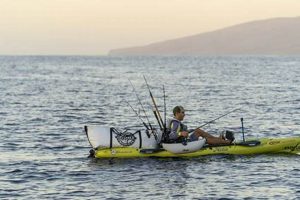
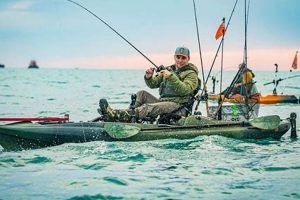
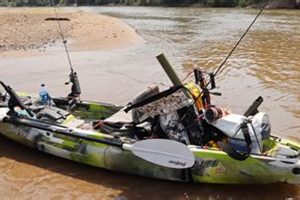
Stabilization systems deployed on fishing kayaks, typically consisting of rigid arms extending outward from the hull and buoyant floats, enhance stability, especially beneficial in rough waters or when standing to cast. These systems create a wider base, resisting tipping and allowing anglers greater freedom of movement. An example includes inflatable floats paired with aluminum or composite arms adjustable for varying conditions.
Increased stability translates to improved safety and fishing effectiveness. By reducing the risk of capsizing, these systems allow anglers to focus on fishing, particularly in challenging environments. They also facilitate standing, which provides a higher vantage point for spotting fish and allows for more powerful casts. Historically, outrigger concepts have been adapted from traditional watercraft designs for modern kayak fishing, improving both accessibility and the range of fishable waters.
This exploration will cover various aspects, including types of systems available, materials used in their construction, installation methods, and best practices for their use in different fishing scenarios. Further discussion will analyze the impact on kayak performance and maneuverability, as well as factors to consider when selecting an appropriate system.
Tips for Utilizing Kayak Fishing Outrigger Systems
Proper use and maintenance ensure optimal performance and longevity of stabilization systems. These tips provide guidance for maximizing benefits and ensuring safe operation.
Tip 1: Choose the Right System: System selection should consider kayak size, fishing style, and anticipated water conditions. Smaller kayaks benefit from lighter systems, while larger vessels or rougher waters may require more robust designs.
Tip 2: Proper Deployment: Deploying systems before entering the water ensures safety and prevents difficulties associated with deployment in unstable conditions.
Tip 3: Adjust for Conditions: Arm length and float position should be adjusted according to water conditions and fishing activity. Shorter arm lengths enhance maneuverability in calmer waters, while longer extensions increase stability in rough conditions.
Tip 4: Regular Maintenance: Regular inspection and maintenance of hardware, floats, and connecting components prevent malfunctions and extend system lifespan. Inspecting for corrosion or damage before each trip is crucial.
Tip 5: Practice Deployment and Retrieval: Practice deploying and retrieving the system in calm water before venturing into challenging conditions. This builds familiarity and facilitates efficient adjustments in various situations.
Tip 6: Consider Weight Distribution: Ensure proper weight distribution within the kayak, including fishing gear and personal items, to maintain balance and prevent excessive leaning. Even with enhanced stability, careful weight management is essential.
Tip 7: Be Mindful of Obstacles: Extended arms increase the kayak’s overall width; therefore, navigate carefully in tight spaces or near obstacles to avoid collisions.
Adhering to these tips improves safety, enhances fishing effectiveness, and prolongs the life of stabilization systems. Careful planning and regular maintenance contribute significantly to successful outings.
By understanding key features, benefits, and best practices, anglers can make informed decisions about integrating these valuable tools into their kayak fishing experience. This concludes the practical advice section.
1. Stability

Stability forms a cornerstone of kayak fishing, directly influencing safety and angling effectiveness. Outriggers significantly enhance stability by broadening the kayak’s base, counteracting destabilizing forces. This broadened base provides resistance against tipping, crucial when navigating challenging conditions such as rough water, strong currents, or when engaging in activities that shift the center of gravity, like casting or landing fish. A kayak outfitted with outriggers becomes a more stable platform, permitting anglers to confidently focus on fishing rather than constantly managing balance. For example, standing to cast in a kayak becomes significantly safer and more practical with the added stability provided by outriggers. This enhanced stability is particularly crucial in offshore fishing or when targeting larger species from a kayak.
The physics behind this increased stability lies in the wider base provided by the outriggers and floats. The extended arms and floats distribute the kayak’s weight over a larger area, creating a significantly more stable platform. This principle is analogous to a tightrope walker using a long balancing pole; the increased width of the base substantially improves stability. Furthermore, the buoyant floats add further resistance to tipping, creating a strong righting moment when the kayak leans. This added buoyancy effectively counteracts the destabilizing forces encountered in various fishing situations. Consider the scenario of landing a large fish; the sudden weight and movement can destabilize a standard kayak, but with outriggers, the angler gains a significant advantage in maintaining balance and control.
Improved stability achieved through outriggers offers significant practical advantages in kayak fishing. It allows anglers to venture into more challenging environments, access previously inaccessible fishing spots, and confidently engage in activities that would otherwise compromise balance. The enhanced stability translates to increased safety, allowing anglers to focus on fishing and reducing the risk of capsizing, particularly in adverse conditions. This improved safety is of paramount importance, especially in remote locations or when fishing alone. In conclusion, stability facilitated by outriggers is not simply a convenience but a critical factor enhancing both safety and the overall effectiveness of kayak fishing.
2. Safety

Safety is paramount in kayak fishing, and outriggers play a crucial role in enhancing it. These systems significantly reduce the risk of capsizing, a major safety concern, especially in challenging conditions. The increased stability offered by outriggers allows anglers to navigate rough waters, strong currents, and unexpected movements with greater confidence. For instance, an angler encountering a sudden wave or the pull of a large fish experiences significantly less destabilization with outriggers deployed. This improved stability reduces the likelihood of capsizing, preventing potential injuries and equipment loss. Consider a scenario where an angler hooks a large fish in choppy water; without outriggers, the struggle could easily lead to capsizing. However, with the added stability, the angler has a much higher chance of successfully landing the fish while remaining safe.
Beyond stability, outriggers contribute to safety by providing a more secure platform for various fishing activities. Standing to cast or retrieve, often precarious in a standard kayak, becomes significantly safer with outriggers. The broader base and added buoyancy create a more stable platform, reducing the risk of falls overboard. This enhanced stability is particularly crucial in situations requiring quick movements or when dealing with unexpected events, such as a fish striking the line. Moreover, outriggers provide a measure of security in emergencies. In the event of a capsize, they can assist in righting the kayak or provide a platform for the angler to hold onto until help arrives. This added security can be crucial in remote locations or when fishing alone, enhancing the angler’s chances of self-rescue or facilitating rescue by others.
In summary, outriggers significantly enhance safety in kayak fishing by improving stability, providing a more secure platform for fishing activities, and offering assistance in emergency situations. This increased safety allows anglers to explore more challenging fishing locations, focus on their technique, and enjoy the experience with greater peace of mind. While outriggers enhance safety, they do not eliminate all risks. Proper use, maintenance, and continued adherence to general water safety guidelines remain essential for a safe and enjoyable fishing experience. Integrating outriggers into kayak fishing promotes a safer environment, allowing anglers to push boundaries while minimizing potential hazards.
3. Deployment
Deployment of kayak fishing outriggers is crucial for maximizing their stability benefits and ensuring safe operation. Efficient deployment methods vary depending on the outrigger system design. Some systems utilize a simple hinge and lock mechanism, allowing rapid deployment and retraction. Others involve telescoping arms that extend outwards and lock into place. Inflatable outriggers require inflation before deployment, adding an extra step to the process. Understanding the specific deployment mechanism of one’s system is essential for efficient setup and adjustment on the water. For example, deploying outriggers before launching the kayak, especially in challenging conditions like surf zones, simplifies the process and avoids precarious balancing acts. Conversely, retracting outriggers before landing or navigating tight spaces prevents collisions and damage.
Effective deployment also involves adjusting the outriggers for optimal performance based on prevailing conditions. Calm water may require shorter outrigger arm extensions for better maneuverability, while rough seas necessitate full extension for maximum stability. Float positioning also influences performance. Anglers frequently adjust float height to adapt to varying water depths and fishing techniques. For instance, higher float positions enhance stability in rough conditions, whereas lower positions minimize wind resistance and improve maneuverability. Proper deployment, therefore, involves not just extending the outriggers but also fine-tuning their configuration to match the specific fishing environment and activity. Incorrect deployment can compromise stability and maneuverability, potentially leading to hazardous situations. For example, deploying outriggers unevenly can create an imbalance, increasing the risk of capsizing.
In summary, efficient and adaptable deployment is crucial for maximizing the benefits of kayak fishing outriggers. Understanding the specific deployment mechanism of one’s system and adjusting the outriggers based on prevailing conditions are key to ensuring optimal stability, maneuverability, and safety. Regular practice and familiarity with the deployment process improve efficiency and preparedness on the water, contributing to a safer and more productive fishing experience. Difficulties in deployment can arise from inadequate practice, mechanical issues, or challenging environmental conditions, emphasizing the importance of preparedness and regular maintenance. Efficient deployment directly contributes to both safety and fishing effectiveness.
4. Materials

Material selection significantly influences the performance, durability, and weight of kayak fishing outriggers. Common materials include aluminum, fiberglass, carbon fiber, and plastics. Each material presents distinct advantages and disadvantages. Aluminum offers a balance of strength, weight, and affordability, making it a popular choice. Fiberglass provides excellent strength and corrosion resistance but can be more expensive. Carbon fiber delivers superior strength and lightness but comes at a premium cost. Plastics, often used for float components, offer buoyancy and affordability but may be less durable than other materials. The choice of material directly impacts the system’s overall weight, affecting kayak maneuverability and portability. For example, heavier aluminum outriggers provide robust stability but add more weight than carbon fiber alternatives.
Material selection also dictates the system’s resistance to environmental factors. Saltwater environments necessitate corrosion-resistant materials like aluminum or fiberglass. Exposure to UV radiation can degrade certain plastics, impacting float buoyancy and longevity. Choosing appropriate materials based on anticipated operating conditions ensures long-term performance and minimizes maintenance. Consider an angler fishing frequently in saltwater; opting for aluminum or fiberglass outriggers mitigates the risk of corrosion and ensures sustained performance. Conversely, an angler fishing primarily in freshwater might prioritize lighter materials like carbon fiber to enhance kayak maneuverability. Matching material properties to the intended environment optimizes system durability and longevity.
In conclusion, careful material selection is crucial for optimizing kayak fishing outrigger performance and longevity. Material properties directly influence strength, weight, corrosion resistance, and overall system durability. Understanding the characteristics of different materials allows anglers to choose systems tailored to specific needs and environmental conditions. This informed decision-making process balances performance requirements with budget considerations, ultimately contributing to a more effective and enjoyable fishing experience. Neglecting material considerations can lead to premature wear, reduced performance, or even equipment failure, highlighting the practical significance of this understanding.
5. Maintenance

Maintenance plays a vital role in ensuring the longevity, performance, and safety of kayak fishing outriggers. Regular upkeep mitigates wear and tear caused by environmental factors and usage, preventing potential failures that could compromise stability and safety. Saltwater environments, particularly corrosive, necessitate diligent rinsing and inspection of metal components for signs of corrosion or salt buildup. Moving parts, such as hinges and locking mechanisms, benefit from lubrication to maintain smooth operation and prevent seizing. Floatation devices require inspection for leaks, punctures, or UV degradation, ensuring continued buoyancy. Neglecting these maintenance practices can lead to decreased stability, increased risk of failure, and potentially hazardous situations on the water. For example, corroded hinges could fail under stress, causing an outrigger to collapse, while a leaking float could compromise buoyancy and stability. Conversely, consistent maintenance ensures the system remains reliable and performs as intended, contributing to a safer and more enjoyable fishing experience.
A comprehensive maintenance routine involves several key steps. Regularly rinsing the entire system with fresh water after each use, especially after exposure to saltwater, removes corrosive residues and debris. Inspecting all components for signs of wear, damage, or corrosion allows for timely repairs or replacements, preventing minor issues from escalating into major problems. Lubricating moving parts with a marine-grade lubricant ensures smooth operation and protects against corrosion. Checking float inflation levels and patching any leaks or punctures maintains optimal buoyancy and stability. Storing outriggers properly, preferably disassembled and in a dry environment, protects them from damage and prolongs their lifespan. Adhering to a consistent maintenance schedule, tailored to the specific outrigger system and usage frequency, maximizes system longevity and ensures reliable performance. For example, anglers fishing frequently in harsh conditions might implement a more rigorous maintenance schedule compared to those fishing occasionally in calmer waters.
In conclusion, a proactive approach to maintenance is essential for preserving the functionality and safety of kayak fishing outriggers. Regular inspection, cleaning, lubrication, and proper storage prevent premature wear and potential failures, ensuring reliable performance and maximizing the lifespan of these crucial stability systems. Understanding the specific maintenance requirements of one’s outrigger system and adhering to a consistent maintenance routine contributes significantly to safety and enjoyment on the water. Failure to prioritize maintenance can lead to compromised stability, equipment failure, and potentially dangerous situations, underscoring the practical significance of this understanding within the broader context of kayak fishing safety and effectiveness.
6. Customization
Customization options for kayak fishing outriggers allow anglers to tailor stability systems to individual needs and kayak designs. Adjustability in arm length, float type, and mounting position contributes significantly to optimized performance. Arm length adjustments accommodate varying water conditions and fishing styles. Shorter arms enhance maneuverability in calm waters, while longer arms provide increased stability in rough conditions or when standing. Float selection considers factors like buoyancy, weight, and deployment method. Inflatable floats offer compact storage and portability, while rigid floats provide greater stability in challenging conditions. Mounting position influences kayak balance and performance. Adjusting mounting positions compensates for varying kayak widths and center-of-gravity considerations. For example, wider kayaks might benefit from outward-angled mounts to maximize stability, whereas narrower kayaks might utilize more vertical mounts. Customizing outrigger systems ensures compatibility with diverse kayak designs, angler preferences, and fishing environments.
Furthermore, customization extends beyond basic adjustments to incorporate specialized accessories and modifications. Anglers frequently add rod holders, fish finders, or camera mounts to outrigger arms, enhancing functionality and convenience. DIY modifications, such as adding stabilizing fins or adjusting float shapes, further personalize systems to meet specific needs. These customizations reflect diverse fishing styles and preferences. An angler targeting large pelagic species might prioritize robust outriggers with specialized rod holders, while an angler focused on shallow-water fishing might opt for a lightweight, easily deployable system. Practical examples include customizing outrigger length for improved maneuverability in mangrove tunnels or adding lighting for enhanced visibility during night fishing. Such tailored modifications optimize stability and improve fishing effectiveness in diverse environments. The ability to customize outrigger systems transforms them from generic accessories into personalized tools integral to individual fishing styles.
In conclusion, customization empowers anglers to optimize outrigger systems for individual needs and fishing styles. Adjustable components, coupled with specialized accessories and modifications, enhance stability, functionality, and overall fishing effectiveness. Understanding the interplay between customization options and kayak design, fishing environment, and individual preferences allows anglers to create truly personalized and effective stability systems. Challenges in customization can arise from compatibility issues between kayaks and outrigger systems or from the complexity of certain modifications. However, the benefits of a well-customized systemenhanced stability, improved fishing effectiveness, and increased angler confidencesignificantly outweigh these challenges. Ultimately, customization transforms kayak fishing outriggers from generic accessories into integral tools that enhance the overall fishing experience.
Frequently Asked Questions about Kayak Fishing Outriggers
This section addresses common inquiries regarding kayak fishing outriggers, providing concise and informative responses.
Question 1: Do outriggers make a kayak significantly more stable?
Outriggers substantially enhance stability by widening the kayak’s base and providing additional buoyancy. This added stability reduces the risk of tipping, especially in rough conditions or when standing.
Question 2: Are outriggers difficult to install?
Installation difficulty varies depending on the specific outrigger system and kayak. Some systems offer straightforward installation processes, while others require more involved setup. Consulting manufacturer instructions or seeking professional assistance ensures proper installation.
Question 3: Do outriggers affect kayak speed and maneuverability?
Outriggers can slightly reduce kayak speed and maneuverability due to increased drag and width. However, the added stability often outweighs this minor performance trade-off, especially in challenging conditions.
Question 4: What maintenance do outriggers require?
Regular maintenance ensures optimal performance and longevity. Rinsing with fresh water after use, inspecting components for wear or damage, lubricating moving parts, and checking float inflation are essential maintenance practices.
Question 5: Are outriggers suitable for all types of kayaks?
Outrigger compatibility depends on kayak design and size. While many kayaks can accommodate outriggers, factors like hull shape and weight capacity influence suitability. Consulting manufacturer recommendations ensures proper fit and performance.
Question 6: Are there different types of outriggers available?
Various outrigger designs exist, including rigid, inflatable, and folding models. Each type offers distinct advantages regarding stability, portability, and deployment. Selecting the appropriate type depends on individual needs and fishing styles.
Understanding these key aspects of kayak fishing outriggers informs purchasing decisions and promotes safe and effective usage. Proper installation, maintenance, and adherence to safety guidelines maximize the benefits of these stability-enhancing systems.
The next section will explore specific outrigger models and discuss their features in detail.
Kayak Fishing Outriggers
Kayak fishing outriggers offer significant advantages in terms of stability, safety, and fishing effectiveness. Exploration of key aspectsmaterials, deployment, maintenance, and customizationreveals the nuanced impact these systems have on kayak performance. Understanding material properties allows informed selection for specific environments and fishing styles. Proper deployment and regular maintenance ensure optimal functionality and longevity. Customization options empower anglers to tailor systems to individual needs, enhancing comfort and effectiveness on the water. Ultimately, successful integration of outriggers into kayak fishing hinges on a comprehensive understanding of these interconnected elements.
The future of kayak fishing outriggers likely involves further innovation in materials, design, and integration with other kayak technologies. Lighter, stronger, and more adaptable systems may emerge, further enhancing stability and expanding fishing possibilities. Continued exploration of design and functionality will drive advancements, leading to safer and more effective fishing experiences. As kayak fishing grows in popularity, the role of outriggers in enhancing stability and safety will become increasingly important, contributing to greater accessibility and enjoyment of the sport.