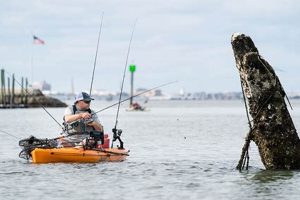
A global positioning system designed for anglers operating from kayaks offers crucial navigational assistance and enhances the fishing experience. These specialized devices typically combine chartplotting, sonar capabilities, and waypointing functionalities within a compact, waterproof design suitable for kayak use. An example would be a unit mounted on a kayak’s dashboard, displaying real-time location on a nautical chart, marking fish-holding structures, and recording productive fishing spots for future reference.
Accurate positioning on the water is paramount for safety and efficient fishing. This technology allows anglers to navigate unfamiliar waters, track successful drifts, return precisely to lucrative locations, and even share coordinates with others. Historically, anglers relied on landmarks and paper charts. Modern electronic navigation significantly improves safety by providing precise location data, especially vital in challenging conditions like fog or darkness. Moreover, the ability to mark waypoints and track movements contributes to a more strategic and productive fishing experience.
This overview highlights the core functionality and advantages of this technology. The following sections will delve into specific features, popular models, mounting options, and practical usage tips for maximizing its potential on the water.
Tips for Utilizing Kayak Fishing GPS
Effective use of navigational technology significantly enhances angling success and safety. The following tips offer practical guidance for maximizing the benefits of these devices in a kayak fishing environment.
Tip 1: Prioritize Waterproofing and Durability: Select a unit specifically designed for marine environments, ensuring it can withstand splashes, rain, and even brief submersion. Look for a high IPX rating for guaranteed water resistance.
Tip 2: Mount Securely and Strategically: Choose a mounting location that provides clear visibility and easy access to controls while minimizing interference with paddling. Consider using a RAM mount system for flexibility and stability.
Tip 3: Pre-Plan Routes and Mark Waypoints: Before launching, study charts and identify potential fishing areas. Utilize the device to create waypoints marking these locations for efficient navigation on the water.
Tip 4: Utilize Track Logging for Pattern Recognition: Activate the track logging feature to record movements throughout the fishing trip. Analyzing these tracks later can reveal patterns in fish behavior and productive drift routes.
Tip 5: Learn Sonar Interpretation for Structure Identification: Familiarize oneself with sonar readings to identify underwater structures such as drop-offs, ledges, and submerged vegetation, which are often prime fish-holding areas.
Tip 6: Regularly Update Charts and Software: Ensure the device has the latest cartography and software updates to maintain accuracy and access the most current navigational information.
Tip 7: Carry Backup Power: Relying solely on the device’s internal battery can be risky. Carry a portable power bank or spare batteries to ensure continuous operation throughout the fishing excursion.
By implementing these strategies, anglers can harness the full potential of electronic navigation, resulting in safer, more efficient, and ultimately, more successful kayak fishing trips.
With a clear understanding of how to optimize these tools, one can transition to practical application and experience the significant advantages they offer on the water. The concluding section will summarize the key takeaways and reinforce the overall value of incorporating this technology into kayak fishing.

Navigation forms the cornerstone of effective kayak fishing, and GPS technology plays a crucial role in facilitating this. Precise positioning and route planning are paramount for accessing productive fishing areas, especially in expansive or unfamiliar bodies of water. The ability to navigate accurately allows anglers to target specific locations, such as drop-offs, reefs, or weed beds, known to hold fish. Consider a scenario where an angler seeks a submerged reef several miles offshore. Without GPS navigation, locating and returning to this specific spot would be challenging and time-consuming, relying solely on compass bearings and potentially inaccurate estimations. A kayak fishing GPS pinpoints the reef’s coordinates, enabling direct navigation and ensuring the angler can return to the productive spot consistently.
Furthermore, navigational capabilities contribute significantly to safety. Kayak anglers often venture into remote areas, and unforeseen circumstances, such as changing weather conditions or equipment malfunctions, can arise. GPS functionality provides real-time location information, enabling anglers to communicate their position in emergencies or navigate back to shore in challenging conditions. For instance, if fog descends unexpectedly, a kayak angler can rely on the GPS to maintain a safe course, avoiding potential hazards and ensuring a safe return. Additionally, tracking features allow anglers to retrace their routes, a valuable asset when exploring new areas or navigating complex waterways.
In summary, the integration of GPS technology revolutionizes kayak fishing navigation. The capacity to pinpoint locations, plan routes, and track movements enhances fishing efficiency and contributes significantly to angler safety. Understanding and utilizing these navigational tools are essential for a successful and safe kayak fishing experience, from locating productive fishing grounds to navigating safely in challenging conditions.
2. Fish finding

Locating fish efficiently is paramount in kayak fishing, and integrating sonar technology within a kayak fishing GPS system significantly enhances this capability. Understanding how these systems assist in identifying fish-holding structures and pinpointing fish concentrations is crucial for maximizing angling success.
- Sonar Technology
Sonar transducers emit sound waves into the water, and the returning echoes create images of the underwater environment. These images reveal bottom contours, vegetation, and, importantly, fish. Different sonar frequencies offer varying levels of detail and depth penetration. For instance, higher frequencies provide detailed images of the water column and are effective in shallow water, while lower frequencies penetrate deeper but offer less detail. Kayak fishing GPS units typically incorporate CHIRP sonar, which utilizes a range of frequencies to provide a comprehensive view of the underwater world. This allows anglers to differentiate between individual fish, schools of baitfish, and underwater structures.
- Structure Identification
Identifying underwater structures is key to locating fish, as these areas often provide shelter, ambush points, or access to food sources. Kayak fishing GPS units with sonar can map the bottom contours, revealing drop-offs, ledges, humps, and other features that attract fish. For example, a submerged hump rising from a flat bottom can be a prime location for ambush predators. The GPS unit not only identifies this structure but also allows anglers to mark its location as a waypoint for future reference.
- Fish Symbol Identification
Many kayak fishing GPS units interpret sonar data and display fish as symbols on the screen. While these symbols don’t definitively confirm the species of fish, they provide valuable clues about fish presence and their approximate depth. Understanding how the unit interprets sonar data and represents fish is essential for interpreting these symbols accurately. Some units even differentiate between larger and smaller fish based on the strength of the sonar return, further aiding anglers in targeting specific sizes.
- Down Imaging and Side Imaging
Advanced kayak fishing GPS units often incorporate down imaging and side imaging sonar. Down imaging provides a near-photographic view of the area directly beneath the kayak, revealing details of the bottom structure and any fish present. Side imaging, on the other hand, scans the water column to the sides of the kayak, extending the search area and revealing structures and fish beyond the boat’s path. These features offer a comprehensive perspective of the underwater environment, significantly increasing the chances of locating fish.
By understanding how sonar technology integrates with kayak fishing GPS units, anglers can effectively locate fish-holding structures, identify fish concentrations, and ultimately, enhance their fishing success. The ability to interpret sonar data, recognize underwater features, and utilize advanced imaging capabilities provides a significant advantage on the water. Combining these fish-finding tools with accurate navigation and waypoint marking transforms the kayak fishing experience into a more strategic and productive endeavor.
3. Safety
Safety is paramount in kayak fishing, an activity inherently involving navigating often unpredictable water environments. Kayak fishing GPS systems contribute significantly to enhancing angler safety through various functionalities. These technological advancements offer crucial support in mitigating risks and responding effectively to unforeseen circumstances, ensuring a more secure and enjoyable fishing experience.
- Emergency Location Communication
In emergencies, communicating precise location is crucial for a swift response. Kayak fishing GPS units often integrate with emergency communication systems, allowing anglers to transmit their coordinates to rescue services if needed. This functionality is particularly valuable in remote areas with limited cell service, providing a reliable means of summoning assistance in critical situations. For instance, if a kayak capsizes far from shore, the angler can activate the emergency beacon, transmitting their GPS location to the appropriate authorities, expediting the rescue process and potentially saving lives.
- Navigation in Challenging Conditions
Navigating in fog, darkness, or unfamiliar waters poses significant risks. Kayak fishing GPS provides real-time location data and navigational guidance, allowing anglers to maintain a safe course even when visibility is compromised. Consider a scenario where fog rolls in unexpectedly while fishing offshore. The GPS unit enables the angler to navigate back to shore safely, following a charted course and avoiding potential hazards like rocks or shallows, which would be difficult to detect visually in dense fog.
- Return-to-Launch Point Functionality
Returning to the launch point after a long fishing trip, especially in changing light or weather, can be challenging. Kayak fishing GPS units offer a “return-to-launch” feature, which automatically guides the angler back to their starting point. This function simplifies navigation, particularly when fatigue or disorientation might impair judgment. This is especially valuable in large bodies of water or unfamiliar areas, eliminating the risk of getting lost and ensuring a safe return.
- Weather Alerts and Forecasts
Some advanced kayak fishing GPS units receive real-time weather updates and forecasts, providing anglers with critical information about impending storms or changing conditions. This allows for proactive decision-making, enabling anglers to seek shelter or return to shore before encountering hazardous weather. For example, a sudden storm warning received on the GPS unit allows the angler to adjust plans and head back to shore promptly, avoiding potentially dangerous conditions on the open water.
These safety features highlight the significant role kayak fishing GPS systems play in mitigating risks and ensuring angler well-being. From emergency communication to navigation assistance and weather alerts, these technologies offer essential support in unforeseen circumstances, enabling safer and more confident exploration of the water. Integrating these safety functionalities into kayak fishing practices enhances the overall experience, allowing anglers to focus on enjoying the sport with greater peace of mind.
4. Waypoint Marking
Waypoint marking represents a crucial function within kayak fishing GPS systems, significantly enhancing angling efficiency and strategic planning. This functionality allows anglers to digitally mark locations of interest on a navigational chart, creating a personalized database of productive spots, potential hazards, or navigational landmarks. The connection between waypoint marking and kayak fishing GPS is symbiotic; the GPS provides the positioning technology, while waypoint marking leverages that technology for strategic advantage on the water. Cause and effect are clearly linked: marking a waypoint (cause) allows for precise return to that location (effect). For example, locating a submerged reef or a productive drop-off can be marked as a waypoint, enabling the angler to return to that specific location easily, eliminating the need to search again or rely on less precise methods like visual landmarks.
The importance of waypoint marking as a component of kayak fishing GPS extends beyond simply marking fishing spots. It contributes to safer navigation by allowing anglers to mark hazards like shallow areas or submerged obstacles. Waypoints can also mark navigational landmarks, aiding in route planning and maintaining course in challenging conditions like fog or darkness. Imagine navigating a winding river system; waypoints can mark critical turns, ensuring safe passage and reducing the risk of disorientation. Furthermore, waypoints can be shared amongst anglers, allowing for collaborative exploration and sharing of successful fishing locations within a community. This shared knowledge expands fishing opportunities and fosters a collective understanding of local waters.
Understanding the practical significance of waypoint marking is essential for maximizing the potential of kayak fishing GPS. By strategically marking locations, anglers create a personalized map of their fishing grounds, optimizing time on the water and increasing the likelihood of success. The ability to quickly and accurately return to productive locations, navigate safely around hazards, and share valuable information transforms the kayak fishing experience. However, effective waypoint management is crucial. Clear naming conventions and regular organization of waypoints are necessary to avoid clutter and ensure the database remains a valuable tool rather than a source of confusion. Regularly backing up waypoint data safeguards against loss due to technical issues, preserving valuable fishing intelligence gathered over time.
5. Chartplotting

Chartplotting functionality within a kayak fishing GPS system provides a visual representation of underwater terrain and navigational data, significantly enhancing situational awareness and strategic decision-making. This integration of cartographic information with real-time GPS positioning allows anglers to visualize their position relative to underwater structures, depth contours, and navigational hazards. The cause-and-effect relationship is direct: accessing detailed chart data (cause) allows for informed navigation and strategic fishing decisions (effect). For example, a chartplotter can reveal a submerged channel or a drop-off, informing decisions about where to cast or troll, maximizing the chances of intercepting fish.
The importance of chartplotting as a component of kayak fishing GPS extends beyond simply displaying location. It provides crucial context for interpreting sonar data, allowing anglers to correlate sonar readings with underwater features shown on the chart. This combined information offers a comprehensive understanding of the fishing environment. Imagine using sonar to identify a fish-holding structure; the chartplotter confirms that structure as a submerged wreck, providing valuable context and influencing subsequent fishing strategies. Furthermore, chartplotting aids in planning routes, avoiding hazards, and navigating safely in unfamiliar waters. Pre-planning routes on a chartplotter before launching allows anglers to identify potential fishing zones and navigate efficiently to those areas. This is particularly valuable in complex waterways or when exploring new fishing grounds.
Practical application of chartplotting necessitates familiarity with nautical charts and their interpretation. Understanding symbols, depth contours, and navigational markers is crucial for extracting meaningful information from the displayed data. Moreover, maintaining up-to-date charts is essential for accuracy and safety. Outdated charts may not reflect recent changes in underwater terrain or navigational markers, posing potential risks. Regularly updating chart data ensures reliable navigation and informed decision-making. While chartplotting significantly enhances situational awareness and strategic planning in kayak fishing, it is important to acknowledge that electronic charts are not infallible. They should be used in conjunction with other navigational tools and good seamanship practices for optimal safety and effectiveness. Combining chartplotter information with visual observations, compass bearings, and knowledge of local conditions ensures a comprehensive and prudent approach to kayak fishing navigation.
6. Compact Design
Compact design is a critical consideration for kayak fishing GPS units, directly impacting usability and practicality within the confined space of a kayak. Units must balance functionality with a small footprint to avoid hindering paddling or other on-board activities. This necessitates careful consideration of size, weight, and mounting options.
- Portability and Mounting Flexibility
Compactness enhances portability, simplifying transport and storage of the unit. Smaller devices offer greater flexibility in mounting locations on a kayak, allowing for strategic placement without obstructing paddling or fishing activities. For example, a compact unit can be easily mounted on a kayak’s dashboard, providing clear visibility and access without interfering with paddle strokes. Larger, bulkier units might restrict movement or require more complex mounting solutions.
- Usability and Ergonomics
Compact designs often prioritize user-friendly interfaces and button layouts suitable for one-handed operation. This is crucial in a kayak environment, where maintaining balance and paddle control are essential. A compact unit with well-placed buttons allows for quick adjustments to settings or waypoint marking without requiring two hands or diverting attention from navigating or fishing. Larger units with complex controls can be difficult to operate efficiently in a kayak’s dynamic environment.
- Battery Life and Power Consumption
Compact units often utilize smaller batteries, necessitating efficient power management to ensure adequate runtime during extended fishing trips. While technological advancements allow for longer battery life even in smaller devices, careful monitoring of power consumption remains essential. Understanding the unit’s power-saving features and carrying backup power sources, like portable power banks, ensures uninterrupted operation throughout the fishing excursion.
- Durability and Weatherproofing
Despite their compact size, these units must withstand the rigors of the kayak fishing environment, including exposure to water, sun, and impacts. Robust construction and reliable waterproofing are crucial for ensuring functionality and longevity. Look for units with high IPX ratings, indicating resistance to water ingress, and durable casings that can withstand accidental drops or bumps common in kayak fishing.
The compact design of kayak fishing GPS units is a crucial factor influencing their practicality and effectiveness on the water. Balancing functionality with a small footprint requires careful consideration of portability, usability, battery life, and durability. Choosing a unit that effectively addresses these aspects enhances the overall kayak fishing experience, providing valuable navigational and fish-finding capabilities without compromising maneuverability or safety.
Frequently Asked Questions about Kayak Fishing GPS
This section addresses common inquiries regarding the selection, usage, and benefits of GPS technology specifically designed for kayak fishing. Clarity on these frequently raised points aims to provide a comprehensive understanding, assisting anglers in making informed decisions.
Question 1: What differentiates a kayak fishing GPS from other GPS units?
Kayak fishing GPS units are typically designed with compact form factors, waterproof construction, and specialized features such as integrated sonar, chartplotting capabilities tailored for marine environments, and mounting systems adaptable to kayak configurations.
Question 2: Is sonar essential in a kayak fishing GPS?
While not strictly essential, integrated sonar significantly enhances fish-finding capabilities by providing real-time information about underwater structures and fish locations. This feature contributes substantially to angling success, particularly in unfamiliar waters.
Question 3: How does GPS technology improve kayak fishing safety?
GPS enhances safety by enabling precise navigation, especially in challenging conditions like fog or darkness. Features like return-to-launch functionality and emergency location communication provide added security in remote areas.
Question 4: What factors should be considered when choosing a mounting system?
Mounting systems should prioritize stability, visibility, and accessibility of the GPS unit while minimizing interference with paddling. RAM mounts are often preferred for their flexibility and robustness.
Question 5: How can waypoint management be optimized within a kayak fishing GPS?
Employing clear naming conventions, regularly organizing waypoints, and backing up data ensure efficient retrieval and prevent loss of valuable fishing intelligence gathered over time.
Question 6: What are the ongoing maintenance requirements for a kayak fishing GPS unit?
Regular software updates, chart updates, and battery maintenance are crucial for ensuring optimal performance, accuracy, and longevity of the device. Protecting the unit from extreme temperatures and ensuring proper storage when not in use also contribute to its lifespan.
Addressing these frequently asked questions aims to provide a comprehensive understanding of kayak fishing GPS systems. Informed decision-making based on these insights contributes to a safer, more efficient, and ultimately, more rewarding angling experience.
The concluding section provides final recommendations and summarizes the core benefits of integrating GPS technology into kayak fishing practices.
Kayak Fishing GPS
This exploration of kayak fishing GPS technology has highlighted its multifaceted role in enhancing angling experiences. From navigation and fish finding to safety considerations and strategic waypoint marking, the integration of GPS significantly impacts efficiency and enjoyment on the water. Compact design considerations ensure practicality within a kayak’s limited space, while chartplotting capabilities provide crucial contextual information for informed decision-making. Addressing frequently asked questions further clarifies the selection, usage, and maintenance of these specialized devices.
Kayak fishing GPS stands as a testament to technological advancement within the angling domain. Its adoption empowers anglers with unprecedented levels of control, precision, and safety consciousness. As technology continues to evolve, further integration of features and enhanced capabilities promise to refine the kayak fishing experience even further, fostering a deeper connection between angler and environment while promoting responsible and sustainable fishing practices.