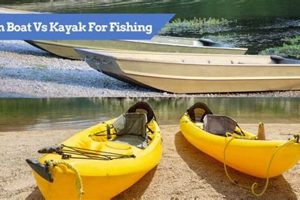
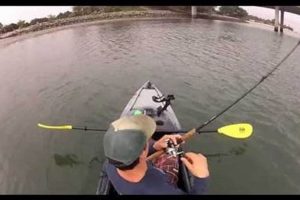
This activity involves angling in small, flowing waterways from a small, human-powered boat. It offers a unique way to target species like trout, smallmouth bass, and panfish in environments often inaccessible by larger watercraft. The maneuverability of the vessel allows anglers to explore shallows, navigate tight bends, and reach secluded pools teeming with fish.
The benefits of this approach are numerous. It offers a close connection with nature, a quiet and less impactful method of fishing, and the opportunity to explore waters otherwise difficult to reach. Historically, small boats have been utilized for fishing in confined waterways, and the modern adaptation with specialized kayaks leverages advancements in material and design for an enhanced experience. This method provides a sustainable and low-impact way to enjoy the sport.
This article will further explore equipment selection, appropriate paddling techniques, effective fishing strategies, and responsible practices for this specific type of angling. It will also address safety considerations and conservation ethics relevant to navigating and preserving these delicate ecosystems.
Tips for Creek Fishing from a Kayak
Effective creek fishing from a kayak requires careful planning and execution. The following tips offer guidance for a successful and enjoyable experience.
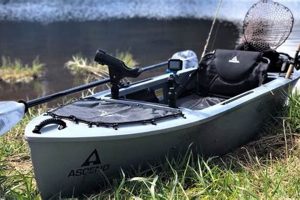
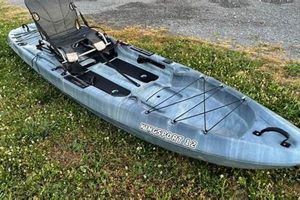
Tip 1: Select the Right Vessel. A shorter, wider kayak offers superior stability and maneuverability in tight spaces, crucial for navigating narrow creeks and shallow water. Sit-on-top kayaks are often preferred for their ease of entry and exit, particularly in the event of an unexpected capsize.
Tip 2: Prioritize Safety Equipment. A personal flotation device (PFD) is essential and should be worn at all times. Carry a whistle for signaling in emergencies, and inform someone of the planned fishing location and return time.
Tip 3: Employ Stealth Tactics. Quiet paddling and minimizing disturbances are crucial for approaching fish in clear, shallow creek waters. Avoid sudden movements and loud noises that can spook wary fish.
Tip 4: Choose Appropriate Tackle. Lighter rods, reels, and lines are generally more suitable for creek fishing. Consider using lures and baits appropriate for target species and the specific creek environment.
Tip 5: Respect the Environment. Practice catch-and-release whenever possible to preserve fish populations. Pack out all trash and avoid disturbing vegetation along the creek banks.
Tip 6: Understand Water Conditions. Check the water level and flow rate before heading out. Be aware of potential hazards such as submerged logs, rocks, and swift currents.
Tip 7: Plan Your Route. Study maps and identify access points, potential fishing spots, and any portage sections where carrying the kayak may be necessary.
By following these guidelines, anglers can maximize their chances of success while ensuring a safe and responsible creek fishing experience. These practices contribute to the preservation of these unique environments for future enjoyment.
This information provides a solid foundation for planning a successful outing. The following sections will delve deeper into specific gear recommendations and advanced fishing techniques.
1. Lightweight Kayak

A lightweight kayak is a critical component for successful creek fishing. Reduced weight significantly impacts maneuverability, portability, and overall fishing experience in these unique environments. The following facets explore the advantages and implications of using a lightweight kayak for this specific angling style.
- Enhanced Portability
Lightweight kayaks are easier to transport to and from the creek. This is particularly important when accessing remote or difficult-to-reach locations, often requiring carrying the kayak over land. A lighter vessel reduces physical strain and allows anglers to explore a wider range of fishing spots, including those inaccessible by larger, heavier boats. This advantage broadens fishing opportunities and allows access to secluded waters.
- Improved Maneuverability
A lighter kayak responds more quickly to paddle strokes and changes in direction. This agility is essential for navigating narrow creek channels, dodging obstacles like submerged logs and rocks, and making precise adjustments in swift currents. Increased maneuverability translates to greater control and efficiency in presenting lures and fighting fish, ultimately increasing the chances of a successful catch.
- Ease of Launching and Landing
Launching and landing a lightweight kayak is significantly easier than a heavier model. This is beneficial in creek environments where launch sites can be uneven, muddy, or otherwise challenging. The reduced weight simplifies entry and exit, making the overall experience more enjoyable and less physically demanding, particularly after a long day of fishing.
- Shallow Water Performance
Lightweight kayaks typically have a shallower draft, meaning less of the hull sits below the waterline. This is crucial for navigating shallow creeks and accessing areas where deeper-draft boats cannot venture. The reduced draft allows anglers to explore the shallowest reaches where fish often concentrate, maximizing fishing opportunities and increasing the likelihood of successful hookups.
These combined advantages contribute to a more efficient and enjoyable creek fishing experience. The ease of transport, maneuverability, and shallow-water performance afforded by a lightweight kayak allows anglers to focus on the fishing itself and fully immerse themselves in the unique challenges and rewards of this specialized angling pursuit.
2. Shallow-Draft Hull

A shallow-draft hull is paramount for effective kayak creek fishing. Creeks, by their nature, present shallow, often rocky, and obstacle-laden waterways. A kayak with a deep draft risks grounding, hindering navigation and potentially damaging the hull. A shallow draft, conversely, allows passage over submerged rocks, logs, and through shallow riffles, expanding access to prime fishing locations often inaccessible to deeper-draft vessels. This access translates to a greater opportunity to target fish holding in shallow pockets, along undercut banks, and in the shallow tails of pools. Consider a scenario where a creek narrows significantly with a rocky bottom. A shallow-draft kayak can navigate this constriction smoothly, while a deeper-draft vessel would likely ground, halting progress and potentially disturbing the water, alerting fish and diminishing fishing success.
The practical significance of a shallow-draft hull extends beyond mere accessibility. It also influences maneuverability and stealth. In shallow water, a deeper draft creates more resistance, requiring greater effort to paddle and maneuver. A shallow-draft hull reduces this resistance, facilitating quicker turns, easier adjustments in current, and a quieter approach, crucial for not spooking wary fish in clear, shallow water. For instance, when approaching a shallow pool holding trout, a shallow-draft kayak allows an angler to position the vessel subtly and present a fly accurately without creating excess disturbance that might alarm the fish.
In summary, the shallow-draft hull is integral to successful kayak creek fishing. It provides the necessary clearance to navigate shallow, obstacle-filled waterways, enhances maneuverability, and facilitates a stealthy approach. These combined advantages contribute significantly to angler success by providing access to prime fishing locations and optimizing presentation techniques, ultimately increasing the likelihood of a productive and enjoyable fishing experience. Understanding this relationship empowers informed equipment choices, contributing to a more effective and rewarding time on the water.
3. Short, Maneuverable Paddle

Paddle selection significantly impacts kayak creek fishing success. Creeks often involve navigating tight turns, overhanging branches, and swift currents. A short, maneuverable paddle becomes essential for efficient propulsion and precise boat control in these confined environments. Its importance extends beyond basic navigation, influencing stealth, stability, and overall fishing efficacy.
- Enhanced Control in Tight Spaces
A shorter paddle allows for quicker, more controlled strokes, essential for navigating narrow passages and avoiding obstacles. Imagine maneuvering through a densely wooded creek with overhanging branches; a longer paddle would become cumbersome, potentially striking obstacles and hindering progress. The shorter paddle’s compact design provides the necessary clearance and control for efficient navigation in these confined spaces.
- Improved Maneuverability in Swift Currents
Quick adjustments in strong currents necessitate a paddle offering immediate responsiveness. A shorter paddle facilitates rapid corrective strokes, maintaining boat stability and preventing capsizing. Consider navigating a shallow riffle with a fast current. A shorter paddle allows for swift, precise adjustments, keeping the kayak on course and preventing it from being swept downstream or into obstacles.
- Facilitated Stealth and Reduced Disturbance
A shorter paddle, coupled with proper technique, minimizes splashing and noise, crucial for approaching wary fish in clear, shallow water. Larger paddles tend to create more surface disturbance, potentially spooking fish. The shorter paddle allows for a quieter, less intrusive paddling style, maximizing stealth and increasing the chances of a successful approach and presentation.
- Increased Efficiency in Technical Maneuvers
Technical maneuvers, such as turning quickly in tight spots or holding position in current, require a paddle offering precise control. The shorter length and lighter weight of these paddles enhance responsiveness and reduce fatigue during repetitive maneuvering, facilitating complex movements with less effort and greater precision. This enhanced control is invaluable for precise boat positioning for optimal casting angles and presentations.
The choice of a short, maneuverable paddle directly influences the effectiveness and enjoyment of kayak creek fishing. Its impact on navigation, stealth, and overall boat control is undeniable. Selecting the appropriate paddle empowers anglers to navigate challenging creek environments effectively, maximizing their fishing success while enhancing safety and minimizing environmental impact.
4. Creek-Specific Tackle
Creek-specific tackle plays a vital role in successful kayak creek fishing. The inherent characteristics of creeks narrow channels, overhanging vegetation, shallow water, and often strong currents dictate the need for specialized equipment that differs significantly from gear used in larger bodies of water. This specialized tackle maximizes fishing effectiveness and contributes significantly to a positive angling experience. The connection lies in the tackle’s adaptability to the creek environment, directly influencing casting accuracy, lure presentation, and fish-fighting capabilities.
Consider the impact of rod length. Longer rods, advantageous in open water, become cumbersome and impractical in the confined spaces of a creek. Overhanging branches and tight quarters necessitate shorter, lighter rods offering enhanced maneuverability and casting precision. Shorter rods also provide greater leverage when battling strong-fighting fish in tight spaces. For instance, a 6-foot, medium-light spinning rod proves far more effective than a 7-foot, medium-heavy rod when targeting smallmouth bass in a narrow, brush-lined creek. Similarly, lighter lines and smaller lures become essential. Heavier lines and larger lures, suitable for open water, tend to snag on submerged debris and overhanging vegetation, reducing fishing efficiency and increasing frustration. Lighter lines and smaller lures, designed for finesse presentations, allow anglers to effectively target fish in these specific conditions. A subtle presentation with a small jig and light line is far more likely to entice a wary trout in a clear, shallow creek than a bulky lure and heavy line.
Understanding the nuanced relationship between creek-specific tackle and kayak creek fishing empowers anglers to make informed equipment choices. These choices directly correlate with fishing success, enhancing casting accuracy, lure presentation, and fish-fighting capability. This specialized approach, tailored to the unique demands of creek fishing, not only increases the likelihood of catching fish but also contributes to a more enjoyable and efficient experience on the water. Recognizing the critical role of properly matched tackle elevates creek fishing from a challenging endeavor to a rewarding pursuit. By adapting to the specific demands of the environment, anglers can fully appreciate the unique challenges and rewards that creek fishing offers.
5. Respectful Angling Practices
Respectful angling practices are essential for the preservation of creek ecosystems and the sustainability of kayak creek fishing. These practices minimize environmental impact, ensuring the continued health and accessibility of these valuable resources for future generations. This involves a conscious approach to interacting with the natural environment, recognizing the interconnectedness of the creek’s flora, fauna, and overall ecological balance.
- Catch-and-Release Fishing
Catch-and-release fishing is a cornerstone of responsible angling in creeks. Returning caught fish to the water minimizes stress on fish populations, preserving breeding stock and maintaining the natural balance of the ecosystem. Proper handling techniques, such as using wet hands or a rubberized net and minimizing air exposure, maximize fish survival rates after release. This ensures the continued viability of the fishery and supports the long-term health of the creek environment.
- Minimizing Disturbance to Aquatic Habitats
Kayak anglers should avoid disturbing aquatic habitats by paddling carefully and avoiding contact with sensitive areas like spawning beds and submerged vegetation. These habitats provide critical shelter and food sources for various aquatic species. Disturbances can disrupt breeding cycles, displace fish, and damage fragile plant life, negatively impacting the overall health of the creek. Quiet paddling and careful route planning minimize such disruptions.
- Proper Waste Disposal
Proper waste disposal is paramount for maintaining the pristine nature of creek environments. All trash, including fishing line, hooks, and food wrappers, should be packed out and disposed of properly. Discarded fishing line poses a significant entanglement hazard for wildlife, while other debris pollutes the water and degrades the aesthetic quality of the creek. Responsible waste management preserves the natural beauty and ecological integrity of these delicate environments.
- Respect for Private Property and Access Points
Respecting private property rights and utilizing designated access points are crucial for maintaining positive relationships with landowners and ensuring continued access to creek fishing opportunities. Anglers should always obtain permission before accessing private property and adhere to any posted regulations. Utilizing established access points minimizes disturbance to riparian areas and prevents erosion. Responsible access practices ensure that creek fishing remains a sustainable and welcomed activity.
These respectful angling practices form the foundation of sustainable kayak creek fishing. They ensure the long-term health of creek ecosystems, preserving the resource for future generations of anglers. By embracing these practices, kayak anglers contribute to the conservation of these valuable natural resources and ensure the continued enjoyment of this unique angling experience. This commitment to responsible angling strengthens the connection between anglers and the environment, fostering a deeper appreciation for the delicate balance of these vital ecosystems.
Frequently Asked Questions
This section addresses common inquiries regarding kayak creek fishing, offering concise and informative responses to facilitate a deeper understanding of this specialized angling pursuit.
Question 1: What are the primary advantages of using a kayak for creek fishing?
Kayaks offer unparalleled access to shallow, narrow waterways often inaccessible by larger boats. Their maneuverability allows navigation through tight spaces and around obstacles, maximizing fishing coverage within the creek environment.
Question 2: What type of kayak is best suited for creek fishing?
Shorter, wider kayaks with a shallow draft and sit-on-top design are generally preferred for stability, maneuverability, and ease of entry/exit in creek environments.
Question 3: What essential safety precautions should one take when kayak creek fishing?
Always wear a personal flotation device (PFD). Inform someone of the planned fishing location and estimated return time. Carry a whistle for signaling in emergencies. Check weather conditions and water levels before embarking.
Question 4: What fishing tackle is recommended for creek fishing?
Lighter rods, reels, and lines are generally preferred. Lure and bait selection should be tailored to target species and specific creek conditions. Smaller lures and lighter lines are often more effective.
Question 5: How can anglers minimize their environmental impact while kayak creek fishing?
Practice catch-and-release fishing whenever possible. Pack out all trash and avoid disturbing vegetation or aquatic habitats. Adhere to access regulations and respect private property.
Question 6: What are the common challenges encountered in kayak creek fishing, and how can they be addressed?
Challenges may include navigating shallow water, swift currents, and obstacles such as fallen trees and rocks. Proper planning, including route assessment and appropriate kayak selection, mitigates these challenges. Developing proficient paddling skills is also essential.
Careful consideration of these frequently asked questions equips anglers with the knowledge and insights necessary for a safe, successful, and environmentally responsible creek fishing experience.
The following section will provide a detailed checklist of essential gear and equipment to further enhance preparedness for kayak creek fishing expeditions.
Kayak Creek Fishing
This exploration of kayak creek fishing has highlighted the unique aspects that define this specialized pursuit. From equipment considerations, emphasizing the importance of lightweight kayaks, shallow-draft hulls, and maneuverable paddles, to the emphasis on respectful angling practices and environmental stewardship, the multifaceted nature of this activity becomes evident. The discussion surrounding creek-specific tackle underscores the importance of adapting to the unique challenges and opportunities presented by these dynamic environments. Addressing common questions provides practical insights for enhancing safety and maximizing fishing success.
Kayak creek fishing offers a rewarding connection with nature, demanding both skillful angling techniques and a deep respect for the delicate ecosystems these waterways represent. Continued exploration and refinement of these practices will ensure the preservation of these valuable resources for future generations, allowing the quiet pursuit of angling in these intimate settings to thrive. The future of this activity relies on the responsible actions of those who partake in it, safeguarding both the sport and the environments that sustain it.