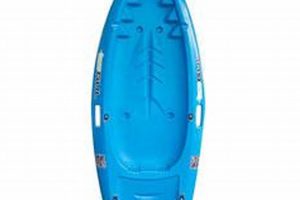
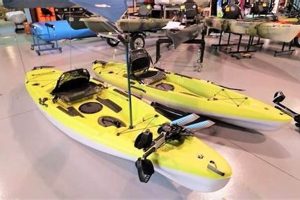
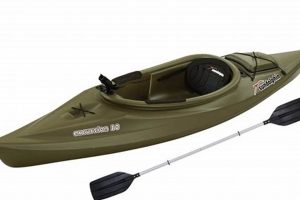
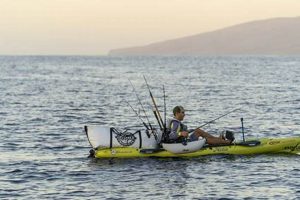
A small, stable watercraft designed for angling in and around islands offers unique advantages. These vessels are typically compact and easy to maneuver, allowing exploration of shallow waters and narrow channels inaccessible to larger boats. Their design often incorporates features like rod holders, storage compartments for tackle, and anchor systems, prioritizing the needs of anglers in these environments.
The ability to navigate close to shorelines and easily access secluded fishing spots makes this type of watercraft highly effective for targeting species that inhabit these areas. Historically, smaller, maneuverable boats have been essential tools for fishing, evolving from traditional canoes and kayaks into specialized designs optimized for stability and functionality. This evolution reflects the enduring importance of accessing shallow, island-rich waters for successful angling.
The following sections will delve into specific design features, recommended equipment, and popular destinations for this style of fishing. Practical advice on choosing the right vessel, essential safety precautions, and techniques for maximizing success will also be covered.
Tips for Island Kayak Fishing
Successful island kayak fishing requires careful planning and preparation. The following tips offer valuable insights for enhancing safety and maximizing angling opportunities.
Tip 1: Prioritize Stability and Maneuverability: Vessel selection should prioritize stability in open water and maneuverability in shallows and tight spaces. Consider kayak designs specifically engineered for fishing, often featuring wider hulls and specialized seating positions.
Tip 2: Research Target Species and Ideal Locations: Thorough research on target species’ habitats and preferred bait is essential. Consult local fishing reports and charts to identify productive areas around islands.
Tip 3: Pack Essential Safety Equipment: A personal flotation device (PFD), a signaling device (whistle or flare), and a first-aid kit are crucial for safety. A reliable communication device and a waterproof bag for electronics are also recommended.
Tip 4: Utilize Appropriate Fishing Gear: Choose rods, reels, and tackle suitable for the target species and the fishing environment. Consider lighter setups for easier handling in a kayak.
Tip 5: Plan for Changing Weather Conditions: Island weather can be unpredictable. Check forecasts before embarking and be prepared for sudden changes. Pack appropriate clothing and ensure the kayak has adequate drainage.
Tip 6: Respect Local Regulations and the Environment: Adhere to all fishing regulations, including licensing requirements and catch limits. Practice responsible angling by minimizing environmental impact and properly disposing of waste.
Tip 7: Master Basic Kayak Handling Skills: Practice paddling and maneuvering the kayak in calm water before venturing to island locations. Learn essential techniques for launching, landing, and recovering from capsizing.
By adhering to these guidelines, anglers can significantly improve their chances of a successful and safe fishing experience. Proper preparation and a focus on safety enable anglers to fully enjoy the unique opportunities offered by island environments.
With these preparations complete, the focus can shift to the practical aspects of enjoying a successful island fishing expedition.
1. Stable Hull Design

Hull design significantly influences a fishing kayak’s performance, particularly in the context of island fishing. Stability is paramount due to the dynamic conditions often encountered near islands: changing tides, currents, and wind patterns. A stable hull minimizes the risk of capsizing, especially when battling larger fish or navigating challenging waters. This stability allows anglers to focus on fishing rather than constantly correcting balance, contributing to a safer and more productive experience. For example, a wider, flatter hull design provides inherent stability compared to a narrower, V-shaped hull, which prioritizes speed over stability. Wider hulls are more resistant to tipping, especially useful when standing to cast or retrieve a fish in the often unpredictable waters around islands.
The practical implications of a stable hull design are numerous. Enhanced stability enables anglers to confidently navigate closer to shorelines, rocks, and reefs, accessing prime fishing locations often inaccessible to larger boats. This advantage is particularly significant in island environments, where shallow-water species and structure-oriented fish thrive. Furthermore, a stable platform allows for more effective casting and retrieval techniques, increasing the likelihood of hooking and landing fish. A stable kayak also facilitates the use of specialized equipment like fish finders and rod holders, which further enhance fishing success in these environments. Consider the scenario of landing a large fish alongside a kayak; a stable hull minimizes the chance of capsizing during this critical moment.
In conclusion, prioritizing a stable hull design is a fundamental consideration for island fishing kayaks. This feature directly contributes to safety and enhances fishing effectiveness in the dynamic conditions characteristic of these locations. While other factors like maneuverability and storage capacity are also important, hull stability forms the foundation for a successful and safe island fishing experience. This understanding allows for informed decisions regarding kayak selection and ultimately contributes to maximizing fishing opportunities in diverse island environments.
2. Protected Storage
Protected storage in an isle fishing kayak is crucial for preserving valuable equipment from the harsh marine environment. Saltwater, spray, and rain can corrode electronics, damage tackle, and ruin personal belongings. Dedicated, waterproof compartments safeguard these items, ensuring functionality and longevity. Consider, for instance, a fishing trip disrupted by a malfunctioning GPS due to water damage; protected storage prevents such scenarios. Furthermore, secure storage prevents gear loss due to unexpected waves or capsizing, a significant concern in the dynamic conditions near islands. This protection extends beyond electronics to essential safety gear like flares and first-aid kits, ensuring their readiness in emergencies. Dry storage also preserves items like licenses, permits, and maps, essential for navigating and complying with regulations in diverse island locations.
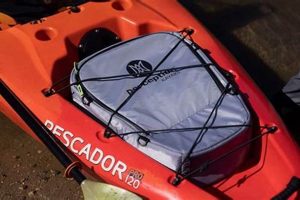
Several types of protected storage solutions cater to the specific needs of isle fishing kayaks. Fully sealed hatches offer the highest level of protection against water intrusion, ideal for sensitive electronics and important documents. Recessed compartments within the kayak’s deck provide convenient access to frequently used items while maintaining a low profile for enhanced stability. Bungee systems secure larger items like tackle boxes and coolers, ensuring they remain onboard even in rough conditions. Furthermore, waterproof bags provide additional protection within storage compartments, organizing gear and preventing smaller items from shifting during transit. The choice of storage solution depends on the specific needs of the angler and the anticipated conditions. For example, anglers targeting remote islands might prioritize larger, sealed hatches for extended trips, while those fishing closer to shore might prefer readily accessible deck compartments.
In conclusion, protected storage is an integral component of an effective isle fishing kayak. It safeguards essential equipment, preserving its functionality and extending its lifespan. This protection contributes to both the success and safety of fishing expeditions in the demanding conditions around islands. Understanding the importance of protected storage and selecting appropriate solutions enables anglers to focus on the fishing experience rather than worrying about gear damage or loss. This preparedness is fundamental for enjoying the unique challenges and rewards of isle fishing kayak adventures.
3. Shallow Draft Access
Shallow draft access is paramount for effective isle fishing kayak excursions. Islands are often surrounded by shallow flats, reefs, and estuaries teeming with fish species. A kayak’s shallow draftthe vertical distance between the waterline and the lowest point of the hulldetermines its ability to navigate these areas. Kayaks with minimal draft access areas inaccessible to deeper-hulled boats, expanding fishing opportunities. This advantage is amplified in island environments where prime fishing grounds often lie in shallow, protected waters. For example, bonefish and permit, prized game fish, frequent shallow flats around tropical islands, making a shallow draft essential for targeting these species.
The practical implications of shallow draft access extend beyond reaching productive fishing grounds. Maneuverability in shallow water is also enhanced. A shallow draft kayak can navigate tight channels, weave through mangrove forests, and approach shorelines closely without grounding. This agility provides a tactical advantage when pursuing fish in their natural habitats. Furthermore, a shallow draft reduces disturbance of the seabed, minimizing noise and turbidity that can spook fish. This stealthy approach contributes to a more natural fishing presentation, increasing the likelihood of success. Consider a scenario where an angler pursues redfish in a shallow marsh; a shallow draft kayak allows silent approach and precise lure placement, maximizing chances of a successful hookup.
In summary, shallow draft access is a defining characteristic of effective isle fishing kayaks. It unlocks access to prime fishing locations, enhances maneuverability, and promotes a stealthy approach. Understanding the importance of shallow draft empowers anglers to select appropriate vessels and maximize their fishing potential in diverse island environments. This knowledge, combined with appropriate fishing techniques and respect for the environment, contributes significantly to successful and sustainable isle fishing kayak experiences.

Island-specific navigation is integral to successful and safe isle fishing kayak excursions. Navigating around islands presents unique challenges and opportunities distinct from open-water or riverine environments. Understanding these nuances enables anglers to maximize fishing time, access productive locations, and ensure safe passage. This involves considering factors such as tidal currents, wind patterns, and proximity to hazards like reefs and shallows, all of which are amplified in island settings.
- Tidal Current Awareness
Tidal currents around islands can be strong and unpredictable, significantly impacting kayak movement. Understanding tidal charts and predicting current flows is crucial for efficient paddling and positioning. For example, leveraging incoming tides can provide access to shallow flats, while outgoing tides assist in navigating back to deeper water. Failure to account for tidal currents can lead to significant delays, increased effort, and potentially dangerous situations.
- Wind Impact and Drift
Wind exposure is amplified in island environments. Kayaks, offering a higher profile than larger vessels, are more susceptible to wind drift. Anglers must anticipate wind direction and speed, adjusting paddling techniques and routes accordingly. Utilizing a sea anchor or drift sock can control drift while fishing, maximizing time on target locations. Neglecting wind impact can result in significant deviations from intended routes, impacting both fishing success and safe return.
- Navigational Aids and Charts
While GPS devices are valuable tools, understanding traditional navigational aids remains essential in island settings. Recognizing markers, buoys, and landmarks allows for safe passage through complex channels and around hazards. Carrying nautical charts provides a backup navigation method in case of electronic failures. For example, recognizing a channel marker indicating shallow water can prevent grounding or hull damage. Over-reliance on electronics without traditional navigation skills can create vulnerabilities in unpredictable circumstances.
- Proximity to Hazards
Islands are often surrounded by submerged hazards like reefs, rocks, and shallows. Careful route planning and observation are crucial for avoiding these obstacles. Understanding how tides affect water depth and visibility is crucial for safe navigation. For instance, a reef exposed at low tide may become a submerged hazard at high tide. Failing to account for these changes can lead to grounding, hull damage, or even capsizing.
These facets of island-specific navigation, when understood and applied, contribute significantly to successful and safe isle fishing kayak experiences. They empower anglers to navigate efficiently, access productive fishing areas, and mitigate potential risks associated with the unique challenges presented by island environments. By combining navigational awareness with skillful kayak handling and appropriate fishing techniques, anglers can maximize their enjoyment and success in these rewarding settings.
5. Appropriate Fishing Gear

Appropriate fishing gear selection is inextricably linked to the success and enjoyment of isle fishing kayak adventures. The unique demands of this environment necessitate specific equipment choices distinct from shore-based or larger vessel fishing. Kayak anglers operate within a confined space with limited storage, requiring compact and versatile gear. Furthermore, the dynamic conditions near islandschanging tides, currents, and windinfluence tackle and rod choices. Consider the scenario of an angler targeting bonefish in shallow flats; a lightweight fly rod with a tropical line and specialized flies is essential, whereas a heavy offshore setup would be impractical and ineffective. The connection between appropriate gear and the isle fishing kayak experience lies in the optimization of efficiency, effectiveness, and safety.
Several factors dictate appropriate gear choices for isle fishing kayaks. Target species significantly influence rod, reel, and line selection. For example, pursuing larger pelagic species offshore necessitates heavier tackle than targeting smaller reef fish. The fishing environment also plays a crucial role. Shallow-water fishing requires shorter rods and lighter lines for precise casts and maneuverability, whereas deeper water or stronger currents may necessitate longer, heavier rods and higher capacity reels. Storage limitations within the kayak influence tackle box size and organization, emphasizing versatility and minimizing redundancy. Furthermore, safety considerations mandate specific gear choices, such as specialized pliers for removing hooks from toothy fish or a landing net for safely securing larger catches in the confined space of a kayak. Understanding these interconnected factors allows anglers to curate a tailored gear selection optimized for the specific challenges and opportunities presented by isle fishing kayak excursions.
In conclusion, appropriate fishing gear selection is not merely an accessory but an integral component of successful isle fishing kayak experiences. It directly impacts fishing effectiveness, safety, and overall enjoyment. By considering target species, the fishing environment, storage limitations, and safety considerations, anglers can make informed decisions about gear selection. This preparedness ensures a more rewarding and efficient fishing experience, maximizing the opportunities presented by the unique challenges and rewards of isle fishing kayak adventures.
6. Safety Equipment Essentials
Safety equipment is paramount for isle fishing kayak excursions. The remote nature of these trips, coupled with the dynamic marine environment, necessitates specific safety precautions. Preparedness for unforeseen circumstances, from sudden weather changes to equipment malfunctions, is crucial for mitigating risks and ensuring a safe return. A comprehensive understanding of essential safety equipment and its practical application is fundamental for responsible and enjoyable isle fishing kayak experiences.
- Personal Flotation Device (PFD)
A properly fitted PFD is non-negotiable. It provides essential buoyancy in case of capsizing, a significant risk in the often unpredictable conditions around islands. PFDs designed specifically for paddling offer greater freedom of movement and comfort during long hours on the water. Choosing a brightly colored PFD enhances visibility, aiding in rescue efforts should the need arise. Consider a scenario where an angler encounters unexpected rough seas and capsizes; a PFD becomes the critical difference between a manageable incident and a life-threatening situation.
- Signaling Devices
Carrying multiple signaling devices is crucial for attracting attention in emergencies. A whistle provides a simple, audible signal, while a waterproof VHF radio enables direct communication with rescue services and other vessels. Visual signals, such as flares or a signal mirror, extend the range of communication, particularly in situations where voice communication is limited or unavailable. For instance, if an angler experiences engine trouble or requires medical assistance, a VHF radio becomes invaluable for summoning help in remote island locations.
- First-Aid Kit and Emergency Supplies
A comprehensive first-aid kit equipped to handle common injuries like cuts, hooks, and sunburns is essential. Including essential medications and supplies specific to individual needs enhances preparedness. Supplementing the first-aid kit with emergency supplies like a waterproof fire starter, a space blanket, and a small knife adds layers of resilience in survival situations. Consider an angler sustaining a hook injury while fishing; a well-equipped first-aid kit enables prompt treatment, preventing infection and ensuring a safe continuation of the trip.
- Navigation and Communication Equipment
Reliable navigation and communication equipment enhance safety in the potentially disorienting environment around islands. A waterproof GPS unit or chart plotter facilitates accurate navigation, especially in challenging conditions like fog or darkness. Carrying a fully charged mobile phone in a waterproof case provides a backup communication method. Checking weather forecasts before departure and regularly monitoring weather updates during the trip aids in anticipating changing conditions and making informed decisions about route adjustments or early returns. For example, if an angler encounters unexpected fog, a GPS unit ensures continued safe navigation back to shore.
These safety equipment essentials are interconnected and contribute to a comprehensive safety strategy for isle fishing kayak adventures. Prioritizing safety enhances enjoyment and mitigates risks inherent in exploring remote island locations. This preparedness empowers anglers to focus on the fishing experience, confident in their ability to respond effectively to unforeseen challenges. The combination of appropriate safety equipment, practiced emergency procedures, and responsible decision-making ensures a safer and more rewarding experience in the dynamic and often unpredictable island environment.
7. Tidal Flow Awareness
Tidal flow awareness is inextricably linked to successful and safe isle fishing kayak experiences. Islands, situated at the interface of land and sea, experience amplified tidal currents due to constricted waterways and changing bathymetry. These currents exert a significant influence on kayak positioning, fishing presentation, and overall safety. Comprehending tidal dynamics empowers anglers to leverage these forces effectively, maximizing fishing opportunities while mitigating potential hazards. For example, fishing near a channel during an outgoing tide can concentrate baitfish and attract predatory species, creating a prime fishing window. Conversely, attempting to paddle against a strong incoming tide can be exhausting and inefficient, potentially jeopardizing safe navigation.
The practical implications of tidal flow awareness extend to various aspects of isle fishing kayak excursions. Understanding tidal cycles enables anglers to plan launch and landing times strategically, avoiding challenging currents or exposed areas during low tide. Knowledge of current direction and speed informs drift fishing techniques, allowing anglers to present bait or lures naturally along structure or through feeding lanes. Furthermore, tidal flow awareness enhances safety by enabling paddlers to anticipate changes in water depth, avoid submerged hazards, and navigate challenging passages effectively. Consider a scenario where an angler is fishing near a shallow inlet; recognizing the incoming tide allows for timely relocation to deeper water, preventing grounding or stranding. Conversely, ignorance of tidal flows could lead to being swept into hazardous areas or encountering unexpectedly strong currents, compromising both fishing success and personal safety.
In conclusion, tidal flow awareness is not merely a supplementary skill but a fundamental component of effective and safe isle fishing kayak practices. It empowers anglers to leverage natural forces to their advantage, enhancing fishing success while mitigating potential risks. This understanding, combined with appropriate kayak handling skills and navigational awareness, unlocks the full potential of isle fishing kayak experiences, transforming potential challenges into opportunities for exploration and enjoyment within the dynamic island environment.
Frequently Asked Questions
This section addresses common inquiries regarding island kayak fishing, providing concise and informative responses to clarify potential uncertainties and enhance understanding of this specialized angling pursuit.
Question 1: What are the primary advantages of using a kayak for fishing around islands?
Kayaks offer unparalleled access to shallow waters, secluded coves, and narrow channels often inaccessible to larger boats. Their maneuverability and quiet operation enable stealthy approaches, minimizing disturbance to fish in these sensitive environments.
Question 2: What type of kayak is best suited for island fishing?
Sit-on-top kayaks are generally preferred for their stability, self-bailing design, and ease of entry and exit. Look for models specifically designed for fishing, featuring rod holders, storage compartments, and anchor systems.
Question 3: What essential safety precautions should be taken when kayak fishing around islands?
Always wear a personal flotation device (PFD), carry signaling devices (whistle, VHF radio, flares), and inform someone of your planned route and return time. Check weather forecasts before embarking and be prepared for changing conditions.
Question 4: What fishing gear is recommended for island kayak fishing?
Rods, reels, and tackle should be appropriate for the target species and fishing environment. Lighter setups are often preferred for easier handling in a kayak. Prioritize versatile gear that can adapt to various fishing techniques.
Question 5: How does tidal flow impact island kayak fishing?
Tidal currents around islands can be strong and unpredictable. Understanding tidal charts and predicting current flows is crucial for efficient paddling, positioning, and fishing presentation. Tidal flow also influences access to shallow areas and navigation through channels.
Question 6: What are the environmental considerations for kayak fishing around islands?
Minimize environmental impact by practicing catch-and-release whenever possible, properly disposing of waste, and avoiding disturbing sensitive habitats like seagrass beds and coral reefs. Adhere to all local fishing regulations and licensing requirements.
Careful consideration of these frequently asked questions enhances preparedness and promotes safe and enjoyable island kayak fishing experiences. Understanding the nuances of this specialized pursuit empowers anglers to make informed decisions, maximizing fishing success while minimizing potential risks.
For further information and detailed guidance, consult local fishing authorities and experienced kayak anglers familiar with specific island environments.
Isle Fishing Kayak
Exploration of isle fishing kayak reveals specialized considerations crucial for optimizing angling success and ensuring safety. Vessel stability, protected storage, shallow draft access, and island-specific navigation are integral for efficient exploration of these unique environments. Appropriate fishing gear selection, tailored to target species and local conditions, maximizes angling effectiveness. Prioritizing essential safety equipment and understanding tidal flow dynamics mitigates potential risks inherent in remote island excursions.
Successful isle fishing kayak experiences require informed preparation, adaptability to dynamic conditions, and a commitment to responsible angling practices. This approach ensures sustainable enjoyment of these exceptional fishing opportunities while preserving the ecological integrity of fragile island ecosystems. Further exploration and refinement of these specialized techniques promise continued enhancement of isle fishing kayak pursuits.